
A review of the 2026 Defense Health Agency testosterone screening policy for male service members alongside InCare’s safety guide covering TRT risks and monitoring.


A multi-year study links modest blood sugar increases to declining erectile function, reinforcing the value of metabolic health alongside hormone evaluation.

Clinical guidelines and military policies clarify when testosterone therapy is appropriate, detailing required testing, potential benefits, and health risks.

A 2026 study links off-label testosterone therapy to higher long-term cardiovascular risks, emphasizing the need for proper clinical evaluation before treatment.

A review of the September 2026 DHA guideline for testosterone deficiency in male service members. Learn about new testing protocols, alternative treatments, and fertility preservation risks.

Recent updates from Urology Times and the Pentagon shift the conversation on hormone therapy. Learn how new clinical data impacts veteran health decisions.

New European Association of Urology guidance outlines targeted early-morning testosterone, glucose, and lipid testing to properly evaluate men with symptoms.

A 2013 retrospective review of 120 men found testosterone therapy did not universally worsen prostate symptoms, though clinical monitoring remains necessary.

New male contraception research highlights how hormonal treatments suppress sperm production, providing key context for veterans managing testosterone therapy.

A 2026 UC San Diego study links naturally occurring anti-NMDAR1 autoantibodies to lower depression and PTSD scores in Marines following a traumatic brain injury.

Recent Pentagon policy updates and medical data highlight the growing debate over military testosterone screening, TRT risks, and active duty hormone health.

Recent reports suggest the Pentagon may expand testosterone screening for service members. Learn what these potential medical policy updates mean for you.

A 260-person study reports hormone therapy significantly reduced severe menopause mood swings. Learn how these findings impact women veterans and VA healthcare.

An analysis of the risks tied to unnecessary testosterone therapy, covering clinical reference baselines, fertility impacts, and the dangers of unregulated use.

BattleVet provides a practical decision framework for veterans considering testosterone replacement therapy, covering diagnostic testing, formulations, and monitoring risks.

Older veterans evaluating low testosterone need clear facts. Learn how to navigate symptom tracking, repeat clinical testing, secondary causes, and TRT decisions.
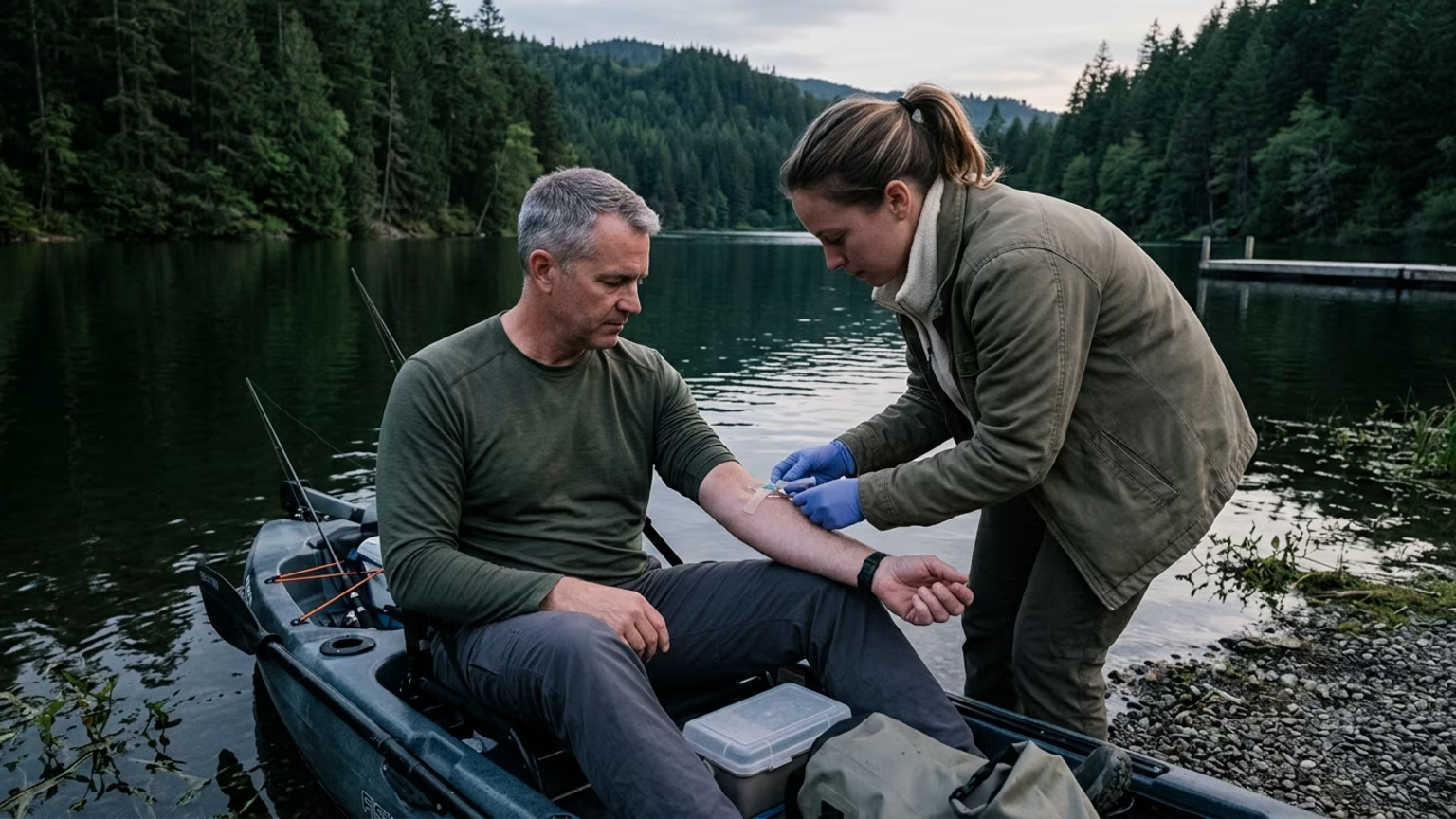
Heroes on the Water and Texas State University have launched a pilot study tracking cortisol and testosterone changes during veteran kayak fishing programs.

The Pentagon recently withdrew mandatory testosterone screening guidance. Learn how these shifting military medical and privacy policies impact active personnel.
Build better habits around strength, recovery, sleep, hormones and healthy aging with practical guidance for active military personnel and veterans.
Explore BattleVet