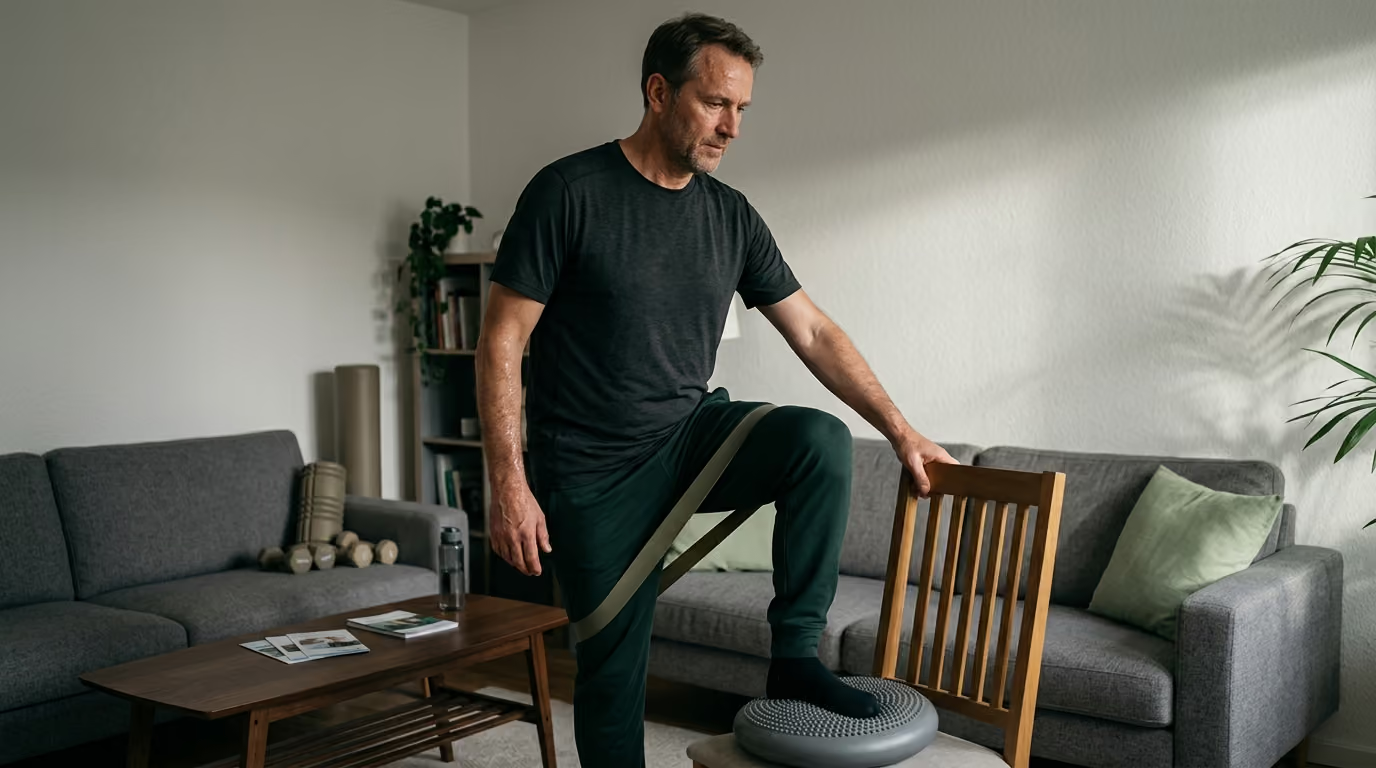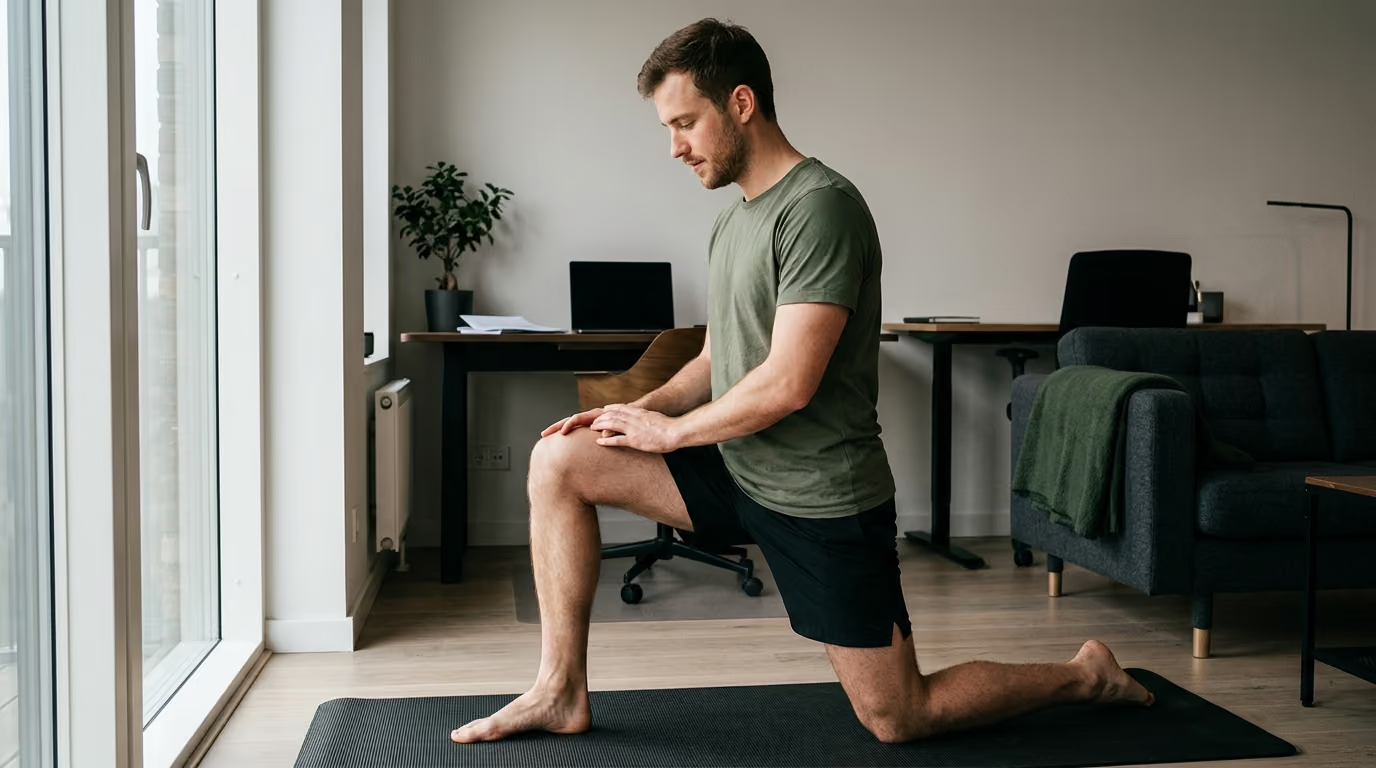

Resting passively after long travel may seem logical, but targeted movement protocols restore circulation and joint mobility far more effectively.





You step out of a car after an eight-hour drive or stand up from an economy airline seat, and your hips feel locked. Your lower back aches, your ankles feel sluggish, and your legs feel heavy and swollen. Many people search for a quick stretch to undo hours of sitting, hoping for an instant fix to their physical discomfort. This guide provides a clear, evidence-based mobility framework to restore circulation, relieve joint stiffness, and return your body to full readiness safely.
Post-travel recovery requires a staged restoration process involving active circulation, gentle joint mobility, muscular activation, and proper sleep rather than aggressive stretching alone.
Recovering from long journeys requires you to systematically reverse the effects of static posture and physical immobility. Sustained sitting reduces blood flow in the lower limbs, increases pressure on the spine, and alters muscle coordination. Restoring normal physical readiness involves low-intensity movement to engage the calf muscle pump, progressive range-of-motion drills for the hips and spine, basic bodyweight activation, and circadian alignment.
Understanding travel recovery starts with the physiology of physical immobility. The World Health Organization defines sedentary behavior as any waking behavior characterized by an energy expenditure of 1.5 metabolic equivalents or less while sitting, reclining, or lying down. Long-distance transit, whether by car, train, bus, or airplane, forces you into prolonged sedentary bouts. This environment pairs low muscular activity with a constrained posture.
When you sit for hours, your lower-body muscles remain largely passive. The calf muscles normally contract during walking, which compresses the deep veins in the lower leg. This action, known as the calf-muscle pump, is the primary mechanism pushing deoxygenated blood and lymphatic fluid back toward the heart against gravity. Prolonged sitting removes this pumping action, causing fluid to pool in the feet and ankles. This pooling creates that familiar heavy, tight feeling in your lower limbs.
Sustained seated postures also place continuous compressive loads on the lumbar spine and pelvic structures. Your hip joints remain fixed at roughly 90 degrees of flexion, while your hamstrings and calves remain in shortened positions. Sitting does not permanently shorten muscle tissue over a few hours. Instead, it temporarily alters joint tolerance and neurological sensitivity. When you finally stand up, your nervous system resists rapid extension, which you perceive as deep joint stiffness.
Postural fatigue accumulates when you sit in cramped seats. Vehicle vibration, poor lumbar support, and forward-head positioning place low-grade stress on the postural muscles of your neck, upper back, and lower spine. Over time, these muscles fatigue and tighten to stabilize your posture. Addressing this stiffness requires restoring blood flow and joint tolerance rather than aggressively forcing tight tissues into extreme ranges. To build physical longevity, you can study our foundational materials on healthy aging and longevity resources.
Researchers have evaluated how physical breaks counteract prolonged sitting. Systematic reviews of workplace interventions show that interrupting sedentary time with stretching, standing, or walking improves self-reported comfort and spinal mobility. Active breaks involving postural changes reduce musculoskeletal discomfort without lowering work productivity.
The evidence base carries important nuances. A Cochrane review examining work-break schedules found that evidence regarding specific break frequencies remains low to moderate in quality. Structured movement breaks improve immediate subjective comfort, but they do not automatically prevent all work-related musculoskeletal disorders. The World Health Organization notes that while limiting sedentary time is critical for health, current data is insufficient to mandate a single universal break interval for every individual.
This distinction matters for practical planning. You do not need to follow a rigid, scientifically mandated timer down to the exact second. Instead, view movement breaks as effective tools for load management and comfort. Taking a brief break every 45 to 60 minutes interrupts static tissue loading and reactivates muscular pumps.
Workplace and laboratory studies consistently confirm that light-intensity physical activity yields measurable physical benefits. Replacing static sitting with walking breaks lowers local tissue strain and improves glucose regulation. When designing a post-travel recovery plan, prioritize frequent, low-intensity movement over prolonged static stretching. For broader strategies on physical restoration, examine our collection of recovery and sleep articles.
Physical recovery after travel must balance comfort routines with medical awareness. Prolonged immobility during long-haul travel lasting more than four hours roughly doubles the risk of travel-associated venous thromboembolism, or VTE. This condition includes deep vein thrombosis, known as DVT, and pulmonary embolism, known as PE. Understanding these risks helps you distinguish ordinary post-travel stiffness from a serious medical emergency.
Deep vein thrombosis occurs when a blood clot forms in a deep vein, usually in the lower leg or thigh. Typical symptoms of DVT include:
A pulmonary embolism occurs if a clot breaks free and travels to the lungs. This is a life-threatening emergency. Signs of pulmonary embolism include sudden shortness of breath, sharp chest pain that worsens with deep breathing, coughing up blood, a rapid heart rate, or unexplained fainting. If you experience any of these symptoms, seek immediate emergency medical care.
Risk factors for travel-associated VTE include previous blood clots, active cancer, recent major surgery or trauma, pregnancy, estrogen-based medications, limited baseline mobility, and advanced age. Guidance from the Centers for Disease Control and Prevention emphasizes moving your legs frequently, exercising your calf muscles while seated, and walking during travel breaks. Compression stockings or medical interventions may benefit higher-risk travelers, but these choices should always be discussed with a qualified physician.
Ordinary travel stiffness affects both sides of your body fairly equally, presenting as general tightness across both hips, calves, or shoulders. Unilateral symptoms, such as swelling, warmth, or pain isolated to one leg, are red flags. Never attempt to massage or aggressively stretch a limb showing signs of a suspected blood clot.
Long journeys produce distinct types of physical exhaustion that require different recovery strategies. Travel fatigue arises from the physical and mental strain of the journey itself. It results from cramped seating, disrupted routines, noise, carrying heavy luggage, and prolonged concentration. Travel fatigue occurs regardless of whether you cross time zones, and it generally resolves after adequate rest, light movement, and a solid night of sleep.
Jet lag disorder is a formal circadian rhythm disruption. It occurs when you rapidly cross three or more time zones, creating a mismatch between your internal biological clock and the local solar time at your destination. Your internal clock regulates body temperature, hormone secretion, digestion, and physical performance. When your circadian timing is misaligned, you may experience insomnia, daytime lethargy, cognitive fog, gastrointestinal distress, and impaired muscular coordination.
Research demonstrates that eastward travel creates greater physiological disruption than westward travel. Traveling east shortens your day, forcing your circadian clock to advance, which the human body finds difficult to navigate. Studies examining athletic performance show that eastward travel across multiple time zones impairs sprint performance, sleep efficiency, and mental motivation for up to 72 hours after arrival.
Recovering from jet lag requires behavioral and environmental interventions. Guidance from the CDC recommends immediately shifting your schedule to your destination time zone upon arrival. Expose yourself to natural sunlight during morning hours to advance your internal clock, or late afternoon light if you traveled westward. Avoid long daytime naps, keeping any rest periods under 30 minutes so you do not disrupt evening sleep. Support your physical training through our library of training and performance articles.
Post-travel recovery works best when structured as a progressive process rather than a random set of stretches. The CALMER framework provides a clear, six-stage approach to restoring movement quality, blood flow, and physical readiness after prolonged immobility.
Begin with gentle, low-risk movements that activate the calf-muscle pump and promote venous return. You can perform these exercises in a passenger seat, at a rest stop, or immediately upon reaching your destination:
Prolonged sitting encourages a slouched, rounded posture. Reverse this static posture without forcing extreme military rigidity:
Once circulation is active, introduce controlled dynamic mobility to restore comfortable range of motion. Perform these movements smoothly without forcing pain:
Static immobility temporarily dampens neuromuscular firing. Low-load bodyweight drills wake up key stabilizing muscles before you lift luggage or resume training:
Physical restoration relies heavily on foundational recovery habits. Match your meal timing to the local clock, and hydrate consistently throughout the day. Manage your light exposure to reinforce circadian alignment, and establish a dark, cool sleep environment. You can explore structured strategies through our sleep, stress and resilience resources.
Do not jump straight from an eight-hour flight into a heavy lifting session or maximal sprint workout. Use the first 24 hours to rebuild your movement capacity with low-intensity steady cardio and basic bodyweight circuits. Progress gradually toward heavier loads and high-intensity demands once your baseline coordination and energy return.
Travel often transitions directly into working in cramped spaces, hotel rooms, or temporary office desks. Setting up a temporary workstation poorly can quickly bring back the stiffness you felt during travel. Applying standard ergonomic principles helps you manage physical strain effectively.
The National Institute for Occupational Safety and Health emphasizes that ergonomics reduces musculoskeletal strain by fitting the work environment to the human body. When setting up a temporary workspace, follow these practical steps:
Managing physical load requires frequent movement breaks regardless of how well your desk is arranged. Stand up every 45 to 60 minutes to stretch your chest, walk to refill your water, or complete a brief set of standing calf raises. Alternate between sitting and standing tasks throughout your workday rather than remaining locked in one position. For comprehensive guidance on physical restoration methods, visit our primary BattleVet resources library.
Dehydration is commonly blamed for every post-travel symptom, but scientific evidence requires a more accurate perspective. Cabin air in airplanes has very low humidity, which increases moisture loss from your skin and respiratory tract. While staying hydrated improves general comfort, reduces dry eyes, and prevents headaches, hydration alone does not prevent travel-related blood clots.
The CDC clearly states that research has not demonstrated a direct link between dehydration and travel-associated VTE. Furthermore, drinking excessive amounts of water does not guarantee protection against venous thrombosis. You should view hydration as a tool for overall well-being, digestive regularity, and alertness rather than a medical clot-prevention strategy.
The National Academies of Sciences, Engineering, and Medicine establishes general adequate intake levels of approximately 2.7 liters of total daily water for women and 3.7 liters for men. These values represent total water intake from all foods and beverages under normal conditions. During travel, focus on steady, moderate fluid intake rather than forcing excessive hydration:
If you manage clinical conditions such as heart failure, kidney disease, or liver disease, follow your doctor's specific fluid guidelines rather than general travel hydration advice.
Returning to demanding physical training immediately after long travel increases your risk of poor performance and movement compensation. Sleep deprivation, dehydration, joint stiffness, and travel fatigue impair motor control and tissue tolerance. Before loading a heavy barbell, sprinting, or participating in intense drills, walk through this return-to-training readiness screen.
If your screen reveals persistent joint restriction, deep fatigue, or sluggish coordination, adjust your training plan. Replace heavy maximal lifting or high-speed sprint intervals with a moderate aerobic session or low-load accessory strength work. Giving your body an extra 12 to 24 hours to re-establish normal movement patterns protects your long-term athletic durability. To build a balanced physical foundation, explore our strength, fitness and body composition resources.
This article is provided for educational and informational purposes only. It is not intended to serve as medical advice, clinical diagnosis, or personalized treatment. Always consult a qualified healthcare professional before beginning any new exercise routine, mobility program, or travel health protocol. If you experience severe pain, unilateral limb swelling, redness, chest pain, shortness of breath, or neurological symptoms such as numbness and weakness, seek prompt medical attention.
Aim to stop every two to three hours during a long road trip to get out of the vehicle and walk. Taking a five to ten minute break allows you to walk around, perform standing calf raises, and stretch your hip flexors. If you are a passenger, you can perform seated ankle pumps and knee extensions every 45 to 60 minutes while the vehicle is moving. Drivers must only perform mobility movements when the vehicle is safely stopped.
Ankle swelling during long flights occurs because of prolonged sitting, gravity, and the absence of muscular contractions from walking. When you remain seated, your calf-muscle pump is inactive, allowing fluid to pool in the lower extremities. Low cabin pressure and dry air can also contribute to mild fluid shifts. This swelling is usually harmless and resolves once you walk and elevate your legs. If swelling occurs in only one leg or comes with pain and warmth, seek a medical evaluation.
Walking is generally better than static stretching immediately after long travel. Walking engages the calf-muscle pump, elevates your heart rate, increases core body temperature, and circulates synovial fluid through your joints. Once you have walked for five to ten minutes to warm up your tissues, you can perform dynamic mobility exercises for your hips, spine, and ankles with greater comfort and safety.
Jumping into an aggressive, high-intensity workout right after travel is generally counterproductive. Travel fatigue and circadian disruption lower your reaction time, impair muscular coordination, and reduce your tolerance to heavy loads. A better approach is to perform a light to moderate active recovery session, such as a brisk walk, mobility drills, and light bodyweight exercises. Save heavy lifting, maximal sprints, and high-volume training for the following day once your sleep and hydration have stabilized.
Use this practical checklist to maintain mobility and recover smoothly during your next long journey:
Follow BattleVet for practical guidance on military and veteran health, strength, recovery, testosterone, sleep and healthy aging. Stay connected for new articles, research backed insights and clear information to help you stay capable for the years ahead.


Build better habits around strength, recovery, sleep, hormones and healthy aging with practical guidance for active military personnel and veterans.
Explore BattleVet