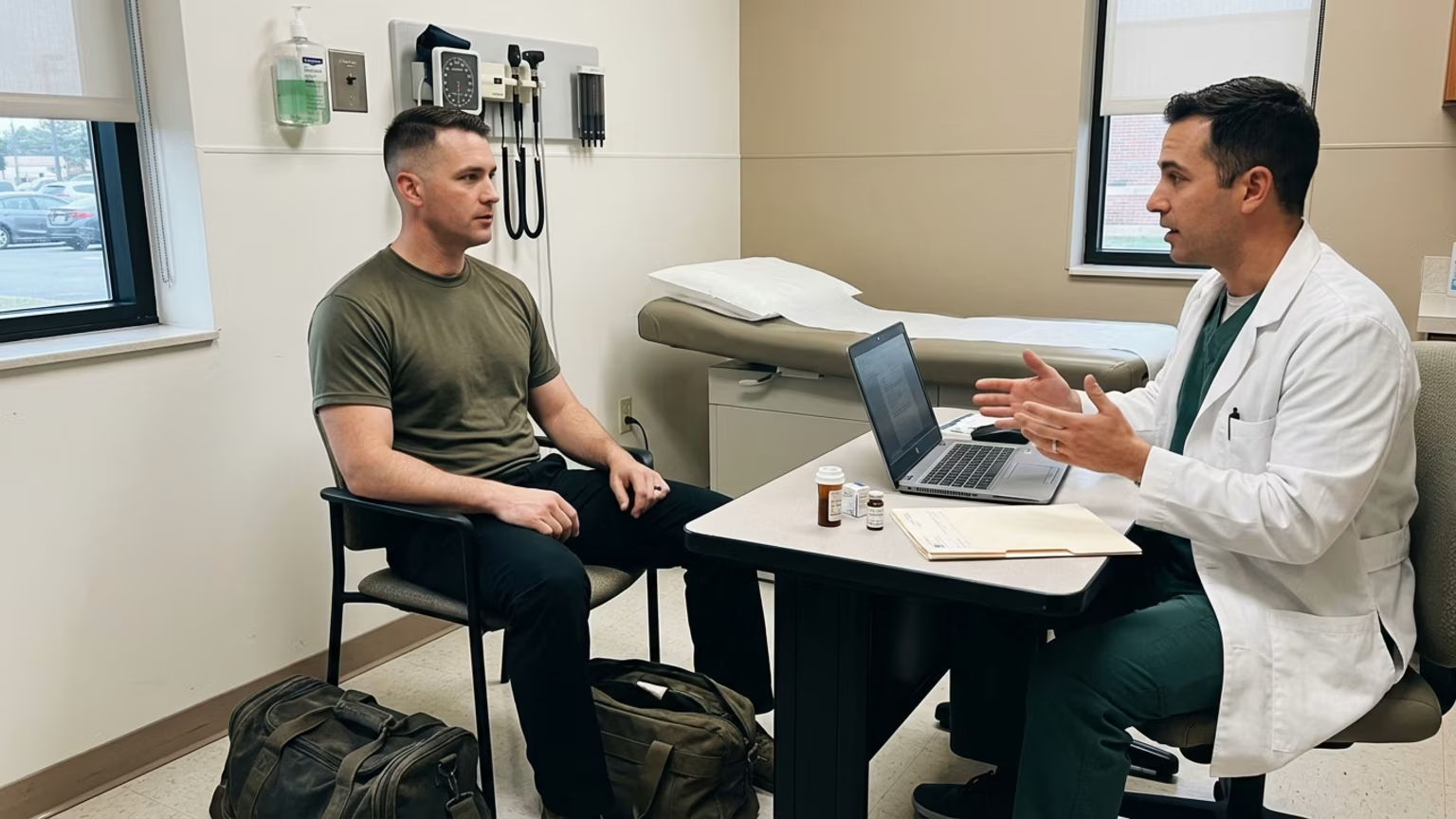

Clinical guidelines and military policies clarify when testosterone therapy is appropriate, detailing required testing, potential benefits, and health risks.





On October 11, 2026, the primary InCare review published an updated clinical evaluation of testosterone replacement therapy. This overview outlines the potential benefits and risks of treatment alongside required diagnostic checks. Less than a month earlier, on September 17, 2026, the Defense Health Agency announced new Department of War guidance. The guidance calls for screening male service members aged 30 and older as part of periodic health assessments.
Understanding the line between screening and medical intervention is vital for active personnel and veterans. The Defense Health Agency policy introduces a structured symptom and risk-factor assessment for older male service members. The agency also notes that male service members younger than 30 may be screened on request or when a clinician identifies indicators. However, a screening result is not by itself a diagnosis.
The InCare review clarifies the strict medical threshold for starting hormone therapy. It states that testosterone replacement therapy should generally be considered when a man has compatible symptoms or signs alongside repeatedly low testosterone. Clinicians must confirm these low levels with morning testing. The review cautions that one low test or advanced age alone is not enough to establish a reason for treatment.
Service members and veterans must navigate these health decisions carefully based on their specific status. The Defense Health Agency stated that the guidance applies specifically to male service members. Screening and treatment for female service members will be addressed in a later companion document. Veterans not covered by this active-duty screening instruction should not assume it establishes their own eligibility or treatment pathway.
The InCare review details specific outcomes from the TRAVERSE trial to clarify the physical impacts of testosterone therapy. While treatment can improve bone mineral density, the review notes that this does not establish fracture prevention. In the trial, researchers reported 91 fractures in the testosterone group, representing 3.5 percent of those participants. The placebo group experienced 64 fractures, or 2.4 percent.
Reports on energy levels and mood show mixed results across different clinical studies. For the TRAVERSE anemia subgroup, the review reports that 41.0 percent of testosterone-treated participants reported improved energy at six months. The placebo group saw a 27.5 percent improvement in energy over the same timeframe. However, the review notes that other analyses found no statistically significant energy benefit overall.
Data regarding broader service member health plays a significant role in evaluating hormone levels. The Endocrine Society reported that 24.2 percent of active service members were obese as of 2023. This statistic is critical because obesity can be associated with low total-testosterone readings. The society criticized the military screening guideline regarding its approach to men with obesity and low readings.
The updated medical and military guidelines emphasize a comprehensive evaluation before beginning any hormone treatment. The InCare review recommends assessing possible contributors to low testosterone before writing a prescription. Clinicians should evaluate patients for sleep apnea, obesity, diabetes, and other health problems. They must also carefully review the effects of any current medications on a patient's hormone levels.
Addressing these underlying conditions is a primary step in maintaining Military Health & Veteran Wellness. Medical experts caution against presenting testosterone therapy as a proven anti-aging, weight-loss, or athletic-performance treatment. Better-supported potential benefits include improved sexual desire and activity, as well as the correction of anemia in some men. Relying on verified information helps separate credible medical treatment from common fitness marketing claims.
Lifestyle factors like restorative rest are critical to evaluating the need for medical intervention. Men dealing with fatigue and hormone changes can find evidence-based guidance in our Recovery and sleep Articles. By prioritizing sleep and metabolic health, service members can better identify if their symptoms stem from true hormonal deficiency.
Treatment requires strict follow-up and monitoring protocols to manage physical risks and ensure patient safety. The InCare review recommends reassessment three to twelve months after initiation and yearly thereafter. During these clinical visits, medical professionals should monitor symptoms, testosterone levels, hematocrit, and blood pressure. Testosterone products can raise blood pressure, and elevated hematocrit is a known treatment concern.
Prostate risk must also be assessed continuously based on a patient's age and personal health history. Active personnel and veterans entering treatment should ask their treating clinician to explain this ongoing monitoring plan. The Defense Health Agency states that military clinicians will monitor and adjust treatment plans as needed. This collaborative approach ensures that the medical response aligns with a service member's operational readiness.
Those focused on maintaining strength and mobility as they age can review our Healthy aging Articles. Understanding how hormone monitoring fits into long-term physical capability allows men to participate actively in their healthcare.
Fertility remains a major factor in the updated clinical guidance and policy discussions. The InCare review states clearly that testosterone therapy can suppress sperm production. It is not a fertility treatment, and men planning to have children should discuss this before starting any regimen. This biological reality requires careful consideration for younger service members entering the new military screening program.
The Endocrine Society raised specific concerns about the recommended use of hCG for men seeking to protect fertility. In some men with obesity-induced hypogonadism, the society argues it could reduce sperm production. They further said that combined testosterone and hCG use for two or more years may delay recovery of normal sperm and hormone production. These points highlight the complexities of managing endocrine health in an active population.
This remains a point of tension, as the society states evidence is insufficient to support population-level blood-test screening for hypogonadism in asymptomatic men. The society warned that screening men over 30 is likely to produce many false positives and be expensive and time-consuming. Despite this, the focus remains on making informed health decisions that support long-term capability. Reading through our Testosterone and hormones Articles can help service members prepare for these complex clinical conversations.
As military health policies and clinical guidelines continue to evolve, the approach to hormone therapy will face further scrutiny. With conflicting views on population-level screening and fertility preservation, the medical community must weigh individual readiness against systemic risks. How will future long-term data shape the way the military diagnoses and manages endocrine health for the next generation of service members?
Follow BattleVet for practical guidance on military and veteran health, strength, recovery, testosterone, sleep and healthy aging. Stay connected for new articles, research backed insights and clear information to help you stay capable for the years ahead.


Disabled American Veterans supports H.R. 210, a proposal to expand comprehensive VA dental care eligibility to all enrolled veterans. Here is what you need to know.

A 2026 meta-analysis links physical activity to improved cellular aging markers. Read how these findings influence long term veteran physical capability.
A recent investigation highlights severe gaps in battlefield medical evacuation and emphasizes the critical need for continuous traumatic brain injury tracking for troops.
Build better habits around strength, recovery, sleep, hormones and healthy aging with practical guidance for active military personnel and veterans.
Explore BattleVet