

Recent Pentagon policy updates and medical data highlight the growing debate over military testosterone screening, TRT risks, and active duty hormone health.





WFAE's September 16 episode of Charlotte Talks with Mike Collins examined the growing influence of testosterone replacement therapy on military health and expectations around male performance. The broadcast followed a Pentagon initiative associated with Secretary of Defense Pete Hegseth. This initiative called for annual testosterone deficiency screening for male active duty and reserve service members aged 30 and older. The Pentagon's screening plan was announced in July 2026 and followed by detailed clinical guidance in early September 2026.
The initial guidance established a pathway for screening and blood testing during regular military health assessments. Men under 30 were to be offered optional annual screening. Female service members were to be asked about symptoms of hormonal dysregulation and referred for further evaluation when appropriate.
The policy environment remains highly fluid. The Pentagon temporarily rescinded the detailed clinical guidance shortly after issuing it. The agency stated that the document was being updated while interim guidance remained in effect.
The WFAE broadcast also noted a broader military policy context. This context involves restrictions on transgender people joining the military since 2025. This places hormone policy within a larger debate about military service, gender, and medical eligibility. Service members must navigate these complex policy layers alongside their personal health decisions.
The episode featured Dr. Tamar Reisman and psychology professor Adam Stanaland. Reisman is a general endocrinologist at Weill Cornell Medicine. Stanaland is an assistant professor of social and developmental psychology at the University of Richmond. Their discussion highlighted the growing influence of testosterone replacement therapy on military health and popular culture.
This policy update matters deeply for active personnel and veterans navigating physical health. The Pentagon stated its objectives were to address hormone deficiencies, protect long term service member health, improve performance, and maximize force readiness. Army urologist Maj. Theodore Crisostomo-Wynne has said that chronic stress can reduce testosterone in service members. He associated possible hormone problems among some high stress personnel with chronic stress, blast exposure, traumatic brain injury, and sleep disruption.
These factors create severe physiological demands. Understanding these environmental stressors is critical before assuming a permanent endocrine disorder. I remember waking up after a poor night of sleep and realizing that my training recovery was taking much longer than it used to. I realized that readiness is more than just pushing through the fatigue.
It requires a dedicated approach to sleep and hormonal health, which completely shifted how I view long term capability. Finding a balance between rigorous training and recovery is essential for veteran lifestyle and healthcare. Sleep disruption is a primary factor in hormonal health. High operational tempo directly interferes with natural physical recovery cycles.
Service members experiencing persistent fatigue often wonder if they have a clinical hormone deficiency. Before pursuing medication, establishing consistent recovery and sleep routines provides a critical foundation for sustained health. The WFAE broadcast also placed TRT within a wider cultural conversation about male physical standards. Young men increasingly encounter social media content promoting testosterone use even when they have typical hormone levels.
WFAE identified the manosphere and online male attractiveness culture as part of the environment shaping perceptions of testosterone. The episode discussed an influencer who said he began obtaining testosterone illegally at age 14. This story illustrates the potential gap between medically supervised treatment and nonmedical or illicit use. The WFAE broadcast specifically addressed the pressure of online male performance culture.
Service members and veterans should be skeptical of online claims about hormone therapy. Influencers often suggest that testosterone automatically improves strength, confidence, or military performance. However, AACE clearly states that there are no defined testosterone levels that are optimal for performance. Personnel must weigh these cultural pressures against their actual physiological needs.
Endocrinology experts caution that universal screening may produce overdiagnosis and overtreatment. The American Association of Clinical Endocrinology argues that current evidence does not support routine population screening of asymptomatic men. AACE cited the TRAVERSE study to outline potential cardiovascular and renal effects. In that specific study population, atrial fibrillation occurred in 3.5% of testosterone treated participants compared with 2.4% in the comparison group.
Acute kidney injury occurred in 2.3% of the treated group compared with 1.5% of the comparison group. These figures represent findings from a particular study population rather than universal risks for every service member considering TRT. AACE noted that many active duty service members are younger than participants in major testosterone trials. This leaves the long term balance of benefits and risks less certain for military populations.
The recent policy updates clarify how personnel should approach hormone evaluations. Hegseth described the screening initiative as an effort to restore natural capabilities rather than provide artificial enhancement. He also noted that receiving TRT would remain an individual choice if treatment were recommended. Because the detailed guidance was temporarily rescinded, service members should rely on current military clinical instructions rather than social media advice.
AACE recommends that testosterone evaluation remain evidence based, clinically appropriate, and consistent with established guidelines. Hypogonadism should be diagnosed through compatible symptoms and unequivocally low morning testosterone measured with an accurate assay. AACE says a low result should be confirmed with repeat morning testing rather than acting on a single measurement. A low number may reflect temporary illness, sleep loss, stress, or other reversible factors.
Obesity and alcohol use can also significantly impact hormone production. AACE recommends evaluating potentially reversible causes of low testosterone before considering treatment. Correcting lifestyle factors often restores natural endocrine balance without requiring lifelong medical intervention. For service members with a traumatic brain injury, AACE identifies pituitary evaluation as potentially relevant.
The injury may affect the hormonal signaling system. Testosterone therapy should be one component of a broader strategy that addresses sleep, nutrition, physical activity, and weight. Exogenous testosterone can stimulate red blood cell production, and inadequate monitoring may increase blood viscosity. AACE lists possible treatment related concerns including altered cholesterol, vascular changes, mood changes, and anxiety.
Exogenous testosterone can also suppress sperm production and reduce fertility. AACE identifies testicular atrophy and the possibility that natural testosterone recovery after stopping therapy may take months to years. In some cases, natural production may not always return fully to baseline. Anyone considering this treatment must discuss reproductive goals with their clinician beforehand.
Ongoing monitoring remains essential for anyone undergoing hormone therapy. AACE identifies cardiovascular and kidney related concerns as issues requiring clinical follow up. Blood thickening and reproductive effects also demand regular medical observation. Safe treatment requires consistent communication with a qualified medical professional.
The conversation around hormone therapy also intersects with longevity. Veterans transitioning into civilian life face shifting physical demands. Maintaining physical capability requires ongoing attention to mobility and strength. Comprehensive healthy aging strategies prioritize natural endocrine function over immediate medical intervention when possible.
Focusing on evidence based training and performance protocols is often the safest initial step for physical improvement. Service members should treat a screening result as the beginning of an evaluation. It is never an automatic diagnosis or prescription.
As the military refines its clinical guidance, the debate between comprehensive readiness and medical caution continues. Will future military health policies increasingly rely on routine blood markers to define readiness, or will clinical evaluation continue to prioritize lifestyle factors and specific symptoms?
Follow BattleVet for practical guidance on military and veteran health, strength, recovery, testosterone, sleep and healthy aging. Stay connected for new articles, research backed insights and clear information to help you stay capable for the years ahead.


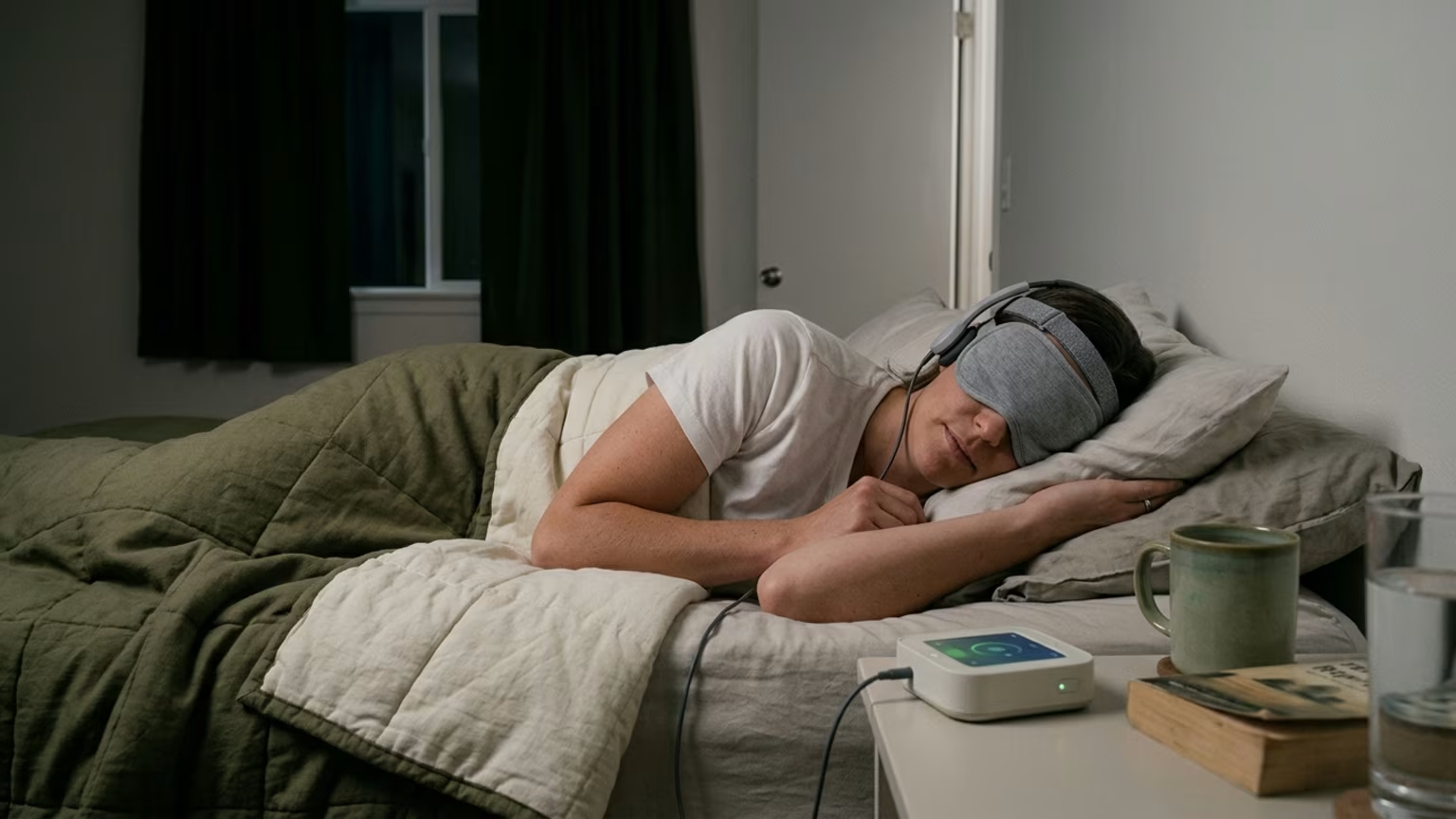
MIT researchers found that timed pink-noise bursts during sleep strengthen fluid waves tied to brain recovery. Here is what this means for veteran health.


A new study reveals how short, vigorous movement bursts and a faster walking pace can protect cardiovascular health and longevity for aging veterans.

The Army has moved its Holistic Health and Fitness program under the Maneuver Center of Excellence. Learn how this integration of sleep, nutrition, and strength impacts physical readiness doctrine.
Build better habits around strength, recovery, sleep, hormones and healthy aging with practical guidance for active military personnel and veterans.
Explore BattleVet