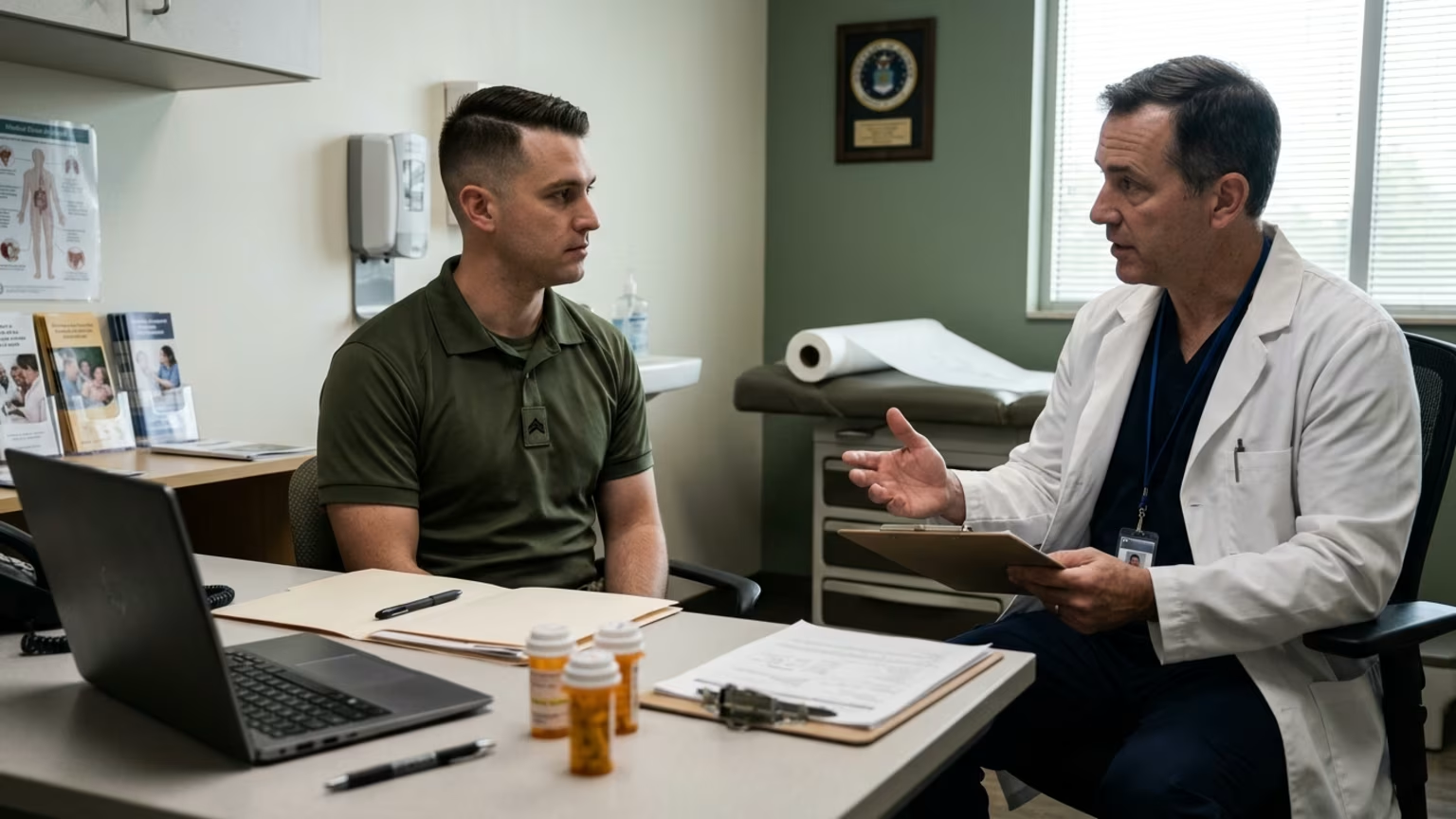

A review of the September 2026 DHA guideline for testosterone deficiency in male service members. Learn about new testing protocols, alternative treatments, and fertility preservation risks.





On September 17, 2026, the Defense Health Agency issued a new Clinical Practice Guideline for Testosterone Deficiency in the Male Service Member. Following this release, Military.com and the Associated Press reported on the strict testing protocols and specific fertility restrictions outlined in the military policy. Shortly after, on October 7, 2026, LADbible published a related public health article featuring medical commentary from Dr. Fraser Gordon. Gordon, an NHS consultant physician, detailed the fertility and monitoring risks of testosterone therapy while responding to a celebrity treatment account.
Celebrity stories can often prompt men to seek medical assessment rather than ignore negative health changes. LADbible reports that actor Josh Duhamel discovered low testosterone in his early 40s. Duhamel stated he now injects testosterone three times a week and feels stronger. However, Gordon clarified that a personal experience is not evidence that testosterone improves performance for people without a clinical indication.
Gordon emphasized that medical testosterone therapy is intended to replace inadequate hormones and bring levels into a normal range. He stated that clinical therapy is not the high-dose use associated with bodybuilding. Gordon also firmly noted that the treatment is not a magic anti-aging drug. Patients should not expect these therapies to improve joints or act as general performance enhancers.
Diagnosing a true hormonal deficiency is complicated by overlapping physical symptoms. Gordon noted that low energy, reduced libido, sexual function changes, and loss of strength require careful evaluation. These specific issues can result from poor sleep, chronic stress, or clinical obesity. Depression, thyroid disease, anemia, and medication side effects can also cause similar physical changes. Because of this extensive overlap, clinical assessment is essential to rule out other root causes.
The active military health policies now prioritize comprehensive evaluation over rapid prescription. The Defense Health Agency guideline sets rigorous diagnostic standards for service members. Military.com reports that the policy requires a structured symptom and risk factor assessment before any lab testing begins. This ensures that environmental factors and alternative medical diagnoses are considered first.
If a clinician determines that testing is indicated, the service member must undergo a highly specific laboratory protocol. The guideline requires two separate fasting blood draws on different mornings. These blood draws must take place between 7 a.m. and 10 a.m. to ensure accuracy. A diagnosis is never based on a single low reading or a general report of fatigue.
The military policy requires a testosterone level below 300 ng/dL on both fasting blood draws. These low laboratory results must also be accompanied by consistent clinical symptoms. Even if a service member meets these strict criteria, starting treatment is not a mandatory requirement. The Associated Press reports that an eligible service member is not required to begin testosterone replacement therapy.
Population-level screening of asymptomatic men remains a highly contested issue in the broader medical community. The Endocrine Society explicitly opposes the broad screening of asymptomatic individuals. The organization argues that current clinical evidence is insufficient to justify testing every patient. Furthermore, they state that screening asymptomatic men over 30 could produce many false positives while being expensive and time-consuming.
The September 2026 guideline has brought fertility directly into military testosterone discussions. Externally supplied testosterone can disrupt the natural biological signals that support regular sperm production. This hormonal disruption can lead to reduced sperm counts and potential testicular shrinkage. Therefore, preserving reproductive health is a primary concern for service members researching testosterone treatments and active therapies.
The Defense Health Agency policy actively restricts standard treatments to protect the reproductive health of personnel. Military.com reports that clinicians are directed not to initiate standard exogenous testosterone for service members who want children. This restriction also applies to active personnel who remain undecided about their future parenthood plans. Instead, the guideline directs these individuals toward human chorionic gonadotropin or off-label clomiphene citrate.
The military report notes that human chorionic gonadotropin is FDA-approved for hypogonadotropic hypogonadism in males. However, Gordon advises that all fertility intentions must be discussed clearly before any medical treatment begins. He warned that patients must address their desire for children prior to starting medication, rather than waiting six months into a protocol. Open communication ensures the clinician can select the safest appropriate path from the beginning.
While the military guideline utilizes alternative medications, the Endocrine Society raised significant clinical concerns on September 24, 2026. The Society cautions that human chorionic gonadotropin can suppress follicle-stimulating hormone. This specific hormone is absolutely necessary for normal sperm production. Consequently, the Society argues this treatment might reduce sperm production and fertility in some men with obesity-induced hypogonadism.
The timeline for recovering normal reproductive function is another major clinical consideration for young men. The Endocrine Society states that men receiving testosterone and human chorionic gonadotropin for two or more years face extended recovery risks. These patients may experience a delayed recovery of normal sperm and natural hormone production. These medical caveats demonstrate that alternative treatments still carry material risks for long-term reproductive health.
Before discussing hormone therapies, service members and veterans should document their daily health carefully. Patients should write down their exact physical symptoms, note when they began, and list any current medications or supplements. They should also document recent changes in sleep patterns, daily stress, or overall physical health. Finally, patients must decide whether having biological children now or later is a priority for their family.
Patients must also ask their medical providers about long-term supervision and routine safety reviews. The LADbible article reports that hormone treatments require regular monitoring to verify that levels remain appropriate and symptoms improve. While the article does not define a universal testing timetable, patients should secure a clear monitoring schedule from their doctor. This clinical oversight ensures that any negative side effects are caught and managed early.
Active-duty members should speak directly with their military clinicians to confirm how the new guideline applies to them. Veterans and former service members must take a different approach when consulting the healthcare choices for veterans governing their specific medical care. The sources reviewed focus exclusively on active-duty service members and defense policies. They do not establish that the Defense Health Agency guideline applies to veterans receiving care through the VA.
Veterans should ask their own care teams about applicable VA or civilian guidance rather than assuming active-duty rules apply. As the Defense Health Agency enforces stricter testing criteria and alternative prescribing paths, the long-term outcomes for service members will become clearer. Will ongoing research resolve the Endocrine Society concerns about prolonged human chorionic gonadotropin use, or will clinical protocols require further updates to protect hormone recovery for younger veterans?
Follow BattleVet for practical guidance on military and veteran health, strength, recovery, testosterone, sleep and healthy aging. Stay connected for new articles, research backed insights and clear information to help you stay capable for the years ahead.



A 2026 Curtin University report associates preexisting sleep disorders with persistent concussion symptoms. Learn how baseline rest impacts veteran head injury recovery.

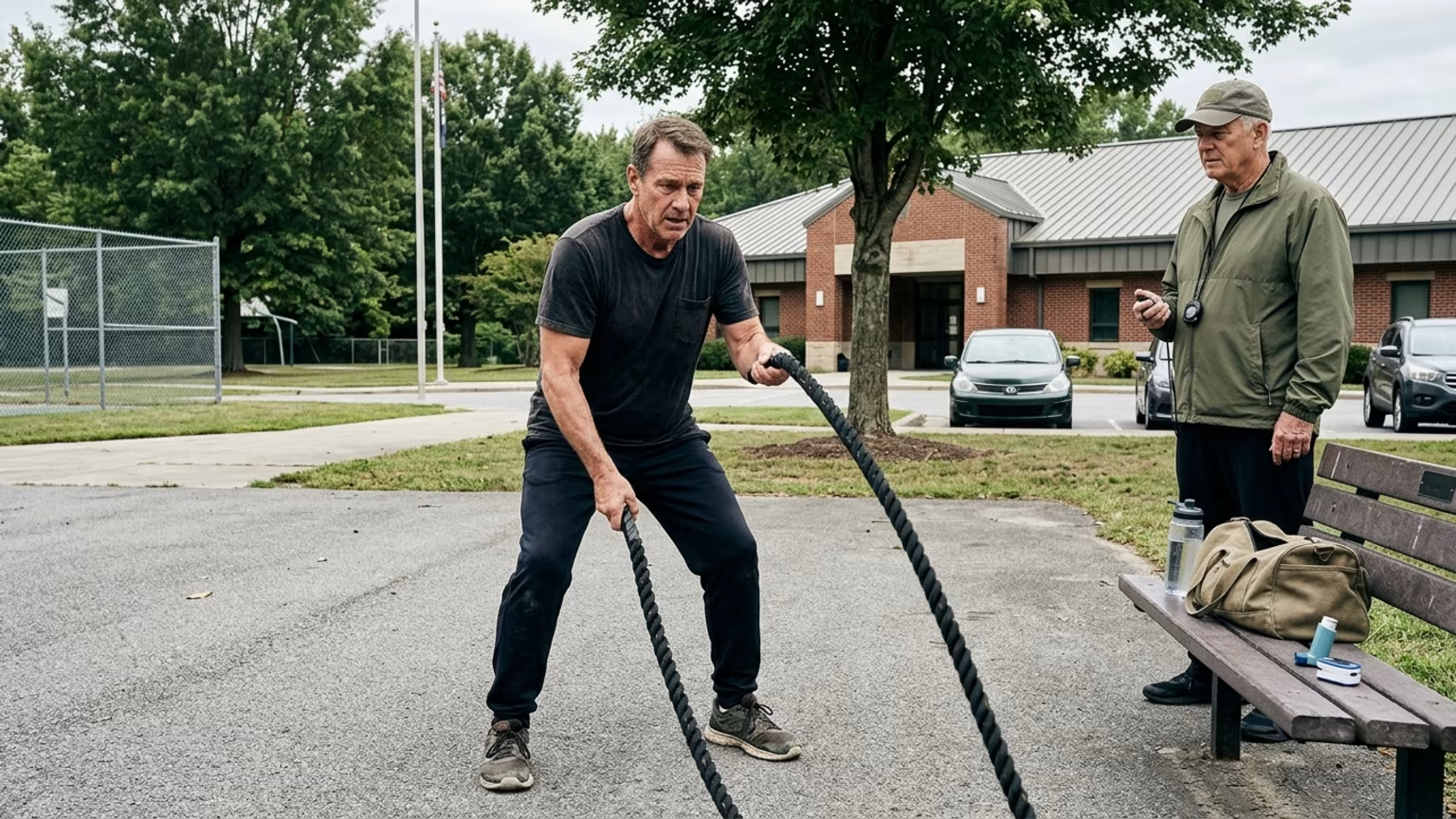
A pilot study evaluated a 12-week high-intensity interval training program for veterans with deployment-related respiratory disease. Review the early findings.

A planned October DEERS outage temporarily limits TRICARE eligibility verification. Learn how this cloud migration affects pharmacies and Open Season updates.
Build better habits around strength, recovery, sleep, hormones and healthy aging with practical guidance for active military personnel and veterans.
Explore BattleVet