

New European Association of Urology guidance outlines targeted early-morning testosterone, glucose, and lipid testing to properly evaluate men with symptoms.





In late 2026, the European Association of Urology updated its clinical guidance regarding the management of erectile dysfunction. The organization now formally recommends that clinicians evaluate total testosterone alongside glucose and lipids for men presenting with relevant symptoms. The guidance specifies using an early-morning, fasting total-testosterone measurement to ensure accuracy. This update provides a clear standard for medical providers assessing specific sexual health changes.
Clear diagnostic protocols are essential for active personnel and veterans managing their long-term capability. Health changes often prompt critical questions about hormone levels, physical performance, and systemic health. This new clinical guideline offers a structured path for addressing these specific symptoms without immediately assuming a single root cause. It anchors diagnostic testing in documented physical signs rather than arbitrary laboratory checks.
For active service members, this targeted evaluation model contrasts with broader military policy changes. The Defense Health Agency recently announced a structured symptom and risk-factor assessment for male service members. This mandatory screening applies to personnel aged 30 and older. The military guidance is implemented during periodic health assessments, entry processing, or annual physicals.
Younger service members also have clear avenues for health screening under the new defense policy. Personnel under 30 may be screened upon request or when a medical provider identifies relevant clinical indicators. The active-duty military screening policy is designed to monitor health regularly across a large, active population. It ensures that personnel maintain the physical readiness required for their daily operational duties.
Veterans navigating civilian healthcare or the VA system face a very different medical landscape. Veterans must actively report their symptoms to their providers to initiate these necessary evaluations. The active-duty safety net of mandatory annual assessments disappears after separation from the military. Understanding the European Association of Urology recommendations helps veterans structure effective conversations with their civilian doctors.
The transition out of military service requires individuals to take full ownership of their health monitoring. During active duty, personnel rely heavily on centralized defense systems to track their required medical appointments. After separation, veterans must independently schedule their health assessments and advocate for specific laboratory tests. Bringing established guidelines to these appointments ensures that veterans receive the same standard of rigorous medical care.
The updated guidance emphasizes that men presenting with erectile dysfunction need a comprehensive initial evaluation. Clinicians are instructed to take a detailed medical and sexual history before ordering diagnostic panels. Doctors must also conduct a focused physical examination to look for obvious physical indicators. Only after these steps should medical providers move forward with targeted laboratory testing.
During this initial evaluation, doctors must screen for possible hypogonadism symptoms to build a complete clinical picture. These common indicators include decreased libido, persistent drops in energy, and chronic fatigue. Patients experiencing these specific issues can learn more in our testosterone and hormones resources. Documenting these physical symptoms provides the necessary justification for ordering specialized hormone panels.
When a veteran reports changes in sexual function, the conversation often shifts entirely to testosterone levels. The updated clinical guidance clearly advises against this narrow, single-issue approach to men's health. Testing testosterone alone does not establish the definitive cause of erectile dysfunction in most patients. Instead, this diagnostic evaluation provides a vital opportunity to identify other significant medical conditions.
The European Association of Urology highlights strong associations between these symptoms and serious cardiovascular disease. The guideline specifically cites increased risks of coronary heart disease and stroke among symptomatic men. It also points to higher instances of atrial fibrillation and general cardiovascular mortality in this patient population. Because of this data, the organization discusses specific cardiovascular risk assessment for men presenting with predominantly vasculogenic symptoms.
Vasculogenic issues relate directly to blood flow and the overall structural health of the circulatory system. Identifying these broader circulatory patterns is crucial for long-term physical maintenance and systemic longevity. A simple hormone test might easily miss early physical signs of metabolic distress or cardiovascular decline. Finding these risk factors early aligns perfectly with proactive healthy aging strategies for military veterans.
By requiring a comprehensive laboratory evaluation, the guideline protects patients from incomplete or rushed diagnoses. The organization cautions that physical examination and laboratory testing may not identify the exact cause. Many men will complete the testing process without receiving a definitive explanation for their initial symptoms. However, the evaluation still serves its primary medical purpose by identifying dangerous comorbid conditions.
The clinical guideline outlines specific laboratory parameters designed to identify and treat reversible risk factors. These tests also help clinicians pinpoint modifiable lifestyle factors that heavily impact overall health. A standard clinical evaluation must include precise measurements of glucose, lipids, and total testosterone. This trio of tests forms the necessary baseline for understanding a patient's current metabolic state.
Hormonal testing requires strict laboratory conditions to yield accurate, highly usable clinical data for doctors. The organization mandates that total-testosterone measurements occur in the early morning. Patients must also be in a completely fasting state when they provide their blood sample. Standardizing the test conditions ensures that clinicians base their decisions on the most reliable baseline figures.
In some complicated cases, a single total-testosterone reading may not provide a complete clinical picture. The guideline notes that calculated or bioavailable free testosterone might sometimes be necessary for corroboration. This secondary step helps clarify borderline results or conflicting physical symptoms reported by the patient. It prevents medical professionals from making permanent health decisions based on one isolated laboratory value.
Metabolic testing is equally prioritized in the new clinical framework established by the medical organization. Fasting glucose or HbA1c and a comprehensive lipid profile are strongly recommended during this work-up. However, these specific metabolic tests are only necessary if they have not been assessed recently. The guideline sets a strict 12-month window for reusing previous glucose and lipid test results.
This operational 12-month rule prevents redundant testing while ensuring that recent metabolic data remains available. If a veteran had a lipid panel six months ago, the doctor can safely use those existing numbers. If the tests are older, the clinician must order new metabolic panels alongside the specific hormone tests. This structured approach saves time while rigorously maintaining high diagnostic safety standards.
The guideline also addresses the clinical use of more specialized, in-depth hormone panels. Routine testing for total PSA, prolactin, and luteinizing hormone should not be ordered universally for every patient. Instead, clinicians may consider these specific measurements strictly for selected patients based on individual signs. This selective testing model keeps the diagnostic process highly efficient and focused on actual clinical indicators.
These updated recommendations reinforce a highly targeted, symptom-led approach to physical health evaluations. This framework contrasts sharply with the broader concept of universal, population-level hormone screening for all men. The Endocrine Society has explicitly stated that current evidence is insufficient to support screening asymptomatic individuals. Broad testing across healthy populations often causes more clinical confusion than actual diagnostic clarity for physicians.
The Endocrine Society warns that screening men over the age of 30 is likely to yield many false positives. Running comprehensive hormone panels on asymptomatic individuals is highly expensive and time-consuming for healthcare systems. This expert consensus supports ordering diagnostic blood tests only when a patient presents with credible physical symptoms. The European Association of Urology echoes this logic by framing testosterone testing strictly as part of a symptomatic work-up.
For active service members, the Defense Health Agency policy requires formal discussions about specific treatment options. When hormone deficiencies are identified during screening, these treatment plans are carefully monitored by military medical professionals. However, a single low laboratory result does not automatically justify immediate medical intervention or long-term prescription medication. Readers focused on improving their physical baselines naturally can review our training and performance articles.
Veterans must understand that physical examinations often leave the precise origin of their symptoms temporarily unclear. The real medical value of these comprehensive tests lies in ruling out severe hidden comorbidities. Finding a reversible risk factor provides a clear, actionable target for improving diet and daily lifestyle habits. Treating an underlying lipid or glucose issue often improves overall physical function without requiring direct hormone replacement.
Modifying lifestyle factors based on accurate laboratory data remains one of the most effective strategies for aging veterans. Improving cardiovascular health through sustained physical fitness directly supports healthy endocrine function over time. Managing blood sugar levels through better nutrition also protects the circulatory system from chronic, long-term damage. These targeted physical interventions often restore baseline performance without exposing the patient to the side effects of hormone medication.
By clearly structuring the diagnostic process, these guidelines help veterans make highly informed healthcare decisions. Patients should never interpret a preliminary screening result as a final diagnosis or a standalone condition. A low hormone number is not an immediate reason to begin testosterone therapy without further medical assessment. Medical history, physical state, and laboratory numbers must all align before starting any therapeutic regimen.
Doctors and patients must work together collaboratively to identify the most likely cause of physical changes. The European Association of Urology framework ensures that medical providers look closely at the entire metabolic system. Navigating these health conversations correctly ensures you address the right physical problems safely and effectively. This methodical approach protects veterans from unnecessary medications and helps maintain long-term physical capability.
As clinical guidance continues to refine how we test and manage hormonal health, the medical focus remains on comprehensive evaluations. Will future updates to civilian and veteran healthcare systems universally adopt these exact cardiovascular and metabolic screening standards for all symptomatic patients?
Follow BattleVet for practical guidance on military and veteran health, strength, recovery, testosterone, sleep and healthy aging. Stay connected for new articles, research backed insights and clear information to help you stay capable for the years ahead.


An ABC investigation highlighted concerns over DVA-funded medicinal cannabis and esketamine prescribing for veterans, leading to tightened rules and oversight.

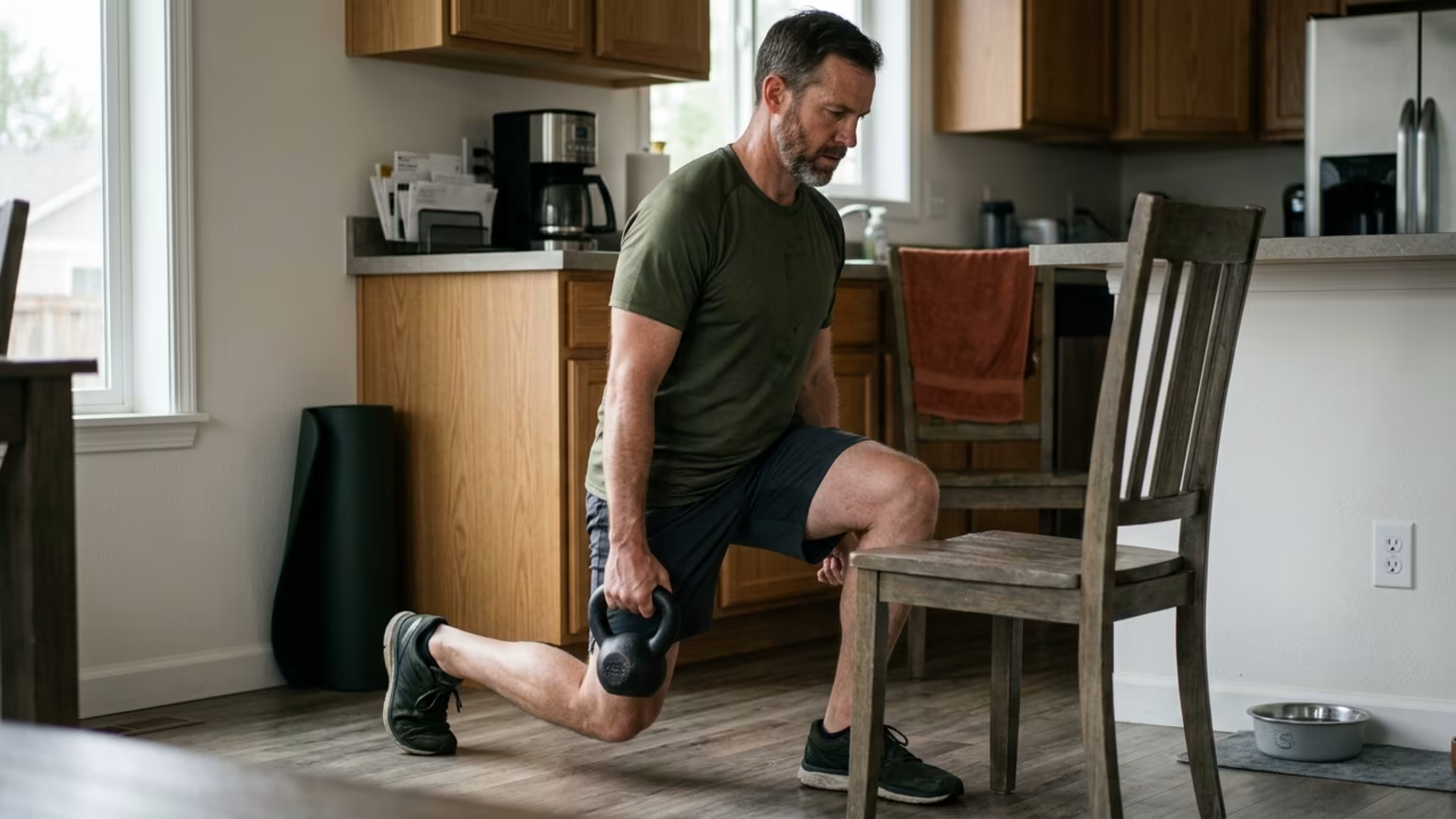
Recent reports highlight a 10-minute daily resistance habit for adults over 40. Learn how brief fitness routines compare to federal strength guidelines.

A September 2026 review shows pre-workout caffeine improves endurance but can degrade sleep quality, requiring careful timing for military and veteran health.
Build better habits around strength, recovery, sleep, hormones and healthy aging with practical guidance for active military personnel and veterans.
Explore BattleVet