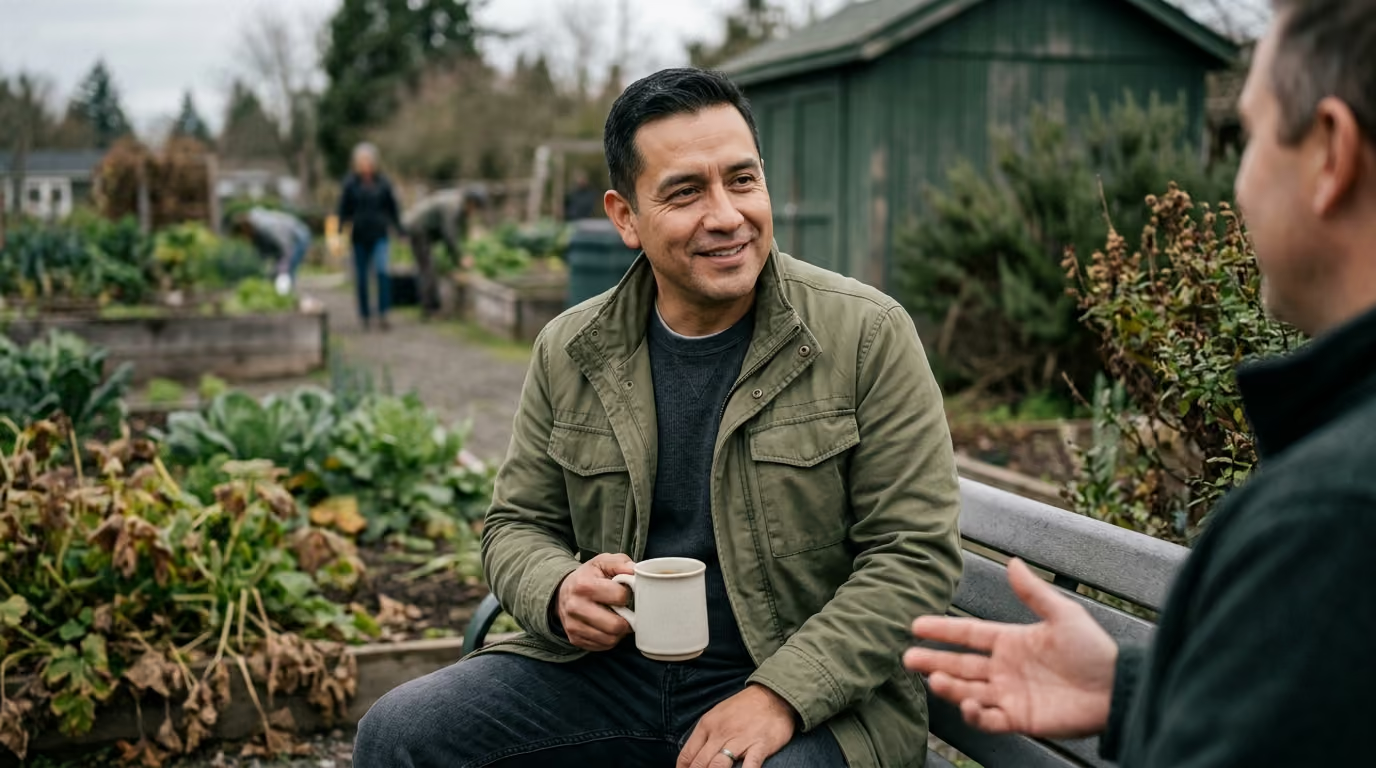

Transitioning veterans often believe they must abandon military identity, yet integrating past values builds far greater psychological resilience and health.





If you are in immediate danger, call 911. For 24/7 support, call or text 988 and press 1 for the Veterans Crisis Line, or text 838255.
Many transitioning service members assume that losing military structure is what disrupts their recovery and sleep. In reality, strict adherence to old operational routines often masks the deeper absence of clear personal direction. You wake up early, complete a rigorous morning training session, and eat clean meals. Despite this discipline, your evening rest remains fragmented and your resting heart rate stays elevated. The underlying challenge is rarely a breakdown in physical work ethic. It is an unresolved shift in why you get out of bed in the morning.
Purpose after military service is not an abstract slogan or a demand to move on. It is a modifiable biological and psychological anchor that organizes daily behavior, reduces perceived stress, and supports long-term recovery.
Developing purpose and meaning provides a practical framework for navigating post-service life. Decades of health research demonstrate that veterans with clear aims and strong personal values experience lower rates of psychological distress, better sleep patterns, and improved physical health outcomes. This guide provides an evidence-based roadmap for rebuilding your life direction, integrating your military background into civilian life, and protecting your long-term health.
Understanding how to build direction after leaving the military requires clear definitions. Popular culture often treats purpose as a single lightning bolt of inspiration or a permanent career calling. Clinical science views meaning as a multifaceted psychological state that individuals build through daily action and reflection.
Psychological research defines meaning in life through three distinct but interconnected components. A veteran can maintain one of these dimensions while experiencing a deficit in another.
A veteran may have clear goals such as completing a degree, yet feel that their daily efforts lack broader significance. Another individual may feel valued by their family, but struggle to create a coherent narrative about their combat deployments. Separating these three components prevents confusion and allows you to target specific areas of your mental recovery.
Service identity encompasses your rank, occupational specialty, unit history, tactical competence, and membership in a mission-driven culture. For many former service members, this identity is the most structured and validated self-concept they have ever experienced. When transition occurs, some civilian advice mistakenly suggests putting the uniform away and forgetting the past entirely.
Forced erasure of military identity rarely succeeds. It often leads to resentment, alienation, and social withdrawal. A healthier psychological strategy is identity integration. Integration means deciding which military values, technical skills, and leadership habits remain useful, while retiring operational patterns that no longer fit civilian life. You do not need to discard your military past to build a productive future. You simply expand your identity so that being a veteran is one major chapter rather than the entire book.
Values represent the enduring principles that describe how you want to interact with the world. Examples include integrity, loyalty, physical courage, discipline, compassion, and accountability. Unlike goals, which can be completed and checked off a list, values serve as a continuous compass.
During military service, values often become fused with rigid operational rules. You might inherit beliefs such as:
Transition requires auditing these rules. The underlying value of reliability remains useful. The rigid rule that you must never ask for support damages your health and shortens your lifespan. Clarifying your core values allows you to maintain high standards without remaining trapped in unsustainable operational habits.
Spirituality in post-service life does not require formal religious affiliation. The Veterans Health Administration Whole Health framework defines spirituality as an individual experience of relating to something greater than the self. It serves as an active source of meaning, awe, and moral grounding.
For some veterans, this connection is cultivated through traditional faith communities and religious practice. For others, it is found in the natural world, philosophy, creative arts, scientific study, or dedicated community service. Existential reflection helps you process the complex moral questions that often arise after military service. Cultivating a connection to a larger whole provides perspective when daily civilian problems seem trivial or frustrating.
The relationship between life purpose and health outcomes is supported by extensive epidemiological and clinical research. Purpose is not merely a subjective feeling of satisfaction. It functions as an active contributor to physical resilience, cardiovascular health, and neurological longevity.
Large cohort studies have evaluated the specific impact of purpose within military and veteran populations. Data from the National Health and Resilience in Veterans Study, which surveyed 4,069 veterans, revealed important correlations between purpose and psychological health:
Importantly, data from the Veteran Metrics Initiative demonstrated that 89.5% of post-9/11 veterans reported high levels of meaning during their first three years post-separation. This finding challenges the widespread media narrative that all veterans are permanently damaged or directionless. While transition presents acute friction, the vast majority of former service members possess the psychological capacity to build meaningful civilian lives.
The physiological benefits of life purpose extend directly into physical longevity and cardiovascular disease prevention:
When reviewing health literature, you must distinguish between observational associations and causal proof. High purpose correlates with better health outcomes, but purpose alone does not instantly cure medical conditions.
People with high purpose frequently engage in healthier daily behaviors. They maintain better nutrition, exercise more consistently, consume less alcohol, and seek medical care earlier. Furthermore, underlying physical illnesses or untreated chronic pain can reduce an individual's sense of purpose. Purpose should be viewed as one vital pillar within a complete health system, working alongside medical care, sleep hygiene, and evidence-based clinical therapy.
How does an internal sense of purpose alter physical health and daily recovery? The connection lies in how the brain processes perceived stress, regulates hormones, and structures daily biological rhythms.
The primary mechanism connecting purpose to physical health is cognitive appraisal. When faced with an unexpected obstacle, your brain rapidly evaluates whether the stressor represents an insurmountable threat or a manageable challenge.
Veterans with low purpose often view minor civilian disruptions as chaotic, random, and irritating. This negative appraisal triggers a prolonged sympathetic nervous system response, flooding the body with cortisol and catecholamines. Conversely, a clear sense of purpose provides context. Adversity is interpreted as an expected part of pursuing a long-term goal. This challenge-oriented mindset moderates the nervous system, reducing physiological wear on the cardiovascular and immune systems.
One of the greatest challenges for former service members is evening cognitive arousal. When you lack a clear direction for the future, your brain attempts to fill the void at night. You may find yourself mentally reviewing past deployments, ruminating over lost relationships, or worrying about finances.
Research on cognitive patterns indicates that higher meaning in life reduces repetitive negative thinking. When your daytime activities align with clear values, your mind requires less evening processing to resolve internal conflicts. This reduction in cognitive load makes it easier to transition into parasympathetic dominance. As a result, you fall asleep faster, experience fewer awakenings, and achieve more deep slow-wave sleep. If you want to explore the mechanisms of nighttime physical repair, read our detailed guide on sleep and physical recovery.
Biological systems thrive on predictability. Your body operates on circadian rhythms that govern hormone production, body temperature, immune function, and cellular repair. Military life enforced these rhythms through strict accountability, scheduled physical training, and mandatory duty hours.
Leaving the military removes this external scaffolding. Without structured commitments, wake times drift, meals become irregular, and evening light exposure increases. A chosen purpose creates internal scaffolding. When you have meaningful work, family responsibilities, or community projects, you naturally wake at consistent hours, seek morning sunlight, and eat on a predictable schedule. These consistent habits synchronize your central circadian clock, reinforcing physical resilience and vitality.
Building purpose does not require reinventing the wheel. Established medical and psychological institutions have developed systematic models to help individuals construct meaningful lives after profound disruption.
The Veterans Health Administration developed the Whole Health model to shift clinical medicine from a narrow focus on illness to a comprehensive focus on personal life goals. Instead of solely asking what is wrong with you, the framework asks what matters most to your life.
The system organizes health around eight domains of self-care:
By addressing each domain, you ensure that your recovery addresses every facet of your daily life. You can read more about self-directed health strategies in our evidence-based research library.
The CHIME model is a widely recognized framework in psychiatric rehabilitation and community mental health. It highlights five active processes that support long-term recovery:
The CHIME model emphasizes that purpose is not merely an internal psychological feeling. It is reinforced by your real-world relationships, community access, financial stability, and personal autonomy.
A dangerous mistake transitioning service members make is concentrating their entire identity into a single pursuit. In uniform, your mission, physical fitness, social circle, and profession were bundled together. If you attempt to replace that unified structure with a single civilian job or fitness goal, you remain vulnerable to sudden disruption.
If your entire sense of self-worth relies solely on your physical performance, an unexpected joint injury or chronic pain flare can destroy your mental stability. If your purpose relies entirely on a specific corporate job, a company restructuring leaves you directionless.
In engineering and military planning, single points of failure are systematically eliminated. You should apply this same risk-mitigation principle to your post-service life by building a diversified purpose portfolio across several independent domains.
A robust post-service purpose portfolio distributes your time and energy across five distinct pillars:
You do not need to max out all five pillars every week. However, establishing a baseline presence in each area ensures that if one pillar faces disruption, your overall identity and motivation remain stable.
Transitioning from abstract philosophy to daily behavioral change requires a structured, actionable system. Use the following four-step process to clarify your personal values and translate them into measurable daily actions.
Review the primary areas of human life and select three to four domains that hold genuine personal significance for you right now:
Choose areas that you genuinely value, rather than domains you feel socially pressured to pursue.
For each chosen domain, write down your underlying assumptions. Ask yourself whether your beliefs reflect timeless principles or rigid operational rules that are actively harming your civilian relationships and health.
To turn updated values into practical daily behaviors, execute the P.A.C.E. method over a two-week period:
Do not judge your transition purely on subjective feelings of happiness. Happiness fluctuates based on acute stressors, poor sleep, or temporary setbacks. Instead, monitor measurable indicators of stability and engagement:
For more perspectives on maintaining functional health as you age, read our resource on healthy aging strategies.
Rebuilding purpose is rarely a clean, linear process. Veterans encounter distinct transitional scenarios that require specific problem-solving approaches.
Navigating post-service life requires avoiding common psychological traps that derail long-term resilience and physical health.
Many veterans spend years waiting for a civilian career that matches the absolute camaraderie and life-or-death intensity of military deployments. This search often leads to chronic job-hopping, dissatisfaction, and cynicism. Civilian work rarely provides the all-encompassing gravity of combat operations. It is completely normal for a civilian job to simply be an honest way to earn a living, develop skills, and provide for your household. You can find your deeper purpose through family, hobbies, community leadership, and personal study.
True resilience does not mean putting on a fake smile, reciting empty motivational quotes, or pretending that serious physical injuries and grief do not exist. Suppressing legitimate sadness, anger, or moral conflict increases systemic physiological stress and worsens mental health outcomes. Authentic meaning-making requires looking honestly at painful past events, acknowledging real losses, and choosing to take constructive action despite emotional discomfort.
Having a clear sense of purpose is a powerful health asset, but it is not a replacement for evidence-based medical and psychological care. If you are experiencing severe clinical depression, debilitating panic attacks, chronic insomnia, or substance dependency, philosophical reflection alone will not resolve the underlying neurochemical and biological dysregulation.
Engage qualified healthcare professionals for medical and psychological issues. Use values clarification and purpose building to support, rather than replace, your clinical treatment plan. If you want to better understand broader post-service adjustments, explore our articles on navigating veteran life.
In an operational military unit, communication is direct, urgent, and hierarchical. Personal vulnerabilities are set aside to accomplish the immediate objective. If you bring this exact operational framework into your home, it frequently causes friction with your spouse and children. Civilian family life requires active listening, patience, emotional safety, and collaborative problem-solving. Purpose within your family involves creating a secure environment where your loved ones feel heard, supported, and valued.
Rebuilding personal direction is a gradual process that generally takes twelve to thirty-six months. Longitudinal data from the Veteran Metrics Initiative shows that while initial transition friction is common, nearly 90% of veterans re-establish high levels of meaning within three years post-separation. Viewing transition as a multi-year development period prevents panic and unrealistic expectations.
When severe physical injuries limit your output, shift your focus from physical execution to intellectual, creative, and relational domains. You can pursue remote learning, learn creative skills, manage organizational projects, or mentor younger individuals. Your value as a human being is not defined solely by physical output.
Yes. Clinical and sociological research demonstrates that secular sources of awe, connection, and ethics provide psychological benefits comparable to formal religious practice. Immersing yourself in wilderness environments, practicing stoic or secular philosophy, creating artistic works, or engaging in local civic action all stimulate the psychological and physiological benefits associated with meaning and purpose.
Normal transition stress typically involves situational frustration, temporary uncertainty about career options, and missing the military community. However, your capacity to experience joy, engage in basic self-care, and complete daily tasks remains intact. Clinical depression involves persistent low mood lasting more than two weeks, severe sleep disturbances, feelings of worthlessness, an inability to experience pleasure in any activity, or thoughts of self-harm. If you experience these symptoms, schedule an evaluation with a qualified physician or mental health professional immediately.
Building a meaningful life after military service is an active, ongoing discipline of aligning your daily actions with your deepest values.
Follow BattleVet for practical guidance on military and veteran health, strength, recovery, testosterone, sleep and healthy aging. Stay connected for new articles, research backed insights and clear information to help you stay capable for the years ahead.


Build better habits around strength, recovery, sleep, hormones and healthy aging with practical guidance for active military personnel and veterans.
Explore BattleVet