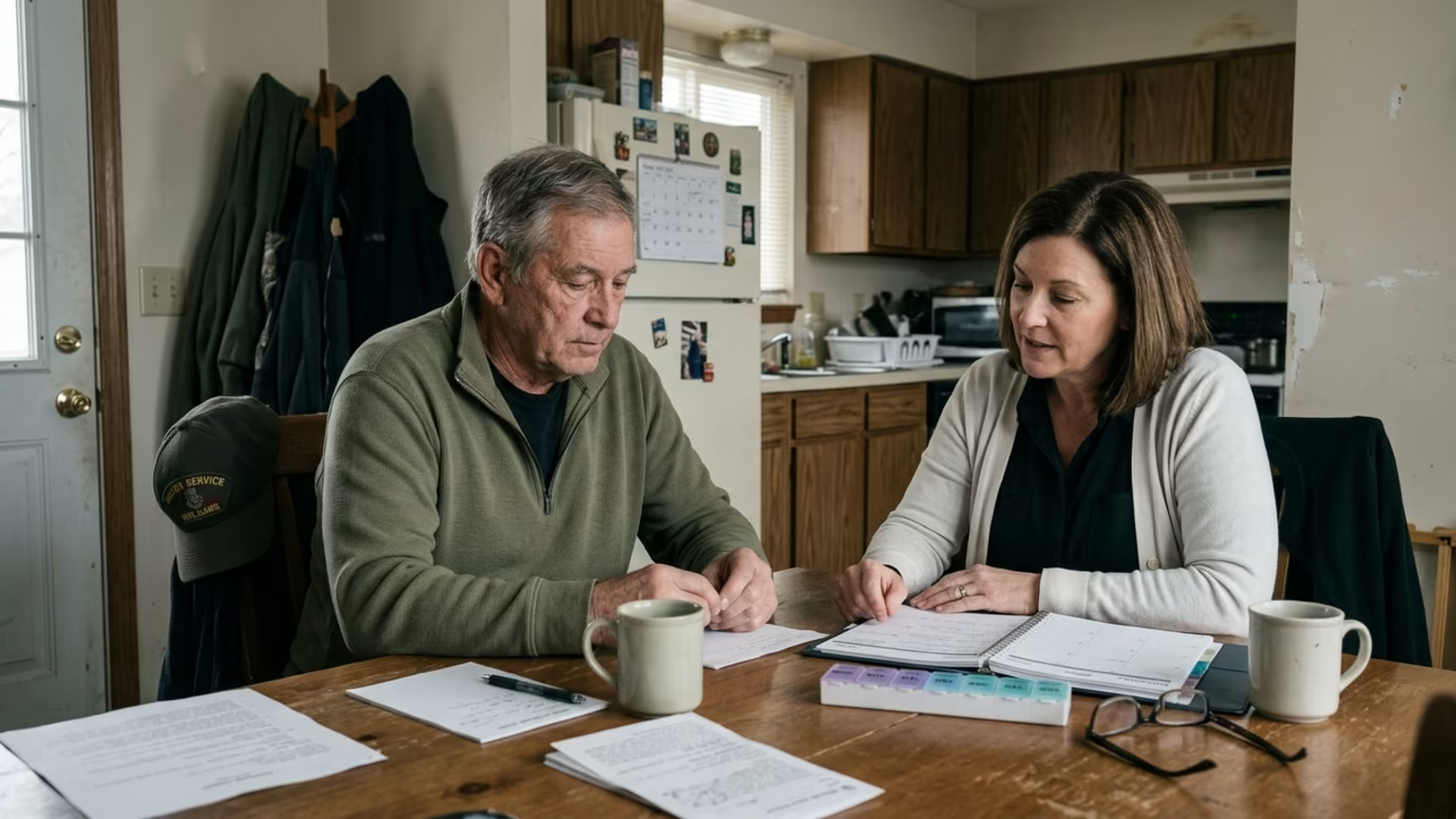

A large veteran study links PTSD and documented social needs to later cognitive impairment, reinforcing the value of connected care planning.





On October 12, 2026, MedicalXpress reported on a JAMA Network Open study by Feiyun Ouyang and colleagues linking PTSD and documented social needs with later cognitive outcomes in U.S. veterans. Veterans with both PTSD and social needs had the highest adjusted hazard of the study’s combined outcome: mild cognitive impairment, Alzheimer disease, or Alzheimer disease-related dementia.
The findings bring housing stability and food access into a conversation often centered on symptoms and diagnoses. In this study, health-related social needs included housing instability, food insecurity, and financial problems. These were part of the health-record information researchers examined alongside PTSD.
For veterans and their families, the practical implication is that cognitive-health planning should make room for everyday circumstances as well as mental-health concerns. Questions about memory and thinking belong alongside discussions about PTSD symptoms and unmet needs. These subjects do not have to be handled as unrelated concerns.
For active personnel, the relevance is a longer-term care-planning question rather than an immediate performance recommendation. For veterans already receiving care, the findings reinforce the value of discussing social barriers with the healthcare team.
BattleVet connects physical capability with long-term health. Its coverage of coordinated care for veterans provides related context for thinking about needs that cross clinical and social-service boundaries.
According to a summary of the study, researchers examined a retrospective cohort of 3,817,970 U.S. veterans. Participants were aged 55 to 100 and had no prior diagnosis of mild cognitive impairment, Alzheimer disease, or Alzheimer disease-related dementia.
The mean age was 70.3, and 96.0% of participants were male. Over a median follow-up of 8.84 years, 270,282 veterans developed the combined cognitive outcome. That represented 7.1% of the cohort.
The researchers compared veterans with PTSD or documented social needs against veterans with neither. The study summary reported these adjusted comparisons for the combined cognitive outcome:
These figures describe comparisons between groups over follow-up. They should not be added together or read as the percentage of veterans who developed a cognitive condition. The 7.1% figure describes how much of the full cohort developed the combined outcome; the adjusted comparisons describe differences between exposure groups.
The clearest finding is the ordering of those groups. Veterans with both documented PTSD and social needs had the highest adjusted hazard compared with veterans with neither.
These are observational associations. They do not establish that PTSD or unmet social needs cause dementia, or that treating either will prevent it. The combined outcome also should not be presented as a separate causal finding for each diagnosis or as an individual veteran’s forecast.
Documentation is another limitation. MedicalXpress reported that researchers used natural language processing to identify social needs in clinical notes and other health-record narratives. Researcher Hong Yu cautioned that consistency with structured data “does not eliminate potential bias” in narrative documentation.
The cohort’s age and sex distribution also matter. Its figures should not be assumed to apply equally to younger veterans, women veterans, or people outside the VA healthcare population.
The practical shift is toward a more complete care conversation. The research supports discussing cognitive concerns, PTSD symptoms, and unmet social needs together with a qualified healthcare professional. It does not establish a new diagnostic testing schedule or physical-performance protocol.
The research supports a discussion that covers:
This is a way to organize relevant information for care planning. It is not a self-diagnosis checklist. Decisions about cognitive evaluation or treatment remain matters for qualified healthcare professionals who can consider the person’s circumstances.
The important distinction is between reporting a concern and deciding what it means. A veteran does not need to establish a connection between a memory concern and a housing problem before mentioning both. The study supports making space for both subjects in the clinical conversation.
BattleVet’s guide to brain health across veteran life offers related educational context for this broader view of cognitive aging.
A separate study published in the Journal of General Internal Medicine examined veterans’ views of social-risk and needs screening. Participants found screening acceptable and recommended clear explanations about why the questions mattered. They also wanted disclosures connected to appropriate resources.
Their recommendations included:
That feedback gives care teams a practical direction. Asking about food or housing needs is only part of the process. Participants also wanted to understand how an answer would connect them with help and whom they could contact afterward.
The service-design lesson is straightforward: a screening process should have a clear route from disclosure to support. The goal is not simply to record a social need. It is to make the next connection understandable and usable.
BattleVet’s resource on social conditions and veteran aging provides additional educational background on this part of long-term health planning.
VA programs offer concrete examples of what a referral can involve. VA Memphis reports that its food hub provides groceries and supportive resources. Its services include same-day social-work referrals for veterans experiencing housing insecurity.
VA also describes housing support through its Supportive Services for Veteran Families and Grant and Per Diem programs. These programs fund services that include preventing housing loss, helping veterans find housing, and providing transitional housing with supportive services.
These examples give a practical meaning to the phrase “address social needs.” It can mean a connection to food access or a social worker. It can also mean a referral to a housing-support program rather than leaving the issue as a note in the record.
Veterans facing food or housing insecurity can ask their VA care team about locally available support. The useful care-planning questions concern which resource fits the need and who will serve as the point of contact. That approach follows the screening participants’ emphasis on clear access routes and practical follow-through.
These services address the needs being disclosed. Their role in this article is to show what support and referral can look like, rather than to present them as cognitive treatments.
This study gives researchers a clear group for further attention: older veterans with both PTSD and documented social needs. It also gives care planners a reason to consider mental health and social circumstances together when discussing cognitive concerns.
A useful next research step would be to examine care approaches that connect these areas and track cognitive outcomes over time. Research could also assess whether screening produces meaningful resource connections, reflecting the priorities veterans described in the screening study.
Will future veteran-health research show whether connecting PTSD care with effective food, housing, and financial support changes long-term cognitive outcomes?
Follow BattleVet for practical guidance on military and veteran health, strength, recovery, testosterone, sleep and healthy aging. Stay connected for new articles, research backed insights and clear information to help you stay capable for the years ahead.


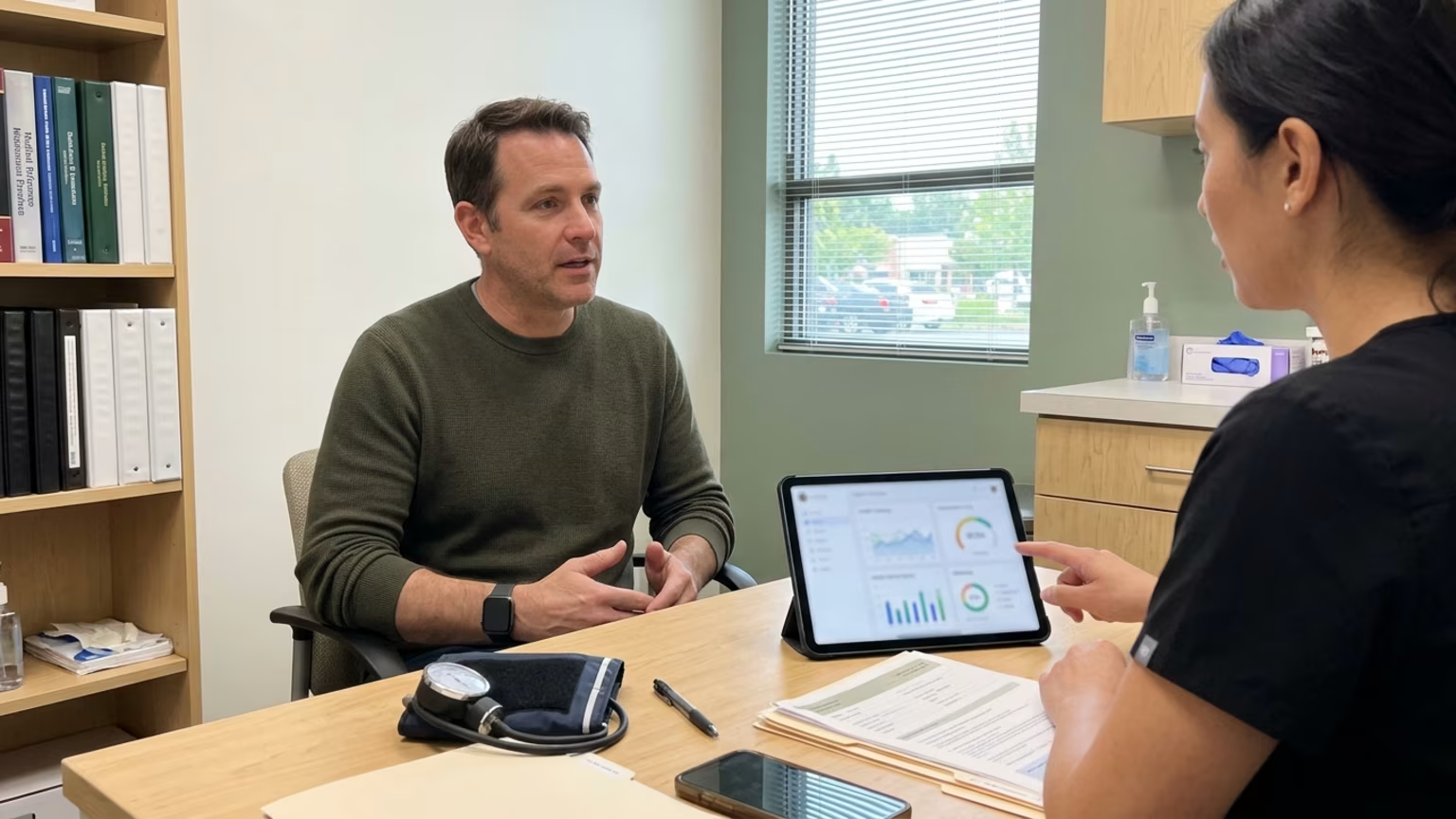
A review of the 2026 Defense Health Agency testosterone screening policy for male service members alongside InCare’s safety guide covering TRT risks and monitoring.

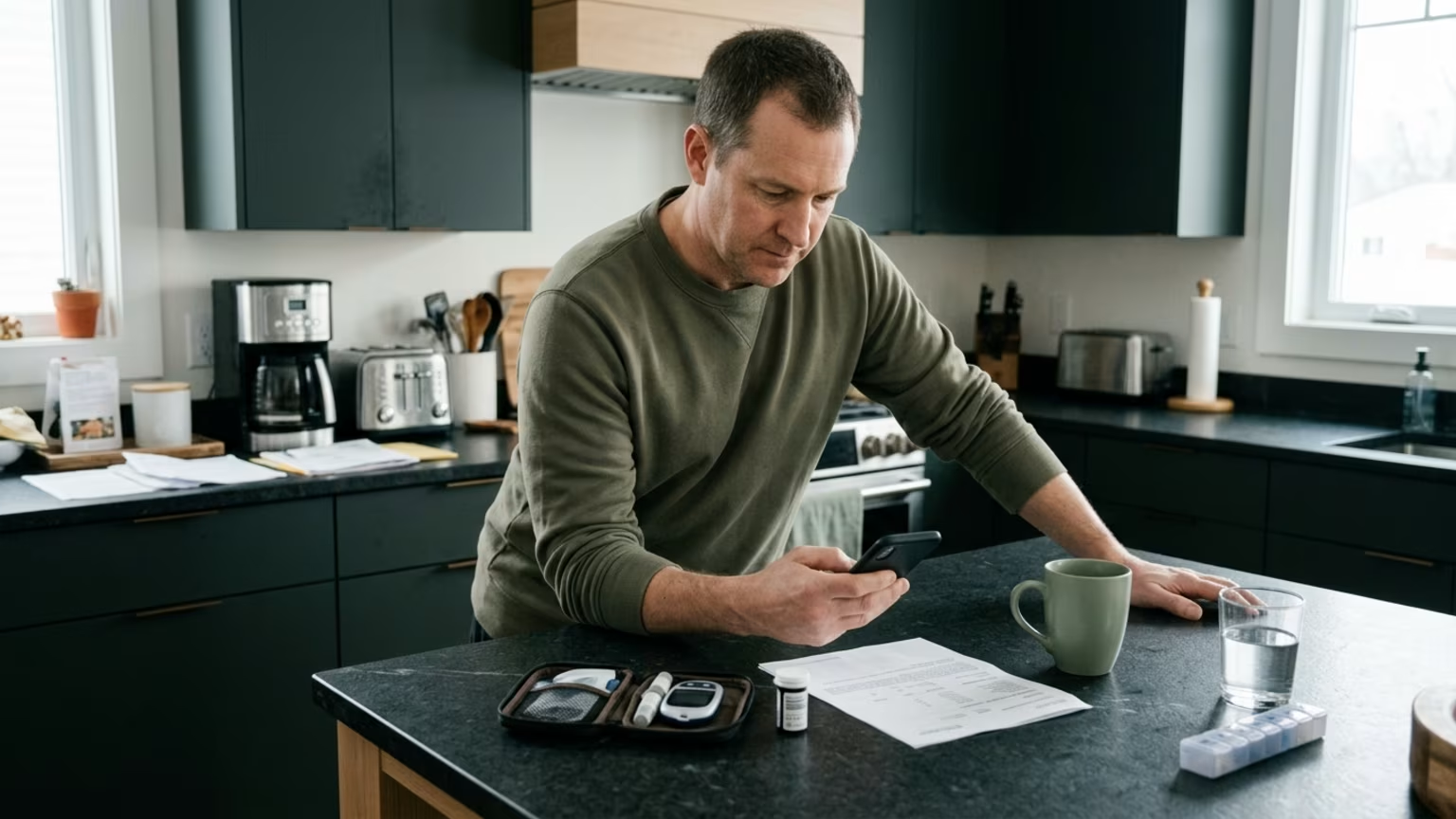
A multi-year study links modest blood sugar increases to declining erectile function, reinforcing the value of metabolic health alongside hormone evaluation.

Learn how to navigate VA community care referral delays, access standards, and individual eligibility following the October 2026 Colorado Springs roundtable.
Build better habits around strength, recovery, sleep, hormones and healthy aging with practical guidance for active military personnel and veterans.
Explore BattleVet