

ErythroMer's reported storage design could matter for military care. An academic review still lists it as preclinical, with human evidence ahead.





On October 12, 2026, The Economic Times reported that KaloCyte and University of Maryland, Baltimore researchers were developing a DARPA-supported synthetic blood product described as nearing human trials. A 2026 review in Protein & Cell identifies the product as ErythroMer, a hemoglobin-based oxygen carrier.
The report puts a practical military-medicine question in focus: could an oxygen-carrying product be stored without refrigeration and prepared quickly for remote emergencies? Its reported design targets battlefield care, disaster response, and other settings where blood resupply is difficult. The news concerns progress toward testing that idea.
The design described by The Economic Times targets room-temperature storage and rapid preparation. Its appeal is logistical: changing how a product is carried and made ready for emergency care. Storage and preparation are different demands from demonstrating what the product does for an injured patient.
University of Colorado Anschutz coverage provides a useful comparison. It describes fresh-frozen plasma as requiring frozen storage and thawing. It also reports research into drone delivery of blood products. That research concerns conventional blood products rather than ErythroMer.
The comparison points to different parts of the supply problem. Drone-delivery research asks how blood products can reach care sites. Shelf-stability research asks how a product can be stored and made ready once it is there. For military readers, that distinction prevents a delivery advance from being mistaken for a new treatment.
For active personnel, the material question is whether emergency blood support can reach a casualty and be prepared where care is needed. A product designed for room-temperature storage is relevant to that question. The intended benefit is another resupply option, not simply a new name for existing blood products.
For veterans, the report's stated uses beyond the battlefield are important. Disaster response and remote emergency care connect this research to healthcare outside active service. The story belongs in BattleVet's coverage of military health. Its focus is access to emergency care rather than a change to everyday fitness or recovery.
Read the project's timeline, funding, and preparation claims as different kinds of information. The Economic Times supplies the development history and reported performance benchmarks. The Protein & Cell review adds the funding context and identifies the technology.
The Economic Times reports that the freeze-dried product is intended to remain stable for years at room temperature and be reconstituted in under two minutes. These are the headline logistics claims. The useful distinction is between long-term storage and preparation at the point of care: each addresses a separate operational need.
The Economic Times describes more than 12 years of development. Separately, the Protein & Cell review reports that DARPA announced a $46 million grant in 2023 for a stable, field-deployable blood substitute centered on ErythroMer. The funding figure describes support for development rather than a purchase of an available product.
According to The Economic Times' account of researchers' statements, DARPA's program required the product to stabilize blood pressure, deliver oxygen to tissues, and support clotting. Researchers reportedly said it had met nearly all benchmarks in preclinical testing.
Those benchmarks explain why the project is broader than a packaging innovation. Storage and preparation matter because the product is intended to support emergency care. The functional requirements keep attention on what it is designed to do after preparation.
The Economic Times story is secondary reporting. It describes researchers' performance statements rather than presenting detailed trial data. That matters when interpreting the preparation claims and the account of preclinical benchmarks.
The 2026 Protein & Cell review still lists ErythroMer as preclinical and says an investigational new drug filing was scheduled before 2027. A scheduled filing is not a completed filing. The reporting does not document an application clearance or a human trial start, and it does not establish authorization for routine military use.
The reported preclinical benchmark results do not establish clinical benefit or show that ErythroMer can replace donated blood. They describe progress within the development program. Human safety and effectiveness remain the questions that the proposed move toward clinical testing is intended to address.
The Protein & Cell review also describes unresolved safety concerns in the broader hemoglobin-based oxygen-carrier field. Earlier products raised concerns about vascular effects and adverse clinical outcomes. It says no hemoglobin-based oxygen carrier has been commercialized as a safe blood substitute. Those class-level findings justify scrutiny but are not demonstrated harms from ErythroMer.
For service members and veterans, this is a research update rather than a reason to change personal care. No new diagnostic testing or physical training protocol follows from the report. Individual medical decisions remain a matter for qualified clinicians.
For medics and emergency clinicians, the supported interpretation is to keep product-development news separate from authorized treatment options. The report offers context about a possible future supply tool. It provides no basis for replacing current transfusion practice with ErythroMer.
BattleVet connects performance with long-term health, but this story concerns emergency capability rather than a performance intervention. Our research resources provide a place to read related health topics in that broader context. The immediate decision is about how to interpret the news, not how to use the investigational product.
Public documentation of clinical-trial authorization would be a meaningful next milestone. Human safety and efficacy results would then provide a basis for assessing the product as an emergency-care option. Those are distinct checkpoints: permission to investigate is one development step, while evidence about patients addresses a different question.
For future military medicine, the relevant evidence needs to connect practical handling with patient care. A storage claim answers a logistics question. Human results would address whether the product's intended functions translate into useful care, and how its safety compares with the concerns described in the broader field.
For veteran healthcare, the wider relevance lies in the disaster and remote-emergency settings named in the report. The long-term value of the project would be an additional emergency supply option across those settings. The standard for judging progress should stay tied to documented clinical milestones rather than the label "synthetic blood."
Will future human trials show that ErythroMer's room-temperature storage and rapid preparation can translate into a safe, effective emergency-care option for service members and veterans?
Follow BattleVet for practical guidance on military and veteran health, strength, recovery, testosterone, sleep and healthy aging. Stay connected for new articles, research backed insights and clear information to help you stay capable for the years ahead.


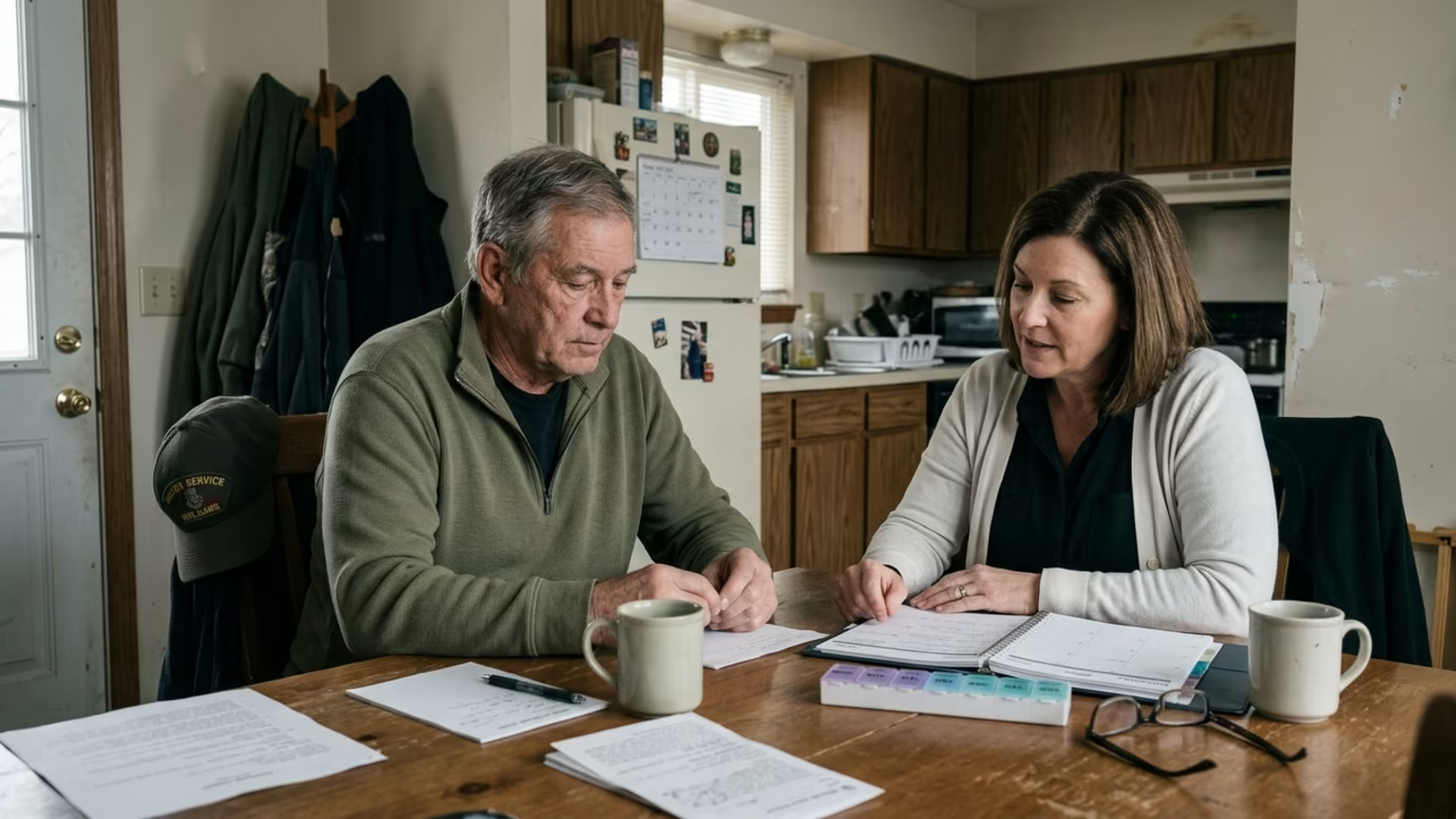
A large veteran study links PTSD and documented social needs to later cognitive impairment, reinforcing the value of connected care planning.

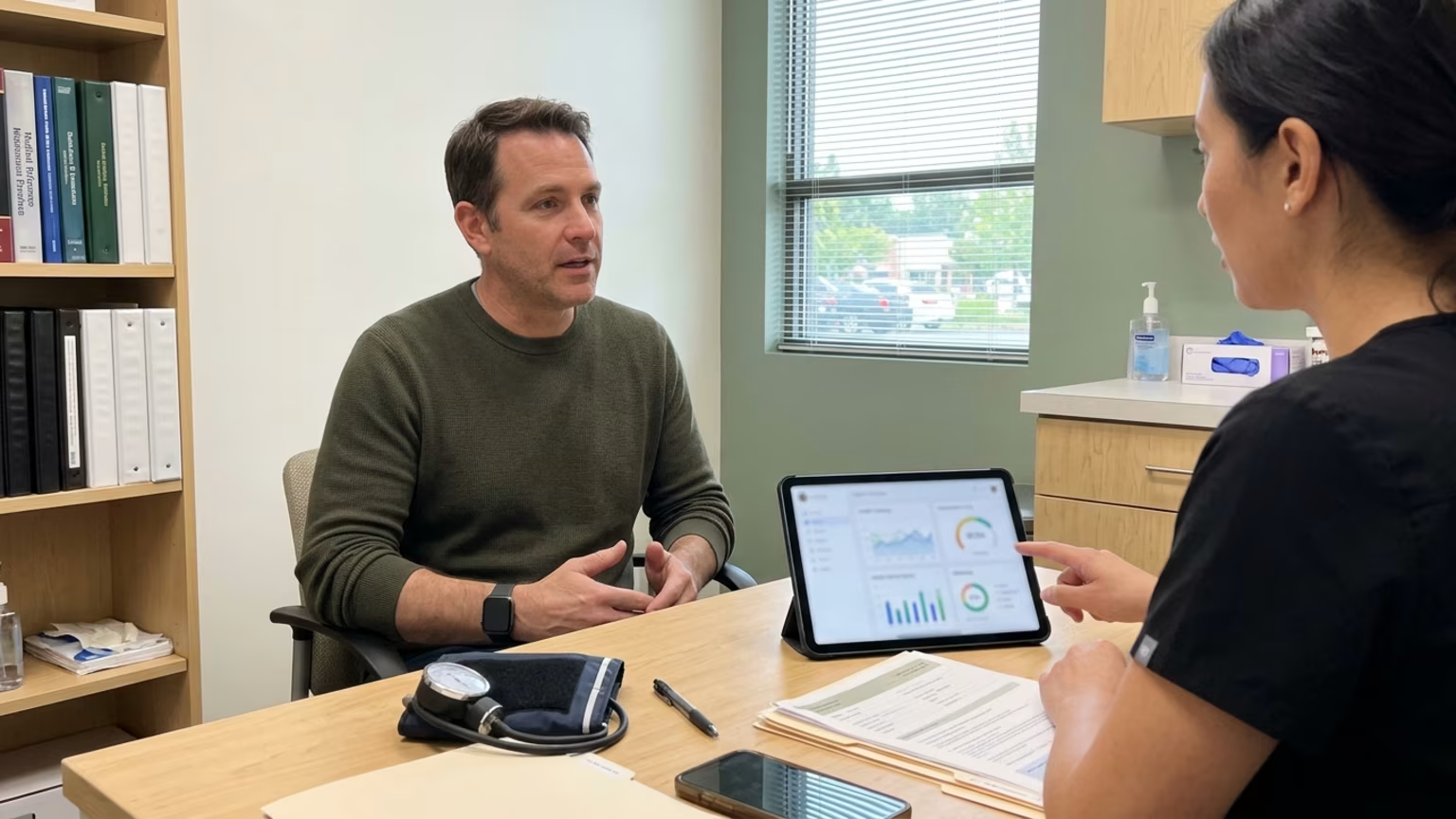
A review of the 2026 Defense Health Agency testosterone screening policy for male service members alongside InCare’s safety guide covering TRT risks and monitoring.
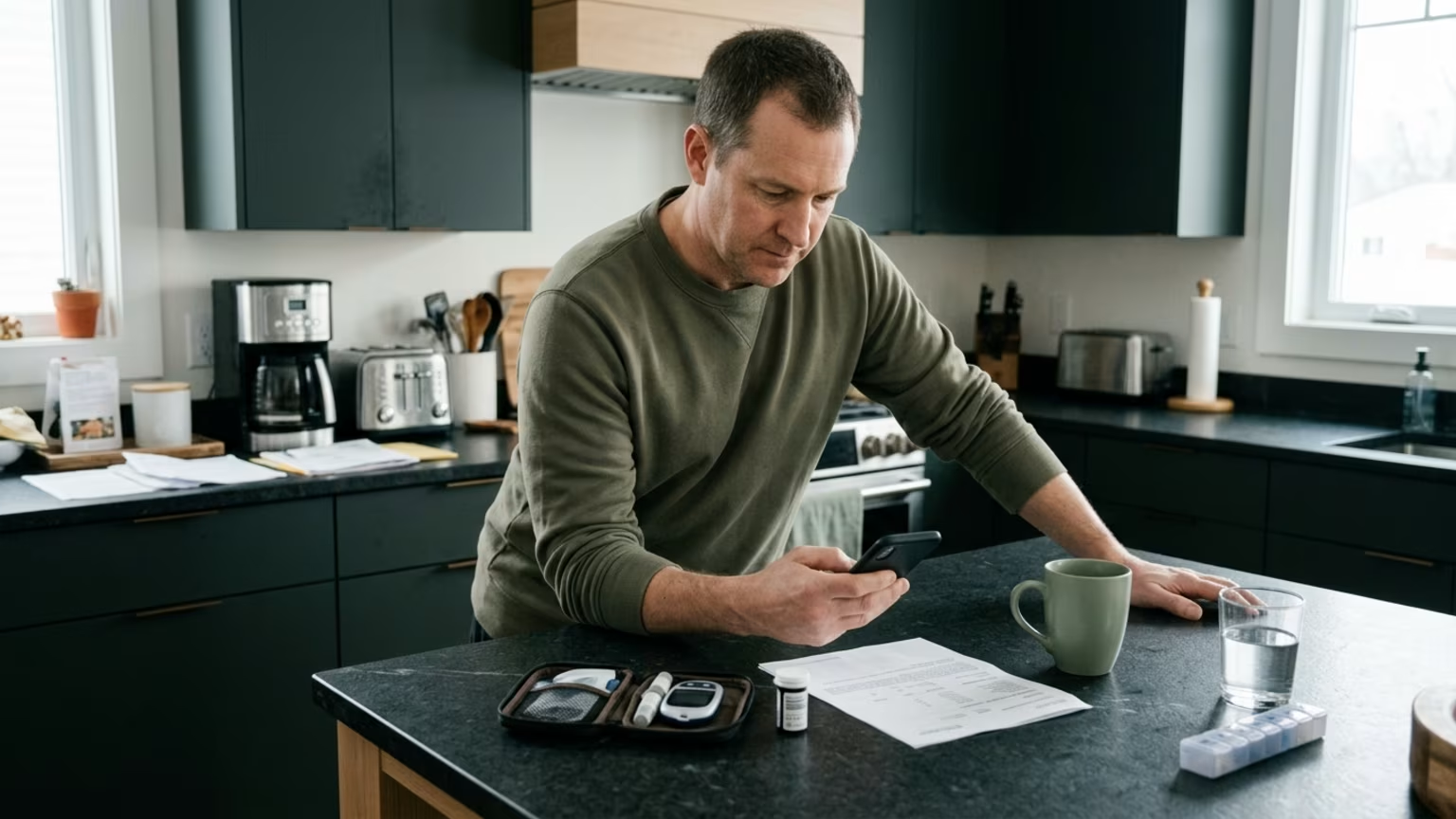
A multi-year study links modest blood sugar increases to declining erectile function, reinforcing the value of metabolic health alongside hormone evaluation.
Build better habits around strength, recovery, sleep, hormones and healthy aging with practical guidance for active military personnel and veterans.
Explore BattleVet