

New male contraception research highlights how hormonal treatments suppress sperm production, providing key context for veterans managing testosterone therapy.





In a published Phase IIb abstract in the Journal of the Endocrine Society, researchers reported on a hormonal gel designed for male contraception. The abstract describes daily transdermal use of a nestorone and testosterone combination gel. This formulation includes 8 mg of nestorone and 74 mg of testosterone delivered in a 5 mL application. Nestorone acts as a progestin to suppress the hormonal signals supporting sperm production, while the testosterone replaces systemic androgen exposure.
Additionally, September 2026 reports from The Hindu highlight ongoing trials for both this hormonal approach and nonhormonal candidates like YCT-529. This new research arrives alongside updated Defense Health Agency clinical guidelines. These guidelines concern testosterone therapy and fertility preservation in male service members.
While clinical trials for male birth control may seem removed from daily military readiness, the underlying science holds significant value. Service members and veterans frequently navigate complex decisions regarding hormone optimization, physical performance, and long term recovery. Understanding how exogenous hormones influence natural reproductive function is a critical part of those decisions. The mechanisms tested in the NES/T trial provide a clear look at how introduced hormones suppress natural physiological processes.
Understanding the body's natural feedback loop is crucial for veterans evaluating their endocrine health. The hypothalamus and pituitary gland constantly monitor circulating hormone levels. They send signals to the testes to stimulate both testosterone and sperm production. When an external source of testosterone enters the system, the brain detects the elevated levels and reduces its natural signaling.
This reduction effectively shuts down the localized environment required for healthy sperm development. The NES/T trial utilizes this exact mechanism. It deploys nestorone to halt the signaling while providing exogenous testosterone to maintain baseline metabolic and physical functions. Readers reviewing our articles on testosterone management should recognize that this data illustrates clear biological trade-offs.
Veterans often focus on the physical benefits of optimized hormone levels, such as improved muscle retention and better energy regulation. However, the systemic impact on fertility is an equally important consideration. When men seek medical support for low testosterone, they must weigh the immediate benefits of treatment against the documented impacts on reproduction. I remember waking up after a poor night of sleep and realizing that my training recovery was taking much longer than it used to.
I realized that readiness is more than just pushing through the fatigue. It requires a dedicated approach to sleep and hormonal health, which completely shifted how I view long term capability. Addressing these physiological factors often leads veterans to consider medical therapies, making clear clinical data highly relevant. Navigating health priorities can shift drastically during the transition to civilian life.
Active personnel might prioritize acute physical performance, while veterans often look toward sustainable health and healthy aging. For anyone utilizing our general military wellness materials, understanding the endocrine system is fundamental. Clinical research on hormonal suppression provides valuable context for anyone evaluating their own endocrine function.
The Phase IIb analysis provides specific metrics on how efficiently this suppression occurs, focusing on sperm concentration as a biological endpoint. Out of 222 participants with an eligible sperm assessment, 192 men reached a target sperm concentration of 1 million per milliliter or lower. This outcome represents 86 percent of the assessed group. It is important to note that this percentage is based on the 222 assessed individuals.
This figure does not necessarily represent every participant enrolled or screened in the broader study. The timeline for achieving this target varied across the assessed population, with researchers tracking specific milestones throughout the trial. The published abstract details the progressive impact of the hormonal gel over several consecutive weeks. Researchers noted that 21 percent of participants reached the suppression threshold by week five of the treatment.
That proportion increased significantly to 52 percent by week eight and reached 64 percent by week nine. Ultimately, 82 percent of the assessed group achieved the target sperm concentration within 12 weeks of initiating the daily transdermal application. The Hindu report highlights this specific finding, noting that more than 80 percent reached the intended suppression level within 12 weeks. The study abstract reported a median of eight weeks to the target among participants who achieved suppression.
However, the authors note that assessment timing was not uniform, so some participants may have reached the threshold earlier than their recorded visit. A week six visit was added during the trial, leaving some men without a measurement between week five and week eight or nine. These measurement limitations mean the exact timing of suppression could differ slightly from the recorded benchmarks.
It is critically important to distinguish between targeted sperm count outcomes and documented clinical contraceptive efficacy. The published abstract reports sperm count results, not couple level pregnancy prevention results. The reported threshold is a recognized target for effective contraception, but the current data alone does not establish how reliably the gel prevents pregnancy. Readers should not equate a biological endpoint with a proven, available contraceptive solution.
In parallel to hormonal methods, scientists are also investigating nonhormonal alternatives. The Hindu reports that early human testing of the nonhormonal candidate YCT-529 found single doses generally well tolerated. This investigational oral approach aims to disrupt retinoic acid signaling involved in sperm development. However, these early safety findings do not establish that YCT-529 lowers sperm counts or prevents pregnancy in people.
The biological principles demonstrated in this contraception research strongly reinforce current protocols regarding clinical testosterone therapies. The Defense Health Agency recently issued a clinical guideline concerning testosterone deficiency in male service members. The DHA guideline calls for documenting fertility intent and advises against starting exogenous testosterone when fertility is desired or undecided. Clinicians are directed to have clear, documented conversations about these specific risks before initiating any treatment.
The military guideline outlines specific proactive steps for service members considering treatment. It explicitly discusses the necessity of semen analysis and sperm cryopreservation before beginning therapy. Exogenous testosterone suppresses reproductive hormone signals and directly impairs sperm production, mirroring the biological pathways highlighted in the NES/T trial. However, it is vital to remember that military guidance about testosterone replacement is strictly for addressing clinical deficiency.
This military guidance is not a recommendation to use any substance for contraception. The contraceptive study abstract focuses on a specific clinical trial and is not a military population study. Veterans managing their healthcare should treat these clinical guidelines as critical planning tools for their long term wellness. Veterans reviewing our healthcare lifestyle resources will find that informed decision making is the best defense against long term complications.
The military guideline notes that recovery after stopping exogenous testosterone is usually reversible but not guaranteed. The DHA explicitly states that recovery may be slower or less certain under specific conditions. These complicating factors include prolonged hormonal exposure, higher treatment doses, older patient age, or pre existing testicular dysfunction. Treating testosterone deficiency requires looking beyond immediate symptoms and planning for future biological impacts.
Professional organizations also continuously review these clinical recommendations to ensure patient safety and long term efficacy. The Endocrine Society has raised a concern that the guideline recommendation for hCG could actually reduce sperm production in some men. These professional critiques highlight the immense complexity of balancing hormone replacement with reliable fertility preservation. Medical protocols require constant refinement as new clinical evidence emerges, and veterans must stay informed to advocate for their own health.
As clinical understanding of hormone therapies improves, veterans and active service members stand to benefit from clearer medical guidance. The ongoing research into both hormonal and nonhormonal suppression methods will likely yield even more detailed data on endocrine function. Medical providers will continue refining how they balance the benefits of androgen replacement with the necessity of preserving natural reproductive health. Will future clinical protocols for veterans find a better way to optimize systemic health while fully protecting long term fertility?
Follow BattleVet for practical guidance on military and veteran health, strength, recovery, testosterone, sleep and healthy aging. Stay connected for new articles, research backed insights and clear information to help you stay capable for the years ahead.


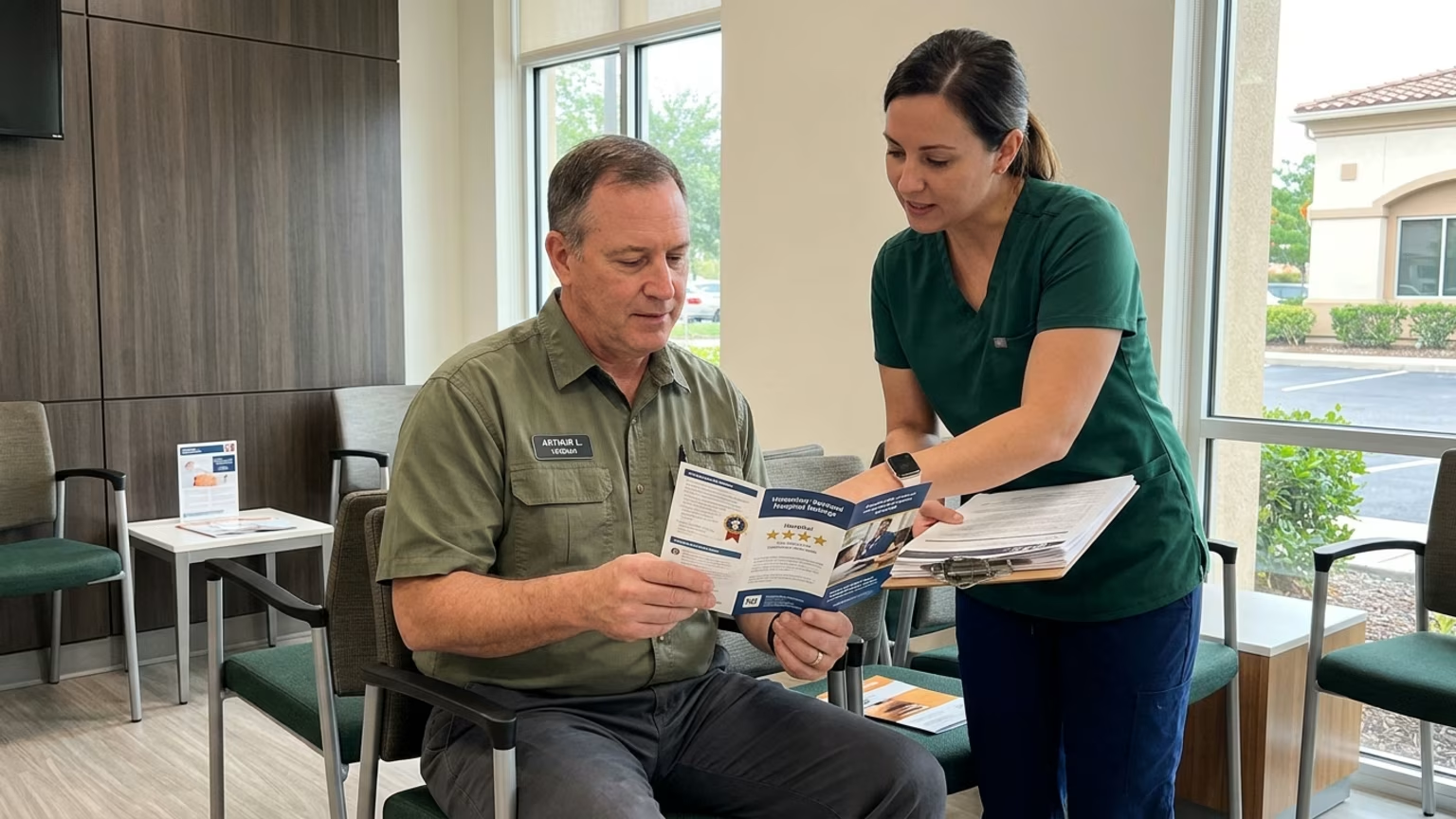
A new CMS report reveals 78 percent of VA hospitals earned four or five stars in overall quality. Learn what these ratings mean for your healthcare choices.


A Durham VA study suggests older veterans with obesity and prediabetes who double their protein intake better preserve physical function during weight loss.

Military fitness leaders are establishing new guidance on sleep readiness. Learn how the latest military protocols address performance, recovery, and hormones.
Build better habits around strength, recovery, sleep, hormones and healthy aging with practical guidance for active military personnel and veterans.
Explore BattleVet