

Combat Stress’s workplace guidance emphasizes listening over diagnosis. Recent U.S. veteran insomnia research adds context for sleep and recovery concerns.





On October 9, 2026, ADS Advance published “Why military trauma awareness matters in the workplace,” presenting Combat Stress’s guidance on supporting veterans at work. Published ahead of World Mental Health Day on October 10, the article identifies sleep disruption and concentration difficulties among the challenges some veterans may experience. Its central recommendation is to ask and listen rather than attempt a diagnosis.
The update puts a practical question in front of employers and veterans: how can a workplace respond to current difficulties without demanding an account of military trauma? Combat Stress’s answer centers on understanding present needs, considering suitable work adjustments and connecting people with professional help where appropriate.
According to the ADS Advance article, Combat Stress identifies several difficulties that can affect some veterans’ working lives:
These are practical concerns for someone trying to remain engaged at work. The guidance directs attention toward what is happening now rather than making a person’s service history the center of every conversation. That distinction leaves room to discuss work needs without turning the discussion into an informal clinical assessment.
Combat Stress also cautions against treating veterans as a uniform group. The article says most veterans will not develop PTSD and should not be defined by their service experiences. Awareness should therefore mean being prepared to respond when a difficulty arises, not assuming that every veteran needs special support.
BattleVet’s focus on sleep and recovery connects everyday functioning with long-term health and capability. In this update, the useful connection is straightforward: persistent sleep concerns deserve attention while the person experiencing them deserves an individual response.
The article names unexpected loud noises and crowded spaces as potentially difficult workplace conditions. It also identifies conflict, uncertainty and a feeling of losing control. These examples describe possible concerns rather than a profile that applies to every veteran.
For a workplace conversation, the relevant issue is the current practical difficulty. A discussion can focus on whether a setting or work arrangement is making things harder and what options might be available. Combat Stress advises against pressing employees to disclose traumatic experiences or details of military service.
That approach separates information needed to discuss work from personal history an employee may not want to share. It also keeps the conversation within the employer’s role: understanding work needs and supporting access to appropriate help.
A separate 2026 study in the Journal of Clinical Sleep Medicine provides population-level context for taking sleep concerns seriously. Researchers examined a nationally representative sample of 2,632 U.S. veterans.
The study reported:
Both estimates were higher in the 2026 study than in the comparison sample. Reporting the categories separately matters because the research did not restrict its assessment of sleep difficulties to clinical insomnia alone.
The researchers also reported associations between insomnia categories and depression, anxiety and PTSD. Those associations remained after adjustment for sociodemographic characteristics, trauma and other health characteristics. Together, the findings provide context for the workplace article’s emphasis on recognizing sleep difficulties and considering professional support.
The two sources serve different purposes. Combat Stress’s workplace recommendations are awareness guidance rather than an independently evaluated intervention. The ADS Advance article does not announce a new clinical guideline or report measured improvements in sleep, recovery or employee retention from particular adjustments.
The insomnia findings concern U.S. veterans. They should not be applied as prevalence estimates for active personnel or veterans in other countries. The comparison also does not establish why the estimates differed between samples.
The study’s associations do not show that insomnia caused the mental-health outcomes. Its underlying data were not publicly available, with access subject to privacy and ethics requirements as well as institutional data-sharing restrictions.
Finally, the workplace article makes clear that irritability or withdrawal is not proof of PTSD. Neither are concentration problems or appearing on edge. The appropriate practical response is to take a difficulty seriously without assigning its cause from workplace observations.
Combat Stress’s guidance supports raising persistent sleep disruption or other difficulties with an appropriate health professional when they interfere with daily functioning. It does not require a veteran to settle on a trauma-related explanation before seeking help.
For personal decisions, the distinction is between describing a concern and diagnosing it. A veteran can explain that sleep or concentration is affecting everyday life. A qualified professional is the appropriate person to assess the health concern and discuss any individual care decisions.
The workplace discussion has a different purpose. It can address current work difficulties and possible support while leaving clinical assessment to qualified care. An employer is not expected to provide treatment.
BattleVet’s broader material on understanding trauma recovery belongs alongside this distinction. Educational guidance can provide context for a conversation without becoming a diagnosis or a personal treatment plan.
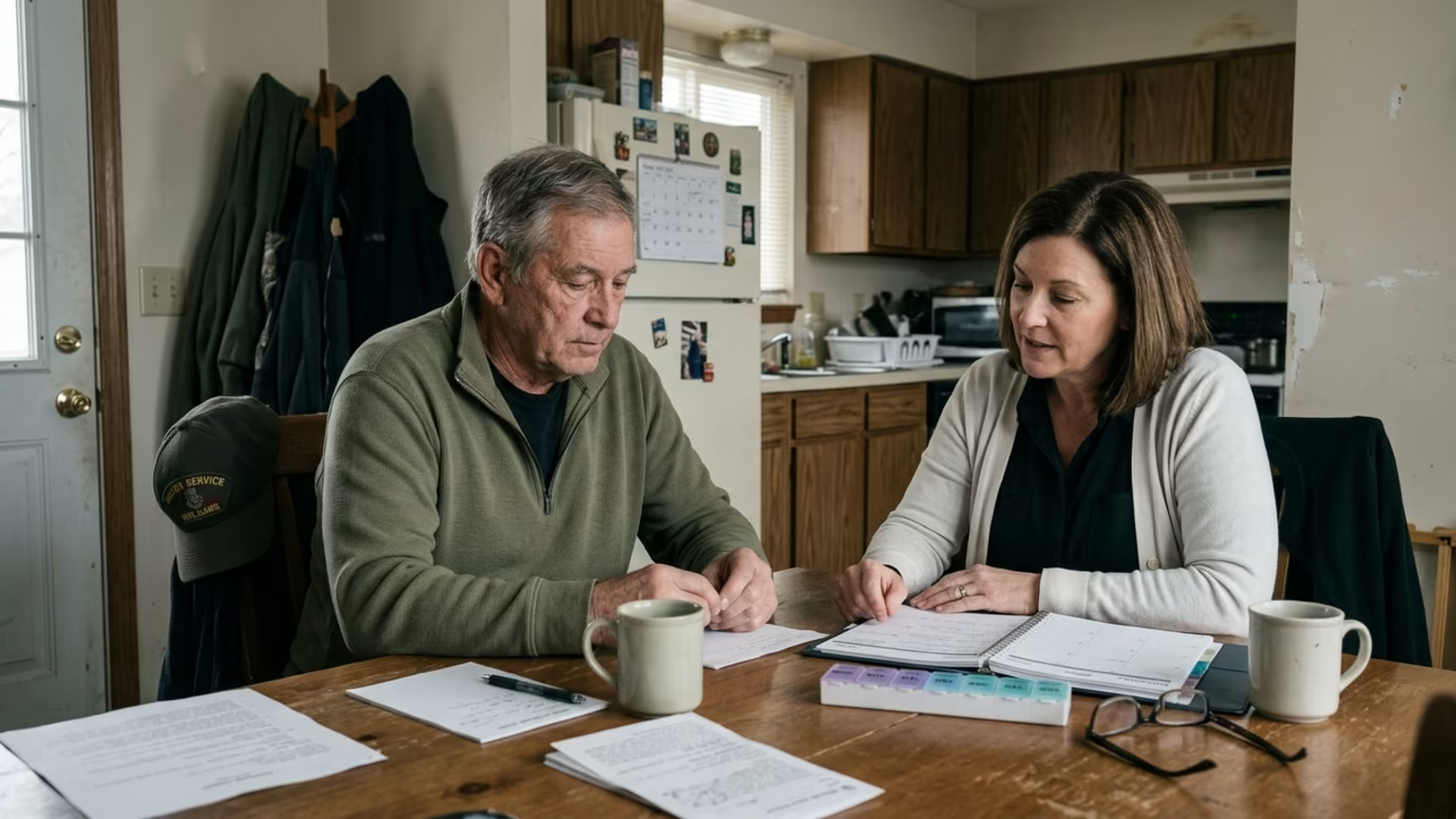
Combat Stress advises managers to notice changes, ask how things are and listen. It specifically discourages asking whether an employee has PTSD or attempting to diagnose a condition. The emphasis is on a useful conversation rather than a label.
Its recommendations support the following approach:
This approach also gives colleagues a clear boundary. They can respond to a change and listen to what the person says without deciding what condition explains it. Military trauma awareness is not a substitute for clinical expertise.
Combat Stress recommends both organizational preparation and discussion of individual work needs. Its suggestions include:
The first two suggestions concern how an organization prepares to respond. The others provide concrete subjects for a conversation about an employee’s current difficulties. The guidance does not require that every veteran receive the same response.
These options are matters to discuss rather than guaranteed accommodations or treatments. Keeping their purpose clear avoids confusing a workplace adjustment with healthcare. A conversation about a quieter workspace can stay focused on working conditions while a health professional addresses the person’s sleep or other symptoms.
This update concerns workplace awareness and support rather than a new diagnostic testing standard or physical performance protocol. Its clearest practical effect is to reinforce attention to persistent sleep and concentration problems while keeping personal health decisions with qualified professionals.
For active personnel, the article offers context rather than instructions to change training or duty requirements. The insomnia study’s veteran sample also needs to remain distinct from an active-duty population. BattleVet’s coverage of sleep in readiness discussions provides a separate editorial route into that broader topic.
For veterans in civilian employment, the immediate relevance is more specific. Combat Stress supports discussing current work difficulties without requiring trauma disclosure. It also supports considering practical adjustments and access to professional help rather than treating workplace observations as a diagnosis.
The next research question is not simply whether employers know more about military trauma. It is whether the support they offer makes a measurable difference to sleep and everyday functioning while respecting veterans’ privacy and individual needs.
The insomnia study supplies population-level context. Combat Stress supplies a practical approach to workplace conversations. How can future veteran healthcare research connect those two areas to identify which forms of workplace support improve sleep and recovery without turning awareness into informal diagnosis?
Follow BattleVet for practical guidance on military and veteran health, strength, recovery, testosterone, sleep and healthy aging. Stay connected for new articles, research backed insights and clear information to help you stay capable for the years ahead.


ErythroMer's reported storage design could matter for military care. An academic review still lists it as preclinical, with human evidence ahead.

A large veteran study links PTSD and documented social needs to later cognitive impairment, reinforcing the value of connected care planning.
A review of the 2026 Defense Health Agency testosterone screening policy for male service members alongside InCare’s safety guide covering TRT risks and monitoring.
Build better habits around strength, recovery, sleep, hormones and healthy aging with practical guidance for active military personnel and veterans.
Explore BattleVet