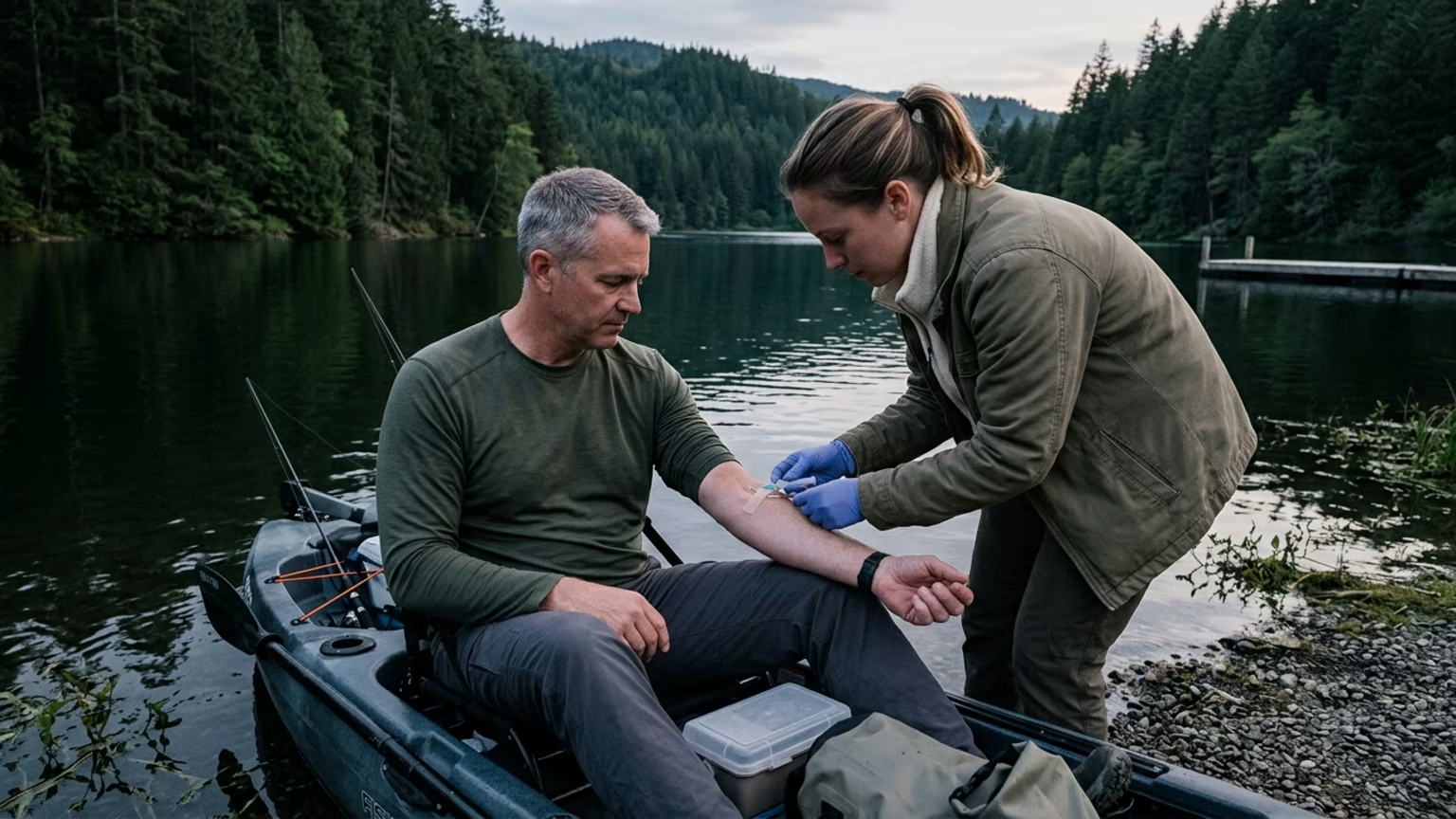

Heroes on the Water and Texas State University have launched a pilot study tracking cortisol and testosterone changes during veteran kayak fishing programs.





On September 9, 2026, Heroes on the Water and Texas State University announced a pilot study investigating biological responses to outdoor recreation. The research examines acute changes in salivary cortisol and salivary testosterone during therapeutic kayak fishing programs. The study is scheduled to take place from September through October 2026 at three major care facilities in Texas. These testing locations include Temple VA in Temple, the III Corps Soldier Recovery Unit at Fort Hood in Killeen, and Brooke Army Medical Center in San Antonio.
The project is officially titled “Therapeutic Kayak Fishing and Acute Changes in Salivary Cortisol and Testosterone: A Pilot Study.” Dr. Shelby Sharpe of Texas State University is the principal investigator for this effort. According to Sharpe, the research is designed to move beyond self-reported experiences by directly measuring how participants' bodies respond to time on the water. Sharpe specifically connected the cortisol measurements with the study's focus on the physiological effects of nature-based recreation on stress.
Texas State University holds primary responsibility for the scientific administration of the study. The university is explicitly managing protocol and Institutional Review Board development. Their teams are also responsible for participant eligibility, recruitment procedures, informed consent, and maintaining participant confidentiality. Furthermore, Texas State University oversees data deidentification and actual data collection.
The university staff will also manage the statistical analysis and the final study deliverables. This meticulous structure helps evaluate military health interventions with clear biological markers. Researchers will collect the saliva samples right before participants enter the water. A second sample is scheduled to be collected approximately 20 minutes after the kayak fishing experience ends.
This tight timeline helps investigators isolate the immediate physiological reactions that occur during the activity. The study focuses on evaluating individuals who already participate in these specialized therapeutic programs. Their recreational programming serves active military personnel and veterans. It also supports emergency responders, first responders, and their immediate families.
Heroes on the Water has designed this project as the second phase of a much broader research initiative. Josh Stanwitz is the executive director of Heroes on the Water. Stanwitz stated that the partnership represents a crucial step toward better understanding and validating the effects of the organization’s therapeutic programming. The goal is to provide concrete evidence alongside the traditional stories of recovery.
Joe Winston, the director of therapeutic programs for Heroes on the Water, also emphasized the significance of this biological testing. Winston described the pilot study as an important continuation of the organization's research effort from phase one. He credited the partnership with Texas State University as a major asset to the project. He specifically noted the university's specialized work in recreational therapy.
The public announcement currently leaves several demographic and structural details undefined. The organizations have not stated the planned sample size or provided detailed demographic information about the participants. Furthermore, the announcement does not identify a control group, randomization, or long-term follow-up procedures. No study findings have been reported yet, as the testing phase is still actively underway.
While researchers gather this new biological data, the current guidance for veteran participation in recreational therapy remains focused on individualized care. Veterans should approach therapeutic kayak fishing as a complementary recovery option. It is not a clinical replacement for standard medical care. A pilot study assessing acute salivary changes cannot diagnose hypogonadism or establish a testosterone-replacement strategy for individuals.
The study measures very short-term hormonal movement. Because samples are collected just 20 minutes after the activity, the design can only address the immediate response surrounding a single session. It cannot establish whether any hormonal change lasts for hours or days. Veterans should remember that hormonal fluctuation is not inherently beneficial without considering baseline levels, sleep, physical exertion, and overall health.
The activity itself contains multiple elements that could influence a biological response. Participants experience physical exertion, direct sunlight, water exposure, and social interaction. They also deal with the novelty of the activity, the anticipation of fishing, and contact with program staff. A basic before-and-after design may detect a shift, but it will not isolate which specific element caused the hormonal reaction.
The before-and-after testing model provides an excellent snapshot of the body in motion. However, it cannot easily separate the impact of the physical exercise from the psychological benefits of being outdoors. A participant might experience a temporary hormonal shift solely from the physical effort of paddling the kayak. Identifying the exact cause of any physiological change will require significantly more testing beyond this initial pilot phase.
Veterans looking for accurate testosterone and hormone information should not self-medicate based on this study topic. A future finding that salivary testosterone changes during kayak fishing would not validate supplements or independent hormone interventions. Clinical hormone management still requires formal blood testing and professional medical oversight. Self-reported benefits and biological markers answer fundamentally different questions about a veteran's overall recovery.
Participants often report improved mood, connection, and confidence even if biological changes are minimal. Tracking outcomes that matter personally is still highly recommended. Veterans may wish to monitor their own sleep, anxiety levels, and social connection alongside any recreational activity. These daily experiences should not be converted into hormonal conclusions without proper clinical testing.
The broader clinical environment already supports recreational therapy as a highly individualized service. VA Tennessee Valley describes recreation therapy as an activity-based service tailored directly to a veteran's personal interests. It is also carefully structured around their individual goals and physical abilities. According to the VA, recreation-therapy planning always begins with a comprehensive assessment of past experiences and personal objectives.
Following this initial assessment, care teams develop an individualized treatment plan for the veteran. Activities can be modified to safely accommodate a veteran's physical abilities while preserving their participation in meaningful recreation. Veterans who are interested in these programs can simply ask their VA primary care provider about connecting with the Whole Health team.
Safety and communication are essential components of these veteran lifestyle initiatives. Veterans must disclose all medical and physical limitations before participating in adapted activities. Clinicians and program staff need accurate information about past injuries, balance issues, and cardiovascular limitations. They also require updates on current medications and any specific water-safety concerns before clearing a participant for kayak fishing.
Recreation therapy is just one component of a broader approach to veteran health and overall well-being. The VA emphasizes that these adapted programs exist to support emotional well-being and build confidence. Physical activity is carefully balanced against the need for meaningful social connection in a safe environment. Care teams look at a veteran's past experiences to ensure the chosen activities are both engaging and physically appropriate.
The impact of this active engagement is highly visible in large-scale veteran events across the country. For example, 16 veterans from the Tennessee Valley system recently participated in the National Veterans Golden Age Games. These events provide structured goals and a strong sense of community for recovering service members. The creative and competitive aspects of recreation therapy also yield tangible results for participants.
In that same year, 49 veterans from the Tennessee Valley system entered the National Veterans Creative Arts Festival. Those participants ultimately earned three national placements for their efforts. These numbers highlight how individualized therapy programs successfully encourage meaningful participation beyond traditional clinical settings.
Heroes on the Water expects to share the final study results in 2027. The organization plans to provide additional updates as the pilot progresses through its scheduled testing phases this fall. Researchers will soon have preliminary data on how salivary cortisol and testosterone react to structured time on the water. As these biological metrics enter the conversation, how will care teams integrate real-time hormone data into their future recreational therapy recommendations?
Follow BattleVet for practical guidance on military and veteran health, strength, recovery, testosterone, sleep and healthy aging. Stay connected for new articles, research backed insights and clear information to help you stay capable for the years ahead.


CDP highlighted an MDMA therapy review and Army suicide-risk prediction research. Here is how to interpret the findings and their implications for care.


Hims expanded its testosterone program. Here are the product-status, monitoring and fertility questions relevant to veterans comparing care.

An Air Force veteran’s Apple Watch alert prompted medical evaluation. Learn what the reported case means for sleep testing and clinical care.
Build better habits around strength, recovery, sleep, hormones and healthy aging with practical guidance for active military personnel and veterans.
Explore BattleVet