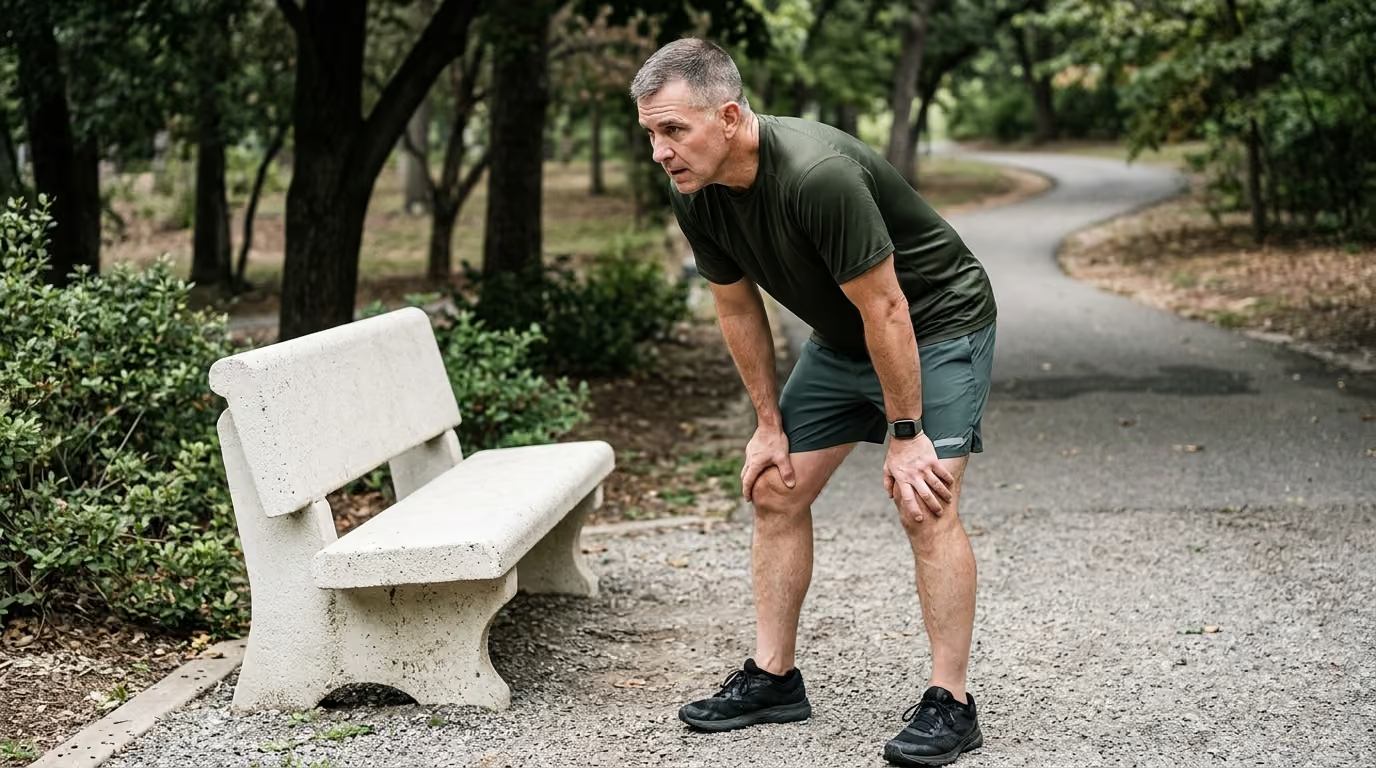

Eight core functional measures, physical performance tests, and vital trends help veterans track mobility, balance, and independence over time.





If you are in immediate danger, call 911. For 24/7 support, call or text 988 and press 1 for the Veterans Crisis Line, or text 838255.
Most health monitoring fails because it focuses on the wrong numbers. Modern smartwatches and health apps encourage people to track dozens of daily metrics, from exact heart rate variability to theoretical sleep stages. Meanwhile, the gradual changes that truly threaten independence, such as losing the ability to stand up from a deep chair without using your arms or feeling unsteady on uneven ground, happen entirely unnoticed.
Tracking your health as you age should function as an early warning radar, not a daily performance evaluation. The primary goal of a personal health dashboard is to identify meaningful changes in physical function, cardiovascular risk, sleep quality, pain interference, and emotional reserve early enough to address them with your healthcare team.
A complete healthy aging dashboard tracks eight core areas: usable strength, walking capacity, balance and fall risk, blood pressure, sleep quality, mood, pain interference, and daily functional independence. Instead of logging volatile day-to-day numbers, an effective tracking system focuses on monthly and quarterly trends using standardized tests and simple patient reports.
Clinical medicine often focuses on disease markers in isolation. A physician might look at blood glucose, lipid panels, or joint space on an X-ray. While these laboratory metrics matter, they do not tell you whether you can safely carry groceries, walk up a flight of stairs, or drive a vehicle.
Veterans Affairs Whole Health programs emphasize self-assessment and personal health planning centered on what matters most to the individual. A functional dashboard shifts the focus from isolated pathology to daily capability. When our team reviewed functional assessment research and physical capability studies, it became clear that physical performance tests often show declining physiological reserve long before a person receives a formal medical diagnosis.
A systematic review of community-dwelling populations found consistent associations between poorer grip strength, slower walking speed, weaker chair rising, shorter standing balance times, and higher all-cause mortality. These performance tests measure the combined health of your muscular, nervous, and cardiovascular systems.
Your personal dashboard should organize these findings using three distinct types of information.
Performance measures are repeatable physical tasks that evaluate strength, mobility, and balance under standardized conditions. They include:
These tasks provide objective benchmarks. They remove the guesswork of trying to remember how well you moved six months ago.
Physiological measures track basic organ function and cardiovascular risk over time. They include:
The purpose of these metrics is not to obsess over minor daily fluctuations. The goal is to track whether chronic strain on your heart, blood vessels, and metabolic system is increasing or staying within a safe range.
Patient-reported outcomes capture your subjective experience of living in your body. These are areas that physical tests cannot measure directly:
A Veteran might record a normal walking speed during a clinic visit while quietly struggling to manage household bills or cook meals at home. Capturing your subjective daily experience ensures these critical changes are not overlooked. You can learn more about managing these transitions in our resource library on healthy aging and longevity.
Measuring your health too frequently creates data fatigue and unnecessary anxiety. A single poor night of sleep, an afternoon of elevated blood pressure after a stressful event, or a slow walk on a humid day does not indicate a health crisis.
What matters is the overall trajectory across weeks and months. Establishing a clear cadence prevents obsessive daily monitoring while ensuring you catch real declines before they become irreversible.
Reserve weekly tracking for measures that fluctuate moderately but require regular check-ins to spot sustained negative trends:
A brief note once a week is sufficient to separate a temporary bad day from a month-long slump.
Physical performance tests should be performed every one to three months. This interval is ideal for:
Testing physical capacity every few months provides enough time to see true progress from exercise or detect meaningful declines without turning physical testing into a daily chore.
Some metrics should only be recorded when specific events occur or when a clinician asks for targeted data:
Always include a short context note alongside your logs. Recording whether you had an infection, changed your medications, experienced poor sleep, or dealt with high stress helps your doctor interpret the numbers accurately. You can read more about balancing physical training and recovery in our guides on recovery and sleep.
Muscle mass naturally declines with age, but usable strength and power matter far more than raw muscle size. Usable strength determines whether you can get off the floor, stand up from a low seat, carry heavy items, and catch yourself if you trip.
A systematic review of 19 studies involving 63,396 participants found that reduced hand-grip strength and slower gait speed were strongly associated with cardiovascular mortality, with gait speed showing the most consistent association. Grip strength reflects overall musculoskeletal integrity, nutritional status, and disease burden.
However, grip strength alone is not a complete measure of frailty. It must be interpreted alongside your age, sex, body frame, arthritis history, and lower-body strength.
The chair-rise test is one of the most reliable measures of lower-body power and independence. To perform it consistently at home, follow these steps:
Keep the testing conditions identical every time. Use the same chair, wear the same type of shoes, and test at the same time of day.
Never test yourself immediately after a heavy workout or when you are sick. If you experience chest pain, severe dizziness, or joint instability, stop the test immediately. Always ensure another person is nearby if you feel unsteady.
Gradual strength changes can be managed with structured resistance training. However, certain patterns require clinical attention:
Sudden weakness on one side of your body, facial drooping, or speech difficulty is a medical emergency. Seek immediate emergency care rather than recording it on a routine dashboard. To explore strength protocols for long-term health, review our practical articles on strength, fitness, and body composition.
Walking is a complex activity that requires your brain, spinal cord, inner ear, heart, lungs, and muscles to work together. Because it integrates so many systems, walking capacity is one of the most powerful predictors of healthy aging.
A meta-analysis of older adults showed that each 0.1-meter-per-second reduction in gait speed was associated with a 12 percent higher risk of earlier mortality. Another pooled analysis found a hazard ratio of 0.88 for survival per 0.1-meter-per-second increase in walking speed.
These numbers represent statistical associations across broad populations, not individual guarantees. Walking slowly does not mean an adverse outcome is inevitable, and forcing yourself to walk faster does not automatically lengthen your life. Instead, these numbers show that walking speed serves as an early indicator of your overall physiological reserve.
A review of frailty research notes that walking speeds above 1.4 meters per second generally indicate full independence in daily activities. Speeds below 0.8 meters per second suggest an increased risk of frailty and falls.
You do not need specialized laboratory equipment to measure walking capacity. You can track your walking speed at home using a simple setup:
Always use your customary assistive device, such as a cane or trekking pole, during the test. Never test without your walking aid simply to get a better score.
Balance issues often present as subtle changes in behavior before an actual fall occurs. You might notice yourself touching walls while walking down a hallway, hesitating at curbs, or feeling anxious when turning around quickly.
The Centers for Disease Control and Prevention uses the Timed Up and Go test within its STEADI fall-prevention framework. The test measures the time it takes to rise from an armchair, walk 3 meters, turn around, walk back, and sit down. Taking 12 seconds or longer indicates an increased risk of falling.
Keep a dedicated log for balance events, recording:
VA fall-prevention clinical guidance highlights that falls are rarely caused by a single issue. They typically result from a mix of muscle weakness, vision changes, blood pressure shifts, home hazards, and medication side effects.
Prompt medical evaluation is necessary if you experience a fall with head impact, loss of consciousness, or severe pain. You should also consult your physician if your near-falls are becoming more frequent or if unsteadiness began after starting a new medication.
High blood pressure causes silent damage to blood vessels, kidneys, and the brain over decades. At the same time, excessively low blood pressure in older adults can cause dizziness, fainting, and dangerous falls.
Accurate tracking requires standardized measurement methods. Sporadic, random readings taken during stressful moments or right after drinking coffee provide misleading data that can lead to incorrect medication adjustments.
The American Heart Association provides clear rules for standardized home blood pressure monitoring:
Take two readings spaced one to two minutes apart in the morning before taking medication, and take two readings in the evening before dinner. Repeat this routine for three to seven consecutive days to calculate a true weekly average.
The joint VA and Department of Defense hypertension guidelines recommend a general systolic blood pressure goal below 130 mmHg for most adults. However, for patients aged 60 and older, the guideline suggests a less stringent target below 150 mmHg when appropriate, with potential added benefits for numbers between 130 and 150 mmHg. The recommended diastolic goal is below 90 mmHg.
The VA clinical guide emphasizes that personal blood pressure targets should always be individualized based on your age, existing medical conditions, and fall risk. Lower is not always better if it causes lightheadedness upon standing.
Many modern smartwatches and rings claim to track blood pressure without an inflatable cuff. Major hypertension clinical guidelines do not recommend cuffless devices for diagnosing or managing high blood pressure due to accuracy concerns.
Reviewing my blood work and physiological markers for the first time felt overwhelming. There was so much confusing information out there about hormones, heart health, and monitoring devices. I wanted clear facts and evidence-based guidance, not a sales pitch. That experience showed me how critical it is to separate established science from marketing hype.
Use an upper-arm cuff validated by recognized medical standards for all clinical decisions, and bring your written averages to your primary care appointments.
Sleep changes as we age, but chronic exhaustion is not a normal part of getting older. For adults aged 65 and older, the CDC recommends 7 to 8 hours of sleep per day.
However, total sleep duration is only part of the equation. A Veteran who sleeps six and a half uninterrupted hours and wakes up alert is in a better functional position than someone who spends nine restless hours in bed and feels exhausted all day.
Avoid obsessing over wearable sleep-stage estimates, such as deep sleep or REM percentages. These algorithm estimates vary significantly across devices and do not provide actionable medical diagnoses.
Focus instead on simple, reliable markers:
VA War Related Illness and Injury Study Center resources identify chronic insomnia, unrefreshing sleep, and severe daytime sleepiness as primary symptoms that warrant formal evaluation. You can review strategies for managing stress and sleep disruption in our sleep, stress, and resilience resources.
Obstructive sleep apnea is widespread among Veterans and significantly raises the risk of hypertension, heart failure, and cognitive decline. VA clinical resources identify several key symptoms:
If these warning signs appear on your dashboard, request a formal sleep evaluation from your clinician rather than attempting to self-medicate with over-the-counter sleep aids.
Pain and emotional health are deeply connected. Chronic joint pain, back injuries, depression, post-traumatic stress, and social isolation frequently amplify one another.
When tracking pain and mood, the primary focus should be on how these factors affect your ability to participate in daily life, rather than looking only at symptom severity scores.
Standard medical intakes often ask patients to rate their pain from 0 to 10. While this number provides a basic snapshot, it rarely reflects true recovery or physical capability.
VA pain-outcome materials emphasize tracking pain interference with walking, sleep, self-care, mood, and social relationships alongside pain intensity. A Veteran with knee osteoarthritis might continue to report a 5 out of 10 pain rating, yet successfully double their walking distance and return to community volunteering after physical therapy.
Track two distinct pain dimensions on your monthly dashboard:
Progress is happening whenever pain interference drops, even if baseline joint discomfort remains unchanged.
The U.S. Preventive Services Task Force recommends regular depression screening for all adults, including those aged 65 and older. The VA uses validated screening tools such as the PHQ-2 and PHQ-9 to detect depressive symptoms early.
Include a brief weekly mental health check on your dashboard:
VA suicide-prevention guidelines note that warning signs such as severe hopelessness, feeling trapped, sudden dramatic mood shifts, giving away possessions, or thinking about death require immediate attention.
If you or a Veteran you know is experiencing thoughts of suicide, contact the Veterans Crisis Line immediately by dialing 988 and pressing 1. Never wait for a routine clinic appointment to discuss acute safety concerns.
The most critical section of your healthy aging dashboard measures daily functional independence. These activities reflect your ability to live safely, manage your home, and take care of your personal needs without relying on full-time support.
Clinicians divide daily function into two main categories: basic activities and instrumental activities.
Basic activities of daily living are essential self-care tasks. Track whether you can complete these movements independently, with assistive devices, or only with personal help:
Instrumental activities require higher-level physical and cognitive coordination. They include:
A practical way to detect subtle declines is to ask yourself a simple question at the end of every quarter:
"What tasks could I complete easily three months ago that are now noticeably harder, slower, or unsafe?"
If you notice you have stopped cooking fresh meals because standing at the stove is too painful, or if balancing your checkbook has become confusing, note this change immediately. Loss of functional independence deserves a medical conversation even if your blood pressure and lab results look completely normal. You can read more about adapting to changes in daily life in our articles on veteran life.
Data is only useful if it helps you make informed decisions. A simple traffic-light model categorizes your monthly dashboard results into three distinct action levels: green, yellow, and red.
A green status indicates your metrics are stable and your daily function is preserved:
Action: Continue your current exercise, nutrition, and recovery routines. Review your metrics again at your next scheduled check-in.
A yellow status indicates a persistent downward trend across one or more areas, or a cluster of minor declines across multiple categories:
Action: Contact your primary care team. Bring your dashboard logs to your visit and review potential causes, including medication side effects, joint issues, sleep disorders, or cardiovascular changes.
A red status represents an immediate threat to your safety or health that cannot wait for a routine check-in:
Action: Seek immediate emergency medical care or call 988 for crisis support. Do not delay emergency care to analyze dashboard trends.
Reviewing real-world scenarios illustrates how a functional dashboard works in practice. These case examples show how to interpret trends and choose the right next steps.
A 74-year-old Veteran notices his 50-foot walking time has slowed by four seconds over the past three months. His chair-rise repetitions dropped from eleven to eight in 30 seconds. He mentions he stopped going to the grocery store because he feels unsteady in crowded aisles.
Clinical interpretation: This is a meaningful functional decline across mobility, strength, confidence, and community participation. The solution is not simply telling him to walk more.
A primary care clinician should perform a comprehensive fall risk assessment. This includes checking for vision changes, reviewing blood pressure drops upon standing, assessing footwear, screening for neuropathy, and reviewing medications. Physical therapy for balance training and lower-body strengthening can help restore his mobility and confidence.
A 68-year-old Veteran with knee osteoarthritis reports her average pain score remains at a 5 out of 10, exactly where it was six months ago. However, her dashboard shows she increased her continuous walking time from 10 minutes to 25 minutes, improved her chair-rise score, and resumed her weekly community volunteer work.
Clinical interpretation: Her treatment plan is succeeding. While the pain intensity score remains unchanged, her pain interference has dropped dramatically and her daily function has expanded. This pattern demonstrates why tracking real-world function is far more informative than relying solely on a 0 to 10 pain rating.
A 62-year-old Veteran logs an average of eight hours in bed each night. Despite this, he records high daytime sleepiness scores, wakes up with frequent morning headaches, and his spouse reports loud snoring with choking sounds during the night.
Clinical interpretation: Total time in bed does not equal restorative sleep. The presence of morning headaches, unrefreshing rest, and witnessed choking sounds strongly suggests obstructive sleep apnea.
His dashboard provides the exact clinical history needed to justify a formal sleep study and evaluation through the VA sleep medicine service.
A 76-year-old Veteran begins a new blood pressure medication. His home systolic average drops from 148 mmHg down to 118 mmHg. However, his dashboard logs reveal three near-falls and episodes of lightheadedness when standing up from his living room recliner.
Clinical interpretation: Blood pressure targets cannot be evaluated without considering safety and stability. In older adults, overly aggressive blood pressure lowering can cause orthostatic hypotension, increasing the risk of serious fall injuries.
His physician should check standing blood pressures, evaluate his hydration, and consider adjusting his medication dosage to prioritize safe mobility.
Health tracking should simplify your life, not make it more complicated. Avoiding these common tracking mistakes will keep your dashboard useful, accurate, and stress-free.
Research studies identify average cutoff scores, such as walking slower than 0.8 meters per second or taking over 12 seconds on a Timed Up and Go test, to identify groups at higher risk. These statistical thresholds do not mean an individual is guaranteed to lose their independence. Use these scores as conversation starters with your doctor, not as fixed predictions of your future.
Studies show that faster walking speeds correlate with longer survival. However, this does not mean that forcing yourself to walk quickly when you feel weak or dizzy will automatically extend your life. Slower walking is often a symptom of underlying heart, lung, joint, or nerve issues that need proper medical evaluation.
Never attempt a balance or chair-rise test alone if you have had a recent fall, feel dizzy, or have an acute injury. Always test in a safe environment with a stable chair placed against a wall, wear supportive footwear, and ensure another person is nearby if your balance is uncertain.
Comparing a walking test taken indoors on a flat hallway with one taken outdoors on uneven gravel gives meaningless results. Similarly, comparing blood pressure readings taken right after exercise with readings taken after five minutes of quiet rest creates false alarms. Keep all testing variables as consistent as possible.
Logging hundreds of daily data points from multiple consumer apps creates clutter and health anxiety. A good rule of thumb is simple: only track a metric if a change in that number will lead to a practical adjustment in your exercise, recovery, lifestyle, or clinical care.
Many physical and mental changes are caused by prescription drugs rather than normal aging. Blood pressure medications, sleep aids, muscle relaxers, antidepressants, and pain medications can cause dizziness, weakness, constipation, and cognitive fog. Always log when you start, stop, or change the dose of any medication.
A health dashboard is only useful if you share the findings with your healthcare team. Bring your written logs, functional tests, and blood pressure averages to your primary care appointments so your physician can see the trends clearly and make better clinical decisions with you.
Setting up your health dashboard takes less than an hour. Follow these practical steps to put your tracking system into practice:
The most actionable measures are your standardized home blood pressure average, walking speed over a fixed distance, chair-rise capacity, sleep regularity, and pain interference with daily tasks. These functional markers reflect the overall health of your heart, muscles, nervous system, and joints.
Testing every one to three months is ideal for most Veterans. This interval gives your body enough time to show meaningful progress from exercise or reveal true functional declines without creating testing burnout.
Consumer smartwatches provide helpful general estimates of sleep duration and consistency, but their sleep-stage algorithms are not accurate enough to diagnose sleep disorders. If you experience chronic fatigue, loud snoring, gasping, or morning headaches, request a formal medical sleep study.
Contact your primary care team if you notice a persistent drop in walking speed or strength across two testing cycles, experience recurrent near-falls, notice expanding pain interference, or record blood pressure averages consistently above your agreed target. Seek emergency care immediately for sudden one-sided weakness, chest pain, fainting, falls with head impact, or severe confusion.
This article is published for educational and informational purposes only. It is not intended to serve as medical advice, clinical diagnosis, or personalized treatment guidance. Health indicators, physical capabilities, and target ranges vary widely based on individual medical history, age, medications, and physical conditions. Always consult a qualified physician or healthcare provider before changing your exercise routine, adjusting prescription medications, or interpreting personal health measurements.
Tracking your health with consistent, practical benchmarks allows you to catch emerging issues early, protect your physical capabilities, and maintain your independence throughout your life.
Follow BattleVet for practical guidance on military and veteran health, strength, recovery, testosterone, sleep and healthy aging. Stay connected for new articles, research backed insights and clear information to help you stay capable for the years ahead.


Build better habits around strength, recovery, sleep, hormones and healthy aging with practical guidance for active military personnel and veterans.
Explore BattleVet