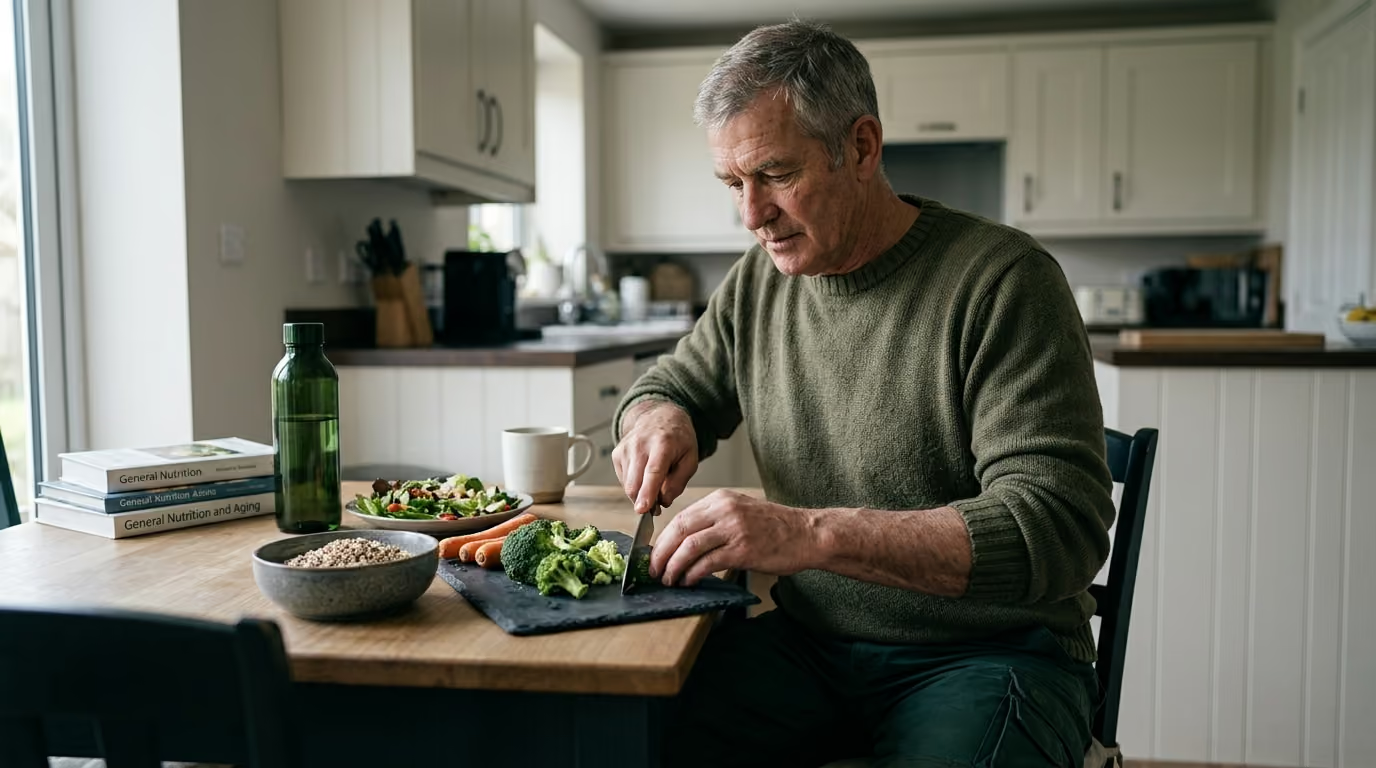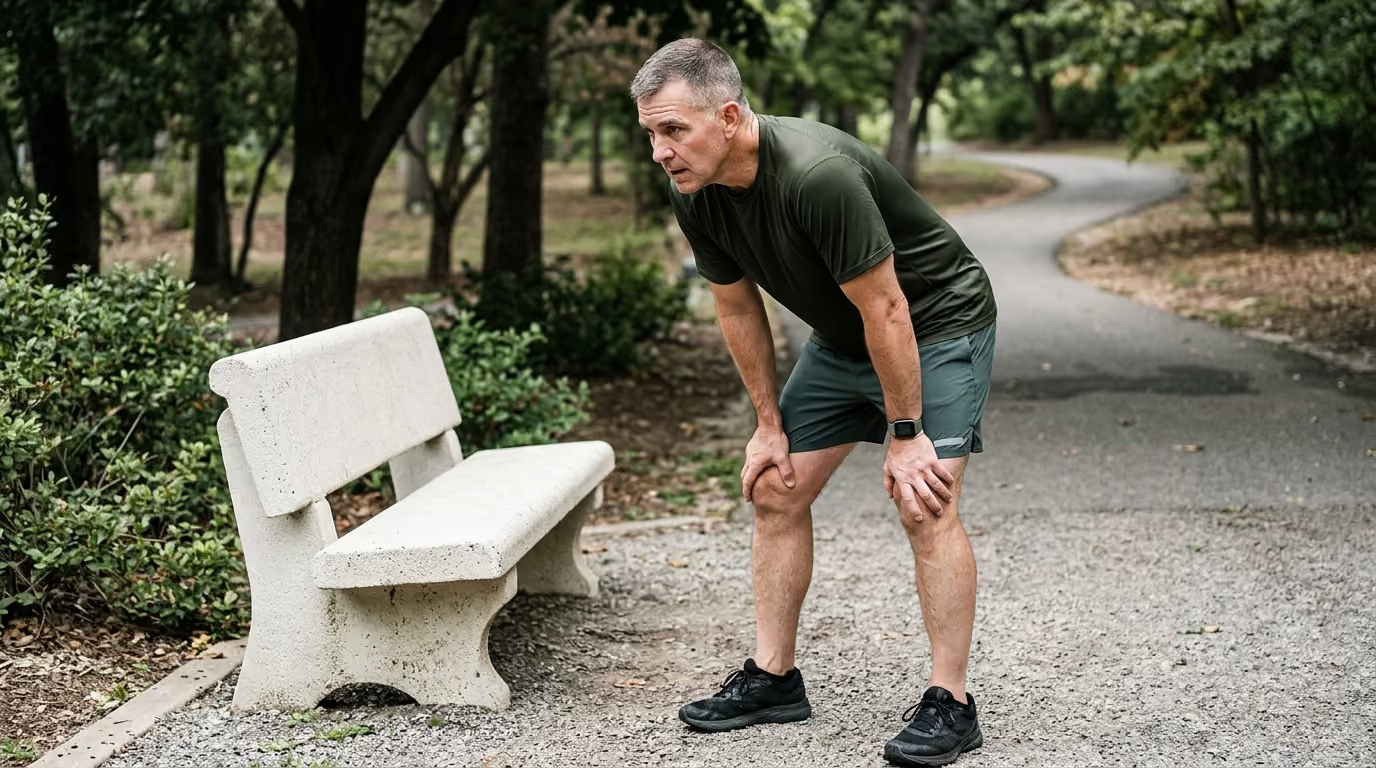

While many veterans assume cardiovascular health requires painful running, sustainable endurance actually comes from low impact aerobic cross training routines.





Lifelong endurance training is not a continuation of high-impact military physical testing. It is a systematic approach to building cardiovascular capacity, joint resilience, and daily stamina across decades. By adjusting training intensity, rotating exercise modes, and integrating strength work, veterans can maintain high physical capability well into their later years.
You wake up after six hours of restless sleep with stiff knees and an aching lower back. Your annual lab work shows borderline fasting blood glucose and rising blood pressure. You know you need regular cardiovascular work, but pounding the pavement like you did years ago now leads to joint inflammation.
Building durable cardiovascular health requires training for sustained capacity rather than short-term physical fitness tests. A well-designed endurance program develops the aerobic energy system, protects compromised joints, and supports everyday physical independence.
Cardiovascular fitness is among the strongest predictors of long-term health, mobility, and all-cause mortality. Veterans can build lifelong aerobic capacity by following a structured weekly plan of 150 to 300 minutes of low-to-moderate-intensity movement. Rotating between walking, cycling, swimming, and rowing allows you to accumulate volume while protecting your joints. Adding targeted strength training twice weekly preserves muscle mass and balance, ensuring your endurance translates into functional daily capability.
Cardiorespiratory fitness refers to the capacity of the circulatory and respiratory systems to supply oxygen to skeletal muscles during sustained physical activity. In clinical settings, researchers express this capacity through maximal oxygen consumption, known as VO2max or VO2peak. They also express it in metabolic equivalents, where one metabolic equivalent represents resting energy expenditure. While military fitness testing often treats endurance as a score on a two-mile run or five-mile ruck, medical research views it as a fundamental vital sign.
The American Heart Association published a scientific statement concluding that cardiorespiratory fitness is a stronger predictor of mortality risk than traditional risk factors like smoking, hypertension, and high cholesterol. A landmark cohort study of 122,007 patients undergoing treadmill testing demonstrated that higher aerobic fitness was directly associated with lower all-cause mortality. The researchers observed no upper threshold where aerobic fitness ceased to provide a health benefit. The least fit participants faced nearly four times the mortality risk of the highest performing group.
Long-term physiological research demonstrates that every increase in aerobic capacity produces measurable health benefits. A study tracking cardiorespiratory changes over time found that each single-unit increase in VO2max was associated with a 9 percent reduction in all-cause mortality risk. This benefit persists regardless of age, sex, or baseline health conditions.
Cardiovascular fitness should not be confused with basic physical activity. Physical activity represents any bodily movement that expends energy, including yard work, occupational tasks, and casual walking. Structured exercise involves planned, repetitive movement designed to maintain or improve physical capacity.
Research evaluating older adults has revealed that physical activity and aerobic fitness contribute independently to longevity. Fit individuals who maintain high daily movement achieve the best health outcomes. However, previously inactive individuals gain substantial cardiovascular protection simply by moving from a sedentary baseline to moderate daily activity. You can review broader principles for long-term health in our healthy aging and longevity resources.
Military service trains personnel to push through pain, complete timed assessments, and sustain heavy loads under adverse conditions. This mindset is useful for operational readiness, but it often leads to overuse injuries, chronic inflammation, and training burnout in civilian life. Lifelong endurance training requires a shift from maximizing immediate output to sustaining weekly consistency.
The organizing principle of veteran endurance training is simple: train for the life you want to keep living. For most veterans, the primary goal is not winning a marathon or passing an obstacle course. The real goal is retaining the stamina to hike with family, work without exhaustion, travel freely, and handle unexpected physical tasks.
High-intensity training produces rapid adaptations, but it places high mechanical stress on connective tissues. As connective tissues age, tendons and ligaments require longer recovery intervals between demanding sessions. Continuing to train with maximum effort on every workout creates cumulative joint breakdown.
A sustainable endurance program shifts the majority of training volume into lower intensity zones. This approach builds capillary density, expands mitochondrial volume, and strengthens cardiac stroke volume without breaking down the musculoskeletal system. Performance goals can still exist, but they must support long-term physical durability. You can explore structured conditioning methods in our training and performance articles.
Endurance is not limited to continuous running on pavement. Choosing the right training mode allows veterans to stimulate the cardiovascular system while managing previous orthopedic injuries. The Centers for Disease Control and Prevention identifies brisk walking, cycling, swimming, and water exercise as joint-friendly activities that minimize mechanical stress.
Walking is the most accessible aerobic training mode. It imposes low impact forces on the ankles, knees, and hips while allowing precise control over intensity. Veterans can progress walking workouts by increasing session duration, quickening their pace, or adding incline.
Walking on an inclined treadmill or hiking natural trails increases cardiovascular demand without increasing joint impact forces. Incline walking recruits the glutes, hamstrings, and calves more effectively than flat walking. It also challenges the cardiovascular system at lower forward speeds.
Veterans dealing with chronic knee pain often tolerate incline walking far better than road running. However, individuals with severe balance limitations should master flat-ground walking before attempting steep outdoor trails.
Cycling provides continuous aerobic conditioning with zero foot-strike impact. It allows veterans to sustain specific heart-rate zones for long periods without joint pounding.
Outdoor cycling develops balance, coordination, and leg power across varying terrain. Stationary upright bikes and recumbent bikes offer controlled indoor alternatives during bad weather or rehabilitation phases. Recumbent bikes are especially valuable for veterans with lower back pain or balance disorders.
Proper bike setup is essential to prevent secondary overuse injuries. A saddle that is set too low increases patellofemoral knee stress, while a saddle set too high causes pelvic rocking and lower back strain.
Water exercise eliminates gravity-induced joint compression, making it ideal for veterans with advanced osteoarthritis or spinal issues. Swimming engages the upper body, core, and lower body simultaneously.
Freestyle, breaststroke, and backstroke build aerobic capacity while promoting shoulder and thoracic spine mobility. Deep-water running using a flotation belt replicates running mechanics without any impact shock.
Swimming intensity is difficult to measure with traditional heart-rate monitors due to water submersion and breathing mechanics. Using perceived exertion scales is usually more reliable than relying on wrist-worn sensors in the pool.
Rowing is a low-impact, whole-body endurance modality that recruits roughly 85 percent of the body's musculature. The rowing stroke distributes mechanical workload across the legs, hips, trunk, and arms.
Rowing builds aerobic fitness while developing posterior chain muscular endurance. This upper-back and hip recruitment directly counters the rounded-shoulder posture common in modern desk work.
Proper rowing technique requires pushing with the legs before hinging the hips and pulling with the arms. Veterans with active lower back pain must maintain a neutral spine during the catch phase to avoid lumbar strain.
A common training mistake is working at an intensity that is too high to build an aerobic base, yet too low to develop top-end power. Using training zones helps you apply the right physiological stress to your body.
The Department of Veterans Affairs highlights the talk test as a reliable, practical method for managing exercise intensity. During moderate-intensity aerobic exercise, you should be able to speak in full sentences without gasping for air. When you cross into vigorous intensity, you will only be able to speak a few words before pausing to take a breath.
The talk test automatically adjusts for daily fatigue, high heat, poor sleep, and individual fitness levels. It is especially useful for veterans taking medications like beta-blockers, which artificially suppress heart rate.
Generic formulas that calculate maximum heart rate by subtracting age from 220 are often inaccurate. The heart-rate reserve method, known as the Karvonen formula, provides a more personalized calculation by accounting for resting heart rate.
To calculate your target heart rate:
Guidelines from the American College of Sports Medicine identify moderate exercise as 40 to 59 percent of heart-rate reserve. Vigorous exercise falls between 60 and 89 percent of heart-rate reserve.
The Rating of Perceived Exertion scale allows you to assess internal physical strain on a simple 1 to 10 scale. A rating of 1 represents sitting quietly, while a rating of 10 represents maximum physical exhaustion.
Foundational endurance training should sit comfortably between 3 and 5 on this scale. Tempo sessions sit around 6 to 7, while high-intensity intervals reach 8 or 9.
External factors like ambient temperature, dehydration, altitude, and psychological stress will elevate your perceived exertion. When environmental conditions are harsh, adjust your pace downward to keep your overall exertion within the target zone.
Building a lifelong training routine requires balancing frequency, intensity, duration, and exercise selection. The World Health Organization recommends that adults perform 150 to 300 minutes of moderate-intensity aerobic activity per week, 75 to 150 minutes of vigorous activity, or an equivalent combination.
If you are currently sedentary, do not immediately attempt 300 minutes of weekly training. Begin with three 20-minute sessions of easy walking or stationary cycling spread across the week.
The Department of Veterans Affairs emphasizes that any movement is preferable to sitting still. Establish the habit of moving three to four days per week before worrying about speed, distance, or complex workouts.
Once you can complete three 30-minute sessions per week comfortably, begin expanding your total volume. Add 5 to 10 minutes to individual workouts every two weeks.
Keep roughly 80 percent of your weekly aerobic training inside Zone 2. This builds capillary density and oxidative enzymes without draining your nervous system. Base training should feel manageable enough that you could repeat the workout the following day.
After establishing a consistent 8 to 12-week aerobic base, introduce one session of higher-intensity intervals each week. This quality workout challenges your cardiovascular threshold and improves your high-end aerobic power.
A practical interval session might involve warming up for 10 minutes, followed by four to six 2-minute hard efforts separated by 2 minutes of easy recovery. Finish with a 5-minute cool-down walk. One weekly interval workout is enough to stimulate adaptations without overloading your joints.
Connective tissues, hormonal systems, and muscle fibers need regular periods of reduced stress to repair and adapt. Schedule a deload week every fourth or fifth week of training.
During a deload week, reduce your total training volume by 30 to 40 percent while keeping the intensity light. Deloading clears residual fatigue, reduces overuse injury risks, and prepares your body for the next training block. You can read more about managing central fatigue in our recovery and sleep articles.
Aerobic exercise alone cannot fully protect against age-related muscle loss, known as sarcopenia, or declining bone mineral density. A study on aging physiology confirmed that aerobic conditioning does not sufficiently improve muscular strength or balance in older populations. An effective endurance routine must be supported by structured resistance training.
Muscle tissue acts as a mechanical shock absorber. When your feet strike the ground during walking, running, or hiking, your muscles absorb the impact forces. If those muscles are weak or fatigue quickly, that mechanical stress transfers directly into your knees, hips, and lower back.
Strong muscles also improve movement economy. When your legs and hips produce force efficiently, your body expends less energy at any given submaximal pace. This allows you to walk, cycle, or row longer with less cardiovascular strain. You can find comprehensive resistance training programs in our strength and fitness resources.
Balance and postural control decline naturally if they are not actively practiced. Falls are a leading cause of injury, disability, and loss of independence among older adults. A systematic review published in the British Journal of Sports Medicine found that exercise programs incorporating challenging balance and functional movements reduced fall rates by 21 percent.
High-risk individuals should not rely solely on brisk walking for health, as walking on uneven surfaces without adequate balance can increase fall risks. Integrate standing balance exercises, single-leg calf raises, and tandem stance work into your weekly warm-ups.
Veterans frequently manage service-connected physical limitations, surgical repairs, or chronic health conditions. A successful endurance program adapts around these challenges rather than trying to train through structural damage.
Joint cartilage relies on movement to receive nutrients from synovial fluid. Total inactivity starves the joint, leading to increased stiffness and accelerated degeneration. The Centers for Disease Control and Prevention confirms that regular, low-impact physical activity reduces arthritis pain, improves physical function, and delays disability.
If a specific mode causes joint pain that lingers for hours after training, swap it for a non-impact alternative. Rotate running with cycling, or swap road hiking for swimming. Strengthening the quadriceps, hamstrings, and hip abductors stabilizes the knee joint and reduces compressive forces on damaged cartilage.
Cardiorespiratory exercise provides profound benefits for individuals with coronary artery disease, hypertension, and type 2 diabetes. Clinical research demonstrates that supervised endurance training improves peak aerobic capacity even in patients managing heart failure.
However, training with known cardiovascular disease requires close medical coordination. Always pay attention to red-flag symptoms during exercise, including chest pressure, radiating neck or arm pain, sudden lightheadedness, or unexplained shortness of breath. Work with your physician to establish safe heart-rate parameters before starting higher-intensity interval work.
Many veterans deal with chronic sleep disruption, shift work, and post-traumatic stress. These challenges keep the sympathetic nervous system chronically activated, elevating resting heart rates and slowing physical recovery.
For veterans dealing with elevated stress, long Zone 2 aerobic sessions serve as a restorative tool. Steady, nasal-breathing cardiovascular work activates the parasympathetic nervous system, lowering resting blood pressure and easing autonomic tension. You can review strategies for managing operational stress in our military health articles.
Veterans using prosthetic limbs or managing mobility impairments can build high-level cardiovascular fitness using adaptive equipment. Options include handcycles, wheelchair racing chairs, arm ergometers, seated cable rowers, and adaptive swimming.
When using prosthetics for endurance training, skin integrity and socket fit are critical. Monitor residual limbs daily for friction blisters, pressure sores, or shear irritation. Adjust training volume immediately if socket fit changes due to fluid shifts or warm weather.
Reviewing how different veterans structure their training shows how these principles apply across different ages and health profiles.
A 52-year-old veteran with service-connected knee injuries experienced sharp joint pain whenever his weekly road running exceeded 10 miles. He refused to stop running entirely but needed a sustainable long-term solution.
Outcome: His knee pain subsided within six weeks, while his total weekly aerobic volume increased from 60 minutes to over 140 minutes. His cardiovascular endurance improved without irritating his joints.
A 64-year-old veteran had been physically inactive for twelve years. He wanted to lower his blood pressure and improve his daily stamina so he could travel without getting winded.
Outcome: Over four months, his resting heart rate dropped by 8 beats per minute, and his resting blood pressure normalized. He established a consistent four-day weekly routine without experiencing injuries.
A 58-year-old veteran logged 100 miles per week on his road bike. Despite having exceptional cardiovascular fitness, he struggled to walk across uneven ground and experienced recurring lower back stiffness.
Outcome: His lower back stiffness cleared up as his hip stability improved. His off-bike mobility and balance scores caught up to his high cardiovascular capacity.
Building a lasting cardiovascular routine requires steady, deliberate actions rather than sudden extreme efforts.
This educational guide is designed for informational purposes only. Before starting a new endurance training program, consult a qualified healthcare professional, particularly if you have a history of cardiovascular disease, metabolic conditions, chronic joint pain, or take prescription medications.
Brisk walking is an effective, evidence-based method for improving cardiorespiratory fitness. By walking at a purposeful pace, adding incline, or navigating rolling terrain, you can easily reach Zone 2 aerobic training thresholds. Walking provides clear cardiovascular, metabolic, and mental health benefits while keeping joint impact low.
Medications like beta-blockers lower resting heart rate and limit your maximum heart-rate response during physical exertion. This makes standard age-based heart-rate formulas inaccurate. If you take rate-altering medications, use the talk test or a 1 to 10 perceived exertion scale to monitor your training intensity accurately.
Veterans with mild osteoarthritis can often run safely if they manage their volume, surface selection, and recovery carefully. Running on soft surfaces like dirt trails, keeping strides short, and avoiding sudden mileage spikes protects joint structures. However, if running triggers joint swelling or pain that lasts into the next day, substitute low-impact alternatives like cycling, rowing, or swimming.
Most veterans achieve excellent health and longevity benefits by training aerobically three to five days per week. Accumulating 150 to 300 minutes of total weekly aerobic activity, combined with two strength training sessions, provides comprehensive cardiovascular and musculoskeletal protection without causing overtraining.
Follow BattleVet for practical guidance on military and veteran health, strength, recovery, testosterone, sleep and healthy aging. Stay connected for new articles, research backed insights and clear information to help you stay capable for the years ahead.


Build better habits around strength, recovery, sleep, hormones and healthy aging with practical guidance for active military personnel and veterans.
Explore BattleVet