
Greater everyday physical capacity and improved well-being are within reach for veterans through structured functional health metrics that look beyond medical labels.





If you are in immediate danger, call 911. For 24/7 support, call or text 988 and press 1 for the Veterans Crisis Line, or text 838255.
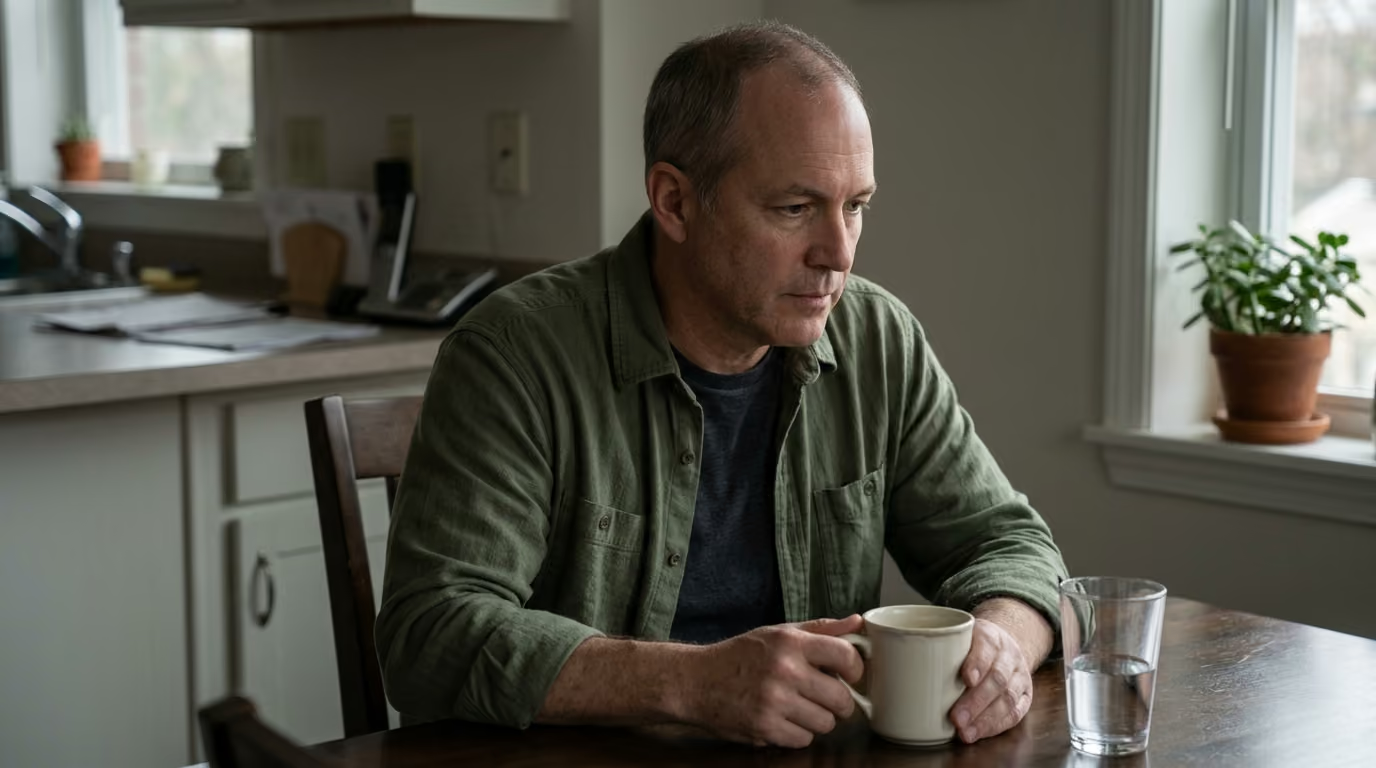
You wake up at five in the morning after four broken hours of sleep. Your lower back is stiff, your left knee throbs when your feet hit the floor, and your mind feels foggy before the day even begins. A routine medical appointment last week handed you three new diagnostic codes and an updated medication list, but none of those labels explained how to get through your workday or coach your daughter's soccer team.
Functional health is not a diagnostic label, a disability rating percentage, or the complete absence of physical discomfort. It is the practical measurement of what you can do each day, how reliably you can do it, and whether you can participate in the life roles that matter most to you. This guide examines how veterans can move beyond symptom suppression, establish objective recovery baselines, and build sustainable daily capacity.
A meaningful recovery does not require a zero-pain score or perfect health. It is built by systematically measuring your everyday function, aligning small physical experiments with personal values, and expanding what you can reliably achieve.
To improve your quality of life after military service, you must separate your medical diagnoses from your functional capacity. While clinical labels describe underlying health conditions, your functional health measures your ability to work, move, rest, think, and maintain relationships. By tracking specific functional domains like sleep regularity, pain interference, cognitive clarity, and physical endurance, you can set flexible goals that produce steady progress even when symptoms fluctuate.
Medical systems frequently prioritize diagnoses over daily capability. A diagnosis provides a clinical name for a pathology, such as degenerative disc disease, post-traumatic stress disorder, or osteoarthritis. While a diagnostic code is essential for medical billing, disability claims, and treatment selection, it tells you very little about a veteran's actual day. Two veterans with the exact same spinal MRI results can have radically different functional lives. One might be unable to walk around the block, while the other consistently carries a backpack and works full time.
In 2001, all 191 World Health Organization Member States endorsed the International Classification of Functioning, Disability and Health, known as the ICF. The ICF framework fundamentally changed how health is understood by shifting the focus from disease and mortality to how people live with their conditions. Under this framework, functioning is an umbrella term encompassing body structures, personal activities, societal participation, and the surrounding environment.
The ICF breaks human function down into distinct, interacting layers. Understanding these layers helps veterans pinpoint exactly where their daily routines break down:
This layer represents the biological disease, disorder, injury, or trauma. Common veteran examples include traumatic brain injury, chronic pain syndromes, limb loss, lumbar spine strain, hearing loss, and clinical depression. The condition is the starting point of clinical care, but it does not dictate your ultimate capability.
This layer addresses physiological functions and anatomical parts. Impairments here include reduced shoulder range of motion, nerve pain, lower grip strength, slowed cognitive processing speed, and disrupted sleep architecture. An impairment at this level is measurable in a clinic, but it only represents one piece of your overall functional capacity.
Activities represent the execution of specific tasks or actions by an individual. Examples include climbing a flight of stairs, driving a car, preparing a meal, focusing on a computer screen for an hour, or lifting a bag of groceries. When an impairment limits your ability to execute a task, it creates an activity limitation.
Participation refers to your involvement in real-world life situations and community roles. This includes working a job, parenting, maintaining a marriage, volunteering, attending social gatherings, or pursuing outdoor recreation. When physical or mental barriers prevent you from fulfilling these roles, you experience a participation restriction.
The ICF model emphasizes that disability is not an inherent personal defect. Instead, disability exists in the dynamic relationship between a person's health status and their surrounding context.
Context consists of environmental factors and personal factors. Environmental factors include physical access to buildings, workplace flexibility, family support systems, reliable transportation, noise levels, and access to Veterans Affairs healthcare. Personal factors include age, coping habits, military cultural background, financial stability, and personal resilience.
When you change the environment or modify the task, your ability to participate can improve dramatically even if your underlying medical condition remains completely unchanged. For broader insights on navigating these systems, reviewing veteran lifestyle and healthcare resources can help clarify your options.
Conventional healthcare often asks, "What is the matter with you?" The Department of Veterans Affairs Whole Health system shifts this perspective by asking, "What matters to you?" This distinction is critical for veterans who feel defined by a list of service-connected disabilities.
The VA Whole Health model organizes personal well-being around the Circle of Health. At the center is mindful awareness, surrounded by eight core areas of self-care: moving the body, surroundings, personal development, food and drink, recharge, family, friends and coworkers, spirit and soul, and power of the mind. Professional medical care, including medications, physical therapy, and surgery, forms the outer ring that supports these self-care behaviors.
The system uses a clinical tool called the Personal Health Inventory. Rather than rating your symptoms from mild to severe, this inventory prompts you to assess your current state across each self-care area and articulate what you want your health for. A veteran rarely wants to lower their blood pressure or reduce joint stiffness simply for the sake of the number. They want lower blood pressure so they can live to see their children graduate, or they want better joint mobility so they can hunt, fish, or complete home repairs.
A structured sequence allows you to turn values into functional change:
Evaluations of the VA Whole Health initiative show measurable improvements in veteran outcomes. Published system evaluations demonstrate that veterans who actively use Whole Health services report greater engagement in self-care, improved perceptions of care quality, higher scores for life meaning and purpose, and greater progress toward personal health goals compared to conventional care users.
Furthermore, a VA report examining veterans with chronic pain found that opioid use decreased by 38% among Whole Health users, compared to an 11% decrease among veterans receiving standard care alone. While this observational data reflects an association rather than direct causation, it highlights the clear benefits of pairing clinical interventions with values-driven self-management.
To track functional recovery accurately, you must break daily life into measurable domains. Tracking these eight specific areas provides an honest assessment of your overall well-being.
Fatigue is more than feeling sleepy. In a functional model, energy is measured as your usable physical and mental capacity before you require prolonged rest. You should evaluate how quickly you drain your energy reserves, whether you experience post-exertional crashes, and how many hours of sustained activity you can manage in a single day. Distinguishing between physical muscle exhaustion and cognitive burnout helps you plan your daily schedule effectively.
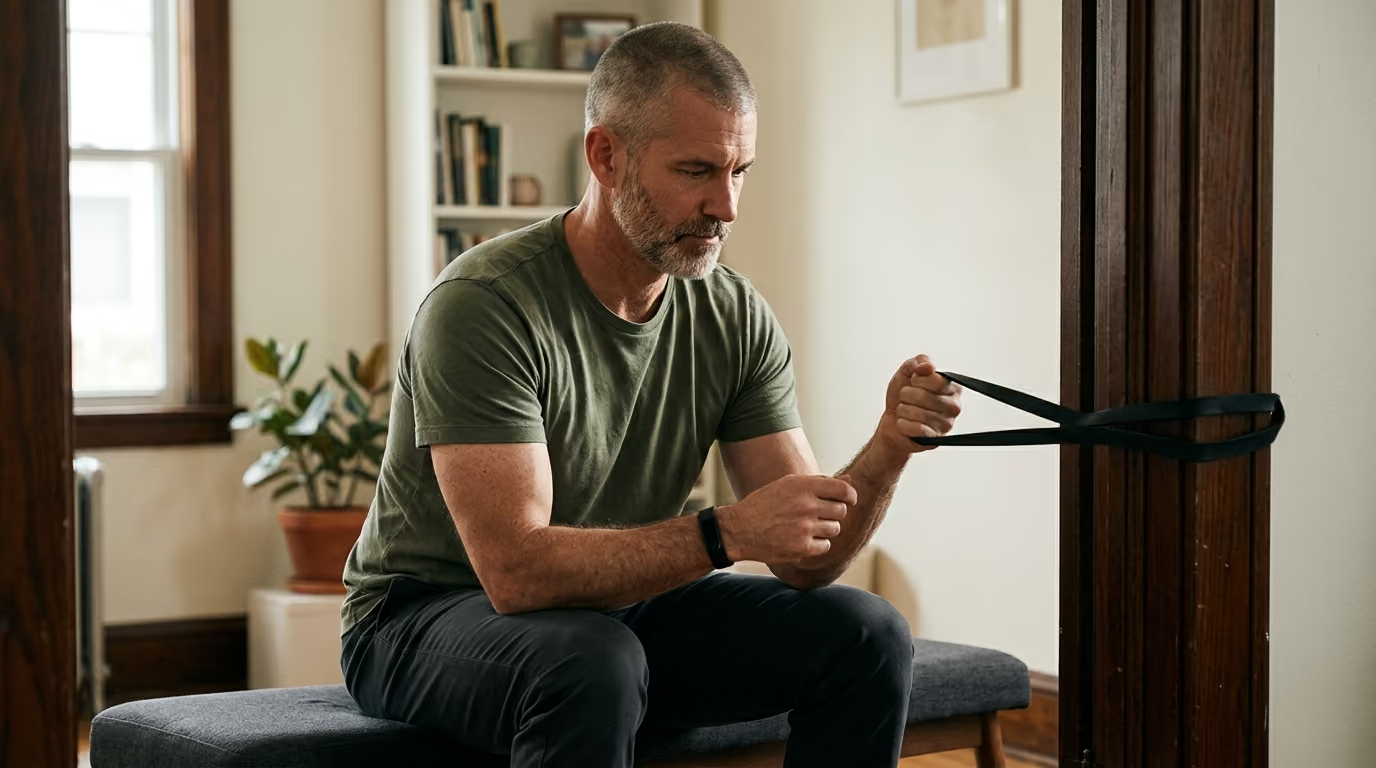
Mobility covers your real-world ability to navigate your physical environment safely. This includes walking distance, balance on uneven ground, the ability to negotiate stairs, standing tolerance while waiting in line, and upper-body reaching and carrying. It also includes functional strength, such as getting off the floor without assistance. Exploring structured routines through physical capacity and strength guidance can help rebuild these baseline movements.
Sleep assessment should move beyond simple hours in bed. A functional sleep evaluation examines sleep latency, night awakenings, nightmare frequency, and how restored you feel upon waking. It also tracks the regularity of your sleep and wake schedule. Disrupted sleep impairs every other functional domain, directly degrading pain tolerance, emotional stability, and physical recovery.
Rather than using broad terms like brain fog, evaluate cognitive function through discrete performance tasks. This includes your ability to maintain sustained attention, hold information in working memory, follow multistep instructions, find words during conversations, and manage sensory distractions in noisy environments. Tracking cognitive capacity helps you organize complex tasks around the hours when your mental clarity is highest.
Clinical appointments frequently overemphasize pain intensity on a zero-to-ten scale. A functional approach separates how severe pain feels from how much it interferes with your life. Pain interference measures the degree to which discomfort stops you from walking, working, socializing, or sleeping. A veteran may continue to experience a baseline pain level of five while dramatically reducing their pain interference score by learning pacing techniques and utilizing ergonomic supports.
Tracking mood functionally involves assessing how emotional states alter your daily behavior. Rather than only counting depressive or anxious thoughts, observe whether emotional distress leads to behavioral avoidance, social withdrawal, irritability with family members, or hypervigilance in public spaces. Lifetime post-traumatic stress disorder affects roughly 7% of the general veteran population, with estimates near 13% for female veterans and 6% for male veterans according to VA population data. Monitoring how these symptoms affect daily tasks is vital for planning effective coping strategies.
Human capability is deeply tied to social connection. This domain tracks your ability to participate in family responsibilities, maintain genuine friendships, communicate your physical needs without conflict, and engage in community groups. Isolation often accelerates physical deconditioning and cognitive decline, making social participation a primary metric of recovery.
Work capacity applies to formal employment, vocational training, school, volunteering, or managing a household. It encompasses attendance reliability, punctuality, physical stamina across a multi-hour shift, error rates under pressure, and the recovery time required after a workday. Identifying your specific limits in this domain allows you to implement reasonable workplace accommodations that protect your long-term health.
Healthcare systems rely on three primary categories of information: clinical measures, performance tests, and patient-reported outcomes.
Clinical measures include blood pressure readings, imaging studies, and lab panels. Performance tests measure objective physical execution in a clinic, such as a six-minute walk test or a grip dynamometer assessment.
Patient-reported outcomes capture the missing perspective: your direct report of your functional capabilities, symptom burdens, and quality of life without clinician interpretation. The Agency for Healthcare Research and Quality highlights that patient-reported outcomes provide critical data on treatment adherence, daily symptoms, and functional limitations that standard clinical exams miss entirely.
The National Institutes of Health developed the Patient-Reported Outcomes Measurement Information System, known as PROMIS, to create precise, standardized metrics for these domains. PROMIS tools are widely used in clinical trials and rehabilitation research to measure physical, mental, and social health.
The PROMIS-29 profile is a practical tool that evaluates seven distinct health domains using four questions each, alongside a single zero-to-ten pain intensity rating:
An updated short-form variation, the PROMIS-16 profile, includes cognitive function abilities alongside these core physical, mental, and social measures.
The fundamental lesson from the PROMIS framework is that pain intensity and pain interference must be measured separately. Pain intensity asks how strong the pain feels right now. Pain interference asks whether that pain stopped you from doing household chores, concentrating on a task, or visiting a friend.
Medical interventions that reduce pain interference directly improve your quality of life, even if your underlying pain intensity takes longer to change. You should view these tracking tools as self-assessment instruments that highlight trends over time, rather than absolute scores that define your worth.
Standard goal-setting techniques frequently fail individuals dealing with chronic health challenges. Traditional SMART goals (Specific, Measurable, Achievable, Relevant, and Time-bound) assume that your physical capacity is stable from day to day.
When an unexpected symptom flare occurs, rigid timelines often collapse, leading to frustration and abandoned plans.
To create lasting physical progress, veterans should adapt SMART goals into flexible, graded systems designed for fluctuating health conditions:
A reliable goal-setting formula follows this template: "I want to perform [specific meaningful activity] with [acceptable symptom tolerance or support equipment] for [duration or frequency] within [time frame], starting with [small initial experiment], and I will track [specific functional metric]."
For example: "I want to cook dinner for my family twice a week using an anti-fatigue mat and a stool by the end of this month, starting with a fifteen-minute meal preparation, and I will track my standing tolerance and next-day fatigue."
To accommodate fluctuating symptoms, organize your routines around three distinct operating days:
This is your baseline protocol during an acute symptom flare, severe sleep deprivation, or heavy joint inflammation. Your only goal is essential self-care, hydration, basic nutrition, and gentle mobility. You strip away non-essential demands without guilt, protecting your baseline while avoiding total physical shutdown.
This represents your normal, sustainable level of physical and mental activity. You complete your regular work tasks, engage in moderate physical movement, and participate in family responsibilities. You finish the day with enough physical reserve to recover after a normal night of sleep.
On days when pain is low and energy is unusually high, you might feel tempted to complete every postponed chore, double your exercise, or work a twelve-hour shift. This boom-and-bust cycle almost always triggers a severe multi-day crash. On a good day, cap your physical exertion at 10% to 20% above your baseline, banking your energy to protect long-term consistency.
Another valuable method is Goal Attainment Scaling, a structured approach often used in rehabilitation medicine. Instead of a simple pass-or-fail goal, you define five possible outcomes: much less than expected, somewhat less than expected, expected outcome, somewhat better than expected, and much better than expected. This structure allows you to capture meaningful, incremental functional progress even when external factors disrupt your ideal target.
Tracking your health should provide actionable clarity, not become an exhausting chore. Overcomplicated tracking protocols often lead to hyper-focus on symptoms, which can paradoxically increase your stress and pain perception.
A functional tracking system requires only two simple components: a one-minute daily log and a weekly review.
The one-minute daily log uses simple 1-to-5 scales to capture essential trends without burdening your schedule. Rate your sleep restfulness, usable energy, pain interference, and mental clarity. Record your primary physical movement, write down one meaningful daily win, and note any clear symptom triggers.
Track these metrics consistently for two to three weeks to establish an honest baseline, particularly when introducing a new exercise program, medication, or physical therapy regimen.
At the end of each week, spend five minutes reviewing your entries using eight targeted questions:
When evaluating your progress, focus entirely on multi-week trends rather than single isolated days. A single bad night of sleep or a temporary pain flare is normal and does not mean your recovery plan is failing.
Conversely, a single high-energy day does not mean you have fully adapted to a new workload. Look for trends like shorter recovery times after physical exertion, fewer days lost to severe flares, and higher consistency in completing your weekly values-based goals.
Applying functional health principles requires adapting them to specific, real-world physical and psychological challenges. The following case patterns illustrate how to turn diagnostic labels into practical recovery plans.
A forty-two-year-old veteran with lumbar disc herniation reports a constant pain intensity of 6 out of 10. His physical capacity allows him to walk for twenty minutes, but he completely avoids attending his children's weekend sporting events because prolonged standing and hard stadium bleachers trigger severe muscle spasms.
A thirty-six-year-old veteran experiences service-connected PTSD, chronic nightmares, morning exhaustion, and severe workplace irritability. Clinical practice guidelines from the VA and Department of Defense for managing PTSD and sleep disorders recommend assessing insomnia independently rather than assuming it is entirely caused by psychological trauma. These guidelines emphasize evidence-based approaches such as Cognitive Behavioral Therapy for Insomnia (CBT-I) as a primary treatment.
A twenty-nine-year-old veteran with a history of blast-related mild TBI can focus on a computer for thirty minutes in a quiet room. However, after two hours in a busy, brightly lit open-office environment, he experiences severe cognitive fatigue, word-finding difficulty, and headaches.
A fifty-year-old veteran with a history of knee and shoulder repairs avoids all strength training out of fear of re-injury. Over five years, this lack of activity led to significant muscle loss, poor aerobic capacity, and difficulty carrying groceries up the front stairs.
A veteran who has been out of the workforce for two years due to combined physical and psychological conditions wants to return to meaningful employment. Attempting an immediate jump to full-time work would likely trigger physical exhaustion and symptom relapse.
Functional health plans must account for specific life circumstances, age-related changes, and the practical realities of navigating healthcare systems.
Invisible disabilities such as mild traumatic brain injury, vestibular disorders, tinnitus, chronic pain, and sleep apnea are often misunderstood by coworkers, family, and friends. Because there are no visible casts or mobility devices, others may assume you have full physical and cognitive capacity.
Clearly communicating your functional boundaries helps manage expectations without requiring you to disclose private medical details. Using simple, direct language like, "My endurance allows for forty-five minutes of social activity before I need a quiet environment," explains your limits clearly and practically.
As veterans age, functional priorities naturally shift toward maintaining autonomy, preserving muscle mass, preventing falls, and supporting cognitive health. It is a mistake to dismiss physical decline as unavoidable aging. Many mobility limitations stem from chronic deconditioning, medication side effects, or unmanaged joint stiffness, all of which can be improved with targeted physical therapy, strength maintenance, and balance training. Reviewing healthy aging and longevity guides provides valuable frameworks for maintaining your independence in later years.
Gender-specific factors and regional access barriers also shape your functional health. Population data from the VA indicates that women veterans report higher lifetime rates of PTSD (13%) compared to male veterans (6%), and they frequently navigate distinct reproductive health, military sexual trauma, and caregiving responsibilities.
For veterans in rural communities, limited access to specialized clinics, long travel times, and poor broadband connectivity represent environmental barriers under the ICF model. Utilizing telehealth, community care networks, and home-based training equipment helps overcome these geographic challenges.
When attending medical appointments, bringing organized functional tracking data changes the conversation with your healthcare team. Clinicians often have limited time during visits. Instead of offering a broad list of daily aches, present a concise functional summary:
Connecting your healthcare directly to real-world performance ensures your medical team works toward outcomes that genuinely matter to your life. For deeper context on service-related health patterns, you can read broader military health research to better understand your care options.
Functional health and self-management frameworks are designed to complement professional medical care, not replace it. Acute medical symptoms, sudden neurological deficits, severe medication reactions, or unstable cardiac symptoms require immediate clinical evaluation.
Mental health symptoms also require timely professional support, particularly when emotional distress becomes overwhelming. According to the 2024 National Veteran Suicide Prevention Annual Report published by the VA, there were 6,407 veteran suicide deaths in 2022.
The unadjusted suicide rate among veterans was 34.7 per 100,000, with rates of 37.3 per 100,000 for male veterans and 13.5 per 100,000 for female veterans. Firearms were involved in 73.5% of these deaths.
Importantly, the same VA reporting shows long-term reductions in suicide rates among veterans who actively participate in Veterans Health Administration care for depression, anxiety, PTSD, and substance use disorders. Recognizing functional deterioration, such as total social withdrawal, severe insomnia, sudden loss of daily purpose, and uncontrolled pain, provides an important opportunity to seek professional support early.
If you or a veteran you know is experiencing acute emotional distress, thoughts of suicide, or a mental health crisis, immediate, confidential support is available around the clock:
Taking decisive action during a crisis protects your safety and ensures you have the support needed to continue your long-term recovery.
You can implement these principles immediately by completing this simple functional health worksheet. Work through each step systematically, focusing on small, sustainable gains.
This article is published for educational, informational, and resource purposes only. It is not intended to serve as medical advice, clinical diagnosis, personalized coaching, or individualized treatment planning. Health decisions, exercise prescriptions, medication adjustments, and rehabilitation protocols should always be discussed directly with a qualified physician, physical therapist, or licensed healthcare professional.
Fluctuating capacity is common in conditions like chronic pain, autoimmune disorders, and traumatic brain injury. Establish a clear minimum viable day routine that maintains essential nutrition, hydration, and gentle movement during flares without guilt. On high-energy days, intentionally cap your physical exertion at 10% to 20% above your baseline to avoid triggering a boom-and-bust cycle.
Focus your communication on specific activities and time limits rather than general symptom complaints. Use objective statements such as, "My back and nerve stamina allows for thirty minutes of walking before I require seated rest," or, "My sensory processing fatigue limits me to forty-five minutes in crowded environments." Clear, practical descriptions help loved ones understand your boundaries without needing to interpret invisible symptoms.
No. Functional goal-setting complements clinical medicine by connecting your treatments directly to real-world capability. While your healthcare providers manage the biological aspects of your diagnoses with medications, imaging, or therapy, functional tracking ensures that those treatments translate into meaningful improvements in your daily life, work capacity, and personal independence.
Track your daily metrics consistently for two to three weeks before introducing major adjustments to your exercise, workload, or therapy routines. This window provides enough data to distinguish genuine functional trends from random day-to-day fluctuations, giving you and your healthcare provider the clear evidence needed to make informed adjustments.
Follow BattleVet for practical guidance on military and veteran health, strength, recovery, testosterone, sleep and healthy aging. Stay connected for new articles, research backed insights and clear information to help you stay capable for the years ahead.


Build better habits around strength, recovery, sleep, hormones and healthy aging with practical guidance for active military personnel and veterans.
Explore BattleVet