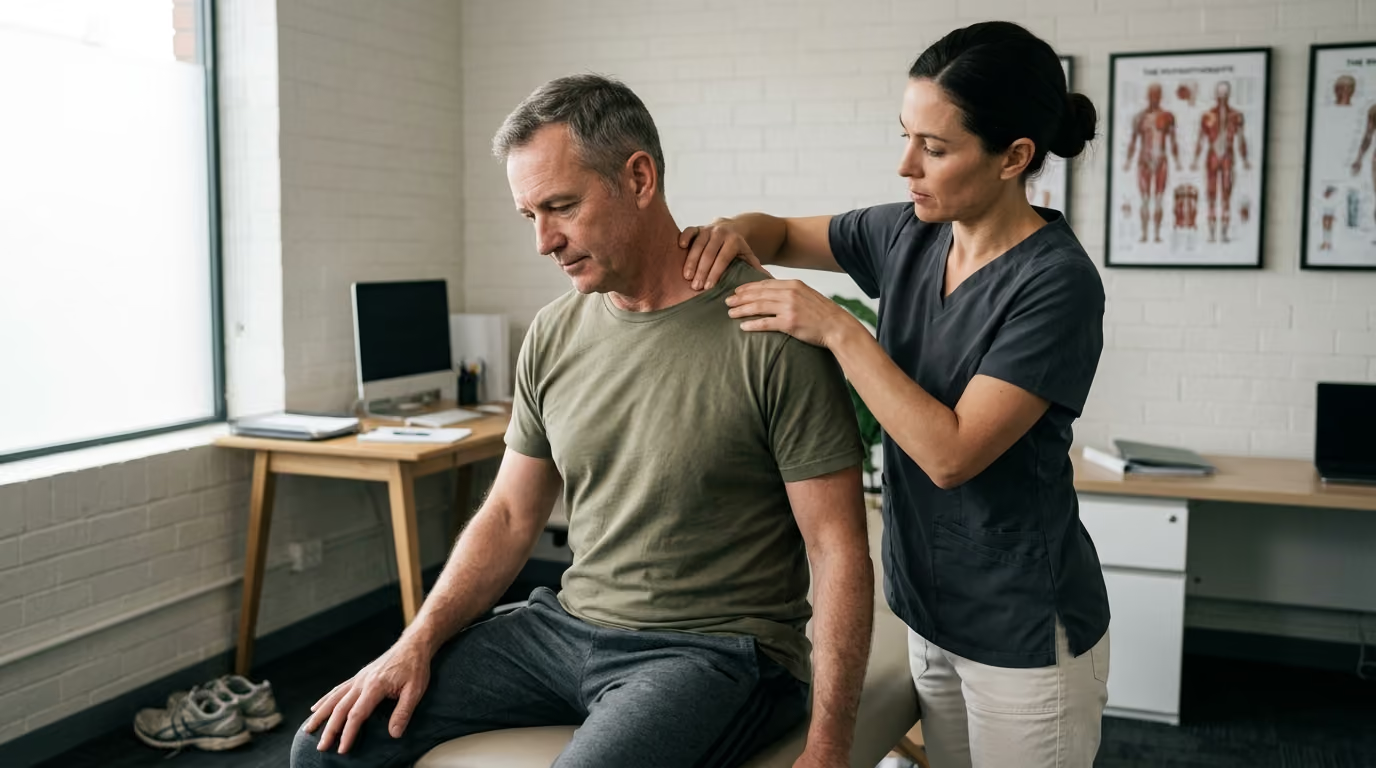

Musculoskeletal disorders affect millions of military veterans who require targeted rehabilitation strategies to manage chronic joint damage and rebuild daily strength.





Waking up at four in the morning to a stiff lower back, aching knees, and sharp shoulder discomfort is a daily reality for many former service members. Stepping out of bed requires a deliberate pause to let the joints unlock and the nervous system settle. Physical training, heavy rucks, operational wear, and old field injuries accumulate over years of active duty. Managing these symptoms often feels like a constant balance between pushing through the day and recovering enough to function tomorrow.
Chronic musculoskeletal pain is a long-term health condition that involves the nervous system, physical tissues, and daily habits. It is not a personal failure, a lack of willpower, or a simple injury that can be cured overnight. This comprehensive resource breaks down the mechanisms behind persistent joint and spine pain, evaluates diagnostic methods, and details an evidence-based stepped-care model from rehabilitation to surgical evaluation.
Musculoskeletal pain persists when physical tissue capacity, movement mechanics, and central nervous system sensitivity remain out of balance. Long-term recovery requires accurate diagnosis, progressive physical rehabilitation, load management, and integrated support for sleep and stress. Passive treatments like rest, medications, or injections provide temporary relief, but lasting physical function requires active conditioning and systematic self-management.
Musculoskeletal conditions represent the single largest category of disability and healthcare utilization across the military and veteran populations. Years of carrying heavy operational gear, repetitive impact from marching or running, vehicle vibration, and acute combat trauma create substantial physical strain. Research shows that physical stress during service frequently leads to lasting joint, tendon, and spinal disorders.
Data from the Veterans Health Administration indicates that over half of veterans receiving VA care have a diagnosed musculoskeletal disorder. A national survey analysis showed that approximately 65.5 percent of military veterans reported experiencing pain during the previous three months, with 9.1 percent reporting severe pain. In broader epidemiological research, the pooled prevalence of chronic non-cancer pain among veterans and service-related groups is estimated at roughly 45 percent. When looking at veterans with specific risk factors or service-connected injuries, that rate often exceeds 50 percent.
Research tracking post-deployment health reveals that joint and spine problems do not resolve on their own once service ends. In a longitudinal study of Operation Enduring Freedom and Operation Iraqi Freedom veterans, the documented prevalence of back problems, joint disorders, and general musculoskeletal conditions rose steadily during each of the first seven years following deployment. Back problem rates increased from approximately 4 percent in the first year to nearly 18 percent among men and almost 20 percent among women by year seven. Joint disorders followed an identical upward path, highlighting the progressive nature of mechanical strain when left unaddressed.
These statistics vary across demographic groups, occupational specialties, and service branches. Findings from the Million Veteran Program demonstrate that osteoarthritis risk varies widely based on age, biological sex, prior traumatic injuries, and specific military duties. Understanding these population trends helps veterans realize that persistent joint or spinal pain is a predictable outcome of sustained physical loading. You can review more population health research in our veteran lifestyle and healthcare section.
To manage persistent discomfort effectively, veterans must understand how pain signals are generated and processed in the body. Acute pain acts as an immediate alarm system that warns of actual or potential tissue damage. Chronic pain, defined clinically as pain lasting or recurring for three months or longer, involves complex changes in both local tissues and the central nervous system. Clinical science classifies chronic pain into three primary mechanisms, which often overlap in service members.
Nociceptive pain arises directly from physical damage or inflammation within body tissues such as muscles, bones, ligaments, tendons, or joint capsules. When you sprain an ankle, strain a lumbar muscle, or irritate a tendon, localized nerve endings called nociceptors detect the mechanical or chemical irritation. This pain pattern is typically mechanical, meaning it changes predictably with specific postures, movements, or physical loads. For example, pain that worsens when bending forward to lift an object and improves when lying flat is characteristic of nociceptive mechanical pain.
Neuropathic pain is caused by direct injury, compression, or disease affecting the nervous system itself. Examples include lumbar radiculopathy, cervical nerve root compression, and peripheral neuropathy. Neuropathic pain often feels like burning, electric shocks, sharp shooting sensations, pins and needles, or deep numbness. It follows specific anatomical pathways, such as a sharp pain that shoots down the back of the thigh into the calf and foot.
Nociplastic pain occurs when the central nervous system amplifies pain signals despite an absence of clear, ongoing tissue damage. In this state, often referred to as central sensitization, the spinal cord and brain become hypersensitive to normal sensory input. Non-painful sensations can feel uncomfortable, and minor tissue irritation can feel severe and widespread. Nociplastic pain is frequently accompanied by persistent fatigue, non-restorative sleep, heightened sensitivity to light or sound, and cognitive fog.
Most veterans with persistent conditions experience a mixed pain state. A veteran with an old combat injury might have nociceptive pain from knee osteoarthritis, neuropathic pain from an old shrapnel wound, and nociplastic amplification driven by years of sleep disruption and physical stress. Recognizing these distinct mechanisms prevents the mistake of treating every flare as a brand-new structural injury.
Military service places unique demands on the human frame. Decades of heavy load carriage, high-impact training, poor sleeping environments, and occupational vibrations create predictable patterns of tissue wear. The most common musculoskeletal disorders diagnosed in veterans share underlying mechanical and physiological drivers.
Low back pain is the most frequent musculoskeletal complaint among veterans. It can stem from intervertebral disc degeneration, facet joint arthrosis, ligament sprains, or muscular deconditioning. Sciatica, or lumbar radicular pain, occurs when a nerve root in the lower spine is irritated or compressed by a herniated disc or narrowing spinal canal. While radiating pain into the leg can be severe, most lumbar conditions do not require invasive surgery and respond well to progressive rehabilitation.
Carrying body armor, wearing heavy helmets, and operating weapons systems place significant static and dynamic loads on the cervical spine and shoulder girdle. Common diagnoses include cervical spondylosis, rotator cuff tendinopathy, subacromial impingement, and labral tears. Chronic neck tension often contributes to cervicogenic headaches, upper back stiffness, and reduced rotational mobility. Shoulder disorders can impair overhead lifting, sleeping on one's side, and routine functional tasks.
The lower kinetic chain absorbs the impact of every ruck march, run, and parachute landing. Patellofemoral pain syndrome, meniscal tears, and hip labral injuries are widespread among active and former service members. In the foot and ankle, plantar fasciitis is particularly prevalent. A military health analysis identified thousands of cases of plantar fasciitis and Achilles tendinopathy, noting that recent deployment and elevated body weight significantly increased the risk of developing these persistent foot and tendon disorders.
Tendinopathy is a chronic condition characterized by localized pain and impaired load tolerance within a tendon, such as the Achilles, patellar, or rotator cuff tendons. Unlike acute tendinitis, which involves short-term inflammation, tendinopathy represents a breakdown in the structural organization of collagen fibers due to chronic overload. Tendons require progressive, controlled mechanical tension to heal and rebuild capacity. Prolonged complete rest weakens the tendon structure, making it even more vulnerable to re-injury when physical activity resumes.
Osteoarthritis involves the progressive thinning of joint cartilage, changes in the underlying bone, and low-grade joint inflammation. When arthritis develops following an acute fracture, ligament rupture, or joint dislocation sustained during military training, it is classified as post-traumatic osteoarthritis. Veterans often develop joint degeneration decades earlier than the general population due to previous high-energy trauma. Management focuses on strengthening surrounding musculature, maintaining joint motion, and optimizing daily physical loading.
Veterans who have undergone limb amputations face complex biomechanical challenges. Residual-limb pain originates in the remaining tissue of the stump, while phantom-limb pain is perceived in the missing body part. Beyond these localized sensations, amputees frequently experience secondary musculoskeletal pain in intact limbs. Compensatory gait mechanics, altered weight distribution, and prosthetic loading often lead to rapid wear and osteoarthritis in the non-amputated limb, as well as chronic lumbar spine strain.
While most musculoskeletal conditions are safe to manage through outpatient rehabilitation and self-care, certain clinical warning signs indicate serious underlying pathology. These symptoms require prompt, comprehensive medical evaluation to prevent permanent nerve injury, systemic illness, or structural instability.
Healthcare providers use specific red flag screening criteria to identify urgent spinal and joint emergencies. In the lumbar and cervical spine, sudden or progressive loss of muscle strength warrants immediate attention. If you experience foot drop, where you cannot lift the front of your foot, or sudden arm weakness that prevents you from gripping objects, seek medical assessment.
The presence of cauda equina syndrome is a true medical emergency that requires emergent magnetic resonance imaging and possible surgical decompression. Warning signs include:
Urgent evaluation is also necessary if musculoskeletal pain is accompanied by systemic symptoms. Unexplained fevers, chills, night sweats, unexpected weight loss, or a history of cancer combined with new, deep bone pain require immediate medical workups to rule out infection or malignancy. A single joint that becomes hot, intensely red, swollen, and exquisitely painful within a few hours may indicate a septic joint infection, which demands prompt joint aspiration and antibiotic therapy.
A common misconception among patients is that every painful joint or spine condition requires an immediate X-ray, CT scan, or MRI. While diagnostic imaging is essential in specific clinical scenarios, routine scanning for uncomplicated musculoskeletal pain often provides little benefit and can sometimes lead to unnecessary medical interventions.
Authoritative guidelines from the Department of Veterans Affairs and the Department of Defense explicitly recommend against routine imaging for acute low back pain in the absence of neurological deficits or red flags. Standard X-rays and MRI scans frequently reveal structural abnormalities that are completely unrelated to the person's current pain. Large-scale imaging studies of completely asymptomatic adults show that over 30 percent of 20-year-olds and more than 80 percent of 50-year-olds have lumbar disc degeneration or bulging discs without any back pain whatsoever.
When an MRI reveals common age-related wear, such as mild disc desiccation, facet arthrosis, or minor cartilage thinning, patients often assume their spine or joint is permanently damaged. This belief can lead to fear-avoidance behavior, where the individual stops moving, lifting, and exercising out of fear of causing further harm. In reality, physical tissues require regular, safe mechanical loading to stay healthy, strong, and resilient.
Diagnostic imaging is clinically useful when it answers a specific medical question and directly alters the treatment plan. Scans are clearly indicated when:
Relying on physical examinations, functional movement testing, and clinical history provides a much more accurate picture of recovery than an isolated scan. Understanding your baseline capacity helps you choose effective strategies in our physical conditioning and strength resources.
Managing chronic pain successfully requires an organized, stepped-care approach. Rather than jumping straight to invasive procedures or passive treatments, evidence-based clinical guidelines recommend beginning with foundational, low-risk therapies and escalating care only when clinically indicated.
Self-management is active, daily healthcare. It provides the foundation for all other treatment steps. Effective self-management includes learning pain physiology, pacing physical tasks to prevent severe flare-ups, and applying heat or cold for short-term comfort. VA educational standards recommend aiming for at least 30 minutes of continuous, tolerable physical activity at least three days per week, modified to individual capability.
Developing a personalized flare-up management plan ensures that temporary increases in pain do not derail long-term progress. A good flare plan involves temporarily scaling back training volume, maintaining gentle range of motion, focusing on diaphragmatic breathing, and avoiding prolonged bed rest. Keeping the body moving prevents joint stiffness and muscular deconditioning.
Structured rehabilitation is the core active treatment for chronic musculoskeletal conditions. Working with a physical therapist, occupational therapist, or kinesiotherapist helps restore joint mechanics, rebuild muscular strength, and improve functional endurance. A proper rehabilitation program establishes clear baseline measurements, sets objective movement goals, and applies progressive overload to rebuild tissue capacity.
Effective rehabilitation moves far beyond passive ultrasound, hot packs, or simple stretching. It emphasizes active, resistance-based loading tailored to the affected tendon, muscle group, or joint complex. Occupational therapy helps modify workstation ergonomics, vehicle seating, and daily lifting mechanics to minimize unnecessary joint strain.
Because the central nervous system processes both emotional stress and physical pain through overlapping neural pathways, psychological and integrative treatments play a vital role. Cognitive Behavioral Therapy for Chronic Pain teaches veterans to identify unhelpful thought patterns, reduce fear of movement, and develop effective coping strategies. Acceptance and Commitment Therapy focuses on pursuing meaningful life values despite physical discomfort.
Integrative modalities also demonstrate clear benefits in clinical trials. Approaches such as acupuncture, yoga, tai chi, and mindfulness-based stress reduction help calm an overactive nervous system, reduce muscle guarding, and improve body awareness. Meta-analyses of military and veteran populations show that complementary practices reliably reduce pain intensity and enhance daily physical functioning.
When non-pharmacological methods require additional support, targeted medications can help manage persistent symptoms. Medications should be selected based on the specific pain mechanism, overall health status, and potential side effects. Clinical guidelines suggest using topical agents, nonsteroidal anti-inflammatory drugs, or specific central-acting agents like duloxetine for chronic back pain. Drug therapies should always support active rehabilitation rather than serve as a standalone solution.
Interventional procedures represent targeted options for specific clinical indications, not routine steps for general aches. Trigger point injections may help alleviate localized, severe myofascial pain that restricts movement. Viscosupplementation or corticosteroid injections into peripheral joints like the knee can provide temporary relief to facilitate active physical therapy.
VA and DoD guidelines advise caution regarding spinal interventional procedures. Long-term use of epidural steroid injections is generally not recommended for non-radicular low back pain or spinal stenosis, and routine steroid injections into spinal facet joints show limited long-term benefit. Injections do not strengthen muscles, improve stability, or fix movement mechanics, meaning their primary value lies in creating a temporary window of relief to enable active exercise.
Surgery is reserved for clear anatomical problems that correlate precisely with physical examination findings and have failed to respond to comprehensive conservative care. Indications for elective surgery include severe, progressive joint destruction requiring total joint arthroplasty, or structural spinal compression causing persistent nerve root compromise.
Elective surgery should always be approached with realistic expectations regarding outcomes, risks, and recovery timelines. Operating on an abnormal imaging finding without matching physical symptoms rarely relieves pain and can create secondary complications. When indicated, pre-surgical physical conditioning and post-operative rehabilitation are critical for optimal recovery.
Pharmacological management of chronic musculoskeletal pain requires a careful balance between functional symptom relief and long-term health risks. Polypharmacy, the concurrent use of multiple prescription medications, is common among veterans and increases the risk of adverse drug interactions, organ toxicity, and cognitive impairment.
Topical analgesics, including topical NSAIDs like diclofenac gel and lidocaine patches, offer localized symptom relief with minimal systemic absorption. They are particularly useful for superficial joints such as the knees, ankles, wrists, and hands. Oral NSAIDs like ibuprofen, naproxen, and meloxicam reduce inflammatory pain effectively, but long-term daily use carries notable risks for gastrointestinal ulceration, renal impairment, and cardiovascular strain.
Acetaminophen helps manage mild to moderate pain, provided total daily doses remain strictly within safe liver limits. For chronic low back pain and conditions involving mixed mechanical and neuropathic features, duloxetine, a serotonin-norepinephrine reuptake inhibitor, has demonstrated clinical efficacy in improving pain scores and daily function. Medications targeting neuropathic pain, such as gabapentin or pregabalin, should be reserved for confirmed nerve injuries or radiculopathies. Short-term muscle relaxants may be considered during acute muscle spasms, but their sedative properties require caution regarding driving and daily alertness.
VA and DoD clinical practice guidelines provide clear, evidence-based recommendations regarding opioid medications for chronic non-cancer pain. Guidelines strongly recommend prioritizing self-management, active rehabilitation, and non-opioid medications over opioids. Clinical evidence demonstrates that long-term opioid therapy does not reliably improve chronic pain intensity or long-term functional capacity, while introducing significant risks of tolerance, physical dependence, hyperalgesia, and accidental overdose.
Guidelines recommend against initiating long-term opioid therapy for chronic musculoskeletal pain. When short-term opioids are prescribed for acute surgical recovery or severe trauma, best practices require:
Veterans currently taking long-term opioids should not abruptly stop their medication, as rapid withdrawal can cause severe physical and psychological distress. Instead, dose reductions should be individualized, slow, and closely coordinated with a medical provider. Combining opioids with alcohol, benzodiazepines, or untreated sleep apnea dramatically amplifies respiratory depression risks and must be carefully managed.
Chronic pain does not exist in an anatomical vacuum. The nervous system constantly integrates physical sensory inputs with emotional processing, stress hormones, and cognitive states. Among military veterans, persistent musculoskeletal pain frequently co-occurs with post-traumatic stress disorder, a history of mild traumatic brain injury, and chronic sleep disorders.
Research indicates that approximately one in five veterans receiving VA care for chronic pain also meets the clinical criteria for PTSD. When a person lives with trauma-related hyperarousal, the sympathetic nervous system remains persistently elevated. This sustained fight-or-flight state increases resting muscle tension, alters cortisol regulation, and lowers the neurological threshold at which sensory signals register as painful. Pain exacerbates emotional distress and hypervigilance, while trauma-related stress increases physical pain perception.
Mild traumatic brain injury adds another layer of complexity to pain management. Evidence syntheses by the Department of Veterans Affairs show that veterans with a history of mTBI, particularly when combined with PTSD, experience a significantly higher prevalence and severity of chronic pain than those without such injuries. Brain injuries can disrupt central pain-modulating pathways, impair sleep architecture, and cause lingering vestibular issues that alter gait and balance, further straining musculoskeletal joints.
Sleep disruption is one of the strongest predictors of chronic pain severity. Non-restorative sleep, frequent nighttime awakenings, and untreated obstructive sleep apnea prevent physical tissue repair and impair descending pain-inhibition pathways in the central nervous system. Improving sleep hygiene, treating airway obstruction, and establishing consistent recovery routines are essential components of any pain management plan. You can explore detailed sleep restoration protocols in our recovery and sleep strategies resources.
Coordinating care across physical therapy, primary care, behavioral health, and sleep medicine ensures that all contributors to chronic pain are addressed simultaneously. Treating physical joint mechanics while ignoring severe insomnia or trauma symptoms limits overall recovery. Integrated, whole-person care provides the highest probability of restoring physical capability.
Applying clinical principles to daily life is easier when examining common scenarios encountered by former service members. These six case studies illustrate how to evaluate symptoms, apply conservative treatments, and make informed medical decisions.
A 34-year-old veteran experiences sudden, sharp lower back pain while deadlifting in the gym. The pain is concentrated in the lumbar region, radiating across the upper gluteal muscles without traveling below the knee. There is no leg weakness, numbness, fever, or change in bowel and bladder function.
The clinical presentation reflects uncomplicated acute mechanical low back pain. In line with VA guidelines, immediate MRI or X-ray imaging is unnecessary and not recommended. The appropriate course of action involves:
A 48-year-old veteran with a ten-year history of intermittent back stiffness notices a new, sharp pain shooting down the right leg into the calf and foot. Over the past two weeks, the veteran has begun tripping over the edge of carpets because they cannot fully dorsiflex or lift their right foot.
This scenario demonstrates radiculopathy accompanied by a progressive motor deficit, commonly known as foot drop. Unlike uncomplicated back pain, progressive neurological weakness is a red flag that warrants prompt clinical evaluation. The recommended steps include:
A 41-year-old veteran increases running mileage from five miles to twenty miles per week while training for an event. Within three weeks, a localized, burning ache develops along the mid-portion of the Achilles tendon, feeling stiffest every morning and tender to the touch.
This pattern indicates mid-portion Achilles tendinopathy caused by a rapid increase in mechanical load that exceeded the tendon's adaptive capacity. Complete rest will only weaken the tendon further. The evidence-based recovery pathway involves:
A 52-year-old veteran with a history of an anterior cruciate ligament tear sustained during airborne operations reports progressive, deep knee aching, joint stiffness after sitting, and difficulty descending stairs.
This presentation aligns with post-traumatic osteoarthritis. Treatment should prioritize strengthening the surrounding musculature to reduce compressive forces across the joint cartilage. The structured plan includes:
A 39-year-old combat veteran reports diffuse, widespread body aches, severe neck tension, chronic lower back stiffness, nightly nightmares, and daytime exhaustion. Previous medical workups showed no structural fractures or surgical spine conditions.
This scenario represents a complex, nociplastic pain state driven by prolonged autonomic nervous system arousal and severe sleep disruption. Treating isolated joints will not resolve the symptoms. An effective, integrated approach includes:
A 36-year-old veteran with a transtibial amputation of the left leg develops worsening pain in the right knee and lower back after increasing daily walking distances.
This case highlights secondary musculoskeletal overload caused by asymmetrical gait mechanics. The veteran naturally shifts weight away from the prosthetic socket, placing excessive mechanical stress on the sound limb and lumbar spine. The management strategy includes:
Taking charge of long-term joint, spine, and muscle health requires establishing sustainable daily habits. You do not need complicated routines or extreme fitness regimens to make meaningful progress. Focusing on foundational health pillars restores physical capacity and builds resilience.
Physical tissues adapt to the demands placed upon them. Avoid alternating between completely sedentary periods and intense, exhausting workouts. Establish a consistent daily movement baseline by incorporating 20 to 30 minutes of low-impact walking, cycling, or swimming. Regular, moderate movement circulates joint fluid, maintains spinal disc hydration, and prevents muscle stiffness.
Muscles act as natural shock absorbers for your joints. Building strength in your hips, glutes, quadriceps, upper back, and core takes direct mechanical pressure off your spine, knees, and shoulders. Focus on basic, multi-joint movement patterns, such as squats to a chair, hip hinges, rows, and overhead presses, using controlled tempos and tolerable resistance. Progress the weight or repetitions gradually over weeks and months. You can find comprehensive conditioning frameworks in our evidence-based veteran health resources.
Physical tissue remodeling and central nervous system regulation occur primarily during deep sleep. Aim for seven to eight hours of quality sleep per night. Keep your bedroom dark, quiet, and cool, and avoid screens and heavy meals in the two hours leading up to bedtime. If you wake up gasping, snore loudly, or feel exhausted despite eight hours in bed, request a sleep study through your healthcare provider to evaluate for sleep apnea.
Pain fluctuations are a normal part of living with a chronic musculoskeletal condition. A flare does not mean you have destroyed your progress or caused fresh structural damage. When symptoms spike, execute a planned response:
When meeting with your healthcare team, clear communication ensures you receive tailored, effective care. Bring a written record of your symptoms, what makes them better or worse, and how they directly limit your daily activities. Frame your goals around functional milestones, such as walking a mile without stopping or carrying groceries comfortably, rather than just chasing a zero-out-of-ten pain score.
To ensure your clinical consultations are focused and productive, consider asking your physician or physical therapist these practical questions:
Investigating your health and adopting structured routines can also benefit from our sleep, stress and resilience resources for managing long-term physical readiness.
Yes, in most cases you can and should continue resistance training. Imaging findings like bulging discs, mild facet arthrosis, and cartilage thinning are common anatomical variations found in both painful and pain-free individuals. Resistance training strengthens the muscles that support your spine and joints, improving stability and load tolerance. The key is to modify exercise selection, load, and range of motion so that movements remain tolerable and do not cause significant symptom flares during or after training.
Muscle fatigue and delayed-onset muscle soreness typically feel like a broad, dull ache across the belly of a muscle group. It usually peaks 24 to 48 hours after unaccustomed physical activity and improves steadily with light movement. In contrast, an acute structural joint or ligament injury often presents with sudden, sharp, localized pain during a specific movement, accompanied by visible joint swelling, warmth, joint instability, or a sensation that the joint is locking or giving way.
Cold weather and drops in barometric pressure can cause joint capsules, tendons, and surrounding scar tissue to contract and expand at different rates, increasing mechanical tension on sensitive nerve endings. Cooler temperatures also reduce blood circulation to peripheral tissues and thicken synovial fluid within joints, leading to increased stiffness and discomfort. Dressing warmly, performing gentle indoor warm-ups, and applying moist heat before physical activity can help minimize cold-related joint stiffness.
Every additional pound of body weight increases the compressive mechanical load placed across your lower back, hips, knees, and feet during standing, walking, and running. For example, during normal walking, the force placed across the knee joint is roughly three to four times your total body weight. Excess weight also produces low-grade, systemic inflammatory chemicals called adipokines, which can irritate tendons and cartilage throughout the body, including joints that do not bear weight.
This article is published strictly for educational and informational purposes and does not constitute individualized medical advice, clinical diagnosis, or treatment recommendations. Veterans and active-duty service members should consult a qualified physician, physical therapist, or healthcare provider before starting any new exercise routine, altering prescription medications, or making substantial changes to their healthcare plan. Never ignore or delay seeking professional medical guidance because of information you have read online.
Follow BattleVet for practical guidance on military and veteran health, strength, recovery, testosterone, sleep and healthy aging. Stay connected for new articles, research backed insights and clear information to help you stay capable for the years ahead.


Build better habits around strength, recovery, sleep, hormones and healthy aging with practical guidance for active military personnel and veterans.
Explore BattleVet