
The Complete Guide to Balance, Fall Prevention, and Safer Mobility for Veterans

Improved mobility and lasting physical independence help veterans overcome service injuries through practical fall screening and essential daily balance exercises.

Share
White Reddit alien mascot face icon on transparent background.White paper airplane icon on transparent background.White stylized X logo on black background, representing the brand X/Twitter.
August 19, 2026
Veteran lifestyle and healthcare

You wake up at two in the morning to use the bathroom, stepping out of bed onto a cold floor. Your feet feel slightly stiff from years of joint wear, and the hallway is completely dark. As you turn the corner, your heel catches the edge of a rug, forcing you to reach quickly for the wall to steady yourself. Your heart races, but you brush it off as normal tiredness rather than a warning sign.

Most people assume fall prevention is only for the elderly, but physical instability affects service members and veterans across every generation. Blast exposures, joint damage, nerve changes, and sleep disruptions can alter physical coordination decades before traditional retirement age. Understanding your physical stability and taking early action is essential for long term independence.

Falls are not an inevitable result of military service or aging, but rather complex physical events that you can actively reduce through lower-body strength training, regular medication audits, vestibular rehabilitation, and targeted environmental modifications.

Maintaining physical balance requires constant coordination among three separate bodily systems. Your eyes track your position in space, your inner ears sense motion and gravity, and the nerve endings in your joints tell your brain where your limbs are placed. When military injuries, chronic pain, or nerve damage disrupt any of these sensory pathways, your body struggles to correct small stumbles. Proactive screening and structured mobility training restore your physical control, protect your joints, and keep you moving safely in your community.

  • THE SENSORY BALANCE TRIAD
  • 1. VISUAL SYSTEM 2. VESTIBULAR SYSTEM 3. PROPRIOCEPTION
  • Eyes track spatial Inner ears detect Joint & foot
  • position & horizon gravity & motion pressure nerves
  • CENTRAL BRAIN STEM
  • Integrates sensory input
  • MOTOR OUTPUT SYSTEM
  • Muscles, ankles, hips, gait

Screen Your Personal Fall and Mobility Risks

Evaluating your stability begins with an honest review of your daily movement patterns and service-connected conditions. According to the Centers for Disease Control and Prevention (CDC) STEADI framework, screening helps identify hidden risks before a serious injury occurs. A single fall doubles your likelihood of falling again, making early identification critical for staying active.

Veterans face unique physical risks compared to the civilian population. A history of blast exposure or traumatic brain injury can cause subtle, long-lasting balance deficits that standard physical exams may miss. Service-related joint degeneration in the knees, hips, and lower back alters how you clear obstacles when walking. Furthermore, conditions such as peripheral neuropathy from toxic exposures or diabetes reduce the sensory feedback from your feet.

You can assess your baseline stability by answering several straightforward questions:

  • Have you experienced a fall or a near fall within the past twelve months?
  • Do you ever feel unsteady while standing up, turning corners, or walking across uneven grass?
  • Do you find yourself avoiding daily errands or social activities because you worry about losing your footing?
  • Do you feel lightheaded, faint, or unsteady when rising quickly from a bed or chair?
  • Do you have difficulty seeing steps, changes in floor surfaces, or street curbs in dim light?
  • Have you sustained a concussion, mild traumatic brain injury, or blast exposure during your service?
  • Do you regularly take multiple prescription medications for pain, sleep, blood pressure, or mood?
  • Do you experience numbness, tingling, or sharp pain in your feet that affects how you place your steps?

If you answered yes to any of these questions, you should seek a comprehensive clinical assessment. Answering yes does not mean you have lost your independence. Instead, it highlights specific, modifiable factors that you and your healthcare team can address through targeted physical therapy and medical reviews. Proactive assessment is a standard part of healthy aging and longevity resources designed to preserve physical performance.

Near falls are critical early warnings that demand attention. A near fall occurs when you trip, slip, or lose your balance but manage to catch yourself on a doorframe, counter, or piece of furniture. Dismissing near falls as simple clumsiness is a common mistake. Tracking these events helps your physical therapist pinpoint whether your instability stems from weak ankle muscles, delayed nerve signals, or poor lighting.

Distinguish Mechanical Slips From Medical and Vestibular Instability

Understanding why you feel unsteady is necessary for choosing the correct intervention. A mechanical fall occurs when an external physical factor, such as a loose cord or slippery surface, disrupts your footing. In contrast, medical instability originates inside your body, often presenting as dizziness, lightheadedness, or sudden disorientation.

Vestibular dysfunction is common among veterans who experienced blast waves, concussions, or heavy vehicle accidents. The inner ear houses tiny fluid-filled canals and otolith organs that tell your brain where your head is in relation to gravity. Blast shockwaves can dislodge delicate inner-ear crystals or damage the vestibular nerve. Research from the Department of Veterans Affairs demonstrates that veterans with mild traumatic brain injuries have distinct, measurable stability deficits compared to uninjured peers.

To help your healthcare provider diagnose the underlying issue, you must be able to describe your symptoms accurately:

  • SYMPTOM CLASSIFICATION MATRIX
  • SYMPTOM TYPE PHYSICAL SENSATION PRIMARY CAUSE
  • Vertigo Spinning room, Inner ear crystal
  • whirling illusion displacement
  • Lightheadedness Faintness, floating, Blood pressure
  • impending blackout medications
  • Disequilibrium Unsteadiness on feet, Neuropathy, joint
  • clumsy walking weakness, spine
  • Visual Sensitivity Disorientation in Sensory conflict
  • crowds, dense aisles post-TBI process

Vertigo

Vertigo creates the false sensation that you or your surroundings are spinning, tilting, or moving. It is often triggered by sudden head movements, rolling over in bed, or looking up at a high shelf. The most common form is Benign Paroxysmal Positional Vertigo, which occurs when loose calcium carbonate crystals drift into the inner-ear canals. A trained physical therapist can resolve this condition using simple, non-invasive head repositioning maneuvers.

Lightheadedness

Lightheadedness feels like impending faintness, weakness, or a floating sensation without the illusion of spinning. This symptom is frequently linked to cardiovascular changes, dehydration, or postural blood pressure drops. When you stand up, gravity pulls blood toward your lower extremities. If your vascular system cannot adjust quickly enough, your brain briefly receives less blood flow, causing momentary instability.

Disequilibrium

Disequilibrium is a sensation of unsteadiness and poor coordination in your legs and torso without dizziness in your head. You might feel as though you are walking on a moving boat or on soft foam. This issue often stems from peripheral nerve damage, severe spinal arthritis, muscle weakness, or joint replacement recovery. Veterans with disequilibrium often compensate by widening their walking stance or looking down at their feet constantly.

Visual Motion Sensitivity

Visual motion sensitivity occurs when your brain struggles to integrate visual data with signals from your inner ears and joints. Walking through busy grocery store aisles, looking at high-contrast carpet patterns, or watching fast-moving traffic can trigger immediate unsteadiness and nausea. This problem is frequent after traumatic brain injuries. Specialized vestibular therapy helps retrain the brain to process complex visual environments without triggering physical instability.

Train Dynamic Balance and Functional Strength

Targeted exercise is the single most effective way to prevent falls and preserve independent mobility. The United States Preventive Services Task Force (USPSTF) assigns a Grade B recommendation to structured exercise for community-dwelling adults at increased risk of falling. High-certainty Cochrane reviews confirm that programs combining progressive balance exercises and functional strength training significantly lower both the overall rate of falls and the number of people who fall.

A complete training regimen must address both static balance and dynamic stability. Static balance is your ability to hold a steady position while stationary, such as standing on one foot at a kitchen counter. Dynamic balance is your capacity to stay upright while your body is in motion, such as turning quickly, stepping over an obstacle, or carrying groceries across an uneven driveway. You can build these capabilities using structured strength, fitness, and body composition routines adapted for stability.

  • BALANCE EXERCISE PROGRESSION LADDER
  • LEVEL 4: DYNAMIC CHALLENGE
  • Multidirectional lunges, obstacle stepping, visual head turns
  • LEVEL 3: REDUCED SUPPORT
  • Single-leg stance, heel-to-toe tandem stands (fingertip touch)
  • LEVEL 2: WEIGHT SHIFTS & STRENGTH
  • Sit-to-stand repetitions, lateral side-steps, calf raises
  • LEVEL 1: STABLE SEATED BASE
  • Seated posture alignment, seated core control, ankle pumps

Level 1: Foundational Seated Stability

If standing exercises feel unsafe, start from a supported, seated position on a firm chair:

  • Seated Posture Realignment: Sit upright without resting your back against the chair. Engage your abdominal muscles, pull your shoulder blades down and back, and hold for thirty seconds.
  • Seated Ankle Pumps and Circles: Lift your feet slightly and point your toes forward, then flex them upward toward your shins. Rotate your ankles in smooth circles to maintain joint mobility and improve circulation.
  • Seated Weight Shifts: Slowly lean your torso to the left, loading your left hip, then return to center and lean to the right. This builds sensory awareness in your pelvic stabilizers.

Level 2: Functional Strength and Supported Transitions

Once seated movements feel comfortable, progress to supported standing exercises using a sturdy, fixed surface:

  • Sit-to-Stand Repetitions: Sit on a sturdy chair with your feet flat on the floor, shoulder-width apart. Lean your chest slightly forward, push through your heels, and rise to a full standing position without using your hands if possible. Slowly lower yourself back down over a count of three seconds. Repeat for eight to ten repetitions.
  • Countertop Heel-to-Shin Calf Raises: Stand facing a kitchen counter with your fingertips resting lightly on the surface. Raise your body up onto the balls of your feet, hold for two seconds, and lower your heels slowly. Then, lift your toes off the floor to stand on your heels, strengthening the anterior tibialis muscles that prevent toe dragging.
  • Supported Side Stepping: While holding a stable counter, step laterally to the right for ten steps, keeping your toes pointed straight forward. Step back to the left for ten steps. This activates the gluteus medius muscles, which control side-to-side hip stability during walking.

Level 3: Static Balance Challenges

These exercises challenge your base of support. Always perform them near a wall, counter, or sturdy support rail so you can catch yourself instantly:

  • Feet-Together Quiet Standing: Stand with your feet touching side by side, hands hovering just above a support surface. Hold this position for thirty seconds while maintaining steady breathing.
  • Semi-Tandem and Full Tandem Stance: Place the heel of one foot directly against the big toe of the other foot (semi-tandem), or directly in front of the toes in a straight line (full tandem). Maintain your balance for twenty to thirty seconds, then switch the front and back feet.
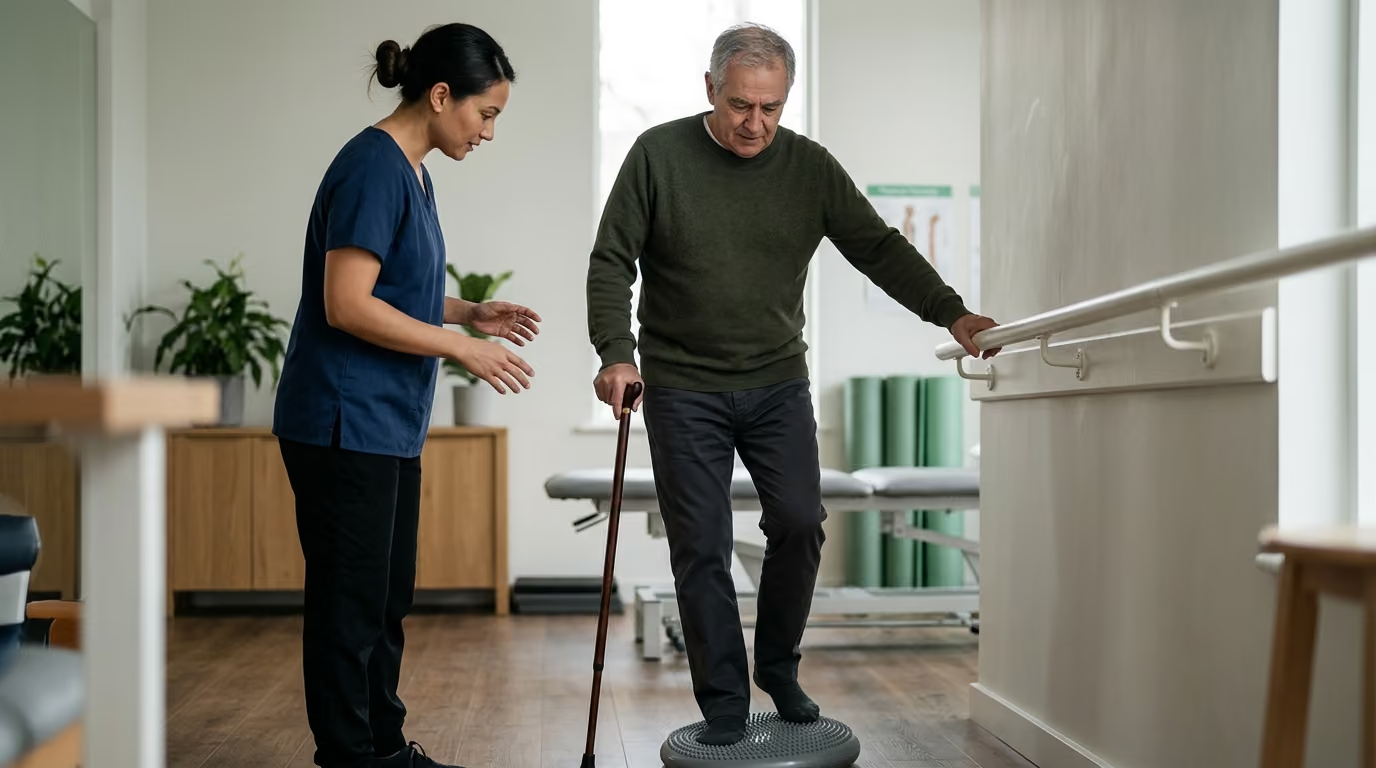
  • Single-Leg Stance: Lift one foot slightly off the floor, balancing entirely on the supporting leg with a slight bend in the knee. Aim to hold for ten to twenty seconds per side, keeping your hands hovering over the countertop.

Level 4: Dynamic and Reactive Stepping

Dynamic drills simulate the sudden balance corrections needed in daily life:

  • Multidirectional Stepping Matrix: Stand in the center of an open area near a support rail. Step forward with your right foot, return to center, step diagonally forward, return, step directly sideways, return, and step backward. Repeat the pattern with your left leg.
  • Walking with Visual Shifts: Walk in a straight line across a clear room while turning your head smoothly to look left and right with every two steps. This drill trains your inner ear and visual system to function together while your body is in motion.
  • Tai Chi for Balance: VA medical centers frequently offer Tai Chi programs, such as Tai Chi for Arthritis and Fall Prevention. Tai Chi emphasizes continuous, flowing weight shifts, rotational trunk movements, and intentional foot placement, all of which reduce fall rates in clinical studies.

When training, follow strict safety guidelines. Never practice difficult balance tasks alone if you have a history of frequent falls. Use stable counters rather than lightweight chairs that can slide or tip over. If you feel sudden chest pain, severe shortness of breath, acute joint pain, or intense dizziness, stop exercising immediately and consult your physician.

Evaluate Medications and Manage Blood Pressure Drops

Prescription drugs, over-the-counter supplements, and drug interactions are among the most common, modifiable causes of unsteadiness in veterans. As we age, our kidneys and liver process medications more slowly, allowing chemical compounds to remain active in the body longer. When multiple medications affect the central nervous system or cardiovascular function, fall risk rises dramatically.

Many veterans take medications for chronic pain, sleep disruptions, high blood pressure, or psychological health. While these medications provide vital relief, certain classes directly impair physical balance, alertness, and reaction times. You can explore broader strategies for physical recovery and medication management in our dedicated recovery and sleep articles.

  • MEDICATION CLASSES REQUIRING MONITORING
  • MEDICATION TYPE COMMON EXAMPLES IMPACT ON BALANCE
  • Sedatives & Sleep Zolpidem, temazepam, Morning groggy
  • Aids over-the-counter PMs slowed reflexes
  • Blood Pressure Drugs Beta-blockers, ACE Orthostatic drops
  • inhibitors, diuretics faintness rising
  • Pain Medications Opioids, muscle Drowsiness, poor
  • relaxants, gabapentin depth perception
  • Antidepressants SSRIs, SNRIs, Altered gait
  • tricyclic compounds delayed reaction

Never stop taking a prescribed medication on your own. Abruptly discontinuing certain blood pressure pills, pain medications, or antidepressants can cause dangerous rebound effects, seizures, or rapid heart rates. Instead, bring all your pill bottles, including vitamins and over-the-counter sleep aids, to your VA primary care provider or clinical pharmacist for a comprehensive medication review. Ask your provider whether any doses can be lowered, simplified, or switched to alternatives that do not cause sedation.

Manage Orthostatic Hypotension

Orthostatic hypotension is a sudden drop in blood pressure that happens when you move from lying down or sitting to standing upright. Gravity pulls blood into the abdomen and legs, temporarily reducing blood flow to the brain. This results in lightheadedness, graying vision, or sudden stumbling.

You can manage mild orthostatic symptoms using several practical behavioral habits:

  • Pause at the Edge of the Bed: When waking up, sit upright on the edge of the bed for thirty to sixty seconds before standing. Let your cardiovascular system adjust to the postural shift.
  • Perform Ankle Pumps Before Rising: While sitting, vigorously pump your feet up and down ten times. This contracts your calf muscles, acting as a muscular pump to push blood back up toward your heart and brain.
  • Hydrate Consistently: Dehydration decreases your total blood volume, making blood pressure drops more severe. Keep a glass of water on your nightstand and drink fluids regularly throughout the day, unless you have fluid restrictions from a kidney or heart specialist.
  • Stand in Stages: When rising from a deep armchair, lean forward, stand up smoothly while holding the armrests, and pause for three full seconds before taking your first step.

Modify Your Home Environment Room by Room

Approximately half of all falls occur within the home, according to the Department of Veterans Affairs. Everyday environments often contain hidden hazards such as dim lighting, loose rugs, slippery surfaces, and cluttered pathways. By methodically inspecting and updating each room, you create a living space that supports safe, independent mobility.

  • ROOM-BY-ROOM SAFETY BLUEPRINT
  • BATHROOM
  • BEDROOM
  • STAIRWAYS
  • Wall grab bars Direct night path Dual handrails
  • Non-slip tub mat Bedside lamp switch High-contrast
  • Raised toilet Cleared floor zone tread markers
  • LIVING AREAS
  • KITCHEN
  • ENTRYWAYS
  • Zero throw rugs Waist-level storage Zero-step entry
  • Tucked lamp cords Prompt spill cleanup Bright exterior
  • Wide open aisles No high step-stools sensor lights

Entryways and Hallways

  • Eliminate Throw Rugs: Small decorative rugs and runners are major tripping hazards. Remove them entirely, or secure them to the subfloor with heavy-duty, double-sided flooring tape.
  • Secure Electrical Cords: Run electrical cords along baseboards, behind furniture, or through wall-mounted cable channels. Never run cords across walkways or under carpets.
  • Improve Lighting Levels: Replace dim light bulbs with high-lumen, non-glare LED bulbs. Install motion-sensor night-lights along hallways to automatically illuminate the path between rooms.
  • Mark Floor Transitions: Use contrasting colored tape or transition strips where hardwood meets carpet, or where floor elevations change between rooms.

Bathrooms

  • Install Professional Grab Bars: Mount heavy-duty grab bars securely into wall studs beside the toilet and inside the tub or shower stall. Never use towel racks or sliding glass door frames for balance support, as they cannot hold your body weight.
  • Use Nonslip Surfaces: Place textured, rubberized nonslip mats or adhesive treads inside the shower or tub basin. Ensure the floor outside the shower has a rubber-backed, non-skid bath mat.
  • Consider Adaptive Seating: A sturdy shower chair and a handheld showerhead allow you to bathe safely from a seated position, conserving energy and eliminating the risk of slipping while shampooing.
  • Raise Toilet Height: Install a raised toilet seat or an ADA-compliant comfort-height toilet to reduce the effort needed to sit down and stand up.

Bedrooms

  • Clear the Nighttime Path: Keep the walking route from your bed to the bathroom completely free of laundry hampers, shoes, blankets, and loose furniture.
  • Accessible Lighting: Place a lamp or touch-activated light switch within arm's reach of your pillow so you never have to navigate a dark room to find a light.
  • Phone and Emergency Access: Keep a charged cell phone, landline, or medical alert device on your bedside table so you can call for assistance if an emergency arises.
  • Appropriate Bed Height: Ensure your mattress is at a height where your feet rest flat on the floor when you sit on the edge. A bed that is too high or too low makes safe transfers difficult.

Kitchens and Living Areas

  • Rearrange Daily Items: Move frequently used plates, cookware, and food items to shelves between waist and shoulder height. This prevents you from overreaching on tiptoes or bending deeply.
  • Avoid Unstable Step Stools: If an item is out of reach, use a wide-base step stool with an attached high handrail, or ask a family member for assistance rather than standing on a standard chair.
  • Wipe Up Spills Immediately: Keep paper towels or a mop accessible to clean up spilled water, grease, or food particles on tile or linoleum right away.
  • Arrange Furniture for Clear Walkways: Arrange couches, coffee tables, and chairs to provide wide, direct walking paths through the room. Ensure furniture edges do not force you to make sharp, awkward turns.

If you have complex mobility challenges, service-connected disabilities, or recurrent falls, ask your VA primary care physician for a referral to an Occupational Therapist. VA occupational therapists can conduct an in-home safety assessment, recommend custom structural modifications, and help you access VA adaptive housing grants.

Select and Maintain Appropriate Footwear and Assistive Devices

Your feet are your physical connection to the ground, and your footwear directly influences how your nerves and muscles sense the floor. Walking barefoot, wearing loose slip-on clogs, or wearing smooth-soled slippers significantly increases your risk of slipping and tripping. Safer footwear provides a stable foundation and clear sensory feedback.

Safer footwear should feature several key design elements:

  • ANATOMY OF A STABLE SHOE
  • Firm Heel Counter
  • Adjustable Closure
  • Locks heel in place Laces or secure velcro
  • Low, Wide Heel
  • Wide Toe Box
  • Broad ground contact Prevents toe pinching
  • Beveled edge (no catch) Allows natural splay
  • Firm Heel Counter: The back of the shoe must be rigid enough to hold your heel securely in place, preventing your foot from sliding sideways.
  • Low, Broad Heel: A wide, low heel increases your surface contact area and keeps your weight centered over your ankles.
  • Beveled, Low-Profile Tread: While outdoor hiking boots have deep lugs, aggressive treads can catch on indoor carpets, causing trips. Choose a flat, textured rubber sole that grips smooth floors without catching carpet fibers.
  • Secure Fasteners: Choose shoes with laces or adjustable hook-and-loop straps to ensure a snug fit that accommodates normal foot swelling throughout the day.
  • Wide Toe Box: Your toes need room to splay naturally when bearing weight, which helps activate balance reflexes and prevents blisters or nerve irritation.

Select and Use Assistive Mobility Devices

Canes, walkers, and rollators are valuable mobility tools, but only when they are properly fitted and used with correct walking mechanics. Using an improperly sized cane or a broken walker creates new balance hazards and strains your shoulders and back.

  • MOBILITY DEVICE SELECTION FRAMEWORK
  • DEVICE TYPE BEST SUITED FOR KEY USAGE RULE
  • Single-Point Cane Mild unsteadiness, Hold on opposite
  • single joint pain side of bad joint
  • Quad Cane Greater stability, All four points
  • slow, deliberate steps flat on the floor
  • Standard Walker Significant weakness, Pick up entirely
  • (No wheels) non-weight bearing step into center
  • Two-Wheeled Walker Moderate instability, Push smoothly
  • normal gait pattern keep frame close
  • Four-Wheel Rollator Longer distances, Never use seat as
  • built-in rest seat a wheelchair base

To measure a standard cane or walker, stand upright with your normal walking shoes on, letting your arms hang relaxed at your sides. The top handle of the cane or walker grip should align with the crease of your wrist. When you place your hand on the grip, your elbow should bend comfortably at a fifteen to twenty-degree angle.

When using a single-point cane for one-sided knee or hip pain, hold the cane in the hand opposite your injured or painful leg. Move the cane forward simultaneously with the painful leg, placing your weight through your arm and the cane to relieve pressure on the joint. Regularly inspect the rubber tips on the bottom of canes and walkers, replacing worn or cracked rubber promptly to maintain traction on wet or smooth surfaces.

Adapt Mobility Protocols for Specific Veteran Populations

Fall prevention requires tailored strategies based on your current physical capabilities, service injuries, and primary mode of mobility. A strategy designed for an independent runner does not fit a veteran managing a spinal cord injury, limb loss, or advanced joint disease. Tailoring your approach ensures safety while preserving functional freedom.

  • MOBILITY GROUP ADAPTATION PRIORITIES
  • 1. INDEPENDENT WALKERS
  • Focus: Dynamic balance drills, footwear audits, terrain shifts
  • 2. ASSISTIVE DEVICE USERS
  • Focus: Device fit, turning technique, stair safety, posture
  • 3. PROSTHETIC AMBULATORS
  • Focus: Socket fit, limb volume tracking, terrain negotiation
  • 4. WHEELCHAIR & SCOOTER USERS
  • Focus: Transfer mechanics, wheel locks, reach-zone planning

Protocol 1: Independent Walkers

If you walk without devices, focus on dynamic balance exercises, challenging multi-directional stepping, and dual-task training (such as walking while counting backward). Regularly check your eyes, audit your home for hazards, and replace worn running or casual shoes. Maintain lower-body strength through squats, calf raises, and core exercises to protect your joints against sudden slips.

Protocol 2: Walkers Using Canes or Walkers

If you use a cane, walker, or rollator, prioritize proper gait mechanics, smooth turning techniques, and regular equipment maintenance. Practice taking small, deliberate steps when turning around rather than pivoting on one foot, which can throw off your center of gravity. Never push a rolling walker too far ahead of your body, as leaning forward reduces your stability and increases your risk of falling.

Protocol 3: Veterans with Lower-Limb Prostheses

Veterans with lower-limb amputations face unique balance challenges related to socket fit, residual-limb volume changes, and prosthetic alignment. Research in VA amputation rehabilitation shows that balance training should progress from seated balance to weight shifting, sit-to-stand control, and dynamic balance drills on varied terrains.

  • Monitor Socket Fit Daily: Changes in residual-limb volume can cause the prosthetic socket to loosen or pinch, leading to skin breakdown and unsteadiness. Add or remove prosthetic socks as directed by your prosthetist to maintain a secure fit.
  • Inspect Hardware Regularly: Check prosthetic feet, knees, and suspension sleeves for signs of wear, loose bolts, or hydraulic fluid leaks.
  • Discuss Advanced Components: The VA/DoD clinical practice guidelines suggest considering microprocessor-controlled prosthetic knees over non-microprocessor units to reduce falls, optimize functional mobility, and improve stability during community walking.

Protocol 4: Wheelchair and Scooter Users

Falls among wheelchair users frequently occur during transfers between the wheelchair and the bed, toilet, shower, or car. Stability protocols for this group focus on upper-body strength, transfer mechanics, and equipment maintenance:

  • Always Lock Wheel Brakes: Engage both wheel locks before initiating any transfer. Verify that the wheel locks grip the tires firmly and do not slip.
  • Manage Footrests Properly: Swing footrests away or flip them up before standing up or sitting down. Stepping directly onto footplates can cause the wheelchair to tip forward.
  • Maintain Clear Transfer Zones: Position the wheelchair as close as possible to the transfer surface, angling it at roughly forty-five degrees to minimize the reach distance.
  • Master Floor-to-Chair Transfers: Work with your physical therapist to learn seated or floor-recovery transfers so you can return to your seat safely if a transfer slip occurs.

For comprehensive information on adaptive living and independent functioning, consult our dedicated veteran lifestyle and healthcare resources.

Execute a Safe Recovery Plan After a Fall

Even with excellent prevention strategies, falls can still happen. Knowing how to respond calmly and methodically protects you from further injury and prevents complications from lying on the floor for extended periods.

  • POST-FALL RECOVERY SEQUENCE
  • STEP 1: PAUSE & ASSESS
  • Stay still, control breathing, check for acute pain or bleeding
  • STEP 2: ROLL TO SIDE
  • Bend knees, roll onto side, use arms to push into hands & knees
  • STEP 3: CRAWL TO SUPPORT
  • Crawl to sturdy chair, bed, or low sofa
  • STEP 4: HANDS ON BASE
  • Place both hands securely on seat of chair
  • STEP 5: STRONGER LEG UP
  • Bring your stronger foot flat on floor in a half-kneel stance
  • STEP 6: PUSH & PIVOT
  • Push with arms and legs, rise, pivot bottom onto chair seat
  • STEP 7: REST & NOTIFY
  • Sit quietly, recover breath, call family member or clinician

Assess for Serious Injuries First

If you fall, do not try to stand up immediately. Rushing to get up can worsen fractures, dislocate joints, or cause sudden dizziness. Lie still for a moment, take several slow breaths, and check yourself for pain, bleeding, or head trauma.

Do not attempt to stand up if you notice any of these warning signs:

  • Severe, sharp pain in your hip, pelvis, thigh, back, or neck
  • Obvious limb deformity, joint swelling, or an externally rotated leg
  • Head injury, bleeding, loss of consciousness, or sudden confusion
  • Inability to bear any weight on your legs or arms
  • Chest pain, heart palpitations, or severe shortness of breath

If any of these red flags are present, remain where you are. Use your cell phone or medical alert device to call 911 immediately. If you cannot reach a phone, slide or crawl toward a phone or front door, or make noise by banging a shoe or object against the floor or wall to alert neighbors.

Safe Floor Recovery Sequence

If you are uninjured, clear-headed, and have normal limb movement, follow this step-by-step recovery process:

  1. Roll Onto Your Side: Slowly bend your knees toward your chest and roll onto your side, resting your head on your arm for a few seconds.
  2. Move to Hands and Knees: Use your arms to push your upper body off the floor, rolling onto your hands and knees. If your knees are painful, slide along the floor on your hips and buttocks toward a sturdy support.
  3. Crawl Toward Sturdy Furniture: Crawl toward a heavy, stable armchair, sofa, or low bed. Avoid lightweight tables or rolling chairs that can slide away from you.
  4. Place Both Hands on the Furniture: Place both hands firmly on the seat of the chair or the edge of the mattress.
  5. Assume a Half-Kneeling Stance: Bring your stronger leg forward, placing that foot flat on the floor with your knee bent at a ninety-degree angle.
  6. Push Up and Pivot: Push down firmly through your hands and your forward foot, straightening your legs until your hips are high enough to pivot your bottom around and sit down on the chair.
  7. Sit, Rest, and Report: Rest in the chair for several minutes until your breathing and heart rate normalize. Contact a family member, caregiver, or healthcare provider to let them know the fall occurred.

Coordinate Fall Prevention With Your VA Healthcare Team

Fall prevention is a team effort. Many veterans hesitate to mention stumbles or falls to their doctors, fearing it might lead to lost driving privileges or unwanted restrictions. However, VA clinicians view fall reporting as a chance to fix underlying problems, adjust medications, and provide supportive equipment that preserves your independence.

To make the most of your appointments, bring this practical checklist to your primary care team:

  • VA CLINICAL DISCUSSION CHECKLIST

You can learn more about coordinating your medical care across specialty clinics by reviewing our comprehensive guides to military health topics.

Evidence-Based Interventions Versus Unproven Claims

When looking for balance solutions, it is important to distinguish proven medical treatments from unverified wellness products. The table below compares established clinical strategies against marketing trends that lack strong supporting data.

  • EVIDENCE SUMMARY FOR MOBILITY
  • INTERVENTION CATEGORY EVIDENCE LEVEL PRACTICAL STATUS
  • Progressive Balance and High Certainty Gold-standard
  • Strength Training (USPSTF, Cochrane) foundation
  • Clinical Medication Moderate-High Proven reduction
  • Audits and Deprescribing (CDC STEADI) in fall events
  • Vestibular Therapy Moderate-High Standard of care
  • for Post-TBI Dizziness (VA/DoD CPG) for inner-ear dys.
  • Home Safety Modifications Moderate Effective for
  • and OT Assessments (CDC, VA NCP) high-risk patients
  • Unsupervised Mega-Dose Low / Uncertain No proven benefit
  • Vitamin Supplements (USPSTF 2024) without deficiency
  • Vibration Balance Plates Early / Low Lacks large-scale
  • and Magnetic Insoles Certainty evidence for falls

High-certainty evidence supports structured, progressive physical exercise, clinical medication management, and vestibular rehabilitation. Conversely, commercial products such as magnetic shoe insoles, uncalibrated whole-body vibration platforms, and mega-dose vitamin regimens lack scientific backing for fall prevention. Vitamin D supplementation is only helpful if your blood tests show an actual deficiency. Focus your time and energy on proven physical training and medical reviews.

Medical Disclaimer

This article is for educational and informational purposes only and does not constitute personalized medical advice, clinical diagnosis, physical therapy prescription, or treatment. Balance impairments, dizziness, and mobility challenges can indicate serious underlying cardiovascular, neurological, or musculoskeletal conditions. Always consult your primary care physician, physical therapist, or qualified VA healthcare provider before beginning a new exercise program, changing your medications, or adjusting your mobility equipment.

Frequently Asked Questions

Does having a single fall mean I am losing my independence?

No. A single fall is an indicator that one or more risk factors need attention, such as footwear, lighting, muscle strength, or medication side effects. By addressing these issues with your healthcare team, you can reduce your future risk and continue living independently.

Can inner-ear problems from military blast exposure be treated years later?

Yes. Vestibular rehabilitation therapy is effective even years after an initial blast injury or concussion. Specialized physical therapists use targeted head, eye, and balance exercises to help your brain compensate for inner-ear damage, significantly reducing dizziness and unsteadiness.

Are walking sticks or trekking poles better than a standard medical cane?

Trekking poles are great for outdoor hikes on rough terrain because they encourage an upright posture and use both arms. However, standard medical canes and walkers are better suited for indoor use, tight turns, and acute joint injuries because they provide stable vertical support and non-slip rubber bases.

Why do my bifocal or progressive glasses make me feel unsteady on stairs?

Bifocal and progressive lenses change your depth perception when you look downward through the bottom portion of the lens. This can make steps, curbs, and floor transitions look blurry or closer than they actually are. When navigating stairs or unfamiliar outdoor terrain, tilt your head down to look through the distance portion of your lenses, or talk to your optometrist about single-vision distance glasses for outdoor walking.

Key Takeaways

  • Balance relies on the coordinated function of your eyes, inner ears, and joint sensors, all of which can be affected by military service injuries.
  • Falls are not an inevitable part of aging or service-connected disability, but manageable physical events that you can actively prevent.
  • Structured lower-body strength training and progressive dynamic balance exercises provide the strongest, scientifically proven protection against falls.
  • Review your complete medication list annually with a VA clinical pharmacist to identify sedating drugs and manage blood pressure drops.
  • Conduct a room-by-room home safety inspection to remove loose rugs, improve lighting, install sturdy bathroom grab bars, and clear pathways.
  • Match your footwear and assistive devices to your specific functional mobility level, and ensure all equipment is professionally fitted and maintained.
  • If a fall occurs, remain calm, assess for injuries, and use a structured floor-recovery sequence to get up safely without causing further harm.

Maintaining your physical balance is an ongoing, proactive practice that protects your strength, preserves your functional mobility, and keeps you active for decades to come.

Sources

  1. VA/DoD Clinical Practice Guideline for the Management of Lower-Limb Amputation
  2. Veterans Health Library: Fall Prevention and Home Safety

Stay ready for the years ahead

Build better habits around strength, recovery, sleep, hormones and healthy aging with practical guidance for active military personnel and veterans.

Explore BattleVet