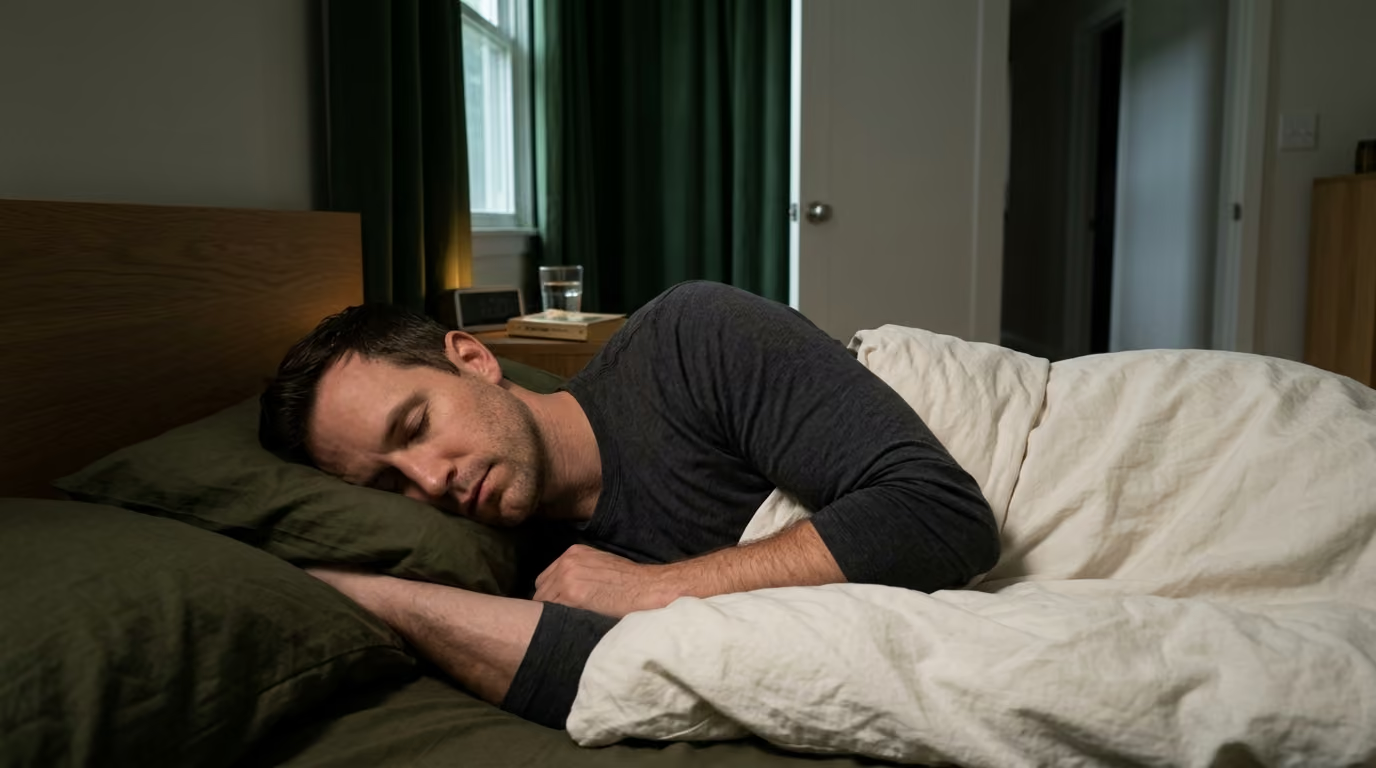

Racing evening thoughts often trigger reliance on alcohol or sedatives, but chemical shutdown impairs sleep architecture and compounds daytime stress.





The bedroom is dark, the clock reads 0230, and your thoughts are still racing through conversations from three years ago. Your muscles stay tense against the mattress, your heart rate refuses to settle, and tomorrow's schedule demands complete focus. Reaching for a drink, a sedative, or cannabis feels like the only reliable switch to turn off your brain.
Substance use for sleep and stress management is not a moral failure or a simple lack of discipline. It is a functional coping behavior used to suppress physical arousal, numb emotional distress, and force sleep onset. This comprehensive guide examines the biological realities of how alcohol, sedatives, opioids, cannabis, and stimulants alter sleep architecture, mood, and long-term recovery.
Using substances to manage stress or force sleep provides short-term sedation at the expense of restorative sleep architecture, creating a biological rebound cycle that increases stress and worsens insomnia over time.
Substances like alcohol, sedatives, and cannabis can induce rapid sedation, but they do not produce natural, restorative sleep. Instead, they alter sleep architecture by suppressing rapid eye movement sleep or disrupting slow-wave sleep. As tolerance develops, the brain adapts, leading to fragmented rest, morning fatigue, and rebound hyperarousal. Over time, stopping or reducing these substances triggers withdrawal-related insomnia, which often tricks people into believing they cannot sleep without chemical assistance. Practical harm reduction focuses on reducing immediate overdose and medical risks, understanding physiological mechanisms, and replacing substance-driven shutdown with structured, evidence-based behavioral strategies.
Understanding substance use begins with recognizing its function. People do not generally use substances because they want poor health. They use them because substances produce predictable, rapid shifts in physiological and emotional states. When stress levels remain high, the central nervous system stays locked in hyperarousal.
Hyperarousal includes racing thoughts, muscle tension, elevated heart rate, and an inability to downshift into rest. In this state, alcohol, cannabis, or prescription sedatives act as chemical brakes. They blunt emotional pain, quiet intrusive thoughts, reduce physical discomfort, and force the body into unconsciousness. The relief is immediate, measurable, and highly reinforcing.
The brain quickly learns this connection. When a chemical reliably provides relief from nighttime distress, the nervous system treats that chemical as an essential tool for survival and rest. A person builds a conditioned response where evening anxiety triggers an automatic urge to consume a substance. Over time, this adaptive response forms a reinforcing cycle.
The substance provides relief in the evening, but it destabilizes normal sleep architecture throughout the night. By morning, the individual experiences fragmented rest, neurochemical depletion, and heightened irritability. This state of persistent negative emotion and heightened stress sensitivity during withdrawal is known in addiction research as hyperkatifeia. Because the person feels exhausted and anxious the next day, their baseline stress increases, making substance use even more appealing the following night. You can read more about managing autonomic arousal in our sleep, stress, and resilience resources.
One of the most critical principles in behavioral sleep medicine is that sedation is not sleep. Sedation refers to pharmacologically induced drowsiness, slowed cognitive processing, and reduced responsiveness to the environment. Sleep, by contrast, is an active, highly regulated biological process organized into specific, repeating cycles.
A person can easily mistake being knocked out for getting deep rest. If you pass out quickly, you subjectively feel that the substance solved your insomnia. However, objective physiological monitoring shows that chemically induced unconsciousness lacks the restorative properties of natural sleep.
Natural sleep is divided into distinct stages that cycle roughly every 90 minutes throughout the night:
Restorative sleep requires proper balance, timing, and cycling among all these stages. When a substance shortens sleep latency, which is the time it takes to fall asleep, it often does so by disrupting the rest of the sleep cycle.
Sleep continuity refers to the ability to remain asleep without frequent micro-arousals or full awakenings. Substances that act as central nervous system depressants often wear off in the middle of the night. As the liver metabolizes the substance, the brain experiences a rebound effect.
Heart rate increases, sympathetic nervous system activity spikes, and the sleeper enters a state of light, highly fragmented rest. Although total time in bed might appear adequate, sleep efficiency, which is the ratio of time spent asleep to total time in bed, drops significantly. The person wakes feeling unrefreshed, mentally sluggish, and physically drained.
Scientific research reveals clear distinctions between established physiological effects, mixed findings, and common myths regarding popular sleep aids.
Alcohol is the most common self-administered sleep aid in the world, yet its physiological costs are thoroughly documented. According to data from the National Institute on Alcohol Abuse and Alcoholism, chronic alcohol use significantly disrupts sleep continuity and staging. While alcohol increases adenosine levels and enhances GABA activity to speed up sleep onset, its metabolization causes severe sleep fragmentation during the second half of the night.
The primary evidence-based impacts of alcohol include:
According to the 2023 National Survey on Drug Use and Health from SAMHSA, an estimated 10.2% of Americans aged 12 or older met the criteria for a past-year alcohol use disorder. Many individuals with alcohol dependence report that sleep disruption was a primary driver of their escalating use.
Cannabis is widely used to manage sleep problems and anxiety, but clinical research paints a nuanced picture. A 2025 systematic review and meta-analysis examining 18 studies concluded that cannabis administration did not consistently alter objective sleep duration, sleep latency, wake time, sleep efficiency, or sleep staging. While many participants report subjective improvements in sleep onset, polysomnography testing often shows little objective change in underlying sleep architecture.
Key points from the current evidence base on cannabis include:
Cannabis may mask underlying conditions like chronic pain, restless legs syndrome, or trauma-related hyperarousal. When the substance is removed, those untreated conditions return with greater intensity.
Combining central nervous system depressants represents one of the most dangerous patterns in substance use. When individuals struggle with severe physical pain, anxiety, and sleeplessness, they may combine prescription medications, illicit substances, or alcohol to force their bodies to shut down.
Depressant substances work additively or synergistically on the brainstem networks that control respiration. When multiple sedatives are combined, the brain loses its reflexive drive to breathe during sleep. What appears to be deep, peaceful sleep is often life-threatening respiratory depression.
Opioids blunt pain and induce drowsiness, but they also impair central respiratory drive and cause sleep-disordered breathing. Benzodiazepines enhance GABA signaling, causing profound muscle relaxation and sedation. Alcohol amplifies both mechanisms while stressing metabolic clearance pathways.
The Centers for Disease Control and Prevention strongly warns against combining opioids with alcohol, benzodiazepines, muscle relaxants, or other sedating drugs. CDC provisional data estimated 80,391 total drug overdose deaths in the United States in 2024, down 26.9% from 110,037 deaths in 2023. Provisional estimates also indicated that opioid-involved deaths fell from 83,140 in 2023 to 54,743 in 2024.
While these provisional decreases are encouraging, poly-substance combinations remain a leading driver of preventable fatalities. If a household uses prescription opioids or sedatives, having naloxone on hand and knowing how to administer it is a vital harm-reduction measure. Exploring comprehensive recovery and sleep strategies can provide safer alternatives for physical restoration.
It is critical to know the difference between a person who is deeply asleep and a person experiencing life-threatening toxicity:
If someone exhibits signs of an overdose, immediately call emergency medical services, administer naloxone if available, and place the person in the recovery position on their side to prevent airway obstruction.
Substance use patterns rarely involve only a single agent. When depressants or poor sleep leave an individual exhausted the next day, they frequently turn to stimulants to maintain cognitive focus, alertness, and physical capability. This initiates a daily push-pull dynamic that severely destabilizes the autonomic nervous system.
Stimulants include prescription medications for attention-deficit disorders, illicit stimulants like cocaine and methamphetamine, and high-dose caffeine and nicotine. Stimulants elevate dopamine, norepinephrine, and epinephrine, forcing the sympathetic nervous system into overdrive.
The cycle typically unfolds across a 24-hour window:
Breaking this cycle requires treating both ends of the loop simultaneously. Simply removing the evening sedative without addressing daytime stimulant consumption guarantees severe sleep-onset insomnia. Conversely, cutting out stimulants without a plan for managing evening distress leaves the individual feeling overwhelmed by unchecked hyperarousal. Balancing physical exertion with autonomic regulation is essential for long-term health, as discussed in our guide to training and physical performance.
Harm reduction is a practical, compassionate public health approach. It focuses on reducing the negative medical, psychological, and social consequences of substance use without demanding immediate, total abstinence as an absolute prerequisite. Harm reduction meets people where they are, prioritizing safety and stabilization while building capacity for change.
The harm-reduction model operates along four distinct tiers:
The top priority is preventing fatal overdose, severe physical trauma, and acute medical crises. Core practices include:
This tier aims to bring structure and predictability to physical health, reducing the chaotic swings caused by erratic substance use:
Once biological risk is stabilized, the individual develops non-chemical tools to manage the internal states that originally drove substance use:
When an individual is ready, this tier connects them to formal healthcare, behavioral therapies, and medical support:
Replacing substance-driven shutdown requires practical, reliable tools that work directly on the nervous system. You cannot simply take away a coping mechanism; you must replace its function.
To build effective alternatives, you must identify what the substance is accomplishing for you. Keep an objective log for three to five days, noting:
The American Academy of Sleep Medicine establishes Cognitive Behavioral Therapy for Insomnia as the first-line treatment for chronic insomnia. Unlike basic sleep hygiene tips, CBT-I is a structured clinical protocol that resets the brain's sleep regulatory systems.
Key components of CBT-I include:
When nighttime quiet brings intrusive memories, panic, or hypervigilance, standard relaxation advice is often inadequate. Individuals dealing with post-traumatic stress require structured grounding techniques to anchor the brain in the present environment.
Practical nighttime grounding steps include:
While many lifestyle adjustments can be made independently, certain substance patterns present severe medical risks that require professional medical supervision. Attempting to stop heavy substance use abruptly without medical oversight can be life-threatening.
Abrupt cessation of sustained, heavy alcohol or benzodiazepine use can trigger life-threatening autonomic instability, seizures, and delirium tremens. The American Society of Addiction Medicine strongly recommends standardized withdrawal risk assessment and medical management rather than unmonitored home detoxification.
You should seek urgent medical assessment if you or someone you know experiences any of the following warning signs:
The American Society of Addiction Medicine guidelines emphasize that oral or intravenous alcohol should never be used to manage withdrawal symptoms. Professional detoxification utilizes monitored, tapered medications, such as specific benzodiazepine protocols, to keep the central nervous system safe while clearing toxins.
When dealing with chronic conditions, navigating system resources and clinical pathways is an essential part of long-term health. For more on navigating clinical support, consult our guide to veteran healthcare decisions.
This article is for educational and harm-reduction purposes only and does not constitute personalized medical advice, diagnosis, or clinical treatment. Substance withdrawal, polysubstance use, and chronic sleep disorders involve complex physiological risks that require individualized clinical care. Always consult a qualified healthcare provider, addiction medicine specialist, or sleep physician before making significant changes to your medication, substance intake, or treatment plan. If you or someone you are with is experiencing an acute medical emergency, severe withdrawal symptoms, or signs of an overdose, contact emergency medical services immediately.
Using alcohol as a nighttime sedative creates rapid biological tolerance. Even if you do not drink during the day, your brain adapts to evening alcohol within a few weeks, requiring more to achieve the same sleepiness. Furthermore, as the alcohol clears your system midway through the night, it disrupts REM sleep and causes rebound awakenings. Over time, bedtime-only drinking worsens underlying insomnia and elevates baseline anxiety the following day.
Cannabis, specifically THC, suppresses rapid eye movement sleep, which is the stage where most dreaming occurs. When you stop using cannabis, your brain experiences a phenomenon known as REM rebound. The nervous system attempts to recover lost REM time, leading to intense, highly emotional, and vivid dreams or nightmares. This rebound effect is temporary, usually peaking within the first one to two weeks of cessation before returning to a natural baseline.
Yes. Even when taken exactly as prescribed, long-term use of pharmaceutical sedatives such as benzodiazepines or Z-drugs alters normal sleep stages. They often increase light sleep while reducing slow-wave deep sleep and REM sleep. While they are effective tools for short-term crises, long-term reliance can lead to physical dependence, daytime sedation, cognitive blunting, and severe rebound insomnia when the medication is eventually discontinued.
Caffeine has an average half-life of five to seven hours, meaning a significant amount remains in your brain late into the evening. Consuming caffeine late in the day blocks adenosine receptors, masking your natural sleep drive. When you try to counter that alertness with evening alcohol, you force the body into a conflicting state of chemical arousal and chemical sedation. The liver must process both compounds, resulting in severe sleep fragmentation, elevated nighttime heart rate, and profound morning fatigue.
Follow BattleVet for practical guidance on military and veteran health, strength, recovery, testosterone, sleep and healthy aging. Stay connected for new articles, research backed insights and clear information to help you stay capable for the years ahead.


Build better habits around strength, recovery, sleep, hormones and healthy aging with practical guidance for active military personnel and veterans.
Explore BattleVet