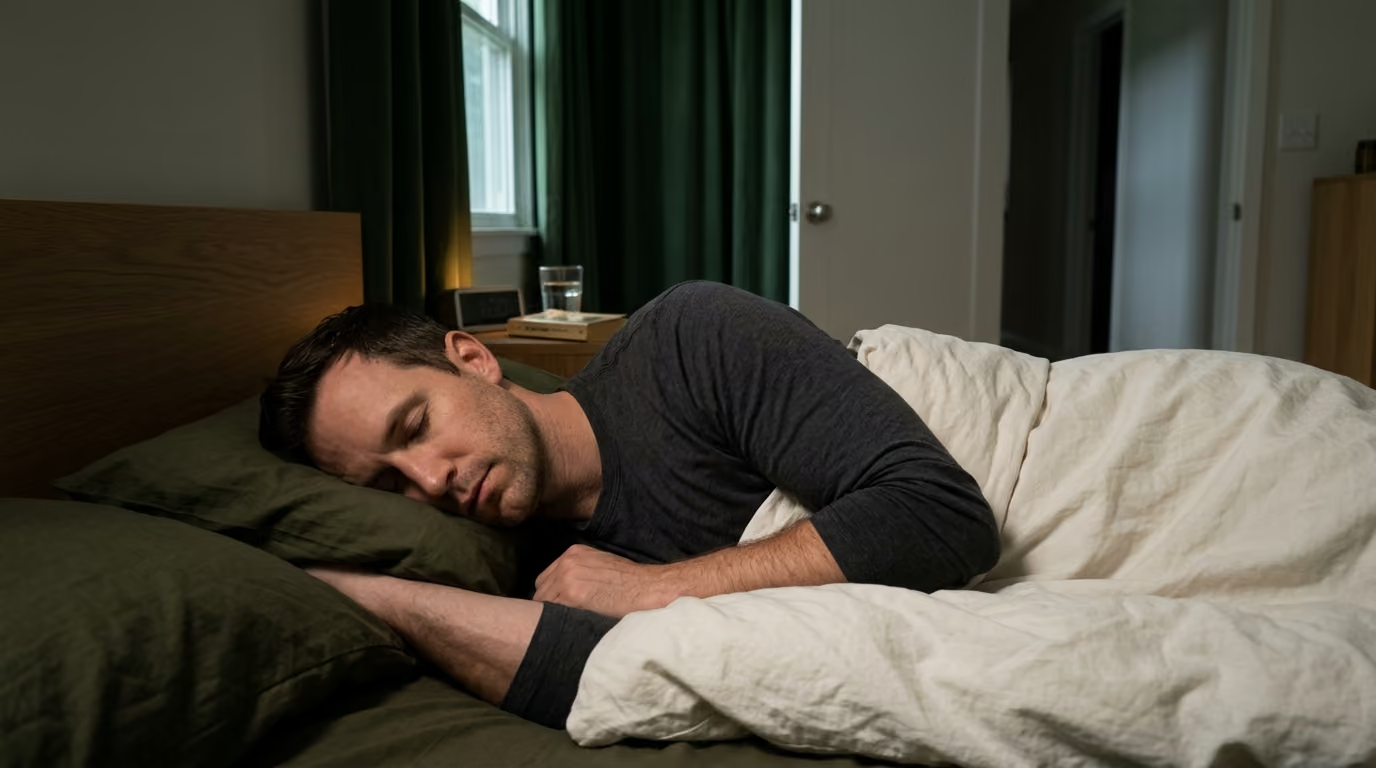

Sleep regulation relies on circadian rhythms and behavioral techniques that help you fall asleep faster and overcome chronic nighttime awakenings.





You lie in bed watching the digital display on the nightstand flip from 1:14 to 2:28. Your muscles feel exhausted from physical training and work, but your brain remains wide awake. You calculate how many hours of sleep remain before the alarm rings, which only makes your heart rate climb. This nightly struggle is common, yet trying harder to force unconsciousness almost always backfires.
Falling asleep and staying asleep are biological processes that thrive on consistency and low arousal, not conscious effort or willpower. This comprehensive guide examines the underlying physiology of sleep regulation, outlines clinical behavioral strategies to rebuild nighttime rest, and provides clear protocols for falling asleep and managing middle of the night awakenings without relying on sedatives as a first option.
Persistent difficulty with sleep is usually solved by addressing conditioned wakefulness, stabilizing circadian timing, and reducing physiological arousal. The most reliable, scientifically validated approach for long term sleep restoration is cognitive behavioral therapy for insomnia, which systematically retrains your brain to associate the bed with deep rest rather than frustration.
Occasional sleep disruption is a normal human experience. A stressful life event, an intense training block, travel across time zones, or an acute illness can disrupt sleep for a few nights. True insomnia disorder, however, involves ongoing difficulty initiating sleep, maintaining sleep, or returning to sleep despite having adequate time and opportunity to do so.
Understanding the distinction between sleep opportunity and sleep ability is essential. Sleep opportunity refers to the amount of time you reserve in your schedule for resting. If work requirements or family obligations force you to stay in bed for only five hours, you are dealing with insufficient sleep opportunity. If you spend eight hours in bed but stay awake for three of those hours, you are dealing with an issue of sleep ability.
The Centers for Disease Control and Prevention defines insufficient sleep duration in adults as averaging fewer than seven hours in a 24-hour period. Data from the CDC shows that roughly one in three American adults regularly falls short of this seven-hour baseline. The American Academy of Sleep Medicine and the Sleep Research Society both advise that adults sleep seven or more hours regularly to support cardiovascular health, metabolic function, and mental sharpness.
Sleep efficiency measures the proportion of time in bed actually spent sleeping. For example, if you spend eight hours in bed but sleep for only six hours, your sleep efficiency is 75 percent. Healthy sleepers generally maintain a sleep efficiency of 85 percent or higher. When sleep efficiency drops significantly, spending extra time lying in bed only trains your brain to remain alert between the sheets.
The National Heart, Lung, and Blood Institute recommends speaking with a healthcare professional when you regularly take more than 30 minutes to fall asleep, repeatedly wake during the night and struggle to drift off again, or experience noticeable daytime impairment. The American Academy of Sleep Medicine notes that roughly 30 percent of adults report general symptoms of insomnia. About 10 percent experience insomnia severe enough to cause daytime consequences, and a smaller subset meets the formal criteria for chronic insomnia disorder.
The human body relies on two primary systems to regulate sleep: homeostatic sleep pressure and the circadian timing system. These two forces work in tandem to keep you alert during the day and help you sustain consolidated rest at night. Understanding how these biological gears mesh prevents the frustration that comes from trying to force sleep on an unpredictable schedule.
Homeostatic sleep pressure acts as the body's internal sleep timer. From the moment you wake up, a chemical called adenosine steadily accumulates in your central nervous system. The longer you stay awake, the higher your sleep pressure builds. When you finally sleep, your brain clears this accumulated adenosine, resetting your sleep pressure for the next day.
The circadian timing system operates as an internal 24-hour clock located in the brain's suprachiasmatic nucleus. This biological pacemaker controls core body temperature, hormone production, blood pressure, and alertness levels across the day and night. Morning sunlight serves as the primary environmental anchor for this clock. It signals your brain to suppress melatonin and raise daytime alertness.
When sleep pressure is high and your circadian clock dips into its nighttime phase, sleep occurs easily and stays continuous. However, when these systems fall out of sync, sleep fragmentation occurs. For instance, taking a long nap late in the afternoon discharges your sleep pressure prematurely. When bedtime arrives, your circadian clock may tell you to rest, but your depleted sleep pressure prevents you from drifting off.
The third critical factor in sleep regulation is the autonomic arousal system. When you actively worry about not sleeping, your sympathetic nervous system activates. Heart rate rises, body temperature increases, and stress hormones like cortisol and adrenaline circulate through the bloodstream. This physiological arousal directly overrides both sleep pressure and circadian signaling, locking you in a state of high vigilance.
This dynamic creates the classic sleep effort cycle. A person experiences one or two poor nights, becomes anxious about their energy for the next day, and begins going to bed earlier to compensate. They spend long stretches awake in bed, staring at the ceiling and monitoring their thoughts. Over time, the bedroom stops being a biological cue for sleep and becomes a conditioned trigger for anxiety, wakefulness, and frustration.
When persistent sleep troubles take hold, reaching for over the counter sleep aids or prescription sedatives is a common reaction. However, leading medical organizations recommend non-drug behavioral therapy as the primary approach. The American College of Physicians strongly recommends multicomponent cognitive behavioral therapy for insomnia, known as CBT-I, as the initial treatment for adults with chronic insomnia.
The American Academy of Sleep Medicine also provides a strong recommendation for CBT-I. Medications can produce temporary sedation, but they do not resolve the underlying cognitive habits, behavioral patterns, and conditioned arousal that maintain chronic sleep problems. Furthermore, sedative medications can carry risks of tolerance, dependency, morning grogginess, and rebound insomnia when discontinued.
Stimulus control therapy breaks the mental association between the bed and sleeplessness. Developed to restore the bed as a powerful cue for sleep, it requires getting out of bed when awake and returning only when sleepy. Over several weeks, this simple behavioral rule extinguishes conditioned bedtime anxiety and restores rapid sleep onset.
Sleep-restriction therapy, or sleep compression, addresses fragmented sleep by temporarily limiting the time spent in bed to match the actual number of hours slept. For example, if someone spends nine hours in bed but only sleeps six, their schedule is adjusted to keep them in bed for roughly six to six and a half hours. This controlled window builds strong homeostatic sleep pressure, consolidates broken sleep, and dramatically improves sleep efficiency. As sleep becomes solid and consistent, time in bed is gradually expanded.
Cognitive restructuring targets the catastrophic self-talk that fuels nighttime arousal. Thoughts like "If I do not sleep right now, my entire week is ruined" or "My body has forgotten how to sleep" trigger acute stress responses. A structured cognitive approach helps people replace these catastrophic assumptions with grounded, realistic perspectives. Learning that you can still function after a rough night removes the desperate pressure to fall asleep immediately.
Relaxation training teaches practical downshifting techniques, such as progressive muscle relaxation, diaphragmatic breathing, and autogenic training. Rather than using these skills as an aggressive test to force immediate sleep, they are practiced to lower autonomic tone and make the body receptive to rest. The European Insomnia Guideline highlights CBT-I as the primary standard of care, noting that digital CBT-I platforms and telehealth delivery offer effective alternatives when in-person behavioral sleep specialists are unavailable.
Struggling to fall asleep at the start of the night, known clinically as sleep initiation difficulty, is often driven by high evening arousal, irregular schedules, or misaligned sleep pressure. Implementing structured, evidence-based habits during the final hours of the day calms the nervous system and primes the body for natural sleep onset.
The most effective behavioral step for reliable sleep onset begins the morning before. Setting a fixed wake time, seven days a week, anchors your circadian rhythm and ensures consistent sleep pressure builds by nightfall. While going to bed at the exact same minute every night is not always realistic, getting out of bed at a consistent time stabilizes your internal clock.
Avoid large weekend lie-ins as a primary recovery tactic. Sleeping two or three hours past your standard wake time shifts your circadian phase later, creating social jetlag. This delay leaves you alert late Sunday evening, which triggers poor sleep at the start of the workweek. If you need recovery, explore evidence-based strategies within our recovery and sleep articles to restore your energy without destabilizing your sleep rhythm.
Stimulus control removes wakeful activities from the bedroom environment. Follow these fundamental clinical rules to retrain your brain:
Getting out of bed interrupts the mental link between your mattress and frustration. It teaches your brain a singular, consistent rule: the bed is a place where sleep happens easily, not a place to lie awake and worry.
High cognitive arousal at bedtime prevents sleep onset. Schedule a dedicated worry time earlier in the evening, ideally two hours before bed. Spend ten minutes writing down pressing tasks, concerns, and practical next steps in a notebook, then close the book to signal that planning is done for the night.
When your head hits the pillow, avoid debating intrusive thoughts or trying to clear your mind by force. Use passive mental routines instead, such as counting backward from 300 by threes or mentally walking through a familiar physical path step by step. These low-threat cognitive tasks occupy working memory, preventing anxious loops without generating new emotional arousal.
Physical tension in the jaw, shoulders, and back keeps the autonomic nervous system in an alert state. Practicing progressive muscle relaxation before bed reduces muscular bracing and signals physical safety to the brain. Starting at the feet, gently tense each muscle group for five seconds, release the tension completely for fifteen seconds, and notice the sensation of release as you work up toward the face.
Slow diaphragmatic breathing also activates parasympathetic tone. Inhale slowly through your nose for a count of four, allowing your abdomen to expand, and exhale gently through your nose or lips for a count of six. Extending the exhale stimulates the vagus nerve, slows your resting heart rate, and lowers blood pressure to support effortless sleep onset.
Sleep-maintenance insomnia, marked by prolonged awakenings during the night, is a frequent and frustrating sleep complaint. Waking up briefly between sleep cycles is a normal physiological occurrence. Healthy adults experience multiple brief awakenings every night, but good sleepers roll over and forget them immediately. The problem emerges when an awakening becomes prolonged, distressing, and mentally activating.
The single most counterproductive action during a middle of the night awakening is checking the clock. Looking at the time triggers immediate mathematical calculations: "It is 3:15, I have to be up in three hours, and I will be exhausted tomorrow." This calculation produces an immediate surge of stress hormones that sharpens alertness.
Turn your alarm clock face toward the wall, place your phone out of reach, and avoid looking at the time when you wake up. Remind yourself that the exact hour is irrelevant. Resting quietly in a dark room still provides valuable physical restoration to your muscular and cardiovascular systems, even if you are not fully asleep.
Address basic physical needs efficiently without turning on bright lights. If you need to use the bathroom, use a nightlight or dim hallway light to navigate safely. If you are thirsty, drink a small sip of room-temperature water rather than a large glass that will wake your bladder again later.
If chronic discomfort, joint stiffness, or lingering injuries disrupt your sleep, use strategic pillow support between your knees or under your lower back to unload spinal stress. For practical strategies on balancing physical recovery and joint health, explore our resources on training and performance to align your daytime training volume with nighttime physical repair.
If you remain awake for roughly 20 minutes and notice irritability, racing thoughts, or muscle tension, do not stay in bed tossing and turning. Lying awake in frustration reinforces the neural conditioning that makes the bed an uncomfortable place.
Get out of bed quietly and move to another room. Keep the lighting as low as safely possible, sit in a supportive chair, and engage in a neutral, screen-free activity. Reading a dense non-fiction book, listening to soft music, or practicing slow breathing works well. Avoid cleaning the house, checking work correspondence, eating snacks, or looking at social media, as these activities reward the brain for waking up.
Do not return to bed until your eyelids feel heavy and you experience genuine physical drowsiness. If you return to bed and find yourself wide awake again 20 minutes later, repeat the process. While this can feel tedious over the first few nights, it is the most reliable behavioral method to extinguish nighttime conditioned arousal.
The following morning, resist the urge to sleep in, cancel workouts, or consume massive doses of caffeine to compensate. Waking up at your scheduled time protects your homeostatic sleep pressure for the following evening. One night of fragmented rest will not harm your long term health, and maintaining your morning schedule ensures you will fall asleep faster the next night.
Sleep hygiene refers to basic environmental conditions and daily health habits that support healthy rest. Common recommendations include keeping the bedroom cool, avoiding caffeine in the evening, and sleeping on a comfortable mattress. While good sleep hygiene provides a necessary baseline, major sleep organizations emphasize its limitations when used as a sole intervention.
The American Academy of Sleep Medicine explicitly states that sleep hygiene should not be used as a stand-alone treatment for chronic insomnia. If someone has spent months developing severe bedtime anxiety, conditioned wakefulness, and circadian misalignment, lowering the bedroom thermostat by two degrees will not resolve the problem. Sleep hygiene removes minor external barriers, but cognitive and behavioral techniques retrain the brain's internal sleep regulation.
Understanding how specific daily habits influence sleep architecture helps you optimize your baseline routine so that behavioral therapy can work effectively.
Alcohol is one of the most widely misused self-medication tools for sleep. While alcohol acts as a central nervous system depressant and can shorten the time it takes to fall asleep, it severely damages sleep quality across the second half of the night.
As your liver metabolizes alcohol, it produces a rebound stimulant effect that fragments sleep architecture. Alcohol suppresses restorative rapid eye movement sleep, worsens upper airway resistance, increases snoring, and causes frequent middle of the night awakenings. Relying on evening drinks to drift off establishes a vicious cycle of poor rest, daytime fatigue, and worsening sleep disruption.
Caffeine is an adenosine receptor antagonist. It does not eliminate fatigue; it temporarily blocks the brain's ability to sense its accumulated homeostatic sleep pressure. The biological half life of caffeine ranges from five to seven hours in healthy adults, and its quarter life can extend past twelve hours.
Consuming coffee, pre-workout supplements, or energy drinks late in the afternoon means a significant amount of active caffeine remains in your system at bedtime. This chemical blockade prevents deep slow-wave sleep and causes frequent micro-arousals during the night. Establish a consistent cutoff for caffeine, ideally eight to ten hours before your planned sleep time, to allow your body to process the stimulant fully.
Nicotine is a potent central nervous system stimulant that elevates resting heart rate and blood pressure. Using nicotine products close to bedtime delays sleep onset and causes withdrawal symptoms during the night that wake you up early. If you use nicotine, discuss structured cessation strategies with a healthcare provider rather than using it as an evening wind-down tool.
Large, heavy meals high in saturated fat or refined sugars eaten late at night demand significant digestive effort. This increases core body temperature and can cause gastrointestinal reflux when lying flat, triggering nighttime awakenings. Aim to finish substantial meals two to three hours before sleep, opting for a small, light protein-and-complex-carbohydrate snack if you feel hungry before bed.
Manage your fluid intake to prevent nocturia, which is waking repeatedly to urinate. Maintain steady hydration throughout the morning and afternoon, but taper your fluid intake during the final two hours of the evening. If you need daytime rest, follow the guidance of the National Heart, Lung, and Blood Institute by keeping naps under 30 minutes and completing them before 3:00 p.m. to protect your nighttime sleep pressure.
To explore the broader connection between physical recovery, stress resilience, and long-term health, review our sleep, stress and resilience educational resources.
Light is the most powerful environmental signal for synchronizing the human circadian clock. Specialized photosensitive retinal ganglion cells in the eyes detect light wavelengths and transmit signals directly to the brain's master clock. Managing your daily light exposure is essential for building a robust sleep-wake cycle.
Getting outdoor sunlight within the first hour of waking sets your circadian rhythm in motion. Natural outdoor light, even on an overcast morning, provides significantly higher lux levels than standard indoor bulbs. This morning light burst halts melatonin secretion, elevates morning cortisol to boost energy, and starts an internal timer that prompts melatonin release roughly 14 hours later.
If you wake up before sunrise due to work shifts or early training, use a high-lux light therapy box or turn on bright overhead indoor lights. Once the sun rises, step outside for ten to fifteen minutes without sunglasses to provide your retinal cells with natural broad-spectrum light.
Electronic devices such as smartphones, tablets, and laptops emit short-wavelength blue light that suppresses evening melatonin release. However, the emotional and psychological content consumed on those screens often causes more sleep disruption than the light itself.
Checking work emails, reading intense news updates, or scrolling through competitive social media feeds triggers cognitive arousal and emotional stress. This mental activation stimulates the sympathetic nervous system, preventing the relaxation required for sleep onset. Establish a digital curfew 60 minutes before bed by charging devices in another room and switching to low-engagement activities like reading printed books, journaling, or stretching.
Your bedroom environment should function as an undisturbed sanctuary for rest. Three physical factors require careful adjustment: temperature, sound, and darkness.
During the transition into sleep, the human body must drop its core temperature by two to three degrees Fahrenheit. A hot, poorly ventilated room prevents this natural thermoregulatory cooling, leading to restless tossing and frequent awakenings. Keep the bedroom thermostat between 65 and 68 degrees, and use breathable cotton or wool bedding to facilitate heat dissipation.
Ensure the room is as dark as possible. Stray light from streetlamps, vehicle headlights, or electronics can penetrate eyelids and disturb sleep architecture. Install blackout shades or wear a contoured sleep mask to block external light. For disruptive ambient noises, run a dedicated white noise machine or fan to create a consistent acoustic blanket that masks sudden sound spikes.
While many sleep difficulties stem from conditioned behavioral habits or lifestyle friction, persistent awakenings can also signal underlying medical conditions that require targeted clinical diagnosis. Treating a primary physiological disorder with behavioral sleep techniques alone will yield frustrating, incomplete results.
Obstructive sleep apnea occurs when the muscles of the upper airway relax during sleep, leading to partial or complete airway collapse. This collapse starves the body of oxygen, triggering brief autonomic arousals that reopen the throat. Many people with sleep apnea do not realize they wake up dozens of times per hour, reporting only broken sleep, morning headaches, dry mouth, and severe daytime exhaustion.
If your bed partner observes loud snoring, gasping, or pauses in your breathing, seek an evaluation from a sleep physician. Diagnostic sleep studies, known as polysomnography or home sleep apnea tests, measure airflow, blood oxygen saturation, and respiratory effort to determine if positive airway pressure therapy, dental appliances, or surgical options are warranted.
Restless legs syndrome is a neurological sensory-motor condition characterized by an irresistible urge to move the legs. This sensation is typically described as creeping, crawling, pulling, or aching deep within the limbs. It occurs during periods of inactivity, peaks in the late evening, and is temporarily relieved by walking or stretching.
Periodic limb movement disorder involves repetitive, involuntary limb jerking during sleep that causes frequent micro-arousals. These conditions require specific medical workups, including testing for serum ferritin and iron saturation levels, as iron deficiency in the central nervous system frequently drives the pathology.
Chronic joint pain, post-surgical discomfort, and musculoskeletal inflammation wake many adults throughout the night. If pain consistently pulls you out of deep sleep, work with your medical provider to optimize physical therapy, nighttime joint positioning, and non-sedating pain management strategies. For veterans and service members managing service-connected physical limitations, our military health articles provide context on balancing ongoing rehabilitation with daily performance.
Review all prescription medications, over the counter drugs, and dietary supplements with your pharmacist or physician. Certain blood pressure medications, beta blockers, antidepressants, decongestants, and corticosteroids can cause insomnia, vivid nightmares, or daytime sleepiness. Never discontinue prescribed medications abruptly, but collaborate with your doctor to explore alternative dosing times or non-disruptive alternatives.
To break the cycle of poor sleep without becoming overwhelmed, focus on behavioral consistency across a single seven-day block. This structured stabilization plan focuses on building high sleep pressure, anchoring circadian timing, and extinguishing bedtime anxiety through proven behavioral methods.
Keep a simple, low-effort sleep diary on your nightstand. Record only essential data points each morning: the time you went to bed, estimated time to sleep onset, number of awakenings, final wake-up time, and total time spent out of bed.
Do not obsess over minute-by-minute accuracy. Rough 15-minute estimates are sufficient to identify trends in your sleep efficiency without feeding anxiety. If you want to explore more educational research on recovery tracking and long-term health, explore our broader veteran health resources.
Treat the final hour of your day as an operational transition zone. Power down work computers, silence non-emergency phone notifications, and dim household lighting. Spend this period engaging in predictable, low-energy habits such as personal hygiene, light stretching, reviewing a printed book, or listening to low-tempo music.
This predictable routine serves as an environmental cue to your nervous system that physical demands are finished for the day. By lowering sympathetic activation before your head touches the pillow, you clear the runway for natural, uninterrupted sleep onset.
Behavioral sleep interventions are supported by decades of rigorous clinical trials, meta-analyses, and professional medical guidelines. However, responsible health education requires a clear distinction between well-established clinical facts, developing research, and common commercial claims.
The American College of Physicians and the American Academy of Sleep Medicine consistently highlight multicomponent CBT-I as the gold standard for chronic insomnia, demonstrating outcomes that match or exceed medications without the associated side effects.
Conversely, consumer wearable devices should be viewed as general lifestyle indicators rather than medical diagnostic instruments. While wearables track gross movement and heart rate variability, they often misclassify quiet wakefulness as deep sleep. Avoid allowing consumer sleep score metrics to dictate your daily mood or reinforce nighttime anxiety.
To improve your sleep quality starting tonight, implement these practical, evidence-based steps:
This article is for educational and informational purposes only and does not constitute individual medical advice, clinical diagnosis, or a formal treatment plan. Persistent sleep difficulties, severe daytime exhaustion, loud snoring, gasping episodes, or suspected movement disorders should always be evaluated by a qualified physician or a board-certified sleep specialist. Never discontinue, adjust, or initiate prescription medications or structured sleep-restriction protocols without direct clinical oversight from your healthcare provider.
Most structured behavioral interventions, such as stimulus control and sleep consolidation within a formal CBT-I program, produce measurable improvements within two to four weeks of consistent daily practice. The first several days can feel challenging as your body adapts to a fixed schedule and conditioned habits are rewired. Consistency with your morning wake time and getting out of bed when awake are the most critical factors for rapid results.
Brief awakenings during the night are a normal, healthy part of human sleep architecture. As you transition between light sleep, deep slow-wave sleep, and REM phases, your brain naturally surfaces into brief moments of micro-wakefulness. These awakenings become problematic only when you become alert, check the time, or experience anxiety that prevents you from drifting back to sleep within a few minutes.
If you are resting comfortably, calmly, and feel physically relaxed, lying quietly in the dark can still provide restful benefits. However, if you notice rising frustration, physical tension, or an active, racing mind, staying in bed is counterproductive. Lying awake in distress reinforces the mental link between your bed and insomnia. Getting out of bed to sit quietly in dim light resets your arousal level and protects your sleep environment.
No, commercial sleep trackers and smartwatches cannot diagnose clinical insomnia or other primary sleep disorders. While trackers provide interesting estimates of your total sleep duration and general movement patterns, they frequently misinterpret quiet, motionless wakefulness as light or deep sleep. Relying heavily on daily sleep scores can generate orthosomnia, a condition where anxiety over achieving perfect tracker metrics worsens actual sleep quality.
Follow BattleVet for practical guidance on military and veteran health, strength, recovery, testosterone, sleep and healthy aging. Stay connected for new articles, research backed insights and clear information to help you stay capable for the years ahead.


Build better habits around strength, recovery, sleep, hormones and healthy aging with practical guidance for active military personnel and veterans.
Explore BattleVet