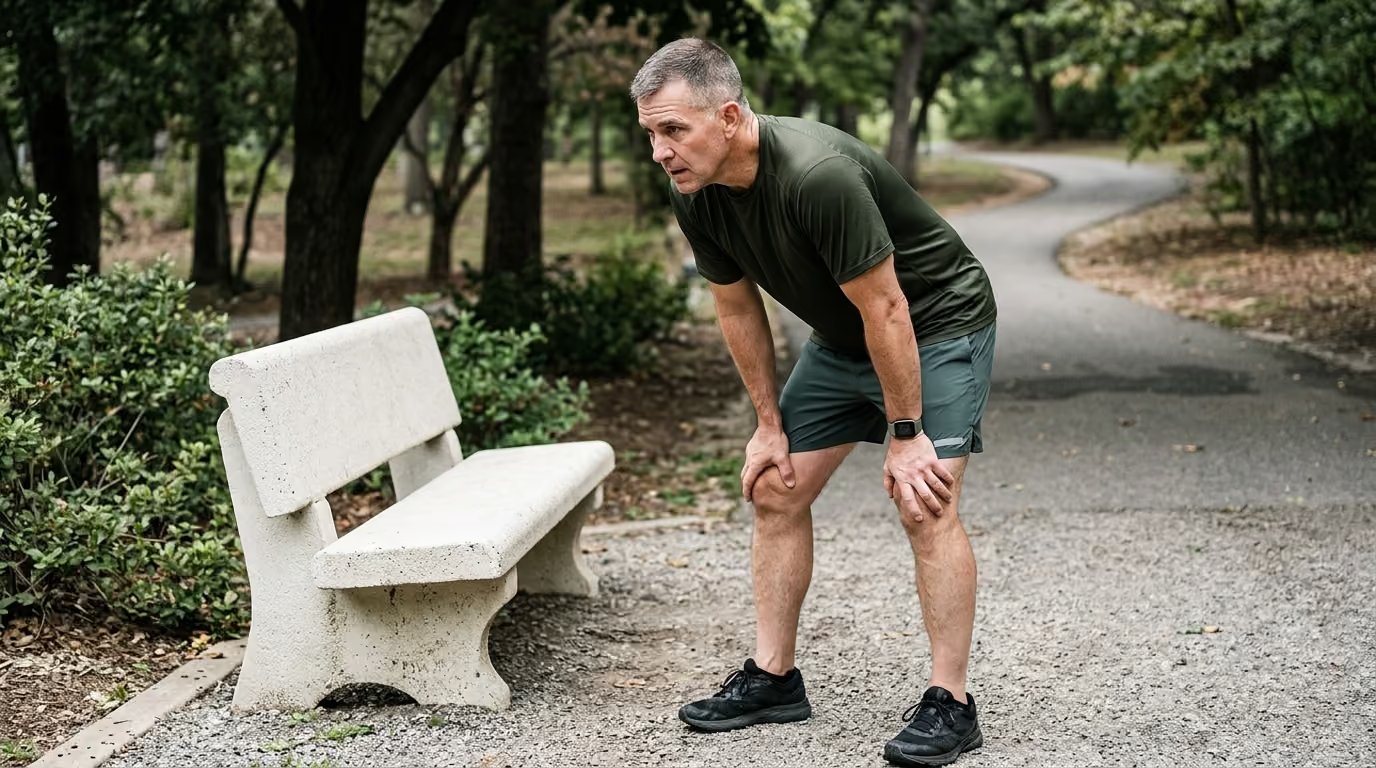

Maintaining strong teeth and gums reduces the risk of functional decline in older veterans while maximizing access to earned dental benefits.





You sit down for dinner after a long day, but chewing a standard meal causes a persistent ache along your lower gumline. Your mouth feels constantly dry, an irritating side effect of blood pressure or allergy medications you started taking recently. You find yourself cutting your dinner short, leaving nutrient-dense foods on the plate, and reaching for softer, refined snacks instead. Minor daily discomforts like these often seem isolated, but they quietly shape your physical capability, systemic health, and quality of life over time.
Oral health preserves physical function, nutritional intake, and everyday independence as you age, while protecting you from the systemic burden of chronic oral infections.
Oral health directly influences long-term vitality by maintaining your ability to break down whole foods, preventing tissue breakdown, and preserving physical autonomy. When teeth decay, gums become chronically infected, or saliva production drops, your nutritional variety narrows and physical frailty can accelerate. Good dental care does not guarantee immunity from cardiovascular disease or sudden illness. Instead, it protects the essential functional pathways, including chewing, swallowing, speaking, and nutrient absorption, that keep aging veterans strong and capable.
Oral health is far more than having clean teeth or a bright smile. It encompasses the functional integrity of your teeth, gums, jaw joints, oral mucosa, and salivary glands. For veterans, maintaining these tissues ensures you can speak clearly, sleep without pain, enjoy meals, and manage daily life independently. Looking at oral care through the lens of healthy aging articles helps shift the perspective from purely cosmetic upkeep to functional preservation.
Dental caries, or tooth decay, remains a primary threat throughout life. In older adults, decay frequently targets the exposed roots of teeth where gums have receded over decades. Root surfaces lack the hard protective enamel found on tooth crowns, making them far more vulnerable to acid damage. Decay can also develop beneath existing fillings or crowns, progressing silently without causing pain until significant structure is lost. When saliva flow decreases, the natural defense against this decay drops substantially.
Periodontal disease represents the other major threat to oral stability. It begins as gingivitis, which is superficial inflammation of the gum tissues caused by bacterial plaque accumulation. Left unmanaged, gingivitis can advance to periodontitis, a chronic inflammatory condition that destroys the periodontal ligament and alveolar bone supporting the teeth. Data supported by the Centers for Disease Control and Prevention (CDC) indicate that 62.3% of adults aged 65 and older have substantial attachment loss, and nearly half present with deep periodontal pockets. Gum disease is widespread, progressive, and clinically significant, not an unavoidable consequence of getting older.
Edentulism, the complete loss of natural teeth, marks the end stage of cumulative dental disease, trauma, and inadequate access to care. Having a functional dentition generally means retaining enough natural or prosthetic teeth to chew a standard diet effectively. Complete tooth loss affects roughly 11% of adults aged 65 to 74 and reaches 20% among those 75 and older. Retaining natural teeth allows for superior bite force and sensory feedback compared to removable prosthetics. Preserving your natural bite is a vital component of long-term physical resilience.
A central concept in geriatric dentistry is oral frailty. Oral frailty describes a cumulative decline across multiple oral functions, including chewing efficiency, tongue strength, swallowing coordination, and saliva output. When oral frailty sets in, physical frailty often follows shortly after. Research shows that older adults experiencing oral frailty face higher risks of malnutrition, sarcopenia, physical disability, and cognitive decline. Treating oral health as an isolated concern ignores its deep integration with your entire physical state.
The prevalence of oral health challenges among aging Americans reveals substantial disparities driven by income, education, and lifestyle habits. CDC data show that 26% of adults aged 65 and older have eight or fewer teeth, while 15% have lost all their teeth entirely. Socioeconomic factors heavily influence these outcomes. Complete tooth loss is more than three times as common among older adults with less than a high school education compared to those with higher education levels.
Tobacco use remains one of the strongest drivers of severe oral disease and tooth loss. Among adults aged 65 and older, current smokers experience complete tooth loss at rates dramatically higher than non-smokers. CDC comparisons indicate that 43% of current older smokers have lost all natural teeth, compared to just 12% of those who never smoked. Nicotine restricts microvascular blood flow to the gums, masking the early warning signs of bleeding while accelerating bone destruction around the teeth.
Disparities in dental insurance coverage amplify these physical risks. In national surveys, roughly 62% of older adults reported having no dental coverage at all. Medicare generally excludes routine dental cleanings, fillings, extractions, and dentures from its standard benefits package. This leaves millions of older Americans paying entirely out of pocket for basic preventive care. For many veterans, leaving active service means losing the comprehensive dental support they relied on during their military careers.
Rural veterans face an even steeper climb when trying to maintain oral health. Rural areas frequently suffer from severe dental provider shortages, requiring long travel times for routine appointments. Research tracking rural veteran populations shows they visit dentists less frequently, carry higher rates of total tooth loss, and face higher out-of-pocket costs than their urban peers. These geographic and financial hurdles often turn manageable minor cavities into emergency extraction situations.
The transition out of active service creates unique gaps in preventive maintenance. Many veterans assume that enrolling in VA healthcare automatically provides them with comprehensive dental benefits. In reality, VA outpatient dental care operates under strict legal eligibility criteria that differ entirely from standard VA medical enrollment. Understanding these coverage realities early helps veterans make proactive arrangements before dental problems compromise their everyday function.
The connection between oral conditions and long-term vitality operates through distinct physiological and behavioral pathways. The primary route involves nutrition and dietary quality. When you lose molars, experience tooth sensitivity, or wear loose dentures, biting and chewing firm foods becomes painful or exhausting. Chewing efficiency drops, forcing individuals to alter what and how they eat.
Chewing impairment alters dietary selection in predictable ways. People with missing teeth or painful gums systematically avoid fibrous vegetables, raw fruits, whole nuts, seeds, and lean meats. These foods require significant bite force and repetitive mastication. Instead, individuals shift toward soft, ultra-processed options that are easy to swallow.
This shift often leads to diets dominated by refined carbohydrates, simple sugars, and saturated fats. While these foods provide cheap calories, they lack essential micronutrients, dietary fiber, and quality protein. A systematic review and meta-analysis confirmed that older adults who are completely edentulous or lack a functional dentition face a 21% higher likelihood of malnutrition or being at risk for malnutrition compared to those with adequate dentition.
Inadequate protein intake directly accelerates sarcopenia, which is the age-related loss of skeletal muscle mass and strength. Muscle loss impairs physical stability, slows walking speed, and dramatically elevates the risk of falls. Long-term studies indicate that having fewer than ten teeth is associated with increased all-cause mortality, with malnutrition acting as a direct statistical mediator in that relationship. Maintaining a strong dentition protects your ability to fuel your muscles with adequate protein and micronutrients through our nutrition and fueling resources.
Periodontitis represents a chronic, low-grade inflammatory burden within the body. In a mouth with severe periodontal disease, the total surface area of ulcerated pocket lining can equal the size of an adult palm. This raw surface allows oral bacteria, bacterial endotoxins, and pro-inflammatory cytokines to enter the bloodstream regularly during normal chewing and brushing.
Circulating inflammatory markers, such as C-reactive protein and interleukin-6, often rise in individuals with chronic, untreated periodontal disease. Over years, systemic inflammation contributes to endothelial dysfunction and the progression of vascular damage. While periodontal pathogens have been identified in atherosclerotic plaques, this demonstrates a biological association rather than direct causation. The presence of oral bacteria in vascular lesions confirms that oral microbes travel systemically, but it does not prove they initiate the plaque buildup.
The loss of oral integrity directly threatens personal independence in older age. Eating is not merely a biological necessity, it is a primary avenue for social interaction and emotional well-being. Veterans experiencing painful chewing or loose, embarrassing dentures often withdraw from social meals, family gatherings, and community events. This social isolation carries measurable risks for cognitive decline and depressive symptoms.
Oral frailty also complicates the management of other chronic illnesses. When chewing becomes difficult, taking oral medications with water can trigger coughing or choking episodes. Poor swallowing coordination increases the danger of aspiration pneumonia, a leading cause of hospitalization and death among frail older adults. Preserving your oral capabilities supports functional independence, personal dignity, and daily comfort.
Saliva is an active biological fluid that protects the tissues of your mouth. It lubricates food to facilitate smooth swallowing, initiates carbohydrate digestion through enzymes, and mechanically washes away loose food particles. Furthermore, saliva contains bicarbonate buffers that neutralize bacterial acids and minerals like calcium and phosphate that continuously remineralize tooth enamel.
A critical distinction exists between xerostomia and hyposalivation. Xerostomia is the subjective sensation of having a dry mouth, whereas hyposalivation refers to an objectively measured drop in salivary flow rate. An individual can experience severe discomfort from xerostomia even if their measured saliva output appears near normal. Conversely, true hyposalivation severely degrades the oral environment, leaving teeth stripped of their primary natural defense.
Polypharmacy, commonly defined as taking five or more daily medications, is the most frequent cause of persistent dry mouth in older adults. Hundreds of widely used medications interfere with the neural signals that stimulate salivary glands. The National Institute of Dental and Craniofacial Research (NIDCR) highlights several medication classes that frequently cause dry mouth:
When multiple drying medications are combined, salivary output drops substantially. Without adequate saliva to neutralize acids and wash away food, aggressive decay can spread rapidly across root surfaces within months. This rapid tooth breakdown makes eating painful, prompting individuals to choose softer, sweeter foods that worsen the decay cycle. Managing dry mouth requires targeted interventions rather than simply accepting it as an inconvenient side effect.
Navigating health information requires separating well-established clinical facts from preliminary research and unproven marketing claims. The relationship between oral health and general bodily health contains clear areas of scientific consensus alongside critical limitations. Understanding where the evidence is solid and where it remains uncertain prevents unrealistic expectations regarding dental interventions.
The strongest clinical evidence confirms that preserving a functional dentition directly protects nutritional status and muscular strength. Multiple high-quality meta-analyses demonstrate that missing teeth, ill-fitting prosthetics, and chewing pain cause older adults to drop essential food groups from their diets. The link between tooth loss, involuntary weight loss, and geriatric frailty is well documented across diverse populations.
Science also firmly establishes that mechanical plaque removal, fluoride application, and regular calculus removal arrest the progression of dental caries and periodontitis. Fluoride incorporates directly into tooth enamel and exposed root dentin, creating a fluorapatite crystal structure that resists acid demineralization. Furthermore, objective clinical trials verify that saliva substitutes, frequent hydration, and sugar-free salivary stimulants provide meaningful symptom relief for medication-induced dry mouth.
The widely discussed link between periodontal disease and cardiovascular conditions rests primarily on observational studies. The American Heart Association (AHA) and the American Dental Association (ADA) have reviewed this relationship extensively. Observational data show that people with advanced periodontitis have higher rates of atherosclerotic cardiovascular disease, heart attacks, and strokes.
However, observational association does not establish direct cause and effect. Periodontal disease and cardiovascular disease share powerful confounding risk factors. These shared drivers include tobacco smoking, advanced age, diabetes mellitus, low socioeconomic status, chronic stress, and inflammatory dietary patterns. When researchers strictly control for these confounding variables, the direct mathematical relationship between gum disease and vascular events diminishes significantly.
The AHA explicitly states that while treating periodontal disease reduces short-term markers of blood inflammation, there is zero clinical trial evidence that dental cleanings or periodontal surgeries prevent heart attacks, reduce strokes, or extend overall lifespan. Claims suggesting that a deep dental cleaning acts as a direct shield against cardiovascular death overstep the scientific data. Periodontal therapy is essential for saving teeth, eliminating oral infection, and reducing local pain, which are more than enough reasons to pursue it.
Similar limits apply to the links between oral health, diabetes, and dementia. While poorly controlled diabetes clearly accelerates gum disease, evidence that periodontal treatment leads to meaningful long-term reductions in HbA1c remains mixed. Likewise, finding oral bacterial DNA in brain tissue of dementia patients indicates pathogen migration, but it does not prove oral bacteria cause Alzheimer's disease. Dental care should be pursued to optimize oral comfort, chewing mechanics, and infection control, not as a standalone cure for systemic conditions.
Understanding how to access dental care is a major hurdle for many veterans. While enrollment in VA healthcare offers comprehensive medical coverage for millions, dental care operates under a separate, highly restrictive set of legal rules established by Congress. Veterans are assigned to specific dental benefit classes based on their service connection, medical conditions, and disability ratings.
Veterans in Class I qualify for comprehensive dental care to maintain and restore complete oral function. This includes cleanings, fillings, crowns, extractions, and dentures. Class II covers veterans who have a specific dental condition or trauma directly rated as service-connected. Those who qualify under Class IIA or Class IV also receive ongoing comprehensive services to ensure their oral health does not compromise their general medical stability.
Recently separated service members have a unique, time-sensitive window of access. Under Class IIN rules, veterans who served on active duty for at least 90 continuous days and separated under conditions other than dishonorable can receive a one-time course of free dental care. To qualify, their DD-214 must not indicate that a complete dental examination and all needed treatment were completed within 90 days prior to discharge. Furthermore, the veteran must apply for this benefit within 180 days of their official separation date.
For the broad population of veterans who do not qualify for direct VA dental treatment, alternative pathways exist. The VA Dental Insurance Program (VADIP) allows veterans and CHAMPVA beneficiaries enrolled in VA healthcare to purchase discounted private dental insurance through approved commercial carriers. While VADIP requires paying monthly premiums and copayments, it offers structured group rates that make preventive exams and restorative treatments far more affordable than standard individual market plans.
Community health centers and dental school clinics offer additional affordable options for veterans lacking comprehensive coverage. Federally Qualified Health Centers (FQHCs) provide routine dental services on a sliding fee scale based entirely on household income. State-level veteran homes and non-profit veteran service organizations also coordinate free dental screening days and emergency relief grants. Knowing these options allows you to build a proactive dental maintenance plan rather than waiting for an emergency to strike. Exploring our broader veteran lifestyle and healthcare resources can help you navigate these benefit systems.
Aging veterans frequently manage complex health issues that complicate routine dental maintenance. Standard oral hygiene advice must be adapted when physical limitations, neurological changes, or medical treatments enter the picture. Identifying these edge cases ensures care remains safe, effective, and realistic.
For veterans coping with post-traumatic stress disorder, traumatic brain injuries, or severe anxiety, the dental chair can be an intense sensory trigger. The feeling of physical confinement, bright overhead lights, loud vibrations, and having instruments placed inside the mouth can provoke hypervigilance or panic. Consequently, many veterans avoid visiting the dentist for years, allowing minor decay to turn into catastrophic tooth loss.
Overcoming this avoidance requires a trauma-informed clinical approach:
Arthritis, spinal cord injuries, Parkinson's disease, and peripheral neuropathy make holding a slender manual toothbrush or manipulating thin dental floss exceptionally difficult. When physical dexterity declines, plaque accumulates along the gumline, accelerating both decay and periodontitis.
Simple mechanical modifications can restore effective self-care:
Many older veterans take antiplatelet drugs like aspirin and clopidogrel, or direct oral anticoagulants like apixaban and warfarin to prevent blood clots and strokes. A common and dangerous mistake is independently stopping these medications before a dental cleaning or tooth extraction out of fear of bleeding.
Stopping prescribed blood thinners without direct physician oversight substantially elevates your risk of experiencing a life-threatening stroke or cardiovascular event. Modern dental protocols allow most routine cleanings, periodontal scalings, and uncomplicated extractions to proceed safely while the patient remains on their regular anticoagulant therapy. Local measures, such as pressure packs, specialized sutures, and hemostatic gelatin sponges, manage oral bleeding effectively. Always inform your dentist of every medication you take, and let your dental and medical providers coordinate procedural care directly.
Veterans undergoing chemotherapy, immunotherapy, or radiation therapy involving the head and neck face severe oral complications. Radiation directed near salivary glands can permanently destroy their ability to produce saliva, resulting in extreme, lifelong hyposalivation and rampant radiation caries. Chemotherapy frequently induces painful oral mucositis, creating severe ulcers that make eating nearly impossible.
Preventive dental clearance must occur prior to beginning radiation or intensive chemotherapy. Any hopeless or infected teeth should be extracted in advance to prevent osteoradionecrosis, a severe condition where irradiated jawbone fails to heal. During and after cancer treatment, patients require specialized high-concentration prescription fluoride gels, custom application trays, and frequent preventive cleanings to protect their remaining teeth.
Wearing removable dentures does not eliminate the need for daily oral hygiene and regular professional checkups. Dentures collect bacterial plaque, food debris, and fungal organisms just like natural teeth. Neglecting denture hygiene frequently causes denture stomatitis, a chronic fungal infection that leaves the underlying palate bright red, swollen, and sore.
Dentures should never be worn continuously around the clock. Sleeping with dentures in place restricts blood flow to the underlying gums and dramatically increases the risk of developing aspiration pneumonia in older adults. Remove dentures every night, brush them thoroughly with a dedicated denture brush and mild soap, and store them in clean water. Inspect your gums routinely for sores, white patches, or red spots, and have your dentist adjust the appliances whenever they begin to slip or cause friction.
Maintaining oral health requires systematic daily habits combined with targeted clinical monitoring. Consistent, low-effort daily actions prevent the accumulation of plaque, protect vulnerable root surfaces, and keep oral tissues comfortable. Use this structured checklist to guide your home care and professional healthcare visits.
Adapting food texture should never mean sacrificing nutritional density. When chewing is difficult, you can modify healthy, protein-rich whole foods to maintain muscle mass and vitality without causing oral pain:
Examining real-world clinical patterns illustrates how oral disease intersects with daily life, medication use, and overall physical function. These scenarios show how proactive intervention restores stability and comfort.
A 68-year-old veteran takes five daily medications for hypertension, mild depression, and chronic low back pain. Over the past year, he noticed a constant feeling of mouth dryness and began avoiding meats, nuts, and raw vegetables because chewing felt exhausting. He gradually shifted his diet to soft crackers, white bread, and sweet tea, losing 14 pounds of lean body mass in ten months. A dental examination revealed extensive root decay across six lower teeth.
The solution required a coordinated interdisciplinary approach. The veteran's primary care provider reviewed his prescriptions and substituted an alternative blood pressure medication that had fewer drying side effects. His dentist restored the decayed root surfaces and prescribed a 5,000 ppm fluoride toothpaste to protect the remaining teeth.
A registered dietitian helped him structure a high-protein diet using eggs, Greek yogurt, stewed poultry, and protein-fortified smoothies. Within six months, the veteran stabilized his weight, halted the progression of decay, and regained his physical strength.
A 62-year-old veteran who has smoked one pack of cigarettes daily for thirty years rarely visited the dentist because his gums never caused him noticeable pain. During a routine medical screening, his physician noticed several visibly loose upper teeth and referred him to a dental clinic. A full periodontal examination revealed advanced periodontitis with severe bone loss and 7-millimeter pockets across multiple teeth.
Nicotine's vasoconstrictive effects had suppressed normal gum bleeding, concealing the aggressive destruction taking place beneath the surface. The dental team explained that lack of pain does not equal healthy tissue. The veteran enrolled in a comprehensive VA tobacco-cessation program, utilizing nicotine patches and behavioral coaching to quit smoking.
His periodontist performed deep cleanings to remove calcified bacterial deposits and extracted two non-restorable teeth to prevent spreading infection. Stabilizing the remaining teeth allowed him to preserve his natural bite and prevent complete edentulism.
A 71-year-old veteran living in a rural area located 90 miles from the nearest VA medical center had no dental insurance. Whenever a tooth became severely infected, he visited the local emergency room, where physicians could only prescribe short courses of antibiotics and pain medications. Over four years, he underwent four emergency extractions at an urgent care clinic, leaving him with only three opposing molars and severe difficulty eating.
A veteran service officer helped him review his options. Although he was not eligible for direct VA dental care, he enrolled in the VA Dental Insurance Program (VADIP), which gave him access to a participating private dentist 20 miles from his home.
The dentist treated his remaining active decay, stabilized his gum health, and fabricated a removable partial denture that restored his chewing surface. Having a stable preventive dental home eliminated his recurring emergency room visits and allowed him to eat solid foods comfortably once again.
As you age, your gums naturally recede, exposing the softer root surfaces of your teeth. Root dentin decays much faster than hard crown enamel when exposed to bacterial acids. Additionally, common medications for blood pressure, allergies, pain, and mood reduce your saliva flow. Without adequate saliva to buffer acids and remineralize enamel, cavities develop and spread far more aggressively.
Original Medicare (Part A and Part B) generally does not cover routine dental services, such as cleanings, fillings, extractions, or dentures. It only covers dental procedures under very narrow circumstances where dental treatment is directly integral to a major medical procedure, such as a heart valve replacement or organ transplant. Many older adults purchase supplemental private dental plans or use discounted insurance programs like VADIP to cover routine care.
Treating periodontal disease eliminates chronic oral infections, relieves pain, and lowers markers of systemic inflammation in your bloodstream. However, high-quality medical research from the American Heart Association confirms that periodontal treatment has not been proven to prevent heart attacks or alter cardiovascular disease progression. You should treat gum disease to save your teeth, maintain chewing function, and protect oral comfort, while managing heart health directly through standard medical care and cardiovascular screening found in our healthy aging resources.
Start by sipping plain water frequently throughout the day, especially while eating meals. Use sugar-free lozenges or chew sugar-free xylitol gum to stimulate your salivary glands naturally. Avoid tobacco, alcohol, and sugary drinks, as they worsen oral dryness and accelerate decay. Finally, bring a complete list of your medications to your primary doctor or pharmacist to see if drying prescriptions can be adjusted safely.
This resource is published strictly for educational and informational purposes and is designed to support informed discussions between veterans and their healthcare teams. BattleVet does not provide personalized medical advice, dental diagnosis, clinical coaching, or individual treatment plans. Always consult a qualified dentist, primary care physician, or clinical pharmacist regarding individual health assessments, dental procedures, and medication adjustments. Never stop or modify prescribed medications without direct guidance from your prescribing medical provider.
Revisit this guide whenever your daily prescription regimen changes, if you notice increasing dry mouth or tooth sensitivity, or when preparing for dental and primary care appointments. Reviewing these standards helps you advocate for your oral function and maintain long-term capability throughout your veteran journey. Staying informed on oral health protects the functional independence and physical resilience you rely on every day.
Follow BattleVet for practical guidance on military and veteran health, strength, recovery, testosterone, sleep and healthy aging. Stay connected for new articles, research backed insights and clear information to help you stay capable for the years ahead.


Build better habits around strength, recovery, sleep, hormones and healthy aging with practical guidance for active military personnel and veterans.
Explore BattleVet