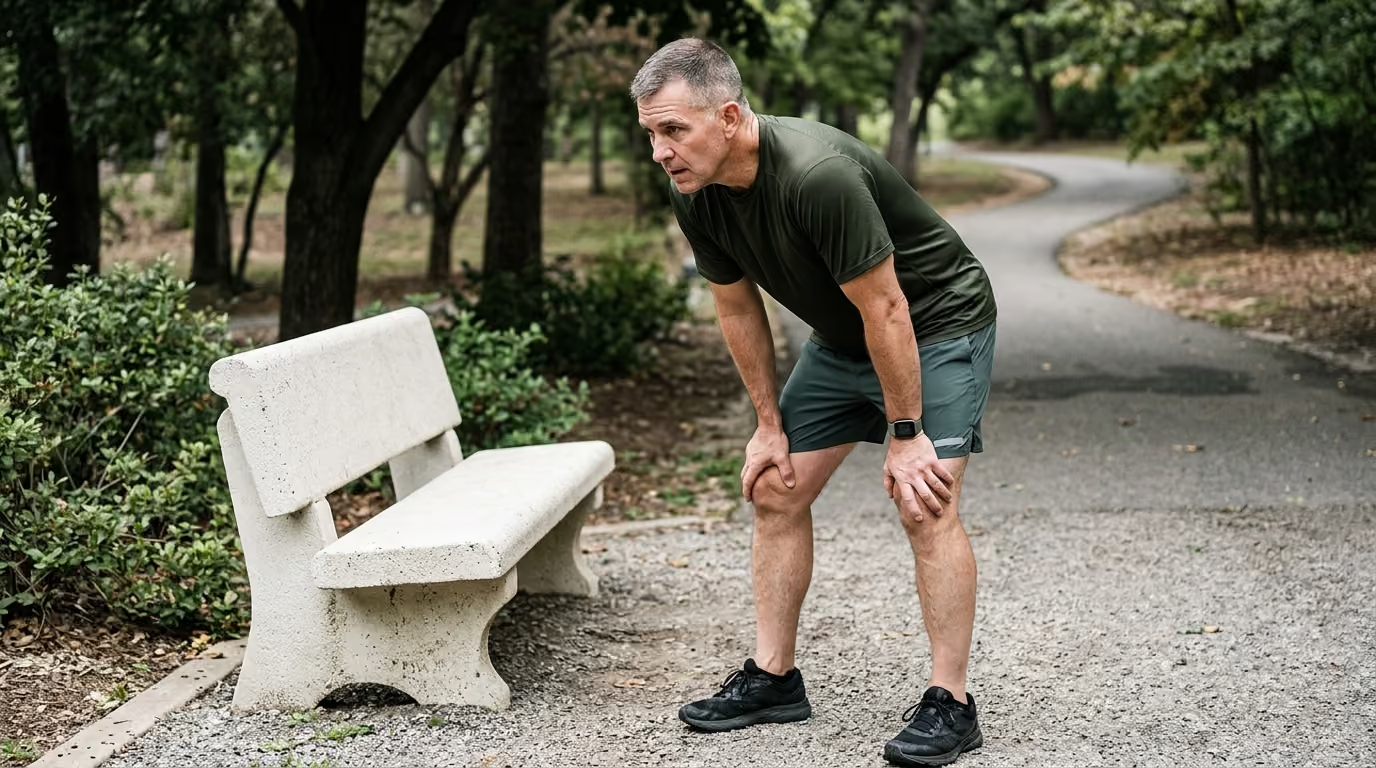

Endless online supplement ads promising total youth require veterans to carefully examine real clinical evidence before altering their daily healthcare routines.





You open your blood work results on a quiet Sunday morning. The numbers on the screen look confusing, and an online search immediately directs you toward expensive hormone clinics and exotic longevity supplements. Everyone promises to restore your physical prime, yet nobody explains what the underlying research actually proves. Navigating this endless stream of health claims can feel exhausting when you simply want reliable answers.
Evaluating longevity advice is not about finding quick fixes or buying into extreme anti-aging protocols. It is a systematic process of checking scientific evidence, measuring absolute risks, and matching health decisions to your specific medical history.
To make informed choices, you must evaluate whether an intervention produces meaningful improvements in physical function, disease prevention, or daily capability. You do not need to accept unverified marketing claims or complex biological theories at face value.
Longevity is often presented as a single goal, but it encompasses distinct health outcomes. True longevity combines how long you live with how well your body functions over time. For veterans, this distinction is essential. Years added to life have little value if they come with severe disability, chronic pain, or loss of independence.
Health professionals divide longevity into three primary categories. Lifespan refers strictly to the total number of years an individual lives. Healthspan describes the period of life spent free from chronic disease and major physical limitations. Functional longevity measures your ongoing ability to lift, walk, think clearly, and care for yourself without assistance.
When evaluating health advice, you must identify which of these outcomes is being discussed. Many popular products claim to promote longevity while only altering intermediate biomarkers. A biomarker is a surrogate measurement such as cholesterol levels, blood glucose, or inflammation scores. Improving a biomarker does not automatically translate into living longer or maintaining physical independence.
Surrogate markers are useful clues for researchers, but they are not patient-important outcomes. A patient-important outcome is something you feel or directly experience. Examples include surviving a heart attack, avoiding bone fractures, preserving your memory, or maintaining the strength required to carry your groceries.
Veterans face unique health considerations that change how general longevity advice applies. Military service frequently involves blast exposures, joint wear, traumatic brain injuries, and chronic sleep disruption. Long tours of duty and sustained physical strain can lead to early osteoarthritis or persistent musculoskeletal pain.
These background factors alter the risk and reward balance of popular longevity protocols. A high-intensity exercise routine designed for an uninjured thirty-year-old might trigger joint failure in a veteran with service-connected knee damage. Similarly, fasting protocols can complicate blood sugar management for individuals dealing with chronic endocrine disruption. Understanding your baseline health profile helps you determine if a generalized health claim is safe and practical for you.
You can explore more foundational guidance on maintaining physical capability across our healthy aging articles to understand how sustainable routines protect your joints and metabolism.
Understanding scientific evidence requires looking beyond promotional headlines. The scientific community uses a structured evidence hierarchy to rank the reliability of research findings. At the bottom of this hierarchy are personal anecdotes, expert opinions, and laboratory animal studies. Animal models provide mechanistic theories, but human biology is far more complex.
Observational cohort studies sit in the middle of the evidence hierarchy. These studies track large groups of people over time to find associations between behaviors and health outcomes. However, observational research cannot prove direct cause and effect. People who exercise regularly, for instance, often have higher incomes, better diets, and lower smoking rates. Researchers try to adjust for these confounding variables, but observational data remains prone to bias.
The most dependable evidence comes from randomized controlled trials and systematic reviews. In a randomized controlled trial, participants are randomly assigned to either an active intervention or a control group. This design balances unknown differences between groups. Systematic reviews pool data from multiple high-quality trials to provide a comprehensive view of the evidence.
When reading study results, you must distinguish between relative risk and absolute risk. Advertisers routinely use relative risk reduction because it produces larger, more impressive numbers. A relative risk reduction describes the percentage change in risk between two groups. Absolute risk reduction measures the actual change in overall disease probability.
Consider a practical example involving cardiovascular disease:
A twenty percent relative reduction sounds dramatic in a headline. An absolute reduction of two percentage points provides a far more realistic picture of the intervention's real-world impact. Knowing the absolute difference helps you decide whether an intervention is worth the required time, financial expense, and potential side effects.
Statistical significance is another concept that is frequently misunderstood. A statistically significant finding simply means that a result is unlikely to be caused by random chance alone. It does not mean the effect is large enough to improve your daily quality of life. An intervention might produce a statistically significant change on a laboratory score that has zero noticeable impact on your physical strength or longevity.
For deeper insights into how research translates into veteran-specific physical capability, browse our collection of training and performance articles.
Evaluating complex health information becomes much easier when you follow a structured checklist. We developed the CLAIMS framework to help veterans evaluate health protocols, supplements, and clinical advice methodically. This framework cuts through marketing noise and focuses on practical applicability.
Begin by translating vague marketing slogans into concrete, measurable statements. Phrases like "supports healthy aging" or "boosts vitality" do not describe specific biological endpoints. Determine what exact outcome is being promised. Is the intervention supposed to lower your blood pressure, reduce joint inflammation, improve sleep quality, or extend total lifespan? Ask how much improvement is expected and how long you must follow the protocol to see results.
Track down the original research supporting the claim. Do not rely on summaries from podcast hosts, social media figures, or commercial sales pages. Look for peer-reviewed studies published in credible medical journals. Check whether the evidence relies on cell cultures, rodents, or living humans. If human studies exist, verify whether they used randomized controlled designs with appropriate comparison groups.
Examine whether the study participants resemble your demographic and medical background. Many longevity studies recruit young, healthy college students or individuals without pre-existing medical conditions. A protocol that works for an uninjured twenty-five-year-old may not be safe for a fifty-five-year-old veteran with spinal fusion, hypertension, or nerve damage. Check if the study excluded people taking prescription medications or individuals with chronic musculoskeletal pain.
Look past statistical significance to measure the practical size of the benefit. Review the absolute risk reduction and the confidence intervals reported in the study. A wide confidence interval indicates significant uncertainty about the true effect size. Check how many participants dropped out due to side effects or lack of adherence. An intervention with a small benefit and high dropout rate is rarely worth pursuing.
Identify who funded the study and who profits from the recommendation. Commercial companies frequently sponsor research to market proprietary ingredients, testing kits, or subscription programs. Financial relationships do not make research automatically invalid, but they demand higher scrutiny. Independent replication by unaffiliated scientists provides greater confidence in the validity of the findings.
Weigh the anticipated benefits against the financial costs, daily time commitment, and potential health risks. Consider the opportunity cost of the intervention. Spending substantial money on unproven supplements may prevent you from investing in proven strategies like physical therapy, balanced nutrition, or gym access. Choose interventions that offer meaningful upsides with minimal potential for harm.
To see how these principles apply to daily routines, review our curated veteran lifestyle and healthcare resources.
High-quality longevity research requires rigorous methodology and transparent reporting. Credible studies explicitly define their inclusion and exclusion criteria so readers understand who was studied. When a company generalizes findings from healthy young adults to older veterans with multiple chronic conditions, the claim loses scientific validity.
A dependable study must include an appropriate comparison group. Depending on the question, the control group may receive an inert placebo, usual medical care, or an established standard treatment. Without a control group, researchers cannot determine if an improvement resulted from the intervention itself, normal healing over time, or the placebo effect.
Blinding is another vital feature of reliable clinical trials. In a double-blind trial, neither the participants nor the administering researchers know who is receiving the active treatment. Blinding is critical for subjective outcomes such as energy levels, joint pain, mood, and sleep quality. While blinding is difficult in lifestyle interventions like exercise, researchers can still use blinded outcome assessors to prevent evaluation bias.
Study duration must also match the scope of the claim. True longevity interventions require years of observation to prove that they prevent chronic disease or extend lifespan. A twelve-week study demonstrating a drop in fasting blood sugar cannot prove that a supplement prevents cardiovascular death over twenty years. Be cautious of short-term studies that make sweeping claims about long-term survival.
Replication across independent research institutions is the ultimate test of scientific truth. A single exciting discovery published by one laboratory should always be viewed as preliminary. Scientific confidence grows only when independent teams replicate the findings using diverse participant groups and rigorous methodologies.
Longevity research includes thousands of proposed interventions, but only a handful possess robust, high-quality scientific support. Separating established practices from unverified trends allows you to invest your effort where it yields real health returns.
Physical activity remains the most validated intervention for extending functional longevity and reducing all-cause mortality. The World Health Organization reports that regular exercise substantially lowers the risk of cardiovascular disease, hypertension, type 2 diabetes, certain cancers, and premature death. Physical activity also supports cognitive health, improves sleep architecture, and preserves physical independence.
Global health guidelines recommend at least 150 to 300 minutes of moderate-intensity aerobic activity per week, or 75 to 150 minutes of vigorous aerobic work. Dose-response analyses demonstrate that accumulating 7.5 to 15 MET-hours of physical activity per week is associated with a 19% to 30% reduction in all-cause mortality risk among older adults.
For aging individuals and veterans with physical limitations, multicomponent exercise that includes balance training and progressive resistance work is essential. The U.S. Preventive Services Task Force recommends structured exercise interventions for community-dwelling adults aged 65 and older who are at increased risk of falling. Resistance training builds lean muscle mass, strengthens connective tissue, and preserves bone density, directly protecting against functional decline.
For step-by-step physical training frameworks tailored to long-term mobility, consult our dedicated healthy aging and longevity resources.
Dietary supplements are aggressively marketed as brain-boosting longevity tools, but clinical trial results are nuanced. The COSMOS clinical trial program evaluated whether daily multivitamin supplementation improves cognitive outcomes in older adults.
In the COSMOS-Mind trial, participants taking a daily multivitamin demonstrated better memory performance over three years compared to those taking a placebo. Investigators calculated that this change was equivalent to slowing cognitive memory aging by approximately 3.1 years. The subsequent COSMOS-Clinic analysis confirmed a modest benefit in global cognition and episodic memory, but found no significant improvement in executive function or attention.
These findings are encouraging, but they must be interpreted accurately. A modest improvement on a standardized memory test does not prove that multivitamins prevent clinical dementia or Alzheimer's disease. Furthermore, the broader COSMOS trial documented 518 invasive cancers among 10,720 multivitamin participants compared to 535 cases among 10,722 placebo participants, showing no major preventive effect on cancer incidence. Multivitamins may help fill nutritional gaps, but they do not replace foundational lifestyle habits.
Social health is often omitted from commercial longevity discussions, yet its impact on survival is well documented. Extensive systematic reviews demonstrate that social isolation and chronic loneliness are strongly linked to increased mortality risk in older adults.
A prominent meta-analysis by Dr. Julianne Holt-Lunstad and colleagues established that social isolation carries a mortality risk comparable to well-known physical risk factors like smoking and physical inactivity. A subsequent systematic review confirmed that socially isolated individuals face a pooled mortality risk roughly 1.32 times higher than well-connected peers.
These data do not mean that simply attending social gatherings guarantees a longer life. However, they show that maintaining meaningful relationships, participating in veteran organizations, and staying involved in community groups are legitimate health priorities. Rebuilding social connection after leaving the military provides measurable biological and psychological benefits.
To improve your daily physical and mental restoration routines, read through our recovery and sleep articles.
The supplement and wellness clinic markets are filled with bold promises, proprietary blends, and advanced testing panels. Making sensible decisions requires understanding regulatory limits, product safety, and commercial motives.
The Food and Drug Administration does not approve dietary supplements for safety or efficacy before they reach store shelves. Manufacturers are responsible for ensuring their products are safe, but the FDA primarily acts after a product causes documented harm. The Federal Trade Commission requires health advertisers to possess competent scientific evidence supporting their claims, yet misleading marketing remains widespread.
Supplements are not harmless simply because they are labeled as natural. Many active botanicals and high-dose vitamins interact with prescription medications. Compounds like St. John's Wort alter how your liver metabolizes cardiovascular drugs, antidepressants, and blood thinners. High doses of fat-soluble vitamins can accumulate in body tissues and cause organ toxicity over time.
In our experience, reviewing blood work for the first time felt overwhelming. There was so much confusing information out there about testosterone and hormones. I wanted clear facts and evidence based guidance, not a sales pitch. That experience showed me how critical it is to separate established science from marketing hype.
You can learn more about safe endocrine evaluation and hormone management in our testosterone and hormones section.
Specialized anti-aging clinics often promote extensive diagnostic panels, including biological age tests, hormone profiles, and inflammatory markers. While comprehensive testing sounds proactive, problems arise when clinics use unvalidated tests to sell expensive proprietary treatments.
Before paying out of pocket for specialized longevity testing, ask critical questions:
If a clinic insists on selling you their own proprietary supplements or discourages you from sharing lab results with your primary care provider, seek an independent medical opinion.
Personal testimonials are the most persuasive marketing tools in the wellness industry, but they represent the weakest form of scientific evidence. A dramatic transformation story can be completely genuine and still provide zero proof that a product works as advertised.
When a person begins taking a new supplement, they often make other positive lifestyle changes simultaneously. They may drink more water, sleep longer, improve their diet, or resume exercise. If their health improves, they usually credit the new supplement rather than the combined lifestyle changes.
Furthermore, many chronic conditions, such as back pain or joint inflammation, follow a natural cycle of flare-ups and remissions. When people seek out a new remedy during a painful flare-up, their symptoms often subside naturally over the following weeks. This phenomenon is known as regression to the mean, yet the supplement receives credit for the recovery.
To protect yourself from misleading marketing, learn to spot common red-flag phrases:
Under Federal Trade Commission guidelines, advertisers must have competent scientific evidence to support any claims that typical consumers will experience the same results shown in testimonials. If an endorser received free products, financial payment, or affiliate commissions, that material connection must be clearly disclosed. Always look for objective, peer-reviewed data rather than emotional personal stories.
Applying the principles of evidence-based health evaluation does not require a scientific degree. You can use a straightforward, five-step decision worksheet whenever you consider a new supplement, diet, or training program.
Write down the exact physical outcome you want to achieve. Are you attempting to reduce knee pain, lower resting blood pressure, improve sleep quality, or build grip strength? Establishing a specific goal prevents you from buying vague wellness products that lack clear measurable endpoints.
Look for randomized controlled trials evaluating the intervention for your specific goal. Check whether the absolute benefit is large enough to make a noticeable difference in your daily routine. Confirm that the positive findings were replicated across multiple independent studies.
Review your complete health history, including service-connected disabilities, joint replacements, and organ health. Consult the National Institutes of Health Office of Dietary Supplements database to verify whether the product interacts with your prescription medications. Discuss the intervention with your physician before starting.
Add up the complete financial expense of the intervention, including recurring subscriptions and required follow-up lab panels. Weigh this financial cost against the daily time and effort required to follow the protocol. Ensure that this investment does not displace proven habits like balanced nutrition, regular exercise, or restful sleep.
Choose one or two objective measurements to track your progress over eight to twelve weeks. These metrics could include walking speed, weight lifted, morning blood pressure, or a validated sleep score. Decide in advance when you will stop the intervention if it fails to produce meaningful improvements or causes unwanted side effects.
Establish safety boundaries for your health experiments. Discontinue any new supplement or exercise regimen and consult a qualified medical provider if you experience:
To learn more about our editorial standards and our mission to provide hype-free health education for service members, visit about BattleVet.
This article is provided for educational and informational purposes only. It does not constitute medical advice, diagnosis, or treatment recommendations. Veterans and active military personnel should always consult a qualified healthcare professional or their primary care physician before beginning any new exercise routine, dietary change, or supplement protocol. Never ignore or delay seeking professional medical advice because of information you read in this guide.
The safest way to verify supplement safety is to consult your prescribing physician or a VA clinical pharmacist. You can also review ingredient fact sheets provided by the National Institutes of Health Office of Dietary Supplements. Keep a written list of every prescription drug, over-the-counter medicine, and dietary supplement you consume, including precise dosages. Bring this list to every medical appointment so your healthcare team can identify potential metabolic interactions or organ toxicity risks.
For most individuals, commercial biological age tests do not provide actionable information that changes clinical management. While epigenetic clocks and composite biomarker panels are valuable research tools, there is little high-quality evidence showing that directing treatment based on these scores improves healthspan or reduces disease risk. You can gather more actionable health data by tracking standard clinical markers, such as resting blood pressure, fasting lipid panels, HbA1c, and physical functional capacity, through regular primary care visits.
High-intensity training must be adapted to protect damaged joints and compromised connective tissue. If service-connected injuries cause pain during heavy impact exercises like running or barbell squats, replace them with low-impact alternatives. Swimming, stationary cycling, rowing, and resistance machines provide cardiovascular and muscular benefits without placing excessive stress on arthritic knees or injured spines. Working with a physical therapist can help you build an effective exercise program that preserves functional capacity while respecting your anatomical limitations.
Sauna bathing and cold water immersion have become popular longevity trends, but long-term survival evidence in humans is limited. Observational studies from Finland demonstrate that frequent sauna use is associated with lower cardiovascular mortality, but these findings may be confounded by overall lifestyle factors. Cold water immersion can reduce perceived muscle soreness after intense exercise, but no randomized controlled trials prove that it prevents chronic disease or extends human lifespan. These practices can be enjoyable recovery tools, but they should not replace basic lifestyle foundations like regular physical training, adequate sleep, and balanced nutrition.
Follow BattleVet for practical guidance on military and veteran health, strength, recovery, testosterone, sleep and healthy aging. Stay connected for new articles, research backed insights and clear information to help you stay capable for the years ahead.


Build better habits around strength, recovery, sleep, hormones and healthy aging with practical guidance for active military personnel and veterans.
Explore BattleVet