
Veteran fatigue is rarely ordinary aging, stemming instead from sleep apnea mechanisms that require clinical testing, targeted therapy, and proper management.





You wake up after eight hours in bed with a dry mouth, a dull morning headache, and heavy limbs. You drink a second mug of coffee before noon, yet your focus drifts and your eyelids grow heavy while driving or sitting at a desk. You might assume this persistent exhaustion is simply the lasting physical toll of military service, chronic pain, or getting older. Many veterans dismiss these daily warning signs for years, but chronic exhaustion is frequently driven by an unrecognized medical breathing condition known as sleep apnea.
Sleep apnea is a common, treatable medical disorder where breathing repeatedly stops or becomes shallow during sleep, causing physical exhaustion, cardiovascular strain, and fragmented rest that requires formal clinical evaluation rather than passive acceptance.
When you search for why you feel exhausted despite spending adequate time in bed, the direct answer is that sleep apnea physically interrupts your sleep architecture and deprives your brain and heart of stable oxygen levels throughout the night. It is not a personal failure, ordinary aging, or unavoidable fatigue from past military deployments. Getting an accurate diagnosis through objective sleep testing and establishing an effective treatment routine can restore daytime alertness, protect your long-term cardiovascular health, and significantly improve your daily capability.
Sleep apnea is a sleep-related breathing disorder characterized by recurrent pauses in respiration throughout the sleep cycle. These pauses lead to brief awakenings that pull you out of deep, restorative sleep stages. Because these arousals last only a few seconds, you rarely remember them in the morning. However, they prevent your brain and muscular system from completing critical restorative cycles, leaving you drained when the alarm goes off.
To understand how this condition affects your body, you must distinguish between the two primary forms of the disorder.
Obstructive sleep apnea occurs when the muscles in the back of your throat relax excessively during sleep. This muscular relaxation allows the soft palate, tongue, and uvula to collapse against the posterior pharyngeal wall. Even though your diaphragm and chest wall continue working hard to draw air, the mechanical blockage prevents oxygen from reaching your lungs. This physical struggle often generates loud snoring, choking noises, or witnessed gasping episodes.
Central sleep apnea involves a completely different physiological mechanism. In central sleep apnea, the physical airway remains open, but the brain stem temporarily fails to transmit the neurological signals required to initiate breathing. As a result, respiratory effort stops entirely for brief intervals. Central events frequently stem from neurological conditions, stroke, heart failure, cervical spine issues, or the regular use of prescription opioid pain medications.
Because the underlying causes and treatment pathways for obstructive and central sleep apnea differ substantially, a clinical evaluation must identify which mechanism is driving your symptoms.
Clinical diagnosis relies on counting specific respiratory disturbances during a monitored sleep period. An apnea occurs when airflow drops by at least 90 percent for a minimum of ten seconds. A hypopnea occurs when airflow decreases by 30 percent or more for at least ten seconds, accompanied by a measurable drop in blood oxygen saturation or a neurological arousal from sleep.
Sleep studies also document respiratory-effort-related arousals. These subtle breathing disruptions do not meet the strict technical criteria for an apnea or hypopnea, but they still force your brain to wake up to reopen a narrowing airway.
Each time an event occurs, your blood oxygen saturation drops, and your sympathetic nervous system triggers a surge of adrenaline. This chemical surge spikes your blood pressure and heart rate, forcing your body into a continuous cycle of survival responses instead of deep physical recovery.
The primary diagnostic metric used in sleep medicine is the Apnea-Hypopnea Index, commonly abbreviated as AHI. Your AHI represents the average number of qualifying apneas and hypopneas recorded per hour of total sleep time.
According to clinical practice guidelines established by the Department of Veterans Affairs and the Department of Defense, sleep apnea severity is classified into distinct categories:
While the AHI provides a standardized numerical score, it does not tell the entire clinical story. A veteran with an AHI of 12 who experiences severe drops in blood oxygen saturation and debilitating daytime sleepiness may require more urgent intervention than someone with a higher AHI and fewer symptoms. Comprehensive clinical decisions must always account for daytime function, cardiovascular history, oxygen desaturation burden, and specific anatomical factors.
Sleep apnea is substantially more prevalent in military veterans than in the general civilian population. Research published in clinical journals shows that approximately 21 percent of veterans have a formal diagnosis of obstructive sleep apnea, compared to roughly 9 percent of nonveterans. In adjusted statistical models, veterans demonstrate more than two and a half times higher odds of developing the condition.
Physical trauma from active service also correlates with elevated risk. Long-term studies tracking combat injuries reveal an obstructive sleep apnea incidence rate of 29.1 cases per 1,000 person-years among injured service members, compared to 23.9 cases per 1,000 person-years among uninjured peers.
Understanding these elevated rates helps remove the stigma surrounding sleep disorders, framing sleep health as an essential component of comprehensive veteran lifestyle and healthcare.
Veterans frequently present with complex health profiles where sleep apnea interacts with other chronic conditions. Post-traumatic stress disorder, traumatic brain injury, chronic musculoskeletal pain, and clinical insomnia often coexist with sleep-disordered breathing.
Among veterans undergoing clinical screening in specialized PTSD treatment programs, studies indicate that between 69 percent and 73 percent screen at high risk for obstructive sleep apnea. Similarly, clinical evaluations of veterans with moderate-to-severe traumatic brain injuries show that more than 50 percent receive a sleep apnea diagnosis during inpatient rehabilitation.
Medical research does not claim that PTSD or brain injuries directly cause physical airway collapse in every case. Rather, hyperarousal, altered sleep architecture, central nervous system dysregulation, weight fluctuations, and medications create complex overlapping barriers.
When a veteran struggles with nightmare-related awakenings and obstructive apneas simultaneously, each condition makes the other harder to treat. Treating the physiological airway obstruction often stabilizes sleep continuity, which provides a stronger foundation for managing psychological stress and cognitive recovery.
To build broader physical resilience, veterans often explore foundational recovery and sleep articles that address how physical rest influences daily performance.
The classic stereotype of sleep apnea is an older, heavily overweight male who snores loudly enough to shake the walls. While obesity and loud snoring are significant risk factors, relying solely on this stereotype causes many veterans to miss an early diagnosis.
Sleep apnea frequently occurs in lean, highly conditioned individuals who possess narrow upper airway anatomy, enlarged tonsils, or thick neck musculature developed through strength training. Furthermore, many veterans sleep alone and have no bed partner to witness breathing pauses or gasping episodes.
Atypical presentations are particularly common among female veterans and younger individuals. Instead of classic snoring, these individuals may report:
When you notice these subtle signs, you should treat them as valid medical indicators rather than ordinary fatigue.
Securing an accurate diagnosis requires an objective medical sleep study rather than relying on self-assessment questionnaires alone. Clinical screening tools, such as the STOP-Bang questionnaire, are useful for identifying high-risk individuals, but they do not confirm the presence or physiological severity of the disorder.
Veterans seeking evaluation have two primary diagnostic paths: in-laboratory polysomnography and home sleep apnea testing.
In-laboratory polysomnography is the most comprehensive diagnostic sleep evaluation available. During an overnight stay at a specialized sleep center, technicians place sensors on your scalp, face, chest, abdomen, and limbs.
This comprehensive setup continuously records several physiological parameters:
In-laboratory studies are recommended when a veteran has suspected central sleep apnea, significant cardiopulmonary disease, neuromuscular disorders, severe insomnia, or complex PTSD. The laboratory environment ensures high-quality data collection and allows technicians to differentiate obstructive events from neurological pauses.
A home sleep apnea test is a portable, self-administered diagnostic evaluation that you complete in your own bed. Home testing devices typically use a nasal cannula to monitor airflow, an elastic chest belt to measure respiratory movement, and a finger probe to track blood oxygen levels.
Home testing offers substantial practical convenience. It eliminates the need to travel to a regional medical facility, which is particularly beneficial for veterans living in rural areas or those dealing with severe social anxiety.
However, home tests have clear diagnostic limitations. They do not record brain waves, meaning they cannot measure actual sleep stages or confirm whether you were truly asleep during the recording period. Consequently, home tests calculate breathing events based on total recording time rather than total sleep time, which can artificially lower your calculated AHI.
Guidelines from the VA and DoD state that a negative or inconclusive home test in a patient with severe symptoms does not rule out sleep apnea. If your home test returns a normal result but you continue to struggle with chronic daytime sleepiness, you should request an in-laboratory polysomnography to ensure accurate diagnostic evaluation.
When your sleep physician reviews your diagnostic report, they examine several key metrics beyond your baseline AHI:
Understanding these detailed parameters helps your medical provider tailor an effective treatment plan to your specific physiological profile.
Once a diagnosis is confirmed, treatment should be initiated promptly to eliminate airway obstructions, restore restful sleep architecture, and reduce cardiovascular strain. Modern sleep medicine provides several validated therapeutic options.
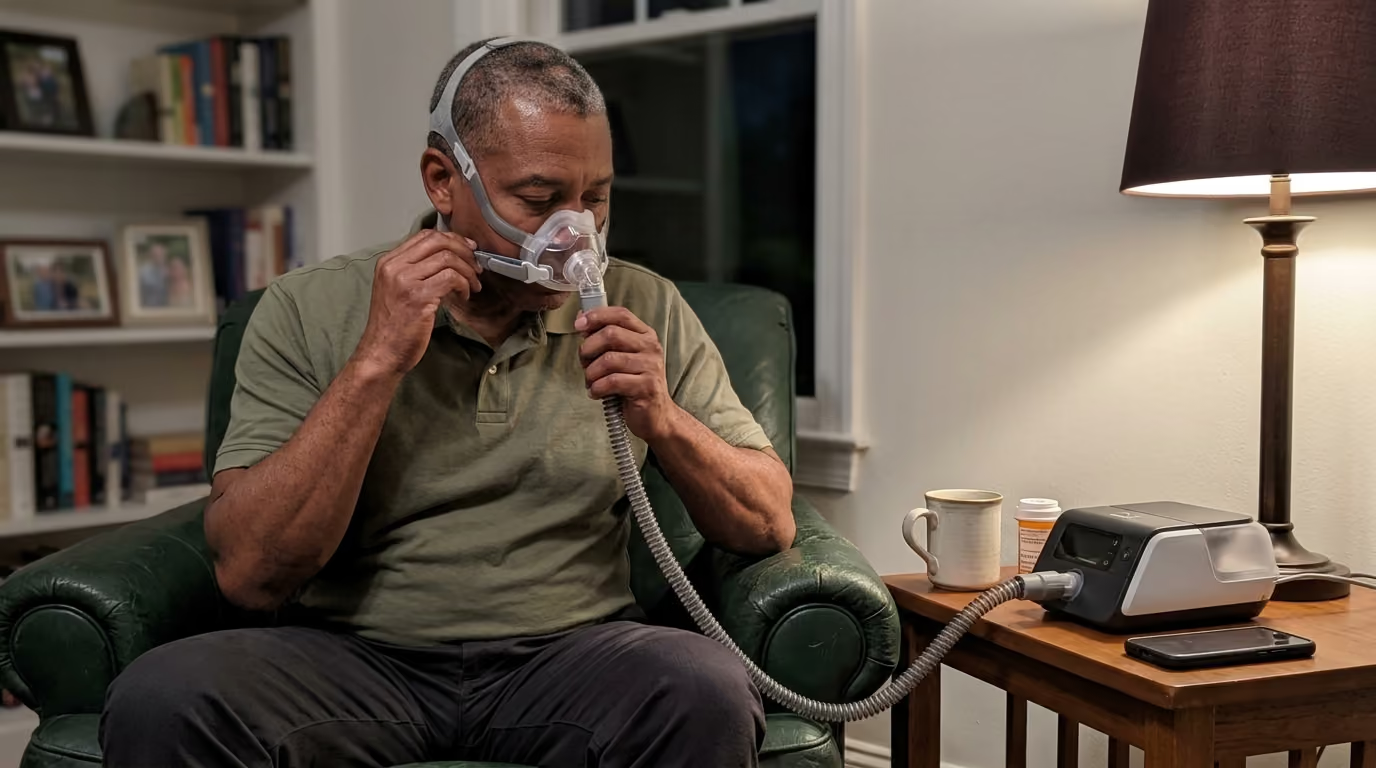
Positive Airway Pressure, commonly known as PAP, remains the gold standard, first-line medical treatment for moderate to severe obstructive sleep apnea. PAP devices work by drawing in room air, filtering it, and delivering gentle, pressurized air through flexible tubing and a mask. This continuous column of air acts as a pneumatic splint, physically preventing the relaxed soft tissues of your throat from collapsing.
Two main types of PAP devices are prescribed:
Clinical practice guidelines from the American Academy of Sleep Medicine recommend initiating therapy with either home APAP or in-laboratory CPAP titration for uncomplicated obstructive sleep apnea. Routine bilevel PAP (BiPAP) is generally reserved for patients requiring high pressures, those with central sleep apnea, or individuals with concurrent respiratory failure.
For severe obstructive sleep apnea (AHI greater than 30), PAP therapy is the strongly recommended medical intervention. For mild to moderate cases, treatment options depend on clinical symptoms, cardiovascular risk factors, and patient preference.
Selecting the correct mask interface is essential for long-term treatment success. An ill-fitting mask causes air leaks, skin irritation, and eye discomfort, leading many patients to abandon therapy prematurely.
The three primary mask configurations include:
While guidelines generally favor nasal interfaces when clinically feasible, your personal facial anatomy, facial hair, nasal patency, and comfort must guide the final selection.
For veterans with mild to moderate obstructive sleep apnea who cannot tolerate PAP therapy or prefer an alternative, a custom-fitted Mandibular Advancement Device (MAD) represents an evidence-based alternative.
These devices resemble athletic mouthguards and are custom-fabricated by qualified dental sleep medicine specialists. The device works by holding your lower jaw (mandible) and tongue in a slightly forward position during sleep. This mechanical advancement expands the posterior airway space and stabilizes the soft palate, reducing airway collapse.
Over-the-counter boil-and-bite mouthguards are not equivalent to custom medical oral appliances. Non-custom devices lack precision titration, can cause permanent bite changes, and rarely provide verified airway stabilization.
If you use a custom oral appliance, you should complete follow-up sleep testing to objectively verify that the device adequately controls your airway obstructions.
For some individuals, airway obstructions occur primarily when sleeping on their back. In the supine position, gravity pulls the base of the tongue downward into the pharyngeal airway. Positional therapy uses specialized vibrating sensors, positioning pillows, or structured garments to encourage consistent side sleeping.
General lifestyle modifications can also support medical treatment:
These lifestyle adjustments provide valuable support, but they should complement, rather than replace, validated medical therapies. For broader insights on maintaining physical health across your lifespan, explore our healthy aging articles.
When standard non-invasive therapies fail or anatomical blockages are severe, surgical options may be considered. Common surgical procedures include uvulopalatopharyngoplasty (UPPP), tonsillectomy, nasal septoplasty to resolve structural nasal obstruction, and maxillomandibular advancement to surgically reposition the jaw structure.
Another modern option is hypoglossal nerve stimulation. This surgically implanted system delivers mild electrical pulses to the hypoglossal nerve during sleep, moving the tongue forward with each breath to maintain an open airway. Surgical suitability requires detailed clinical evaluation by an otolaryngologist specializing in sleep surgery.
Obtaining a PAP device is only the first step; using it consistently throughout every sleep period is where long-term health improvements occur. Many veterans encounter physical and psychological hurdles when beginning treatment, leading to frustration and inconsistent use.
Understanding how to methodically troubleshoot these challenges prevents early abandonment of therapy.
Physical discomfort is a common reason veterans struggle with their devices. Fortunately, most physical issues have straightforward solutions:
Psychological barriers are just as significant as physical ones. Veterans managing service-connected trauma, claustrophobia, hyperarousal, or severe insomnia often find wearing a facial mask distressing.
When a veteran with PTSD experiences hypervigilance, strapping a mask onto the face can trigger feelings of restriction or panic. Overcoming this requires a gradual, trauma-informed desensitization approach:
If severe insomnia or hyperarousal persists, ask your medical provider for a referral to a behavioral sleep medicine specialist trained in Cognitive Behavioral Therapy for Insomnia (CBT-I).
For structured strategies on managing nighttime stress and autonomic recovery, consult our dedicated sleep, stress and resilience resources.
In many administrative and healthcare contexts, treatment adherence is defined as using a PAP device for at least four hours per night on 70 percent of nights.
It is vital to understand that four hours is merely an administrative compliance benchmark, not a physiological standard for optimal health. If you sleep for seven hours but remove your mask after four, your airway remains completely unprotected during the final three hours of the night.
REM sleep clusters heavily in the second half of the night, meaning your most severe apneas and steepest oxygen desaturations often occur right after you take the mask off.
VA/DoD clinical guidance emphasizes using your device for the entire duration of sleep, including daytime naps. Full-night coverage ensures steady oxygen delivery, prevents autonomic cardiovascular stress spikes, and maximizes morning recovery.
Managing sleep-disordered breathing is fundamentally about preserving long-term cardiovascular, metabolic, and cognitive health. The human body is not built to withstand repetitive episodes of oxygen deprivation and sympathetic nervous system spikes night after night.
Decades of peer-reviewed clinical research clearly establish the physiological damage caused by untreated moderate-to-severe obstructive sleep apnea:
Research from transportation safety agencies also demonstrates that individuals with untreated sleep apnea have a significantly higher risk of motor vehicle collisions due to involuntary micro-sleeps behind the wheel.
While the cardiovascular and cognitive risks of untreated sleep apnea are firmly established, scientific research remains ongoing regarding other proposed health associations.
Early investigations are studying whether consistent PAP therapy directly reduces systemic inflammatory biomarkers like C-reactive protein over multi-year periods. Researchers are also examining how treating sleep apnea might influence the long-term progression of neurodegenerative disorders and post-traumatic stress symptoms.
While preliminary findings are promising, clinical trials emphasize that PAP therapy should be viewed as one vital component of comprehensive healthcare, rather than an isolated cure for complex psychiatric or neurodegenerative conditions.
Veterans seeking to improve long-term physical capability should explore our evidence-based military health articles to build balanced daily health routines.
The following clinical scenarios illustrate how sleep apnea diagnosis and management function in everyday veteran healthcare.
A 42-year-old veteran visits a primary care clinic complaining of debilitating morning fatigue, daily headaches, and severe afternoon brain fog. He reports sleeping seven hours each night and does not believe he snores loudly. Because he does not fit the classic profile of an older, heavy snorer, previous providers attributed his symptoms entirely to mild depression and service-related wear and tear.
A clinician administers a validated screening tool and orders a home sleep apnea test. The recording reveals an AHI of 22 events per hour, with respiratory events clustering during REM sleep and accompanied by drops in blood oxygen saturation down to 84 percent.
The veteran is prescribed an APAP device with a low-profile nasal pillow mask. Within three weeks of consistent nightly use, his morning headaches resolve, his daytime concentration sharpens, and his afternoon energy stabilizes.
A 35-year-old veteran with service-connected PTSD receives an in-laboratory diagnosis of severe obstructive sleep apnea with an AHI of 38. She receives a PAP machine from the medical center, but during her first two nights, the feeling of the mask triggers immediate anxiety and panic sensations. Feeling overwhelmed, she packs the device into its travel case and stops using it.
At a follow-up appointment, her clinical team identifies the mask-related distress and implements a structured behavioral desensitization plan. She works with a respiratory therapist to switch from a full-face mask to a minimalist nasal cradle and begins wearing it for 15 minutes each afternoon while awake.
Her provider also coordinates care with a behavioral sleep medicine specialist to address her sleep-related hyperarousal. By breaking the association between the mask and panic, she gradually reaches seven hours of continuous nightly PAP use, resulting in fewer nighttime panic awakenings and deeper, more restorative rest.
A 48-year-old veteran with chronic back pain and daytime exhaustion completes a home sleep apnea test. The automated report calculates an AHI of 3.8 events per hour, which falls within the technically normal range. However, the veteran continues to experience severe daytime sleepiness, unrefreshing rest, and morning dry mouth.
Recognizing that the home test only recorded total time in bed and did not capture brain wave activity, his physician notes that the veteran slept poorly during the test. The clinician orders an in-laboratory polysomnography.
The comprehensive laboratory study documents an actual AHI of 18 events per hour along with an elevated Respiratory Disturbance Index, demonstrating that his home study had produced a false negative. He is successfully fitted with a custom oral appliance, which stabilizes his upper airway and restores his daytime alertness.
A 55-year-old veteran receiving long-term prescription opioid therapy for severe combat-related spinal injuries reports disrupted sleep, morning confusion, and frequent nighttime awakenings. His bed partner notes that he does not snore loudly, but his breathing rhythm frequently stops completely before resuming with a sudden, deep gasp.
An in-laboratory polysomnography is conducted, revealing an AHI of 34 events per hour. Crucially, more than 80 percent of the recorded events show an absence of respiratory effort, confirming a diagnosis of central sleep apnea related to opioid use rather than mechanical obstruction.
His sleep medicine specialist coordinates with his pain management team to carefully adjust his medication regimen and initiates therapy with an adaptive servo-ventilation device designed specifically to stabilize irregular central breathing patterns. This targeted physiological intervention resolves his nocturnal oxygen drops and reduces his daytime cognitive fatigue.
This educational guide is provided solely for informational purposes and should not be used as a substitute for professional medical evaluation, clinical diagnosis, or personalized treatment advice. Sleep-disordered breathing is a complex physiological condition that requires direct oversight by a qualified healthcare professional.
If you experience persistent daytime exhaustion, loud snoring, witnessed breathing pauses, morning headaches, or unexplained cognitive fatigue, schedule an evaluation with a licensed physician or sleep medicine specialist. Never alter, discontinue, or adjust your prescribed medical devices, positive airway pressure settings, or prescription medications without direct medical guidance from your healthcare team.
Yes. While excess body weight and loud snoring are well-known risk factors, obstructive sleep apnea frequently affects individuals with lean body compositions. Upper airway dimensions, thick neck musculature, jaw structure, enlarged tonsils, and genetic airway anatomy can all cause physical airway collapse during sleep. Many individuals experience significant breathing pauses accompanied by subtle gasping, morning headaches, and daytime fatigue rather than loud, disruptive snoring.
PAP therapy acts as a pneumatic support that keeps your airway open, preventing drops in blood oxygen levels and eliminating the surges of adrenaline triggered by airway collapse. By preventing these nocturnal stress responses, consistent PAP therapy helps lower resting blood pressure, reduces strain on your heart muscle, and lowers the risk of cardiac arrhythmias and long-term cardiovascular disease.
If your home sleep apnea test is negative or inconclusive but you continue to experience severe daytime sleepiness, morning headaches, or unrefreshing sleep, you should request an in-laboratory polysomnography. Home tests can underestimate sleep apnea severity because they do not track brain wave activity or confirm actual sleep time. In-laboratory testing provides a comprehensive, multi-channel physiological assessment that accurately detects subtle breathing disruptions and alternative sleep disorders.
No. Over-the-counter mouthguards sold online or in retail stores are not approved medical devices for treating obstructive sleep apnea. They lack precision calibration, can shift your bite permanently, and often fail to maintain an open airway during deep sleep. If an oral appliance is appropriate for your diagnosis, it must be custom-fabricated, fitted, and monitored by a qualified dental sleep medicine specialist in coordination with your sleep physician.
Follow BattleVet for practical guidance on military and veteran health, strength, recovery, testosterone, sleep and healthy aging. Stay connected for new articles, research backed insights and clear information to help you stay capable for the years ahead.


Build better habits around strength, recovery, sleep, hormones and healthy aging with practical guidance for active military personnel and veterans.
Explore BattleVet