
Almost half of adults over 75 experience hearing difficulty, highlighting why former service members must address service-related auditory trauma early.





Most people assume hearing loss is quiet. They picture sounds slowly fading away until the world becomes muffled. In reality, hearing damage is often noisy, exhausting, and chaotic. You sit at a crowded dinner table with family, hearing plenty of noise, but catching only every third word. Nodding along feels easier than asking someone to repeat themselves for the fifth time.
Hearing health is not just about detecting faint sounds in a soundproof booth. It is an active health and safety issue that influences communication, mental fatigue, personal relationships, balance, and cognitive function as you grow older.
For military veterans, auditory damage is rarely just a consequence of getting older. Decades of blast waves, engine noise, flight lines, and weapons fire combine with natural age-related changes to create complex hearing challenges. Addressing hearing loss and tinnitus requires a practical strategy that focuses on real-world function, clear communication, and continued participation in daily life.
Auditory problems are among the most common service-connected disabilities in the United States. According to VA Research, hearing loss and tinnitus represent the single largest disability category among military veterans. In fiscal year 2020, more than 1.3 million veterans were receiving disability compensation for hearing loss. More than 2.3 million veterans were receiving compensation for tinnitus during that same period.
By September 2023, data from the joint VA and Department of Defense clinical practice guidelines showed that compensated tinnitus cases had grown to nearly 3 million individuals. These numbers reflect the intense physical environments required by military service. Military personnel regularly encounter acoustic hazards that far exceed standard civilian workplace limits.
Acoustic trauma during military service often results from high-intensity impulse noises such as rifle fire, artillery, and explosive detonations. It also stems from continuous high-decibel exposure in vehicle engine compartments, shipboard mechanical spaces, and flight lines. Head trauma, concussions, blast-induced barotrauma, and toxic exposures to certain fuels or industrial solvents can also degrade the auditory system over time.
These military exposures often interact with age-related hearing loss, known clinically as presbycusis. The National Institute on Deafness and Other Communication Disorders reports that approximately 15 percent of American adults report some trouble hearing. The prevalence rises sharply with age. Roughly one in three adults between ages 65 and 74 has hearing loss, and nearly half of adults older than 75 experience significant hearing difficulty.
When military-related inner ear damage combines with natural aging, veterans often experience symptoms earlier and more severely than non-veterans. Protecting your long-term capability requires understanding these issues as part of broader military health considerations. Auditory health is a fundamental pillar of healthy aging rather than a minor inconvenience to ignore.
To manage hearing health effectively, you must understand the difference between an auditory impairment and a functional hearing disability. An impairment is an objective change in physical hearing sensitivity measured during an audiogram. A functional disability is the practical impact that hearing loss has on your daily life, safety, and relationships.
An audiogram measures the softest sounds you can detect across various frequencies in a quiet room. It classifies loss by type and severity, but it cannot show how hard your brain works to understand words in a noisy restaurant. Sensorineural hearing loss involves damage to the delicate hair cells of the inner ear or the auditory nerve pathways. The Department of Veterans Affairs notes that while sensorineural loss is permanent, it can often be managed with modern hearing technology.
Conductive hearing loss occurs when sound waves cannot travel efficiently through the outer ear canal, eardrum, or middle ear bones. This form of loss can stem from earwax impaction, fluid buildup, infections, or physical damage to the eardrum. Mixed hearing loss is a combination of sensorineural and conductive factors. Many veterans experience high-frequency sensorineural hearing loss, which creates a specific and frustrating communication pattern.
High-frequency hearing loss strips away the higher-pitched consonant sounds such as S, F, TH, SH, and K, while leaving lower-pitched vowel sounds audible. Because vowels carry volume while consonants carry meaning, a person with this pattern can hear that someone is speaking, but cannot distinguish the exact words. You perceive people as mumbling, especially in environments with background noise or echoing acoustics.
Hearing speech requires far more than basic sound detection. It requires audibility, acoustic clarity, active attention, working memory, and language processing speed. When speech signals arrive at the brain damaged or incomplete, your mental processing must work overtime to fill in the missing pieces. This effort creates substantial listening fatigue by the end of the day.
In recent years, researchers have examined the connection between untreated hearing loss, cognitive decline, and long-term brain health. The 2024 Lancet Commission report on dementia prevention identified hearing loss as one of 14 potentially modifiable risk factors for dementia across the human lifespan. Their meta-analysis of multiple population cohorts found that hearing loss was associated with a 37 percent higher risk of incident dementia.
The research also identified a dose-response relationship. For every 10-decibel decrease in hearing sensitivity, the estimated risk of cognitive decline increased between 4 percent and 24 percent across various studies. A separate systematic review of eight cohorts involving more than 126,000 participants found that individuals using hearing aids had a 19 percent lower risk of cognitive decline compared to individuals with unmanaged hearing loss.
These research findings show a meaningful correlation, but they do not prove that hearing loss directly causes dementia in every individual. Observational studies cannot prove direct causation. Scientists are currently exploring four main biological and behavioral explanations:
When your ears send distorted signals, your brain diverts mental resources away from working memory and complex thinking simply to decode raw sound. Over years, this chronic reallocation of mental energy may leave fewer cognitive reserves available for other brain functions.
Prolonged lack of sensory input causes the auditory processing areas of the brain to receive fewer signals. Neuroimaging studies suggest that long-term sensory deprivation is linked to faster rates of brain tissue atrophy in regions responsible for sound and speech processing.
The World Health Organization notes that social isolation and loneliness are widespread consequences of untreated hearing impairment. When following conversations becomes exhausting, people often withdraw from family gatherings, clubs, religious services, and volunteer work. This loss of regular social and intellectual stimulation is an established risk factor for cognitive decline.
Hearing loss and cognitive decline may share underlying systemic causes, including microvascular disease, high blood pressure, diabetes, systemic inflammation, or a history of traumatic brain injury. In this scenario, hearing loss serves as an early indicator of wider vascular or neurological changes.
Understanding these connections is essential for anyone focusing on healthy aging and longevity resources. It is equally important to note that unmanaged hearing loss can skew clinical memory testing. A veteran who cannot hear instructions clearly during a cognitive screening will score poorly, creating a false impression of memory loss when the real issue is poor auditory input.
Many veterans wait a decade or more between noticing their first hearing difficulties and seeking professional clinical care. Recognizing early warning signs allows you to intervene before communication breakdowns cause chronic frustration or social isolation.
Common early indicators of hearing loss include:
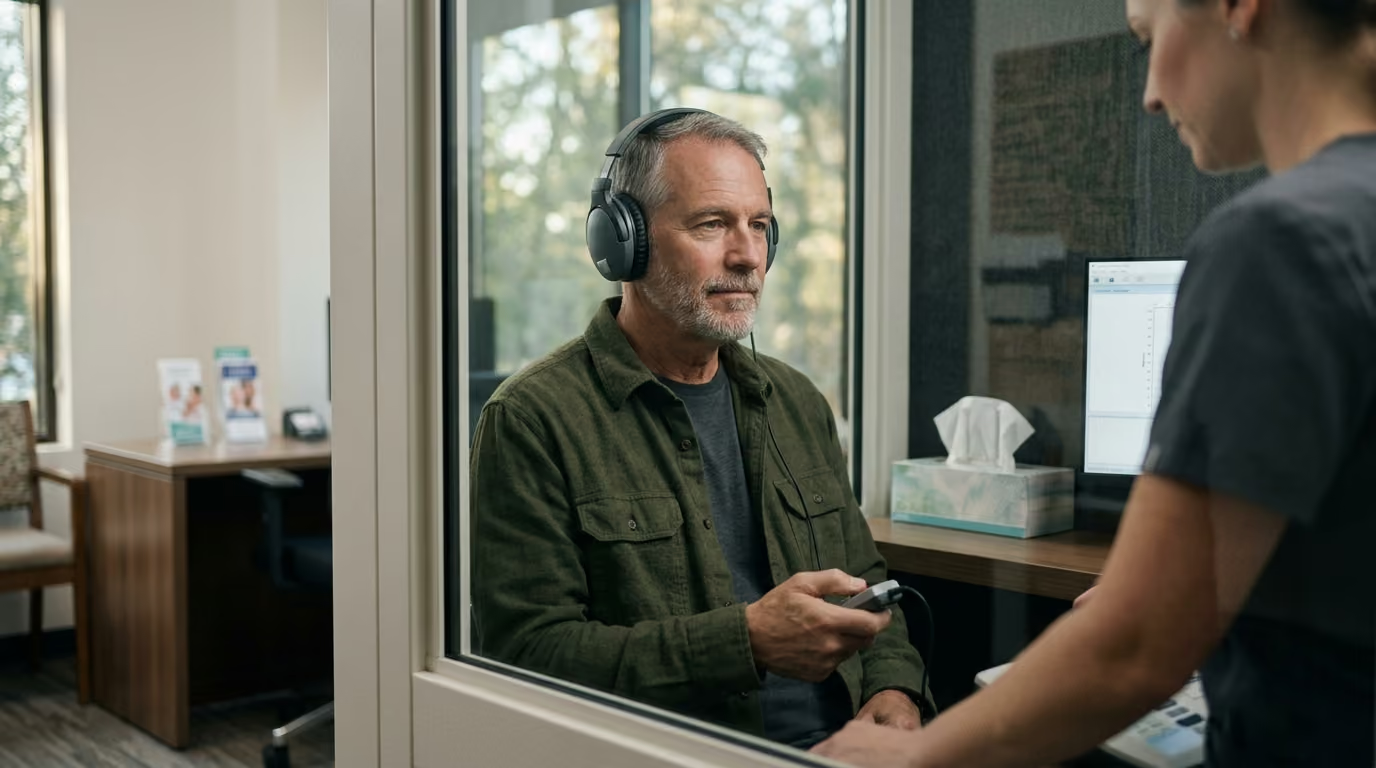
A basic hearing screening is only a preliminary check to see if further evaluation is warranted. A full diagnostic evaluation conducted by a licensed audiologist is much more thorough. This assessment includes otoscopy to inspect the ear canal and eardrum, pure-tone air and bone conduction testing, and speech recognition testing in quiet and noisy environments.
Certain auditory symptoms require urgent medical evaluation rather than a standard hearing aid fitting. Contact an audiologist, otolaryngologist, or urgent care provider immediately if you notice any of the following red flag conditions:
A rapid drop in hearing ability in one or both ears, occurring all at once or over a few days, is a medical emergency. Sudden hearing loss often responds best to medical treatment when evaluated within the first 48 to 72 hours.
Hearing loss or persistent tinnitus that occurs only in one ear, or is substantially worse on one side, requires medical evaluation. This pattern can occasionally indicate acoustic neuromas, vascular problems, or localized structural issues.
Tinnitus that sounds like a rhythmic pulsing, whooshing, or thumping that matches your heartbeat should always be evaluated by a physician. Pulsatile tinnitus may indicate vascular abnormalities, blood flow changes, or intracranial pressure variations.
Physical discomfort, fluid discharge, persistent itching, or a feeling of severe pressure in the ear canal often points to middle ear infections, Eustachian tube dysfunction, or eardrum perforations that require medical treatment.
Hearing changes accompanied by true spinning sensations, severe balance problems, or unsteadiness require comprehensive evaluation. Conditions such as Meniere's disease, labyrinthitis, or vestibular nerve injuries affect both hearing and balance systems.
Hearing aids are the primary tool for managing permanent sensorineural hearing loss. However, these devices do not restore normal hearing in the same way glasses correct vision. Eyeglasses bend light so the eye can focus accurately, but a hearing aid amplifies and processes acoustic signals for an inner ear that has damaged sensory cells.
Modern prescription hearing aids use digital signal processors to amplify only the specific frequencies where you have deficits. They preserve lower frequencies where your hearing is normal, while boosting high-frequency consonants. They also use directional microphones, feedback cancellation, and noise reduction algorithms to make speech clearer in difficult environments.
According to the National Institute on Deafness and Other Communication Disorders, nearly 29 million American adults could benefit from using hearing aids. Yet fewer than 30 percent of adults aged 70 and older who could benefit have ever used them. For adults aged 20 to 69, that figure drops to roughly 16 percent.
Adjusting to hearing aids requires time and consistent use. When you begin wearing devices, everyday environmental sounds such as footsteps, running water, and refrigerator motors can feel unnaturally loud. Your brain needs several weeks of daily wear to re-learn how to filter out background noises and prioritize speech. Working with an audiologist for follow-up adjustments is critical to achieving a comfortable, effective fit.
Beyond standard hearing aids, a wide range of assistive listening devices can improve communication and environmental safety:
For veterans with severe-to-profound hearing loss who receive little benefit from conventional hearing aids, cochlear implants may be an option. Cochlear implants bypass damaged inner ear hair cells entirely, stimulating the auditory nerve directly with electrical impulses. An audiologist specializing in implantable devices can determine whether you meet the clinical criteria for an evaluation.
Tinnitus is defined by the National Institute on Deafness and Other Communication Disorders as the perception of sound when no external acoustic source is present. People experience tinnitus as ringing, buzzing, hissing, whistling, roaring, clicking, or static. It may be constant or intermittent, heard in one ear, both ears, or centered inside the head.
In military populations, tinnitus is closely linked to acoustic trauma, blast exposures, and traumatic brain injury. However, Veterans Affairs Canada lists several other potential contributors, including chronic middle ear disease, head and neck injuries, barotrauma, and certain medications. Common drugs such as high-dose aspirin, nonsteroidal anti-inflammatory drugs, certain antibiotics, and specific chemotherapy agents can trigger or worsen tinnitus.
Tinnitus is not simply a mechanical problem in the ear. It is a neurological condition. When the inner ear is damaged, the auditory cortex receives fewer signals from outside. The brain often turns up its internal sensitivity to compensate, generating spontaneous neural activity that the conscious mind interprets as sound.
The severity of tinnitus is determined less by its decibel loudness than by how the brain reacts to the signal. When the brain views the sound as a threat, it triggers the sympathetic nervous system. This reaction causes anxiety, irritability, sleep disturbances, and concentration issues. This feedback loop can make the tinnitus feel much louder and more disruptive.
The 2024 VA/DoD Clinical Practice Guideline for the Management of Tinnitus provides evidence-based recommendations for veterans. The guideline recommends hearing aids for individuals with tinnitus who also have hearing loss. Amplifying ambient sounds restores natural auditory input to the brain, which often reduces the contrast of the internal ringing.
Other clinically supported management strategies include:
Surrounding yourself with low-level, pleasant background sound prevents the auditory system from focusing on the internal tinnitus signal. Tabletop sound machines, fan noise, nature sound generators, and specialized smartphone apps provide gentle acoustic backgrounds that make tinnitus less noticeable, especially when falling asleep.
Cognitive behavioral therapy is one of the most effective psychological interventions for reducing tinnitus-related distress. CBT does not eliminate the physical sound, but it helps change how your brain reacts to it. It reduces the emotional distress, anxiety, and sleep disruption associated with the condition, helping you reach a state of habituation where the sound no longer dominates your attention.
Tinnitus thrives on exhaustion and nervous system arousal. Practicing good sleep hygiene, reducing late-night screen exposure, and addressing underlying sleep apnea can significantly reduce tinnitus intrusiveness. Incorporating proven techniques for managing sleep and stress helps calm the sympathetic nervous system.
Veterans should be cautious about heavily advertised dietary supplements, herbal drops, and online quick fixes that claim to cure tinnitus. The American Academy of Otolaryngology-Head and Neck Surgery notes that there are currently no medications, vitamins, or supplements scientifically proven to eliminate subjective tinnitus. Spending money on unproven remedies delays genuine clinical care that helps you habituate to the sound.
Hearing aids and assistive listening devices are powerful tools, but they work best when paired with effective communication strategies. Hearing is a shared activity between a speaker and a listener. Applying basic adjustments to your environment and communication habits can dramatically improve understanding while reducing listening fatigue.
The American Speech-Language-Hearing Association (ASHA) recommends several practical communication strategies for family members, friends, and coworkers:
Clear communication is equally critical in medical settings. ASHA and clinical safety organizations emphasize that veterans should confirm medication names, dosages, and procedural instructions using teach-back techniques. Always ask your healthcare providers for written visit summaries to ensure you do not miss vital health information due to background clinic noise.
When hearing becomes difficult, the natural human reaction is to avoid challenging social environments. Over months and years, this avoidance can turn into a pattern of withdrawal, loneliness, and depression. Overcoming this pattern requires a structured, step-by-step approach rather than forcing yourself into noisy, overwhelming situations.
A graded participation plan allows you to rebuild your communication confidence gradually:
Begin by engaging in direct conversations with one person in a quiet, well-lit room at home. Practice using active listening techniques, maintaining eye contact, and using specific clarification requests without background distractions such as television.
Connect with distant family members, friends, or military comrades using video calling platforms equipped with real-time automated captioning. This setting allows you to practice integrating visual cues with amplified, captioned audio in a controlled space.
Participate in small gatherings of three or four people in a quiet home environment or a low-noise setting during off-peak hours. Sit in the best acoustic position, inform the group of your hearing needs, and take a brief listening break if you feel tired.
Return to familiar group settings, such as veterans' organization meetings, local clubs, or places of worship, using your assistive technology. Use remote microphones or connect your hearing aids to the facility's hearing loop system to maintain speech clarity.
Attend larger family gatherings, celebrations, or restaurant dinners with a defined strategy. Choose your seat carefully, arrange for your communication partner to help clarify missed information, and set a comfortable time limit for your stay.
Re-engaging in these meaningful activities is a vital part of navigating veteran life and transition. Hearing care is ultimately successful not when an audiogram score improves, but when you can comfortably participate in daily life, connect with loved ones, and stay involved in your community.
Navigating hearing health requires separating clinical facts from common myths and misconceptions. Avoiding these frequent pitfalls will help you make better decisions about your long-term auditory care:
While auditory sensitivity declines with age, untreated hearing loss should never be accepted as something you simply have to endure. Modern hearing technology, medical interventions, and communication strategies can improve clarity and quality of life at any age.
Being able to hear an engine rumbling, a dog barking, or a door slamming does not mean your speech understanding is intact. Hearing loss usually affects high frequencies first, degrading speech clarity while leaving low-frequency volume detection relatively normal.
Hearing aids are sophisticated amplifiers, not new biological ears. They significantly improve access to sound, but they cannot completely eliminate background noise or restore youthful hearing. Realistic expectations and communication adjustments are essential for long-term success.
Misunderstandings and missed details are often caused by poor auditory input rather than memory loss. If your ears do not pick up the information accurately, your brain cannot store or recall it later.
Protecting your ears around loud engines, firearms, and power equipment is essential. However, wearing high-grade earplugs in normal, quiet environments out of fear can increase the brain's internal sensitivity and worsen sound sensitivity or tinnitus. Use hearing protection when noise levels are hazardous, but allow your auditory system to engage with normal daily sounds.
Veterans enrolled in VA healthcare are eligible for comprehensive diagnostic audiologic evaluations. If an audiologist determines that hearing aids are clinically necessary to support your daily communication, the VA provides high-quality prescription hearing aids, batteries, maintenance, and assistive accessories at no cost. You do not necessarily need a formal service-connected disability rating for hearing loss to receive clinical hearing care through the VA healthcare system.
There is currently no scientifically proven surgical, medical, or pharmacological cure for subjective tinnitus. However, tinnitus can be managed effectively using sound therapy, prescription hearing aids, cognitive behavioral techniques, and lifestyle modifications. These strategies help the brain habituate to the sound so that it no longer causes stress, disrupts your sleep, or interferes with daily life.
If you have normal baseline hearing and no symptoms, a screening every two to three years is generally adequate. If you have known hearing loss, military noise exposure, persistent tinnitus, or wear hearing aids, you should schedule a comprehensive diagnostic hearing evaluation every year. Regular testing ensures your devices are programmed correctly for any changes in your hearing profile.
Over-the-counter (OTC) hearing devices are intended only for adults with perceived mild-to-moderate hearing loss. They are self-fitted and adjusted by the user without requiring an in-person audiologic exam. Prescription hearing aids are medical devices programmed by a licensed audiologist based on diagnostic testing. They provide precise frequency shaping, higher power output for severe losses, advanced noise reduction, and custom earmolds.
Taking deliberate, practical steps to protect and support your hearing health preserves your capability, maintains your independence, and keeps you connected to the people and activities that matter most.
This article is for educational purposes only and should not be used as medical advice. Always discuss individual health assessments, audiological testing, and treatment plans with a qualified healthcare professional.
Follow BattleVet for practical guidance on military and veteran health, strength, recovery, testosterone, sleep and healthy aging. Stay connected for new articles, research backed insights and clear information to help you stay capable for the years ahead.


Build better habits around strength, recovery, sleep, hormones and healthy aging with practical guidance for active military personnel and veterans.
Explore BattleVet