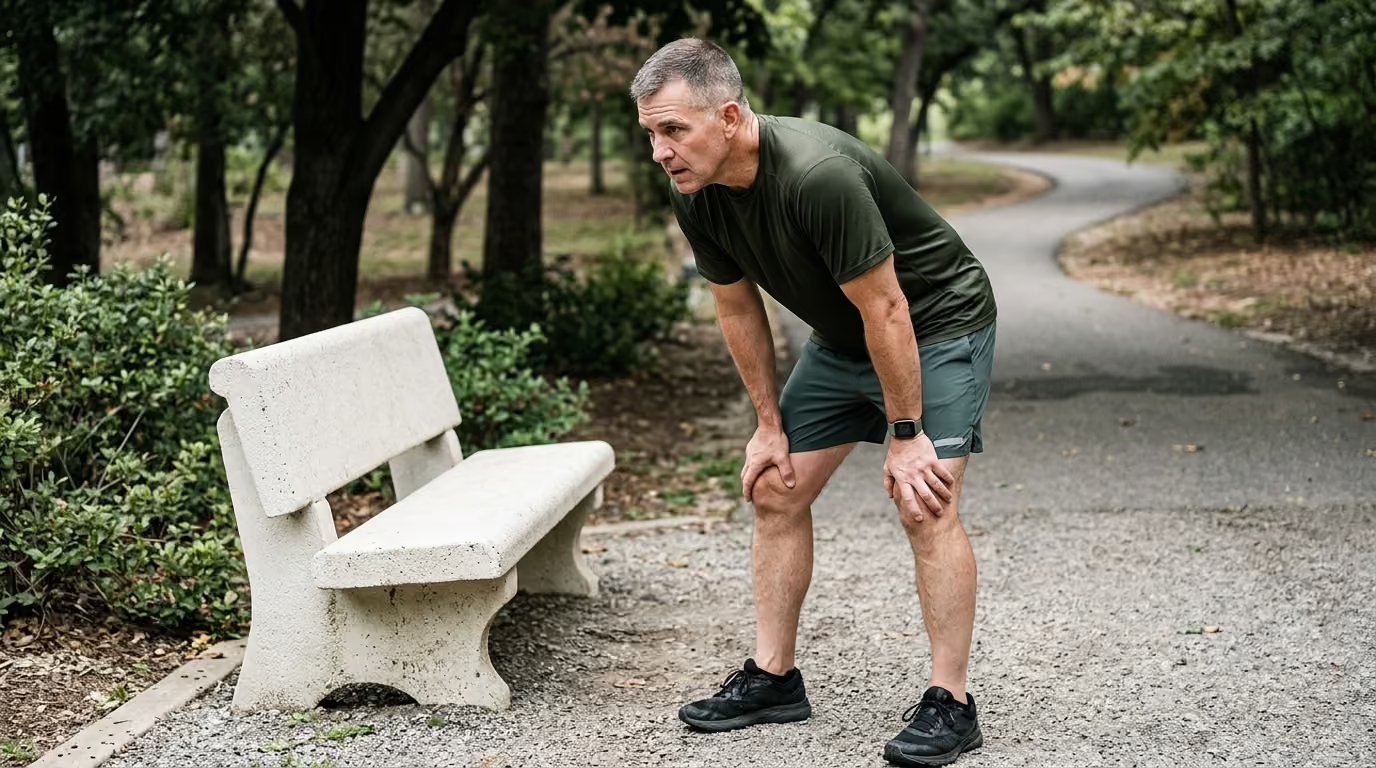

Four structured steps help military veterans assess health baselines, optimize movement, and apply evidence-based habits for lifelong functional independence.





If you are in immediate danger, call 911. For 24/7 support, call or text 988 and press 1 for the Veterans Crisis Line, or text 838255.
You sit at the kitchen table with a stack of lab results, a stiff lower back, and a fitness tracker showing five hours of fragmented sleep. The generic advice found online tells you to take dozens of unverified supplements and run five miles a day. That advice ignores your service-connected knee injury, your history of blast exposure, and your real daily schedule. You need a practical framework built around your actual health history, your current capabilities, and your personal goals.
A veteran longevity plan is not an expensive collection of biohacking trends or an extreme exercise routine. It is a structured, repeatable system designed to preserve functional independence, physical strength, cognitive clarity, and emotional health across every stage of civilian life.
The most effective way to build long-term capability is to assess your individual baselines, align your habits with proven medical evidence, and create sustainable routines that account for your service history. By following a structured process of assessment, prioritization, action, and scheduled review, you can protect your mobility and health for decades to come.
Longevity is often described simply as living longer. Total lifespan represents only the number of years between birth and death. For veterans, the more important metric is healthspan, which means the number of years lived with good health, physical capability, and mental clarity.
Functional longevity goes one step further. It focuses on your ability to continue performing the physical, mental, and social activities that give your life meaning. This includes walking without fear of falling, lifting your grandchildren, maintaining your home, traveling independently, and staying connected with your community.
Generic longevity advice often fails former service members because it assumes an uninjured baseline. Military service places unique physical, psychological, and environmental demands on the human body. High-impact conditioning, heavy load carriage, chronic sleep restriction, toxic exposures, and blast trauma alter your long-term health risks.
Your service history is clinically relevant, but it does not determine your future health. Recognizing the impact of prior training, joint wear, or operational stress allows you to select interventions that protect your body rather than aggravate old injuries. You can read more about these foundations in our healthy aging and longevity resources.
The Department of Veterans Affairs organizes this concept through its Whole Health model. This approach shifts the central question from "What is the matter with you?" to "What matters to you?" By identifying your mission, aspiration, and purpose, you build a health plan that supports your real life rather than chasing arbitrary clinical metrics.
Before choosing new health habits, you must establish an honest baseline. A complete health inventory provides the necessary context for your primary care provider and helps you make informed decisions.
Military records provide crucial context for long-term health planning. Write down your service branch, dates, and primary military occupational specialties. Note whether you had combat deployments, parachute jumps, heavy weapons exposure, or repetitive blast exposure.
Record any documented chemical, burn pit, radiation, or contaminated water exposures. The PACT Act expanded VA healthcare and benefits for veterans exposed to toxic substances during service. Documenting these details ensures you receive timely screenings, including the VA toxic exposure screening completed every five years.
List every diagnosed health condition, prior surgery, and chronic symptom. Organize your medical history into three distinct categories to prepare for clinical visits:
Write down every prescription, over-the-counter medicine, sleep aid, pain reliever, and dietary supplement you take. Record the specific dose, why you take it, and who prescribed it.
Polypharmacy, which is the concurrent use of multiple medications, is a major driver of preventable health complications in older adults. It increases the risk of falls, dizziness, cognitive changes, drug interactions, and hospital visits. Never stop taking prescribed medications on your own, but schedule a formal medication review with your primary care provider or clinical pharmacist.
Assess what your body can currently do without severe pain or safety risks. Review your capabilities across these four practical movement categories:
Reviewing your functional baseline helps you apply proven military health considerations to your personal situation.
Longevity media frequently blurs the line between established clinical medicine and preliminary laboratory research. Building a dependable health strategy requires understanding which interventions are supported by strong human trials and which remain experimental.
Decades of robust clinical research show that a small group of fundamental habits accounts for the vast majority of preventable morbidity and premature mortality.
Many popular longevity topics are supported only by animal models, observational associations, or small pilot studies in humans. These interventions should never replace foundational health habits.
A longevity plan works best when built sequentially. Rather than changing everything at once, focus on setting clear priorities and building sustainable habits over time.
Start by defining what you want your health to help you achieve over the next 10, 20, or 30 years. Write down two or three concrete statements that describe your long-term goals.
Use these statements to evaluate your daily habits. If a trendy diet, rigorous workout, or expensive supplement does not directly support your personal mission, remove it from your plan.
Physical training for long-term health should prioritize joint preservation, movement quality, and progressive strength over maximum intensity. Align your baseline routine with the physical activity guidelines from the Centers for Disease Control and Prevention:
You can find more detailed training frameworks in our strength and body composition guides.
Sleep disruption is common among veterans due to shift work, training environments, chronic pain, and operational stress. Prioritize non-pharmacological approaches to restore natural sleep architecture.
For chronic insomnia, cognitive behavioral therapy for insomnia (CBT-I) is the recommended first-line medical treatment. Clinical guidelines advise against the long-term use of sedative-hypnotic medications or benzodiazepines for chronic sleep issues. Check our sleep, stress, and resilience strategies for actionable routines.
Healthy nutrition supports lean muscle mass, stable blood sugar, and cardiovascular health without requiring extreme dietary restrictions.
Work with your healthcare provider to establish a clear schedule for preventive screenings. The U.S. Preventive Services Task Force and VA healthcare guidelines recommend routine monitoring based on age, sex, and risk factors:
A successful longevity plan must be resilient enough to handle joint flares, work stress, travel, and personal disruptions. When your routine is interrupted, a structured fallback plan prevents short-term setbacks from turning into permanent dropouts.
Your Minimum Viable Plan is a scaled-down version of your health routine designed for high-stress or high-pain days. It preserves your momentum without overloading your system.
Implementation intentions create automatic responses to predictable obstacles. Write down clear if-then statements for the challenges you encounter most often:
Pain is an indicator of sensitivity and tissue stress, but it does not always signal irreversible tissue damage. Veterans often swing between pushing through severe pain and avoiding all activity entirely. A balanced approach protects long-term function:
To learn more about navigating healthcare systems and finding specialty clinics, read our guide to veteran healthcare navigation.
A longevity plan should evolve as your age, goals, and health status change. Establishing scheduled review intervals keeps your habits aligned with your current needs.
Track simple daily behaviors to build reliable routines. Focus on leading indicators, which are the actions you control directly, rather than lagging indicators like body weight or cholesterol numbers:
At the end of each week, spend five minutes reviewing your consistency. Identify which habits were easy to maintain and which ones ran into friction. Adjust your schedule for the upcoming week accordingly.
At the end of each month, evaluate your progress toward your current SMART goals (Specific, Measurable, Action-oriented, Realistic, Time-based). If you achieved your goal, set the next incremental target. If you missed your goal, determine whether the target was unrealistic or if your daily schedule needs adjustment.
Once a year, conduct a comprehensive review of your entire longevity strategy. Complete a new baseline assessment, update your medication inventory, and confirm that all age-appropriate preventive screenings are up to date. Revisit your mission, aspiration, and purpose statements to ensure your daily efforts still reflect your personal priorities.
Applying these principles looks different depending on your age, injury profile, and background. Here are five practical examples showing how different veterans can structure their individual plans.
Profile: A 54-year-old former infantry non-commissioned officer with bilateral knee osteoarthritis, chronic lumbar stiffness, and a history of high-volume running.
Primary Goal: Maintain lower-body strength and cardiovascular endurance to hunt and hike without causing joint swelling.
Profile: A 42-year-old veteran managing service-connected post-traumatic stress, chronic sleep disruption, and multiple daily prescriptions for pain, mood, and sleep.
Primary Goal: Improve sleep quality, reduce daily fatigue, and safely simplify medication use.
Profile: A 71-year-old Navy veteran with mild peripheral neuropathy, decreased lower-body strength, and two near-falls over the past six months.
Primary Goal: Maintain independent living at home and eliminate fall risks.
Profile: A 62-year-old veteran living two hours away from the nearest VA medical center, dealing with hypertension and prediabetes.
Primary Goal: Improve cardiovascular fitness and metabolic health using local and telehealth resources.
Profile: A 48-year-old veteran with documented burn pit exposure during deployments to Iraq and Afghanistan, reporting mild shortness of breath during exertion.
Primary Goal: Screen for respiratory and cardiovascular conditions while building safe aerobic fitness.
For broader context on conditioning safely as you age, review our physical training and performance principles.
Avoiding common misconceptions is just as important as choosing the right habits. Watch out for these frequent mistakes when developing your personal plan.
Purchasing unproven longevity supplements while sleeping five hours per night, avoiding exercise, and eating highly processed food is ineffective. Supplements cannot compensate for poor sleep, lack of physical activity, smoking, or chronic stress. Build a reliable routine around nutrition, movement, and sleep before spending money on dietary supplements.
Many veterans carry an intense training mentality from their service years. When joint pain or life stress prevents them from training at peak intensity, they often stop entirely. Sustainable longevity requires consistency over intensity. Performing a modified 15-minute workout is far better than doing nothing for weeks at a time.
Cardiovascular health and muscle mass are critical, but emotional well-being and social support are equally important for long-term health. Chronic untreated depression, severe anxiety, unresolved trauma, and social isolation significantly increase mortality risks. Treat mental health care, veteran peer groups, and community involvement as essential medical priorities.
Stopping prescription medications abruptly due to concerns about side effects or polypharmacy can cause severe withdrawal or acute medical emergencies. Always work with your prescribing physician or clinical pharmacist to taper or adjust medications safely.
Military service often involves repetitive high-impact physical loading, blast exposure, operational stress, irregular sleep schedules, and environmental toxins. These factors can increase your lifetime risk for osteoarthritis, sleep apnea, cardiovascular disease, and chronic pain. A personalized longevity plan identifies these specific risks early and selects protective habits, such as low-impact resistance training and regular clinical screenings, rather than applying generic advice.
Never attempt to train through sharp, worsening, or unstable joint pain. Replace painful movements with joint-friendly alternatives that train the same muscle groups. For example, swap outdoor running for cycling or swimming, and replace heavy barbell squats with goblet squats to a box or leg presses. Work with a physical therapist to assess your movement mechanics and establish an exercise range that builds strength safely.
Review your daily habits and weekly consistency on an ongoing basis. Conduct a monthly check-in on your SMART goals to evaluate what is working and what needs adjustment. Schedule a comprehensive Whole Health review once per year with your primary care provider to update your baseline health inventory, review your medications, and complete recommended preventive health screenings.
Yes. The VA Whole Health program offers personal health planning, health coaching, peer support, and integrative therapies like acupuncture and chiropractic care. In addition, VA primary care covers evidence-based preventive screenings, physical therapy, nutrition counseling through the MOVE! program, toxic exposure screenings under the PACT Act, and mental health care.
This article is provided for educational and informational purposes only and does not constitute medical advice, diagnosis, or treatment. Military service, injury histories, chronic conditions, and prescription medications create unique individual health considerations. Always consult a qualified healthcare professional or your primary care provider before starting a new exercise program, making significant dietary changes, altering your medication regimen, or trying dietary supplements. If you are experiencing a medical emergency or thoughts of self-harm, call 911 or contact the Veterans Crisis Line immediately by dialing 988 and pressing 1.
Follow BattleVet for practical guidance on military and veteran health, strength, recovery, testosterone, sleep and healthy aging. Stay connected for new articles, research backed insights and clear information to help you stay capable for the years ahead.


Build better habits around strength, recovery, sleep, hormones and healthy aging with practical guidance for active military personnel and veterans.
Explore BattleVet