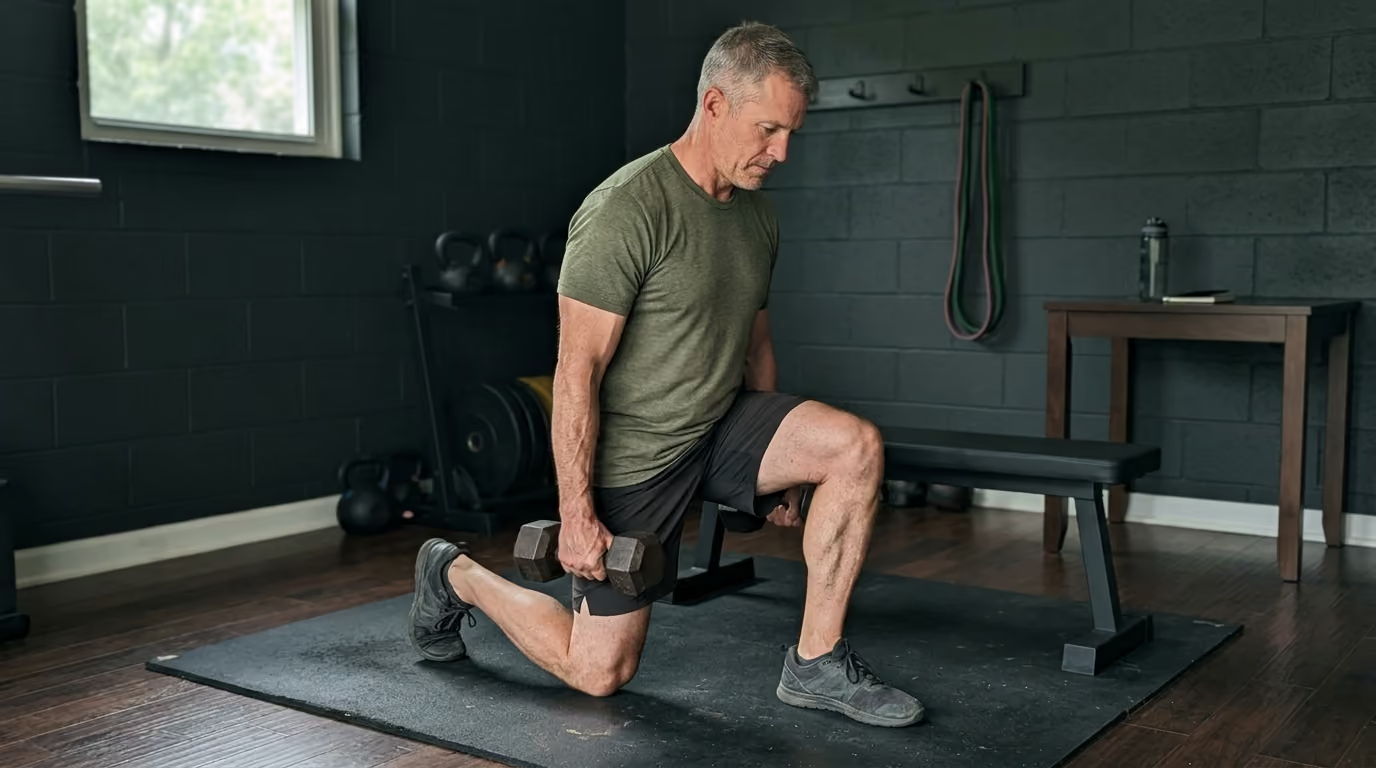

Waking up with aching joints after pushing through old military workouts signals the need for a smarter, sustainable approach to lifelong functional fitness.





The common belief that prior military service provides a lifelong fitness baseline often works against long term health. You wake up with a stiff lower back, reach for a cup of black coffee, and realize that yesterday's routine tasks left you completely drained. Your blood work shows climbing markers for blood pressure or resting blood sugar, while old knee and shoulder injuries flare up after basic yard work. Pushing through the pain using old habits does not rebuild capability, but rather leaves you more exhausted and injured. Long term physical capability requires an approach based on current recovery tolerance rather than past service standards.
Quick Take: Sustainable physical capability for veterans requires matching training volume, intensity, and movement selection to current recovery capacity, injury history, and daily life demands rather than past military benchmarks.
Lifelong fitness after military service is built by developing five key attributes: aerobic endurance, functional strength, active mobility, balance, and structured recovery. Rather than following rigid, high-impact routines, veterans benefit from a flexible system that accommodates service-connected injuries, work demands, and normal aging. Starting with a minimum effective dose of low-impact cardiovascular work and foundational strength movements protects joints while progressively rebuilding work capacity.
Many veterans struggle with physical activity because they measure their present physical state against their former service self. Military physical training is designed to prepare units for specific operational requirements over a compressed timeline. That approach prioritizes mission readiness over joint longevity, often accepting high injury rates as an operational cost. Transitioning to lifelong training requires abandoning the idea that a workout must be punishing to be effective.
Data from the U.S. Census Bureau indicates that service-connected disability among veterans increased from 15 percent in 2008 to approximately 30 percent in 2022. This shift highlights why a one-size-fits-all training regimen fails for modern veterans. A program designed for an uninjured twenty-year-old recruit cannot support a veteran managing spinal disc issues, joint replacements, or nerve damage. Training must address the physical reality of your body today.
Physical activity, exercise, and training serve distinct purposes in a healthy life. Physical activity includes any bodily movement that burns energy, such as occupational labor, yard work, or walking the dog. Exercise represents planned, structured movement aimed at maintaining general physical fitness. Training organizes those efforts toward specific adaptations, such as hiking uphill without knee pain or carrying heavy loads safely.
Having a physically demanding job does not eliminate the need for structured exercise. Manual labor often involves repetitive, asymmetrical tasks that overload specific joints while neglecting cardiovascular health and balanced muscle support. A mechanic or warehouse worker may lift heavy objects all day, yet still lack shoulder mobility and aerobic endurance. Structured training fills the gaps left by daily occupational stress rather than adding more wear and tear.
To build sustainable health, separate performance goals from functional health goals. Functional health focuses on getting off the floor easily, climbing stairs comfortably, maintaining independence, and keeping blood markers in a healthy range. Performance goals target specific athletic achievements, such as running a trail race or hitting a new deadlift milestone. You can review our detailed guides on veteran lifestyle and healthcare resources to balance these competing physical demands across different stages of life.
A complete physical program does not require hours in the gym every day. Instead, it balances five interrelated pillars that reinforce each other without exceeding your recovery capacity. When programmed intelligently, these pillars support long term independence, joint health, and daily energy.
Aerobic conditioning forms the engine for daily energy and cardiovascular health. It strengthens the heart muscle, lowers resting blood pressure, and improves insulin sensitivity. A strong aerobic base also speeds up recovery between sets of strength training and reduces overall fatigue during the workday.
Strength training preserves muscle mass, maintains bone density, and reinforces connective tissue around damaged joints. It ensures you have the physical force required to lift household objects, carry groceries, and maintain your posture. Muscle tissue acts as a metabolic reservoir that helps regulate blood glucose and hormone levels as you age.
Mobility is the usable, active range of motion you can control under load. It differs from passive flexibility, which merely measures how far a limb can be pulled into a stretch. Practicing active mobility ensures that joints can move smoothly through essential movement patterns without pain or instability.
Balance and coordination protect you against unexpected slips, trips, and falls. Power is the ability to produce force quickly, which is critical for catching yourself when you stumble on uneven terrain. Power declines faster than raw strength as we age, making deliberate, low-impact power work essential for lifelong independence.
Training only stimulates progress, while actual adaptation occurs during rest. Proper recovery involves adequate sleep, smart nutrition, active rest days, and managing life stress. If your total physical and mental load consistently exceeds your recovery capacity, training leads to chronic inflammation and deconditioning.
To explore how these pillars work together, you can review our articles on training and performance strategies designed for sustainable athletic longevity.
Cardiovascular disease remains a leading health challenge for aging adults, making aerobic work non-negotiable. Guidelines from the U.S. Department of Health and Human Services recommend 150 to 300 minutes of moderate-intensity aerobic activity per week, or 75 to 150 minutes of vigorous activity. For veterans with joint pain, the primary goal is collecting these aerobic minutes without aggravating knees, hips, or the lower back.
You do not need expensive heart rate monitors to measure cardiovascular effort accurately. Heart rate data can be skewed by blood pressure medications, dehydration, anxiety, or warm weather. Using perceived exertion and simple breathing checks often provides a more reliable assessment.
Running on hard asphalt is not the only way to build cardiovascular endurance. If running causes joint pain, switch to low-impact alternatives that provide identical cardiovascular benefits without joint irritation.
The American Heart Association emphasizes that cardiovascular volume and intensity must progress gradually. Pushing duration, speed, and frequency at the same time is a common cause of overuse injuries. Follow a sequential progression to build work capacity safely:
Building strength does not require complicated machines or dangerous maximum-effort lifts. A sustainable strength routine focuses on fundamental human movement patterns that translate directly into daily function. Training movements rather than isolated muscles ensures balanced development and joint stability.
Veterans can explore complete exercise libraries in our section on strength, fitness, and body composition resources to build tailored workouts.
Design your strength sessions around these foundational movement categories:
For long term health, you do not need to train to absolute muscular failure. Lifting to failure increases joint stress and dramatically extends recovery time without providing superior muscle growth. The American College of Sports Medicine recommends resistance training for all major muscle groups on at least two days per week.
A practical method for gauging effort is using Repetitions in Reserve (RIR). Choose a weight that allows you to complete your target repetitions while leaving two to three good repetitions in the tank. If a set of eight squats feels like you could have performed ten with clean form, you are at an appropriate training intensity.
Pain is a protective signal from your nervous system, not a marker of training progress. While temporary muscle burn and mild next-day soreness are normal responses, sharp joint pain, clicking accompanied by discomfort, or radiating nerve sensations are warning signs. The VA Veterans Health Library guidance on chronic pain notes that while mild soreness can occur when starting exercise, sharp or escalating pain requires an immediate adjustment.
Apply a simple rule to your training: if a movement causes sharp pain, modify the range of motion, change the grip or foot stance, reduce the load, or substitute a different exercise entirely. Training through pain causes compensatory movement patterns that create new injuries elsewhere in the body.
Mobility and balance are frequently neglected until a major limitation or fall occurs. Maintaining active control over your joints allows you to navigate uneven terrain, handle physical chores, and react quickly to unexpected slips.
Static stretching alone does not build joint stability. Holding a passive stretch temporarily lengthens muscle tissue, but it does not teach the central nervous system how to control that new range under load. Usable mobility combines flexibility with active muscular tension.
Balance is a motor skill that degrades without regular practice. The Centers for Disease Control and Prevention emphasizes regular balance training for older adults to maintain independence and prevent fall-related injuries. Balance practice can easily be integrated into daily routines without dedicated gym equipment.
Power is the ability to generate force rapidly. When you slip on ice or catch your toe on a rug, your nervous system must produce quick muscular force to prevent a fall. High-impact plyometrics are often unsuitable for arthritic joints, but power can be trained safely using low-impact methods.
You can read more about age-related physical maintenance in our dedicated healthy aging articles section.
Your body does not distinguish between the physical stress of a hard workout and the mental stress of work deadlines, poor sleep, or chronic pain. All sources of stress draw from the same systemic recovery pool. If your life stress is exceptionally high, your workout volume must decrease to prevent systemic burnout.
Autoregulation is the practice of adjusting your daily workout intensity based on your current physical and mental readiness. A traffic-light model provides a clear decision-making framework before every training session:
Experiencing a flare of joint or back pain does not mean you must stay in bed for a week. Complete bed rest often leads to muscle stiffness and heightened pain sensitivity. The goal during a flare is to maintain gentle, pain-free circulation without irritating the sensitive tissues.
Physical training breaks down muscle protein and depletes glycogen stores, requiring deliberate nutritional support for rebuilding. Aim for adequate daily protein intake from whole food sources to support tissue repair and prevent age-related muscle loss. Staying well hydrated maintains joint fluid lubrication and supports cardiovascular efficiency during exercise.
Sleep remains the most powerful recovery tool available. Deep sleep stages trigger the release of growth hormone and facilitate neurological recovery. You can find comprehensive sleep strategies in our library on recovery and sleep articles.
A service-connected disability or mental health condition requires thoughtful modifications, not complete inactivity. Physical training should serve as a supportive tool that enhances mental clarity and physical independence.
Veterans with amputations, severe joint degeneration, or spinal fusion can achieve high levels of fitness using adaptive strategies. The VA National Veterans Sports Programs provide structured adaptive sports and therapeutic fitness opportunities nationwide.
Post-traumatic stress and hypervigilance can make commercial fitness centers stressful environments. Crowded spaces, loud clanging weights, and people moving behind you can trigger heightened stress responses that interfere with exercise.
Data from the VA National Center for PTSD shows that lifetime PTSD affects approximately 7 percent of veterans overall, with higher rates among those who utilize VA healthcare. While peer-reviewed systematic reviews indicate that regular aerobic exercise significantly reduces PTSD symptom severity, exercise must complement formal mental health care rather than replace it.
To make physical activity sustainable and comfortable:
For more detailed insights on the broader military experience, review our articles on military health topics.
Understanding training principles is helpful, but applying them to specific life situations provides real value. The following practical case studies illustrate how to adapt the core framework to different veteran profiles.
Body weight on a scale and maximum bench press numbers are poor indicators of daily physical readiness. Tracking practical movement metrics provides a clear, motivating picture of your true functional independence and physical health.
Perform these simple assessments every eight to twelve weeks to track your real-world progress:
In addition to physical performance tests, monitor subjective indicators of systemic health. Track these variables in a basic training journal:
This framework is designed strictly for educational and informational purposes and does not constitute personalized medical advice, diagnosis, or treatment plans. Veterans managing service-connected injuries, chronic cardiovascular conditions, metabolic disease, or severe pain should consult with a qualified healthcare professional before beginning any new exercise routine.
Collaborating with a Veterans Affairs primary care provider, physical therapist, or occupational therapist ensures your program safely accounts for your medical history. If you experience chest pain, sudden dizziness, shortness of breath, or new neurological symptoms such as numbness or loss of bowel control, stop physical activity immediately and seek emergency medical evaluation.
Two to three full-body strength sessions per week provide an optimal stimulus for muscle retention and joint strength while allowing 48 to 72 hours of recovery between workouts. This frequency stimulates muscle protein synthesis without overwhelming joint tolerance or recovery capacity.
Severe, function-limiting soreness or sharp joint pain indicates that the training dose exceeded your current recovery capacity. Reduce the training volume by half during the next session, lower the resistance, or substitute a lower-impact movement until symptoms settle.
Yes, brisk walking, incline treadmill hiking, and light rucking provide identical cardiovascular adaptations to running without the repetitive high-impact forces on knees, hips, and spinal discs. As long as your heart rate and breathing reach target aerobic zones, the cardiovascular benefits remain equal.
Begin with a minimum viable routine consisting of 10 to 15 minutes of daily walking and basic bodyweight movements such as chair sit-to-stands and wall push-ups. Build consistency over four to six weeks before increasing session duration, adding external weights, or raising movement complexity.
Sustainable physical fitness is a lifelong practice of building and preserving physical capacity to support the life you choose to live.
Follow BattleVet for practical guidance on military and veteran health, strength, recovery, testosterone, sleep and healthy aging. Stay connected for new articles, research backed insights and clear information to help you stay capable for the years ahead.


Build better habits around strength, recovery, sleep, hormones and healthy aging with practical guidance for active military personnel and veterans.
Explore BattleVet