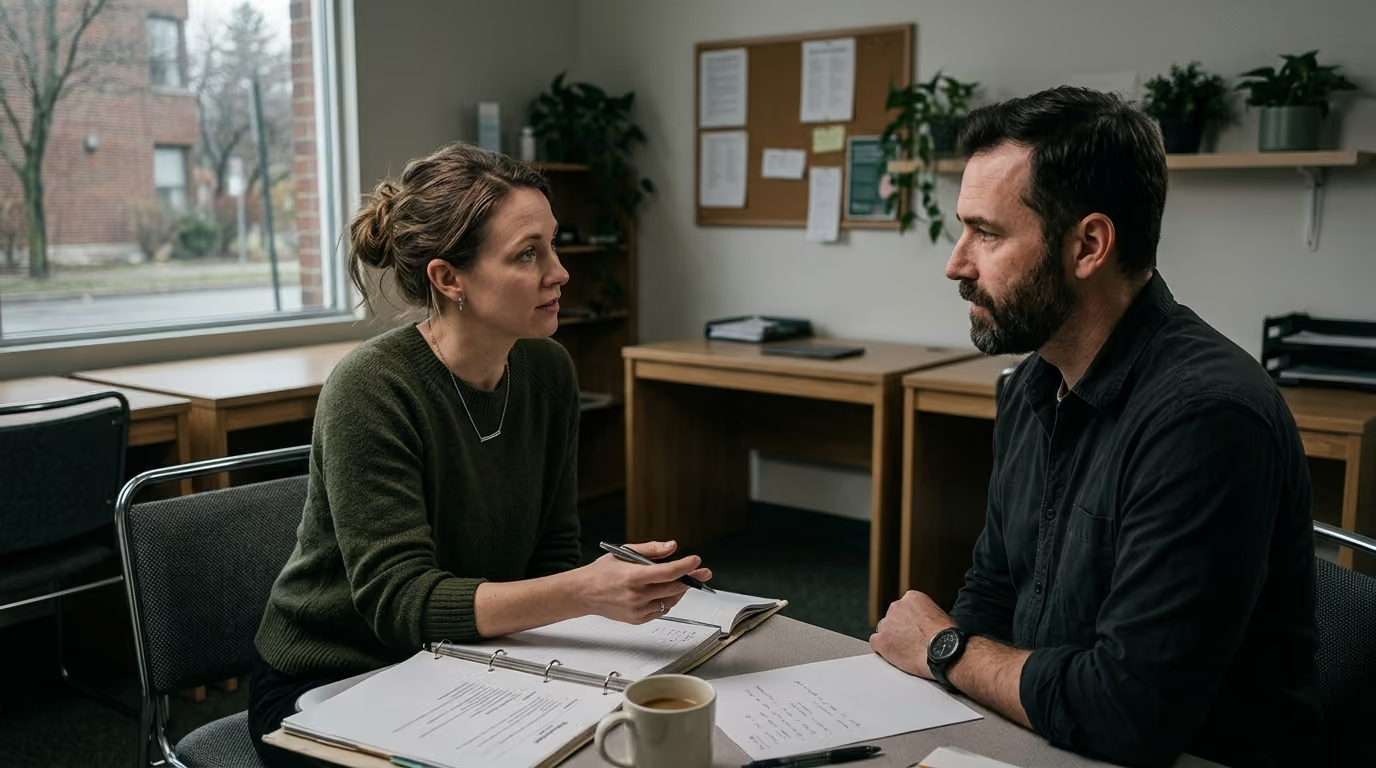

Five key definitions clarify how operational pressure impacts physical health, daily judgment, and decision-making during high-stakes missions and crisis situations.





If you are in immediate danger, call 911. For 24/7 support, call or text 988 and press 1 for the Veterans Crisis Line, or text 838255.
Operational stress management is a structured decision system designed to evaluate demands, identify leverage points, choose proportionate responses, and review operational outcomes. It is not an expectation of invulnerability, nor is it a demand to absorb unlimited pressure through sheer personal willpower. This guide breaks down the science of operational load, the mechanics of stressor evaluation, and a repeatable six-stage process built for high-demand roles.
You wake up at four in the morning with an elevated resting heart rate and a mind already racing through unassigned tasks. Your previous night of sleep was fragmented, your physical recovery is lagging, and your daily schedule offers zero buffer for errors. Pushing harder without an accurate evaluation of your environment will only accelerate physical exhaustion and operational breakdown.
Operational stress management succeeds when you treat stress as a mismatch between demands and resources rather than a personal defect.
To manage high-demand environments without burnout, you must separate what is directly controllable from what requires organizational escalation, adjust your recovery protocols, and test practical interventions.
Operational stress refers to the physiological, emotional, and cognitive pressure that results directly from carrying out a role, mission, or complex responsibility. It emerges in any environment characterized by time pressure, high-stakes decisions, constant interruptions, heavy workloads, and competing priorities. This includes military service, emergency response, healthcare, crisis counseling, demanding corporate positions, and intensive family caregiving.
To address this pressure effectively, we must clarify several related terms:
According to the National Institute for Occupational Safety and Health (NIOSH), job stress occurs when requirements do not match capabilities, resources, or needs. This definition is essential because it places stress within the relationship between an individual and their environment. Stress is not situated entirely inside a person's head.
When resilience is framed solely as individual toughness, systems often fail. If an organization increases workload while reducing staffing, demanding that workers simply become tougher creates a cycle of self-blame. Research from NIOSH indicates that organizational changes must take priority when addressing systemic occupational stress.
A credible operational framework uses a dual-track model. It supports the individual with practical self-regulation and recovery and sleep strategies. At the same time, it actively identifies systemic bottlenecks, workload defects, and broken processes that require structural fixes.
Before choosing a response, you must map the operational landscape. Demands rarely arrive as single, isolated events. Instead, they compound across multiple domains of daily life.
To understand where pressure originates, evaluate the stressor system across four distinct categories:
This includes total task volume, technical complexity, tight deadlines, emotional labor, and the severity of decision consequences. It also accounts for constant interruptions and physical danger.
Resources represent your operational counterweights. They include staffing levels, specialized training, verified information, necessary equipment, operational budget, and access to peer or supervisor support.
Work design covers shift schedules, degree of autonomy, role clarity, communication channels, and scheduled opportunities for physical restoration. NIOSH highlights that clear roles and predictable schedules substantially reduce chronic occupational strain.
Individual baseline factors shape your capacity to absorb demands. These factors include acute illness, chronic pain, caregiving responsibilities, financial strain, prior trauma, and accumulated sleep debt. These elements serve as critical context for planning, not evidence of personal failure.
Once stressors are mapped, classify each factor by its degree of controllability:
These are actions you can execute independently without seeking approval. Examples include setting a structured bedtime routine, shutting off non-essential notifications during focus blocks, taking a ten-minute recovery walk, or logging recurring errors for a team review.
These factors require negotiation, coordination, or formal escalation to change. Examples include requesting adjusted project deadlines, rebalancing shift assignments, asking for clearer task priorities, and securing additional equipment.
These are fixed operational realities in the immediate moment. Examples include past events, macroeconomic conditions, another person's emotional reaction, a sudden emergency dispatch, or an active family crisis. Recognizing an uncontrollable stressor does not mean you approve of it. It simply prevents you from wasting vital cognitive energy on factors you cannot alter right now.
The Operational Stress Management Framework operates as a repeatable decision loop. It provides an objective method to assess load, select targeted interventions, and evaluate operational changes.
Start by describing observable facts rather than subjective self-criticism. Instead of thinking that you cannot handle your workload, document what actually occurred.
Record the specific time demands spiked, the number of unexpected interruptions, and the exact physical symptoms you experienced. Note whether your heart rate increased, your sleep duration dropped, or your focus deteriorated. Separating observable events from your emotional interpretation prevents catastrophic thinking and highlights immediate leverage points.
List the active demands across your professional and personal life. Identify which resources are currently missing, such as clear guidance, adequate rest, or technical support. Look for underlying patterns, such as whether your exhaustion spikes after specific shift patterns or during multi-day administrative bottlenecks.
Review your stressor list and assign each item to a category: change immediately, influence through channels, prepare for, recover around, or escalate. Focus your immediate personal efforts on items you directly control. Route systemic obstacles through appropriate leadership, safety committees, or organizational channels.
Select an intervention that matches the specific nature of the stressor. If an administrative process is broken, altering your breathing patterns will not fix the workflow. Choose whether to modify the situation, adjust your exposure, regulate your physiological response, restore depleted biological capacity, or execute an emergency escalation.
Avoid building massive, complicated lifestyle overhauls when you are already cognitively overloaded. Choose a streamlined action plan:
Evaluate the outcome after a defined trial period, such as seven to fourteen days. Ask objective questions about what changed. Did the selected action reduce your total stress load, improve your resting heart rate, or stabilize your sleep?
If the intervention failed, treat that result as valuable operational data rather than a personal deficiency. A failed plan usually means the root cause was misidentified, the intervention lacked sufficient authority, or the organization failed to provide necessary resources.
Applying the right response to the right stressor prevents wasted effort and cognitive exhaustion. The framework establishes five distinct response pathways:
Use this pathway when the stressor is directly modifiable. If you face conflicting priorities from different managers, request a formal meeting to establish an unambiguous priority order. If an operational checklist contains redundant steps that create dangerous delays, propose an edited workflow. Changing the situation removes the friction entirely.
When a stressor cannot be eliminated immediately, reduce your total exposure time. This might involve rotating high-stress field duties among team members or establishing protected ninety-minute blocks with all digital notifications muted. In emergency and healthcare roles, it includes scheduling mandatory decompression intervals after critical incidents.
When the situation cannot be altered immediately and acute physiological arousal threatens your decision-making, apply real-time regulation tools. The World Health Organization (WHO) highlights that brief self-help exercises can rapidly decrease subjective distress. Useful methods include:
When chronic stress depletes your cognitive and physiological reserves, skill application deteriorates. Capacity restoration focuses on fundamental biological needs. This involves protecting consistent sleep windows, drinking adequate water, eating balanced meals, and taking scheduled breaks away from screens and operational noise. Explore our comprehensive library on sleep, stress and resilience for detailed restoration protocols.
Certain stressors should never be managed with personal coping techniques alone. Immediate escalation is mandatory when you observe severe safety breaches, escalating substance misuse, symptoms of clinical depression, traumatic flash reactions, or thoughts of self-harm. Escalation means engaging medical personnel, employee assistance programs, or safety leadership immediately.
Recovery is an essential operational requirement, not an optional reward for hard work. Without structured biological and cognitive restoration, your central nervous system remains locked in persistent sympathetic arousal. This biological state elevates baseline cortisol, disrupts glucose metabolism, and impairs executive function.
Data from the Centers for Disease Control and Prevention (CDC) shows that more than one-third of American adults routinely obtain insufficient sleep, defined as less than seven hours per twenty-four-hour cycle. State-level CDC data demonstrates that insufficient sleep rates range from 30% in Vermont to over 46% in Hawaii. Sleep deprivation is an established public health reality that directly degrades operational safety and stress tolerance.
When you are chronically sleep-deprived, the prefrontal cortex loses its ability to regulate the amygdala. As a result, minor operational obstacles are perceived as major threats. You become irritable, your risk assessment fails, and your reaction time slows significantly. Pushing through severe fatigue without addressing recovery is an operational liability.
WHO sleep and recovery guidelines emphasize several core practices to protect biological restoration:
For individuals working variable shifts or night rotations, standard sleep advice must be adapted. Use blackout window coverings, run white noise machines to block daytime street traffic, and wear blue light blocking glasses during your morning commute home. Protecting even a single consolidated four-to-five-hour core sleep block provides essential neurological restoration when eight continuous hours are unattainable.
Developing an effective stress management approach requires separating proven interventions from preliminary findings and popular misconceptions. High-demand fields often promote resilience programs that overestimate what individual mental techniques can achieve while ignoring system-level fixes.
Extensive workplace research confirms that multilevel interventions produce the most reliable reductions in burnout and chronic exhaustion. A comprehensive 2025 review on occupational health demonstrated that combining organizational adjustments with individual coping skills creates durable improvements in workforce well-being. Similarly, a 2023 meta-analysis confirmed that dual-level interventions help prevent occupational burnout by lowering emotional exhaustion.
Research from NIOSH demonstrates that modifying structural working conditions directly reduces injury rates, absenteeism, and physical complaints. Adjusting workload distributions, establishing clear job responsibilities, and allowing workers to participate in operational scheduling directly improves performance and health outcomes.
Controlled trials on low-intensity psychosocial programs, including the World Health Organization's Problem Management Plus initiative, show reliable benefits. A systematic review revealed that these structured self-help practices achieved a small-to-medium reduction in psychological distress (standardized mean difference of -0.45) and a small improvement in positive mental health (standardized mean difference of 0.31).
While standalone resilience training and digital stress apps are heavily marketed, their scientific support remains modest and inconsistent. A meta-analysis examining structured resilience interventions found a pooled standardized mean difference of 0.44 across eleven studies. However, only four of those eleven studies demonstrated statistically significant improvements on an individual basis.
A separate meta-analysis evaluating randomized controlled trials of resilience programs identified a smaller effect size of 0.37 within three months of follow-up. The researchers formally rated their confidence in the overall body of evidence as low due to study limitations and inconsistent outcomes.
Furthermore, a 2024 meta-analysis on digital resilience applications identified small, short-term benefits that showed wide variability across different delivery models. The long-term retention of these skills remains unproven.
These findings show that while brief mental regulation tools are useful, they cannot compensate for unmanaged workloads or unsafe operational environments. Standalone mental training is an aid, not a comprehensive solution for systemic overload.
To understand how this framework functions in real-world conditions, consider five operational scenarios.
The Situation: A project manager receives conflicting directions from three corporate executives without a clear priority ranking. She routinely works late into the evening, misses meals, and suffers from broken sleep.
System Assessment:
The Intervention: The manager creates a shared document listing all active projects and asks the executives to rank them. She protects an eight-hour rest window each night.
Review: If leadership refuses to prioritize the workload, the continuing strain is caused by organizational friction, not a lack of personal resilience.
The Situation: An emergency room nurse faces a severe staffing shortage, missed meal breaks, and escalating administrative paperwork. He notices mounting exhaustion and dread before every shift.
System Assessment:
The Intervention: The nurse submits formal staffing exception reports and coordinates with colleagues to ensure covered meal breaks. He implements a twenty-minute quiet decompression protocol before interacting with family after work.
Review: If patient counts remain unsafe, hospital leadership must address staffing. Individual coping strategies cannot solve institutional resource deficits.
The Situation: A family caregiver assists an aging parent who wakes up multiple times throughout the night. The caregiver experiences chronic fatigue, physical weakness, and rising irritability.
System Assessment:
The Intervention: The caregiver arranges for a relative to cover two nights per week, securing two uninterrupted seven-hour sleep periods. She also eliminates non-essential volunteer commitments.
Review: Gaining two solid nights of sleep stabilizes mood and cognitive focus, demonstrating that targeted recovery protects caregiving performance.
The Situation: Following a traumatic incident, a paramedic experiences elevated resting heart rate, intrusive thoughts, and emotional withdrawal.
System Assessment:
The Intervention: The paramedic engages a trained peer support specialist and uses paced breathing exercises to manage acute arousal spikes. If intrusive symptoms persist beyond two weeks, she seeks a specialized clinical trauma evaluation.
Review: Addressing acute trauma through structured peer support and medical channels prevents chronic operational impairment.
The Situation: A department supervisor praises his team for working ninety-hour weeks to hit arbitrary deadlines. However, error rates, unexcused absences, and staff resignations rise sharply.
System Assessment:
The Intervention: The supervisor establishes mandatory minimum rest periods between shifts, delegates tasks to balance the workload, and tracks project rework metrics.
Review: Departmental errors decline and output stabilizes, proving that structured operational recovery improves total team performance.
Applying stress management principles without clear boundaries can lead to counterproductive habits. Watch for these common pitfalls:
Telling an exhausted person to focus only on what they can control becomes harmful when used to ignore broken equipment, dangerous understaffing, or abusive leadership. Controllability assessments must highlight systemic issues that need escalation, not silence valid operational concerns.
Enduring extreme demands without adequate rest is not resilience; it is unmanaged physical depletion. Real resilience requires sustained performance supported by deliberate recovery cycles. If recovery is eliminated, performance will inevitably drop.
Accepting an unchangeable situation simply means recognizing current operational facts so you can plan your next action effectively. It does not mean accepting unsafe working conditions, toxic behavior, or ethical violations.
Breathing exercises, meditation apps, and mental reframing techniques help regulate acute physiological arousal. However, they cannot balance an unrealistic budget, repair broken machinery, or resolve conflicting orders. Technical problems require operational solutions.
Organizations often track employee stress surveys while ignoring excessive overtime, missed meal breaks, and high turnover rates. Monitoring individual health without measuring workplace conditions places the burden of broken systems entirely on workers.
Attempting complex cognitive reframing while running on four hours of sleep rarely succeeds. Biological exhaustion directly impairs executive function. Prioritize basic sleep and physiological restoration before relying on complex mental strategies.
When an intervention fails to reduce stress, avoid asking why the person failed to cope. Instead, investigate whether the intervention had sufficient leadership support, realistic timelines, and adequate resources.
To integrate this framework into your routine, implement this streamlined four-step action process over the next fourteen days. You can also explore our training and performance resources to align your physical conditioning with your recovery demands.
Identify a primary source of daily friction and take immediate action:
Secure an operational asset to manage your active demands:
Protect a dedicated daily window for biological restoration:
Evaluate your progress using an objective daily measurement:
If your chosen metric improves after fourteen days, keep that routine in place and select your next target. If the metric remains unchanged, adjust your strategy without self-criticism. Consult our library of veteran life articles for additional perspectives on navigating major career and lifestyle transitions.
This framework is published solely for educational and informational purposes. It does not provide medical advice, psychiatric diagnoses, or personalized healthcare treatment plans.
Chronic sleep disruption, severe fatigue, persistent anxiety, depressive symptoms, and physical exhaustion can stem from underlying medical or psychiatric conditions. Always consult a qualified physician, psychologist, or healthcare provider to evaluate individual health conditions, adjust medications, or address mental health symptoms.
When you lack the formal authority to change project deadlines, shift assignments, or staffing levels, focus your efforts on clear documentation and personal boundaries. Document workload bottlenecks and safety concerns clearly, and ask supervisors to confirm task priorities in writing.
Connect with colleagues to identify shared operational challenges, and use established safety or union channels to escalate system-level risks. Most importantly, focus your energy on protecting your personal sleep schedule, off-duty nutrition, and recovery routines.
Moral distress occurs when you know the ethically correct action but cannot carry it out due to organizational rules, legal constraints, or resource shortages. Individual coping exercises like deep breathing cannot resolve moral conflicts on their own.
In these situations, seek guidance from clinical ethics committees, professional ombudsmen, chaplains, or qualified counselors. Document institutional constraints clearly, connect with trusted peers for mutual support, and escalate unresolved ethical issues through appropriate institutional channels.
No, high-stakes operational roles can never be entirely free of stress. The objective is not to eliminate physiological activation, but to keep that arousal within manageable, effective levels.
High-stress operations require structured preparation, clear task procedures, structured duty rotations, reliable peer support networks, and mandatory post-incident recovery periods. Experiencing elevated heart rates and intense focus during critical operations is a normal, adaptive response. The key is ensuring that your nervous system returns to its baseline state once the operation concludes.
Chronic physical exhaustion, memory lapses, low mood, and disrupted sleep can result from several underlying medical issues. These include sleep apnea, thyroid dysfunction, clinically low testosterone, micronutrient deficiencies, or autoimmune conditions.
If your fatigue and cognitive fog persist despite two to three weeks of consistent sleep and reduced workload, schedule a comprehensive medical evaluation. A physician can run targeted blood panels and diagnostic assessments to identify or rule out physical causes. You can find comprehensive information on clinical hormone markers in our educational resources library.
Follow BattleVet for practical guidance on military and veteran health, strength, recovery, testosterone, sleep and healthy aging. Stay connected for new articles, research backed insights and clear information to help you stay capable for the years ahead.


Build better habits around strength, recovery, sleep, hormones and healthy aging with practical guidance for active military personnel and veterans.
Explore BattleVet