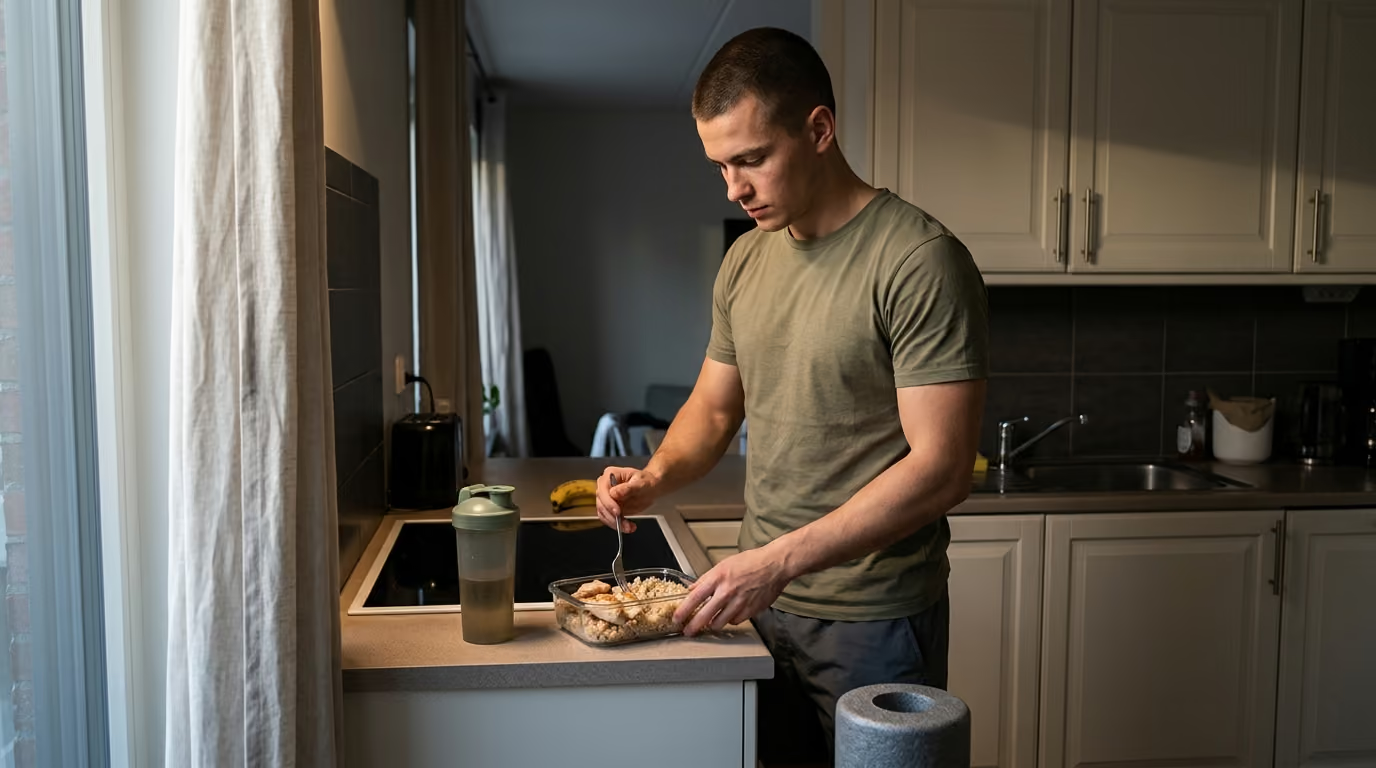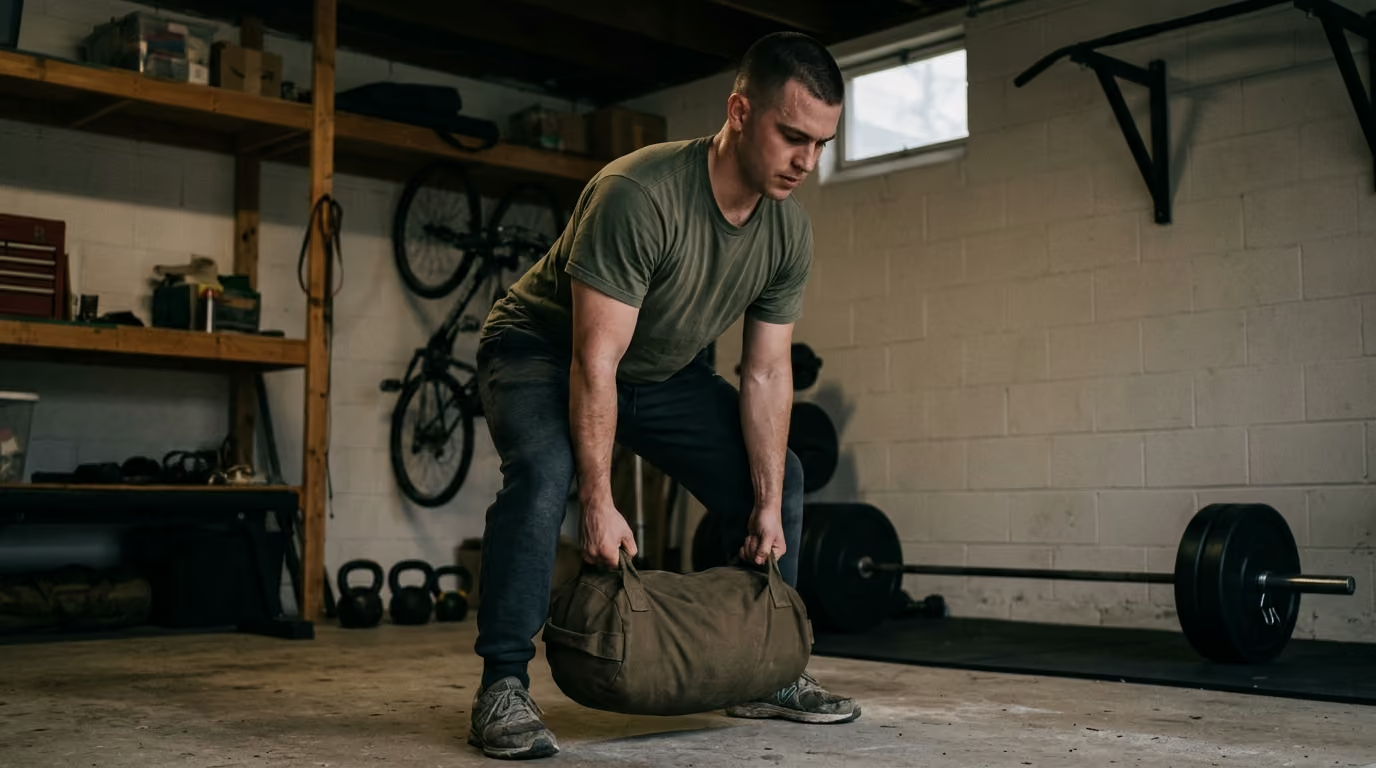

Demanding shifts and limited recovery leave little gym time, but minimal resistance sessions effectively preserve physical readiness and protect joint health.





You wake up to an alarm after five hours of broken sleep, your lower back stiff from yesterday's ruck march. A full day of field preparation, shift work, or family obligations leaves exactly twenty minutes before you must leave the house. You open your search bar to ask how little training you can do without losing your strength, your physical readiness, or your joint health.
This guide delivers the definitive, research-supported blueprint for maintaining and building physical capability when time, equipment, and recovery capacity are severely constrained.
A minimum-effective-dose strength program uses the smallest amount of targeted resistance training to maintain neuromuscular readiness, preserve lean muscle, and build functional strength without overwhelming your schedule or recovery capacity.
The direct answer to training under extreme time constraints is structured simplicity. You do not need ninety minutes in a commercial gym to preserve physical capability. Clinical trials and sports science reviews show that performing as little as one working set per major movement pattern, two to three times per week at an appropriate effort level, produces measurable strength gains. When your primary objective shifts to strength maintenance during field exercises, deployments, or demanding work periods, performing three to four working sets per movement pattern just once every seven to fourteen days preserves up to 90 to 95 percent of your muscular strength and aerobic adaptations.
To achieve this, you strip away non-essential exercises. You focus exclusively on five fundamental movement categories: a knee-dominant squat, a hip-dominant hinge, an upper-body push, an upper-body pull, and a loaded carry or trunk stability exercise. By adjusting your training load based on daily sleep quality and occupational fatigue, you protect your joints, maintain operational readiness, and build sustainable physical performance across a lifetime of service and civilian life.
The concept of the minimum effective dose originated in pharmacology. It represents the lowest amount of an active substance required to produce a desired therapeutic outcome. Applied to physical preparation, the minimum effective dose is the smallest volume, frequency, or duration of exercise necessary to create positive neuromuscular adaptations or prevent physical degradation.
Understanding this concept requires distinguishing between several related physiological thresholds. A minimum detectable dose is the smallest stimulus that creates any measurable biological change. The minimum practically effective dose is the volume of work required to create an adaptation noticeable in everyday performance. The maintenance dose is the specific training volume required to preserve previously acquired adaptations without attempting to push performance higher.
In contrast, the optimal dose is the volume of training that maximizes strength, muscle size, or work capacity over a defined period. Pursuing an optimal training dose requires substantial time, pristine nutrition, consistent sleep, and low outside stress. For active service members and busy veterans, pursuing an optimal dose during high-stress operational cycles often leads to overtraining, excessive joint wear, and eventual burnout.
The recoverable dose represents the upper limit of training volume an individual can absorb and benefit from before fatigue undermines performance. In our experience, trying to maintain fitness years after leaving service required a completely new mindset. The goal changed from immediate tactical readiness to healthy aging and longevity. I learned that connecting short term performance with long term health, focusing on mobility and cardiovascular function, was the real key to staying capable.
Tactical physical readiness differs fundamentally from conventional bodybuilding or powerlifting. A competitive lifter focuses strictly on peak single-repetition maximums in controlled environments. A service member or active veteran requires multi-planar strength, trunk stiffness, grip endurance, unilateral leg stability, and tolerance for awkward loads. The training program must build structural resilience while respecting total systemic fatigue from duties, rucking, running, and occupational stress.
Training density and intensity must be carefully regulated when volume is reduced. When training with minimal sets, each repetition must be executed with intentional control and high mental focus. You do not need to train to absolute muscular failure, which occurs when the weight cannot be moved for another repetition. Instead, successful minimal-dose training relies on precise proximity to failure, ensuring that the muscle fibers receive an adequate mechanical stimulus to adapt without creating excessive neural fatigue.
Autoregulation serves as the operational mechanism for managing this balance. Autoregulation allows a trainee to adjust daily training loads based on real-time readiness rather than rigid percentages. Using the Repetitions in Reserve scale, you estimate how many additional technically sound repetitions you could complete before reaching failure. This framework ensures that your training stimulus remains productive regardless of whether you slept eight hours in a bed or four hours in a transit facility.
Scientific literature provides clear insight into how human muscle and connective tissue respond to reduced training volumes. A rigorous examination of the data requires separating well-established scientific findings from emerging research and preliminary observations.
Substantial peer-reviewed literature confirms that low-volume resistance training produces robust strength adaptations in both novice and experienced lifters. A landmark systematic review conducted by Androulakis-Korakakis and colleagues analyzed the minimum effective training dose required to increase 1RM strength in resistance-trained men. The researchers established that performing a single set of six to twelve repetitions at 70 to 85 percent of 1RM, two to three times per week with high effort, produced statistically significant increases in squat and bench press strength over an eight to twelve-week period. While these strength increases were smaller than those achieved through higher-volume programs, the adaptations were meaningful and consistent.
Research on training frequency demonstrates that total weekly volume is the primary driver of strength adaptations rather than how often you enter the gym. A systematic review published in sports science literature evaluated well-trained populations across six to twelve weeks. When weekly set volume was equated, researchers found no significant differences in maximal strength development between low-frequency schedules, such as one to two days per week, and high-frequency schedules, such as four to five days per week. This provides flexibility for service members whose schedules permit training only on specific days.
Strength maintenance requires far less training volume than initial strength development. A comprehensive review on time-efficient training by Iversen and colleagues determined that younger adults can maintain their muscular strength and muscle mass for months with as little as one brief session per week, consisting of three to four sets per exercise. A 2024 experimental study examined concurrent endurance and strength maintenance over a 12-week reduced-frequency cycle. The researchers found that performing a single full-body training session every seven days completely maintained leg press strength, quadriceps muscle cross-sectional area, and aerobic power. Even training only once every 14 days preserved approximately 90 to 95 percent of previously acquired muscle size and strength adaptations.
Military-specific research highlights the direct physiological cost of inadequate sleep on performance and injury risk. A comprehensive military review demonstrated that sleep deprivation severely degrades aerobic capacity, prolonged work capacity, and cognitive readiness, while basic maximal strength remains relatively resilient to short-term sleep loss. However, chronic sleep restriction creates severe systemic vulnerabilities. A study investigating U.S. Army Special Operations Forces soldiers revealed that those reporting four hours of sleep or less per night were 2.35 times more likely to sustain a musculoskeletal injury compared to soldiers who slept eight hours or more.
While the foundational benefits of low-volume training are well-established, other areas of minimal-dose research remain preliminary. The concept of exercise snacking involves distributing very brief bouts of bodyweight or resistance training throughout the day. Emerging studies suggest that performing one to two minutes of bodyweight squats, push-ups, or band exercises every few hours improves metabolic health and maintains basic neuromuscular function. However, current evidence is insufficient to confirm whether exercise snacks can build or maintain high levels of maximal strength in experienced trainees over long durations.
The rate of muscular detraining following complete cessation of exercise presents another area of ongoing investigation. A study on adolescent athletes found that three weeks of complete training cessation caused no measurable decline in muscle thickness or athletic performance. However, these findings cannot be directly applied to older veterans or chronically stressed tactical athletes. Age, previous training history, circulating hormone levels, and daily nutritional intake significantly influence how quickly muscle tissue breaks down during periods of inactivity.
Research examining the differential volume requirements between younger and older adults is also evolving. Current evidence suggests that older trainees, particularly individuals over the age of fifty, require slightly higher weekly volume and more frequent protein distribution to prevent sarcopenia and preserve joint function. For older veterans exploring our healthy aging articles, low-volume training remains highly effective, but must be paired with careful exercise selection and deliberate joint restoration strategies.
A successful minimal-dose program rejects body-part splits such as chest days or arm days. Instead, it organizes training around five primary movement patterns that develop real-world physical capability and reinforce structural integrity.
The knee-dominant pattern trains the quadriceps, gluteal complex, and knee extensors. These muscles absorb ground impact during running, stabilize the pelvis during load carriage, and provide force for ascending terrain. Primary exercises include the barbell back squat, front squat, goblet squat, Bulgarian split squat, and machine leg press.
Unilateral variations, such as split squats and step-ups, provide high physical value for tactical populations. They challenge pelvic stability, correct side-to-side strength asymmetries, and reduce total compressive load on the lumbar spine. If lower-back fatigue from occupational gear is elevated, substituting heavy back squats with Bulgarian split squats allows you to train the legs to an adequate intensity with half the external spinal load.
The hip-dominant pattern develops the posterior chain, including the hamstrings, glutes, spinal erectors, and latissimus dorsi. This musculature protects the lumbar spine, generates explosive hip extension, and allows for safe lifting of heavy equipment or casualties from the floor. Standard movements include the conventional deadlift, trap-bar deadlift, Romanian deadlift, kettlebell swing, and hip thrust.
The trap-bar deadlift is often the most practical choice for busy service members and veterans. The neutral grip and centered mass reduce shearing stress on the lower back while distributing force evenly between the quadriceps and posterior chain. For individuals with existing lumbar spine sensitivity, the Romanian deadlift performed with dumbbells or a barbell allows precise control over the range of motion while maintaining continuous hamstring tension.
Upper-body pushing movements develop the pectoralis major, anterior deltoids, and triceps brachii. These muscle groups are essential for pushing vehicles, clearing obstacles, placing equipment overhead, and maintaining shoulder joint integrity. The primary horizontal pushing exercises include the barbell bench press, dumbbell flat or incline press, and standard push-ups.
Vertical pushing exercises include the standing overhead barbell press, single-arm dumbbell press, and landmine press. Standing presses recruit the abdominal wall and glutes to stabilize the torso under load. If prior shoulder injuries or acromioclavicular joint wear make overhead pressing uncomfortable, the incline dumbbell press or angled landmine press provides an effective pushing stimulus with significantly reduced subacromial impingement risk.
Pulling movements train the latissimus dorsi, rhomboids, posterior deltoids, trapezius, and elbow flexors. These muscles maintain thoracic posture against the forward-pulling weight of body armor, backpacks, and tactical vests. Pulling capacity directly governs rope climbing, obstacle navigation, and casualty extraction capability.
Vertical pulling movements include the strict pull-up, chin-up, and lat pulldown. Horizontal pulling exercises include the chest-supported row, barbell bent-over row, single-arm dumbbell row, and cable row. Chest-supported rows are especially valuable because they remove stabilizing fatigue from the lower back, allowing full recruitment of the upper back musculature even when systemic fatigue is elevated.
Carries and trunk exercises build force transfer capacity, grip strength, and spinal stiffness. When moving under load, the trunk must act as a rigid cylinder that transfers force between the lower and upper body without collapsing into flexion or rotation. Essential movements include the bilateral farmer carry, unilateral suitcase carry, bear-hug sandbag carry, and front-rack carry.
Trunk training within a minimal-dose framework avoids repetitive spinal flexion movements like conventional sit-ups. Instead, it prioritizes anti-extension and anti-rotation movements. Exercises such as the hardstyle plank, side plank, Pallof press, and dead bug build trunk endurance without placing excessive compressive stress on the lumbar intervertebral discs.
To make training consistent across unpredictable schedules, you must eliminate the all-or-nothing mindset. If an unexpected operational task prevents a planned forty-minute workout, you do not cancel the session. Instead, you select a pre-planned compressed or emergency training session from a tiered menu.
The Level A workout is your standard baseline session when you have 35 to 50 minutes of uninterrupted time. It delivers a complete stimulus across all five movement categories, using heavier loads and standard rest periods.
In this session, rest two to three minutes between primary strength sets to permit complete phosphocreatine resynthesis and central nervous system recovery. This structure is ideal for dedicated training days in garrison or stable home environments.
The Level B session reduces gym time to 15 to 25 minutes by pairing non-competing exercises into antagonistic supersets. You perform an upper-body push immediately followed by an upper-body pull, or a lower-body knee movement paired with a hip-dominant hinge.
This format maintains high mechanical tension while elevating cardiovascular density. It provides an effective strength and maintenance stimulus in half the time of a traditional session.
The Level C session takes between 5 and 10 minutes and requires minimal or no equipment. Its purpose is not to set personal strength records, but to preserve neuromuscular motor patterns, stimulate muscle protein synthesis, and maintain the psychological habit of daily discipline during crises.
Perform two continuous rounds of the following movement sequence with unbroken transitions:
Completing this micro-session prevents the physical stiffness and detraining associated with prolonged sedentary periods during field operations or long-distance travel.
Training environments vary dramatically based on your operational status and civilian routine. The following templates provide concrete, structured plans for specific access levels and equipment availability. For a complete library of movement standards and exercise modifications, visit our strength, fitness, and body composition resources.
This program is designed for service members and veterans with standard barbell and dumbbell access who can commit to two focused sessions per week.
This template distributes training volume across three short 20-minute windows per week. It is well-suited for high-tempo garrison schedules or demanding work weeks.
When deployed or participating in extended field exercises, access to heavy iron is often non-existent. You can execute this template using only a standard issue rucksack, a pull-up bar or structural beam, and bodyweight.
Travel often limits training to small living spaces without external equipment. This circuit maximizes mechanical tension using tempo manipulations and unilateral leverage.
Perform 3 complete rounds of the following sequence, resting 60 seconds between rounds:
Designing a program on paper is straightforward, but applying it amid sleep deprivation, rucking, running, and high occupational stress requires disciplined autoregulation. Rigidly forcing a prescribed weight when systemic recovery is compromised increases the likelihood of injury.
Military research confirms that short sleep combined with physical overexertion impairs muscular repair and elevates injury risk. Sleep extension and brief daytime naps of 20 to 30 minutes represent the most effective non-pharmacological interventions for restoring neuromuscular performance. For more strategies on managing physical restoration and sleep architecture, consult our recovery and sleep articles.
When you enter a session feeling moderately fatigued from work or disrupted sleep, modify your training using three specific levers:
Double progression provides the most reliable method for advancing strength without causing sudden overload. Select a target repetition range for an exercise, such as 6 to 8 repetitions. Begin with a load you can manage for 6 clean repetitions. Keep that exact load across subsequent sessions until you can complete 8 technically sound repetitions on all working sets.
Once you reach the upper repetition threshold, increase the external resistance by 2 to 5 percent for upper-body lifts or 5 to 10 percent for lower-body lifts, and return to 6 repetitions. This measured approach prevents premature plateaus and protects joint structures.
The physiological needs of active service members focused on immediate tactical performance differ from those of veterans managing chronic pain, past orthopedic surgeries, or advancing age. Our team recognized that connecting short-term performance with long-term health was the true foundation for sustained functional capability.
Many veterans manage chronic lower back pain, knee meniscus tears, cervical spine stiffness, or shoulder instability. A minimal-dose strength program must accommodate these anatomical restrictions rather than aggravate them.
As individuals advance past forty and fifty years of age, muscle tissue loses motor units and tendon compliance decreases. The time-efficient training literature cautions that older adults may require slightly more weekly volume and deliberate exercise selection to maintain muscle mass and bone mineral density compared to twenty-year-olds.
Older veterans benefit from longer, dynamic warm-ups that elevate core temperature and lubricate synovial joints before handling external resistance. Incorporating unilateral balance work, single-leg hinges, controlled eccentric tempos, and dedicated pulling exercises preserves posture and protects against falls. For further guidance on maintaining resilience across the lifespan, review our healthy aging and longevity resources.
Resuming physical training after months away from structured exercise requires a gradual ramp-up phase. Even though muscular memory preserves motor patterns, connective tissues such as tendons and ligaments adapt much slower than skeletal muscle.
Begin your return with a single full-body session per week for the first two weeks, using moderate loads at 4 to 5 RIR. This exposes muscle fibers to eccentric stress without inducing debilitating delayed onset muscle soreness or tendon irritation. After establishing baseline tolerance, advance to two weekly sessions.
When shifting to a minimal-dose approach, trainees frequently make several predictable mistakes that undermine their progress. Avoiding these errors ensures that your reduced training time delivers maximum physical return.
A minimal effective dose program is a deliberate strategy for maintaining capability during constrained periods, not a permanent system for maximizing elite athletic qualities. A single heavy set will maintain your baseline strength and neuromuscular coordination, but it will not optimize maximum muscular hypertrophy or elite conditioning. When time and recovery permit, higher training volumes remain appropriate for targeted physical development.
Because minimal-dose programs use few sets, trainees often assume every set must be pushed to absolute failure. Taking multi-joint barbell movements like squats and deadlifts to muscular failure creates severe central nervous system fatigue, degrades movement mechanics, and increases orthopedic injury risk. High-effort training should remain at 1 to 3 Repetitions in Reserve, ensuring strong mechanical tension without systemic breakdown.
Under time pressure, trainees often default to push-ups and squats while abandoning pulling movements and loaded carries. This creates severe muscular imbalances. Forward-rounded shoulders and weak upper back musculature increase your vulnerability to neck pain and rotator cuff injuries. Every training week must balance pushing movements with equal or greater pulling volume.
Severe delayed onset muscle soreness is an indicator of novel muscle damage, not an indicator of productive adaptation. In a tactical or work environment, excessive soreness impairs your ability to climb, carry loads, or perform daily duties. A well-designed minimal-dose program preserves physical readiness without causing debilitating muscle pain.
Attempting a true one-repetition maximum after four hours of sleep or a demanding physical shift is counterproductive. When systemic fatigue is high, motor unit recruitment and dynamic stabilization are impaired. Use your training sessions to build strength through controlled submaximal repetitions rather than testing your limits under poor recovery conditions.
The practical implementation of minimal-dose training depends on your immediate operational and personal context. The following real-world case scenarios illustrate how to adapt these principles effectively. For broader programming frameworks, explore our training and performance guidance.
Resistance training places acute demands on the cardiovascular, musculoskeletal, and nervous systems. While low-volume resistance training is safe and protective for most individuals, specific medical conditions warrant professional clinical evaluation before beginning or modifying a program.
If you have a history of cardiovascular disease, uncontrolled hypertension, previous stroke, or unexplained chest pain, consult a physician before performing heavy resistance training. The Valsalva maneuver, which involves holding your breath during exertion, causes sharp transient increases in blood pressure and intrathoracic pressure. Trainees with cardiovascular considerations should maintain continuous breathing during all repetitions and avoid maximal straining.
Individuals managing service-connected musculoskeletal injuries, spinal disc herniations, joint replacements, or persistent neuropathic pain should collaborate with a licensed physical therapist or sports medicine physician. A qualified healthcare professional can evaluate your joint mechanics, identify contraindicated ranges of motion, and recommend tailored exercise substitutions.
This educational resource does not provide individual medical consultations, physical therapy evaluations, personalized clinical prescriptions, or healthcare treatment plans. Always discuss individual health assessments, training modifications, and medical concerns with a qualified healthcare professional.
Yes. Peer-reviewed systematic reviews demonstrate that resistance-trained men performing a single working set of six to twelve repetitions at 70 to 85 percent of 1RM, two to three times per week with high effort, achieved statistically significant increases in maximal squat and bench press strength over eight to twelve weeks. While multi-set programs produce faster and larger strength gains, a single set executed with high focus provides an effective stimulus for strength development when time is constrained.
Clinical trials show that performing one full-body resistance training session every seven days preserves muscle mass, maximal strength, and aerobic power for at least twelve weeks in individuals with previous training experience. Even reducing frequency to one session every fourteen days maintains approximately 90 to 95 percent of prior physical adaptations. This makes once-weekly training an effective maintenance strategy during deployments, field exercises, or demanding family periods.
Execute a Level C emergency session. Perform a continuous, unbroken circuit of air squats or split squats, strict push-ups, towel or backpack rows, and a hardstyle plank. Completing two quick rounds of these foundational movements takes less than ten minutes, stimulates muscle protein synthesis, maintains joint range of motion, and preserves training consistency without requiring gym equipment.
Bodyweight training can maintain baseline strength and muscular endurance if you introduce sufficient mechanical tension. Because you cannot easily increase the external load of a bodyweight exercise, you must increase mechanical difficulty by using unilateral variations such as single-leg split squats, adjusting movement leverage, pausing at the bottom of each repetition, and slowing down the eccentric lowering phase. However, to preserve high levels of maximal absolute strength, returning to heavy external loads is necessary once standard equipment becomes available.
Apply this minimum-effective-dose framework this week using the following step-by-step checklist:
Follow BattleVet for practical guidance on military and veteran health, strength, recovery, testosterone, sleep and healthy aging. Stay connected for new articles, research backed insights and clear information to help you stay capable for the years ahead.


Build better habits around strength, recovery, sleep, hormones and healthy aging with practical guidance for active military personnel and veterans.
Explore BattleVet