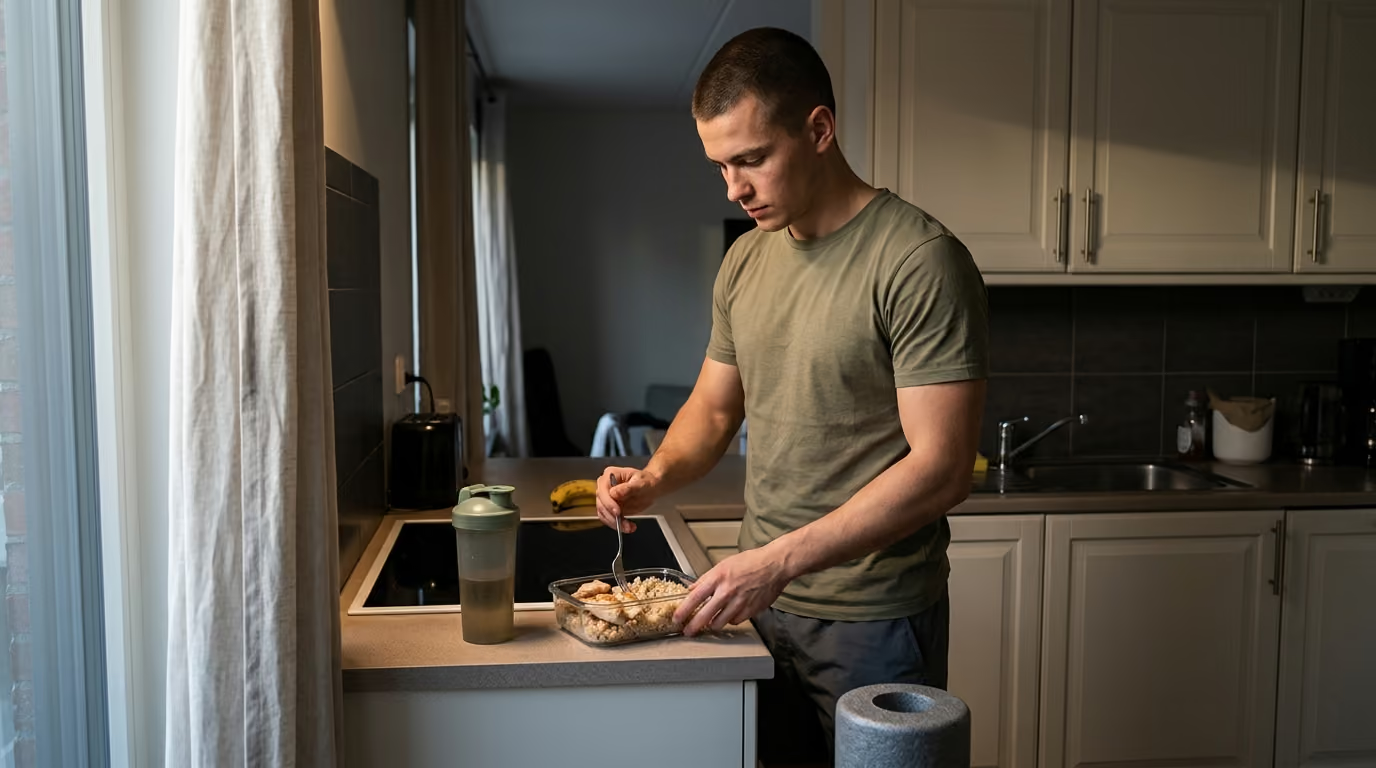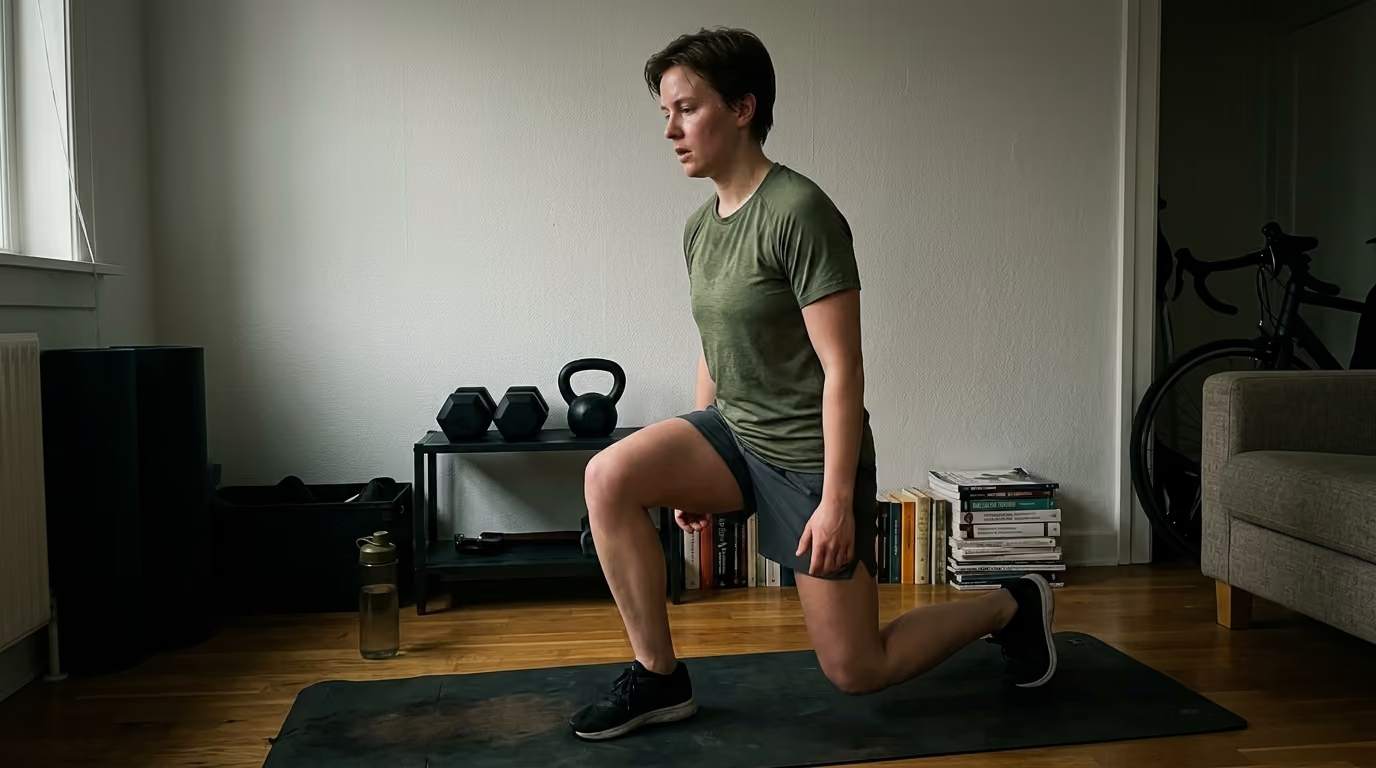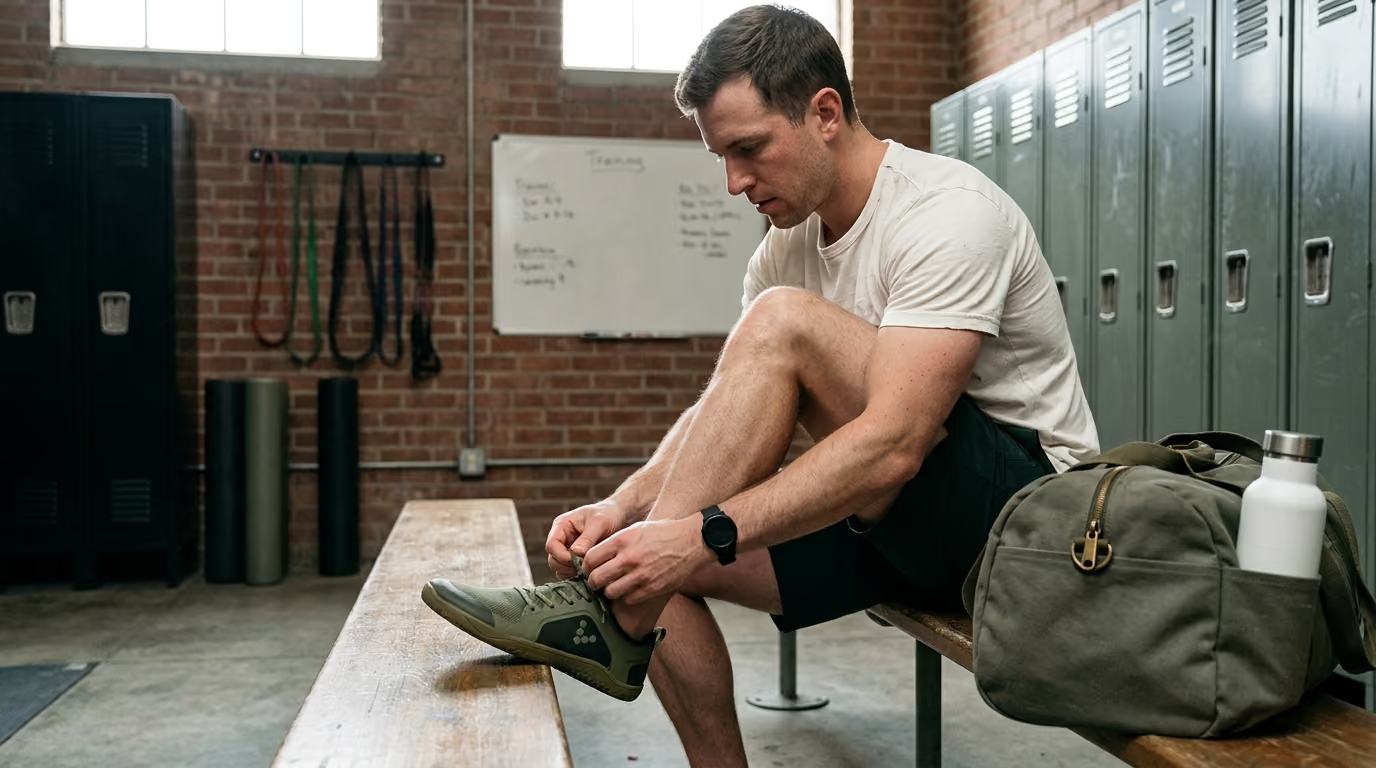

Peak physical readiness on test day comes from building foundational strength and aerobic capacity through balanced workouts instead of daily exhaustion.





You wake up at five in the morning, lace your shoes, and feel the familiar tightness in your calves and lower back. Your next assessment is eight weeks away, yet your pull-up numbers have stalled and your run times are not dropping. You wonder whether you should add more miles, push through daily exhaustion, or scrap your routine entirely. Preparing for physical testing requires clear planning rather than constant fatigue.
Preparing effectively for military fitness assessments requires developing broad physical capabilities rather than repeatedly testing the events until exhaustion. A progressive plan must target your individual baseline, build strength and aerobic endurance systematically, and manage recovery to ensure consistent progress.
To pass or maximize a military physical fitness assessment, you must train the underlying energy systems and movement patterns that support each event. Rather than performing maximum-effort tests every week, you should identify your physical bottlenecks, build submaximal volume across calisthenics and running, and schedule strength work before high-intensity conditioning.
Most service members and candidates prepare for physical fitness assessments by repeatedly taking the test. A candidate who struggles with strict pull-ups might perform maximum sets every afternoon. Another who needs a faster two-mile run might sprint as hard as possible three days per week. This approach creates rapid fatigue without addressing the underlying physical limiters.
Military physical assessments are designed to measure multiple physical qualities across different energy systems. Modern assessments do not measure general fitness in a single dimension. For instance, the United States Army uses an assessment model that evaluates maximal strength, explosive power, trunk stability, anaerobic capacity, and aerobic endurance in a continuous sequence. Testing these events to absolute failure on a regular basis causes excessive wear on joints, tendons, and the nervous system.
When you train only by testing, your movement mechanics deteriorate quickly under fatigue. Performing sloppy push-ups or broken pull-ups reinforces poor movement patterns that get disqualified on test day. Furthermore, constant maximal testing fails to build the aerobic base and muscular size necessary for long-term improvement.
A structured preparation framework separates the building phase from the testing phase. Training sessions should develop the strength, capacity, and stamina required for the assessment without inducing chronic fatigue. Periodic assessments can track progress, but the bulk of your weekly training must focus on controlled, repeatable work. You can find more foundational training models across our strength, fitness and body composition resources.
Every military assessment measures a specific combination of physical traits. Understanding these traits allows you to select exercises that build the required qualities efficiently.
Maximal strength is the maximum force your muscles can produce against an external resistance. This quality is tested directly in events such as the Army three-repetition maximum deadlift. Maximal strength provides a buffer for occupational tasks like lifting heavy equipment, dragging a simulated casualty, and carrying ammunition boxes.
Relative strength is the amount of force you can produce in relation to your total body mass. Relative strength is the primary driver of bodyweight calisthenics, including strict pull-ups, push-ups, and parallel-bar dips. A heavier individual may possess high maximal strength in a barbell lift but struggle with pull-ups because they must move a larger body mass against gravity. Training must address both absolute force production and body composition.
Muscular endurance is the ability of a muscle group to perform repeated submaximal contractions without fatiguing. Push-ups, dips, and planks evaluate muscular endurance. High maximal strength supports muscular endurance by lowering the percentage of your maximum capacity required for each repetition. However, muscular endurance also requires local capillary density, efficient lactate clearance, and disciplined pacing.
Aerobic capacity determines how efficiently your cardiorespiratory system delivers oxygen to working muscles over sustained periods. Events such as the two-mile run or Marine Corps three-mile run rely primarily on aerobic energy production. A strong aerobic base also speeds up recovery between high-intensity efforts, such as repeated sprint intervals or loaded movements.
Anaerobic capacity and repeat-sprint ability govern short, high-intensity efforts. The Army Sprint-Drag-Carry and the continuous Combat Field Test challenge this system directly. These events require you to accelerate, decelerate, carry awkward loads, and repeat hard efforts with minimal rest. Without adequate anaerobic capacity and grip endurance, your performance will drop sharply halfway through the assessment.
Trunk stability is the ability to resist unwanted spinal motion under external load. The Marine Corps adopted the plank as a mandatory event to evaluate core stability, endurance, and spinal control while reducing lower-back strain. Trunk control ensures effective force transfer between the upper and lower body during running, lifting, and carrying.
Load carriage capacity is the ability to walk or march with heavy external loads over distance. Rucking depends on lower-body strength, trunk stiffness, foot health, and aerobic fitness. Carrying heavy loads alters normal walking mechanics and places high stress on the musculoskeletal system. Preparing for loaded movement requires specific, gradual exposure rather than generic conditioning alone.
Before starting a training cycle, you must evaluate your current physical capabilities against the standards of your specific assessment. Generic programs fail because they assume every trainee starts with the same strengths and weaknesses.
Review the official scoring guidelines, event order, movement standards, and minimum passing thresholds for your specific service and occupational specialty. The United States Army distinguishes between combat and combat-enabling specialties. Combat roles require a sex-neutral, age-normed score of at least 350 points with a 60-point minimum per event. Combat-enabling roles require a score of 300 points with the same 60-point event minimum.
The Marine Corps Physical Fitness Test evaluates pull-ups or push-ups, the plank, and a three-mile run. The plank requires a minimum hold of 1:10 and awards maximum points at 3:45. Knowing your exact scoring tables helps you allocate your weekly training time toward events that offer the greatest point improvements.
Conduct a baseline test using strict movement standards. Have a training partner or coach evaluate your form to ensure you do not count repetitions that fail to meet official requirements.
Record your baseline numbers for:
Use your baseline results to identify the primary bottleneck holding back your total score. If you can perform twenty push-ups but cannot complete a single strict pull-up, additional chest pressing will not improve your test score. Your training must prioritize pulling strength and upper-body mechanics.
Common training bottlenecks include:
Between formal assessments, avoid testing to absolute failure. Track submaximal markers such as repetitions completed with two reps left in reserve, easy-run paces at a fixed heart rate, and total weekly quality volume.
Calisthenics form the backbone of military upper-body testing. Building high-repetition capacity requires technical precision and accumulated submaximal volume rather than daily burnouts.
A strict pull-up requires coordinated action from the lats, upper back, forearms, biceps, and abdominal muscles. Kipping, swinging, or failing to clear the chin over the bar invalidates repetitions under official standards.
For trainees who cannot perform a strict pull-up:
For trainees who can perform one to five strict pull-ups:
For advanced candidates seeking maximum scores:
Push-up testing standards vary across military branches. The Army hand-release push-up requires you to lower your chest flat to the ground, extend both arms outward into a T-shape, bring hands back under shoulders, and press to full lockout. This standard eliminates bouncing and demands high shoulder and triceps strength.
To build push-up endurance:
Parallel-bar dips build exceptional triceps, chest, and shoulder strength. However, deep dips place significant stress on the anterior shoulder joint and sternum.
Begin with isometric support holds on parallel bars, maintaining active shoulder depression. Lower yourself only until your upper arms are parallel to the ground, avoiding excessive shoulder extension. Regress to bench dips or resistance-band dips if you experience shoulder discomfort. Dips are valuable for upper-body pressing power, but they should be modified if they aggravate old injuries. You can read more about structured performance programming in our training and performance articles.
The plank evaluates your capacity to maintain a neutral spine and resist lumbar extension under fatigue. In the Marine Corps Physical Fitness Test, holding a rigid plank for 3:45 secures maximum points.
A successful plank requires total-body tension rather than passive hanging on your joints. Squeeze your glutes, press your forearms into the floor, engage your quadriceps, and pull your belly button toward your spine. Your hips, shoulders, and ankles should form a straight line.
To improve your plank hold:
A candidate who can hold a three-minute plank in a quiet room may still struggle during a fitness test if their core is already fatigued from running or lifting. Include plank sets at the end of strength or running sessions to build endurance under realistic conditions.
Running events determine a significant portion of your total fitness score. Developing run capacity requires a structured combination of easy aerobic volume, threshold runs, and high-intensity intervals.
A well-rounded running program includes three distinct training intensities:
The World Health Organization physical activity guidelines recommend at least 150 to 300 minutes of moderate aerobic activity or 75 to 150 minutes of vigorous activity weekly for general health. Military candidates require running volumes near or slightly above the upper end of these ranges to maximize test performance, balanced carefully against joint tolerance.
Pacing mistakes cause more failed running tests than lack of conditioning. Many candidates sprint the first four hundred meters of a two-mile run, flood their legs with lactate, and slow down significantly for the remainder of the test.
Practice negative splits during training runs, where the second half of the run is completed faster than the first half. Use a GPS watch or track markers to learn your target kilometer or mile pace. Run with a cadence of 170 to 180 steps per minute to minimize ground contact time and reduce landing impact forces on your knees and shins.
Sudden increases in running mileage frequently lead to medial tibial stress syndrome, commonly known as shin splints, as well as stress fractures and Achilles tendinitis. Progressive overload must be gradual. While popular coaching often recommends limiting weekly mileage increases to ten percent, scientific research on running injuries shows that sudden training spikes must be monitored alongside individual biomechanics, footwear, running surfaces, and prior injury history.
If you experience persistent shin or joint pain, replace some running volume with non-impact cross-training. Rowing machines, stationary bikes, and pool swimming preserve cardiorespiratory fitness while removing impact stress from the lower extremities.
Loaded movement is a defining requirement of military physical performance. Walking with a heavy ruck or carrying heavy equipment demands a unique combination of strength, aerobic fitness, and structural resilience.
A systematic review published in Sports Medicine examining military load carriage found that heavy external loads alter gait kinematics, shorten stride length, increase ground reaction forces, and significantly elevate lower-body injury risk. Preparing for load carriage requires progressive, deliberate conditioning.
To build rucking capacity without getting injured, follow a structured progression:
A meta-analysis on military physical training demonstrated that combined progressive resistance training and aerobic training produced substantial improvements in load carriage capacity, yielding an effect size of 1.7 standard-deviation units when specific load-carriage exercise was included. Barbell squats, deadlifts, and lunges build the structural foundation needed to support heavy loads over distance.
The Army Combat Field Test requires completing sixteen repetitions of lifting a 40-pound sandbag to a 65-inch platform, along with carrying two 40-pound water cans over 50 meters. These movements require functional grip strength and hip extension power. Train these events with sandbags, trap bars, and thick-handled dumbbells to replicate test conditions.
Developing strength and endurance at the same time is known as concurrent training. When programmed poorly, high volumes of running can interfere with strength gains, and heavy lifting can make your legs too fatigued for quality running.
A systematic review and meta-analysis on concurrent training order found that performing resistance training before endurance training resulted in a pooled lower-body strength advantage of 3.96 kilograms compared to the reverse order. Aerobic capacity adaptations, however, were not significantly affected by exercise sequence. When combining strength and conditioning in the same session, perform your heavy strength work first.
To peak for an assessment, structure your training into four distinct phases over twelve to sixteen weeks.
A balanced concurrent training week during the Development Phase might look like this:
Training provides the stimulus for improvement, but physical adaptation happens during recovery. Without adequate rest, your performance will decline and your injury risk will rise. For more guidance on optimizing rest, consult our recovery and sleep articles.
Sleep is the primary driver of tissue repair and hormonal balance. Chronic sleep restriction reduces reaction time, decreases glycogen synthesis, and impairs cognitive focus during physical testing. Aim for seven to nine hours of quality sleep per night. If occupational demands or shift work disrupt your sleep, use twenty-minute naps to help clear cognitive fatigue.
In our experience, cutting through training myths requires the same discipline as navigating healthcare data. Reviewing my blood work for the first time felt overwhelming. There was so much confusing information out there about testosterone and hormones. I wanted clear facts and evidence based guidance, not a sales pitch. That experience showed me how critical it is to separate established science from marketing hype.
Managing total life stress is equally important. High work stress and domestic demands deplete the same physiological resources as hard training. When life stress is high, reduce your workout volume and focus on recovery. Further strategies for operational resilience are available in our sleep, stress and resilience resources.
Track your daily recovery using simple subjective markers:
Schedule a planned deload week every four to six weeks. During a deload, reduce your total sets and running distance by thirty to fifty percent while keeping the weight on the bar relatively heavy. Deloads allow your central nervous system, tendons, and connective tissues to recover from accumulated stress.
Body composition plays an important role in military physical testing. Excess body fat adds dead weight during pull-ups, push-ups, and running events, requiring greater energy expenditure for every movement. Conversely, extreme calorie restriction degrades muscle tissue, reduces bone mineral density, and impairs recovery.
If you need to reduce body fat:
Scientific literature provides clear principles for military fitness preparation, though some popular training beliefs lack strong empirical support.
For broader context on military operational health, explore our military health articles.
This article is provided for educational and informational purposes only. It does not constitute medical advice, physical therapy diagnosis, or personalized athletic coaching. Military physical training and heavy load carriage carry inherent risks of musculoskeletal injury and cardiovascular strain. Always consult a qualified healthcare professional or physician before beginning any rigorous physical training program, especially if you have a history of cardiovascular conditions, joint injuries, or chronic pain.
Most candidates achieve the best balance of progress and recovery training four to five days per week. This allows for two lower-body or running-focused days, two upper-body strength and calisthenics days, and one dedicated aerobic or rucking session, leaving two days for complete rest.
Yes, provided your training is structured properly. Focus on relative strength by keeping pull-up sets submaximal and maintaining a lean body composition, while building your running capacity through low-intensity Zone 2 mileage and targeted interval sessions. Separate hard running from heavy lower-body lifting to avoid interference.
If your push-ups stop improving, reduce your frequency of training to failure. Instead, increase your total weekly volume using submaximal sets with two to three repetitions left in reserve, and build your pressing foundation with weighted dips, bench presses, and overhead presses.
Begin with a light pack weighing twenty to twenty-five pounds, or approximately fifteen percent of your body weight. Increase the weight gradually over several months, rarely exceeding thirty-five to forty-five pounds in standard training unless your specific occupational specialty requires heavier operational loads.
When to revisit this resource: Review this framework at the start of every new training cycle, whenever your test scores plateau, or when transitioning between different service assessment standards.
Building physical readiness is a continuous process that rewards discipline, smart progression, and consistent recovery over short-term intensity.
Follow BattleVet for practical guidance on military and veteran health, strength, recovery, testosterone, sleep and healthy aging. Stay connected for new articles, research backed insights and clear information to help you stay capable for the years ahead.


Build better habits around strength, recovery, sleep, hormones and healthy aging with practical guidance for active military personnel and veterans.
Explore BattleVet