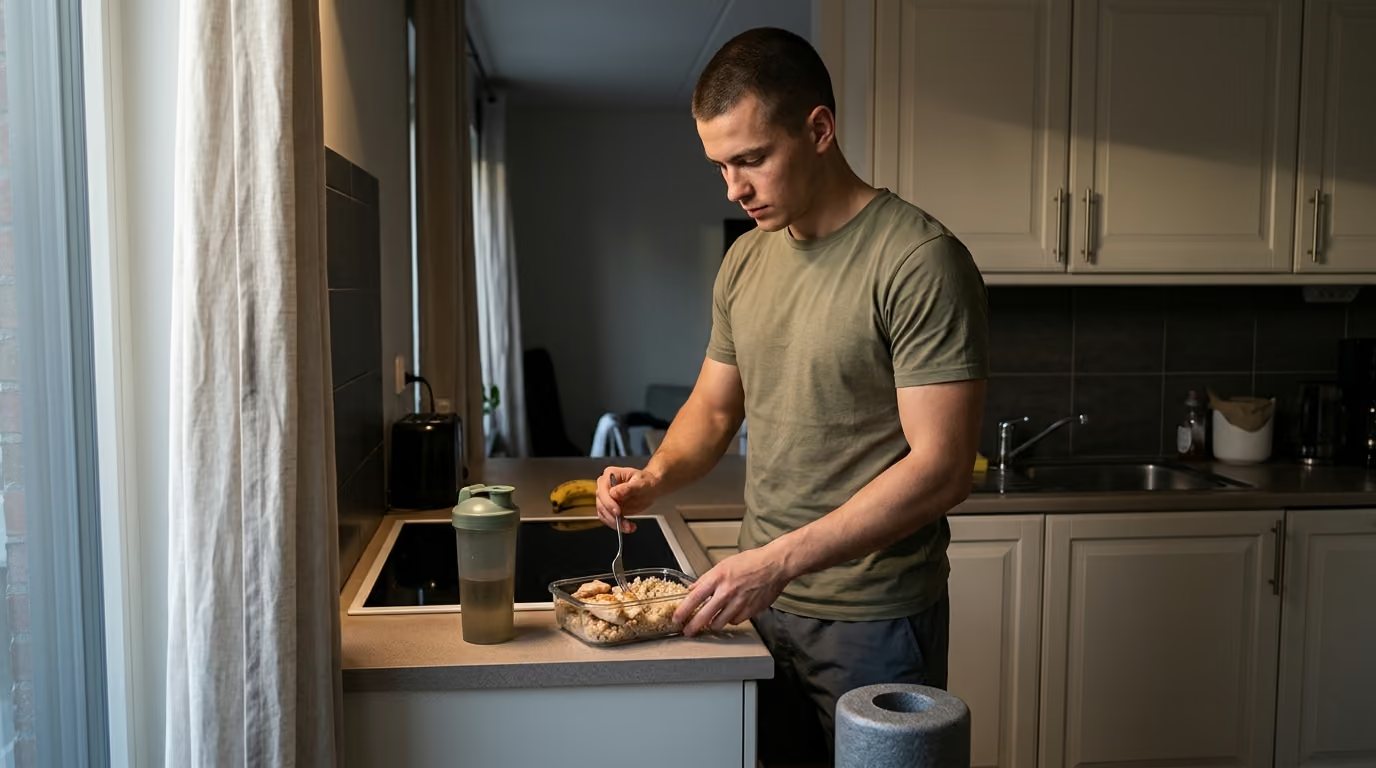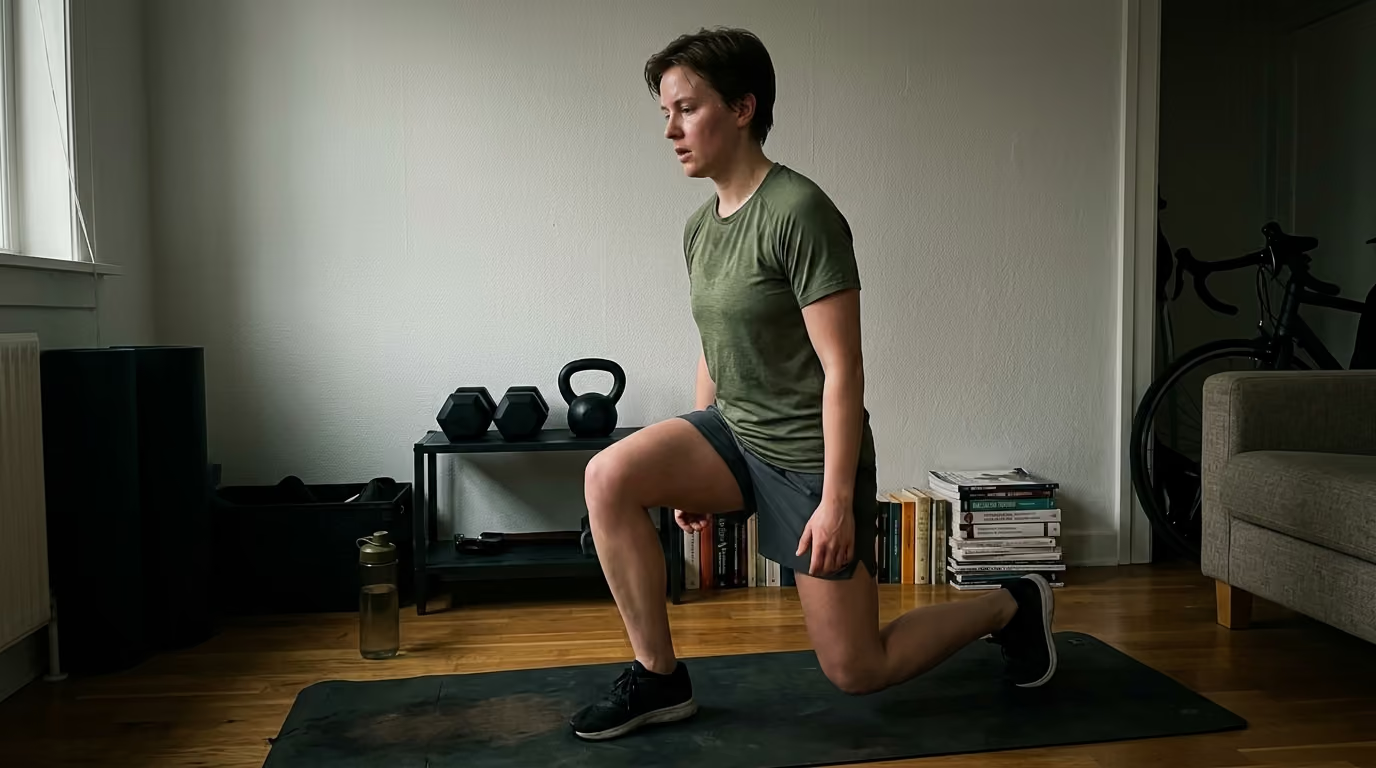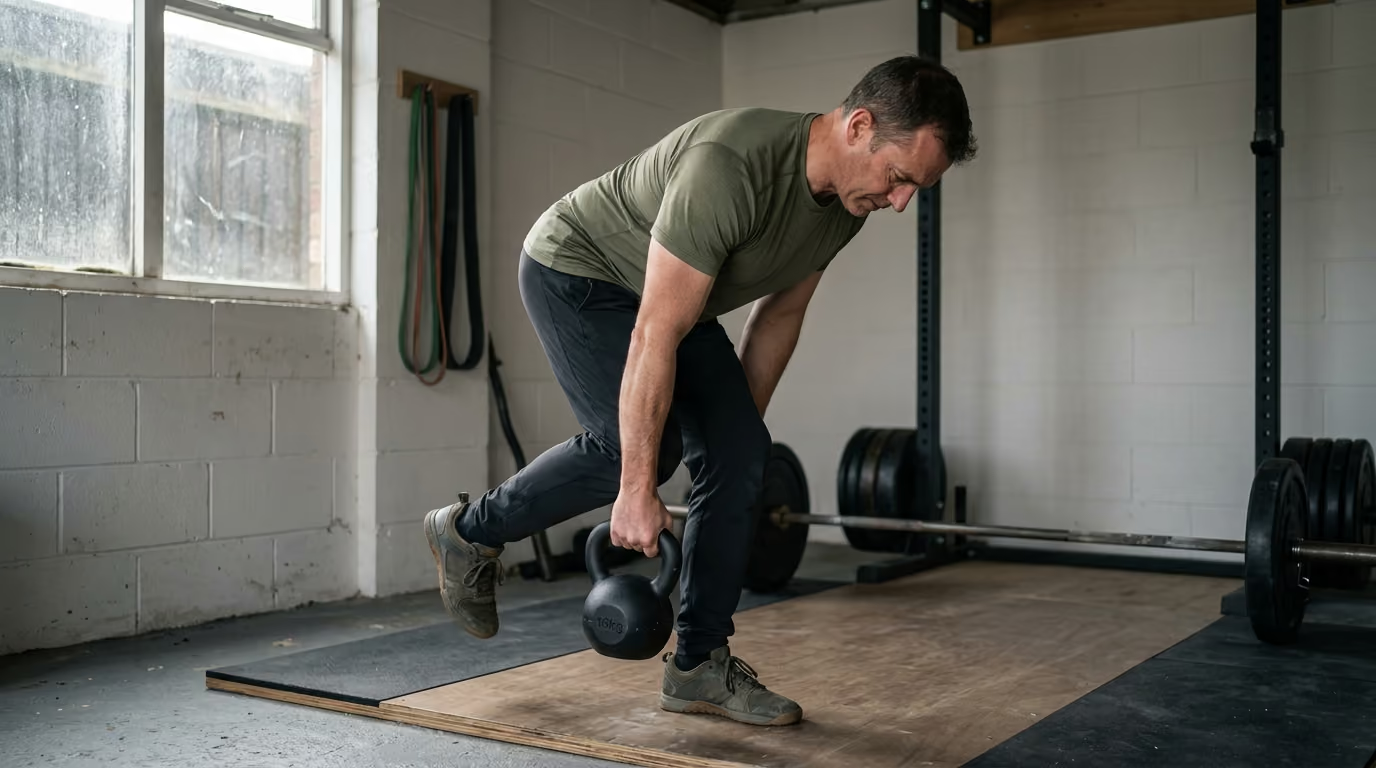

Decades of functional strength come from balancing muscle preservation, aerobic health, and baseline movement habits across realistic yearly training seasons.





The alarm sounds at dawn, your lower back feels stiff from yesterday's yard work, and your shoulder aches when you reach for a coffee mug. Your recent routine blood work showed elevated fasting glucose, and work stress left you with barely five hours of fragmented sleep. Looking at your running shoes by the door, the thought of an intense, grueling workout feels unrealistic and counterproductive.
A sustainable physical training system builds lasting capability across decades by prioritizing consistency, minimum baseline standards, and seasonal progression over short-term exhaustion.
To stay strong and capable throughout life, you need a flexible framework that develops strength, aerobic capacity, mobility, and recovery without relying on extreme intensity. This approach uses minimum training standards during demanding life periods, adjusts workload across recurring seasons, and protects joint health. By anchoring your habits to identity and process rather than brief fitness challenges, you protect functional independence and physical resilience at any age.
True physical capability is much broader than the number on a bathroom scale or a single maximum lift in the gym. A durable fitness system manages multiple distinct physical capacities, treating them like a balanced investment portfolio. If you invest all your energy into one asset while neglecting the others, your physical independence becomes vulnerable over time.
Strength is your fundamental ability to produce force against external resistance. It governs your capacity to lift heavy items, carry groceries, climb stairs, and get up from the floor with confidence. A complete long-term plan tracks both absolute strength, which is the total weight you can move, and relative strength, which measures your power relative to your body mass.
Hypertrophy refers to increasing the size of muscle tissue, while muscle retention protects that tissue during periods of aging, illness, or fat loss. Maintaining lean tissue supports metabolic health, protects bone density, and buffers against physical decline. According to the International Society of Sports Nutrition position stand on diets and body composition, resistance training combined with adequate dietary protein provides the primary stimulus for muscle protein synthesis and tissue retention.
Muscular endurance allows your muscles to sustain repeated contractions or hold positions over extended periods. This capacity supports everyday physical labor, yard work, long hikes, and recreational sports without rapid physical exhaustion. When muscular endurance is high, daily tasks demand a smaller fraction of your total physical capacity.
Power is the ability to produce force quickly. While strength helps you carry a heavy load, power enables you to react rapidly when you stumble on an uneven sidewalk or need to accelerate suddenly. Research published in the Journal of Gerontology demonstrates that power training improves functional movement capacity and balance recovery in older adults more effectively than traditional slow-speed lifting alone.
Aerobic fitness measures how efficiently your heart, lungs, and blood vessels deliver oxygen to working muscles during sustained effort. A strong aerobic base improves recovery between hard efforts, supports deep sleep, and reduces all-cause mortality risk. It forms the physical foundation that allows you to train consistently without accumulating excessive systemic fatigue.
Mobility represents controlled, active movement through a functional range of motion. It is not an abstract pursuit of extreme flexibility, but rather the practical ability to move freely without compensation or pain. Functional mobility allows you to reach overhead, hinge at the hips to pick up an object, rotate your torso, and walk without joint restriction.
Balance is your ability to maintain your center of mass over your base of support, whether stationary or moving. Coordination is the efficient organization of complex movement patterns. The World Health Organization guidelines emphasize that multicomponent physical activity focusing on functional balance and strength at least three days per week significantly reduces the risk of fall-related injuries in aging adults.
Body composition describes the relative proportion of fat mass and lean muscle tissue. Long-term health requires looking beyond total scale weight, which fluctuates with hydration, digestive contents, and glycogen storage. Tracking waist circumference, strength markers, and everyday functional capacity provides a far clearer picture of physical health than the scale alone.
To read more about managing body composition effectively across different life stages, review our detailed guide to strength, fitness and body composition resources.
Most fitness plans fail because they are designed only for ideal circumstances. When work deadlines mount, family emergencies arise, or sleep quality drops, rigid six-day programs collapse completely. A durable long-term framework solves this problem by establishing a minimum effective floor.
The minimum floor represents the smallest amount of physical activity needed to maintain momentum, preserve lean mass, and prevent physical regression. It is not a failure or a compromise. It is an intentional fallback strategy designed for high-stress periods, travel, illness recovery, or major life transitions.
Evidence from a national cohort study of 416,420 adults published in the American Journal of Preventive Medicine shows that approximately one hour per week of moderate-to-vigorous physical activity yields substantial reductions in mortality risk. The same research found that adding just one to two weekly resistance training sessions produces meaningful, measurable survival benefits compared to inactivity.
These findings show that modest, consistent training provides profound health returns. You do not need to spend ten hours in the gym each week to protect your health. When life becomes chaotic, maintaining your baseline floor keeps your habits alive until your schedule normalizes.
A practical minimum floor might consist of two 30-minute full-body strength sessions each week. It can include a daily step target tailored to your current baseline, such as 6,000 to 8,000 steps. It might mean performing one brisk 20-minute walk after dinner and maintaining a basic protein target at each main meal.
The primary rule of the minimum floor is simple: reschedule missed sessions within the week rather than abandoning the plan entirely. Preserving your routine at a reduced volume prevents the mental friction of having to restart your fitness journey from scratch later.
Setting goals around short-term aesthetic targets often leads to burnout and frustration. Once a six-week challenge ends, people frequently abandon their routines because they lack a long-term direction. A sustainable framework uses a four-tier goal hierarchy that supports consistent, year-round execution.
An identity goal defines the type of person you intend to be over your lifetime. It focuses on values rather than temporary metrics. Examples include deciding to be someone who remains physically capable, someone who values health over ego, or someone who trains to stay active with family for decades to come.
Outcome goals provide specific, measurable milestones along the path of your identity. These might include achieving five strict pull-ups, completing a five-kilometer run without stopping, or reducing waist circumference by two inches. Outcome goals give your training clear direction, but they must be anchored to your deeper identity to maintain value once completed.
Process goals describe the daily and weekly behaviors that directly create your desired outcomes. These are entirely within your direct control. Examples include completing two strength workouts each week, walking for ten minutes after lunch, and turning off screens 45 minutes before sleep.
Review goals establish recurring checkpoints to evaluate what is working and what requires adjustment. A monthly or quarterly review allows you to examine your progress objectively without emotional judgment. If your stress levels increased and recovery declined, your review allows you to adapt your program before injury occurs.
When structuring your training, prioritize your primary physical adaptation rather than trying to maximize everything at once. If your main goal is building strength, focus on resistance training while placing aerobic conditioning and mobility on maintenance doses. Attempting to maximize muscle gain, marathon endurance, and aggressive fat loss simultaneously creates conflicting physiological demands and accelerates physical exhaustion.
For more strategies on maintaining capability across your lifespan, consult our collection of healthy aging and longevity resources.
Relying purely on willpower or daily motivation is an unreliable strategy for lifelong fitness. Motivation fluctuates based on sleep, work stress, and personal mood. Sustainable training systems rely on structured behavioral design to make regular movement the easiest choice.
A systematic review published in the International Journal of Behavioral Nutrition and Physical Activity examined 54 factors influencing exercise adherence. The researchers found that programs fostering autonomy, perceived competence, and strong habit cues consistently produced superior long-term adherence across all demographics.
A landmark habit-formation study led by Dr. Phillippa Lally at University College London tracked participants building daily health routines. The study found that automaticity increases nonlinearly with repetition, taking anywhere from 18 to 254 days to solidify depending on the complexity of the behavior. Missing an isolated opportunity did not materially affect the long-term habit formation process, proving that consistency matters far more than rigid perfection.
To make your training routine resilient, lower the friction required to start your workouts. Set out your training gear the night before, store your equipment in visible locations, and choose exercises that fit your available space. Keep your scheduled training windows predictable so they become automatic parts of your calendar.
Use implementation intentions, which are structured if-then plans that anticipate common disruptions. For example, tell yourself: "If my workday runs late and I miss my afternoon workout, then I will complete a 15-minute bodyweight routine before dinner." This removes the need for active decision-making when your willpower is already depleted.
Connect your training to intrinsic values rather than external pressures. When you view exercise as an investment in your personal freedom, energy, and mental clarity, adherence becomes a natural self-care practice rather than a chore.
A durable long-term training program should not be built around random exercises chosen on a whim. Instead, it should organize movement around essential human movement patterns that develop full-body capability and protect your joints.
In our experience, trying to maintain physical capacity years after leaving military service required a completely new mindset. The goal changed from immediate tactical readiness to healthy aging and longevity. We learned that connecting short-term performance with long-term health, especially through mobility and cardiovascular function, was the real key to staying capable.
Every balanced training week should address the following functional categories:
Progressive overload is the gradual increase of stress placed on the body during training. While many people believe progression only means adding heavier weight to a barbell, long-term training offers many pathways to progress.
The American College of Sports Medicine progression models recommend increasing loads by 2% to 10% only when you can perform one to two repetitions beyond your target rep range with sound technique. You can also progress by adding repetitions, increasing total sets, improving movement tempo, increasing active range of motion, or reducing rest intervals.
For a comprehensive breakdown of exercise selection and programming variables, explore our library of training and performance articles.
Full-body routines performed two to three times per week provide an exceptionally durable baseline. Unlike body-part splits, a full-body format ensures that all primary movement patterns are trained frequently. If an unexpected event forces you to miss a workout, you have not neglected an entire muscle group for a full week.
A sample balanced session might include two sets of a squat variation, two sets of a hip hinge, two sets of a horizontal push, two sets of a horizontal pull, and two sets of a loaded carry. Finish the session with five to ten minutes of balance drills or low-impact conditioning to complete a comprehensive, joint-friendly workout.
Expecting your body to hit personal records continuously throughout the year is an unrealistic approach that frequently leads to overuse injuries. Long-term training succeeds through seasonal periodization, where you shift your primary focus across different phases of the year.
A seasonal approach allows you to direct your physical and mental resources toward one primary goal while placing other qualities into maintenance mode. This prevents training monotony and gives your joints and nervous system regular opportunities to recover.
Organize your training year into recurring, flexible phases based on your personal life demands:
This phase focuses on rebuilding baseline movement habits, mastering technical execution, and establishing regular sleep and nutrition routines. It is ideal after an extended training layoff, a major life transition, or a period of severe illness. Workloads remain moderate, and the emphasis rests entirely on consistency and movement quality.
During a build season, you gradually increase training volume or resistance to drive progressive adaptations in strength, muscle hypertrophy, or work capacity. Caloric intake supports recovery, and life stress should be relatively low to allow your body to adapt to the higher training stimulus.
A performance season aligns your physical preparation toward a specific physical objective. This could be preparing for an outdoor hiking trip, a local running event, or a structured physical test. Training becomes more specific to the target event, while general fitness qualities shift to a maintenance volume.
In a fat loss season, you establish a modest caloric deficit while keeping resistance training volume sufficient to retain lean muscle tissue. The goal is improving body composition without compromising joint health or causing chronic fatigue. Training focuses on maintaining strength numbers rather than pursuing aggressive performance increases.
A maintenance season keeps your current strength, muscle, and conditioning stable while reducing training volume and complexity. This phase is exceptionally valuable during intense work projects, family travel, or personal holidays when gym time is limited. Two brief sessions per week preserve your physical gains effectively.
A restoration phase provides an intentional reduction in training volume and intensity lasting one to two weeks. It allows accumulated connective tissue fatigue to dissipate and helps reset mental motivation. During this period, prioritize active recovery, light walking, mobility work, and extra sleep.
To learn more about optimizing physical recovery protocols during lower-intensity seasons, consult our dedicated recovery and sleep articles.
Physical aging is characterized by gradual declines in muscle mass, bone density, and nervous system responsiveness. However, a significant portion of this decline stems from physical inactivity rather than unavoidable biological decay. Structured resistance training acts as a powerful countermeasure against physical frailty.
Clinical research on aging and muscular function indicates that muscle mass decreases by roughly 2% per year after age 50, while muscle strength declines by approximately 15% per decade. A systematic review published in Ageing Research Reviews examined resistance training in older adults, showing strength increases ranging from 6.6% to 37% alongside marked improvements in functional mobility and gait speed.
Preserving independence requires maintaining specific functional capabilities that directly translate to daily life. These qualities allow older adults to navigate physical environments safely without relying on external assistance.
To maintain functional autonomy into your later decades, prioritize the following capacities in your program:
The ability to rise from a low chair, climb stairs without handrail support, and get up from the floor independently is a critical marker of functional health. Squats, step-ups, and structured floor-to-stand transitions preserve the lower-body strength and hip mobility required for these everyday movements.
Grip strength correlates strongly with overall vitality, upper-body function, and independence. Carrying loaded objects trains the hands, forearms, core musculature, and postural stabilizers simultaneously. Incorporating regular suitcase carries and farmer walks ensures you can manage heavy luggage, groceries, and household objects safely.
Falls are a leading cause of injury and loss of independence among aging adults. Power training, which emphasizes moving moderate loads with intentional speed, trains the nervous system to execute rapid balance corrections when a slip occurs. Combining light power work with dynamic balance exercises creates a resilient buffer against fall-related injuries.
To deepen your understanding of evidence-based longevity strategies, read our detailed healthy aging articles.
Exercise provides the mechanical stimulus for adaptation, but nutritional habits determine how effectively your body repairs tissue, manages inflammation, and maintains a healthy body composition. A sustainable approach avoids extreme dietary restrictions in favor of consistent, balanced fueling.
Dietary protein supplies the essential amino acids required to rebuild muscle tissue and support immune function. The International Society of Sports Nutrition position stand on protein intake recommends that exercising individuals consume 1.4 to 2.0 grams of protein per kilogram of body weight per day to maintain or build muscle mass.
Distributing your protein intake evenly throughout the day optimizes muscle protein synthesis. Aiming for 20 to 40 grams of high-quality protein per meal provides an efficient stimulus for tissue recovery. While meeting your total daily protein goal is the most important factor, spreading your intake across three to four meals supports consistent satiety and recovery.
Crash dieting often causes significant losses in lean muscle tissue, drops in resting metabolic rate, and rapid weight regain once the diet ends. A durable fat loss phase uses a conservative caloric deficit that allows you to maintain training performance while gradually reducing fat mass.
Prioritize resistance training and high protein intake during any fat loss phase to signal to your body that muscle tissue must be preserved. Pair this with daily non-exercise physical activity, such as walking, to support energy expenditure without creating severe metabolic fatigue.
Relying exclusively on the bathroom scale provides a distorted view of physical change. Water retention, digestive contents, and muscle gain can mask fat loss on the scale, leading to unnecessary frustration.
Track your body composition using multiple data points over time:
Setbacks are an unavoidable reality of a decades-long fitness journey. Minor injuries, viral illnesses, work travel, and family crises will inevitably disrupt your scheduled routine. The goal of a sustainable framework is not to avoid all disruptions, but to navigate them without abandoning your long-term commitment.
Use a simple traffic light model to adjust your daily training based on physical readiness and recovery markers:
A common mistake after missing a week of training is attempting to make up for lost time by performing double workouts or training with extreme intensity. This sudden spike in workload overwhelms unconditioned connective tissues, causes excessive soreness, and significantly increases your risk of injury.
When returning from a training layoff, follow a progressive re-entry protocol:
Avoiding common training mistakes saves years of wasted effort and protects you from preventable injuries. By understanding these pitfalls, you can build a more resilient approach to physical health.
A workout does not need to leave you crawling out of the gym to be effective. Excessive exhaustion drains your systemic recovery capacity, impairs work productivity, and makes consistent adherence difficult. Effective training stimulates adaptation without causing unnecessary systemic breakdown.
Habit research confirms that missing a single workout does not disrupt long-term behavioral automaticity. Viewing a missed session as a personal failure often triggers a cycle of complete abandonment. View missed sessions simply as neutral data points, and resume your normal routine at the next scheduled opportunity.
Short fitness challenges create temporary urgency, but they rarely teach the behavioral skills needed to maintain physical capacity over years. Once the challenge ends, individuals often rebound back to their previous sedentary patterns. Every training block should connect directly to a sustainable long-term maintenance plan.
Focusing exclusively on heavy lifting while neglecting aerobic conditioning leaves your cardiorespiratory system underdeveloped. Research confirms that combining aerobic exercise with strength training provides superior cardiovascular and metabolic benefits compared to either modality alone. A strong aerobic base directly supports intra-workout recovery and long-term vitality.
Adding weight to an exercise while your movement mechanics deteriorate is a direct pathway to joint irritation. Progression must always be earned through sound technical execution. Increase the training load only when you can complete your target repetitions with complete control.
Adapting your fitness routine to your specific life circumstances ensures that you maintain momentum regardless of external constraints. Below are evidence-based adaptations for common real-world situations.
Individuals with demanding work schedules often struggle to complete long workouts. A practical solution involves using two 35-minute full-body sessions per week focused on multi-joint compound exercises. Pair upper-body and lower-body movements into non-competing supersets to maximize training density, and use brief ten-minute walking breaks during the workday to maintain daily movement volume.
Returning lifters often attempt to handle the same weights they lifted years prior, resulting in severe connective tissue strain. A safer approach begins with bodyweight and light resistance movements, focusing on rebuilding movement coordination and tendon tolerance. Increase training volume gradually over four to six weeks before introducing heavier loads.
Achieving progressive overload does not require a fully equipped commercial gym. You can create an effective training stimulus using a pair of adjustable dumbbells, resistance bands, and bodyweight variations. Progress by slowing down movement tempo, utilizing pausing techniques at the bottom of repetitions, increasing total reps, and choosing challenging single-leg exercises like Bulgarian split squats.
When designing a lifelong fitness framework, it is essential to distinguish between established exercise science and emerging, unverified fitness trends. Grounding your training in rigorous scientific evidence prevents wasted time and protects you from unsubstantiated marketing claims.
Building your personal fitness framework requires taking deliberate, manageable steps to establish lasting habits. Follow this structured process to organize your weekly routine:
Before beginning any new exercise regimen, particularly if you have pre-existing medical conditions, cardiovascular concerns, joint injuries, or have been sedentary for an extended period, consult a qualified physician or licensed physical therapist. This resource provides educational information on physical conditioning principles and does not constitute personalized medical advice. A qualified healthcare professional can help you modify exercises to match your personal medical history, ensuring that your long-term fitness program remains safe and effective.
Research indicates that performing two full-body resistance training sessions per week is sufficient to maintain existing muscle mass and strength. Each session should target all major movement patterns with moderate intensity and sound technical form.
Yes, bodyweight training can build substantial functional capability and muscular endurance. By adjusting leverage, changing movement tempo, increasing repetitions, and progressing to challenging single-limb variations, you can provide an effective stimulus for long-term health without external weights.
Concurrent training does not impair strength development when programmed intelligently. Maintaining a solid aerobic base improves your recovery between lifting sets and supports overall metabolic health. Keeping your conditioning sessions moderate and separating them from heavy lifting sessions prevents unwanted interference.
As you age, prioritize exercise quality, joint comfort, and movement velocity over maximal absolute loads. Incorporate dedicated balance drills, single-leg exercises, and floor-to-stand transitions to preserve functional independence, and allow extra recovery time between demanding workouts.
When to revisit this resource: Review this framework whenever you experience a major schedule shift, recover from an illness or injury, or notice that your current fitness routine is causing persistent physical fatigue or joint pain.
Building physical capability is a lifelong practice of consistent, adaptable execution that supports your independence and vitality through every stage of life.
Follow BattleVet for practical guidance on military and veteran health, strength, recovery, testosterone, sleep and healthy aging. Stay connected for new articles, research backed insights and clear information to help you stay capable for the years ahead.


Build better habits around strength, recovery, sleep, hormones and healthy aging with practical guidance for active military personnel and veterans.
Explore BattleVet