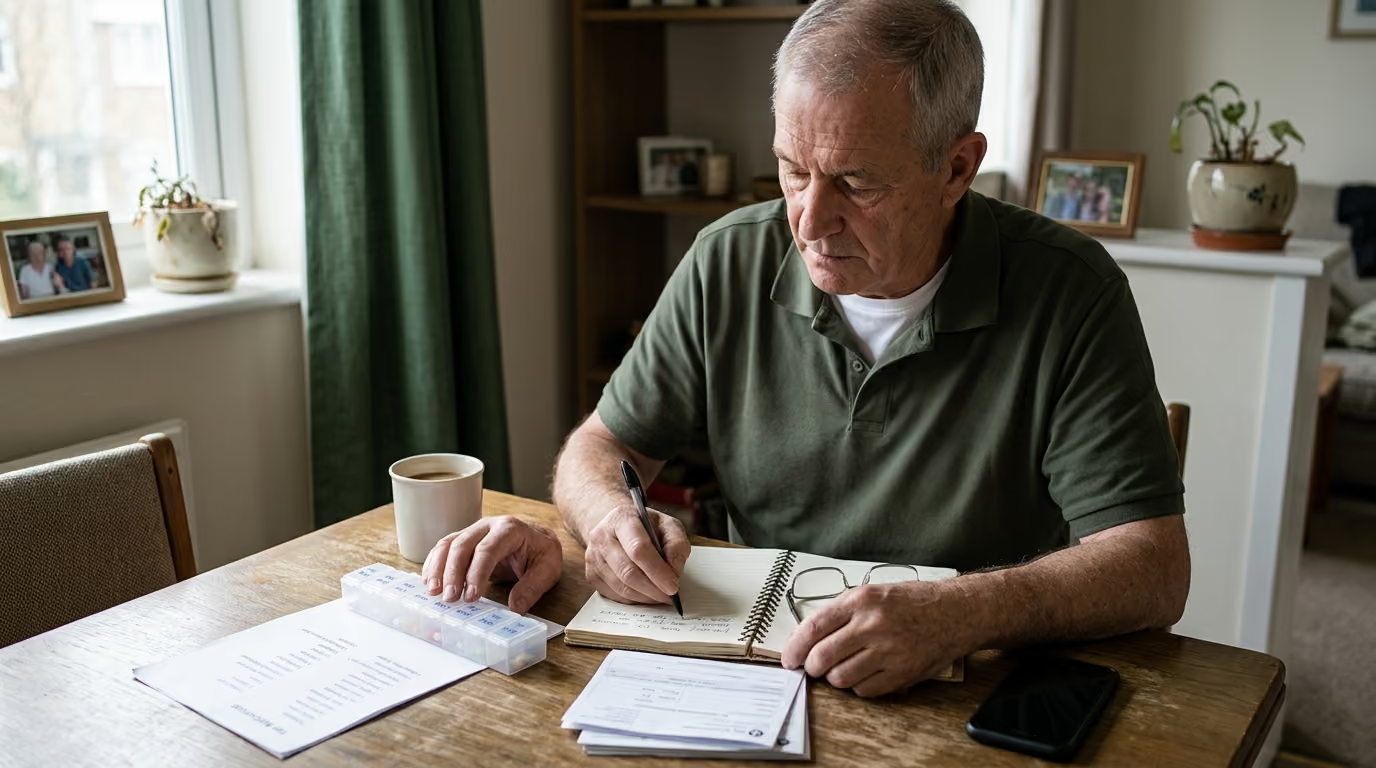

Six actionable preparation steps give veterans the exact tools needed to track complex symptoms, reconcile medication lists, and master clinical appointments.





If you are in immediate danger, call 911. For 24/7 support, call or text 988 and press 1 for the Veterans Crisis Line, or text 838255.
Most people assume that being a good patient means sitting quietly and waiting to answer questions. You wake up early, drive to the clinic, wait in an exam room, and receive twenty minutes of rapid conversation. You leave with a new prescription slip, but your primary concern was never fully addressed. A medical visit is not a passive inspection. It is a short, high stakes information exchange that requires deliberate preparation.
Treating your medical appointment as a structured briefing where you set priorities and verify instructions leads to safer treatment and better health outcomes.
To prepare effectively, you must build a focused three-item agenda, document an accurate medication list showing what you actually take, record symptoms by their functional impact, and bring outside records. During the visit, deliver your most important concern in the first sixty seconds, use teach-back to confirm orders, and establish who owns every follow-up task before leaving the exam room.
A standard medical appointment carries significant time pressure. Primary care clinicians and specialists often manage complex schedules, meaning your face-to-face time must be used efficiently. If you arrive without an organized summary of your health, the first ten minutes are spent sorting through basic background details. This leaves little time to discuss diagnoses, evaluate treatments, or address preventive care.
Preparation is not the same as attempting to diagnose yourself. Your role as a patient is to report observations, timelines, functional changes, and personal goals clearly. The clinician's role is to interpret those facts, evaluate clinical probabilities, and recommend appropriate tests or treatments. When both sides understand their roles, the consultation becomes a collaborative effort.
You can organize your preparation around a six-step model:
Beginning your preparation several days before the appointment prevents last minute rushing. It allows you to track patterns as they happen rather than trying to recall details from memory while sitting on an exam table. You can find additional structured templates across our veteran lifestyle and healthcare resources to assist with ongoing tracking.
Medication errors represent a major risk during transitions of care. When you see multiple providers across the Department of Veterans Affairs (VA), private community networks, and urgent care clinics, your electronic health record can quickly become outdated. An incomplete medication record can lead to dangerous drug interactions, duplicate therapies, or incorrect dosing.
The most critical element of medication tracking is reporting your actual schedule rather than the label instructions. If a prescription bottle directs you to take a capsule twice daily, but you only take it once in the morning because of stomach upset, your doctor needs that exact information. Prescribing decisions made on incorrect assumptions about what you are taking can cause significant harm.
Your comprehensive medication list must include every substance you put into your body:
For every item on your list, document seven specific data points:
You can use the VA Blue Button tool on My HealtheVet to download your official prescription history. However, remember that electronic systems may only display VA prescriptions unless staff manually entered outside records. Bring your self-maintained list, or place all your original bottles in a bag and bring them directly to the clinic for a physical review. Never stop taking a prescribed medication on your own before an appointment; discuss your side effects directly with your clinician so they can provide a safe tapering or substitution plan.
Describing a physical or psychological problem in vague terms slows down clinical evaluation. Telling a doctor that your knee hurts or that you feel tired does not provide enough diagnostic data. Clinicians need specific details regarding timing, intensity, triggers, and functional limitations to narrow down potential causes.
A structured symptom log transforms vague complaints into actionable clinical data. When you track an issue over several weeks, you provide your clinician with objective patterns rather than general recollections. This information helps your doctor determine whether a condition is acute, progressive, or tied to specific activities.
Whenever you track a symptom, record these core characteristics:
Connecting your symptoms directly to functional loss is one of the most effective ways to communicate clinical severity. Doctors evaluate how an illness impairs your ability to work, maintain physical fitness, and manage basic tasks. Instead of saying your back pain is severe, explain that your back pain prevents you from lifting your groceries or walking more than fifty yards.
Consider this functional symptom statement:
> "For the last four weeks, I have experienced a burning pain in my right shoulder whenever I lift my arm above chest height. It reaches a six out of ten intensity, occurs daily during work, and prevents me from sleeping on my right side. Ice provides mild relief, but over-the-counter ibuprofen has not reduced the pain."
This concrete description provides immediate clinical value. It defines the anatomical location, movement limitations, sleep interference, and past treatment failures in two sentences. If you are also managing chronic fatigue or sleep disruption, reviewing recovery and sleep strategies can help you establish clearer baseline logs for your appointments.
A primary care visit must cover preventive screenings, chronic disease monitoring, mental health checks, and new physical complaints. Attempting to address ten distinct problems in a single fifteen-minute encounter ensures that none of them receive proper clinical attention. You must organize your concerns in order of clinical importance before you walk into the building.
Begin prioritizing your concerns the day your appointment is scheduled. Limit your primary agenda to two or three core topics. If you have secondary concerns, list them separately and introduce them only if time permits after your main priorities are resolved.
Use this prioritization checklist to rank your health concerns:
When your appointment begins, present your agenda immediately using the "headline first" communication method. State your top issues in the first sixty seconds before the provider begins typing notes. This allows the clinician to allocate the remaining time appropriately across your most urgent needs.
You can open your primary care appointment with a concise briefing:
> "I have three main goals for our appointment today. My primary concern is new shortness of breath when walking up stairs, which started three weeks ago. Second, I need to review dizziness that began after my blood pressure dose increased. Third, I want to confirm whether my physical therapy referral went through."
Specialty care visits require a slightly different approach. When seeing a cardiologist, orthopedist, or gastroenterologist, your focus narrows to one body system. However, the specialist still needs your broader medical history to avoid making recommendations that conflict with other treatments.
Prepare a specialty referral packet containing:
Never assume that outside community records or VA clinic files have automatically transferred to a specialist's desk. Systems between civilian hospital networks and federal facilities do not always share data smoothly. Carrying physical copies of your recent labs, scans, and discharge summaries ensures your appointment is productive even if electronic records are unavailable.
Discussing mental health, trauma history, or substance use can feel uncomfortable, especially if you are accustomed to managing problems independently. However, psychological health directly impacts cardiovascular function, immune response, pain processing, and hormone regulation. Preparing for behavioral health visits requires an organized, honest assessment of your daily life and cognitive patterns.
A mental health appointment does not require you to recite traumatic events in detail during your initial consultation. You remain in control of the pace of your care. Your primary goal during an intake is to describe your current symptoms, daily challenges, and treatment preferences so the clinician can recommend safe, effective support options.
Before your behavioral health appointment, write down brief observations about these life areas:
If you are dealing with service-related trauma, you can set clear personal boundaries while still seeking medical help. Use this phrasing to establish your comfort level:
> "I am experiencing severe insomnia, irritability, and stress related to events from my military service. I am not ready to discuss the specific details of those events today, but I need practical help managing my sleep and daily stress levels."
If you are experiencing severe psychological distress or thoughts of self-harm, communicate this immediately. VA facilities and community emergency centers prioritize crisis interventions above routine consultations. Veterans can access immediate support by calling the Veterans Crisis Line at 988 and pressing 1, or by texting 838255. Seeking help for psychological health is a practical step toward maintaining long-term physical capability. You can review our broader military health resources for further educational guides on long-term physical and mental resilience.
Miscommunication in healthcare is common. Medical terminology is complex, and processing detailed clinical instructions while managing anxiety or physical discomfort is difficult. Research shows that patients routinely forget or misunderstand a large portion of the medical information provided during a clinic visit.
The teach-back method is an evidence-based communication standard designed to eliminate confusion. Teach-back is not an examination of your memory or intelligence. Instead, it is a deliberate safety check to ensure that the healthcare professional explained the diagnostic findings and treatment steps clearly.
You can initiate the teach-back process yourself near the end of your appointment. As your doctor finishes explaining the plan, pause and summarize the instructions back to them in your own words.
Use this simple phrasing to start the summary:
> "We covered a lot of information today, and I want to make sure I have all the steps correct. Let me repeat what I understand I need to do, and you can correct anything I missed."
When summarizing your plan, verify six critical operational points:
If your provider delivers multiple complex instructions, use the "chunk and check" technique. Ask the clinician to break down the information into manageable categories. Review medication changes first, confirm you understand them, and then proceed to lab tests and follow-up schedules.
Be completely transparent about practical barriers that might prevent you from executing the plan. If a recommended medication costs too much, if you lack transportation for weekly therapy, or if your work schedule conflicts with physical therapy hours, state this immediately. A treatment plan you cannot realistically follow is not an effective plan. Your clinician can adjust their recommendations to match your schedule, budget, and physical environment.
Virtual healthcare and video appointments offer significant convenience, eliminating long drives and clinic waiting rooms. However, technical difficulties, poor audio, and home distractions can quickly undermine a virtual consultation. Preparing your physical space and your technology is just as important as organizing your medical notes.
VA video appointments typically run through the VA Video Connect platform, while private community care doctors may use different secure portals. Test your hardware, software, and internet connection well before your scheduled appointment time to prevent delays.
Follow this preparation checklist before entering a telehealth session:
If you do not have access to a private space at home due to family, roommates, or work environments, notify your clinic ahead of time. You can request a telephone appointment, use a private room at a local VA clinic, or schedule an in-person visit instead.
During a virtual appointment, remember the inherent physical limitations of telehealth. A clinician cannot listen to your lungs with a traditional stethoscope, palpate your abdomen, or perform a hands-on joint stability exam through a screen. Ask your provider directly whether your symptoms require an in-person physical examination or follow-up laboratory work to confirm their clinical impressions.
Many medical appointments fail to yield results because of preventable planning mistakes. Recognizing these common errors allows you to adjust your approach and protect your continuity of care across complex healthcare systems.
Look out for these frequent appointment mistakes:
Closing the care loop means executing and tracking every medical instruction after you leave the clinic. The work done after an appointment determines the success of your overall medical care.
Take these immediate actions after every healthcare encounter:
Patient Advocates operate at every VA medical center as independent employee representatives. They help navigate administrative bottlenecks, resolve care disputes, and ensure your patient rights are protected without compromising your clinical relationships.
Clinical research shows that communication quality directly affects diagnostic accuracy, treatment adherence, and medical safety. Incomplete information exchanges between patients and healthcare providers remain a leading cause of preventable medical errors and hospital readmissions across both federal and private health systems.
The Agency for Healthcare Research and Quality (AHRQ) identifies medication reconciliation as an essential safety practice during all healthcare transitions. Studies evaluated by AHRQ demonstrate that discrepancies between what patients actually take and what is documented in medical records occur in up to seventy percent of clinical encounters when deliberate reconciliation is omitted. Most of these discrepancies involve over-the-counter products, supplements, and outside specialist prescriptions that never made it into the primary chart.
Research on the teach-back method demonstrates clear measurable benefits for clinical outcomes:
Shared decision-making research confirms that collaborative patient-provider discussions improve long-term treatment satisfaction. When clinicians outline multiple valid medical options and explicitly incorporate patient lifestyle goals, individuals show greater adherence to physical therapy, dietary changes, and medication regimens.
Evidence regarding electronic patient portals shows that direct access to lab notes and secure messaging enhances patient engagement. However, researchers caution that digital records often contain technical terminology that can cause unnecessary health anxiety if reviewed without clinical context. Using patient portals to review notes, combined with structured appointment agendas, provides the most reliable framework for managing chronic health conditions.
Investigating stress regulation and sleep tracking can provide additional context on how physical markers change over time. You can read our educational guides on sleep, stress and resilience to understand how daily lifestyle factors interact with long-term clinical health metrics.
Applying preparation techniques in real-world scenarios helps clarify how to handle common clinical challenges. Here are five practical examples demonstrating how to structure your communication under challenging circumstances.
A veteran experiences persistent daytime fatigue, morning headaches, low back stiffness, and brain fog, but feels overwhelmed trying to explain everything at once.
A private community cardiologist prescribes a new blood thinner, but the VA pharmacy system still displays an older, conflicting medication.
A veteran seeks help for severe insomnia, hypervigilance, and irritability, but feels anxious about discussing combat experiences in detail.
A veteran lives in a crowded household and needs to discuss sensitive physical and psychological symptoms during a scheduled video appointment.
A clinician spends fifteen minutes discussing routine lab work, leaving only three minutes to address the veteran's primary reason for visiting.
If you are also focusing on physical strength, recovery, and body composition as part of your overall wellness, our strength, fitness and body composition resources provide structured guidance that complements your primary care goals.
This article is provided solely for educational and informational purposes and does not constitute personalized medical advice, clinical diagnosis, or treatment recommendations. Healthcare systems, clinical policies, and prescription formularies vary by location and provider network. Always consult with a qualified physician, physician assistant, or nurse practitioner regarding specific medical conditions, new symptoms, or changes to your medication regimen. If you are experiencing a medical emergency, call 911 or visit the nearest emergency department immediately. For urgent mental health crises, call 988 and press 1 to reach the Veterans Crisis Line.
Use the "headline first" technique in the first minute of your visit to present your top two priorities immediately. If time runs short before you address a major concern, politely ask your provider if you should schedule a dedicated follow-up visit or if they can order preliminary diagnostic tests through secure messaging.
Never assume electronic records transfer automatically between civilian providers and VA networks. Request printed copies of clinic notes, lab panels, and imaging reports from your community doctor at the end of every visit. You can hand-deliver these copies to your VA clinic team, fax them to your primary care team, or ask your community doctor to fax the records directly to your local VA Community Care office.
Focus on tracking only your most disruptive symptom rather than recording every minor body sensation. Use a simple notebook or smartphone note to record the date, duration, zero-to-ten pain rating, and specific functional limitations, such as difficulty sleeping or walking. Keep your notes brief, consistent, and focused on patterns over time.
Yes, you have the right to bring a family member, caregiver, or trusted advocate into your medical appointments. Decide before the visit what role your support person will play, such as taking notes, tracking instructions, or helping recall symptom timelines. Let your clinician know at the start of the visit that your companion is there to assist with notes and support.
Taking a structured, proactive approach to your healthcare ensures that your time with your doctor produces clear answers, accurate treatments, and lasting physical capability.
Follow BattleVet for practical guidance on military and veteran health, strength, recovery, testosterone, sleep and healthy aging. Stay connected for new articles, research backed insights and clear information to help you stay capable for the years ahead.


Build better habits around strength, recovery, sleep, hormones and healthy aging with practical guidance for active military personnel and veterans.
Explore BattleVet