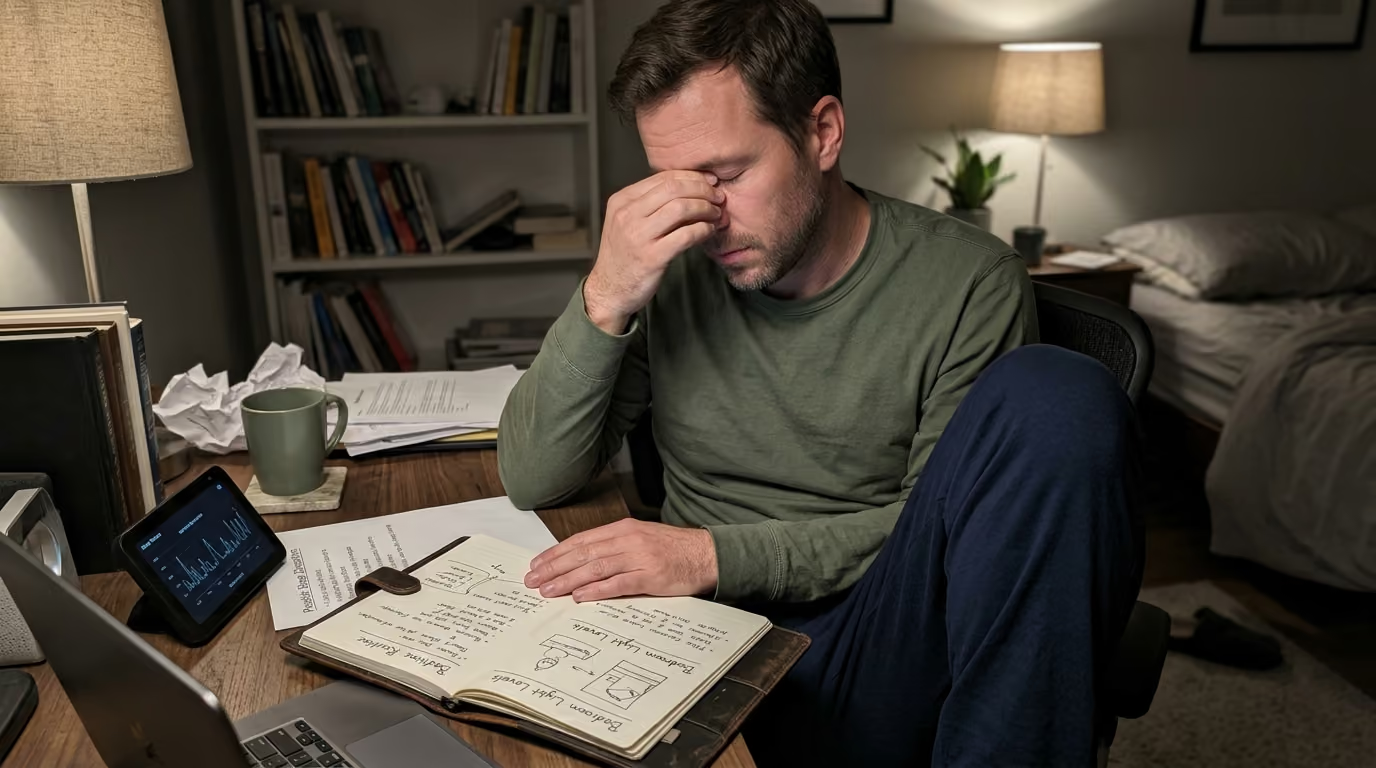

Restorative rest depends on identifying subtle chemical, schedule, and behavioral disruptors rather than simply increasing the number of hours spent in bed.





Most people assume that poor recovery comes from spending too few hours in bed, so they try to fix their fatigue by going to bed earlier or taking over-the-counter sleep aids. In reality, spending extra time awake in bed often makes sleep fragmentation worse by training your brain to associate the mattress with frustration and alert wakefulness. Real restoration depends on the biological quality, continuity, and timing of your rest rather than time spent lying down.
You set your alarm for 0600 after turning the lights out at 2200. You spent eight full hours under the covers, yet you wake up feeling like you never slept. Your morning coffee barely clears the mental fog, your joints ache, and your afternoon energy crashes before your shift ends.
A sleep disruptor audit is a structured, two-week behavioral experiment designed to pinpoint the exact chemical, environmental, schedule, and physiological triggers degrading your recovery.
A comprehensive audit evaluates six distinct categories of interference: chemical intake, daily behaviors, sleep environment, physical symptoms, circadian timing, and psychological arousal. By tracking these variables alongside objective wake patterns and subjective morning alertness, you can isolate what is breaking your sleep architecture and systematically correct it.
To audit your sleep effectively, you must measure the right biological markers. Many people look only at total hours, but duration is only one component of healthy rest. The National Heart, Lung, and Blood Institute defines sleep deficiency broadly. It includes insufficient sleep duration, irregular sleep timing, and poor sleep quality that leaves you unrefreshed.
Surveillance data from the Centers for Disease Control and Prevention indicates that over 30 percent of American adults sleep fewer than seven hours per night. However, getting seven hours on paper does not guarantee restorative rest. A complete audit separates your rest into four core dimensions:
Sleep quantity refers to the actual minutes spent asleep, not merely your time in bed. Key terms in your audit include:
Spending nine hours in bed to achieve six hours of fragmented sleep results in poor sleep efficiency. This dynamic often fuels conditioned insomnia, as the bed becomes linked to wakeful tossing and turning.
Continuity measures how uninterrupted your sleep remains across the night. A person who sleeps six continuous hours often feels more restored than someone who gets eight hours interrupted by five awakenings. Continuity tracking monitors:
Sleep architecture describes the cyclical progression through specific biological stages. Normal sleep cycles repeat roughly every 90 to 110 minutes throughout the night.
Chemicals like alcohol or nicotine can alter these stages without changing your total time in bed. You can explore deeper recovery mechanisms across our recovery and sleep articles to understand how deep stages drive tissue repair.
Two internal systems govern your ability to sleep: circadian rhythm and homeostatic sleep pressure. Circadian timing is your 24-hour internal clock, managed by the suprachiasmatic nucleus in the brain. It coordinates core body temperature, alertness, and melatonin release based on environmental cues like sunlight and meal timing.
Sleep pressure is the physical accumulation of adenosine in the brain during wakefulness. The longer you remain awake and active, the higher your sleep pressure rises. Taking long afternoon naps or lying in bed late on weekends dissipates this pressure prematurely. This makes it difficult to fall asleep at your target bedtime.
Exogenous substances represent the most common category of sleep disruptors. Many individuals consume stimulants and sedatives in a daily cycle that masks underlying sleep debt while actively destabilizing their sleep architecture.
Alcohol is widely misused as a sleep aid because it acts as a central nervous system depressant. It enhances gamma-aminobutyric acid activity, which reduces sleep-onset latency and makes you fall asleep faster. However, its downstream metabolic effects severely compromise sleep continuity and architecture.
A systematic review and meta-analysis of 27 studies published in Sleep Medicine Reviews demonstrated that alcohol significantly delays the onset of REM sleep and reduces total REM duration. These disruptions occur even at low doses of one to two standard drinks. High doses shorten the time it takes to enter slow-wave sleep initially, but they cause severe sleep fragmentation during the second half of the night.
As the liver metabolizes ethanol into acetaldehyde, the brain experiences a rebound in sympathetic nervous system activity. This metabolic clearance causes elevated heart rate, night sweats, vivid nightmares, and frequent awakenings. Furthermore, research synthesized in Sleep Medicine shows that alcohol relaxes upper airway muscles, worsening snoring and obstructive breathing events.
Caffeine is an adenosine receptor antagonist. It does not eliminate fatigue, but rather blocks the receptors that register sleep pressure in the brain. Because of its half-life, caffeine consumed in the afternoon or evening can delay sleep onset and reduce slow-wave sleep.
A meta-analysis published in Sleep Medicine Reviews analyzed caffeine clearance and sleep loss. The researchers calculated that to avoid reductions in total sleep time, a standard cup of coffee containing 107 milligrams of caffeine should be consumed at least 8.8 hours before bed. For concentrated pre-workout supplements containing 217.5 milligrams of caffeine, the clearance window extends to at least 13.2 hours before sleep.
Many individuals build a tolerance to the overt jitteriness of caffeine and believe late intake does not affect them. However, objective polysomnography shows that evening caffeine reduces restorative slow-wave sleep even when the individual feels they fell asleep easily.
Nicotine is a potent stimulant that increases heart rate, blood pressure, and alertness through nicotinic acetylcholine receptors. In a systematic review published in Frontiers in Psychiatry, chronic tobacco and nicotine users exhibited increased Stage N1 and N2 light sleep, decreased slow-wave sleep, and elevated wake time after sleep onset compared to non-users.
Nicotine causes dual-phase sleep disruption. The acute stimulant effect impairs sleep onset if consumed close to bedtime. Later in the night, the rapid drop in circulating nicotine levels induces micro-withdrawals that cause awakenings and light, restless sleep.
Smokeless nicotine pouches, vaping devices, and traditional tobacco products all produce these disruptions. If you use nicotine patches during smoking cessation, the 24-hour delivery can sometimes cause vivid dreams and awakenings. Switching to a 16-hour patch taken off before bed can help resolve this issue under medical guidance.
Over-the-counter decongestants containing pseudoephedrine or phenylephrine stimulate alpha-adrenergic receptors, causing sustained wakefulness. Beta-blockers prescribed for cardiovascular health can suppress endogenous nocturnal melatonin secretion, leading to insomnia and nighttime awakenings.
Conversely, relying on over-the-counter antihistamines like diphenhydramine for sleep induction is problematic. Clinical practice guidelines from the American Academy of Sleep Medicine advise against using antihistamines as chronic insomnia treatments due to lack of efficacy, rapid tolerance, and daytime grogginess.
Behavioral habits and schedule instability disrupt the coordination between your internal circadian clock and your daily life. An inconsistent routine weakens the neurological signals that tell your brain when to rest.
Social jet lag occurs when your sleep schedule on workdays differs significantly from your schedule on free days. Shifting your bedtime and wake time by two or three hours on the weekend forces your circadian system into a state of continuous adjustment.
A 2025 report from the National Institutes of Health noted that adults with highly irregular sleep-wake patterns experienced significantly higher rates of cardiovascular events compared to those with stable schedules. An irregular schedule disrupts blood pressure dipping and glucose metabolism. Keeping a consistent wake time seven days a week is the single most effective way to anchor your circadian rhythm.
Physical training provides long-term benefits for sleep quality, but intense sessions scheduled too close to bedtime can interfere with sleep onset. Vigorous training elevates core body temperature, stimulates sympathetic nervous system tone, and raises circulating cortisol.
A systematic review published in Sports Medicine found that evening exercise generally does not harm sleep parameters unless it involves high-intensity exertion ending within one hour of bedtime. When intense training ends less than 60 minutes before lights-out, sleep-onset latency increases and total sleep time drops. You can review scheduling strategies within our physical training and body composition resources to align heavy workouts with optimal recovery windows.
Naps can be an effective recovery tool when managed correctly, but poorly timed naps undermine nighttime rest. A long or late-afternoon nap burns off accumulated adenosine, reducing your homeostatic sleep pressure before your primary sleep window.
If you must nap, keep the duration between 15 and 25 minutes to avoid entering Stage N3 slow-wave sleep. Waking from deep sleep produces sleep inertia, which leaves you groggy for hours. Conclude all daytime naps before 1500 to ensure your brain accumulates enough sleep pressure to fall asleep smoothly at night.
Your sleep environment sends continuous sensory inputs to your brain throughout the night. Light, sound, temperature, and technology use can trigger micro-arousals that fragment your sleep architecture without fully waking you up.
Using smartphones, tablets, and laptops in the bedroom interferes with sleep through two distinct physiological mechanisms: photic stimulation and cognitive activation. Electronic screens emit short-wavelength blue light, which directly stimulates melanopsin-containing retinal ganglion cells. These cells signal the suprachiasmatic nucleus to suppress the production of melatonin.
In a cross-sectional study of 122,058 adults published in BMJ Public Health, daily screen use in bed before sleeping was associated with 48 fewer minutes of sleep per week and a 33 percent higher likelihood of poor sleep quality. The cognitive engagement from answering emails, reading news, or scrolling social media creates sympathetic arousal that opposes the mental relaxation required for sleep.
Blue-light-blocking glasses offer only partial protection. They filter specific light wavelengths, but they do nothing to reduce the psychological arousal or bedtime delay caused by engaging digital content. A standard rule is to power down interactive screens at least 30 to 60 minutes before lights out.
Your core body temperature must decrease by approximately one to two degrees Fahrenheit to facilitate sleep onset and maintain deep slow-wave sleep. An overly warm sleeping environment impairs this natural thermal drop, causing frequent awakenings and reduced slow-wave sleep.
Keep the bedroom ambient temperature between 65 and 68 degrees Fahrenheit (18 to 20 degrees Celsius). Using breathable bedding materials and taking a warm shower 60 minutes before bed can facilitate heat dissipation by dilating peripheral blood vessels in your hands and feet.
Ambient light from streetlamps, electronics, or morning sun penetration can pass through thin eyelids and trigger micro-arousals. Blackout curtains or a comfortable, contoured eye mask provide a low-cost solution to eliminate visual disruption.
Intermittent environmental noise, such as traffic, sirens, or household movement, triggers sympathetic spikes in heart rate even if you remain asleep. A consistent sound machine emitting white or pink noise masks unpredictable acoustic spikes, helping preserve continuous sleep cycles.
Many sleep disruptions are driven by undiagnosed or poorly managed physical conditions. These symptoms frequently disrupt sleep continuity without the person realizing an underlying medical issue is the root cause.
Gastroesophageal reflux disease and sleep problems share a well-documented bidirectional relationship. When you lie flat, gravity no longer keeps gastric acid in your stomach, allowing stomach contents to travel up the esophagus.
Nighttime reflux does not always present as classic, painful heartburn. Many individuals experience "silent" reflux, which presents as:
Clinical guidelines from the American College of Gastroenterology recommend finishing your last meal at least two to three hours before lying down. Elevating the head of your bed by six inches using bed risers or an under-mattress wedge utilizes gravity to prevent nocturnal acid migration.
Pain and sleep quality also influence each other in a bidirectional cycle. Acute or chronic musculoskeletal pain makes finding a comfortable sleeping position difficult, while poor sleep lowers pain thresholds and heightens pain sensitivity the next day.
A systematic review in Sleep Medicine Reviews highlighted that individuals with chronic pain experience significantly higher rates of sleep-onset delay, frequent awakenings, and unrefreshing sleep. When pain wakes you up repeatedly, your brain can develop conditioned hyperarousal, creating anticipatory dread about going to bed.
Addressing pain-related sleep disruption requires clinical management of the primary condition combined with strategic sleep ergonomics. Using targeted pillow support between the knees for side sleepers or beneath the knees for back sleepers maintains neutral spinal alignment and reduces joint stress throughout the night.
Sleep disruptors rarely act in isolation. In everyday life, multiple mild disruptors interact to create severe, compounding sleep dysfunction. Identifying these combined patterns is an essential part of the audit process.
This common pattern begins with poor sleep, leading to heavy caffeine consumption throughout the day to combat fatigue. The late caffeine intake delays sleep onset that night. To force relaxation, the individual drinks two or three glasses of alcohol before bed.
The alcohol induces rapid sleep onset but causes severe sleep fragmentation, sweating, and REM suppression during the second half of the night. The individual wakes unrefreshed, reaching for more caffeine to survive the day. Breaking this loop requires stabilizing caffeine intake first, followed by a trial of alcohol-free evenings.
A late-evening schedule often leads to eating dinner within an hour of bedtime. If that meal contains high fat, acidic sauces, or is paired with wine, gastric emptying slows and the lower esophageal sphincter relaxes.
Once the person lies flat, acid enters the upper airway, triggering coughing and awakenings. The individual may believe they have unexplained insomnia or sleep maintenance problems, when the root cause is gastric distress.
A painful shoulder or back injury initially wakes you up several times per night. Over time, you begin to worry about whether you will be able to sleep, checking the clock at each awakening and calculating your remaining hours of rest.
Eventually, the psychological hyperarousal becomes an independent cause of insomnia. Even on nights when physical pain is minimal, your heart rate remains elevated and your brain stays alert. Resolving this pattern requires treating the physical joint issue while utilizing stimulus control techniques to extinguish sleep-related anxiety.
To eliminate guesswork, you must track your daily habits and sleep outcomes systematically. A 14-day sleep disruptor diary provides the objective data required to identify patterns and verify whether behavioral adjustments are working.
When testing interventions based on your audit data, change only one primary variable at a time for a minimum of three to five consecutive days. If you eliminate caffeine, stop drinking alcohol, stop using screens, and lower your thermostat all on the same night, you will not know which factor improved your rest.
Common single-variable tests include:
Track both your subjective morning restoration and your daytime energy levels to judge the outcome of each test.
Consumer smartwatches, rings, and wristbands use accelerometers and photoplethysmography sensors to track movement and heart rate variability. These devices provide useful estimations of total sleep duration, bedtime consistency, resting heart rate, and overnight wake events.
However, do not fixate on consumer sleep-stage scores. Wearable algorithms estimate deep and REM stages through proxy measurements, which are not equivalent to clinical polysomnography with electroencephalography. Trying to force an algorithm to show higher deep sleep numbers often creates unnecessary stress that worsens your rest. Use your wearable for schedule trends and wake frequency, but judge your actual recovery by daytime capability and mental clarity.
A behavioral audit resolves lifestyle, environmental, and schedule interference. However, it cannot cure underlying clinical sleep disorders. Continuing to apply sleep hygiene rules to a medical condition delays appropriate treatment and increases health risks.
Consult a qualified healthcare professional or sleep specialist if your audit reveals any of the following clinical signs:
For chronic insomnia, multicomponent Cognitive Behavioral Therapy for Insomnia is the gold-standard, first-line clinical treatment recommended by medical guidelines. CBT-I addresses the psychological conditioning and sleep scheduling mechanics that maintain chronic wakefulness. You can find healthcare guidance across our veteran lifestyle and healthcare resources to prepare for clinical sleep consultations.
Understanding what the science supports, and where data remains observational, helps you make grounded decisions without buying into unproven marketing claims.
The physiological mechanisms behind chemical disruptors are well documented in clinical research. Polysomnographic trials consistently prove that caffeine reduces slow-wave sleep and total duration when consumed close to bedtime.
Extensive meta-analyses confirm that acute alcohol intake alters sleep architecture by suppressing REM sleep, raising heart rate, and fragmenting the second half of the night. Furthermore, the role of morning sunlight exposure and consistent wake times in stabilizing human circadian rhythms is supported by decades of chronobiology research.
While the negative association between evening screen use and sleep duration is clear across massive population studies, much of this evidence remains cross-sectional. Cross-sectional data demonstrates an association, but it does not prove direct causation. Some individuals use screens late at night precisely because they already have difficulty falling asleep due to stress or insomnia.
Similarly, large cohort studies showing increased cardiovascular and metabolic mortality in people with irregular sleep schedules are observational. Irregular sleep often coexists with shift work, socioeconomic stress, poor nutrition, and higher life demands.
Finally, consumer wearable algorithms that estimate sleep stages continue to evolve. While their aggregate data is useful for monitoring behavioral consistency, individual nightly stage scores must be interpreted with caution. Maintaining long-term vitality requires an evidence-led approach, which we outline across our healthy aging and longevity resources.
Real-world sleep disruption rarely presents as a single clean symptom. The following case patterns demonstrate how to analyze multi-factor sleep logs and implement targeted adjustments.
A 46-year-old individual reports falling asleep within five minutes of hitting the pillow at 2230. However, they consistently wake up at 0315 with a dry mouth, mild headache, and elevated heart rate, struggling to fall back asleep before their 0600 alarm.
The audit log revealed two glasses of bourbon consumed between 2030 and 2200 to wind down from work. The fast sleep onset was driven by the sedative effect of alcohol, which wore off four hours later. The resulting metabolic rebound spiked sympathetic activity and caused early-morning wakefulness.
The intervention involved replacing the evening bourbon with sparkling water and completing an alcohol-free 14-day test period. By night five, the 0315 awakenings resolved, sleep efficiency improved to 88 percent, and morning mental clarity returned.
A 34-year-old fitness enthusiast trains at 1730 on workdays. They report tossing and turning for over an hour every night, despite feeling physically exhausted from heavy lifting.
The audit revealed that they consumed a scoop of pre-workout powder containing 300 milligrams of caffeine and other stimulants at 1700 before their training session. Because high-dose caffeine requires up to 13 hours for adequate clearance, their central nervous system was heavily stimulated at their 2230 bedtime.
The intervention replaced the caffeinated pre-workout with a non-stimulant alternative while keeping training intensity the same. Within four days, sleep-onset latency dropped from 75 minutes to 15 minutes, allowing them to gain nearly an extra hour of restorative rest every night.
A 29-year-old technician wakes at 0530 Monday through Friday for work, going to bed at 2200. On Friday and Saturday nights, they stay up until 0130 playing video games and sleep in until 0930 on Saturday and Sunday mornings. Every Sunday night, they experience severe insomnia, lying awake until 0200.
The audit identified a four-hour schedule drift between workdays and free days. Sleeping in until 0930 on Sunday depleted their homeostatic sleep pressure and shifted their internal clock later. By 2200 on Sunday evening, their brain was biologically primed for wakefulness.
The intervention anchored their weekend wake time to 0630, allowing only a one-hour shift from workdays. They engaged in 15 minutes of outdoor walking on weekend mornings to reinforce circadian alignment. By the second weekend, Sunday night insomnia was completely eliminated.
This article is provided for educational and informational purposes only. It does not constitute medical advice, diagnosis, or treatment. Modifying prescription medications, evaluating chronic pain, addressing suspected sleep apnea, or managing substance dependency must be done in consultation with a qualified physician or healthcare professional.
A structured audit should be conducted for 14 consecutive days. Tracking two full weeks captures both weekday routines and weekend schedule variations, providing enough data to separate temporary bad nights from consistent behavioral disruptors.
Passive television viewing from several feet away is generally less disruptive than using a handheld smartphone or tablet. Handheld screens sit close to your eyes, delivering concentrated light exposure, while interactive tapping, scrolling, and messaging create significantly higher cognitive and emotional arousal.
Waking consistently around 0300 or 0400 often aligns with the transition between sleep cycles during the second half of the night, when slow-wave sleep decreases and lighter REM sleep dominates. Common triggers include the metabolic clearance of evening alcohol, falling blood sugar, a drop in bedroom temperature, or full bladder pressure.
Supplements cannot override active sleep disruptors like late caffeine intake, evening alcohol, irregular schedules, or severe psychological stress. While certain micronutrients support general bodily function, correcting behavioral and environmental triggers through an audit is necessary for lasting sleep restoration.
Systematic auditing transforms sleep from an unpredictable daily struggle into an objective, manageable foundation for long-term health and physical capability.
Follow BattleVet for practical guidance on military and veteran health, strength, recovery, testosterone, sleep and healthy aging. Stay connected for new articles, research backed insights and clear information to help you stay capable for the years ahead.


Build better habits around strength, recovery, sleep, hormones and healthy aging with practical guidance for active military personnel and veterans.
Explore BattleVet