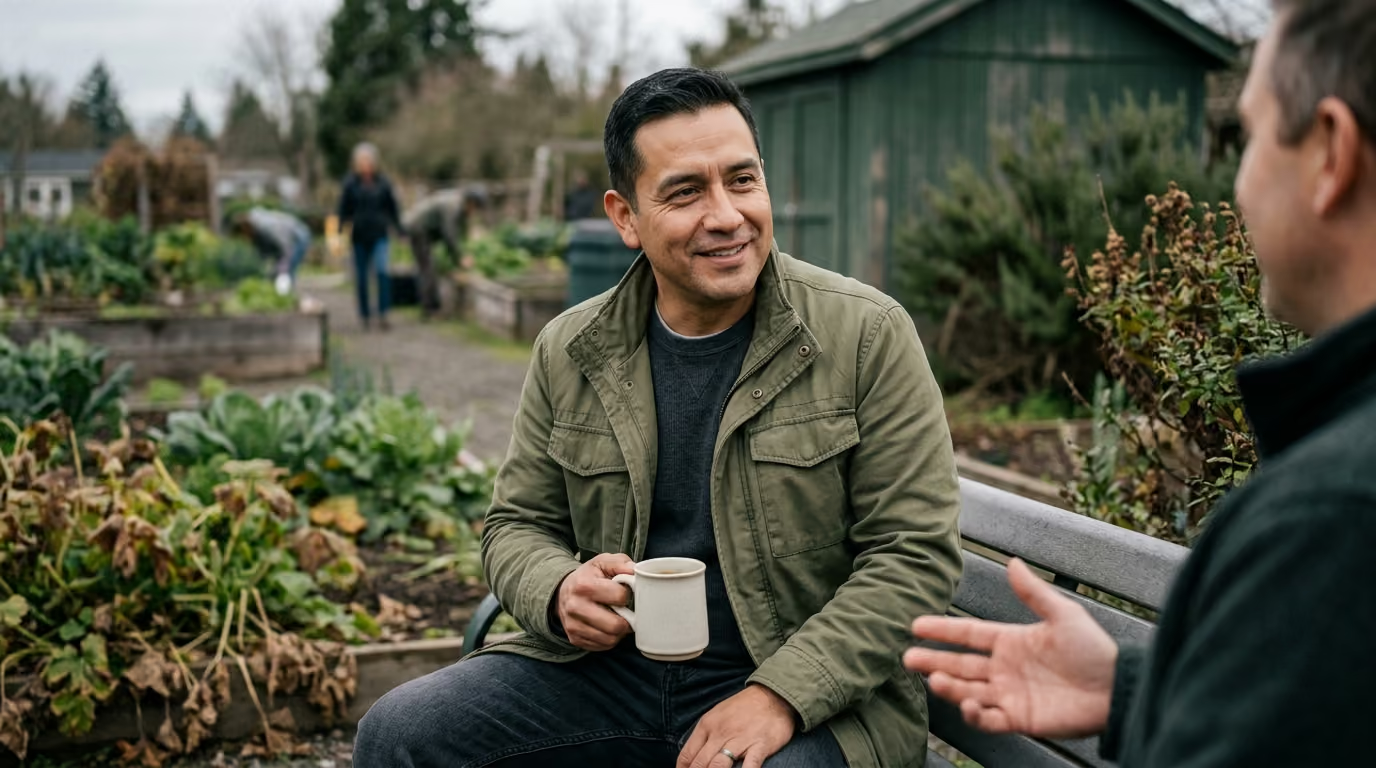

Waking up without a military schedule often disrupts sleep and purpose, but evidence-based strategies help veterans rebuild health and identity effectively.





If you are in immediate danger, call 911. For 24/7 support, call or text 988 and press 1 for the Veterans Crisis Line, or text 838255.
Military transition is the multi-stage process of moving from active duty structures into civilian life. It is not an overnight administrative event, nor is it a personal deficit when friction occurs. This guide examines the physiological, psychological, and social adaptations required after leaving service, providing an evidence-led roadmap for long-term health and stability.
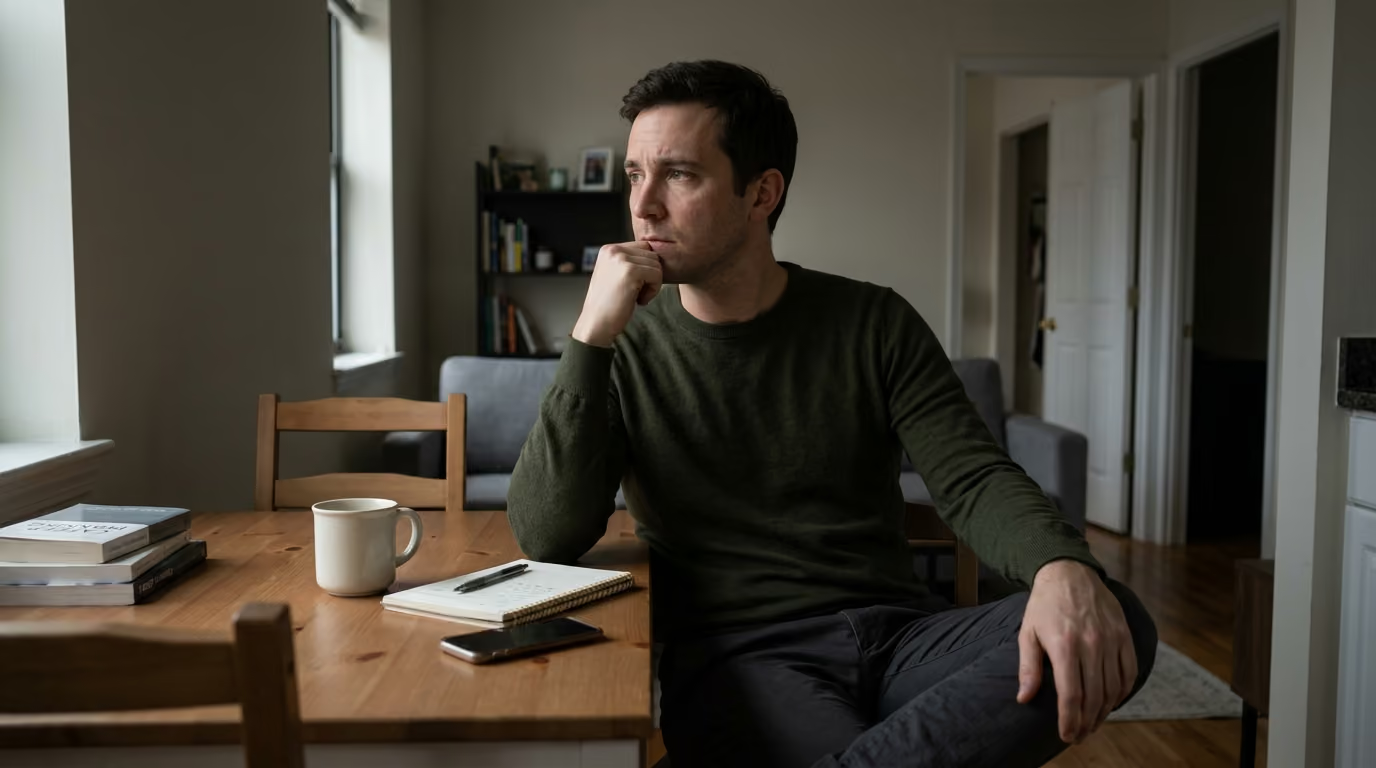
The alarm sounds at 0530, but there is no formation to attend. Your uniform hangs in the back of the closet, replaced by civilian clothes that feel unfamiliar. Blood work shows elevated resting cortisol, your joints ache from years of physical load, and sleep feels light and broken. You sit at the kitchen table wondering how to direct your energy without a daily operations order.
Military transition is a comprehensive health and lifestyle restructuring that requires deliberate systems for physical recovery, identity integration, daily structure, and social connection.
Transition stress is the physiological and psychological strain caused by simultaneous changes in employment, routine, social support, and identity after military separation. You can manage this strain by establishing fixed daily rhythms, treating sleep disruption through proven behavioral protocols, translating military competencies into civilian contexts, and building layered community networks.
The human body and brain adapt deeply to the demands of military service. High operational tempos, unpredictable schedules, continuous risk assessment, and hierarchical accountability create specific neural and hormonal baselines. When service ends, the external framework that reinforced those baselines disappears. This sudden change requires the nervous system to recalibrate while managing major life logistics.
Transition is best understood through five interconnected domains: identity, structure, connection, purpose, and physiological regulation. A disruption in one domain often creates friction in another. For example, losing the daily schedule of military duty can disrupt sleep timing. Broken sleep impairs mood regulation, which can complicate job interviews and personal relationships.
Physical health patterns during the first post-service year highlight this systemic strain. A landmark study from the Department of Veterans Affairs monitored veterans across their first year after separation. The researchers found that 53 percent reported chronic physical health conditions, and 33 percent reported chronic mental health conditions at both three and nine months post-separation. Chronic pain, sleep disturbances, anxiety, and depression were among the most common complaints. More than half of the participants reported declining satisfaction with their health during this initial year.
These findings show that leaving the military does not automatically resolve service-connected physical wear. Health priorities often become more noticeable once the buffering structure of active service is gone. Recognizing these physical realities early allows veterans to treat post-separation friction as a normal logistical challenge rather than a personal failure.
To build a stable post-service life, you must evaluate where friction is occurring across the five primary transition areas:
Each domain supports the others. When you maintain physical regulation through solid sleep and training, your capacity to handle identity shifts and career searches increases significantly. Exploring targeted sleep, stress, and resilience resources can provide structured frameworks for managing this physiological load.
The shift from mandatory physical training to self-directed movement often leads to training inconsistencies. Joint pain, spine issues, and repetitive strain injuries sustained during service can flare up when daily routines change. Furthermore, metabolic demands shift when activity levels drop, requiring adjustments in daily nutrition to prevent unwanted body composition changes.
Accessing healthcare through the Department of Veterans Affairs or private insurance requires patience and proactive tracking. Scheduling a comprehensive post-separation health assessment ensures that documented service injuries receive ongoing management. Establishing baseline blood panels, cardiovascular screenings, and musculoskeletal evaluations early prevents minor physical limitations from becoming chronic obstacles during civilian readjustment.
Sleep disruption is one of the most widespread challenges reported during military transition. The removal of shift-work demands does not instantly fix the nervous system. Instead, the uncertainty of career changes, financial shifts, and relocation often keeps the autonomic nervous system in a state of high alertness.
Research indicates that sleep problems affect a substantial portion of the veteran population. In the National Health and Resilience in Veterans Study, 37.4 percent of veterans reported poor sleep quality. Clinical insomnia was present in 11.4 percent of participants, while another 26.0 percent experienced subthreshold insomnia. Among post-9/11 veterans in specialized VA studies, insomnia rates reached 57 percent, rising to over 93 percent among those diagnosed with post-traumatic stress disorder.
The relationship between transition stress and sleep functions as a self-reinforcing feedback loop. Elevated stress increases evening cognitive arousal, making it difficult for the brain to initiate deep sleep. Fragmented sleep reduces emotional regulation, increases irritability, and impairs decision-making capacity the following day. These cognitive deficits make professional and personal tasks more stressful, which elevates evening anxiety and further disrupts sleep.
Addressing sleep requires clinical precision rather than relying on short-term fixes. General sleep hygiene tips, such as keeping a dark room, are rarely sufficient to resolve chronic insomnia. Veterans benefit from structured behavioral interventions that retrain the brain to associate the bed with restful sleep.
It is essential to distinguish between temporary sleep disruption and clinical insomnia disorder:
VA and Department of Defense clinical guidelines recommend Cognitive Behavioral Therapy for Insomnia, known as CBT-I, as the primary first-line treatment for chronic insomnia. CBT-I addresses the psychological and behavioral patterns that maintain poor sleep, using methods like stimulus control and sleep restriction. It produces longer-lasting improvements than sedative medications without the risks of dependency or daytime grogginess. Reviewing detailed articles on recovery and sleep can help you understand the behavioral protocols that support autonomic recovery.
Many transitioning service members use alcohol to unwind or induce drowsiness. While alcohol can shorten the time it takes to fall asleep, it severely degrades sleep architecture. It suppresses rapid eye movement sleep, increases middle-of-the-night awakenings, worsens sleep apnea, and elevates resting heart rate throughout the night.
Data from the RAND Corporation highlights the scope of substance use within the community. In 2023, 55 percent of veterans reported consuming alcohol in the prior month. Among those who drank, 42 percent engaged in binge drinking, and nearly 16 percent reported heavy alcohol use. Furthermore, approximately 9 percent met the diagnostic criteria for a probable alcohol use disorder.
Using alcohol to manage transition stress or sleep difficulties creates long-term physiological debt. It blunts emotional processing, worsens morning fatigue, and increases baseline anxiety through withdrawal-mediated autonomic arousal. Replacing chemical sedation with evidence-based behavioral routines is essential for genuine physical restoration.
Military service is more than an occupation; it is a total social and cultural environment. Uniforms, ranks, clear hierarchies, and shared values provide an immediate sense of identity and belonging. When you leave the military, this all-encompassing identity suddenly falls away.
Research summarized by the RAND Corporation indicates that roughly one-third of veterans view their military identity as their primary self-concept. Holding a strong military identity can offer valuable benefits, including personal pride, discipline, high performance standards, and a strong sense of purpose. However, problems arise when separation is perceived as the total loss of one's value, social standing, and community.
Transition requires identity integration rather than total identity rejection. You do not need to discard your military values, discipline, or history. Instead, the goal is to build a broader identity that includes civilian roles such as partner, parent, student, professional, mentor, or community leader.
Studies show that veterans with a coherent, multi-faceted personal identity demonstrate greater psychological resilience and better mental health outcomes. When your sense of worth is distributed across several meaningful life areas, setbacks in any single area are far less destabilizing. Reading about veteran life and community adjustment provides practical perspectives on navigating these cultural and personal shifts.
A primary driver of identity distress is the difficulty of translating military competence into civilian terms. Veterans often struggle to describe their qualifications on resumes, leading to underemployment or professional frustration. The goal is to translate specific tactical duties into universal operational capabilities.
Consider these functional translations:
The Department of Defense Transition Assistance Program provides mandatory foundational training in skill translation and financial planning. Engaging deeply with these translation exercises helps bridge the gap between military achievements and civilian professional opportunities.
Purpose is rarely discovered through passive reflection alone. In military service, purpose was handed down through orders and organizational missions. In civilian life, purpose must be actively constructed through trial, contribution, and direct engagement.
You can rebuild meaning by running short-term lifestyle experiments:
These activities provide positive feedback, help you build new social circles, and restore the feeling of making a tangible contribution. Over time, these small investments form the bedrock of a stable post-service purpose.
Resilience during military transition is frequently misunderstood. Popular culture often portrays resilience as an unchanging personal trait, akin to mental toughness or emotional detachment. Modern psychological and military health research presents a much more nuanced picture.
Established clinical evidence confirms that successful transition outcomes depend heavily on external resources and social contexts. A comprehensive review by RAND Europe found that scientific literature does not support a simple, direct link between individual resilience traits and uniform transition success. Instead, factors like steady employment, family stability, financial security, communication skills, and accessible mental healthcare heavily influence post-service trajectories.
Resilience is dynamic, relational, and context-dependent. A service member who excelled in high-stress operational environments may struggle in an unstructured civilian workplace. Recognizing that resilience interacts with your environment removes the stigma from transition difficulties.
To make informed health and lifestyle decisions, you must separate well-supported medical findings from emerging theories.
Established Scientific Evidence:
Emerging Research and Knowledge Limits:
Understanding these distinctions helps you focus your energy on proven behavioral foundations rather than unverified health trends. Prioritizing consistent routines, evidence-based clinical care, and reliable support systems yields the most dependable long-term results.
Leaving the armed forces fundamentally alters your social architecture. In uniform, social connection is built into daily life. You work, eat, train, and live alongside individuals who share identical expectations, humor, and operational language. In civilian environments, social networks are diffuse, voluntary, and require deliberate cultivation.
Loneliness and social isolation are distinct concepts, and both present genuine health risks. Social isolation refers to an objective lack of contact with other people. Loneliness is the subjective distress felt when there is a gap between desired and actual connection. A veteran can work in a crowded office and still feel intensely lonely if their colleagues do not understand their background.
Data reveals that loneliness is a widespread concern across the veteran community. In a nationally representative study of 4,069 veterans, 56.9 percent reported feeling lonely at least some of the time, with 19.7 percent experiencing frequent loneliness. In longitudinal tracking over three years, roughly 39 percent of veterans followed moderate-to-increasing or high-level loneliness trajectories. Having a supportive partner and maintaining a strong sense of purpose were identified as key protective buffers.
Social isolation carries physical health consequences comparable to well-known cardiovascular risk factors. It elevates systemic inflammation, disrupts sleep quality, and increases vulnerability to depression and substance misuse. Creating proactive, layered social connections is an essential health strategy during transition.
Relying solely on one type of relationship creates a fragile support system. An effective social strategy incorporates multiple distinct layers:
VA transition guidelines emphasize that veterans do not need to replace their military friends. Instead, the goal is to broaden the circle. Maintaining contact with old teammates while establishing civilian friendships gives you a balanced, resilient support structure.
Transition alters household routines, decision-making dynamics, and daily expectations. Spouses and children adapt to new schedules, and partners often renegotiate household responsibilities. While families look forward to an end to deployments, the physical presence of a stressed, transitioning veteran can create unexpected domestic tension.
Clear, non-defensive communication is critical during this readjustment phase. Scheduling regular check-ins to discuss finances, routines, and emotional needs prevents minor misunderstandings from escalating. Community-based Vet Centers offer free, confidential readjustment counseling for both veterans and their families, providing an objective space to navigate these domestic shifts.
Transition trajectories are not uniform. While a planned retirement allows for extensive preparation, unplanned separations introduce distinct logistical and psychological challenges. Medical boards and involuntary administrative discharges fundamentally alter the transition timeline.
Medical separations frequently involve chronic physical pain, functional limitations, and complex administrative boards. The veteran must navigate VA disability claims, medical evaluations, and vocational rehabilitation while managing the grief of an unexpected career end. In a VA study tracking post-9/11 veterans, individuals undergoing medical separations reported significantly higher rates of physical limitations and mental health strain compared to their peers who completed planned exits.
Involuntary separations can generate profound feelings of anger, institutional betrayal, and shame. Personnel who leave under administrative pressure often have limited time to secure housing, civilian employment, or healthcare. Recognizing the specific risks associated with different discharge circumstances ensures that support is applied where it is needed most.
Managing a medical discharge requires balancing physical recovery with administrative requirements:
Integrating physical health management with clear vocational goals reduces the risk of long-term disability dependency. Reviewing healthy aging and longevity resources can help you design sustainable strength and mobility programs that protect your joints as you age.
Different veteran cohorts encounter distinct transition environments that require tailored solutions:
Recognizing these specific challenges prevents one-size-fits-all assumptions and helps you choose resources suited to your specific background. Exploring comprehensive military health insights provides valuable context on how service backgrounds shape post-military health.
Establishing a proactive, structured framework prevents transition friction from escalating into chronic health issues. Rather than waiting for motivation, build predictable daily systems that protect your sleep, physical capability, and social connection.
This 30-60-90 day stabilization plan organizes your physical restoration, career preparation, and personal readjustment into clear, manageable steps.
The first month centers on establishing biological and administrative foundations:
The second month focuses on vocational translation and expanding your social circle:
The third month solidifies your long-term health and lifestyle structure:
Recognizing when normal readjustment stress crosses into clinically significant distress is critical for long-term health. A challenging transition is common, but persistent, debilitating symptoms warrant formal professional care. Seeking clinical support is an operational decision that protects your physical and cognitive capabilities.
The stepped-care framework organizes support options based on symptom severity and personal safety:
Step 1 involves self-monitoring through sleep tracking, structured schedules, and regular physical recovery. Step 2 leverages social and community resources, such as peer networks, transition coaches, and local veteran organizations. Step 3 introduces professional outpatient assessment for persistent insomnia, joint pain, anxiety, depression, or relationship distress. Step 4 engages specialized, evidence-based treatments like CBT-I for insomnia or Cognitive Processing Therapy for trauma. Step 5 addresses acute crisis situations requiring immediate emergency intervention.
Schedule a clinical evaluation with a qualified physician or mental health professional if you experience:
Community-based Vet Centers provide free, confidential readjustment counseling to eligible veterans, active service members, and their families. Their services operate independently from standard VA medical centers, providing an accessible, private resource for post-service counseling.
Suicide risk represents a critical concern during the post-separation window. According to the 2024 National Veteran Suicide Prevention Annual Report, 6,407 veterans died by suicide in 2022. The unadjusted suicide rate for veterans was 34.7 per 100,000, compared to 13.5 per 100,000 for female veterans and 37.3 per 100,000 for male veterans. Firearms were involved in 73.5 percent of veteran suicides. The report also identified an elevated suicide rate of 46.2 per 100,000 among service members during their first full year of separation.
These statistics emphasize the need for clear, direct action during acute crises. Talking openly about distress does not increase suicide risk; it opens pathways for immediate support.
If you or a veteran you know experiences overwhelming hopelessness, talks about wanting to die, gives away possessions, or shows dangerous changes in behavior, take immediate action:
This article is for educational and informational purposes only and does not constitute formal medical advice, clinical diagnosis, or treatment recommendations. Health decisions, physical training changes, and mental health interventions should always be discussed with a qualified healthcare professional, primary care physician, or licensed mental health provider.
Yes. The physical and cognitive energy required to navigate housing changes, career searches, financial restructuring, and identity shifts is significant. Furthermore, when the sustained adrenaline of active service fades, physical fatigue and joint inflammation often become more apparent. If profound exhaustion persists beyond a few months, consult a physician to evaluate thyroid function, sleep apnea, nutrient levels, and baseline hormone profiles.
A formal clinical evaluation is required to accurately determine the root cause of sleep problems. While insomnia is a core symptom of PTSD, it frequently develops independently due to shifting daily routines, elevated caffeine consumption, evening alcohol use, or general life anxiety. VA and Department of Defense guidelines recommend screening for environmental, medical, and behavioral factors independently of PTSD, utilizing CBT-I as the primary treatment for chronic insomnia regardless of trauma history.
Civilian workplaces operate on different cultural norms, communication styles, and accountability structures than military units. Direct, blunt operational language can easily be misinterpreted as anger or hostility in civilian corporate environments. Focus on adapting your delivery while maintaining your professional standards, and satisfy your need for direct, shared military culture by connecting with veteran peer groups and community service organizations outside of work.
Family members can provide meaningful support by maintaining predictable household routines, offering space for physical decompression, and avoiding pressuring the veteran to instantly resolve all long-term career decisions. Encourage open, low-pressure conversations about household roles, and suggest engaging with confidential, community-based resources like Vet Centers together. If emotional withdrawal is accompanied by heavy alcohol use or severe mood swings, encourage a consultation with a qualified medical professional.
Follow BattleVet for practical guidance on military and veteran health, strength, recovery, testosterone, sleep and healthy aging. Stay connected for new articles, research backed insights and clear information to help you stay capable for the years ahead.


Build better habits around strength, recovery, sleep, hormones and healthy aging with practical guidance for active military personnel and veterans.
Explore BattleVet