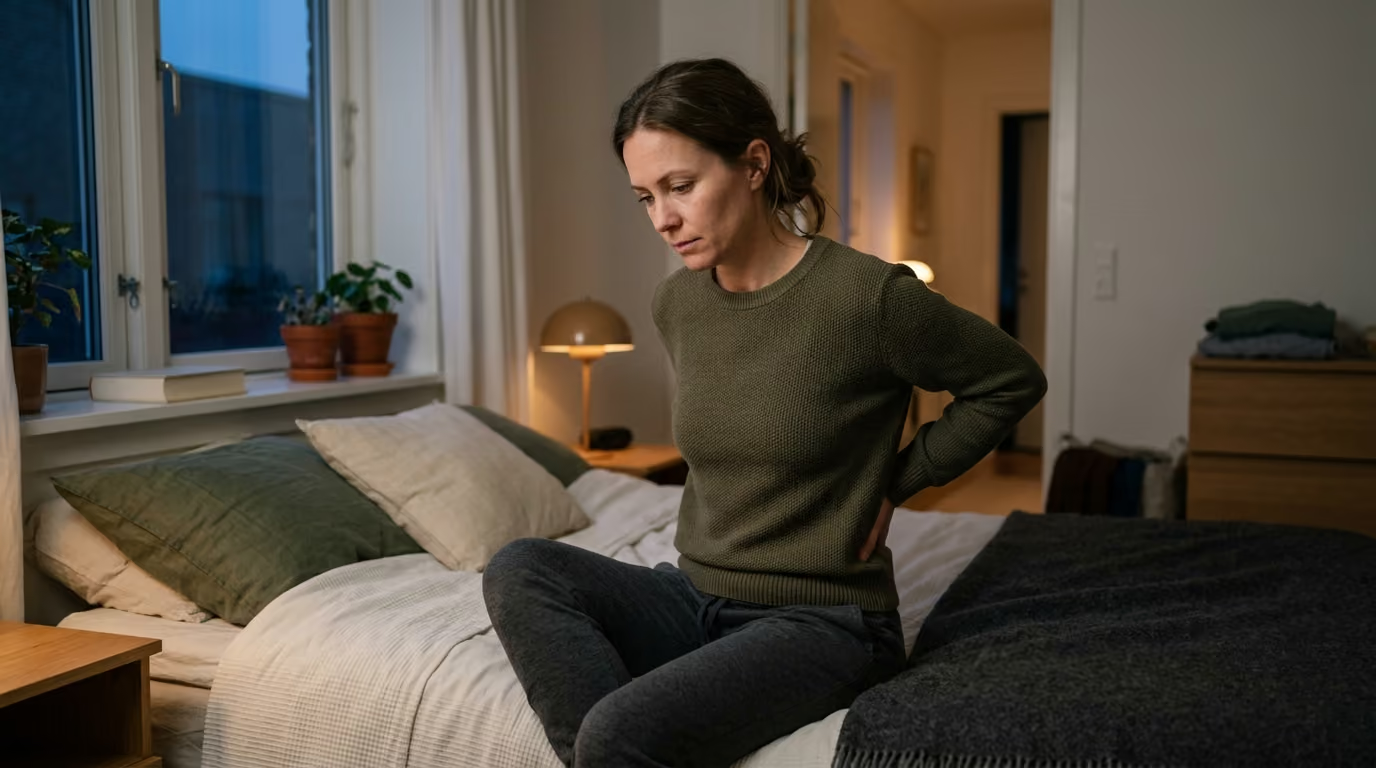

Midnight awakenings from persistent discomfort trigger a vicious biological cycle, highlighting how targeted sleep therapies can break ongoing pain pathways.





You wake up at three in the morning with a throbbing ache in your lower back. You shift positions, adjust the pillows, and check the clock on the nightstand. The harder you try to force yourself back to sleep, the tighter your neck and shoulders become. By six in the morning, your physical fatigue is severe, and the pain feels sharper than it did the night before.
Quick Take: Chronic pain and sleep disruption form a bidirectional cycle where poor sleep amplifies pain sensitivity, while structured sleep interventions like cognitive behavioral therapy for insomnia can significantly reduce pain interference and restore physical capability.
Chronic pain and disturbed sleep operate as an interconnected biological and behavioral loop. Pain makes falling and staying asleep difficult, while fragmented sleep lowers pain thresholds and impairs the nervous system's ability to inhibit pain signals. Addressing this cycle requires treating pain and sleep together rather than waiting for pain to disappear before managing sleep.
Sleep disturbances affect an estimated 40% to 88% of individuals living with chronic pain. In clinical research involving chronic non-cancer pain, systematic reviews report a pooled sleep-disturbance prevalence of 75.3% using the Pittsburgh Sleep Quality Index and 72.9% using the Insomnia Severity Index. Up to 89% of patients with chronic pain report at least one major sleep complaint. Furthermore, roughly 53% of patients in pain clinics meet the diagnostic criteria for clinical insomnia, compared to only 3% of pain-free individuals.
For decades, clinicians treated poor sleep merely as an unfortunate symptom of physical pain. The assumption was simple: cure the underlying injury, and sleep will return to normal. Longitudinal and microlongitudinal research has overturned this assumption. Studies tracking patients over days, weeks, and months demonstrate that sleep quality reliably predicts next-day pain intensity. In many cases, impaired sleep predicts the onset and worsening of pain more strongly than pain predicts subsequent sleep disruption.
When you lose sleep, your central nervous system loses its baseline resilience. A single night of poor rest can lower your pain tolerance, decrease your emotional regulation, and reduce your physical coping capacity. The following day, ordinary physical tasks place greater strain on the body. This added strain increases pain intensity, which triggers higher anxiety and protective muscle tension at bedtime.
This dynamic forms a self-reinforcing feedback loop. Pain triggers arousal, which delays sleep onset and causes frequent awakenings. Sleep fragmentation limits restorative deep sleep, which increases pain sensitivity the next day. The individual then compensates by resting excessively, napping during the day, or extending time in bed. These compensatory habits weaken the biological drive for sleep, causing the cycle to repeat night after night.
Understanding this bidirectional loop is central to physical restoration. When you manage sleep directly, you improve the physiological environment required for tissue recovery, nervous system regulation, and sustainable physical performance. You can review our articles on recovery and sleep to explore how these recovery mechanisms influence overall health.
The relationship between sleep and pain is driven by specific neurobiological pathways. When sleep is cut short or repeatedly interrupted, four primary mechanisms alter how your brain and spinal cord process sensory signals.
The human central nervous system possesses an internal pain-control system known as descending pain modulation. Specialized pathways travel from the brainstem down to the spinal cord to filter, dampen, or inhibit incoming pain signals before they reach conscious awareness.
Sleep deprivation severely impairs this inhibitory control. Human neuroimaging studies show that acute sleep loss increases neural activity within the brain's primary somatosensory cortex, which processes physical sensations. At the same time, sleep deprivation reduces activation in higher-order brain regions responsible for pain valuation and modulation.
Controlled laboratory experiments show that a single night of total sleep deprivation significantly lowers mechanical, cold, and pressure-pain thresholds. It also impairs conditioned pain modulation and accelerates temporal summation, which is the amplification of pain from repetitive stimuli. In simple terms, lack of sleep turns down the nervous system's internal volume dial for dampening pain.
Sleep disruption alters the production of systemic cytokines and inflammatory mediators. When you miss out on slow-wave sleep, cellular inflammatory activity can increase. Elevated systemic inflammation sensitizes peripheral nerve endings and lowers the threshold required to trigger a pain response.
However, systemic inflammation is not the sole driver of pain amplification. Recent partial sleep restriction studies show that cold and heat pain sensitivity can increase even without measurable changes in standard blood inflammatory markers. This finding indicates that sleep loss alters pain processing through direct neural circuits in addition to biochemical inflammatory responses.
Central sensitization is a condition where the central nervous system enters a persistent state of high reactivity. In this state, normal sensory inputs produce pain (allodynia), and mildly painful inputs produce severe pain (hyperalgesia).
Sleep fragmentation has been linked to increased central and peripheral sensitization. When micro-awakenings interrupt sleep continuity, spinal neurons become hyperexcitable. Central sensitization does not mean that the pain is imaginary or purely psychological. Instead, it describes a measurable neurobiological change where the nervous system amplifies sensory signals regardless of whether ongoing tissue damage is present.
Pain naturally triggers protective muscle contraction, commonly known as muscle guarding. When an area of the body hurts, surrounding muscles contract to brace the joint and prevent further movement. While this response is helpful during the first few days after an acute injury, persistent guarding creates chronic muscle stiffness and local ischemia.
Experimental studies have found that partial sleep restriction significantly lowers pressure-pain thresholds across the trapezius and upper back muscles. Inadequate rest makes tense muscles more tender and irritable. This heightened sensitivity reinforces the brain's perception of physical threat, keeping muscle tissue in a continuous, braced state that interferes with comfortable sleep positions.
Effective management requires a clear diagnosis of the specific pain type and sleep disorder involved. Treating all pain and insomnia with a single generic approach rarely produces lasting improvements.
The International Association for the Study of Pain defines chronic pain as pain that persists or recurs for longer than three months. Clinicians divide chronic pain into distinct categories based on underlying mechanisms:
Pain intensity is not a direct gauge of tissue damage. A person can experience severe, disabling pain due to central sensitization and nociplastic changes even when standard magnetic resonance imaging scans appear completely normal.
Insomnia involves persistent difficulty with sleep initiation, duration, consolidation, or quality, occurring despite adequate opportunity and circumstances for sleep. Chronic insomnia occurs at least three nights per week for a minimum of three months and produces noticeable daytime impairment.
Sleep fragmentation differs from short sleep duration. A person may spend eight hours in bed but wake up repeatedly for thirty seconds at a time due to pain or breathing disruptions. These brief arousals disrupt deep, restorative sleep stages without the person remembering every awakening.
Sleep efficiency measures how effectively time in bed translates into real sleep. It is calculated by dividing total sleep time by total time spent in bed, then multiplying by one hundred. A sleep efficiency score above 85% is considered healthy, while scores below 75% are common in chronic pain populations. Extended time spent tossing and turning lowers sleep efficiency and reinforces conditioned insomnia.
Medications are frequently used to manage chronic pain and nighttime awakenings. While pharmacological tools have a role in acute stabilization, relying solely on sedative medications introduces significant long-term risks.
A common pitfall is confusing drug-induced sedation with natural, restorative sleep. Many prescription hypnotics, sedating antihistamines, and muscle relaxants act as central nervous system depressants. They can shorten the time it takes to become unconscious, but they often alter natural sleep architecture by suppressing slow-wave deep sleep and rapid eye movement sleep.
Without sufficient deep sleep, tissue repair slows down, and descending pain inhibition remains impaired. Patients often wake up groggy and unrefreshed, mistaking their morning brain fog for worsened pain or disease progression.
Chronic opioid therapy carries documented risks for sleep architecture and respiratory stability. Opioids suppress the central respiratory drive within the brainstem, leading to central sleep apnea, hypoxemia, and ataxic breathing patterns during sleep.
The risk of opioid-induced sleep-disordered breathing escalates significantly at higher daily dosages, with methadone use, and when opioids are combined with other central nervous system depressants. The Centers for Disease Control and Prevention guidelines advise avoiding concurrent prescribing of opioids and benzodiazepines whenever possible due to heightened overdose and respiratory depression risks. Patients taking opioids who snore loudly, wake up gasping, or experience severe morning headaches should be formally evaluated for sleep apnea.
When sleep quality drops after a painful day, individuals often take extra pain relievers or over-the-counter sleep aids late at night. This reactive dosing creates daytime grogginess, leading to afternoon caffeine consumption and irregular napping.
By the following evening, natural sleep drive is disrupted, prompting another round of nighttime medications. Abruptly discontinuing prescribed pain or sleep medications can trigger severe rebound insomnia, hyperalgesia, and autonomic withdrawal. Any medication adjustments must be conducted under direct medical supervision.
Clinical guidelines from the American Academy of Sleep Medicine and the American College of Physicians recommend Cognitive Behavioral Therapy for Insomnia (CBT-I) as the first-line treatment for chronic insomnia in adults. CBT-I is a structured, multi-component psychological and behavioral intervention typically delivered over four to eight sessions.
Systematic reviews and meta-analyses confirm that CBT-I produces substantial benefits for individuals with chronic pain. In an analysis of 14 randomized controlled trials, CBT-I produced large improvements in sleep efficiency, sleep onset latency, and sleep continuity. It also generated statistically significant reductions in pain intensity and depressive symptoms.
The estimated probability of achieving clinically meaningful sleep improvement after CBT-I was 81% at post-treatment and 71% at long-term follow-up. The probability of experiencing significant pain reduction was 58% after treatment.
Network meta-analyses comparing sleep-focused CBT with standard pain-focused CBT show that sleep-directed interventions produce stronger, more broad-based improvements in sleep quality, daily disability, and mood. Addressing insomnia directly stabilizes the neurological foundation required for active rehabilitation.
Stimulus control re-establishes the conditioned association between the bed and sleep. Chronic pain sufferers often spend hours lying awake in bed while uncomfortable, anxious, or checking the clock. Over time, the bedroom becomes a physical trigger for frustration and hyperarousal.
Stimulus control instructions include:
Sleep restriction therapy limits the total time spent in bed to match the actual amount of time spent asleep. When a person sleeps only five hours but spends nine hours in bed trying to rest, their sleep becomes shallow and fragmented.
By temporarily compressing time in bed, mild sleep deprivation builds homeostatic sleep pressure. This increased sleep drive leads to faster sleep onset and consolidated, deeper sleep stages. As sleep efficiency rises above 85%, time in bed is gradually extended in 15-minute increments.
Sleep restriction must be tailored carefully for individuals with complex conditions, particularly those with bipolar disorder, seizure disorders, or safety-sensitive occupations.
While CBT-I directly addresses sleep mechanics, pain-focused cognitive behavioral therapy targets catastrophic thinking, fear of movement, and maladaptive activity pacing.
Many people alternate between pushing through severe pain during good days (overactivity) and collapsing into complete rest for days afterward (underactivity). This boom-and-bust cycle destabilizes both the nervous system and circadian rhythms.
Structured behavioral pacing teaches individuals to divide physical tasks into manageable intervals, maintaining a steady baseline of activity regardless of daily pain fluctuations. You can explore our sleep, stress, and resilience resources for additional evidence-based strategies on nervous system regulation.
Clinical presentations of pain and sleep disturbance vary widely. Recognizing these distinct patterns helps pinpoint the most effective combination of interventions.
A 42-year-old individual with lumbar disc pathology goes to bed at 8:30 PM to compensate for poor sleep the previous night. They spend two hours awake, monitoring every sensation in their back and checking the clock every 15 minutes. They worry that lost sleep will make work impossible the next day.
The primary problem here is conditioned arousal and excessive time in bed. The recommended approach involves establishing a fixed 6:00 AM wake time, eliminating visible bedroom clocks, restricting initial time in bed to six hours, and applying stimulus control when wakefulness exceeds 20 minutes.
A 55-year-old veteran taking prescribed opioids for severe knee and hip osteoarthritis reports waking up every hour. The individual attributes all awakenings to joint pain and requests higher nighttime analgesics. However, their partner reports heavy snoring and periods of silence followed by loud gasps.
Increasing opioids in this scenario escalates the risk of life-threatening central sleep apnea. The correct intervention is a formal sleep study (polysomnography), screening for sleep-disordered breathing, and initiating positive airway pressure therapy before adjusting any pain medications.
A 38-year-old with persistent neck stiffness holds their shoulders in an elevated, braced posture throughout the workday. At night, the pressure of the pillow against their trapezius triggers intense aching. After three nights of restricted sleep, muscle pressure tenderness spreads into the upper back and jaw.
In our experience working with physical conditioning and rehabilitation, readiness depends heavily on sleep quality. I remember waking up after a poor night of sleep and realizing that my training recovery was taking much longer than it used to. I realized that readiness is more than just pushing through the fatigue. It requires a dedicated approach to sleep and hormonal health, which completely shifted how I view long term capability.
For this pattern, the solution includes progressive muscle relaxation, diaphragmatic breathing before sleep, and gentle cervical mobility paired with graded resistance training rather than continuous rest.
A 29-year-old athlete undergoes successful surgical repair of an ankle ligament. Six months later, the physical tissue is fully healed, and weight-bearing testing shows normal strength. However, the patient continues to experience severe sleep-onset insomnia, lying awake for hours dreading morning exhaustion.
The acute pain is gone, but the learned conditioned arousal in the bedroom remains active. The treatment requires standard CBT-I protocols to break the mental association between the bed and wakeful frustration, rather than ordering additional imaging scans or physical therapy.
A 50-year-old individual experiences widespread body pain, severe daytime fatigue, and depressive symptoms lasting over a year. Comprehensive rheumatologic and neurological workups reveal no identifiable structural damage. The person spends eleven hours in bed daily, has stopped exercising, and avoids social contact.
This case fits the criteria for chronic primary pain with high emotional distress. The optimal management plan uses an integrated biopsychosocial approach: combined CBT-I and pain behavioral therapy, gradual physical reactivation, and structured activity pacing to restore daily capability.
A 34-year-old security specialist working rotating shifts reports severe flare-ups in thoracic back pain when attempting to sleep during daytime hours. The individual sleeps normally on weekends during nighttime hours.
The primary disruption is circadian misalignment rather than primary insomnia. The body's core temperature and cortisol rhythms are mismatched with the sleep schedule. The intervention focuses on light-blocking window treatments, wearing blue-blocking glasses during the morning commute, and maintaining fixed anchor sleep blocks on alternating shifts.
Restoring healthy sleep alongside chronic pain requires a structured, multi-phase plan. Follow these five practical phases to rebuild sleep continuity and physical capacity.
Before altering your routine, rule out medical conditions that require specialized care. Seek immediate medical evaluation if your pain is accompanied by red flags such as unexplained weight loss, fever, numbness in the groin or saddle region, loss of bowel or bladder control, or progressive muscle weakness.
Keep a comprehensive sleep and symptom diary for fourteen consecutive days. Track the following metrics every morning and evening:
Circadian consistency sets the neurological foundation for restorative rest. A fluctuating wake-up schedule disrupts your central circadian pacemaker, impairing both nighttime sleep consolidation and daytime pain modulation.
Set a non-negotiable wake-up time seven days a week, regardless of how poorly you slept the previous night. Expose your eyes to natural outdoor light for 15 to 30 minutes within an hour of waking. Morning light suppresses melatonin production and initiates the circadian timer for evening sleepiness.
Eliminate long daytime naps. If severe fatigue creates a safety hazard, limit rest to a single 20-minute nap taken before 2:00 PM to protect evening sleep pressure.
Adjust your physical sleep environment to minimize physical strain and sensory interruptions.
Apply the core principles of CBT-I to eliminate conditioned sleep frustration and rebuild sleep efficiency.
Calculate your average total sleep time from your Phase 1 diary. Set your initial time in bed to match this average plus 30 minutes, ensuring you do not restrict time in bed below five and a half hours for safety. For example, if you sleep an average of six hours, your initial window in bed should be six and a half hours (such as 11:30 PM to 6:00 AM).
When in bed, practice diaphragmatic breathing with an extended exhalation. Inhale smoothly through your nose for four seconds, and exhale slowly through your mouth for six seconds. This slow exhalation stimulates the parasympathetic nervous system, lowering heart rate and muscle guarding.
If you remain awake for roughly 20 minutes, leave the bedroom immediately. Engage in quiet reading under soft, warm lighting in another room until genuine drowsiness returns.
Physical activity is a powerful non-pharmacological tool for improving sleep depth and reducing chronic pain sensitivity. Prolonged bed rest and physical deconditioning weaken connective tissues, increase joint stiffness, and worsen central sensitization.
Incorporate daily graded movement, starting with low-impact walking and progressing to resistance training. Graded resistance exercises strengthen supportive musculature, improve joint stability, and release endogenous endocannabinoids that assist with natural pain modulation.
Schedule strenuous training sessions at least three hours before bedtime to allow body temperature and sympathetic nervous system activity to return to baseline. You can review our physical restoration resources to learn how structured physical conditioning supports long-term physical capability.
Track functional outcomes rather than daily pain scores. Gauge success by improvements in walking distance, lifting capacity, daily mood, and consolidated hours of sleep. Pain levels often fluctuate during recovery, but improving physical function and sleep efficiency indicates that your nervous system is adapting successfully. For additional perspectives on staying capable over time, explore our healthy aging guidance.
Overcoming chronic pain and sleep disruption requires letting go of several widespread myths that derail progress.
The pain-sleep relationship is bidirectional. In many clinical studies, sleep quality is a stronger predictor of next-day pain than pain is of next-day sleep. Treating sleep directly alters central nervous system excitability, dampens pain sensitivity, and improves daytime physical function even while underlying structural conditions persist.
Behavioral therapies like CBT-I and pain-focused CBT are not treatments for imaginary conditions. Chronic pain alters real biological circuits in the brain and spinal cord. Behavioral interventions directly influence autonomic arousal, brain-derived neurotrophic factors, muscle bracing, and descending inhibitory pathways.
Lying awake in bed for nine or ten hours when you can only produce five hours of fragmented sleep damages sleep quality. It weakens your biological sleep drive and conditions your brain to associate the mattress with pain, tossing and turning, and anxiety. Consolidating your sleep window produces deeper, more restorative rest.
Standard structural imaging frequently fails to identify the primary sources of chronic pain, including central sensitization, peripheral nerve hyperexcitability, and small-fiber neuropathy. Chronic primary pain is recognized by major international medical bodies as a distinct physical condition characterized by altered nervous system processing.
Night-to-night fluctuations in sleep and pain are normal. A brief spike in pain after a restless night reflects temporary nervous system sensitivity, not new physical damage or tissue degradation. Viewing poor nights as temporary fluctuations prevents the catastrophic thinking that triggers muscle bracing and prolonged insomnia.
Individual sleep requirements vary across the population, typically ranging between seven and nine hours for adults. Fixating on achieving exactly eight hours of uninterrupted rest creates unnecessary performance anxiety at bedtime. The primary goals are sleep continuity, high sleep efficiency, and waking feeling capable of daily tasks.
Sedatives induce drug-mediated central nervous system depression, but they often suppress restorative slow-wave sleep. Over time, sedative tolerance, rebound insomnia, and respiratory depression risks undermine physical recovery. Medications should support a broader rehabilitation plan, not serve as a permanent replacement for behavioral sleep regulation. For more insights on navigating long-term health decisions, review our articles on veteran life transitions.
Improving your sleep will not automatically cure underlying structural issues such as severe joint degeneration, advanced neuropathy, or autoimmune disorders. However, clinical trials demonstrate that resolving chronic insomnia significantly reduces pain intensity, lowers widespread sensitivity, improves physical function, and relieves depressive symptoms. Consolidated sleep restores your body's descending pain-control pathways, making your daily pain substantially more manageable.
Most clinical CBT-I programs last between four and eight weeks. Patients often observe improvements in sleep continuity and sleep efficiency within the first two to three weeks of consistent application. Reductions in pain interference and daily muscle guarding typically follow as sleep becomes more consolidated and restorative.
Graded, low-impact exercise is generally safe and highly beneficial for chronic pain conditions, provided you have been cleared of acute medical red flags by a physician. Regular movement improves circulation, reduces joint stiffness, stimulates natural pain-relieving neurochemicals, and deepens slow-wave sleep. Start with tolerable baselines such as walking or bodyweight mobility, and gradually increase intensity over time.
Pain often feels magnified at night due to several biological and environmental factors. In the quiet of the bedroom, sensory distractions drop away, focusing your brain's attention entirely on internal physical sensations. Additionally, natural circadian drops in anti-inflammatory cortisol levels and sleep-deprivation-induced reductions in descending pain inhibition combine to lower your pain threshold in the early morning hours.
This resource is provided strictly for educational and informational purposes. It does not constitute formal medical advice, diagnosis, or treatment recommendations. Chronic pain and sleep disorders can stem from complex medical conditions that require thorough clinical evaluation.
Always consult a qualified healthcare professional before starting any new treatment plan, altering your exercise regimen, or making changes to prescribed medications, including opioids, sedatives, or over-the-counter sleep aids. Do not ignore professional medical advice or delay seeking care based on the information provided in this guide.
Revisit this guide whenever you experience an acute pain flare that threatens your sleep routine, when transitioning between different work schedules or physical training phases, or when evaluating the long-term effectiveness of your current pain management plan. Reviewing these behavioral steps regularly helps maintain your sleep efficiency and physical capability over time. Building consistent sleep habits is an active, ongoing process that protects your health and performance across every stage of life.
Follow BattleVet for practical guidance on military and veteran health, strength, recovery, testosterone, sleep and healthy aging. Stay connected for new articles, research backed insights and clear information to help you stay capable for the years ahead.


Build better habits around strength, recovery, sleep, hormones and healthy aging with practical guidance for active military personnel and veterans.
Explore BattleVet