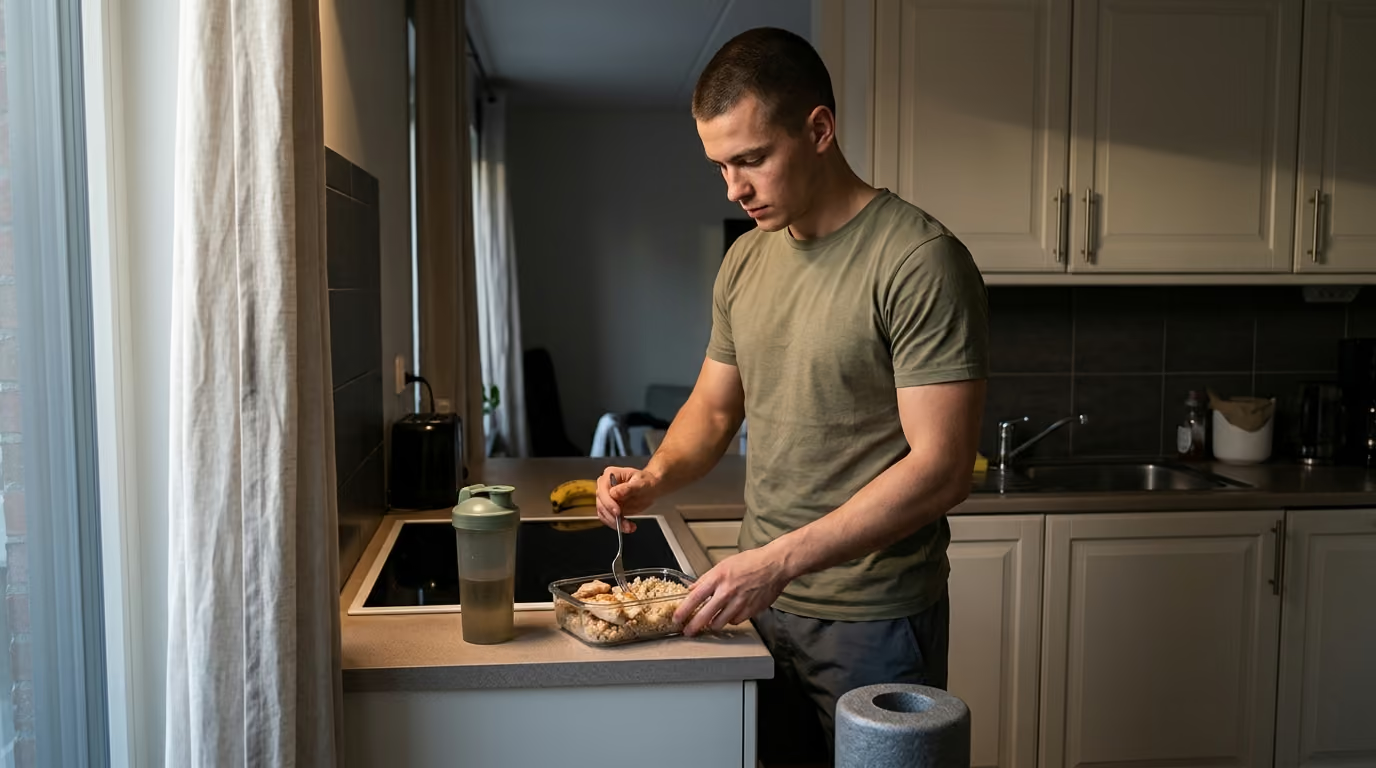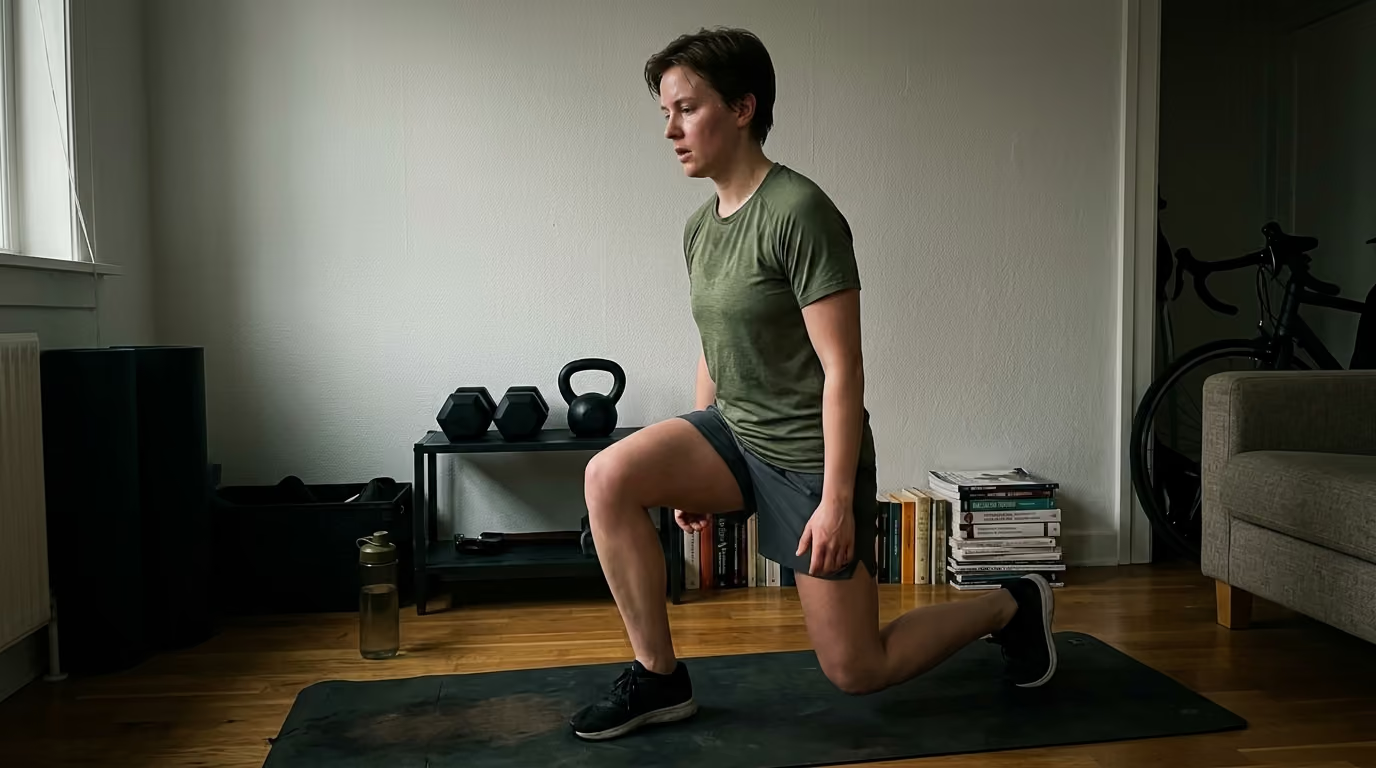

Struggling to hit your target weights despite intense training reveals a recovery deficit best fixed by optimizing sleep, fueling, and hydration.





You wake up to a buzzing alarm at 0530, feeling just as exhausted as when your head hit the pillow. Your joints feel stiff, your resting heart rate is elevated by five beats, and yesterday's heavy squats still ache in your legs. You wonder whether you need an expensive ice bath, a handful of unproven supplements, or simply another hour in bed.
Physical recovery is the biological process of converting training stress into positive adaptations, requiring a clear hierarchy of sleep, proper fueling, hydration, and workload management rather than expensive passive gadgets.
True recovery is not a single passive treatment or a collection of commercial products. It is the coordinated physiological restoration of the nervous system, muscular tissue, endocrine function, and mental energy. When your recovery matches your training load, your body adapts by increasing strength, building lean muscle mass, expanding aerobic capacity, and maintaining metabolic health. When recovery falls behind, performance drops, injury risk rises, and chronic fatigue accumulates.
To manage recovery effectively, you must understand how physical stress transforms into functional improvement. Exercise does not build fitness during the workout itself. The workout provides a controlled stressor that temporarily damages muscle fibers, depletes fuel stores, and strains the central nervous system. Recovery is the biological window where repair, replenishment, and structural remodeling occur.
The entire process operates as a six-part physiological cycle:
A common error in training management is confusing short-term performance readiness with long-term biological adaptation. Performance readiness refers to your physical capability to execute a task today. Adaptation refers to the durable structural changes created over months of consistent stimulus and recovery.
Some recovery modalities improve immediate readiness while blunting long-term adaptations. For instance, immersing your body in freezing water directly after heavy lifting reduces acute muscle soreness and helps you feel refreshed. However, that same cold exposure suppresses the inflammatory signaling pathways required for maximum muscle hypertrophy. A competitive athlete in a multi-day tournament may prioritize immediate readiness, whereas an individual training for size and strength must prioritize the cellular remodeling process.
You must also distinguish between recovery status and overall systemic health. An individual can display normal strength during a workout while accumulating significant sleep debt, elevated psychological strain, and hormonal disruptions. The International Olympic Committee consensus statements emphasize that training load must be evaluated alongside psychological stress, non-training life events, illness history, and nutritional status. No single variable reveals your complete physiological condition.
Not all recovery practices offer equal returns on your time and financial investment. Establishing a systematic recovery protocol requires categorizing methods by their scientific validity, cost, and practical impact.
Foundational practices form the non-negotiable base of human physiology. If your sleep is restricted or your caloric intake fails to cover your baseline metabolic demands, secondary interventions cannot compensate. You cannot out-supplement chronic sleep loss or poor training programming.
Contextual methods serve specific training phases, congested schedules, or environmental challenges. These tools provide measurable benefits when applied to the right problem, such as using structured carbohydrate refeeding between double-session training days.
Optional methods offer modest, mostly subjective benefits. Many of these tools alter your perception of soreness without accelerating structural tissue repair. They should only be considered once Tier 1 and Tier 2 fundamentals are consistently executed.
The sports science literature provides varying levels of certainty regarding recovery modalities. Separating proven interventions from preliminary findings prevents wasted effort and misallocated resources.
Extensive peer-reviewed research confirms several core principles of physical restoration:
Several popular interventions show promise in specific scenarios but lack universal application:
A critical review of the literature highlights several common practices that lack solid empirical backing:
Sleep is the primary physiological state for neurological recovery, tissue regeneration, and endocrine balancing. During deep slow-wave sleep, systemic blood pressure falls, parasympathetic activity dominates, and growth hormone secretion peaks. During rapid eye movement sleep, the brain processes motor learning, emotional stress, and cognitive inputs.
Understanding sleep requires defining clear operational terms:
General population guidelines recommend seven to nine hours of sleep per night for healthy adults. However, individuals subjected to heavy physical training, military operations, or significant psychological demands require expanded sleep opportunities. For active populations, aiming for eight to ten hours of total sleep opportunity accommodates the increased physiological strain of muscular and neural remodeling.
Research examining sleep extension demonstrates significant functional benefits. A seminal study on collegiate basketball players published in Sleep extended sleep opportunities to ten hours per night over several weeks. The athletes experienced a 9% increase in free-throw accuracy, a 9.2% improvement in three-point shooting, faster sprint times, and reductions in daytime fatigue.
Endurance research shows comparable outcomes. A study on endurance cyclists demonstrated that three consecutive nights of sleep extension improved sustained time-trial performance compared to habitual and restricted sleep conditions. The researchers noted that cumulative sleep volume directly altered perceived exertion, allowing athletes to sustain higher workloads at lower subjective ratings of strain.
Daytime naps represent an effective strategy for managing unavoidable sleep deficits. A systematic review published in the Journal of Sports Sciences found that naps lasting between 20 and 90 minutes meaningfully restored physical and cognitive capabilities following partial night sleep restriction. A 20- to 30-minute nap reduces daytime sleepiness without creating severe sleep inertia. A longer 60- to 90-minute nap allows completion of a full sleep cycle, aiding motor skill consolidation and physical restoration.
To maximize sleep efficiency, maintain a cool, pitch-dark, and quiet sleeping environment. Keep ambient room temperatures around 65 to 68 degrees Fahrenheit to facilitate the natural drop in core body temperature required for deep sleep initiation. Minimize exposure to high-intensity artificial light and stimulating work tasks in the final 60 minutes before bed.
If you want to learn more about sleep, stress and resilience, focus on structural habits rather than quick fixes.
While total sleep duration receives substantial attention, sleep regularity plays an equally critical role in physiological restoration. Sleep regularity refers to the day-to-day consistency of your bedtime and wake time. Maintaining stable sleep timing aligns your central circadian clock in the hypothalamus with peripheral cellular clocks found in skeletal muscle, liver, and cardiac tissue.
When your sleep schedule shifts erratically between weekdays and weekends, circadian misalignment occurs. This phenomenon disrupts the rhythmic secretion of cortisol, melatonin, and metabolic hormones. Even if you attain eight hours of total sleep after an erratic shift, the biological quality and stage distribution of that sleep are compromised.
A comprehensive 2025 review on athlete sleep regularity noted that inconsistent sleep timing correlates with elevated markers of psychological distress, impaired daytime alertness, and disrupted metabolic profiles. Although direct athletic performance trials focusing purely on regularity indexes are still emerging, stable sleep schedules consistently support superior mood regulation and cognitive performance.
Shift work, irregular duty rosters, and early morning physical training frequently challenge circadian stability. To protect your circadian rhythm:
Nutrition provides the chemical substrates required to rebuild damaged muscle tissue, restore depleted cellular energy stores, and support immune function. Without adequate macronutrient and micronutrient availability, the body cannot carry out structural adaptations.
Energy balance reflects the simple equation of total energy consumed versus total energy expended, resulting in body weight changes over time. Energy availability is a more precise physiological metric. It represents the dietary energy remaining for baseline physiological processes after subtracting the energy cost of exercise, scaled to fat-free mass.
When energy availability drops too low, either through excessive training volume, severe dietary restriction, or both, the body enters a protective survival state. It downregulates reproductive hormones, decreases bone turnover, suppresses thyroid output, and elevates chronic cortisol. In this state, muscle repair stalls and recovery capacity declines drastically.
Healthy physiological functioning requires maintaining adequate energy availability. For individuals seeking fat loss, caloric deficits should be structured conservatively to avoid crossing the threshold into low energy availability, which impairs training quality and compromises lean tissue retention.
Protein supplies the essential amino acids necessary for muscle protein synthesis and connective tissue repair. The International Society of Sports Nutrition position stand states that exercising individuals require an overall daily protein intake of 1.4 to 2.0 grams per kilogram of body weight per day to optimize exercise-induced adaptations.
Consuming your total daily protein across evenly spaced meals stimulates muscle protein synthesis more effectively than skewing intake toward a single large evening meal. Research indicates that individual meal doses containing 0.25 to 0.40 grams of protein per kilogram of body weight, or roughly 20 to 40 grams of high-quality protein containing sufficient leucine, maximize the anabolic response.
During structured calorie restriction for fat loss, daily protein requirements increase to protect lean muscle mass from catabolism. Research shows that lean, resistance-trained individuals in a caloric deficit benefit from protein intakes between 2.3 and 3.1 grams per kilogram of fat-free mass. This elevated intake preserves muscle tissue, supports satiety, and maintains performance while dieting.
For comprehensive information on physical preservation, review the available strength, fitness and body composition resources.
Carbohydrate requirements depend heavily on the volume, intensity, and frequency of your training sessions. Resistance training, high-intensity interval conditioning, and long-duration endurance work deplete intramuscular glycogen stores.
For high-volume endurance training or multiple daily training sessions, aggressive glycogen replenishment requires consuming roughly 1.2 grams of carbohydrate per kilogram of body weight per hour for the first four hours post-exercise. Alternatively, consuming 0.8 grams per kilogram of carbohydrate combined with 0.2 to 0.4 grams per kilogram of protein achieves similar rates of glycogen resynthesis while initiating muscular repair.
For individuals performing standard single-session resistance workouts four to five days per week, extreme carbohydrate loading protocols are unnecessary. Daily carbohydrate intake should simply be matched to total training volume, ranging from 3 to 5 grams per kilogram for moderate training days up to 6 to 10 grams per kilogram for heavy endurance blocks.
The traditional 30-minute post-workout anabolic window is far more flexible than once believed. The cellular signaling pathways for nutrient uptake and protein synthesis remain elevated for several hours following resistance exercise. Consuming a balanced meal rich in whole-food protein and digestible carbohydrates within one to two hours before or after training fully satisfies physiological requirements.
Explore further practical guides on recovery and physical restoration to optimize meal design.
Water balance directly impacts cardiovascular strain, thermoregulation, nutrient transport, and muscular power output. Losing as little as 2% of your baseline body mass through sweat during exercise increases heart rate, elevates core temperature, and raises perceived exertion.
Consensus guidelines from sports medicine and athletic training organizations recommend beginning every exercise bout in a well-hydrated state. You can verify baseline hydration status by observing morning urine color, aiming for a pale straw color, and ensuring body mass remains stable from day to day.
Fluid replacement strategies must account for individual sweat rates, environmental temperature, and humidity. While mild dehydration impairs performance, overhydrating presents severe medical risks. Drinking excessive amounts of plain water beyond sweat losses can dilute systemic sodium levels, leading to exercise-associated hyponatremia.
Guidelines explicitly advise that athletes should never drink enough fluid to gain weight during a training session. For prolonged training sessions lasting longer than 90 minutes or sessions conducted in high heat, fluids should be combined with sodium in concentrations of roughly 400 to 700 milligrams per liter to maintain plasma volume and stimulate fluid retention.
During the post-workout recovery period, aim to consume roughly 125% to 150% of the fluid volume lost during the session over several hours. Ingesting this fluid alongside electrolyte-containing meals ensures proper fluid retention and prevents rapid urinary excretion.
The human nervous system does not separate physical training strain from daily life stress. Occupational demands, relationship friction, financial strain, and sustained cognitive focus all recruit the sympathetic nervous system and the hypothalamic-pituitary-adrenal axis.
When life stress remains chronically elevated, systemic recovery capacity drops. Elevated baseline cortisol levels, prolonged sympathetic tone, and blunted parasympathetic reactivation impair tissue repair, disrupt sleep architecture, and increase soft-tissue injury risk.
A systematic review and meta-analysis published in Sports Medicine examined the impact of stress-regulation interventions across athletic populations. The researchers identified a moderate overall positive effect size of g = 0.52 for stress-reduction strategies on physical performance outcomes. Implementing structured psychological regulation techniques directly improves recovery status by lowering non-training strain.
Mental fatigue also alters exercise capacity. A systematic review on mental fatigue demonstrated that sustained, demanding cognitive tasks performed immediately prior to training significantly impair endurance performance and elevate ratings of perceived exertion. Interestingly, maximal isometric strength, power output, and short-duration anaerobic capacity remain largely unaffected by mental fatigue.
This distinction explains why a high-stress workday may leave your heavy single-repetition deadlifts intact while making a subsequent high-intensity conditioning session feel exceptionally grueling.
Practical strategies to manage cognitive and emotional load include:
Training adaptation requires progressive overload, but unmanaged spikes in workload exceed the body's physiological capacity to repair. Systemic monitoring ensures that fatigue remains within productive parameters.
Effective recovery management tracks both external and internal training parameters:
A practical, validated method for monitoring internal load is the Session Rating of Perceived Exertion method. The athlete rates the global difficulty of an entire workout on a scale of 1 to 10 roughly thirty minutes post-session, and this number is multiplied by the session duration in minutes.
Tracking cumulative weekly load units allows you to evaluate rate-of-load progression. Sharp increases in weekly training load exceeding normal progressive steps substantially raise the probability of non-functional overreaching or soft-tissue injury.
Athletic conditioning exists along a continuum of fatigue and adaptation:
The joint consensus statement from the European College of Sport Science and the American College of Sports Medicine emphasizes that no single biological marker diagnoses overtraining syndrome. Monitoring must combine multi-variable tracking, including performance data, subjective well-being, resting vitals, and psychological profiles.
A simple, effective monitoring system tracks daily recovery status to guide immediate training adjustments:
If you encounter persistent combinations of the following symptoms, seek professional medical evaluation rather than continuing to train through the deficit:
Check out our articles on military health for operational contexts on managing severe systemic fatigue.
Heat applications are frequently marketed as universal recovery solutions. However, the scientific literature clearly distinguishes between heat acclimation for environmental adaptation and passive heat for post-exercise recovery.
Heat acclimation involves repeated, controlled exercise bouts conducted in hot conditions. This protocol induces biological adaptations:
Systematic reviews demonstrate that structured heat acclimation protocols lasting 8 to 14 days produce robust, durable adaptations. Protocols shorter than seven days yield modest improvements, whereas protocols spanning roughly ten to fourteen days maximize thermal tolerance.
The International Olympic Committee recommends at least four heat-exposure sessions per week to induce thermal acclimation and a minimum of two weekly sessions to maintain those adaptations over time.
Using post-workout saunas or hot tubs as generic muscle recovery tools yields mixed and uncertain evidence. Systematic reviews examining post-exercise thermal exposure find low-certainty evidence for accelerated muscle repair or reductions in delayed-onset muscle soreness.
While chronic post-exercise sauna bathing can induce modest plasma volume expansion beneficial for endurance runners, it does not accelerate muscle protein synthesis or clear structural myofibrillar damage faster than standard passive rest. Thermal modalities should be used for psychological relaxation or environmental conditioning rather than relied upon as foundational recovery tools.
Cold-water immersion involves submerging the body in cold water, typically between 50 and 59 degrees Fahrenheit, for 10 to 15 minutes post-exercise. Cold immersion triggers peripheral vasoconstriction, blunts local inflammatory signaling, and decreases tissue temperature.
While cold immersion effectively reduces the perception of muscle soreness and lowers acute systemic inflammation, it carries a significant physiological trade-off for strength athletes.
A systematic review and meta-analysis published in the Journal of Strength and Conditioning Research demonstrated that regular cold-water immersion performed immediately after resistance training attenuates long-term gains in maximal strength, isometric force, and muscle endurance.
A 2024 meta-analysis confirmed that post-exercise cold immersion moderately blunts muscle hypertrophy. Mechanistically, cold exposure downregulates the anabolic signaling cascades, including the mammalian target of rapamycin pathway, and reduces ribosome biogenesis in recovering muscle fibers.
To deploy cold-water immersion intelligently, apply a clear decision rule:
For further reading on training adaptations, explore our collection of training and performance resources.
Applying recovery science requires adjusting protocols to the specific constraints of the individual.
A lifter trains four days per week, sleeps seven hours per night, and hits a prolonged plateau in strength and body composition.
Instead of adding volume or purchasing recovery gadgets, the first intervention is expanding nightly sleep opportunity by 45 to 90 minutes. Next, verify daily protein intake falls strictly between 1.6 and 2.0 grams per kilogram of body weight, distributed across four distinct meals. Finally, introduce a planned deload week every fifth or sixth week to dissipate accumulated systemic fatigue.
An individual dieting aggressively to reduce body fat experiences persistent joint aching, declining strength, and elevated irritability.
The intervention begins by reducing the caloric deficit to a moderate, sustainable range, preventing low energy availability. Elevate protein intake to between 2.3 and 3.1 grams per kilogram of fat-free mass to protect lean tissue. Reallocate the bulk of daily carbohydrates directly around the training window to sustain workout quality, and replace high-intensity conditioning with low-impact walking.
An endurance athlete preparing for a summer marathon struggles with elevated heart rates and early exhaustion during hot training sessions.
The primary strategy is a structured 10- to 14-day heat acclimation protocol, consisting of moderate-intensity runs performed in the heat to expand plasma volume. The athlete calculates their hourly sweat rate by tracking pre- and post-run body mass, developing an individualized fluid and electrolyte replacement plan that limits total fluid loss to under 2% of body mass.
A player must compete in three high-intensity matches over a four-day span, where immediate readiness matters far more than long-term muscle hypertrophy.
The priority shifts entirely to rapid glycogen resynthesis and systemic restoration. The athlete consumes 1.2 grams of carbohydrate per kilogram per hour immediately following each match, paired with sodium-rich fluids. Strategic 10-minute cold-water immersion sessions and scheduled 30-minute afternoon naps are utilized between matches to reduce subjective soreness and restore neuromuscular drive.
A professional managing high occupational stress finds that their normal conditioning workouts feel extraordinarily difficult, despite maintaining normal gym strength numbers.
Recognizing that mental fatigue disproportionately elevates perceived exertion during endurance tasks, the individual shifts high-demand conditioning sessions to lower-stress days, such as weekend mornings. They incorporate a five-minute diaphragmatic breathing sequence immediately after finishing work before entering the gym, resetting autonomic balance and lowering baseline sympathetic tone.
Explore additional strategies on healthy aging and longevity to maintain performance across decades.
To establish a highly effective, evidence-based recovery routine, focus on systematic execution:
Muscular and neurological recovery from a standard resistance training session generally takes between 48 and 72 hours for the specific muscle groups trained. Factors influencing this timeline include total training volume, proximity to muscular failure, the degree of eccentric muscle damage, nutritional energy availability, and sleep quality.
Mild to moderate muscle soreness does not require complete rest. You can perform light active recovery, such as walking, cycling, or mobility work, which increases local blood flow and reduces stiffness without inducing further structural damage. If soreness is severe or alters your normal joint mechanics, allow an extra day of rest or train an alternate muscle group.
Cold showers lower skin temperature and provide a psychological alertness boost, but they do not extract heat from deep muscle tissue as effectively as full-body immersion in cold water. Neither cold showers nor cold immersion should be used routinely post-workout if your primary goal is maximizing muscle size and strength.
Normal training fatigue resolves within a few days of lighter volume, adequate food, and restorative sleep. Overtraining syndrome is characterized by prolonged performance decrements lasting several weeks or months, accompanied by chronic mood changes, disrupted sleep patterns, elevated resting vitals, and frequent illness that does not resolve after a simple deload week.
The information provided in this guide is for educational and informational purposes only and does not constitute personalized medical advice. Training, nutritional, and recovery protocols should be tailored to individual health status, medical history, and physical capacity. Always consult with a qualified healthcare professional, sports medicine physician, or registered dietitian before making significant changes to your exercise programming, dietary intake, or health habits.
Follow BattleVet for practical guidance on military and veteran health, strength, recovery, testosterone, sleep and healthy aging. Stay connected for new articles, research backed insights and clear information to help you stay capable for the years ahead.


Build better habits around strength, recovery, sleep, hormones and healthy aging with practical guidance for active military personnel and veterans.
Explore BattleVet