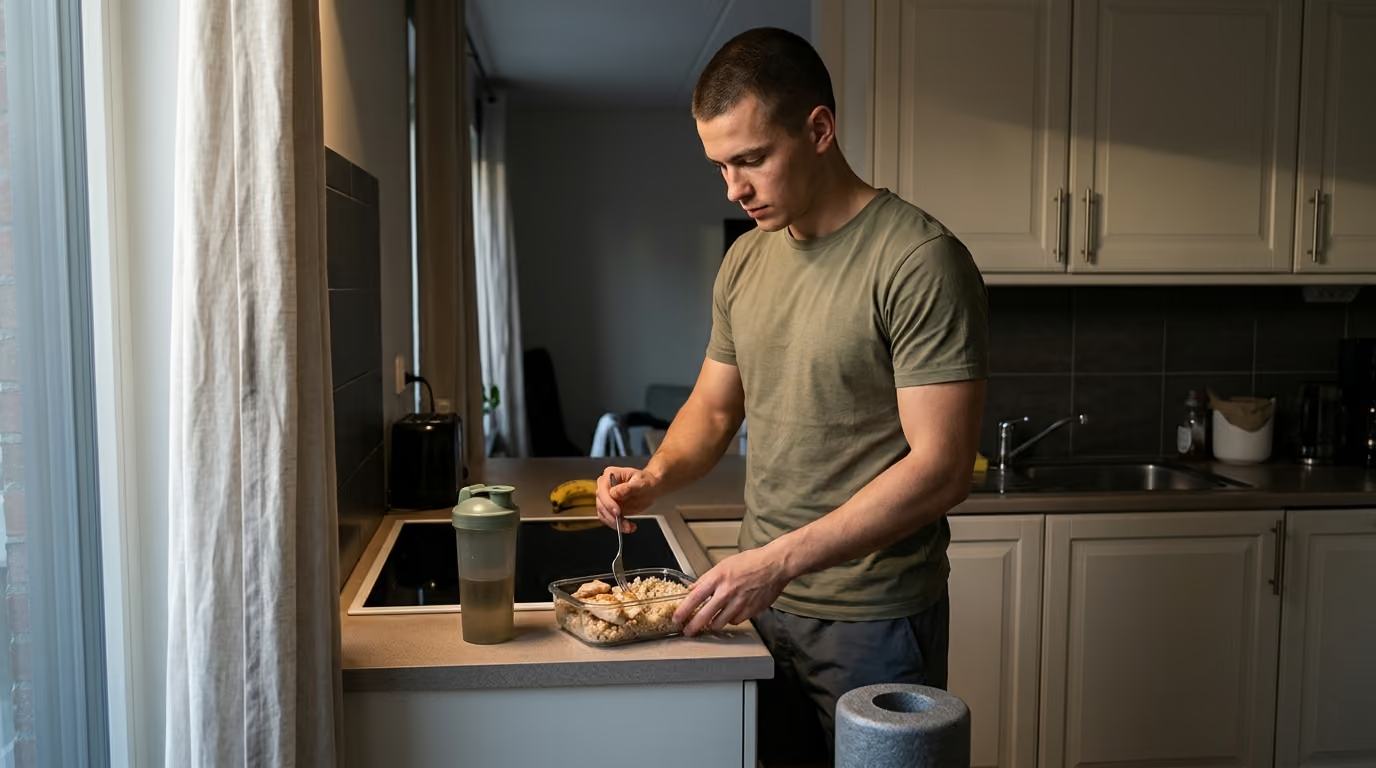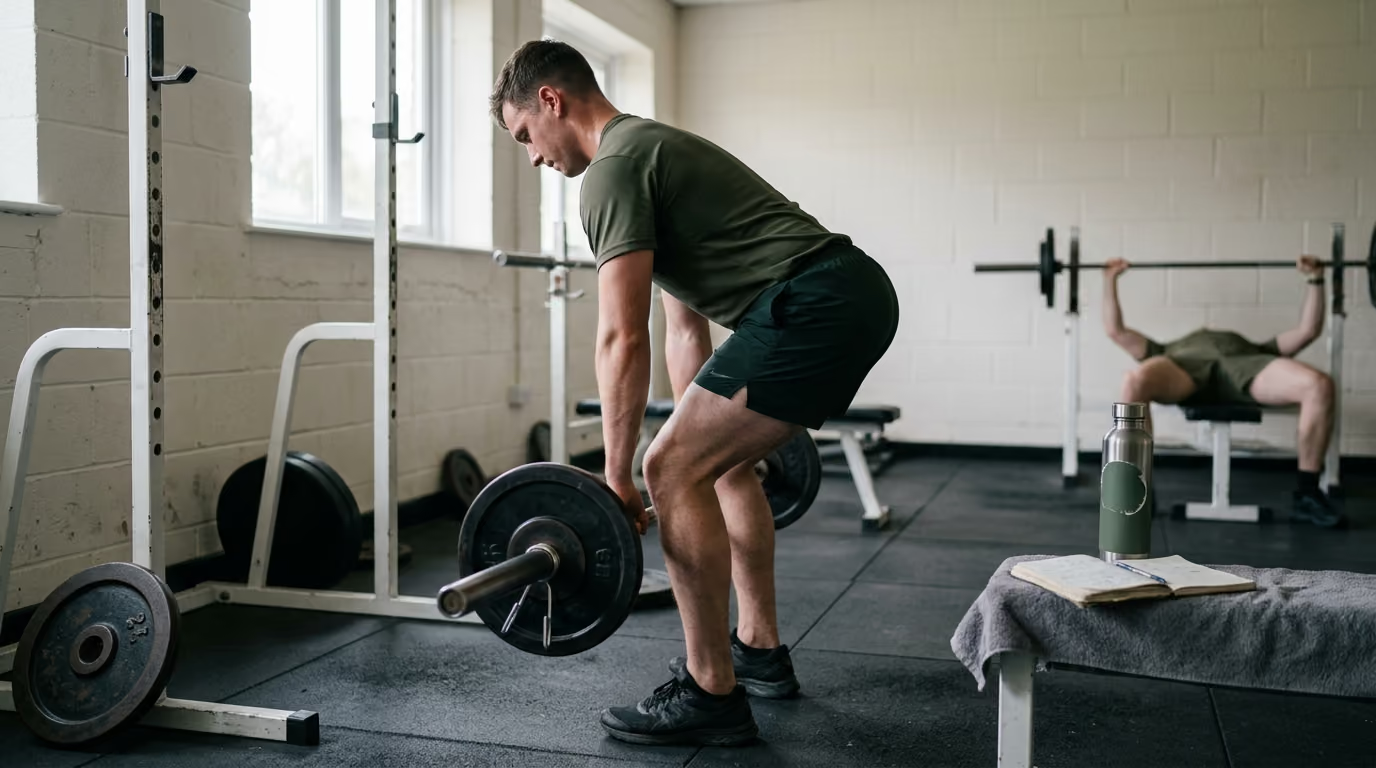

Military physical readiness demands both power and endurance, which tactical service members can achieve by systematically sequencing weekly hybrid training.





Conventional fitness culture often insists that you must choose between getting strong or building endurance. Strength coaches argue that distance running destroys lean muscle tissue and impairs maximal force output. Endurance specialists claim that heavy barbell training creates unnecessary body mass and slows down running times. For military personnel and veterans, this forced choice does not reflect operational reality. Military tasks require an individual to deadlift heavy loads, drag casualties, carry weighted rucksacks over distance, sprint between cover, and maintain energy under sustained fatigue.
You wake up at 0500 with tight hips and aching shoulders. Your sleep tracker shows five hours of broken rest, and your lower back feels stiff from yesterday's heavy trap-bar deadlifts. Today's schedule requires a four-mile unit formation run, followed by an afternoon equipment movement across uneven terrain. Successfully handling these competing demands requires a structured strategy rather than random effort.
Concurrent training allows service members to build high levels of maximal strength, explosive power, and aerobic capacity at the same time when training volume, exercise sequencing, and recovery are managed with precision.
Concurrent training is the deliberate integration of resistance training and endurance conditioning within the same overall program. Interference between strength and endurance adaptations is not an automatic outcome. Instead, interference is conditional. It occurs primarily when total weekly workload exceeds recovery capacity, when sessions are poorly sequenced, or when excessive endurance volume causes persistent muscle damage. By organizing training variables properly, service members can build a resilient body that meets every operational demand.
The interference effect describes the phenomenon where endurance training blunts improvements in muscular strength, power, and hypertrophy, or where heavy resistance exercise impairs aerobic development. Early exercise physiology research suggested that endurance training and strength training stimulated opposing cellular pathways. Endurance exercise activates signaling pathways related to mitochondrial growth, while heavy lifting stimulates protein synthesis and muscle growth.
Modern scientific research paints a much more nuanced picture. Recent meta-analytic reviews demonstrate that concurrent training produces substantial increases in both muscle size and dynamic strength. While strength-only training may show slightly higher average force gains than concurrent training in elite lifters, concurrent training reliably produces greater strength than endurance training alone. Furthermore, umbrella reviews confirm that concurrent training improves maximal oxygen uptake at rates comparable to endurance-only training.
The interference effect is conditional rather than absolute. Its severity depends on training status, total weekly volume, exercise modality, session sequencing, and nutritional status. A systematic review published in sports medicine literature revealed that concurrent training blunted lower-body strength adaptations in untrained males, but had minimal negative impact on females. In addition, reductions in aerobic capacity improvements were primarily observed in untrained individuals rather than trained athletes.
The primary driver of compromised performance in military environments is rarely the simple combination of lifting and running. Instead, it is unmanaged total stress. Service members often combine mandatory physical training, personal weightlifting, unit ruck marches, occupational field work, caloric deficits, and sleep loss. In that environment, chronic fatigue degrades neuromuscular performance. To build an effective concurrent program, you must view total stress as a finite budget that must be distributed across competing qualities. You can read more about balancing workloads in our training and performance resources.
A successful military program does not mirror a sport-specific bodybuilding routine or a marathon training schedule. It starts with the physical demands of military tasks and works backward to identify the required attributes. Operational demands require high force production, power, structural durability, and aerobic efficiency.
A complete military conditioning system must develop six physical qualities:
Maximal strength is the ability of the neuromuscular system to produce peak force against an external load. It provides the foundation for carrying heavy loads, lifting equipment, handling casualties, and protecting joints from impact injuries. Without adequate maximal strength, daily operational tasks require a higher percentage of your maximum capacity, which speeds up the onset of fatigue.
Power is the rate at which force is produced. It enables rapid acceleration, obstacle clearance, jumping, breaching, and reactive movement under load. Power work relies heavily on fast-twitch motor unit recruitment and central nervous system efficiency.
Muscular endurance is the ability of specific muscle groups to sustain repeated contractions or maintain isometric positions under fatigue. Tasks such as push-ups, sustained casualty drags, climbing, and loaded carries demand local muscular endurance across the shoulders, arms, trunk, and hips.
Aerobic capacity provides the foundation for work capacity, sustained movement over long distances, and rapid recovery between high-intensity efforts. Research demonstrates that aerobic fitness strongly correlates with performance across military load carriage tasks. A well-conditioned aerobic system allows service members to clear metabolic waste products quickly and maintain cognitive clarity under physical exertion.
Operational tasks rarely involve continuous, steady-state pacing. Instead, they require short bursts of high-intensity effort separated by brief rest periods. Repeated-sprint ability ensures that an individual can sprint between cover, lift heavy objects, and immediately sprint again without experiencing catastrophic fatigue.
Mobility is the ability to actively control joints through full ranges of motion under load. It prevents movement compensations during loaded carries, deep squats, and uneven terrain movement. Adequate mobility across the ankles, hips, thoracic spine, and shoulders reduces overuse injury risk.
The current United States Army Fitness Test reflects this multi-dimensional demand. Its five events include the three-repetition maximum trap-bar deadlift, the hand-release push-up, the sprint-drag-carry, the plank, and the two-mile run. This test requires high force production, upper-body endurance, explosive change of direction, trunk stability, and aerobic running stamina. Focusing exclusively on one physical quality leaves essential capabilities underdeveloped.
Organizing a concurrent training week requires deliberate stress distribution. Stacking hard lower-body strength sessions on top of high-volume running days leads to chronic joint irritation and degraded performance. The weekly layout should provide enough separation between demanding sessions to allow muscular and neural recovery.
This structure balances strength, speed, aerobic capacity, and operational durability. It provides adequate separation between lower-body lifting and high-impact running.
For personnel balancing heavy operational duties or mandatory morning unit training, a four-day model reduces total gym volume while preserving key strength and endurance markers.
When operational tempo is intense or time is limited, three sessions per week can maintain baseline strength and aerobic fitness.
Research shows that combining progressive resistance training with aerobic exercise at least three times per week produces large adaptations in tactical performance. When specific load carriage is included in the program, service members experience substantial gains in marching speed and load tolerance. To explore foundational fitness topics further, visit our strength, fitness and body composition resources.
When training schedules require combining strength and endurance work on the same day, session order dictates the primary adaptation. Performing high-intensity endurance training immediately before heavy lifting impairs force production and disrupts technical execution.
Systematic reviews on exercise sequencing confirm that performing resistance training before endurance exercise produces superior dynamic strength and hypertrophy compared to the reverse order. When dynamic lower-body strength is the primary objective, lift first while your nervous system is completely fresh.
If endurance performance is your primary objective during a specific training cycle, perform the running or rucking workout first. Alternatively, separate the two training bouts by several hours. Research on acute interference indicates that an interval of four to eight hours between sessions allows acute fatigue to dissipate, preserving performance in the second workout.
Follow these practical rules for workout sequencing:
Exercise selection in a military concurrent program should emphasize multi-joint movements that build multi-planar strength, trunk rigidity, and resilience under load. Isolation exercises have their place for joint health, but multi-joint compound patterns deliver the highest return on invested time.
The hip hinge builds the posterior chain, including the glutes, hamstrings, and erector spinae. A strong posterior chain is essential for lifting casualties, pulling heavy gear, and carrying rucksacks over distance.
Bilateral squats build absolute force, while unilateral lower-body movements build single-leg stability, correct side-to-side strength deficits, and match the mechanics of loaded walking and climbing.
Upper-body pushing exercises develop the chest, anterior shoulders, and triceps, supporting barrier climbing, load placement, and standard fitness test performance.
Upper-body pulling movements balance pressing volume, protect the rotator cuff, and support obstacle negotiation, rope climbing, and casualty dragging.
Loaded carries and sled drags are the bridge between traditional strength training and operational stamina. They train the body to transfer force through a rigid trunk while moving under load.
Cardiovascular exercise should incorporate diverse modalities to manage orthopedic stress while building distinct energetic systems.
Progressive overload is the gradual increase of stress placed on the body during training. In a concurrent training program, trying to progress weight, running volume, rucking distance, and interval intensity simultaneously leads to rapid burnout. Progress one major stress variable at a time while maintaining the others with submaximal baseline volumes.
Double progression is an effective method for exercises like push-ups, pull-ups, dips, and step-ups. Pick a repetition range, keep the load constant, and increase total repetitions across workouts until you hit the upper target. Once you hit the top of the range across all sets, increase the resistance and return to the lower end.
For example:
For core barbell lifts like the deadlift and squat, use heavy submaximal loads between 75 and 87 percent of your one-repetition maximum. Train within the 3 to 5 repetition range, resting 3 to 5 minutes between heavy sets. When you can comfortably exceed your repetition target by two repetitions on your final set while maintaining strict form, increase the training load by 2 to 5 percent for upper-body lifts and 5 to 10 percent for lower-body lifts.
Fixed percentage models do not account for operational fatigue, restricted sleep, or field training stress. Autoregulation allows you to adjust the day's training load based on actual physical readiness using Repetitions in Reserve (RIR). If a prescribed workout calls for 4 sets of 5 repetitions at 2 RIR, select a weight that allows you to complete 5 clean repetitions while feeling confident you could have performed 2 more repetitions before reaching failure. If poor sleep or accumulated fatigue reduces your force output, the absolute weight on the bar drops, protecting your nervous system from excessive fatigue.
Load carriage performance relies heavily on absolute maximal strength, body composition, and aerobic capacity. Research shows that specific, progressive rucking exercise yields substantial improvements in rucking speed and injury resistance.
To progress load carriage safely:
Military careers and veteran life bring specific physical challenges, including unpredictable deployment cycles, prior musculoskeletal injuries, chronic joint wear, and age-related hormonal shifts. A rigid training program will fail when exposed to these realities. Flexible nonlinear periodization allows service members and veterans to maintain high levels of performance by adapting workouts to changing environments.
During extended field operations or deployments with limited gym equipment, shift your training goal from maximal strength expansion to strength maintenance. You can preserve maximal strength for several weeks with low-volume, high-intensity training.
Focus on:
When you return from field exercises or arduous deployments, avoid the temptation to immediately jump into heavy maximal lifting. Spend two weeks rebuilding baseline tissue tolerance, joint range of motion, and aerobic capacity before loading the barbell aggressively. You can find more insights on maintaining long-term physical capacity on our healthy aging resources.
Veterans often manage accumulated orthopedic wear, including degenerative disc issues, patellar tendinopathy, shoulder impingement, and chronic ankle instability. An effective concurrent training program for veterans focuses on joint-friendly exercise variations that deliver the desired muscular and cardiovascular stimulus without exacerbating joint pain.
Useful training adjustments for veterans include:
Veterans who have been away from structured exercise should build their baseline with low-impact aerobic work and basic bodyweight resistance training before introducing high-velocity running or heavy loaded carries. Consistent, moderate physical activity supported by clear progression produces sustainable physical capability at any age.
Concurrent training places heavy demands on energy stores, joint structures, and the central nervous system. Without adequate recovery, training adaptations stall, and the risk of overuse injuries escalates. Monitoring simple daily readiness markers helps you make informed training adjustments before overtraining develops.
You do not need expensive clinical equipment to track your recovery. Simple daily markers provide reliable feedback regarding your systemic fatigue:
Use a straightforward traffic-light system to manage daily sessions:
Avoid these frequent mistakes when implementing a concurrent training program:
Treating every run as a timed race creates chronic sympathetic nervous system stress and elevates cortisol. Approximately 75 to 80 percent of your aerobic training volume should consist of easy, conversational Zone 2 work. Reserve high-intensity intervals and threshold runs for targeted, purposeful sessions.
Performing excessive isolation exercises, like multiple variations of bicep curls and leg extensions, produces substantial local muscle damage and soreness without building functional capability. Focus your energy on multi-joint compound patterns that directly improve operational performance.
Concurrent training requires substantial fuel. Restricting calories or severely limiting carbohydrates while running and lifting heavy compromises glycogen replenishment, raises injury risk, and accelerates muscle loss. Consume adequate dietary protein, approximately 0.7 to 1.0 grams per pound of bodyweight daily, and match your carbohydrate intake to your daily physical workload.
Constantly testing your one-repetition maximum deadlift or running an all-out two-mile time trial drains nervous system reserves without providing an optimal training stimulus. Use submaximal training loads to build capacity, and save true maximum-effort tests for planned quarterly or semi-annual evaluations.
The information provided in this guide is designed for educational and informational purposes only. It is not intended to serve as individual medical advice, physical therapy prescription, diagnosis, or personalized healthcare guidance. Before beginning any rigorous strength and conditioning program, especially when managing prior musculoskeletal injuries, chronic pain, or cardiovascular conditions, consult with a qualified healthcare professional or sports medicine specialist.
Yes. Research indicates that concurrent training can produce significant muscle hypertrophy comparable to strength-only training, provided that overall training volume, caloric intake, and protein consumption are sufficient. Interference effects on muscle growth occur primarily when endurance volume is excessively high or when recovery is compromised.
If you are training twice in a single day, an interval of 4 to 8 hours between sessions is ideal. This window allows acute metabolic and neuromuscular fatigue to subside. If you must train both within the same session, perform your strength work first when maximal force production is your priority.
Rucking builds specific load carriage capacity, posterior chain endurance, and aerobic stamina under weight, but it does not fully replace running. Running develops unique tendon elasticity, stride frequency, and high-velocity cardiovascular adaptations. A complete military conditioning program includes both progressive rucking and dedicated running.
Lifting 3 to 4 days per week is ideal for building maximal strength and power while leaving sufficient recovery capacity for 2 to 3 aerobic conditioning sessions. If time or operational demands are limited, a well-structured 2-day full-body strength program can maintain your strength baseline.
Consistent execution of structured strength and endurance training builds the physical foundation required for long-term operational performance and lifelong capability.
Follow BattleVet for practical guidance on military and veteran health, strength, recovery, testosterone, sleep and healthy aging. Stay connected for new articles, research backed insights and clear information to help you stay capable for the years ahead.


Build better habits around strength, recovery, sleep, hormones and healthy aging with practical guidance for active military personnel and veterans.
Explore BattleVet