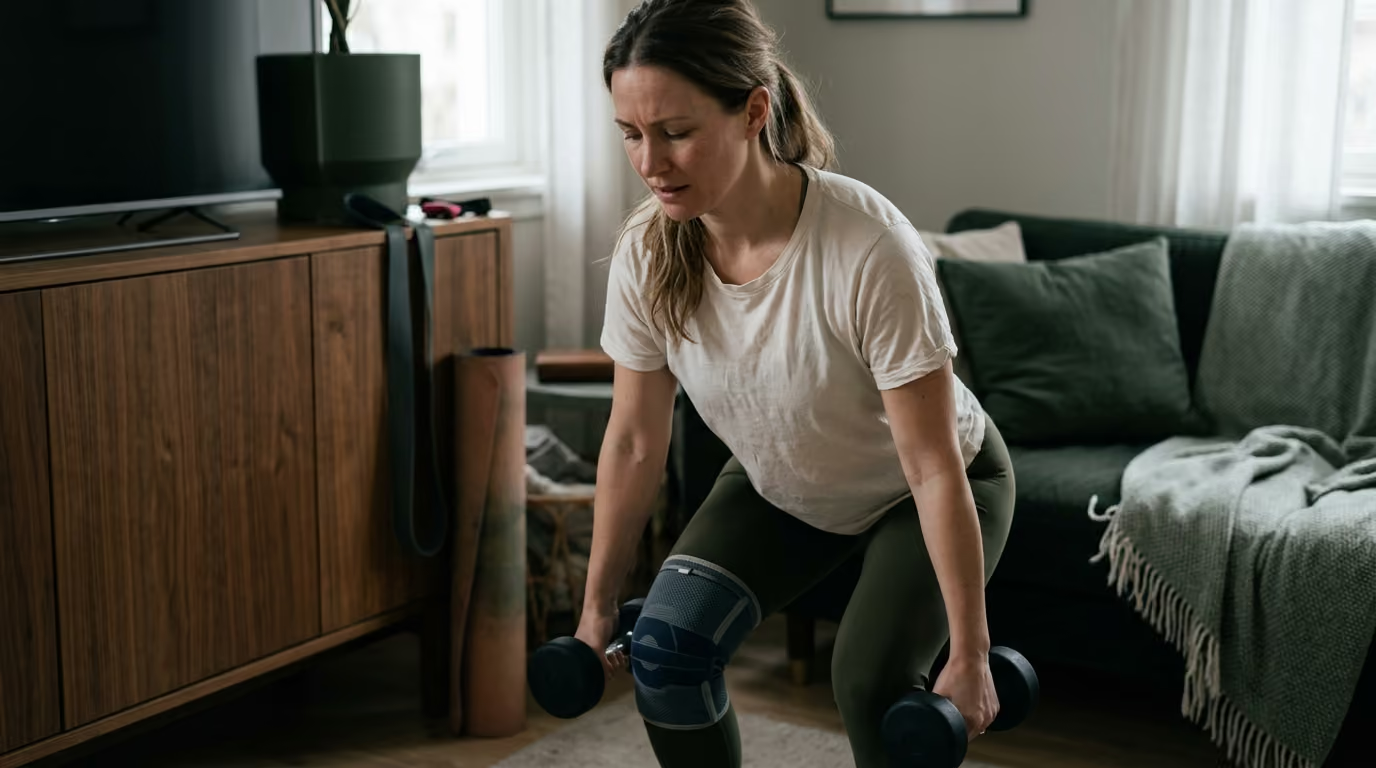
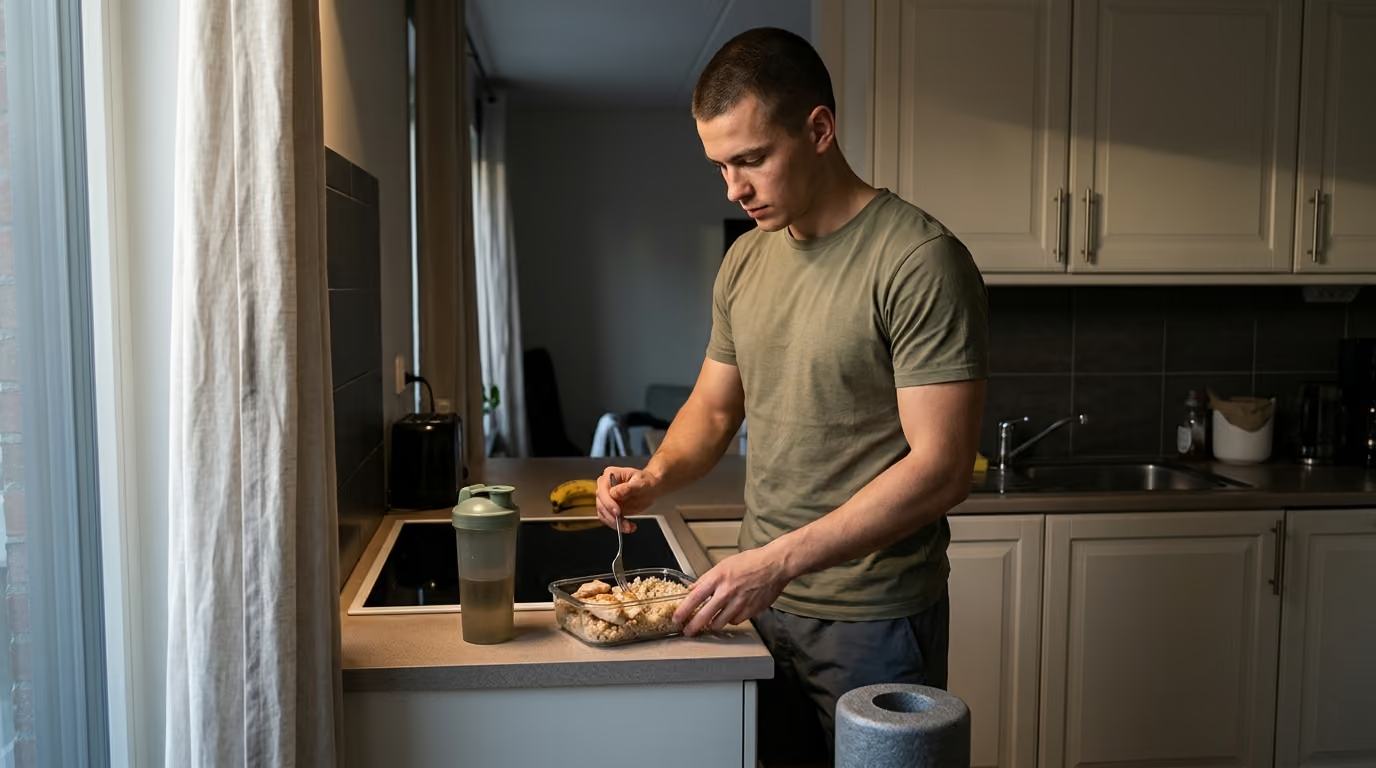
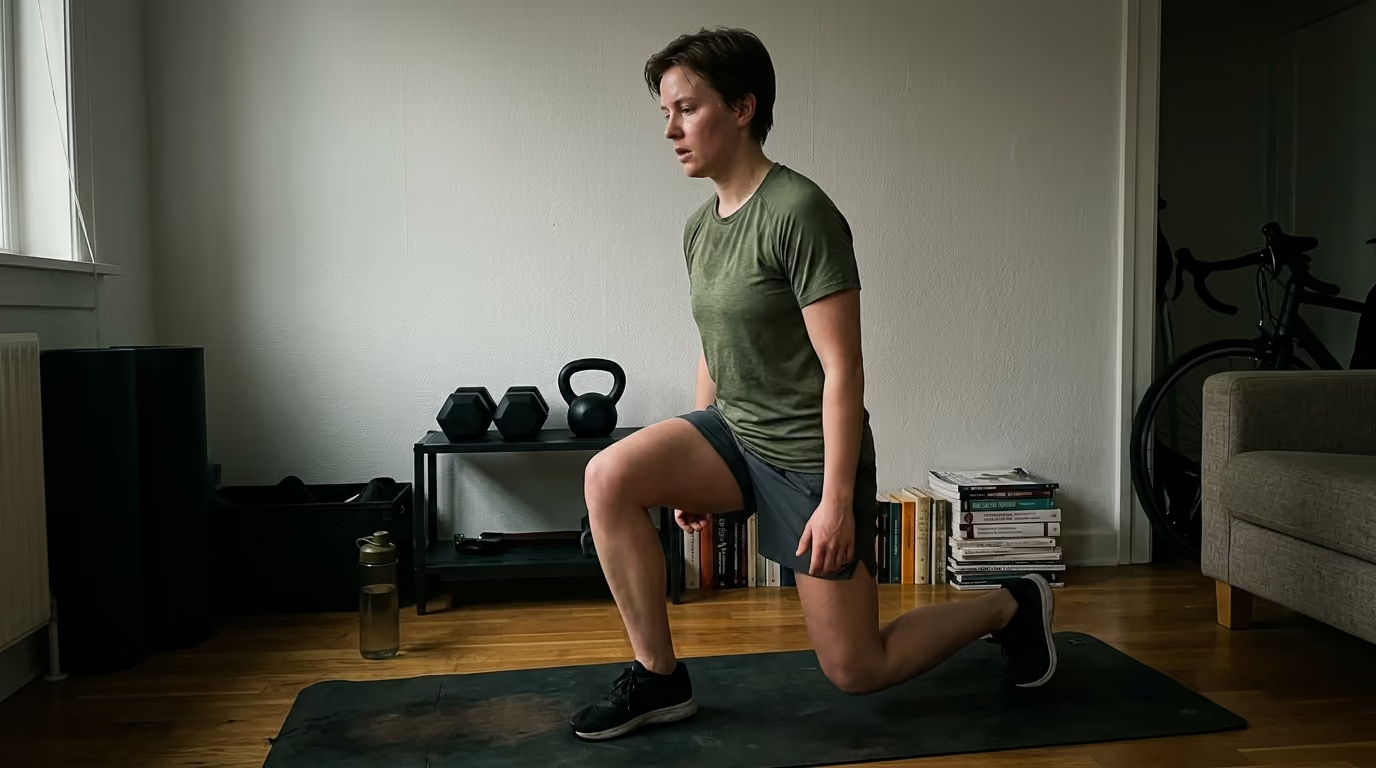
You wake up after a restless night with a familiar ache in your lower back and stiffness across your knees. Standing at the kitchen counter, you wonder whether lifting weights today will rebuild your joint tolerance or trigger a three-day setback. You want to stay strong and capable, but navigating persistent discomfort makes every gym session feel like a high-stakes guessing game.
Strength training with chronic pain is not a reckless risk or a test of willpower, nor is it a guaranteed quick cure for structural joint damage. It is a systematic process of finding a tolerable, repeatable dose of physical loading that gradually restores physical capacity, rebuilds movement confidence, and maintains long-term health. This comprehensive guide covers the science of symptom monitoring, movement modifications, graded progression frameworks, and practical strategies for training around previous injuries while working alongside your healthcare team.
A structured resistance program can safely improve functional capacity, muscle mass, and quality of life in individuals with persistent musculoskeletal symptoms, provided you manage training volume, monitor next-day recovery responses, and modify exercise selection rather than abandoning physical activity altogether.
According to data from the Centers for Disease Control and Prevention, 24.3 percent of adults in the United States reported chronic pain in 2023, while 8.5 percent experienced high-impact chronic pain that regularly interfered with daily work and life. Avoiding resistance exercise out of fear often leads to muscle loss, joint instability, reduced cardiovascular fitness, and heightened tissue sensitivity. By shifting your perspective from chasing complete pain elimination to systematically expanding physical capacity, you can safely train around old injuries, osteoarthritis, and chronic primary back pain.
What Is the Difference Between Persistent Pain and Acute Injury?
Understanding the distinction between an acute injury and persistent pain is the foundation of smart training. An acute injury involves recent tissue trauma, such as an ankle sprain, a torn muscle fiber, or a surgical incision. These events typically present with rapid swelling, visible bruising, structural instability, and sharp, well-defined pain that directly reflects tissue healing timelines.
Persistent or chronic pain is defined as discomfort that continues or recurs for three months or longer. It often persists well beyond normal biological healing windows. In these scenarios, pain does not function as an accurate structural damage meter. Instead, it acts like an oversensitive alarm system influenced by previous injuries, nervous system sensitivity, poor sleep quality, systemic inflammation, psychological stress, and movement apprehension.
To train safely, you must understand three critical variables:
- Irritability: This describes how easily your symptoms are triggered, how intense they become, and how long they take to return to baseline. A highly irritable joint flares up from minimal movement and stays aggravated for days, while a low-irritability condition requires heavier loading to provoke and calms down within minutes.
- Tissue Capacity: This represents the total amount of physical stress a muscle, tendon, joint, or nervous system can tolerate before becoming irritated. Capacity includes maximum force output, endurance, range of motion, coordination, and recovery speed.
- Total Training Load: Load is far more than the number on a weight plate. It encompasses sets, repetitions, tempo, movement velocity, range of motion, leverage, training frequency, weekly volume, and outside life stressors.
A previous injury does not mean a body part is permanently fragile. Research in sports medicine and physical therapy shows that tissues adapt to progressive loading when demands match current capacity. For instance, tendon rehabilitation research shows that controlled loading protocols allow people with chronic tendinopathy to continue training safely without worsening long-term tissue health. By viewing training through the lens of capacity rather than structural vulnerability, you can design workouts that challenge your muscles while respecting joint boundaries. Explore our strength, fitness and body composition resources for more principles on foundational conditioning.
What Does Clinical Research Say About Lifting Weights With Chronic Pain?
Major global medical institutions consistently recommend exercise and resistance training for managing persistent musculoskeletal conditions. The scientific consensus separates established benefits from experimental approaches, providing clear guardrails for physical preparation.
Established Scientific Evidence
World Health Organization guidelines strongly support structured exercise programs as a core non-surgical intervention for adults with chronic primary low-back pain. Resistance training improves muscular endurance, stabilizes trunk mechanics, and reduces functional disability. Multiple clinical guidelines for knee osteoarthritis, including recommendations from the American College of Rheumatology and the Osteoarthritis Research Society International, identify land-based resistance exercise and aerobic conditioning as essential first-line interventions.
A systematic review published in physical therapy literature examined resistance training for knee osteoarthritis across dozens of randomized controlled trials. More than 50 to 75 percent of the included studies demonstrated clinically meaningful improvements in pain relief, joint function, and lower-body strength compared to standard care. A 2024 meta-analysis confirmed that progressive resistance exercise consistently enhances physical capability and reduces discomfort in individuals with degenerative joint changes.
For tendon rehabilitation, peer-reviewed clinical trials show that loading protocols using symptom-monitored frameworks are superior to complete rest. Complete immobilization weakens tendon stiffness and decreases muscle cross-sectional area, making future re-injury more likely. The American College of Sports Medicine recommends resistance training targeting all major muscle groups at least two to three days per week for healthy adults, and this baseline applies to individuals with chronic pain when proper load modifications are introduced.
Early and Uncertain Research
While the benefits of general resistance training are well documented, certain debates remain unresolved:
- High-Velocity vs. Heavy Slow Resistance: A recent network meta-analysis of 46 clinical trials involving over 3,400 participants suggested that high-speed resistance training might yield distinct benefits for stiffness and functional scores in knee osteoarthritis. However, introducing rapid movement into an inflamed, highly irritable joint without adequate preparation carries flare-up risks.
- Loaded vs. Unloaded Movement for Back Pain: Systematic reviews comparing externally loaded resistance exercise against unloaded bodyweight movement or motor control drills for chronic low-back pain show comparable long-term benefits. External loading produces small additional pain reductions beyond seven weeks, but it is not universally superior for every individual.
- Imaging Correlation: Magnetic resonance imaging (MRI) and X-ray findings often correlate poorly with pain intensity. Many pain-free adults possess disc bulges, cartilage wear, or labral tears on scans. Using imaging reports as the sole blueprint for exercise selection is not supported by current medical literature.
Training with persistent pain works best when viewed as a tool to rebuild physical function, maintain independence, and support healthy metabolic health over decades. For additional perspectives on long-term joint health, consult our healthy aging articles.
How Do You Assess Your Baseline and Choose a Starting Dose?
Starting a strength routine with existing discomfort requires an honest, objective baseline assessment. Rather than testing a maximal lift, your objective is to establish an entry point that challenges your muscular system without producing an intolerable symptom spike.
Step 1: Medical Clearance and Screening
Before altering your routine, consult a qualified physician or physical therapist to screen for serious pathology. Do not begin self-directed progression if you experience red-flag symptoms:
- Sudden or progressive loss of muscle strength, such as foot drop or leg giving out.
- Numbness, tingling, or altered sensation in the groin or inner thighs.
- Bowel or bladder dysfunction.
- Marked, unexplained joint swelling, visible deformity, or joint locking.
- Pain resulting from a recent high-impact traumatic event.
- Systemic signs like unexpected weight loss, fever, or constant night pain unrelated to movement.
Step 2: Establish Your Training Objective
Clarify what you want to achieve with your program. If your priority is general joint resilience and cardiovascular health, a simple full-body routine performed twice per week with moderate loads is sufficient. If your objective is returning to heavy lifting or manual labor, you will need a systematic progression that increases external load and task-specific capacity over several months.
Step 3: Record Objective Baseline Metrics
Choose an initial exercise variation and track the following parameters:
- Exact exercise variation, grip, and stance.
- External resistance used.
- Completed sets and repetitions.
- Repetitions in reserve (RIR), estimating how many additional clean repetitions you could have performed.
- Movement tempo and active range of motion.
- Symptom ratings during the session, two hours later, and the next morning on a standard zero-to-ten scale.
Step 4: Pick a Conservative Entry Dose
Begin with an exercise regression that provides maximum stability and support. For example, use a goblet box squat rather than a heavy barbell back squat, or an incline dumbbell press instead of a flat barbell bench press. Perform one or two sets with four to five repetitions in reserve during week one. This gives your nervous system and joint tissues an opportunity to demonstrate their recovery tolerance before you increase volume.
To optimize physical readiness between training sessions, review our practical guidance in the recovery and sleep category.
How Can You Modify Exercises and Movement Patterns Around Joint Irritability?
When a particular exercise causes sharp or lingering joint discomfort, avoid abandoning the underlying movement pattern. Instead of dropping leg training because deep squats irritate your patellar tendon, modify variables to preserve the training stimulus while reducing joint stress.
Movement Pattern Regressions
Focus on the primary movement pattern rather than a specific barbell lift. Here is how you can regress common patterns when joint irritation occurs:
Knee-Dominant Movement
- Standard Exercise: Deep barbell back squat.
- Primary Issue: High patellofemoral compressive force at deep knee flexion angles.
- Regressions: Box squat to a comfortable depth, leg press with restricted travel, goblet squat with a vertical torso, or supported sit-to-stand.
Hip-Dominant Movement
- Standard Exercise: Conventional barbell deadlift from the floor.
- Primary Issue: High spinal shear and extreme lumbar flexion under heavy loading.
- Regressions: Romanian deadlift with dumbbells, elevated trap bar deadlift from blocks, kettlebell deadlift, or barbell hip thrust.
Horizontal Pressing
- Standard Exercise: Flat barbell bench press.
- Primary Issue: High anterior shoulder capsule strain and fixed wrist positioning.
- Regressions: Incline dumbbell press with a neutral grip, floor press to restrict shoulder extension, machine chest press, or elevated push-up.
Vertical Pressing
- Standard Exercise: Standing barbell overhead press.
- Primary Issue: Subacromial irritation or lumbar hyperextension during full overhead reach.
- Regressions: Half-kneeling landmine press, high-incline dumbbell press, or seated neutral-grip dumbbell press.
Horizontal Pulling
- Standard Exercise: Bent-over unsupported barbell row.
- Primary Issue: Excessive isometric lumbar fatigue combined with upper-body pulling stress.
- Regressions: Chest-supported dumbbell row, seated cable row with a neutral attachment, or single-arm supported dumbbell row.
Single-Leg Loading
- Standard Exercise: Walking lunges or unsupported split squats.
- Primary Issue: Instability causing knee valgus collapse or hip joint discomfort.
- Regressions: Supported split squat holding a power rack, low box step-up with handrail support, or static reverse lunge.
Modifying Range of Motion
Joint irritation frequently occurs only at end-range positions. For example, your hip may tolerate a 70-degree squat depth comfortably but flare up at 110 degrees. Restricting your active range of motion using boxes, floor stops, or safety pins allows you to train the target musculature effectively. As tissue tolerance and movement confidence improve over weeks, you can gradually increase depth by small increments.
Adjusting Tempo and Using Pauses
Fast, uncontrolled movement increases peak impact forces across joint surfaces. Slowing your eccentric tempo to three seconds and adding a one-second pause at the transition point eliminates momentum. This makes a lighter weight feel significantly heavier to the working muscles while reducing peak forces on passive joint structures.
Leveraging Isometric Holds
Isometric contractions involve generating muscular force without joint movement. When dynamic repetitions cause joint irritation, isometrics serve as a reliable bridge. Performing a 30-second Spanish squat hold, a wall sit, or an isometric split squat can build local muscular endurance and trigger a temporary analgesic response in irritated tendons.
Equipment Selection: Machines vs. Free Weights
Free weights are exceptional for developing dynamic balance and coordination, but they impose high stabilization demands. Resistance machines provide fixed movement paths, reducing the coordination burden on irritated joints. Cables and resistance bands offer smooth, continuous tension across the entire range of motion, eliminating sharp sticking points. Use whatever equipment allows you to train with minimal joint irritation and consistent technical execution.
What Is a Safe Way to Monitor Symptoms During and After Training?
Monitoring how your body responds to exercise requires a structured, objective tracking method. Sensation during a set tells only half the story. The total 24-hour response reveals whether a training dose was appropriate.
The Traffic-Light Monitoring Framework
Use this simple three-tier model to guide your daily training decisions:
Green Zone: Safe to Continue and Progress
- Discomfort during exercise is mild, staying at or below a 3 or 4 on a 10-point scale.
- Movement technique remains crisp, smooth, and symmetrical without compensatory limping.
- Sensation returns to baseline within one to two hours after your session.
- Morning stiffness the following day is minimal and matches your typical baseline.
- Action: Maintain your current training plan or apply a small, planned progression.
Yellow Zone: Modify and Monitor Closely
- Discomfort during training reaches a 5 or 6 on a 10-point scale.
- You alter your technique or posture slightly to avoid pain.
- Joint ache or muscular soreness lingers for several hours or into the evening.
- The following morning brings noticeable joint stiffness, mild swelling, or reduced mobility.
- Action: Do not advance load or volume. Adjust your next session by shortening the range of motion, reducing total sets, or substituting a less provocative variation.
Red Zone: Stop and Re-Evaluate
- Discomfort spikes to a sharp 7 out of 10 or higher.
- Sudden giving way, joint catching, or severe movement hesitation occurs.
- Pain remains elevated for more than 24 to 48 hours, disrupting normal walking and sleep.
- Marked joint effusion, warmth, or visible swelling develops the next day.
- New neurological symptoms appear, such as radiating numbness or progressive weakness.
- Action: Discontinue the irritating exercise immediately. Drop back to your previous stable baseline and seek guidance from a qualified healthcare clinician.
The 24-Hour Next-Morning Rule
In clinical sports physical therapy, particularly within patellar and Achilles tendinopathy rehabilitation, clinicians use the next-morning symptom check as the ultimate test of exercise tolerance. Tendons and articular cartilage often do not register severe pain during the workout itself. Instead, inflammatory mediators and fluid shifts accumulate overnight, resulting in heightened morning stiffness.
If your joints feel unusually stiff, hot, or painful the morning after training, your previous day's volume, intensity, or range of motion exceeded current capacity. If your morning state is unchanged from your standard baseline, your system handled the training stress effectively.
How Do Graded Exposure and Graded Exercise Help Rebuild Physical Capacity?
When dealing with chronic back pain or long-standing joint problems, the biggest barrier to progress is often fear of movement, known clinically as kinesiophobia. People learn to guard, brace, and avoid everyday actions like bending, twisting, or lifting. Graded exposure and graded exercise are clinical strategies designed to reverse this protective cycle.
Graded Exercise vs. Graded Exposure
- Graded Exercise: Focuses on establishing a submaximal physical quota, such as walking for ten minutes or performing three sets of eight repetitions, and progressing that quota steadily over time regardless of minor symptom fluctuations.
- Graded Exposure: Focuses specifically on movements or positions you fear or actively avoid, such as rounding your back to pick up an object. It breaks the feared movement into a progressive hierarchy, starting with low-threat versions and gradually advancing toward the full movement.
A randomized clinical trial evaluating physical therapy interventions for chronic low-back pain found that graded exercise and graded exposure produced equivalent improvements in pain intensity and functional disability. Both methods succeed because they desensitize an overprotective nervous system while building real tissue capacity.
Implementing a Double-Progression Framework
To avoid overloading healing tissues, use a conservative double-progression system:
- Select a moderate repetition range, such as 8 to 12 repetitions per set.
- Choose a starting weight that allows you to complete 8 repetitions with 3 to 4 repetitions in reserve.
- Keep the load identical across subsequent workouts while gradually adding repetitions until you can perform 12 clean, controlled repetitions across all planned sets.
- Once you hit the top of the repetition range without triggering a yellow or red symptom response, increase the resistance modestly by 2 to 5 percent.
- Return to 8 repetitions with the new load and repeat the progression cycle.
Quota-Based vs. Symptom-Contingent Training
Symptom-contingent training means stopping the moment you feel any discomfort. This approach often reinforces movement fear and leads to erratic training schedules. A hybrid quota approach is far more effective: set a conservative, predetermined volume that you know falls safely within your green zone, execute that work deliberately, and assess the 24-hour response before making changes.
For structured guidance on building strength safely across all phases of life, explore our training and performance articles.
How Should You Program for Common Issues Like Low Back Pain and Knee Osteoarthritis?
Practical programming requires translating broad rehabilitation concepts into concrete weekly routines. Below are five real-world case patterns illustrating how to structure training around specific physical limitations.
Case 1: Knee Osteoarthritis and Stair Discomfort
- Individual Profile: A 52-year-old former military member with chronic medial knee joint pain, morning joint stiffness, and difficulty climbing stairs.
- Primary Objective: Rebuild quadriceps strength, improve knee extensor capacity, and reduce daily stair discomfort.
- Initial Exercise Selection:
* Goblet Box Squat to parallel: 3 sets of 8 to 10 repetitions with a 2-second eccentric phase.
* Leg Press with neutral foot placement: 3 sets of 10 to 12 repetitions, avoiding deep knee flexion.
* Seated Calf Raise: 3 sets of 12 to 15 repetitions.
* Low-Impact Conditioning: 15 minutes of stationary cycling with moderate resistance.
- Progression Strategy: Gradually lower the box height by one inch every four weeks, provided next-morning joint swelling is absent.
Case 2: Chronic Lumbar Pain and Deadlift Avoidance
- Individual Profile: A 44-year-old with non-specific chronic low-back pain who stopped all hinging and lifting movements two years ago out of fear of disc damage.
- Primary Objective: Restore posterior chain capacity, develop lifting confidence, and support occupational lifting demands.
- Initial Exercise Selection:
* Elevated Trap Bar Deadlift from knee-height blocks: 3 sets of 6 to 8 repetitions leaving 4 RIR.
* Chest-Supported Dumbbell Row: 3 sets of 8 to 10 repetitions.
* Suitcase Carry with a moderate kettlebell: 3 sets of 20 meters per side.
* Bird-Dog isometric holds: 3 sets of 5 repetitions per side with 5-second pauses.
- Progression Strategy: Lower the trap bar elevation by two inches every three to four weeks while monitoring next-morning lumbar stiffness.
Case 3: Previous Shoulder Injury and Overhead Restrictions
- Individual Profile: A 38-year-old with a history of an acromioclavicular joint separation and rotator cuff tendinopathy who experiences sharp anterior shoulder pain during barbell pressing.
- Primary Objective: Maintain pressing strength and pectoral muscle mass without aggravating subacromial structures.
- Initial Exercise Selection:
* Half-Kneeling Landmine Press: 3 sets of 8 to 10 repetitions with a neutral grip.
* Neutral-Grip Dumbbell Flat Bench Press with elbows tucked at 45 degrees: 3 sets of 8 to 10 repetitions.
* Prone Face Pull with external rotation: 3 sets of 12 to 15 repetitions using a light resistance band.
* Chest-Supported Row: 3 sets of 10 to 12 repetitions.
- Progression Strategy: Gradually shift the angle of the landmine press toward higher vertical angles as shoulder tolerance develops.
Case 4: Chronic Patellar Tendinopathy
- Individual Profile: A 30-year-old recreational athlete with persistent anterior knee pain at the inferior patellar pole that worsens during jumping and deep squatting.
- Primary Objective: Increase tendon stiffness and quadriceps force production using progressive mechanical loading.
- Initial Exercise Selection:
* Isometric Spanish Squat Hold with a heavy loop band: 4 sets of 45-second holds at 60 degrees of knee flexion.
* Heavy Slow Resistance Leg Extension: 3 sets of 8 repetitions using a 3-second lifting and 3-second lowering tempo.
* Romanian Deadlift: 3 sets of 8 to 10 repetitions.
- Progression Strategy: Advance from isometric holds to heavy slow dynamic loading over six to eight weeks, using the 24-hour next-morning pain rule to verify tolerance.
Case 5: High-Impact Chronic Pain and Low Recovery Tolerance
- Individual Profile: A 58-year-old dealing with multi-joint chronic pain, poor sleep continuity, and significant daytime fatigue.
- Primary Objective: Rebuild foundational movement tolerance and muscular endurance without triggering systemic fatigue flares.
- Initial Exercise Selection:
* Supported Sit-to-Stand from a bench: 2 sets of 6 to 8 repetitions.
* Standing Incline Push-Up against a barbell in a power rack: 2 sets of 8 repetitions.
* Seated Cable Row: 2 sets of 8 to 10 repetitions.
* Standing Supported Farmer's March in place: 2 sets of 30 seconds.
- Progression Strategy: Keep total session volume very low, focusing on training frequency of three short 15-minute sessions per week before attempting to increase external loading.
To learn more about adapting physical routines for long-term health and capability, review our healthy aging and longevity resources.
What Common Mistakes Prolong Pain and Stall Training Progress?
Navigating resistance training with chronic pain requires avoiding several common traps that cause unnecessary flare-ups and frustration.
- Adopting a "No Pain, No Gain" Mentality: Pushing through sharp, escalating joint discomfort under heavy loads does not build mental toughness. It irritates sensitised tissues and reinforces neural pain signaling. Respect your body's early warning signals.
- Treating Pain as Direct Tissue Damage: Assuming that every sensation of stiffness or ache indicates that a joint is deteriorating leads to excessive avoidance, catastrophizing, and muscle loss. Recognize that an oversensitized nervous system can broadcast discomfort even when structural tissues are completely safe.
- Changing Too Many Variables at Once: If you simultaneously increase your squat weight, add two extra sets, deepen your range of motion, and switch from a box squat to a free squat, you cannot identify what triggered a subsequent flare-up. Adjust only one variable at a time.
- Ceasing All Movement During a Minor Flare-Up: Complete bed rest and immobilization cause rapid deconditioning and joint stiffness. When a flare-up occurs, drop your training intensity, perform gentle pain-free mobility work, and maintain your routine with low-impact walking.
- Relying Entirely on Passive Treatments: While massage, heat packs, and passive stretching can provide short-term symptom relief, they do not build muscular strength or increase tissue capacity. Active, progressive loading must remain the cornerstone of your long-term physical strategy.
- Fixating Exclusively on the Weight on the Bar: Long-term progress includes improved movement coordination, faster recovery times, increased daily walking tolerance, and greater confidence during everyday tasks. Track your total functional capacity, not just your barbell numbers.
Practical Steps to Build Your Chronic-Pain Strength Routine
To begin implementing these principles immediately, follow this straightforward action sequence:
- Schedule a Clinical Review: Meet with your physician or physical therapist to review your medical history, establish clear diagnostic boundaries, and rule out red-flag contraindications.
- Select Four Core Movement Patterns: Pick one knee-dominant exercise, one hip-dominant exercise, one upper-body press, and one upper-body pull that currently sit comfortably in your green zone.
- Establish a Moderate Starting Volume: Begin with two full-body workouts per week. Perform two working sets per exercise with three to four repetitions in reserve.
- Implement the 24-Hour Tracking Log: Record your discomfort ratings during the session, two hours post-workout, and the following morning.
- Apply Double Progression: When an exercise remains consistently in your green zone for two consecutive weeks, add one or two repetitions per set before increasing external resistance.
- Prioritize Recovery Foundations: Ensure you consume adequate dietary protein, maintain a consistent sleep schedule, and integrate daily low-impact walking to support systemic tissue repair.
For additional strategies on managing lifestyle factors that support long-term physical resilience, explore our sleep, stress and resilience resources.
Important Medical Disclaimer
This article is designed strictly for educational and informational purposes and does not constitute medical advice, diagnosis, physical therapy, or individualized treatment plans. Chronic pain, joint degeneration, and previous injuries are complex conditions that require professional clinical evaluation. Always consult a qualified physician, physical therapist, or orthopedic specialist before beginning, modifying, or progressing any exercise program, especially if you have a history of cardiovascular disease, musculoskeletal trauma, or neurological symptoms. If you have questions about our health and performance content, you can contact the BattleVet editorial team.
Frequently Asked Questions About Strength Training With Chronic Pain
Can lifting weights make joint osteoarthritis worse?
High-quality clinical guidelines show that progressive resistance training does not accelerate joint wear or worsen osteoarthritis when performed with appropriate loads. In fact, strengthening the muscles surrounding an arthritic joint helps absorb impact forces, improves synovial fluid circulation, and significantly enhances physical function and mobility.
How do I know if my pain is safe to train through or dangerous?
Discomfort that is mild, dull, stays below a 4 out of 10, and resolves within a few hours or by the following morning is generally a manageable response to training. If you experience sharp pain, joint catching, sudden instability, significant swelling, or radiating numbness, stop immediately and seek medical evaluation.
Should I wear supportive gear like knee sleeves, weightlifting belts, or wrist wraps?
Supportive gear can provide warmth, tactile feedback, and increased joint confidence during heavy compound movements. While equipment should not be used to mask severe pain or compensate for poor technique, neoprene sleeves and supportive wraps are practical tools that can make training more comfortable for sensitive joints.
How long does it take to see strength improvements when managing chronic pain?
Neuromuscular adaptations and improvements in movement confidence often appear within the first three to four weeks of consistent, symptom-monitored training. Measurable increases in muscle mass and connective tissue capacity typically develop over eight to twelve weeks of progressive, repeatable loading.
Sources
- Centers for Disease Control and Prevention: Chronic Pain and High-Impact Chronic Pain in U.S. Adults, 2023
- Centers for Disease Control and Prevention: Data Brief No. 518 PDF Report
- PubMed: Clinical Guidelines for Exercise in Knee Osteoarthritis
- PubMed Central: Non-Surgical Management of Chronic Low Back Pain Guidelines