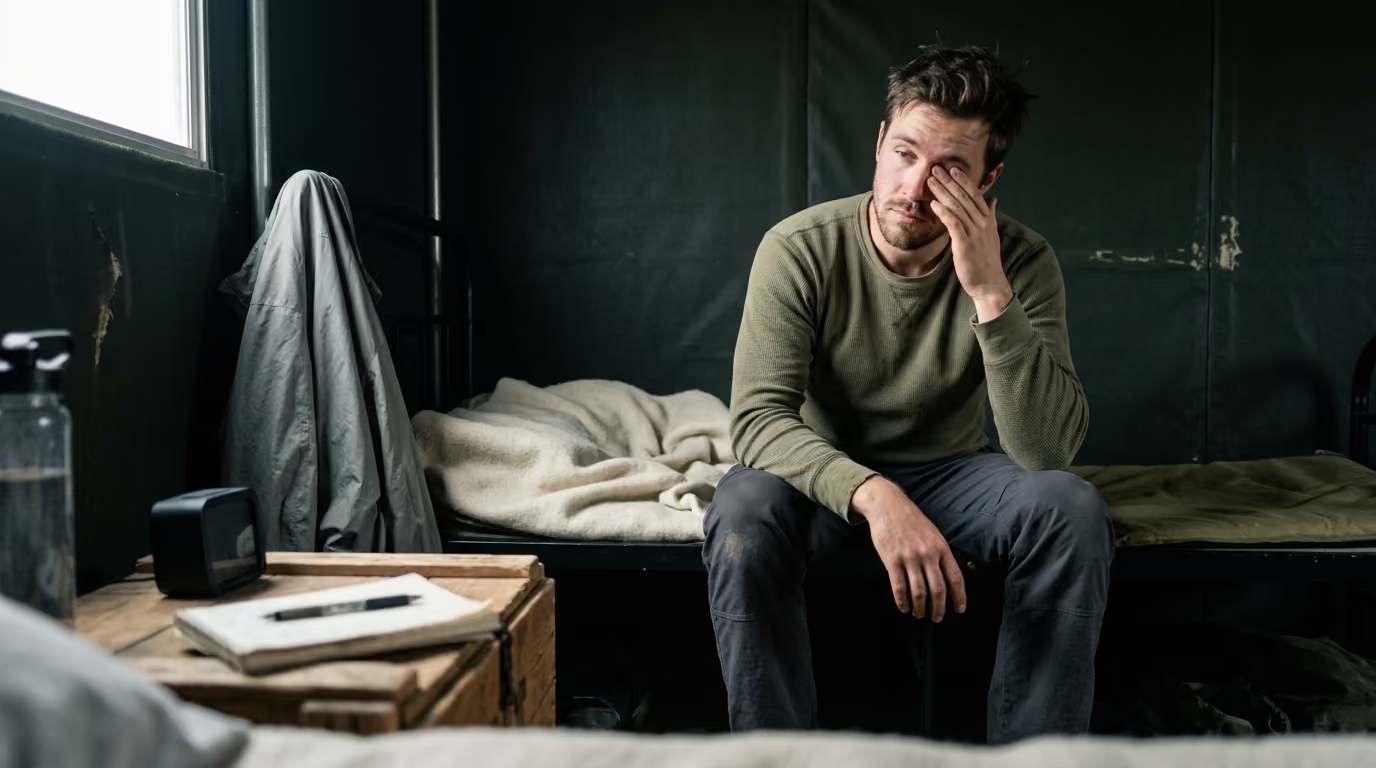

Rest in harsh field conditions is often treated as secondary, but managing biological sleep drivers and environmental disruptors is essential for performance.





If you are in immediate danger, call 911. For 24/7 support, call or text 988 and press 1 for the Veterans Crisis Line, or text 838255.
You set up your bivouac after fourteen hours on your feet, but the diesel generator fifty yards away hums with an erratic rattle. The ground under your mat stays damp, your base layer clings with dried sweat, and your watch alarm is already set for four hours from now. When you finally close your eyes, your mind runs through tomorrow's patrol route while every rustle outside keeps your pulse elevated. Getting restful sleep in difficult field conditions is one of the hardest operational problems you will face.
Operating in austere environments degrades your physical recovery and mental sharpness through fragmented rest, extreme temperatures, noise, and constant nervous system arousal.
Managing sleep under harsh conditions requires treating rest as an operational supply that must be forecasted, defended, and systematically maintained rather than left to chance. To survive and perform during field exercises, remote deployments, wilderness expeditions, or shift work, you must actively control environmental disruptors, schedule work-rest cycles around biological limits, and apply tactical recovery countermeasures.
Understanding how environmental stressors alter your biology is the first step toward building a reliable sleep routine in the field.
Sleep in austere environments rarely fails for a single reason. It breaks down because multiple biological and external forces collide. Understanding the mechanics of sleep debt, circadian rhythms, and physiological arousal gives you the framework needed to defend your recovery.
Sleep opportunity is the nominal block of time allocated for rest. Sleep obtained is the actual duration of physiological sleep achieved. In austere settings, these two numbers diverge quickly. A nominal eight-hour rest block is often reduced by gear maintenance, hygiene, security handovers, and sleep latency.
Military sleep research emphasizes that biological needs are satisfied only by actual sleep, not by simply lying down or resting off duty. When sleep obtained consistently falls below biological need, you accumulate sleep debt. According to the American Academy of Sleep Medicine and the Sleep Research Society, adults require at least seven hours of sleep per night on a regular basis to maintain optimal cognitive and physical health.
The following definitions establish the core parameters of sleep tracking:
Studies reviewed by the U.S. Army demonstrate that laboratory performance is not sustainably maintained with fewer than five hours of sleep per night. Furthermore, standard alertness countermeasures like caffeine lose their effectiveness after three consecutive days of sleeping under six hours.
Human sleep is regulated by two primary forces known as the two-process model. Process S represents homeostatic sleep pressure, which builds every hour you remain awake. Process C represents the circadian rhythm, an internal biological clock driven by the suprachiasmatic nucleus that regulates core temperature, alertness, and hormone secretion over a 24-hour cycle.
In field conditions, circadian misalignment occurs when duty schedules force you to sleep during biological daylight or work during the circadian nadir between 0200 and 0600. When sleep pressure is high but the circadian system is signaling wakefulness, sleep becomes shallow and easily broken. Correcting this requires deliberate manipulation of external timing cues like light, meal timing, and physical exertion.
Stress in austere conditions is both mental and physical. Threat, uncertainty, lack of privacy, and fear of missing an alert elevate the sympathetic nervous system. This state of hyperarousal elevates resting heart rate, increases muscle tension, and prevents the shift into parasympathetic recovery.
Field training research demonstrates that acute operational stress degrades attentional focus, while sleep loss reduces the brain's capacity to regulate emotional and stress responses. Stress damages sleep quality, and the resulting fatigue leaves you more vulnerable to operational stress. Breaking this loop requires establishing absolute psychological safety within your immediate shelter.
Severe operational environments disrupt normal endocrine production. Research on simulated military operations demonstrates significant alterations in circulating hormones during sustained sleep restriction. Testosterone levels drop significantly, while cortisol patterns lose their normal morning-to-night diurnal rhythm.
These hormonal shifts impair protein synthesis, slow tissue repair, and reduce immune defense. While you cannot run blood work in a temporary camp, understanding this physiological strain reinforces why you cannot ignore sleep during long exercises. For more background on endocrine regulation and recovery, review our educational articles on testosterone and hormone balance.
External conditions dictate how much of your allocated rest converts into actual restorative sleep. Controlling noise, light, temperature, air quality, and physical bedding forms the foundation of environmental sleep hygiene.
Field environments are rarely quiet. Common disruptions include running generators, idling vehicles, foot traffic, wind against tarps, and radio transmissions. Intermittent, unpredictable sounds are far more damaging than steady background hums because your brain treats unexpected noises as potential threats.
Medical field hygiene guidance indicates that frequent awakenings drastically reduce the restorative value of sleep. To minimize acoustic disruption, apply the following steps:
Thermal regulation is a primary driver of sleep architecture. To initiate sleep, your core body temperature must drop by approximately one to two degrees Fahrenheit. High ambient temperatures and elevated humidity prevent your body from shedding heat through sweating and peripheral vasodilation.
Cold environments create opposite challenges. If your sleep system lacks adequate thermal insulation, your body triggers shivering and peripheral vasoconstriction to protect vital organs. These physical responses prevent your brain from entering slow-wave and REM sleep stages.
The microclimate inside your shelter requires specific adjustments:
Light is the most powerful synchronizer of the human circadian system. Exposure to bright light, especially blue wavelengths from device screens, headlamps, and vehicle lights, suppresses the production of melatonin. This chemical suppression delays sleep onset and shifts your circadian phase later into the night.
In high-latitude operations during summer months, continuous daylight removes normal environmental evening cues. Conversely, winter deployments in polar regions remove morning light signals, making wakefulness sluggish and difficult. Use light-blocking eye masks in bright conditions, and deploy high-intensity white light strategically upon waking during polar darkness to anchor your circadian rhythm.
Enclosed field shelters often suffer from poor air quality. Burning heaters, diesel exhaust, dust, and exhaled carbon dioxide accumulate in unventilated spaces. Elevated carbon dioxide levels increase night awakenings, cause morning headaches, and degrade daytime cognitive performance.
Physical comfort directly affects sleep continuity. Hard ground increases pressure points on hips and shoulders, causing frequent position shifts throughout the night. Wet gear dramatically increases heat loss and causes skin maceration. Keeping sleeping gear dry and separated from working equipment is an absolute rule of field discipline.
Sleep deprivation does not degrade all mental tasks at the same rate. Understanding which human capabilities fail first allows leaders and individuals to manage risks during sustained field operations.
Research conducted by military institutions indicates that combat task effectiveness degrades by 15 to 25 percent for every hour of partial sleep deprivation accumulated per night. When sleep is restricted to four hours per night over several consecutive days, estimated operational effectiveness can plummet toward 15 percent of baseline capacity.
These performance drops manifest as slower reaction times, reduced target discrimination, inaccurate land navigation, and impaired risk assessment. Fine motor skills and working memory deteriorate early, making complex technical tasks prone to severe errors.
The brain manages stimulation differently depending on task structure. In military training studies, sleep-deprived individuals struggle significantly during monotonous, repetitive tasks that lack external feedback. These tasks include static guard duty, perimeter scanning, route monitoring, and extended night driving.
Conversely, individuals can often maintain performance during short, highly engaging, dynamic tasks with immediate feedback. Adrenaline and high situational stakes temporarily mask underlying exhaustion. This creates a dangerous false confidence: successfully executing a high-intensity drill does not mean you are safe to drive a vehicle or make critical planning decisions thirty minutes later.
Self-assessment of fatigue is notoriously unreliable in austere conditions. As sleep debt accumulates, your subjective perception of impairment levels off, while your objective performance continues to drop steadily. You feel like you are adapting, but your error rate continues to climb.
To evaluate actual field readiness, teams should track practical operational markers rather than asking individuals if they feel tired:
A common misconception among field personnel is that you can train yourself to require only four or five hours of sleep. Decades of physiological and operational research show that humans do not adapt to chronic sleep deprivation. While psychological tolerance to discomfort may increase, biological degradation remains constant.
Over time, chronic restriction causes sustained cardiovascular strain, weakened immune responses, and persistent lapses in attention. You do not adapt to less sleep; you simply adapt to operating with severe functional impairment.
Defending sleep in the field requires deliberate operational planning. Leaving rest to individual preference guarantees mission failure when conditions become demanding.
Systematic sleep management relies on a structured, five-layer approach designed to integrate biological recovery into routine operations:
Entering an austere environment with an existing sleep debt accelerates cognitive collapse. Data from the Centers for Disease Control and Prevention indicates that over one-third of adults operate with insufficient sleep in daily life. When these individuals enter the field, their operational capacity drops rapidly.
Sleep banking involves deliberately extending sleep to eight or nine hours per night for one to two weeks before a demanding operation. This practice creates a biological buffer. Research shows that individuals who bank sleep retain higher cognitive capacity, sustain attention longer, and recover faster when exposed to subsequent operational sleep restriction.
The primary sleep block must be treated with the same operational discipline as equipment maintenance or perimeter defense. An unbroken six-hour block provides vastly superior physiological recovery compared to three separate two-hour blocks totaling the same duration.
To protect the primary window:
When an extended operation concludes, recovery must be managed systematically. Personnel should not immediately transition into high-demand administrative or physical tasks.
Schedule a dedicated 24- to 48-hour recovery window that prioritizes consolidated nighttime sleep, nutritious meals, and rehydration. You can read more about balancing physical output with structured downtime in our guide to training and physical performance.
When mission parameters make a full seven-hour sleep window impossible, you must deploy active countermeasures to sustain operational effectiveness and safety.
Naps are a proven method for restoring alertness during sustained operations. Army health guidelines advise that when regular consolidated sleep is impossible, personnel should take short, frequent naps whenever opportunities arise.
Select the appropriate nap duration based on your operational window:
Caffeine is a central nervous system stimulant that works by blocking adenosine receptors in the brain. It temporarily prevents your brain from sensing accumulated sleep pressure, but it does not remove metabolic sleep debt.
To maximize the benefits of caffeine while avoiding negative side effects, follow these guidelines:
Your personal sleep kit should be packed and maintained with the same care as your primary operational gear. Small, lightweight tools can drastically improve sleep quality in hostile environments:
When standard quarters are unavailable, modify your improvised shelter to optimize sleep parameters:
Different field environments present unique physical challenges. Tailoring your sleep strategy to specific climates and operational formats is critical for long-term health and capability.
High heat and relative humidity tax your cardiovascular system and make sleep initiation exceptionally difficult. When the skin cannot evaporate sweat, your core body temperature stays elevated, keeping your heart rate high and sleep shallow.
Mitigation protocol:
Cold weather operations combine extreme physical energy expenditure with dangerous environmental conditions. Hypothermia and cold injuries occur rapidly when exhausted individuals fall asleep without proper thermal protection.
Mitigation protocol:
Rotating watch schedules break circadian rhythms and cause severe sleep fragmentation. Rapid changes between day and night shifts leave personnel in a permanent state of biological jet lag.
Mitigation protocol:
Rapid transit across multiple time zones disrupts the body's internal master clock, which takes approximately one day per time zone crossed to adjust naturally.
Mitigation protocol:
In disaster relief centers, shared operational tents, or temporary mass lodgings, interpersonal disruptions compound environmental noise and light issues.
Mitigation protocol:
Operational fatigue is expected in austere environments, but it can easily mask serious environmental illnesses, psychiatric crises, or physiological breakdowns. Leaders and team members must recognize when standard rest countermeasures are insufficient and medical evacuation or intervention is necessary.
Extreme heat and severe cold produce symptoms that mimic simple sleepiness. Treating heat stroke or severe hypothermia as mere tiredness can lead to permanent disability or death.
Watch for these clear clinical distinctions:
While environmental disruptions cause acute sleep loss, individuals may also suffer from underlying clinical conditions exacerbated by field stress. Obstructive sleep apnea, severe circadian rhythm disorders, and chronic insomnia degrade recovery even when adequate sleep opportunities are provided.
If a team member displays heavy gasping for breath during sleep, chronic loud snoring followed by sudden silences, or an inability to sleep despite extreme physical exhaustion and quiet conditions, they require formal medical evaluation upon return from the field. For comprehensive information on clinical health topics, check our veteran health and military medicine articles.
Sustained operational stress can push the nervous system into persistent fight-or-flight activation. In this state, an individual cannot down-regulate physiological arousal even in completely safe, dark, and quiet conditions.
Key psychiatric red flags include:
When personnel exhibit severe cognitive degradation, keeping them on safety-critical duties endangers the entire team. Establish clear, non-negotiable rules for removing exhausted individuals from hazardous tasks.
Remove individuals immediately from the following roles if they demonstrate microsleeps or severe fatigue:
For further reading on managing chronic physical strain, structural pain, and overall wellness during recovery periods, visit our library of articles on sleep and physical recovery.
This manual is intended exclusively for informational, educational, and operational planning purposes. It does not constitute formal medical advice, clinical diagnosis, or personalized healthcare treatment. Environmental stressors, sleep restriction, and thermal extremes place substantial demands on human physiology.
Always consult with a qualified healthcare professional, operational medical officer, or physician regarding individual health conditions, persistent sleep disorders, mental health challenges, or medications. Never disregard professional medical advice or delay seeking clinical care because of information contained in this field resource.
Recovering from several consecutive days of restricted sleep generally requires more than a single long night of rest. While one eight-to-ten-hour sleep episode significantly clears acute fatigue and brain fog, returning your endocrine balance, reaction times, and immune markers to their baseline levels often takes two to four nights of consistent, consolidated sleep.
Focus on establishing a regular sleep schedule, staying hydrated, eating balanced meals, and minimizing high-intensity stressors during the initial 48 hours of recovery.
Using sedating over-the-counter medications, such as diphenhydramine or other first-generation antihistamines, is generally not recommended during field operations. These drugs frequently cause prolonged morning grogginess, dry mouth, blurred vision, and altered core temperature regulation.
Crucially, they disrupt normal sleep architecture by suppressing deep slow-wave and REM stages, leaving you with lower-quality restorative sleep. In an operational setting where you might need to react instantly to an emergency, medication-induced grogginess presents a serious safety hazard.
High-altitude environments degrade sleep through hypoxia, the reduced availability of oxygen in the blood. Hypoxia triggers periodic breathing, also known as Cheyne-Stokes respiration, where your body alternates between rapid breathing and brief respiratory pauses during sleep. This pattern causes frequent micro-arousals that leave you feeling exhausted the next morning.
To improve sleep at high elevations, ascend gradually to allow for acclimatization, maintain high fluid intake, keep your upper body slightly elevated while sleeping, and avoid alcohol or sedating medications that depress respiratory function.
The most effective strategy is using fixed watch schedules with protected, unbroken sleep blocks of at least six to seven hours for off-duty personnel, rather than rotating shifts every few days. If short, rotating shifts are unavoidable, use a forward-rotating schedule where shift times move progressively later in the day rather than earlier.
Additionally, avoid scheduling solo watches longer than two to three hours during the circadian low between 0200 and 0600. Pair watchstanders during these hours to maintain safety and mutual accountability.
Use the following step-by-step checklist to organize your sleep plan and improve your recovery during field exercises, remote work, or backcountry travel:
Follow BattleVet for practical guidance on military and veteran health, strength, recovery, testosterone, sleep and healthy aging. Stay connected for new articles, research backed insights and clear information to help you stay capable for the years ahead.


Build better habits around strength, recovery, sleep, hormones and healthy aging with practical guidance for active military personnel and veterans.
Explore BattleVet