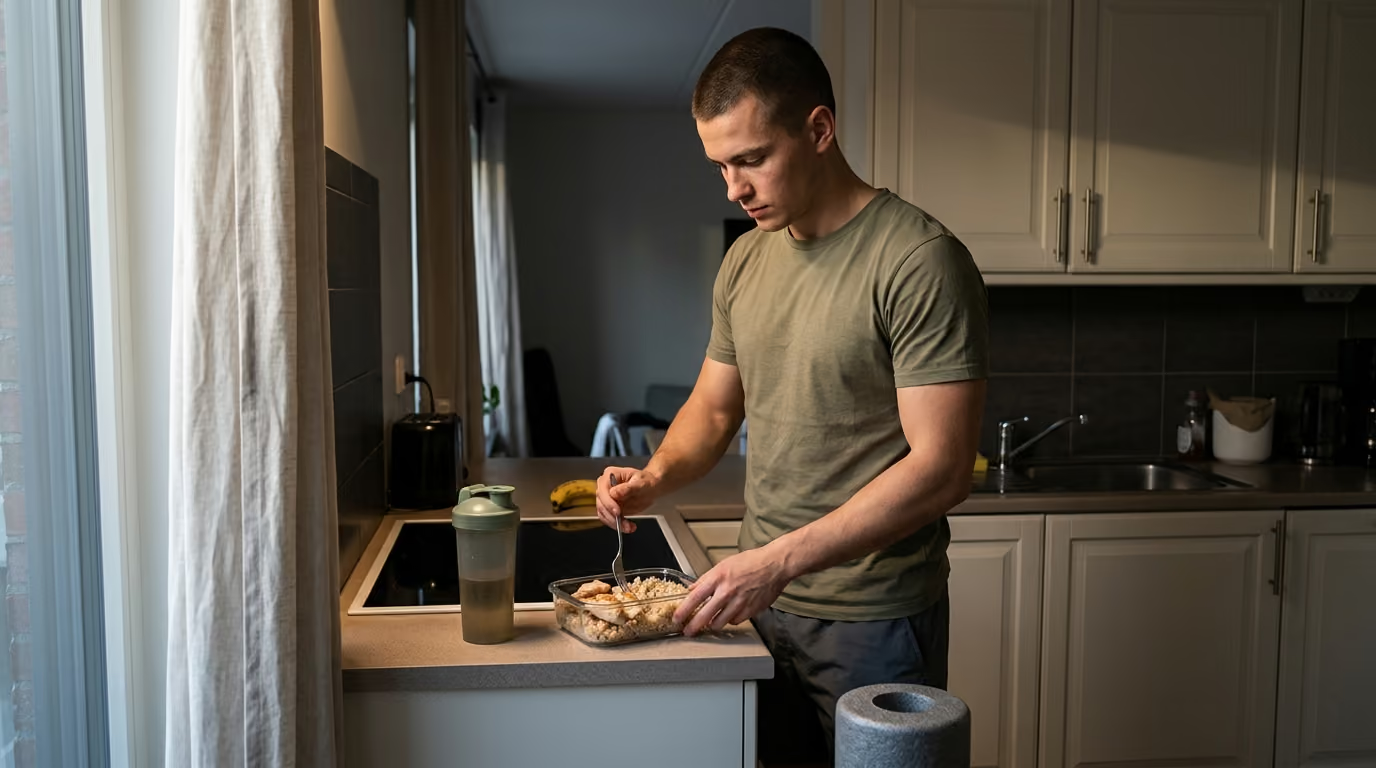

Long term physical capability relies on structured performance metrics and adaptable routines that protect your training consistency against everyday stress and fatigue.





You wake up before sunrise, write down a plan to get in shape, and head into another demanding week. By Thursday, poor sleep, long work hours, and sore joints turn your broad ambition into skipped workouts and frustration. You step on the bathroom scale, see no change, and wonder if your effort is delivering any return.
Goal setting fails when ambition lacks clear definitions, repeatable tests, and realistic guardrails for daily life.
To set physical goals that actually work, you must convert subjective words like lean, fit, strong, or tactical into measurable performance standards, body composition metrics, and daily process behaviors. An effective plan pairs a clear outcome with consistent tracking, adequate recovery, and specific rules for adjusting your training when life demands change.
Most training programs stall because they begin with descriptive labels rather than testable metrics. Words such as lean, athletic, fit, and strong describe feelings or broad visual concepts. They do not define an observable outcome, a testing standard, a timeline, or acceptable physical trade-offs.
When someone says they want to get fit, that statement does not reveal whether they need better cardiorespiratory endurance, higher maximum force production, improved joint mobility, or better work capacity. Fitness is a wide umbrella covering multiple physical qualities that require distinct training adaptations. Without separating these qualities, people often attempt to train for conflicting adaptations at the same time, leading to poor progress and chronic fatigue.
The term tactical suffers from a similar lack of precision. In occupational settings, capability requires a specific mix of absolute strength, relative strength, aerobic capacity, grip endurance, and load carriage. A generic gym circuit does not prepare an individual for the demands of carrying heavy equipment over uneven terrain. An effective goal defines the exact physical task, the environmental conditions, and the required recovery time.
Body composition goals face identical challenges when expressed vaguely. Wanting to look toned or get lean provides no actionable feedback during a training block. A measurable goal defines whether the target is a smaller waist circumference, a specific change in rolling body weight, or improved muscle mass. Clear metrics allow you to evaluate progress objectively rather than relying on emotional impressions in the mirror.
To build training targets that deliver results, you can explore our comprehensive collection of strength, fitness, and body composition resources designed for long-term health and capability.
A complete goal framework prevents the common mistake of tracking only an outcome. Relying solely on an end result leaves you with no guidance when daily stress, poor sleep, or minor injuries disrupt your schedule. A resilient training plan uses a five-layer system that organizes your intent into practical daily actions.
Your primary objective represents your dominant training focus for the next eight to sixteen weeks. Attempting to maximize absolute strength, run a personal best in a half marathon, and lose significant fat simultaneously creates competing physical demands. Choosing one primary objective does not mean ignoring other qualities, but it determines how you allocate your training energy and recovery capacity.
Common primary objectives include:
Outcome metrics define what success looks like at the end of a training block. These are the objective markers you measure to determine if your primary objective was achieved. Because outcome metrics can be influenced by daily stress, illness, and measurement noise, you should select one to three reliable markers rather than a dozen scattered numbers.
Examples of clear outcome metrics include:
Supporting performance metrics bridge the gap between long-term outcomes and daily training. They demonstrate whether your physical capacity is improving even when your main outcome metric moves slowly. These markers help verify that positive adaptations are occurring beneath the surface.
Useful supporting metrics include:
Process metrics track the daily and weekly behaviors within your direct control. While you cannot force your body to adapt at an arbitrary rate, you can control your execution of the plan. When training progress stalls, checking your process metrics reveals whether the issue is program design or inconsistent execution.
Key process metrics include:
Guardrails protect your long-term health and keep your training sustainable. They establish non-negotiable boundaries that prevent overreaching, injury, and burnout. If a training plan produces progress on paper but compromises your health, the plan is flawed.
Essential guardrails include:
Strength is not a single, universal quality. A person who can back squat twice their body weight might struggle with a high-repetition pull-up test, a prolonged farmer's walk, or an overhead press. To set effective strength goals, you must define the type of strength you need and establish strict testing standards.
Muscular strength manifests in several distinct ways depending on the load, speed, and duration of the effort:
A strength goal is meaningless without defined movement parameters. Changing your squat depth, foot placement, bar speed, or rest intervals alters the physiological demand of the test. When you retest your strength after weeks of training, you must know that your progress reflects true muscular adaptation rather than compromised technique.
Every strength target should define the exact exercise variation, the equipment used, the range of motion, and the tempo. For example, rather than writing a goal to bench press 100 kilograms, write a target to bench press 100 kilograms with the bar touching the chest, a one-second pause, feet flat on the floor, and a full lockout. This level of detail removes guesswork and ensures that every test evaluates genuine physical capability.
Developing muscular strength requires structured progressive overload and specific neurological adaptations. Research from the American College of Sports Medicine highlights that voluntary strength development is maximized when using heavier loads, full ranges of motion, multiple challenging sets, and consistent weekly frequency.
Key evidence-based principles for strength development include:
Understanding how to program these variables is essential for consistent progress. You can read more in our detailed guides on training and performance strategies to structure your weekly lifting splits.
Cardiovascular fitness supports every aspect of physical capability, from sustained physical work to rapid recovery between heavy lifting sets. Setting effective conditioning goals requires distinguishing between general health baselines, fitness development targets, and specific operational capability standards.
The World Health Organization outlines clear physical activity guidelines for general adult health. These recommendations include accumulating 150 to 300 minutes of moderate-intensity aerobic activity per week, or 75 to 150 minutes of vigorous-intensity aerobic work, or an equivalent combination. Adults should also perform muscle-strengthening activities involving all major muscle groups on two or more days each week.
These public health recommendations represent a baseline floor for cardiovascular and metabolic health. They reduce disease risk, improve baseline insulin sensitivity, and support mental well-being. However, meeting the minimum public health baseline does not automatically prepare you for demanding athletic events, mountain hiking, or occupational physical testing.
Performance goals require structured aerobic training that targets specific physiological adaptations. These adaptations include increasing stroke volume, expanding capillary density in working muscles, and improving mitochondrial efficiency. To build true operational fitness, your goals must move beyond simple movement minutes and focus on measurable work capacity.
Vague intentions to do more cardio often result in unstructured, medium-effort workouts that create fatigue without targeted adaptation. An effective aerobic goal uses a standardized test conducted under repeatable conditions.
Consider replacing broad cardio goals with specific benchmarks:
Standardizing your testing conditions is critical for accurate tracking. Weather, surface friction, sleep status, caffeine intake, and pacing strategy all impact endurance performance. Conduct baseline and follow-up tests under similar conditions to ensure you are measuring physical progress rather than external variables.
Physical capability often matters more than isolated gym numbers or body composition metrics. Capability represents your ability to complete physical tasks safely, repeatedly, and without excessive exhaustion.
Meaningful capability targets include:
When establishing an operational or capability target, build your training around the demands of the actual task. If your goal involves load carriage, your plan must include progressive marching and trunk stabilization work alongside traditional strength training.
Tracking body composition is where many dedicated individuals become discouraged. Daily fluctuations on a standard bathroom scale create confusion and can lead to unnecessary dietary changes. Understanding the mechanics of body composition measurement ensures your goals reflect meaningful tissue changes rather than normal biological noise.
A standard scale measures total body mass, which includes water, skeletal muscle, fat tissue, bone mineral content, glycogen stores, and digestive contents. A change on the scale tells you that your total mass shifted, but it cannot tell you which tissues changed.
Short-term scale spikes or drops are almost always caused by shifts in fluid balance and digestive volume:
To evaluate scale data accurately, weigh yourself under identical conditions each morning after waking and using the bathroom. Calculate a seven-day rolling average and compare weekly trends rather than reacting to daily numbers.
Many people set goals around achieving an exact body fat percentage. However, measuring body composition in living humans is an estimation rather than a direct physical count.
Dual-energy X-ray absorptiometry, commonly known as DXA, is widely used in research settings for estimating fat mass and fat-free mass. While highly informative, DXA machines require specialized facilities, trained technicians, and expose the user to low levels of radiation. Even DXA measurements have small margins of error based on hydration status and recent food intake.
Bioelectrical impedance analysis, or BIA, is common in commercial gym scales and handheld devices. BIA estimates body composition by passing a weak electrical current through body tissues and measuring impedance. Research shows that BIA frequently overestimates fat-free mass compared to DXA and has wide individual limits of agreement. Changes in skin temperature, hydration, recent exercise, and electrolyte balance can alter BIA readings significantly.
When tracking body composition, understand that consumer devices are useful for identifying multi-month trends when conditions are strictly standardized. They are not precise enough to justify sudden dietary changes based on a single reading. Combining rolling scale averages with standardized waist circumference measurements offers a practical, low-cost method for tracking central fat changes over time.
A common training objective is body recomposition, which involves reducing body fat while simultaneously building or maintaining skeletal muscle. During a successful recomposition phase, your total scale weight may remain flat while your physical measurements and performance improve.
Systematic reviews examining resistance training combined with moderate caloric restriction confirm that lifting weights preserves lean tissue and promotes greater fat loss compared to dietary restriction alone. In many cases, participants gained measurable muscle strength and lost abdominal fat while their overall body weight shifted only slightly.
If you rely solely on the bathroom scale during a recomposition phase, you might assume your program is failing. If your waist circumference is decreasing, your training loads are increasing, and your clothes fit better, your body composition is improving regardless of what the scale displays.
Physical training provides the stimulus for adaptation, but recovery dictates whether that adaptation actually takes place. Setting realistic performance and composition targets requires aligning your daily nutrition and sleep habits with the demands of your training program.
Adequate dietary protein is necessary for repairing muscle tissue, supporting immune function, and preserving lean mass during fat loss phases. Without sufficient amino acid availability, your body cannot recover efficiently from progressive resistance training.
The International Society of Sports Nutrition provides clear evidence-based guidelines for protein consumption in exercising populations:
These protein guidelines apply to healthy, active adults. Anyone managing underlying medical conditions, such as renal disease, should establish their dietary targets with a qualified medical professional.
Sleep is a critical biological requirement for tissue recovery, hormonal balance, cognitive function, and metabolic health. Treating sleep as an optional lifestyle choice undermines your training goals and increases injury risk.
The Centers for Disease Control and Prevention recommends that adults aged eighteen to sixty sleep at least seven hours per night on a regular basis. Chronic sleep restriction reduces insulin sensitivity, blunts muscle protein synthesis, elevates systemic inflammation, and impairs decision-making.
In our experience, people often blame their training program or supplements when their progress stalls, yet they consistently sleep fewer than six hours per night. Reviewing my blood work for the first time felt overwhelming when I noticed elevated stress markers and sluggish recovery. There was so much confusing information out there about testosterone and hormones, but optimizing foundational sleep habits made an immediate, measurable difference.
Prioritizing sleep hygiene ensures your body can adapt to the training stimulus. You can learn more about practical sleep strategies in our guides on recovery and sleep optimization to support your long-term health.
A static training plan rarely survives contact with real life. Work obligations, family demands, minor joint irritations, and travel will inevitably require adjustments. An effective goal architecture includes structured review cycles and explicit decision rules to guide your modifications.
To make smart adjustments, you must understand the difference between leading and lagging indicators in your training data.
Leading indicators measure your current actions and behaviors. They respond immediately and are within your direct control:
Lagging indicators represent the physiological adaptations that result from your behaviors. They change slowly over weeks and months:
When a lagging indicator is not moving, first evaluate your leading indicators. If your training adherence is below 80 percent, modifying the workout program will not fix the issue. The solution is simplifying your schedule to ensure consistent execution of the basics.
Decision rules remove emotional reactions from your training management. Instead of making drastic changes based on a frustrating week, use predetermined rules to guide your adjustments.
Use these practical decision rules when evaluating your progress:
Adjusting your plan based on structured feedback is a normal component of long-term physical development, not a sign of failure.
Translating these concepts into practical programs is easier when you see complete examples. Below are five structured goal blueprints designed for common training scenarios.
Developing long-term physical capability is central to our broader work on healthy aging and functional longevity, helping individuals maintain independence and strength across every decade of life.
Building a reliable goal-setting strategy requires separating settled exercise science from emerging trends and common training myths.
Extensive peer-reviewed research supports several foundational training principles:
Certain areas of fitness science involve nuanced findings and individual variability:
You can turn these principles into an actionable training plan by following five straightforward steps:
To manage your daily recovery alongside these steps, explore our resources on sleep, stress management, and resilience.
This guide provides educational information regarding physical training, goal setting, and body composition tracking. It is not a substitute for individualized medical evaluation, diagnosis, or treatment.
Before beginning a new high-intensity training program or making substantial changes to your diet, consult with a qualified healthcare professional. An individualized medical assessment is especially important if you have a history of cardiovascular disease, uncontrolled hypertension, metabolic disorders, chronic joint injuries, or if you are returning to exercise after an extended period of inactivity. Always listen to your body and seek professional medical guidance if you experience chest discomfort, severe dizziness, or sharp joint pain during physical activity.
Testing a true one-repetition maximum is physically demanding and unnecessary for most recreational and tactical lifters. Instead of testing maximal strength every few weeks, use submaximal performance markers to assess progress. Tracking a five-repetition maximum or monitoring bar speed and repetitions in reserve during normal training provides an accurate picture of strength development without accumulating excessive joint stress or fatigue. Save formal maximal testing for the end of a structured twelve to sixteen-week training cycle.
When you start a structured resistance training program, your muscle tissue stores additional glycogen and water to support recovery and repair. At the same time, challenging training stimulates muscular adaptation while moderate activity helps reduce fat tissue. This process of body recomposition can cause your total scale weight to remain stable or rise slightly even as your waist circumference decreases and your clothes fit better. Rely on rolling waist measurements and progress photos rather than single scale readings.
You can evaluate your training intensity by tracking repetitions in reserve, often abbreviated as RIR. An RIR of two means you ended the set when you could have completed exactly two more clean repetitions with good technique before failing. Research demonstrates that training with an RIR of one to three provides an effective stimulus for both strength and muscle growth while avoiding the excessive joint strain and prolonged recovery times associated with complete muscular failure.
Concurrent training for high-level endurance and maximal strength is possible, but it requires careful management of training volume and recovery. Because endurance running and heavy lifting place competing demands on your neuromuscular and energy systems, progress in both qualities will be slower than if you focused on one primary objective. To optimize concurrent training, separate hard running sessions and heavy leg workouts by at least twenty-four hours, consume adequate dietary carbohydrates and protein, and prioritize seven to eight hours of nightly sleep.
Return to this guide whenever you complete a twelve-week training block, experience a prolonged plateau in your physical progress, or need to transition from an athletic performance phase to a health maintenance routine. Reviewing your five-layer goal architecture ensures your training remains purposeful, measurable, and aligned with your long-term capability.
Building sustainable physical capability requires patience, objective measurement, and consistent execution over months and years.
Follow BattleVet for practical guidance on military and veteran health, strength, recovery, testosterone, sleep and healthy aging. Stay connected for new articles, research backed insights and clear information to help you stay capable for the years ahead.


Build better habits around strength, recovery, sleep, hormones and healthy aging with practical guidance for active military personnel and veterans.
Explore BattleVet