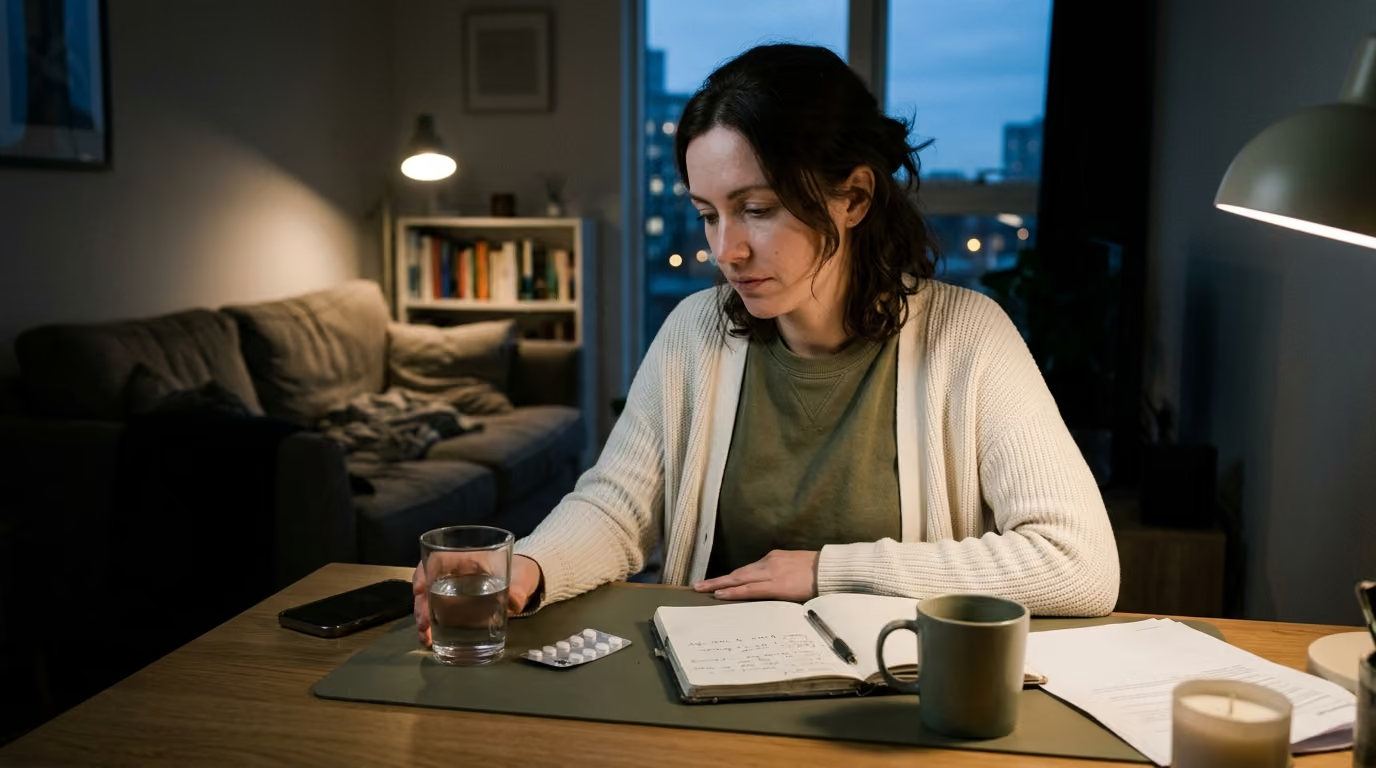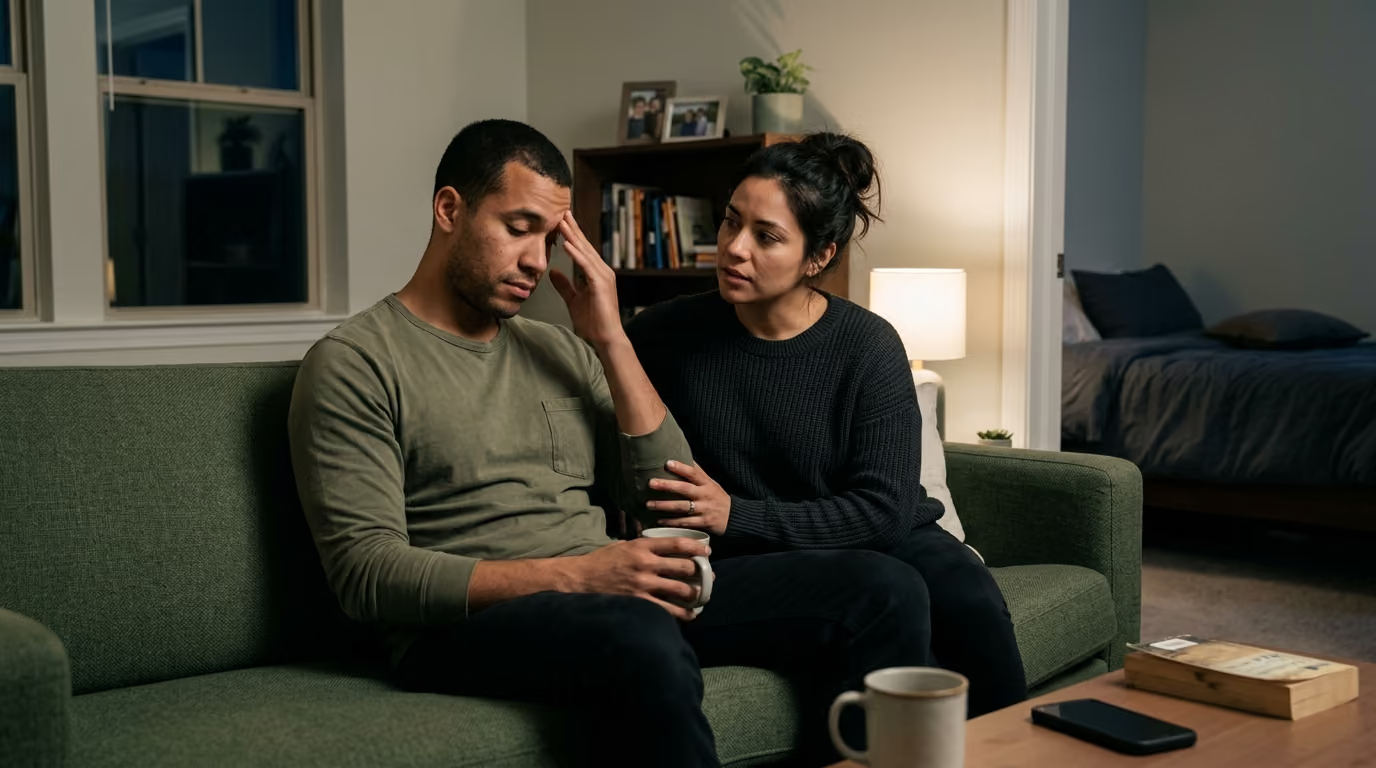

Restored intimacy and healthier family routines emerge when partners implement actionable frameworks to manage chronic arousal and sleep disruption together.





If you are in immediate danger, call 911. For 24/7 support, call or text 988 and press 1 for the Veterans Crisis Line, or text 838255.
The digital alarm reads 03:14, casting a faint blue glow across the bedroom ceiling. Your chest is tight, your ears strain against the silence of the house, and your partner has rolled to the far edge of the mattress to escape your restless shifting. In four hours, the kids need breakfast and the workday starts, but your nervous system is convinced that sleeping is dangerous.
Most people assume that relationship problems after military service are caused entirely by personality clashes, emotional distance, or communication breakdowns. In reality, relationship breakdown is often driven by a physiological capacity deficit caused by broken sleep and persistent stress.
When chronic sleep disruption and high stress deplete your neurological reserves, the brain loses its baseline ability to regulate emotion, tolerate frustration, and read social cues accurately. Restoring a healthy relationship requires treating sleep loss, nervous system arousal, and relationship dynamics as a single connected system rather than separate personal failures.
Post-service relationship strain is not proof of incompatibility or a ruined family. In modern military and veteran health research, clinicians view this through a capacity model. When service members return with disrupted circadian rhythms, post-traumatic stress symptoms, or chronic pain, their biological capacity for patience and empathy drops sharply. Relationship conflict then elevates cortisol and nighttime arousal, which further degrades sleep quality. Breaking this cycle requires objective clinical assessment, predictable household routines, clear communication rules, and a shared understanding of biological limits.
Sleep quality and relationship health do not exist in isolation. They operate in a continuous biological feedback loop where a change in one directly alters the other. Service-related stress, high-tempo deployments, and operational conditioning train the autonomic nervous system to stay alert. When you transition home, that same protective vigilance keeps your brain monitoring the environment all night.
This hyperarousal leads to fragmented sleep, frequent awakenings, or night terrors. When you wake up unrefreshed, your prefrontal cortex operates with reduced metabolic efficiency. The prefrontal cortex manages impulse control, emotional regulation, and cognitive flexibility. Without adequate sleep, minor household disagreements trigger the amygdala, making everyday conversations feel like threats.
Couples often fall into a predictable six-stage cycle that destabilizes the home:
Understanding this cycle prevents partners from viewing irritability as a lack of love. It helps both individuals see that an explosive reaction to dirty dishes or a missed schedule is often a physiological reaction driven by an exhausted brain. More detailed breakdowns on nervous system regulation can be found across our sleep, stress, and resilience resources.
It is essential to separate an explanation from an excuse. Sleep deprivation and post-traumatic stress explain why emotional regulation is difficult. They never justify intimidation, emotional abuse, property damage, or physical violence. Recognizing the biological mechanics of sleep loss is a tool for problem-solving, not a pass for destructive behavior.
Navigating the science behind sleep and stress requires separating established clinical facts from early, evolving research. Decades of peer-reviewed sleep research provide clear baselines for human performance and physiological health. Emerging psychiatric studies continue to uncover how specific trauma interventions alter nervous system recovery.
The American Academy of Sleep Medicine and the Sleep Research Society have established that adults require seven or more hours of sleep per night on a regular basis for optimal health. Consistently sleeping less than seven hours is clinically linked to increased risks of depression, impaired immune function, cardiovascular disease, and metabolic dysfunction. Data from the Centers for Disease Control and Prevention indicates that adults sleeping six hours or less are approximately 2.5 times more likely to report frequent mental distress compared to those getting adequate rest.
In veteran populations, sleep disturbance is exceptionally common. In nationally representative studies of U.S. veterans, poor sleep quality is reported by roughly 27.6% of all former service members. Among veterans who screen positive for probable post-traumatic stress disorder (PTSD), that number jumps to 84.2%. Research demonstrates that poor sleep quality directly mediates the link between PTSD symptoms and impaired physical functioning or reduced quality of life.
The clinical consensus is equally clear regarding treatment sequences. Cognitive Behavioral Therapy for Insomnia (CBT-I) is recognized by the Department of Veterans Affairs and Department of Defense as the first-line treatment for chronic insomnia, even when PTSD is present. Evidence confirms that treating sleep disorders directly yields significant improvements in daytime functioning rather than waiting for trauma symptoms to resolve on their own.
While the broader health impacts of sleep are well established, specific relational mechanics remain an active area of investigation. Preliminary experimental studies on couple dynamics show that sleep-deprived partners display higher cortisol spikes during conflict and lower positive affect before and after discussions. Shorter sleep duration has also been associated with higher systemic inflammatory markers, such as interleukin-6, following marital disagreements.
Recent military-specific studies reveal nuanced patterns. For instance, research examining military couples identified that self-reported hostility during conflict was associated with lower sleep efficiency, while relationship-enhancing interpretations were linked to higher percentages of deep Stage N3 sleep. Interestingly, hostility did not correlate across all sleep metrics, such as total sleep time or REM percentages, demonstrating that subjective relationship quality may influence specific sleep architecture in complex ways.
Emerging research also suggests that brief, couples-based cognitive behavioral interventions can simultaneously reduce PTSD severity and improve relationship satisfaction. While early results are promising, researchers continue to study how telehealth delivery, partner accommodation styles, and different trauma types alter long-term relational recovery.
When a service member lives in a state of high vigilance, intimacy and communication are often the first casualties. The brain treats intimacy as a vulnerable state that requires safety. If your nervous system registers your environment as unpredictable, dropping your guard to connect emotionally or physically feels unnatural.
Hyperarousal frequently manifests as the "night watch" pattern. You might find yourself checking door locks repeatedly, scanning windows, or needing to sleep facing the bedroom entryway. While these behaviors kept you secure during operational service, they introduce subtle friction into a shared bedroom. A partner may interpret your inability to relax as emotional detachment or a lack of trust.
Research on interpersonal conflict shows that sleep loss significantly reduces empathic accuracy. Empathic accuracy is the capacity to read a partner's facial expressions, tone of voice, and body language accurately. When you are sleep-deprived, neutral facial expressions are frequently misread as hostile, critical, or dismissive. A simple request, such as asking what time you will be home, can be perceived as an interrogation.
This misinterpretation leads to defensive communication. Instead of responding to the content of the conversation, both partners react to perceived threats. The conversation shifts from collaborative problem-solving to defensive posturing, resulting in emotional withdrawal or explosive arguments. Over time, physical touch and sexual intimacy decline because both partners feel unsafe or emotionally drained.
To understand these patterns in daily life, consider these common relationship friction points:
Addressing these issues requires recognizing that emotional withdrawal is rarely a lack of caring. It is a biological defense mechanism triggered when cognitive reserves are empty. Learning more about targeted recovery and sleep strategies can help couples identify practical ways to restore physical and emotional margin.
Discussions about military transition often focus entirely on the veteran. However, relationship health depends equally on the partner's wellbeing. Partners of veterans experiencing chronic sleep issues and stress frequently carry an enormous, invisible burden.
When a veteran struggles with sleep disruptions, nightmares, or daytime fatigue, the non-veteran partner often becomes the primary shock absorber for the household. They take on extra chores, manage the children quietly to avoid waking the veteran, handle family finances, and monitor the veteran's mood. Over months and years, this dynamic creates severe caregiver burnout, chronic sleep debt, and quiet resentment.
A major risk in these relationships is a process known as symptom accommodation. Accommodation happens when a partner reorganizes daily life to prevent the veteran from experiencing discomfort or distress. Examples of accommodation include:
While accommodation comes from a place of compassion and love, clinical studies show that daily accommodation of PTSD and stress symptoms harms both people. It reduces relationship satisfaction, lowers intimacy, and reinforces the veteran's isolation. By managing every external stressor, the partner inadvertently prevents the veteran from building tolerance and engaging in evidence-based recovery.
Healthy support looks very different from toxic accommodation. Healthy support involves partnering on recovery goals, maintaining personal boundaries, and encouraging professional treatment. It means agreeing on shared household responsibilities while allowing each person to experience the natural consequences of their choices. A partner must preserve their own physical health, social connections, and sleep routines rather than sacrificing them to manage another person's symptoms.
Children are acutely sensitive to the emotional climate of a home. When parents are chronically sleep-deprived and stressed, the structure of the household tends to oscillate between rigid control and exhausted disengagement. Both extremes create anxiety for developing children.
A returning parent often struggles with the chaotic nature of civilian home life. In military environments, communication is direct, hierarchies are clear, and instructions are followed immediately. At home, toddlers throw tantrums, teenagers test boundaries, and schedules shift unpredictably. A tired parent whose prefrontal cortex is depleted may view normal childhood behavior as defiance, leading to harsh reactions followed by deep guilt.
Clinical trials on family reintegration, such as the Strong Families program, demonstrate that structured parenting support significantly reduces parental stress and improves parental reflective capacity. Reflective capacity is the ability to pause, recognize what a child is feeling, and respond thoughtfully rather than reacting out of frustration.
Building a stable parenting environment after service requires practical, repeatable routines:
Repairing with children teaches them that adults make mistakes and take responsibility. It removes the burden of guilt from the child and preserves emotional safety within the home. For more perspectives on family adaptation and transition challenges, browse our articles on veteran life and reintegration.
Improving relationship stability does not require endless emotional debates. It requires practical, low-friction operating systems that minimize misunderstandings when energy is low. Couples can implement concrete protocols to protect both their sleep and their communication.
Never initiate a high-stakes conversation when one or both partners are operating on empty reserves. Before discussing finances, relationship goals, parenting issues, or scheduling conflicts, perform a quick capacity check.
Ask four objective questions:
If capacity is insufficient, declare a pause using an explicit formula: "I want to give this issue my full attention, but I do not have the mental bandwidth to discuss it constructively right now. Let us talk tomorrow at 10:00 AM after breakfast." This preserves connection without abandoning the issue.
Establish a ten-minute planning meeting every afternoon or early evening. Running this check-in well before bedtime prevents late-night disputes and reduces mental load before sleep.
Cover these specific operational points:
Create a firm boundary between daytime problem-solving and nighttime recovery. The human nervous system requires a gradual reduction in stimulation to initiate restorative sleep stages.
Adopt these practical agreements:
Lifestyle adjustments and communication frameworks provide the foundation for recovery. However, persistent sleep disruption and severe stress often require specialized clinical interventions. Seeking clinical care is a proactive step to restore biological and relational capability.
When sleep problems persist for more than three months and cause significant daytime impairment, a comprehensive medical sleep evaluation is necessary. The VA/DoD clinical practice guidelines strongly advise against relying primarily on long-term sedative medications for insomnia.
Evidence-based clinical treatments include:
For a broader view of military-specific health conditions, explore our collection of military health insights.
When relationship distress and post-traumatic stress are deeply intertwined, joint therapy is often more effective than individual treatment alone. Couples-based approaches treat the relationship as an active resource for healing.
Cognitive-Behavioral Conjoint Therapy (CBCT) for PTSD is an evidence-based intervention designed specifically for couples. Randomized clinical trials show that CBCT significantly reduces PTSD symptoms in veterans while simultaneously improving relationship satisfaction and reducing attachment anxiety for partners. Notably, research confirms that CBCT delivered via secure home-based telehealth is just as effective as in-person clinic visits. This makes evidence-based couples care accessible for families dealing with transportation challenges, childcare constraints, or rural living.
Pursuing therapy together shifts the narrative from "fixing a broken partner" to "strengthening the team." It provides an objective space to dismantle unhelpful accommodation patterns, align expectations, and build lasting resilience.
This article is provided for educational and informational purposes only and does not constitute medical, psychological, or clinical advice. The information presented should not be used to diagnose, treat, or manage any health condition, sleep disorder, or mental health issue. Always consult a qualified physician, psychologist, or licensed healthcare professional regarding individual health assessments, symptoms, medication management, or treatment plans. If you or someone you know is in immediate danger or experiencing a medical crisis, contact emergency medical services or call the Suicide & Crisis Lifeline by dialing 988.
Sleep deprivation reduces functional connectivity between the prefrontal cortex and the amygdala. The prefrontal cortex manages impulse control, logic, and emotional regulation, while the amygdala detects threats. When sleep debt accumulates, the amygdala becomes hyper-reactive, causing you to perceive neutral comments or small frustrations as immediate personal attacks.
No. Sleeping separately can be a practical, healthy strategy to ensure both partners get restorative sleep, especially when dealing with severe restlessness, snoring, apnea, or nightmares. The key is to make the decision collaboratively, discuss it openly, and protect emotional and physical intimacy during waking hours.
Support involves encouraging evidence-based treatment, establishing clear boundaries, and maintaining shared household responsibilities. Avoidance is enabled when a partner takes over all life tasks, isolates the family from social connections, or tolerates disrespectful behavior to avoid triggering discomfort. Healthy support emphasizes partnership, mutual accountability, and joint problem-solving.
Cognitive Behavioral Therapy for Insomnia (CBT-I) is the first-line, evidence-based treatment recommended by the VA and DoD for chronic insomnia, even when PTSD is present. If nightmares are the primary issue, Imagery Rehearsal Therapy is highly effective. If loud snoring, choking, or excessive daytime sleepiness occurs, a formal sleep study is essential to evaluate for obstructive sleep apnea.
Restoring peace and stability at home after military service is not about returning to the past, but about deliberately constructing a predictable, healthy system that supports the whole family.
Follow BattleVet for practical guidance on military and veteran health, strength, recovery, testosterone, sleep and healthy aging. Stay connected for new articles, research backed insights and clear information to help you stay capable for the years ahead.


Build better habits around strength, recovery, sleep, hormones and healthy aging with practical guidance for active military personnel and veterans.
Explore BattleVet