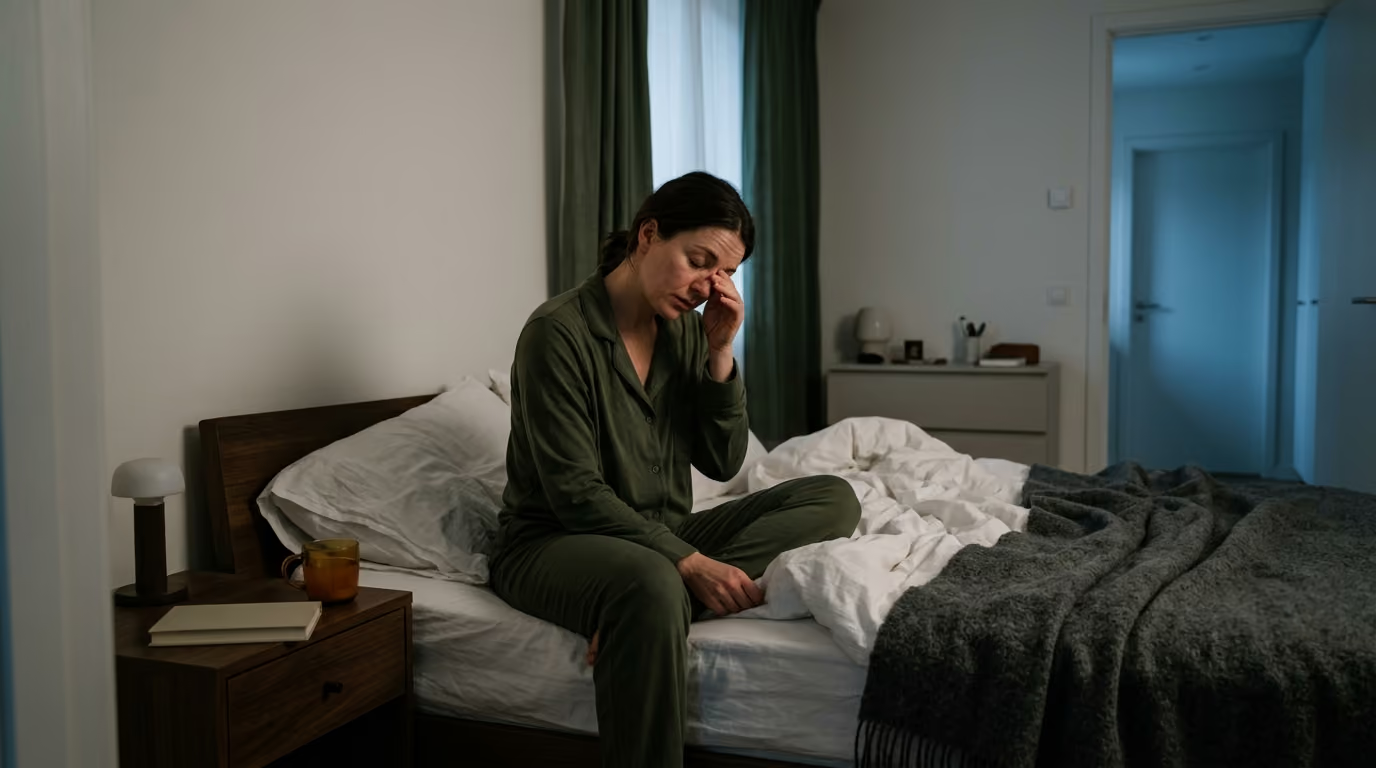

Trauma disrupts healthy sleep architecture by keeping the brain on high alert, but targeted therapies like IRT and CBT-I restore peaceful rest.





If you are in immediate danger, call 911. For 24/7 support, call or text 988 and press 1 for the Veterans Crisis Line, or text 838255.
You wake up at three in the morning with your heart pounding against your ribs. Your sheets are soaked with sweat, and your eyes immediately scan the dark doorway of your bedroom. Your nervous system reacts before your conscious mind realizes you are safe at home. The alarm will go off in three hours, but your body refuses to let down its guard.
Trauma disrupts sleep by keeping your internal threat detection system active throughout the night, but targeted psychological therapies and structured nighttime routines can retrain your sleep cycle and reduce nightmare frequency.
When a person experiences severe trauma, the brain alters how it processes safety and danger during rest. Nightmares, nocturnal panic, intrusive memories, and constant scanning for threats can turn the bedroom into a conditioned source of distress. Resolving these challenges requires understanding how trauma alters sleep architecture. It also requires using clinical interventions that address both the psychological memory and the physical state of hyperarousal. You can find related educational materials in our sleep, stress, and resilience resources library.
Sleep requires a physiological downshift that allows the body to repair tissue and organize memories. During normal sleep, the brain reduces sympathetic nervous system activity and lowers blood pressure. It also decreases core body temperature and reduces circulating stress hormones like cortisol and norepinephrine. This shift signals to the central nervous system that the surrounding environment is secure.
Trauma alters this restorative process by keeping the threat detection network on high alert. The amygdala remains reactive, while the prefrontal cortex struggles to signal that danger has passed. When you attempt to fall asleep, the brain perceives the vulnerability of sleep as an operational risk. Instead of entering deep slow-wave sleep, the body remains suspended in a state of autonomic arousal.
This persistent vigilance prevents smooth transitions between sleep stages. Heart rate variability drops, muscle tension remains high, and the threshold for waking up becomes abnormally low. A minor sound, such as a settling floorboard or an HVAC unit, can trigger a full fight-or-flight response. The brain treats these harmless sensory inputs as immediate threats to survival.
Over time, this heightened nocturnal state creates a learned connection between bedtime and distress. Going to bed no longer represents rest and recovery. Instead, it becomes a period of anticipated vulnerability, conflict, and physical discomfort. Breaking this pattern requires addressing the physiological arousal that keeps the threat system active overnight.
Understanding trauma-related sleep issues requires distinguishing between several related conditions. While these conditions often overlap, each has distinct diagnostic features and clinical considerations.
Nightmares are disturbing, vivid dreams that involve threats to physical survival, personal security, or emotional integrity. Most people recall the details of a nightmare immediately upon waking. In trauma-exposed populations, nightmares do not always present as literal replays of an event. They frequently manifest as symbolic variations involving pursuit, entrapment, helplessness, or profound loss.
Occasional nightmares happen to most adults and do not constitute a clinical disorder. Nightmare disorder occurs when repeated, frightening dreams cause clinically significant distress or impair daytime functioning. The American Academy of Sleep Medicine notes that nightmare disorder affects approximately 4% of the general adult population. Among individuals with post-traumatic stress disorder, this rate rises substantially, often affecting between 50% and 70% of patients.
Clinical significance depends on the level of distress and impairment rather than raw frequency alone. A person who experiences one severe nightmare per week may suffer significant impairment if it causes days of anticipatory dread. Sleep avoidance, severe daytime fatigue, and chronic mood disruption are key markers of a significant clinical issue.
Insomnia involves persistent difficulty falling asleep, staying asleep, or obtaining restorative rest despite having adequate time for sleep. In people with a history of trauma, insomnia is rarely just poor sleep hygiene. It is commonly fueled by fear of dreaming, conditioned arousal in bed, chronic pain, and an urge to maintain perimeter security.
Insomnia and nightmares often occur together, but they represent distinct clinical problems. A study of recently combat-exposed service members found that 74% met the criteria for insomnia, while 61% reported distressing nightmares. Research indicates that insomnia is more prevalent than nightmares when only one condition is present. However, having both conditions simultaneously produces the highest levels of daytime impairment.
Hypervigilance is a continuous, exhausting state of scanning the environment for potential hazards. At night, hypervigilance presents as specific behaviors and physical sensations. You might find yourself checking door locks repeatedly, monitoring window latches, or positioning the bed so you can see the entry door. You may also feel unable to fall asleep if other household members are already resting.
This behavior is an understandable adaptation to real past danger. The nervous system developed these protective reflexes to survive threatening environments. Problems arise when these survival mechanisms remain active in safe environments, preventing the physical rest needed for health. Hypervigilance is not an intentional choice to stay tense, but an involuntary biological alarm that requires structured retraining.
Intrusive memories are unwanted, distressing recollections that enter conscious awareness without warning. These intrusions can occur while lying awake in the dark, drifting off to sleep, or waking up from a dream. They can be visual, sensory, emotional, or somatic, often bringing back the exact physical sensations experienced during the original event.
Repeated frightening awakenings create a conditioned fear response to the sleeping environment. The bed, the dark, the silence of the night, and even the feeling of tiredness become paired with danger. This conditioning establishes a self-reinforcing cycle:
Interrupting this maintenance cycle requires targeted psychological strategies, environmental adjustments, and proper medical guidance. You can learn more about managing physical strain and recovery in our military health topics archive.
Clinical research over the past three decades has clarified the relationship between trauma exposure and sleep pathology. Understanding what the evidence demonstrates helps separate established medical facts from common assumptions.
Data consistently show that sleep disturbances are among the most common and persistent consequences of trauma. In populations diagnosed with post-traumatic stress disorder, insomnia rates typically range from 80% to 90%. Nightmares occur in roughly 50% to 72% of these individuals, depending on the diagnostic criteria used.
The National Vietnam Veterans Readjustment Study found that 52% of combat veterans with PTSD experienced recurrent, clinically significant nightmares. More recent longitudinal research confirms that these symptoms do not simply vanish with time. In a study tracking service members after combat deployments, nightmare complaints diminished only modestly over several years without targeted intervention.
Sleep problems are also common in the acute phase following a traumatic event. Up to 90% of individuals report sleep disruption and distressing dreams in the days and weeks immediately following severe stress. For many people, these acute symptoms resolve naturally as the brain processes the event. For others, acute sleep disruption hardens into chronic insomnia and nightmare disorder, requiring clinical care.
Researchers previously viewed sleep problems as secondary symptoms that would automatically resolve once the primary trauma was treated. Modern neuroscience has demonstrated that the relationship between trauma and sleep is bidirectional. Trauma causes sleep disruption, but chronic sleep loss also degrades the neural pathways needed for psychological recovery.
Rapid Eye Movement (REM) sleep plays a critical role in processing emotional memories. During normal REM sleep, the brain reactivates emotional experiences while concentrations of stress neurochemicals remain low. This process helps strip away the distressing emotional charge from the factual memory. When trauma fragments REM sleep, this natural emotional depotentiation fails. The memory remains raw, highly charged, and capable of triggering severe physiological distress.
In our experience, we often overlook how baseline physiological recovery falters when sleep is broken. I remember waking up after a poor night of sleep and realizing that my training recovery was taking much longer than it used to. I realized that readiness is more than just pushing through the fatigue. It requires a dedicated approach to sleep and hormonal health, which completely shifted how I view long term capability. Readers managing physical conditioning can review our training and performance articles for broader context on systemic fatigue.
Medical literature identifies severe, unmanaged sleep disruption as an important risk indicator in trauma-exposed individuals. Multiple systematic reviews confirm that recurrent nightmares and chronic insomnia correlate with elevated rates of suicidal ideation and self-harm behaviors.
A prospective study evaluating trauma survivors found that 42.9% of participants with both clinically significant nightmares and comorbid insomnia reported suicidal ideation. In contrast, those with insomnia alone reported an 8.0% rate, and those with neither sleep disturbance reported a 6.7% rate. While recurrent nightmares do not directly cause self-harm, they significantly amplify feelings of helplessness, exhaustion, and psychological pain.
When sleep disturbance reaches a point where hope feels depleted or self-harm thoughts appear, immediate professional support is essential. Clinicians must routinely assess sleep health during safety screenings, and individuals should treat severe sleep disruption as an urgent medical priority.
Treating trauma-related sleep issues requires evidence-based therapies rather than basic advice to relax. Several psychological and medical treatments have demonstrated strong efficacy in clinical trials.
Imagery Rehearsal Therapy is the leading psychological intervention for chronic nightmare disorder and trauma-related nightmares. Recommended by the American Academy of Sleep Medicine, IRT is a cognitive-behavioral technique that alters the narrative structure of recurring nightmares. It transforms the nightmare from an uncontrolled intrusion into a manageable, learned mental script that can be rewritten.
A meta-analysis evaluating IRT demonstrated large, sustained improvements in nightmare frequency, overall sleep quality, and general PTSD symptom severity. The clinical benefits were maintained at six-month and twelve-month follow-up assessments. The standard clinical protocol follows five structured phases:
IRT should be conducted with professional guidance if visualizing trauma material triggers severe dissociation, panic, or overwhelming emotional distress.
Cognitive Behavioral Therapy for Insomnia is the gold-standard, first-line treatment for chronic insomnia across clinical guidelines. While sleep hygiene addresses general habits, CBT-I restructures the behavioral patterns and cognitive misinterpretations that sustain insomnia over time.
Clinical trials show that combining IRT with CBT-I yields better improvements in sleep quality than using either therapy in isolation. CBT-I uses several core components:
For individuals with trauma histories, stimulus control and sleep restriction must be implemented carefully. A clinician ensures that these techniques do not trigger safety concerns or worsen daytime functioning.
Medication is sometimes used alongside psychotherapy to manage severe trauma-related sleep symptoms. Prazosin, an alpha-1 adrenergic receptor antagonist originally developed for high blood pressure, has been widely studied for trauma nightmares. It works by blocking excessive norepinephrine activity in the central nervous system during sleep.
Guideline recommendations for prazosin require careful explanation because clinical evidence is nuanced. The 2023 VA/DoD Clinical Practice Guideline suggests considering prazosin specifically for PTSD-associated nightmares. However, the same guideline recommends against using prazosin as a general standalone treatment for PTSD overall.
The American Academy of Sleep Medicine also identifies prazosin as an option for post-traumatic nightmares. Because prazosin lowers blood pressure, it can cause lightheadedness, dizziness upon standing, and elevated fall risks. Starting, adjusting, or discontinuing this medication must always occur under close medical supervision.
Other medications, such as certain antidepressants or non-benzodiazepine sleep aids, may be considered by a physician based on individual needs. Benzodiazepines are generally avoided in standard trauma guidelines due to risks of tolerance, dependence, and potential interference with trauma processing.
Medical treatment provides long-term resolution, but you also need practical strategies to manage difficult nights right now. Establishing a predictable safety protocol reduces baseline arousal and gives you an actionable plan when waking from a nightmare.
Your physical bedroom environment should reinforce a genuine sense of safety without creating endless checking rituals. Making a few deliberate adjustments helps calm an overactive nervous system:
When you wake up from a terrifying nightmare, your body is flooded with adrenaline. Trying to force yourself back to sleep immediately usually fails and increases frustration. Follow this structured grounding sequence instead:
Trauma-related awakenings can be distressing for romantic partners and family members. During sudden awakenings, individuals experiencing hyperarousal may react defensively before regaining full awareness. Open communication establishes safety for everyone in the home:
For additional perspectives on long-term wellness and sustainable routines, explore our recovery and sleep guidance collection.
Misunderstandings about trauma and sleep can prevent people from seeking appropriate care or lead to unhelpful coping strategies. Clarifying these misconceptions helps you make informed choices about your health.
Many people believe a dream must be an exact replay of a past event to count as a trauma nightmare. In reality, trauma-related nightmares frequently present as symbolic scenarios involving peril, betrayal, being chased, or failing a mission. The emotional intensity and physiological response define the trauma connection, not the literal narrative.
Nightmares are extremely common in the direct aftermath of significant stress or trauma. Experiencing disturbing dreams for several weeks after an event does not mean you have developed lifelong PTSD. It often reflects the brain's initial attempt to process what happened. Persistent symptoms lasting beyond three months warrant a formal clinical evaluation.
Standard sleep advice, such as avoiding caffeine and keeping a cool room, is useful but rarely sufficient on its own for trauma-driven sleep disorders. Hyperarousal, conditioned fear, and intrusive memories are robust neurological phenomena that require targeted behavioral and cognitive interventions. Treating trauma nightmares as basic sleep hygiene issues leads to unnecessary frustration and delays real progress.
Waking up from a disturbing dream often triggers an urge to analyze its hidden meaning immediately. Dissecting dream symbols at three in the morning engages the analytical prefrontal cortex and spikes cognitive arousal. Nighttime is for physical grounding and returning to rest; cognitive processing and dream rewriting should occur during daylight hours.
Alcohol helps induce rapid sleep onset, making it a common form of self-medication for trauma survivors. However, as the body metabolizes alcohol during the night, it causes severe REM rebound, sleep fragmentation, and heightened autonomic arousal. This chemical rebound frequently triggers intense, vivid nightmares in the early morning hours, worsening the sleep deficit.
Trauma-related sleep disruption manifests differently across various medical backgrounds and life circumstances. Clinical care must adapt to these specific situations.
Service members and civilians with a history of concussions or traumatic brain injury frequently experience complex sleep issues. TBI can physically disrupt the brain structures responsible for generating circadian rhythms and regulating sleep stages. Individuals managing both TBI and trauma-related hyperarousal face compounded challenges with memory, light sensitivity, and headache-induced awakenings.
Treating sleep disorders in individuals with TBI requires careful coordination between neurologists, sleep specialists, and mental health providers. Behavioral therapies like IRT may need adaptation for memory retention, using structured written worksheets and simplified visualization steps.
Obstructive Sleep Apnea involves repeated airway collapses during sleep, leading to oxygen drops and abrupt awakenings. OSA is common among individuals with PTSD, and the two conditions can mimic and worsen one another. An apnea-related gasping awakening can trigger an immediate panic response, which the brain misinterprets as a trauma-related threat.
Anyone with trauma symptoms who also snores heavily, wakes gasping, or experiences severe morning fatigue should undergo an overnight sleep study. Treating underlying sleep apnea with continuous positive airway pressure (CPAP) often reduces nightmare frequency by preventing oxygen-deprivation awakenings.
Evidence-based sleep therapies assume that the individual is currently in a safe, secure living environment. When a person faces ongoing domestic instability, community violence, or active operational danger, hypervigilance remains an appropriate survival mechanism. In these circumstances, social support, physical safety planning, and legal protections must take priority alongside psychological care.
For broader resources on managing life transitions and accessing support, review our veteran lifestyle and healthcare library.
This guide is designed for educational purposes and provides research-backed information on trauma-related sleep challenges. It does not constitute medical advice, psychological diagnosis, or personalized treatment planning.
Sleep disturbances can stem from overlapping medical, psychiatric, and neurological factors that require thorough diagnostic evaluation. Conditions such as central sleep apnea, nocturnal seizures, cardiac arrhythmias, and endocrine imbalances can produce nighttime symptoms that mimic trauma-related hyperarousal. Always consult a qualified healthcare provider, such as a board-certified sleep physician, psychiatrist, or licensed clinical psychologist, before making changes to your health regimen or medications.
If you or someone you know is experiencing overwhelming distress, severe depression, or thoughts of self-harm, seek immediate support. In the United States, you can call or text 988 to reach the Suicide & Crisis Lifeline, or dial 988 and press 1 to connect directly with the Veterans Crisis Line. These free, confidential services operate twenty-four hours a day, seven days a week.
Yes, trauma-related nightmares can emerge months, years, or even decades after the traumatic experience occurred. Major life changes, increased daytime stress, medical problems, retirement, or physical injury can lower your coping reserves. When overall stress rises, the nervous system's ability to suppress unresolved threat memories diminishes, allowing nightmares and hyperarousal to resurface.
Most clinical trials evaluating Imagery Rehearsal Therapy involve four to eight structured sessions conducted over several weeks. Many individuals notice meaningful reductions in nightmare intensity and frequency within three to four weeks of consistent daily practice. However, long-term mastery and sustained improvement require continued application of the rewritten dream scripts and regular grounding routines.
Nightmares occur during Rapid Eye Movement (REM) sleep, involve complex narrative story lines, and leave the person fully alert and able to recall the dream upon waking. Night terrors occur during deep slow-wave, non-REM sleep, usually early in the night. During a night terror, the individual may scream, flail, or sit up in bed with their eyes open while remaining asleep, typically having no memory of the episode the next morning.
Waking someone from a nightmare does not cause psychological harm, but it must be done carefully to ensure physical safety. A person waking from severe trauma-related dreams may experience immediate disorientation and active fight-or-flight reflexes. Rather than shaking or grabbing the person, stand at a safe distance, turn on a soft light, and speak their name calmly to help them reorient.
When to revisit this resource: Return to this guide whenever you experience a change in your sleep quality, notice an increase in nightmare frequency after high-stress life events, or prepare for an evaluation with a sleep medicine or mental health specialist.
Building nighttime security and restoring restorative sleep is a step-by-step process of retraining your autonomic nervous system, applying evidence-based behavioral therapies, and giving your body the structured conditions it needs to recover.
Follow BattleVet for practical guidance on military and veteran health, strength, recovery, testosterone, sleep and healthy aging. Stay connected for new articles, research backed insights and clear information to help you stay capable for the years ahead.


Build better habits around strength, recovery, sleep, hormones and healthy aging with practical guidance for active military personnel and veterans.
Explore BattleVet