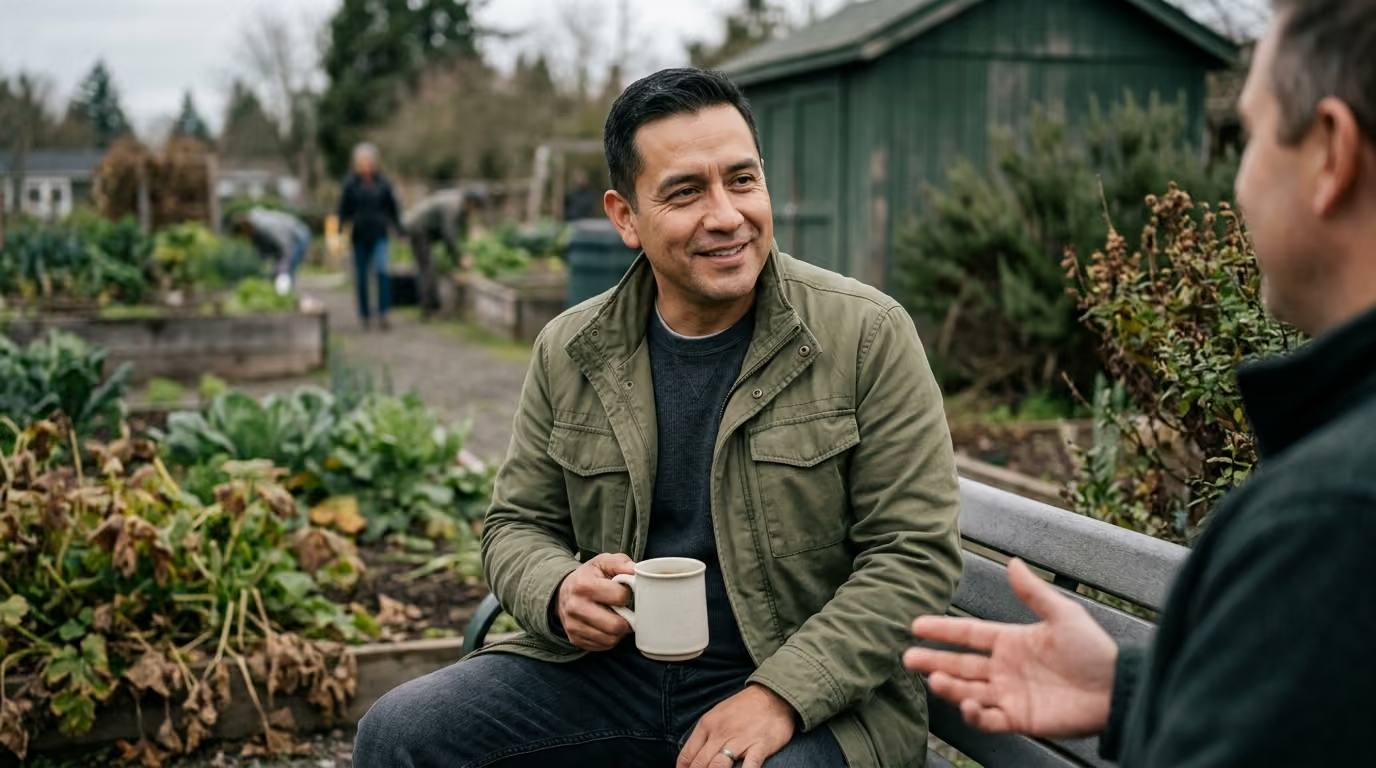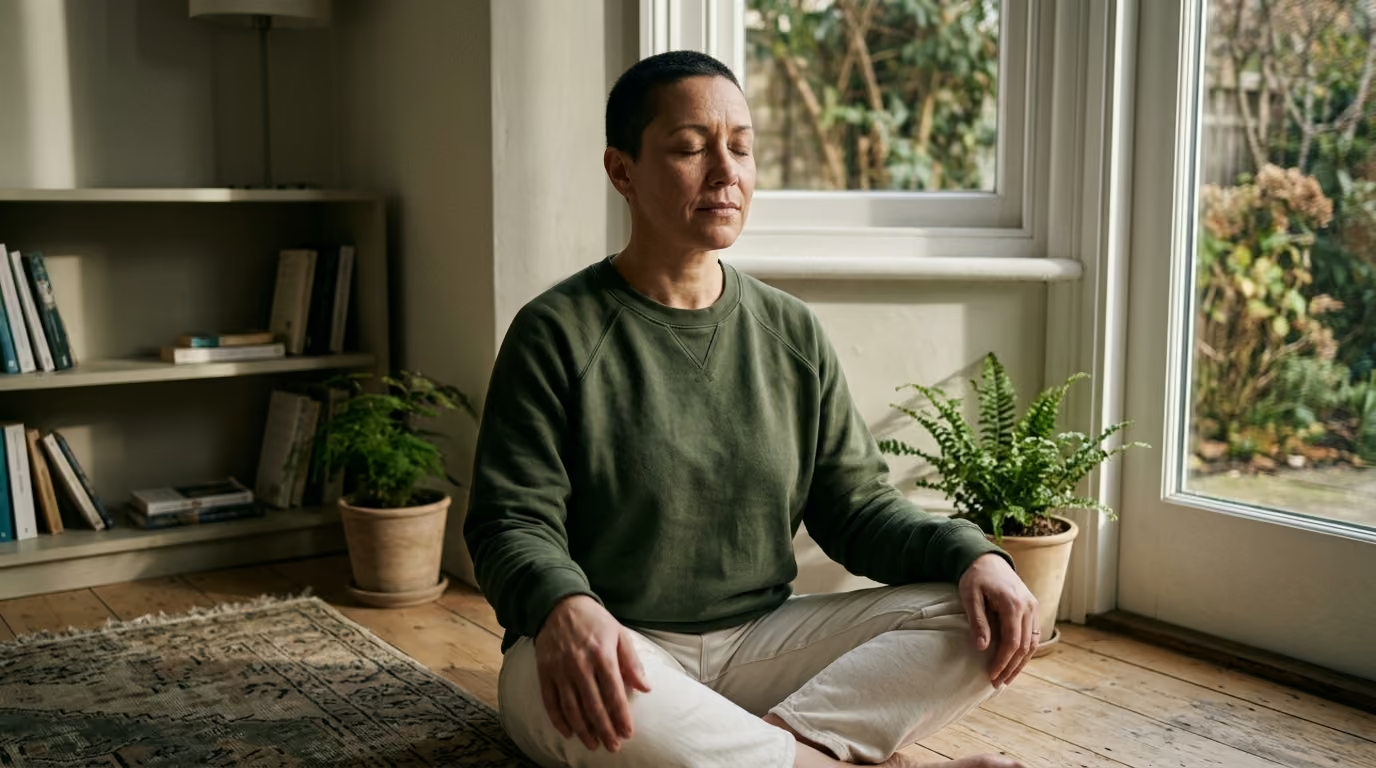

Mindfulness training helps veterans and service members regulate stress, rebuild cognitive focus, and manage nervous system reactions through structured mental exercises.





If you are in immediate danger, call 911. For 24/7 support, call or text 988 and press 1 for the Veterans Crisis Line, or text 838255.
Sitting in silence and trying to empty your mind is often the worst advice a veteran can receive. When you sit with closed eyes and force yourself to relax, your nervous system may interpret the quiet as a vulnerability. You lie awake at 0200 listening to the house settle while your heart rate stays elevated and your shoulders stay tight. You try a generic breathing app to settle your nervous system, but focusing inward only makes the ringing in your ears louder and your racing thoughts more intense. Standard relaxation advice often fails because military training deliberately conditions the brain to scan for threats rather than drop its guard.
Mindfulness for military personnel and veterans is not a relaxation exercise or a cure-all, but an active attention training skill designed to regulate stress responses and build psychological flexibility.
Mindfulness is the practice of deliberately paying attention to present experience with awareness and reduced automatic reactivity. In military and veteran health, mindfulness functions as a mental training protocol that supports attentional control, nervous system regulation, and cognitive flexibility. It is an adjunct to evidence-based healthcare rather than a standalone replacement for clinical treatments.
Mindfulness is widely misunderstood in popular culture. It is frequently marketed as a path to instant peace, passive relaxation, or emotional detachment. In reality, authentic mindfulness practice is an active cognitive discipline. For service members and veterans, it is best understood as attention training under demanding conditions.
The practice consists of four distinct operational components:
Attention training relies on a continuous mental cycle. You select an anchor, notice when your mind wanders, acknowledge the distraction without self-criticism, and redirect your focus back to the anchor. The act of noticing the drift and returning to the anchor is the core repetition that builds cognitive control. A wandering mind does not mean you failed the exercise. The return itself is the mental repetition that strengthens your attentional capacity.
Research in military operational settings supports this practice-based framework. Studies examining military personnel during demanding pre-deployment field training show that high operational tempo degrades working memory and attentional stability. Practice-focused mindfulness training helps protect against these cognitive lapses far more effectively than passive lecture-based instruction.
Mindfulness also builds an ability known as decentering or reperceiving. Decentering is the capacity to observe thoughts, emotions, and physical sensations as temporary mental events rather than absolute commands or literal facts. A veteran walking through a crowded store might automatically think, "I am in danger." Through decentering, the individual recognizes that thought as an internal alarm signal rather than an objective reality. This mental space allows the person to assess the environment accurately and choose a calculated response.
This psychological capacity fits directly into the biological concept of the window of tolerance:
Mindfulness does not guarantee a calm state of mind. Instead, it expands your capacity to recognize when you are drifting into hyperarousal or hypoarousal. With that awareness, you can use specific grounding skills to return to regulated engagement. Developing these self-regulation practices is an important component of long-term sleep, stress and resilience resources.
Evaluating the scientific research on mindfulness requires separating genuine clinical findings from commercial wellness marketing. Mindfulness programs have produced measurable benefits across numerous clinical trials, but the evidence base has clear boundaries and limitations.
The Department of Veterans Affairs and Department of Defense Clinical Practice Guideline for PTSD evaluates non-pharmacological and complementary health interventions. In its 2023 update, the VA/DoD guideline gave Mindfulness-Based Stress Reduction, known as MBSR, a weak-for recommendation for the treatment of post-traumatic stress disorder. A weak-for recommendation means clinicians may consider offering MBSR as an adjunct or secondary option, but it is not a first-line substitute for established trauma-focused psychotherapies like Prolonged Exposure or Cognitive Processing Therapy.
Systematic reviews and meta-analyses offer a broader perspective on the data:
These findings show that mindfulness-based practices can provide meaningful symptom relief for many veterans. However, the outcomes vary based on individual trauma history, program format, instructor competence, and symptom severity. Early research in active-duty military medical field exercises indicates that brief, structured mindfulness protocols can reduce perceived stress and improve operational resilience under simulated field pressure.
Mindfulness should be viewed as an evidence-informed mental training skill and a helpful adjunct to clinical care. It should not be oversold as a universal cure for trauma-related disorders.
Sleep disturbance is one of the most common and disruptive health issues facing active service members and veterans. It is also an area where mindfulness is frequently promoted without sufficient clinical context.
Epidemiological research demonstrates the heavy burden of sleep disruption in military populations:
Chronic sleep deprivation degrades physical recovery, hormonal health, and cognitive function. Service members struggling with nighttime arousal often turn to meditation apps to force themselves to sleep. This approach frequently backfires. Trying to force sleep through meditation turns practice into another performance task, which increases mental frustration and physiological arousal.
Mindfulness supports healthy sleep by changing your psychological relationship to nighttime wakefulness. When you wake up at midnight, your mind often begins catastrophizing about fatigue, work performance, and daytime functioning. This secondary worry triggers an adrenaline release that keeps you awake.
Mindfulness teaches you to notice those catastrophic thoughts without getting drawn into them. You learn to let your body rest in the dark without turning wakefulness into an active battle.
Mindfulness does not cure physical sleep apnea, fix severe circadian rhythm shifts from shift work, or stop chronic trauma nightmares on its own. For chronic sleep conditions, mindfulness should be paired with dedicated clinical sleep protocols and structured recovery and sleep strategies.
Mindfulness practices are generally safe, but they are not free of risk. When applied incorrectly, standard meditation techniques can trigger physiological activation, panic, or psychological destabilization in people with significant trauma histories.
Clinical researchers specializing in trauma-sensitive mindfulness, including David Treleaven, have shown that standard meditation instructions can be dysregulating for trauma survivors. Asking an individual with severe PTSD to sit in a dark room, close their eyes, and focus exclusively on internal bodily sensations can remove external safety cues. For someone whose trauma is linked to physical injury, assault, or confinement, focusing on internal sensations can trigger panic attacks, dissociative episodes, or vivid flashbacks.
Peer-reviewed literature examining adverse events during meditation shows that unsupervised, extended silent retreats and intense internal focus can occasionally cause severe anxiety, derealization, and re-traumatization. Service members and veterans should be aware of several common pitfalls:
Trying to eliminate all thoughts creates unnecessary frustration. The human brain naturally generates thoughts, scans for patterns, and processes memories. Mindfulness is the practice of observing those thoughts without getting hooked by them, not stopping mental activity entirely.
Mindfulness is not a tranquilizer. When you slow down and pay attention, you may initially notice unaddressed grief, chronic physical pain, muscular bracing, or hypervigilance. Noticing distress is often the first step in learning to regulate it, but it should not be mistaken for immediate relaxation.
Acceptance does not mean approving of past trauma, tolerating abusive situations, or giving up on personal standards. Acceptance simply means acknowledging what is happening in the present moment so you can choose your next move effectively.
In physical training, pushing through muscular burn builds strength. In trauma recovery, pushing through severe dissociative symptoms or panic attacks reinforces nervous system dysregulation. If a mindfulness exercise causes severe distress, you should modify the anchor, open your eyes, or stop the exercise immediately.
Smartphone meditation apps can offer helpful practice reminders and basic grounding exercises. However, a mobile app cannot evaluate complex psychiatric symptoms, manage severe depression, or treat clinical PTSD. Mindfulness practice should support comprehensive medical care, not replace it. You can review broader clinical approaches in our educational resources on veteran lifestyle and healthcare options.
Traditional mindfulness methods can be modified to maximize psychological safety and real-world utility for service members and veterans. Trauma-sensitive mindfulness adapts standard practices to ensure the individual maintains control, environmental awareness, and agency at all times.
These structured adaptations help make mindfulness safe and practical:
Standard meditation usually directs attention toward the breath or internal organs. For many veterans, internal sensations are associated with anxiety, pain, or traumatic memories. External anchors ground your attention in your physical environment instead.
Titration means practicing in small, manageable doses rather than long, exhausting sessions. An extended 45-minute meditation can easily trigger restlessness, physical pain, or intrusive memories.
Begin with 60 to 180 seconds of focused grounding. Short, consistent practices build attentional control without overwhelming your nervous system. You can gradually extend the duration as your capacity for regulated engagement grows.
Trauma often involves situations where personal agency and physical control were stripped away. Rigid meditation rules that demand total silence, closed eyes, and absolute stillness can feel restrictive.
Trauma-sensitive practice emphasizes choice. You can keep your eyes open, change your posture whenever you need to, stand up, walk around, or end the session early. Retaining full control over your physical posture keeps your nervous system feeling secure.
Sitting motionless in a chair is not required to practice mindfulness. Many veterans find movement-based attention training far more grounding and effective than stationary meditation.
Mantram repetition involves the silent, deliberate repetition of a chosen word or short phrase to steady the mind. Clinical programs at the VA have demonstrated that mantram practice helps veterans manage intrusive thoughts, reduce anger spikes, and improve attentional focus. It provides a simple, portable cognitive anchor that can be used in traffic, crowded public areas, or operational environments.
These principles form the foundation of our educational coverage of military health and physical readiness.
Developing a sustainable mindfulness practice requires a structured, progressive approach. Use this step-by-step protocol to build a routine that fits your daily schedule and respects your nervous system.
Identify a specific, practical reason for practicing. Avoid vague goals like finding inner peace. Practical objectives include:
Choose an anchor that provides stable, non-threatening sensory feedback. Rank potential anchors based on your comfort level:
If an anchor begins to evoke anxiety or unwanted intrusive memories, immediately switch to an external visual or auditory anchor.
Start with small, easily achievable time frames:
Set a subtle timer and begin your practice:
Evaluate your state of mind immediately after the session:
Modify your protocol based on your post-practice check. If sitting still increased your hypervigilance, switch to a walking practice. If breath awareness increased your heart rate, switch to auditory grounding. Treat mindfulness like physical strength training by adjusting the load and format to build capacity safely.
Understanding how to adapt mindfulness to specific, real-world situations helps bridge the gap between theory and daily life.
A former combat engineer lies in bed scanning the dark room, listening intensely for unusual noises outside, and feeling a rapid pulse. When he tries a traditional deep breathing meditation, focusing on his chest makes his heart pound harder, and the silence feels unsafe.
A service member attending a wellness class participates in a 30-minute internal body scan. Halfway through the exercise, she begins to feel completely disconnected from her limbs, numb, and unable to track what the instructor is saying.
A junior officer in a high-stress operational environment notices sudden surges of intense anger during briefing conflicts, leading to sharp, unprofessional outbursts that harm working relationships.
A veteran with chronic lumbar spine degeneration and nerve pain finds that focusing on his body during meditation makes his back pain feel unbearable.
Applying these tools across different phases of life supports healthy aging and longevity.
Selecting the right mindfulness program or instructor is critical for service members and veterans, particularly those with trauma histories or active mental health conditions.
The Department of Veterans Affairs Whole Health guidelines state that clinical mindfulness interventions should be delivered by licensed healthcare providers who have formal training in mindfulness protocols and a thorough understanding of military culture, PTSD, dissociation, and chronic pain.
When evaluating a mindfulness program, instructor, or course, look for these quality indicators:
If you experience severe dissociative episodes, worsening depression, intense flashbacks, or thoughts of self-harm during or after mindfulness practice, discontinue unsupervised meditation immediately and seek evaluation from a qualified mental health professional. Mindfulness is a supportive mental discipline, but professional clinical care remains the foundation for treating serious psychological conditions.
Mindfulness research has grown substantially over the last two decades, but several important scientific questions remain unanswered. A balanced, evidence-based perspective requires recognizing these gaps in current knowledge.
Researchers are still working to determine the optimal dose of mindfulness training for different clinical populations. Scientists do not yet know the exact minimum number of practice minutes required per day to produce lasting neurological and behavioral changes in high-stress military cohorts.
Comparative effectiveness research is also ongoing. While studies confirm that mindfulness programs outperform passive control groups, more high-quality head-to-head trials are needed to compare mindfulness-based programs directly against active treatments like standard exercise therapy, cognitive behavioral interventions, and social support groups.
Scientists are also investigating how individual differences influence treatment outcomes. Genetics, baseline nervous system reactivity, specific trauma types, and personal preferences all impact how a veteran responds to mindfulness training. Future clinical models aim to identify in advance which individuals will thrive with mindfulness approaches and which individuals will achieve better outcomes through movement-based, cognitive, or medical interventions.
Mindfulness is a valuable, evidence-informed skill for attention training, stress regulation, and cognitive flexibility. By approaching the practice with realistic expectations, using trauma-sensitive adaptations, and keeping it integrated with professional healthcare, service members and veterans can use mindfulness safely to protect their health and performance over the long term.
This article is provided strictly for educational and informational purposes and does not constitute medical, psychological, or clinical advice. Mindfulness practices and self-regulation techniques are not substitutes for professional diagnosis, medical treatment, or evidence-based psychiatric therapy. Service members and veterans dealing with post-traumatic stress, severe anxiety, chronic depression, sleep disorders, or other medical conditions should consult a qualified healthcare provider or licensed mental health professional to receive an individualized clinical evaluation and treatment plan.
Mindfulness is a broad cognitive capacity and state of awareness, while meditation is one formal method used to train that capacity. Mindfulness involves paying deliberate, non-judgmental attention to present-moment experiences throughout daily life, including during work, physical exercise, or conversations. Meditation refers to structured, dedicated exercises, such as seated breathing or body scans, designed to build that attentional skill.
No. Mindfulness is not a standalone cure for combat-related PTSD. The 2023 VA/DoD Clinical Practice Guideline gives Mindfulness-Based Stress Reduction a weak-for recommendation, meaning it can serve as a helpful adjunct or complementary practice alongside primary, evidence-based trauma therapies like Prolonged Exposure or Cognitive Processing Therapy.
Stop focusing on your breath and switch to an external sensory anchor immediately. Open your eyes, look around the room, identify several physical objects, feel the contact of your feet against the floor, or listen to environmental sounds. Breath-focused exercises can sometimes trigger hyperarousal or suffocation anxiety in trauma survivors, making external sensory anchors a safer and more regulating choice.
You do not need to sit for long meditation sessions to build attentional control. Starting with two to three minutes of structured grounding once or twice per day is effective for building consistency without overwhelming your nervous system. In high-stress or operational settings, even brief 30-second grounding pauses throughout the day can improve mental focus and emotional regulation.
Practical attention training builds the mental discipline required to respond with clarity under pressure, protect your health, and maintain operational capability across every stage of service and civilian life.
Follow BattleVet for practical guidance on military and veteran health, strength, recovery, testosterone, sleep and healthy aging. Stay connected for new articles, research backed insights and clear information to help you stay capable for the years ahead.


Build better habits around strength, recovery, sleep, hormones and healthy aging with practical guidance for active military personnel and veterans.
Explore BattleVet