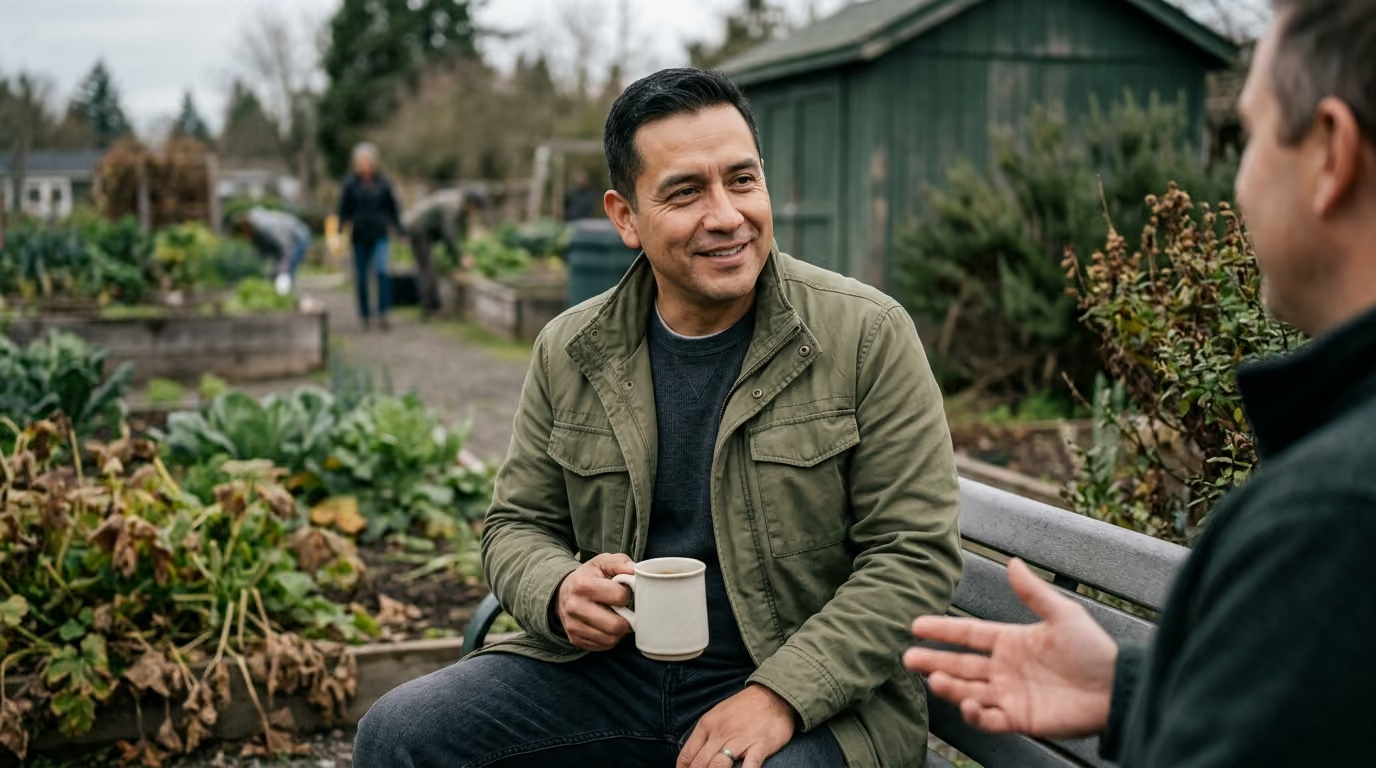

Standing in a quiet civilian workplace without a clear chain of command can feel isolating, but building new daily routines restores personal purpose.





If you are in immediate danger, call 911. For 24/7 support, call or text 988 and press 1 for the Veterans Crisis Line, or text 838255.
Military-to-civilian adjustment is not a standard career change or simple residential move. It is a fundamental shift between distinct cultural systems with contrasting rules, communication styles, hierarchies, and concepts of personal purpose. This guide provides an evidence-based roadmap for navigating the psychological, physical, and relational shifts of post-service life.
You wake up at 0500 out of habit, but there is no formation to attend, no physical training schedule, and no daily task list waiting on a board. The house is completely silent, yet your nervous system remains keyed for immediate action. You stare at a closet of civilian clothes and realize that nobody has assigned you a mission for the day. That sudden lack of direction can feel more disorienting than the most demanding operational deployment.
Quick Take: Military-to-civilian transition requires actively translating your military identity, habits, and physical routines into a sustainable civilian life rather than discarding your service experience or trying to handle the adjustment alone.
The direct answer to navigating post-service adjustment is recognizing that transition stress is a normal psychological response to cultural re-entry, not a personal failure or automatic clinical disorder. Successfully managing this shift requires deliberate reconstruction across five foundational areas: daily structure, personal meaning, identity integration, social relationships, and nervous system recovery.
Military-to-civilian transition refers to the total process of moving from active service into civilian communities and workplaces. It includes concrete logistical changes such as finding housing, securing employment, managing personal finances, and enrolling in healthcare. It also demands deep internal shifts in how you regulate stress, relate to family members, communicate with peers, and define your personal worth.
Many veterans expect transition to be an administrative event marked by separation paperwork or a final discharge date. Long-term studies show that psychological adjustment operates on a much longer timeline. Research tracking 9,566 veterans over multiple years demonstrated that while vocational and social stability often remain high, financial and psychological adjustments can fluctuate for years after leaving uniform.
When service members return to civilian life, they frequently experience reverse culture shock. This term describes the disorientation felt when re-entering an environment that was once familiar, only to find that your expectations, habits, and values no longer match those around you.
Common signs of reverse culture shock include:
These reactions do not reflect character defects or poor attitudes. They represent functional adaptations developed in high-accountability environments that require recalibration in civilian settings.
Military service relies on institutional imprinting. This means internalizing values like hierarchy, punctuality, mission focus, emotional control, and total responsibility for others. When you spend years practicing these behaviors, they become automatic physical and mental baselines.
In civilian life, some of these habits remain useful, while others create unexpected friction. Equating your worth entirely with usefulness can lead to severe overwork. Suppressing vulnerability can damage intimate relationships. Maintaining scanning behaviors and hyper-readiness in safe settings burns unnecessary nervous energy. The objective is to identify which habits to keep and which ones to adjust.
Military service gives personnel an immediate identity, structured authority, and a clear social standing. Leaving service removes these anchors all at once. Research examining veteran career transitions identifies three clear stages of identity adjustment:
Identity transition is not about erasing your past. An individual who leaves the infantry or naval service does not stop being capable, reliable, or courageous. Instead, the focus shifts toward applying those capabilities to education, civilian employment, community leadership, or family life.
Data shows that transition challenges are widespread across the veteran population. More than 44% of post-9/11 veterans report difficulties during their transition to civilian life, with 27% describing the process as somewhat or very difficult. In other studies, roughly half of recently discharged service members reported significant adjustment strain.
These figures show that transition strain is a widespread experience rather than an isolated personal failure. Experiencing friction during adjustment does not mean you have a mental health disorder. It means you are adapting to an environment with fundamentally different social contracts.
Military roles provide explicit job descriptions, rank-based authority structures, and direct chains of command. Civilian organizations tend to rely on informal negotiation, personal diplomacy, and ambiguous authority boundaries.
This environment can generate role ambiguity. Veterans often struggle with not knowing where their responsibilities end, how success is measured, or when a task is finished. In response, some veterans overwork to fill perceived gaps, while others step back out of frustration. Learning to separate formal responsibility from external concerns helps prevent chronic overwork and professional burnout.
Military units form rapid, deep social bonds through shared adversity, close quarters, and common missions. Civilian friendships, by contrast, are usually formed slowly around shared hobbies, geographic proximity, or professional networking.
Veterans often encounter:
Civilian social life rarely provides automatic belonging. Building a reliable network after service requires intentional effort, patience, and realistic expectations about how civilian friendships develop over time. Explore additional insights on connection and stress in our veteran life articles.
Physical recovery and nervous system regulation form the foundation of mental resilience. When sleep quality drops, emotional regulation, patience, and cognitive performance deteriorate quickly. For many veterans, sleep disruption is the first domino that knocks down daily stability.
Many former service members treat sleep problems as minor inconveniences or matters of poor willpower. In reality, military sleep debt, operational schedules, physical pain, and conditioned hyper-arousal alter the nervous system. Restoring proper sleep architecture is a primary physical requirement for successful long-term adjustment.
Basic sleep hygiene advice includes reducing evening caffeine, maintaining a dark bedroom, and sticking to a consistent bedtime. While helpful, clinical research indicates that sleep hygiene education alone is rarely sufficient to resolve persistent veteran sleep disturbances.
Chronic post-service insomnia often involves conditioned arousal, where the bed becomes associated with alertness, racing thoughts, or physical discomfort. Clinical guidelines established by the Department of Veterans Affairs and Department of Defense recommend Cognitive Behavioral Therapy for Insomnia, known as CBT-I, as the primary treatment for chronic insomnia disorder. CBT-I addresses the thoughts and behaviors that maintain poor sleep, outperforming sedative medications in long-term outcomes.
In studies of military personnel and veterans, CBT-I produced significant reductions in insomnia severity scores, sleep latency, and nighttime awakenings. Mean scores on the Insomnia Severity Index dropped from 20.7 down to 10.9 in clinical trials, representing major functional recovery. If you are experiencing persistent sleep disruption, read our specialized recovery and sleep articles to understand evidence-based intervention pathways.
When sleep is broken and nervous system arousal remains high, veterans often turn to alcohol, cannabis, or over-the-counter sleep aids. These substances may speed up sleep onset, but they disrupt deeper sleep stages like REM and slow-wave sleep.
Using substances to control arousal creates a destructive physiological cycle:
Breaking this cycle requires treating the underlying sleep disturbance directly rather than relying on chemical sedation. You can review detailed recovery strategies in our sleep, stress, and resilience resources.
Distress after military service is often grouped under the general label of PTSD. While post-traumatic stress is common, civilian transition can also involve major depression, general anxiety, complicated grief, or moral injury. Accurate identification of these conditions is necessary for choosing the right recovery strategy.
Lifetime prevalence of PTSD among military veterans is estimated between 6.9% and 9.4%, compared to roughly 6% in the general adult population. Depression and anxiety disorders are frequently more prevalent than PTSD in post-service populations. Furthermore, many veterans experience significant life friction without meeting the criteria for any psychiatric diagnosis.
Moral injury is conceptually distinct from PTSD. PTSD is primarily an anxiety and fear-based condition caused by exposure to actual or threatened death, serious injury, or sexual violence. Moral injury refers to profound psychological, social, or spiritual distress resulting from actions, witnessing events, or enduring betrayals that violate deeply held moral codes.
Key differences between these conditions include:
A veteran may experience PTSD alone, moral injury alone, or both conditions simultaneously. Interventions for moral injury, such as adaptive disclosure, acceptance and commitment approaches, and trauma-informed guilt reduction, focus on value repair, reconciliation, and processing moral distress.
Veterans facing multiple overlapping conditions require careful clinical attention. Research shows that veterans diagnosed with both PTSD and depression face a significantly higher risk of suicidal behavior compared to peers without these diagnoses. Among veterans who received Veterans Health Administration care and died by suicide in recent national data, depression was documented in 38.1%, anxiety in 27.5%, and PTSD in 26.6%.
These numbers highlight the necessity of professional support when mental health symptoms begin to interfere with daily life. These statistics represent broad population patterns, not individual destiny. Having a diagnosis does not mean a crisis is inevitable, but unmanaged symptoms require structured support. Review broader systemic considerations in our military health topics.
Transition experiences vary based on occupational background, discharge characterization, branch of service, gender, and family dynamics. Assuming that all service members follow an identical transition path obscures the specific challenges faced by different groups.
A combat veteran retiring after twenty years of service faces a different landscape than a junior enlisted member leaving after four years, or an individual discharging due to an unexpected medical condition. Tailoring your transition strategy requires looking honestly at the circumstances of your separation.
An unplanned exit from service creates unique psychological hurdles. In a longitudinal study of releasing service members, 55% of participants separated due to medical reasons. Participants frequently described this path as unexpected, leading to feelings of disappointment and frustration with institutional processes.
Medical separation often forces an individual to confront:
Addressing medical release requires intentional mourning of the lost career, aggressive physical rehabilitation, and proactive navigation of healthcare resources.
The characterization of a discharge directly impacts a veteran's mental health trajectory and access to support. Research demonstrates that while personnel with honorable discharges typically maintain stable mental health patterns across separation, those with general or other-than-honorable discharges often experience rising distress that persists long after discharge.
This population faces elevated risks due to:
Veterans holding other-than-honorable discharges should seek guidance from specialized legal clinics, county veteran service officers, and community-based health centers that provide care regardless of discharge status.
Transition impacts the entire family unit. While a separating service member may view civilian life as a release from deployments, the spouse or partner may experience significant anxiety regarding financial stability, changing daily roles, and domestic predictability.
Spouses frequently report challenges when a veteran returns home with chronic irritability, sleep disruptions, or hypervigilance. Effective relationship management during transition relies on clear communication about daily schedules, respecting boundaries around decompression time, dividing household responsibilities, and establishing shared goals for civilian life.
A significant body of peer-reviewed research clarifies what supports veteran health and what stands in the way of recovery. Distinguishing between proven clinical approaches and early or uncertain research findings allows veterans to make informed decisions about their healthcare.
The evidence base strongly supports structured, skill-based interventions for specific transition challenges. At the same time, cultural stigma and logistical barriers continue to prevent many former service members from accessing available care.
The research landscape can be categorized based on the strength of scientific validation:
Relying on evidence-based foundations ensures that individuals allocate their time and energy toward interventions with proven records of success.
Systematic reviews show that approximately 60% of military personnel experiencing mental health challenges do not seek professional care. Research indicates that 44.2% of service members worry that leadership will treat them differently if they seek help, while 42.9% fear being viewed as weak.
Stigma persists in veteran life, often taking the form of self-stigma. Veterans tell themselves that others had it worse, that they should be able to handle stress alone, or that seeking help takes resources away from more deserving peers. National data shows that among veterans screening positive for a probable mental health or substance use disorder, fewer than 30% access active care.
Overcoming these barriers requires reframing healthcare utilization as a standard performance and maintenance behavior. Just as physical training requires proper equipment and medical oversight for physical injuries, mental resilience requires evidence-based tools when cognitive or emotional systems become overloaded.
Transitioning successfully into civilian life requires a systematic approach. Rather than attempting to change every aspect of your life at once, focusing on deliberate, measurable adjustments produces sustainable momentum.
The following practical exercises and frameworks are designed to help you organize your daily routine, translate your capabilities into civilian settings, and rebuild personal agency.
Evaluate your current baseline across the five key domains of transition by rating each area from 1 to 10:
Identify your two lowest-scoring domains and focus your efforts there for the next thirty days. This targeted approach prevents feeling overwhelmed and directs your energy toward the areas of greatest need.
Review your typical habits and sort them into three categories:
Civilian freedom can initially feel liberating, but without external demands, it can quickly turn into aimless drift. Build a self-directed weekly schedule using the following structure:
Review your schedule at the end of each week to assess what worked and adjust your plan for the following week.
Transition challenges often appear in predictable patterns. Understanding the underlying dynamics of these scenarios allows you to apply targeted solutions before minor frustrations become major setbacks.
The following case patterns illustrate common transition friction points and demonstrate practical, step-by-step methods for resolving them.
A veteran separates from service, takes a few months off to relax, but soon finds themselves sleeping late, gaming for hours, and feeling disconnected and irritable. Without daily formations or missions, time loses meaning.
The underlying issue is the sudden disappearance of external structure. The solution is not to create an overly rigid schedule, but to re-establish essential daily anchors. Set a fixed morning wake time, schedule one productive task before noon, plan daily physical training, and commit to a weekly community or volunteer activity to restore a sense of responsibility.
A capable noncommissioned officer applies for dozens of corporate management positions but receives zero interview requests. Their résumé lists titles, duty descriptions, and operational jargon that civilian hiring managers do not understand.
The underlying issue is a language barrier, not a lack of capability. To fix this, translate military responsibilities into business outcomes:
A veteran enters a civilian office, delivers concise, direct instructions to team members, and expects immediate execution. Within weeks, coworkers describe the veteran as aggressive, unapproachable, or intimidating.
The underlying issue is applying a high-stakes, direct communication style to a collaborative corporate setting. The fix is using a three-part communication model:
This approach preserves clarity and decisive direction while building psychological safety and collaboration among civilian team members.
An individual secures a good civilian job, maintains physical fitness, and presents an outward image of total success. Behind closed doors, they rely on four drinks a night to sleep, suffer from persistent nightmares, and feel emotionally detached from their family.
The underlying issue is high-functioning concealment, where outward competence masks internal distress. The solution requires acknowledging that physical endurance is not a substitute for addressing underlying health needs. The individual should consult a qualified healthcare provider for a sleep and mental health screening, set firm limits on substance use, and engage in evidence-based therapy to resolve the underlying trauma or insomnia. You can find comprehensive health frameworks in our veteran lifestyle and healthcare library.
Navigating military-to-civilian adjustment requires balancing personal discipline with professional support. Implementing daily structure, maintaining physical fitness, and translating your skills are foundational steps you can take independently.
At the same time, persistent challenges such as chronic sleep disturbances, overwhelming anxiety, unmanaged physical pain, symptoms of depression, or thoughts of self-harm require formal evaluation. Discuss your symptoms and health baseline with a qualified physician or licensed mental health professional to ensure you receive an accurate assessment and a care plan tailored to your specific needs.
Psychological transition varies widely for each individual. While administrative discharge takes a single day, adapting to civilian social norms, establishing a new career identity, and stabilizing daily routines often takes anywhere from one to three years. Longitudinal research shows that adjustment is an ongoing process rather than an immediate event.
If basic adjustments like limiting evening screen time and reducing caffeine do not resolve your insomnia within a few weeks, request a referral for Cognitive Behavioral Therapy for Insomnia (CBT-I) or a comprehensive sleep study. CBT-I is the primary evidence-based treatment recommended by VA/DoD guidelines for chronic insomnia, addressing conditioned wakefulness and nighttime arousal.
Communicate openly about the cultural differences between military and civilian environments without assuming your family intuitively understands your perspective. Establish clear routines, explain your need for occasional decompression time in plain terms, and involve your partner in long-term goal setting. If communication becomes consistently strained, consider short-term couples counseling to build healthy dialogue habits.
Not necessarily. Feeling detached or frustrated by civilian workplace communication is a standard manifestation of reverse culture shock. It reflects the abrupt shift from a tightly bonded, mission-driven military unit to a more individualized workplace. However, if that detachment is accompanied by persistent sadness, loss of interest in all activities, chronic exhaustion, or feelings of worthlessness, you should be evaluated for clinical depression.
Follow BattleVet for practical guidance on military and veteran health, strength, recovery, testosterone, sleep and healthy aging. Stay connected for new articles, research backed insights and clear information to help you stay capable for the years ahead.


Build better habits around strength, recovery, sleep, hormones and healthy aging with practical guidance for active military personnel and veterans.
Explore BattleVet