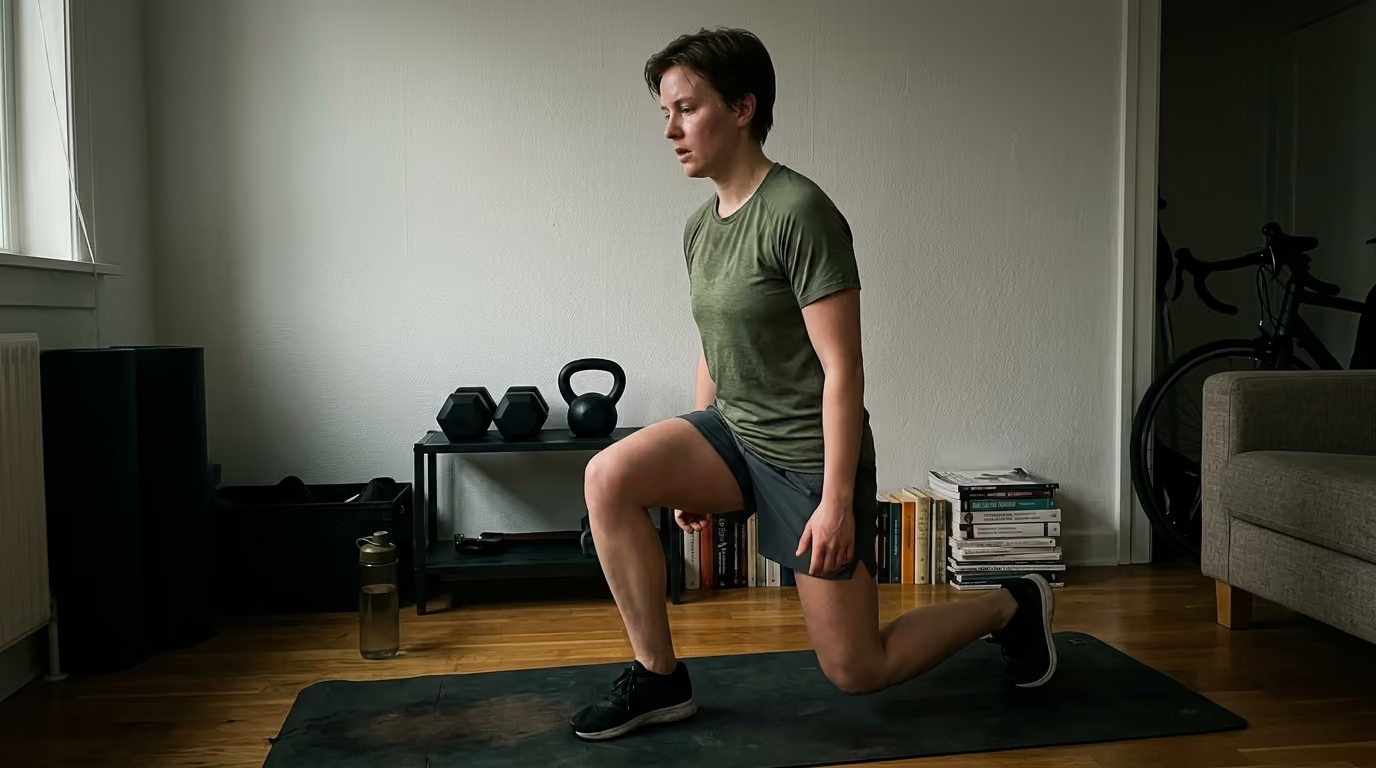

Four primary individual factors shape training adaptations across lifespan stages to help athletes optimize strength, hypertrophy, and recovery programming.





You finish a standard training session and notice your knees ache, your lower back feels exhausted, and your progress has stalled for three weeks. Your workout partner followed the exact same routine and set personal records without joint irritation. The routine was designed for a broad demographic average rather than your specific body proportions, training background, and recovery capacity. Standardized templates often fail because human bodies differ in mechanics, physiology, and prior physical exposure.
A successful strength and conditioning routine must be built around your specific baseline capacity, movement mechanics, training background, and recovery tolerance rather than generic demographic categories.
Individualizing a fitness program requires assessing what you want to achieve, your current training tolerance, your joint mechanics, and your personal rate of recovery. While biological sex, chronological age, body dimensions, and athletic background offer useful starting baselines, they are population averages rather than rigid individual rules. Real progress comes from applying progressive overload, selecting exercises that match your limb lengths, managing fatigue, and making systematic adjustments based on your observed performance over time.
To understand how to individualize a program, you must first understand the physiological principles that govern how the human body adapts to physical stress. A common mistake in fitness planning is treating physical capacity as a single, general attribute. When people say someone is strong or fit, they often combine several distinct physiological traits into one broad label.
Absolute strength refers to the total amount of external load you can move or the raw force you can produce. A 300-pound barbell deadlift or a 70-pound dumbbell overhead press represents absolute strength. Relative strength expresses that force output in proportion to your body mass or your lean muscle mass. A person who weighs 150 pounds and squats 300 pounds has a higher relative strength ratio than a 250-pound person who squats 350 pounds.
These two measurements serve different functions in training analysis:
When evaluating sex differences in research, males generally display higher absolute strength numbers because they typically start with larger skeletal frames and more baseline muscle mass. When strength is evaluated relative to lean muscle mass or baseline body weight, the gap between sexes narrows significantly. An effective training plan never treats strength as a context-free number.
Strength is not a single physiological quality that transfers equally across all movements. Force production depends heavily on the specific neuromuscular patterns required by a given movement. A person might demonstrate exceptional force production on a seated leg press machine while struggling with balance and force transmission in a free-weight barbell squat.
Strength encompasses several distinct physical adaptations:
Research demonstrates that strength adaptations remain accessible across the entire human lifespan. In a systematic review examining resistance training in healthy older adults, participants achieved average strength gains of approximately 18.4% and improved their rate of force development by 26.7%. Aging does not remove your ability to develop force. It simply requires you to match exercise selection, volume, and movement complexity to your current joint tolerance and health baseline.
Muscle hypertrophy refers to an increase in the physical size of skeletal muscle fibers. Strength gains, however, come from both structural changes in the muscle and neural improvements in the central nervous system. When you begin a new exercise, your nervous system learns to coordinate motor units, recruit muscle fibers more efficiently, and inhibit antagonist muscles.
During the initial weeks of a new program, rapid strength improvements often occur with minimal changes in muscle size. This rapid progression reflects motor learning and improved neuromuscular efficiency rather than sudden muscle tissue growth. As training status advances, further strength increases depend more heavily on structural muscle hypertrophy and continued refinement of lift technique.
The distinction between absolute and relative adaptation is critical when reviewing exercise science. A systematic review published by Roberts and colleagues in 2020 evaluated young to middle-aged adults performing identical resistance training programs. The analysis found no significant sex differences in muscle hypertrophy or lower-body strength adaptations, while females demonstrated greater relative upper-body strength increases. Another meta-analysis by Refalo and colleagues noted greater absolute increases in muscle size among males, but relative muscle growth was nearly identical between sexes.
Training status describes how well adapted your neuromuscular system, connective tissues, and metabolic pathways are to resistance exercise. Your training status is specific to the movements and exercise modalities you have practiced consistently over recent months.
The American College of Sports Medicine outlines clear distinctions across training backgrounds:
A trainee can be advanced in one physical domain while remaining a novice in another. An experienced marathon runner may have an advanced aerobic base while possessing the resistance-training status of a complete novice. The American College of Sports Medicine recommends that training progression adjust loading ranges and periodization complexity based on actual lifting experience rather than age alone.
People do not respond identically to the exact same workout routine. Individual responses are shaped by genetics, sleep quality, daily nutritional intake, psychological stress, previous athletic history, and structural joint anatomy.
A comprehensive review of interindividual training variation by Sparks and colleagues evaluated 149 exercise studies. The researchers emphasized that apparent non-responders to training often experience measurement errors, inconsistent execution, or poor recovery rather than true biological inability to adapt. Furthermore, a study on trained young men found that between-person variability in muscle growth was roughly 40 times larger than the variability caused by tweaking specific training variables.
Intrinsic individual factors strongly influence the rate of physical change. No single combination of sets, repetitions, or rest periods produces identical results for every lifter. You can explore structured approaches within our strength, fitness, and body composition resources to build programs that adapt to individual response rates.
Designing an effective program requires separating biological differences from outdated social assumptions. Men and women do not require completely different workout styles to build strength, improve stamina, or alter their body composition.
On average, biological males possess higher total body mass, greater skeletal muscle mass, lower body fat percentages, and denser bone structures than biological females. These baseline differences are primarily driven by lifelong endocrine profiles, particularly circulating testosterone levels during and after puberty.
An ACSM review examining sex differences in athletic performance reported an average performance gap of 10% to 30% across various competitive sporting events. The size of this gap depends heavily on the specific physical demands of the event. Sports that rely on absolute upper-body power and raw speed show wider disparities, whereas ultra-endurance events show narrower performance differences.
These group averages must not be treated as rigid rules for individual lifters. Human physical performance exists on an overlapping bell curve. Many trained female athletes possess far higher absolute strength and power outputs than untrained or recreationally active males.
A widespread myth in fitness culture suggests that women cannot build meaningful muscle mass or that they require high-repetition, low-load training to tone without adding size. The scientific literature demonstrates the opposite. Skeletal muscle tissue in females responds to mechanical tension and volume with robust hypertrophic adaptations.
The systematic review and meta-analysis by Roberts, Nuckols, and Krieger found no significant sex differences in relative muscle hypertrophy when comparing young to middle-aged adults. When men and women perform similar resistance protocols relative to their baseline capacity, their relative percentage increases in muscle cross-sectional area are remarkably similar.
The practical programming takeaways are clear:
Strength adaptations follow a similar pattern to muscle growth across both sexes. A meta-analysis by Schoenfeld and colleagues examined strength and hypertrophy across multiple training studies. The researchers found that relative lower-body strength adaptations were comparable between men and women, while females often demonstrated larger relative upper-body strength gains.
Because many women start with less upper-body resistance training experience and lower baseline upper-body mass, their relative ceiling for adaptation is exceptionally high. Initial upper-body strength gains in female lifters are often rapid when they are exposed to compound pressing and pulling exercises.
When programming for female lifters, coaches should avoid neglecting heavy upper-body work. Compound movements such as overhead presses, bench presses, and horizontal rows provide powerful adaptation stimuli that build functional capability and upper-body bone mineral density.
Muscle fatigue and recovery profiles display several interesting sex-related trends. During sustained submaximal isometric contractions and certain dynamic resistance protocols, females frequently demonstrate greater fatigue resistance than males.
Several physiological mechanisms contribute to this difference:
A 2025 scoping review analyzing neuromuscular fatigue in resistance-trained individuals found minor to nonexistent sex differences across many standard lifting protocols. However, male lifters showed higher fatigability during sets using moderate loads, shorter rest intervals, and complex multi-joint movements.
A recent study evaluating repeated bench press sets found that female lifters maintained their repetition performance better across consecutive sets than male lifters. Despite completing higher relative training density, the female participants recovered their baseline force production at a similar rate. You can review our training and performance guidance for practical methods to track set fatigue and optimize session volume.
During endurance exercise performed at similar relative intensities, female physiology is associated with higher rates of lipid oxidation and lower rates of carbohydrate and amino acid oxidation. Research by Tarnopolsky and colleagues shows that female skeletal muscle utilizes intramyocellular lipids more readily, which spares muscle glycogen during long training sessions.
Despite these metabolic efficiencies, biological males maintain an average advantage in maximal endurance performance. Elite male endurance athletes typically possess maximal oxygen uptake values approximately 10% higher than elite females when normalized to body mass. This difference is driven primarily by higher hemoglobin concentrations, greater blood volume, larger stroke volume, and lower average body fat percentages.
These physiological variations do not justify separate training philosophies. Both men and women improve their aerobic fitness through structured cardiovascular training, including low-intensity steady-state base work and high-intensity interval training.
The influence of menstrual cycle phases on strength and athletic performance has received substantial research attention. While fluctuating levels of estrogen and progesterone can alter substrate use, body temperature, and fluid balance, their direct impact on strength output varies widely among individuals.
Key considerations for menstrual cycle tracking include:
Research does not support rigid, calendar-based workout changes for every female lifter. Universal phase-based programming often creates unnecessary complexity without reliable performance benefits. The most practical approach is symptom-guided and performance-monitored autoregulation. If an athlete experiences severe symptoms during a specific phase, adjusting training volume and intensity for several days is appropriate.
Physical capability naturally changes across the lifespan, but chronological aging does not eliminate your capacity to build muscle, develop strength, and enhance cardiovascular fitness.
The natural aging process is often accompanied by sarcopenia, which is the involuntary loss of skeletal muscle mass, and dynapenia, which is the loss of muscle strength and power. Dynapenia often progresses more rapidly than sarcopenia because age-related physical decline involves neural changes, loss of motor units, and altered tendon compliance alongside muscle fiber atrophy.
The selective atrophy of type II muscle fibers is a hallmark of aging skeletal muscle. Because type II fibers are responsible for rapid, high-force contractions, older individuals often experience a faster decline in power output and rate of force development than in basic isometric strength. This loss of rapid force generation directly influences balance recovery, walking speed, and the ability to prevent accidental falls.
A systematic review published in the Journal of Applied Physiology evaluated muscle fiber adaptations in older adults following progressive resistance training. The analysis showed that older men and women achieved moderate to large increases in both type I and type II muscle fiber cross-sectional areas. Resistance training directly counters age-related muscle atrophy regardless of when you begin.
The human body retains its ability to adapt to mechanical overload well into advanced age. Resistance training remains the most effective clinical intervention for restoring functional independence, enhancing metabolic health, and increasing bone density in older populations.
Research published in Frontiers in Physiology examined resistance training adaptations in healthy older adults across multiple clinical trials. The researchers found that progressive loading produced average improvements of 18.4% in absolute muscle strength and 26.7% in rate of force development. Older muscle tissue remains fully responsive to progressive overload.
For older adults diagnosed with clinical sarcopenia, evidence-based recommendations suggest training at moderate to high intensities. Effective protocols typically involve loads between 60% and 80% of one-repetition maximum, performed two to three times per week for two to three sets of 8 to 12 repetitions per major movement pattern. You can explore our healthy aging strategies for more detailed guidance on preserving physical capability throughout your life.
Managing fatigue and joint tolerance becomes increasingly important as lifters age. While older adults can and should train with sufficient intensity, their total weekly training volume and exercise frequency require careful management.
A 2024 review in Sports Medicine evaluated resistance training volume in older populations. The findings indicated that low to moderate training volumes produce substantial improvements in physical function, muscle size, and lean mass. While higher training volumes can yield additional strength gains, they also increase joint stress and recovery demands.
Older trainees should focus on the following programming rules:
Exercise selection for older adults must prioritize safety, stability, and functional transfer to daily life. Free-weight barbell exercises can be highly effective, but they are not mandatory for achieving excellent health and strength outcomes.
Machines, cables, resistance bands, dumbbells, and supported bodyweight exercises offer stable alternatives that load target musculature while minimizing spinal compression and balance hazards. For individuals with joint limitations or poor balance, seated leg presses, chest-supported rows, and cable presses provide an intense stimulus without elevated risk of falling.
Key movement patterns for older trainees should include:
Chronological age provides very little information about a person's actual physical capacity. A 65-year-old veteran who has maintained a consistent lifting routine for four decades possesses far greater tissue tolerance and neuromuscular skill than a sedentary 35-year-old.
A seasoned older lifter may require sophisticated programming strategies, planned deload weeks, and careful volume management to continue making subtle improvements or maintaining peak strength. Conversely, a 70-year-old beginner will experience rapid neuromuscular adaptations from basic, low-volume movements performed with light resistance. Programs must always be calibrated to training age and tissue capacity rather than birth dates.
Body size, skeletal proportions, and limb lengths significantly affect biomechanics, exercise performance, and equipment compatibility. Treating two individuals of different heights and limb proportions as if they should move identically creates inefficient technique and increases injury risk.
Your skeletal structure dictates the lever arms and torque required to move an external load. Lifters with longer femurs relative to their torso length must lean further forward during a standard back squat to keep the center of mass balanced over the midfoot. This forward lean increases the moment arm on the lumbar spine and hips while decreasing the mechanical demand on the quadriceps.
Conversely, a lifter with short femurs and a long torso can remain upright during a squat, distributing the load more evenly between the knees and hips. Similar leverage differences apply to the bench press and deadlift:
Forcing every trainee into an identical stance or grip width ignores fundamental skeletal differences. Stance width, grip spacing, and exercise selection should be adjusted to match your individual bone structure and joint anatomy.
Comparing strength across different body weights requires an understanding of physical scaling laws. As an organism increases in linear size, its body volume and mass increase cubically, while muscle cross-sectional area and force production capacity increase only quadratically.
Because of this geometric reality, larger individuals naturally have lower strength-to-body-weight ratios than smaller individuals, even when they carry high amounts of functional muscle mass. Dividing the load lifted directly by total body weight unfairly penalizes heavier lifters.
Common methods for scaling strength include:
No single scaling metric fits every situation. Coaches and athletes should select the scaling method that aligns with the specific performance question being asked.
Standard commercial fitness equipment is built around average body dimensions. Larger-bodied individuals or lifters with high body mass often encounter physical constraints that have nothing to do with effort or motivation.
Common equipment limitations include:
Simple exercise modifications resolve many of these mechanical hurdles:
A comprehensive review by O'Donoghue and colleagues confirmed that supervised resistance training significantly improves body composition, reduces fat mass, and increases functional capacity in adults with overweight or obesity. Adapting equipment to fit the person ensures consistent long-term adherence.
When fat loss is a primary goal, tracking scale weight alone can be highly misleading. Resistance training alters body composition by stimulating muscle protein synthesis and preserving metabolically active tissue during a caloric deficit.
A systematic review published in Obesity Reviews by Lopez and colleagues examined resistance training during weight reduction. The researchers demonstrated that adding resistance exercise preserves fat-free mass and enhances fat loss, even when total body weight on the scale decreases at a slower pace compared to dieting alone.
A trainee who is building muscle while losing fat may see little change in body weight over an eight-week period. However, their waist circumference may decrease, their resting blood pressure may improve, and their absolute strength may increase. Evaluating progress through waist measurements, strength logs, and photos provides a far more accurate reflection of body composition improvements than a bathroom scale.
Your training background determines the volume, intensity, and structural variety required to stimulate continued physical adaptations. Programming must meet you at your current adaptive threshold.
A beginner or novice lifter possesses an exceptional sensitivity to physical stimuli. Almost any structured, progressive routine will produce measurable adaptations in muscle size, strength, and endurance.
Novice programming should adhere to the following principles:
A novice can achieve outstanding progress using three brief full-body sessions per week, performing two to three sets of basic compound movements per session. Adding high complexity or training to failure is unnecessary and increases recovery demands without providing additional benefit.
After six months to two years of consistent lifting, the rapid progress of the novice phase naturally slows. The nervous system has developed high efficiency, and further gains require higher total workloads, targeted exercise selection, and planned variation.
Intermediate programming requires:
Intermediate lifters must track their recovery carefully. As workouts become more demanding, sleep quality, daily nutrition, and life stressors play a decisive role in whether a training block succeeds. You can review our recovery and sleep habits resources for evidence-based methods to support training adaptations.
Advanced lifters have spent years accumulating training volume and are operating near their individual genetic potential. For these individuals, standard linear progression no longer works, and marginal improvements require carefully calculated training stimuli.
The American College of Sports Medicine recommends that advanced lifters utilize periodized loading strategies across a broad spectrum of intensities. Advanced programs often cycle through distinct phases focusing on hypertrophy, maximal strength, and power across several months.
Key requirements for advanced trainees include:
Veterans and former athletes returning to training after an extended layoff represent a unique category. Due to residual motor patterns and retained myonuclei from previous training, detrained individuals often regain lost strength and muscle mass much faster than true beginners.
However, muscle memory does not protect unconditioned connective tissues. Tendons, ligaments, and joint capsules adapt to mechanical loading much more slowly than skeletal muscle. Returning lifters who attempt to lift weights based on their past personal records frequently suffer acute tendinopathies or muscle strains.
A safe re-entry protocol should:
To turn physiological principles into a working training routine, you need a systematic, repeatable framework. Follow this six-step process to build a program customized to your needs.
Identify the primary physiological adaptation you want to achieve over the next 12 to 16 weeks. A program designed to maximize absolute strength will look different from a routine built for functional mobility, muscle hypertrophy, or endurance.
The American College of Sports Medicine outlines clear, goal-specific training baselines:
Review your actual physical activity over the past eight weeks. Record your weekly lifting frequency, average set volume, cardiovascular exercise, job-related physical demands, and sleep duration.
Establish your true starting point rather than your aspirational capacity. If you have been completely inactive for two months, your current capacity is that of an untrained beginner, regardless of what you could lift five years ago.
Select exercises that train the fundamental human movement patterns while fitting your unique limb lengths and joint tolerances.
The fundamental movement patterns include:
Choose the variation of each pattern that allows you to move through a full active range of motion without joint pain.
Start your training block with the lowest volume that produces a positive adaptive signal. For most trainees, this means starting at the lower end of weekly set recommendations:
Starting at the lower end of the volume spectrum leaves room for progressive overload over time while keeping recovery demands manageable.
Progressive overload is the gradual increase of stress placed on the body during training. You can achieve overload through multiple methods:
Increase external load gradually, typically by 2.5% to 5% when you can complete all planned sets and repetitions with perfect technique.
Do not rely on scale weight or gym performance alone to gauge your progress. Monitor several markers across different domains:
Adjust your program when the data shows persistent fatigue, joint pain, or stalled progress across two or more consecutive weeks.
To see how these principles apply in practice, review these five common training scenarios.
A 30-year-old female with no prior resistance training background wants to build lower-body muscle mass and improve overall bone density.
A 38-year-old male veteran with ten years of lifting experience reports aching shoulders, poor sleep, and declining bench press numbers over the last month.
A 71-year-old individual wants to climb stairs without assistance, carry groceries comfortably, and reduce their risk of falls.
A 45-year-old individual with obesity wants to build strength and improve metabolic health but feels uncomfortable getting down onto the gym floor.
A 28-year-old active-duty service member needs to pass a tactical fitness test requiring heavy deadlifts, pull-ups, and a timed five-mile run.
Avoiding common programming mistakes will save you time and prevent unnecessary injuries.
This article is for educational and informational purposes only and does not constitute medical advice, physical therapy, or individualized healthcare recommendations. Always consult a qualified healthcare professional, physician, or certified physical therapist before beginning any new exercise routine, especially if you have pre-existing medical conditions, cardiovascular disease, joint pathology, or are recovering from surgery.
No. Men and women have the same basic skeletal muscle anatomy and neuromuscular systems. Both sexes benefit from the same fundamental compound movement patterns, including squats, hinges, presses, pulls, and carries. Exercise selection should be guided by individual goals, joint mobility, limb lengths, and preferences rather than biological sex.
Focus on managing total weekly volume, perfecting movement quality, and giving yourself adequate recovery between hard sessions. Keep using moderate to heavy loads to maintain muscle mass and bone density, and include light-load, high-speed movements to preserve rate of force development and balance.
Due to the laws of allometric scaling, body mass increases cubically with size while muscle cross-sectional area and force output increase quadratically. Shorter lifters also have shorter limb lengths, which reduces the total distance the weight must travel and decreases the mechanical lever arms on their joints.
Detrained lifters typically regain strength and muscle size much faster than beginners due to retained neuromuscular coordination and myonuclei in the muscle fibers. Most individuals can recover a significant portion of their previous performance within 6 to 12 weeks of structured, progressive training, provided they do not overload their connective tissues too quickly.
Revisit this guide whenever you experience a training plateau lasting longer than four weeks, when transitioning between distinct fitness goals, after returning from a significant training layoff, or when modifying your routine to accommodate joint changes and aging.
Building a capable, durable body requires matching proven physiological principles to your unique individual capacity, allowing you to train productively for decades to come.
Follow BattleVet for practical guidance on military and veteran health, strength, recovery, testosterone, sleep and healthy aging. Stay connected for new articles, research backed insights and clear information to help you stay capable for the years ahead.


Build better habits around strength, recovery, sleep, hormones and healthy aging with practical guidance for active military personnel and veterans.
Explore BattleVet