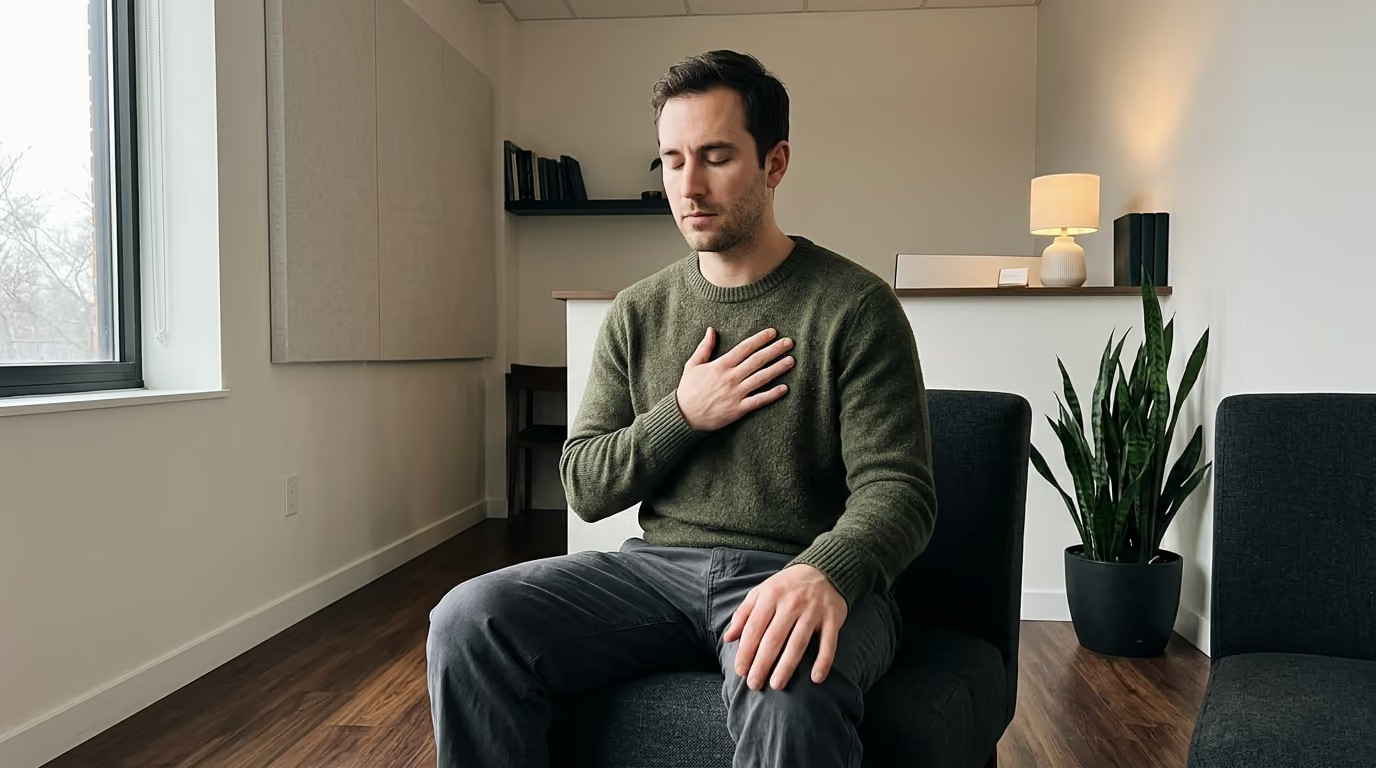

High nervous arousal masquerades as usable energy, yet it actually drains your body without practical physiological tools to restore lasting calm.





If you are in immediate danger, call 911. For 24/7 support, call or text 988 and press 1 for the Veterans Crisis Line, or text 838255.
You sit with your back against the wall at a crowded restaurant, your eyes tracking every person who enters the door. A fork drops on the floor behind you, and your body jolts with a sudden spike in heart rate before your mind can process the sound. By the time you get home, your jaw aches from clenching, and your mind feels completely drained, yet when you lie down in bed, your brain refuses to switch off.
Hypervigilance is a protective biological state where the nervous system remains stuck on high alert, but you can retrain your threat-detection system through grounded regulation, environmental clarity, and evidence-based care.
Hypervigilance occurs when your brain and autonomic nervous system continuously scan the environment for danger, treating ordinary, ambiguous cues as imminent threats. It is not an imaginary flaw or a sign of weakness. It is an adaptive defense mechanism that has become persistent, sensitive, and difficult to deactivate. Regaining calm requires distinguishing between genuine risks and false alarms, restoring physiological safety, and systematically retraining the brain to stand down when danger has passed.
The human nervous system is designed to keep you alive. To do this, it operates an internal surveillance network that assesses whether an environment is safe, uncertain, or hazardous. When this system works as intended, it detects an immediate risk, activates physical defenses, and then returns to baseline once the hazard is gone.
In hypervigilance, this system becomes biased toward detecting danger. The threshold for what registers as a threat drops significantly. Neutral stimuli, such as a sudden noise, a shift in someone's tone of voice, or an unexpected change in plans, are interpreted as immediate hazards.
This ongoing readiness is driven by a physiological feedback loop:
Research published in psychiatric literature shows that heightened visual scanning and persistent physiological arousal create a forward feedback loop. The more you scan your surroundings, the more ambiguous details you notice. The more ambiguous details you notice, the more danger you anticipate. Over time, the body stays in a state of high threat detection, even in quiet, secure settings.
It is critical to recognize that physical arousal does not equal usable energy. People in a state of chronic nervous system activation often feel completely exhausted, foggy, and emotionally drained. Their systems are burning fuel at an unsustainable rate just to maintain a baseline of defensive readiness.
Alertness is not inherently bad. Humans need vigilance to navigate hazardous work environments, drive safely in bad weather, and protect their families from actual harm. The goal of nervous system regulation is never carelessness. The goal is accurate threat discrimination.
Appropriate vigilance is proportionate to an identifiable, present risk. It is flexible, responsive to changes in context, and capable of winding down when the environment is secure. For example, staying alert while walking down an unlit alley at night is practical vigilance. Once you are inside a locked, secure house, your system should gradually power down.
Maladaptive hypervigilance is broad, rigid, and resistant to reassuring facts. It operates under the assumption that danger is present everywhere at all times. A hypervigilant person continues scanning the room, evaluating exits, and anticipating betrayal long after they have entered a safe space.
Calm is not the same as letting your guard down dangerously. Calm is the ability to choose your response rather than living in an automatic, reactive alarm state. Improving nervous system regulation broadens your choices. It allows you to stay sharp when necessary while giving your body the rest it needs to recover.
This distinction matters because telling someone to relax when they live in an unstable or dangerous environment is neither practical nor safe. If you live in an unsafe neighborhood, face domestic intimidation, or work in a high-risk occupation, your alertness serves a real purpose. Regulation practices must help you evaluate the reality of your surroundings rather than forcing you to ignore real problems.
Hypervigilance rarely happens in isolation. It is part of a broader spectrum of nervous system states that alter how you interact with people, manage your emotions, and process physical sensations.
A startle reaction is a normal, primitive reflex designed to protect vulnerable body parts from unexpected physical impacts. When a loud noise occurs, the body flinches, the eyes blink, and the neck muscles contract.
In a regulated system, the conscious mind quickly assesses the sound, realizes there is no danger, and settles back down. In an overactive system, the startle response is amplified and prolonged. The jump is more violent, the heart rate stays elevated for minutes or hours, and the person may experience immediate anger, panic, or embarrassment. Laboratory studies show that people with persistent trauma symptoms display significantly larger startle responses even during calm baseline conditions.
Chronic activation taxes the prefrontal cortex, the part of the brain responsible for impulse control, patience, and rational problem-solving. When your survival system is running in the background, your capacity to handle daily friction drops.
Irritability, snapping at family members, and sudden angry outbursts are common manifestations of hyperarousal. They happen because the nervous system interprets neutral friction, like a spilled drink or a traffic delay, as an unbearable demand on an already overloaded system. Explaining this physiological link does not excuse harmful behavior or verbal abuse, but understanding the mechanism helps you address the root cause through nervous system recovery rather than just trying to suppress your feelings.
When high activation continues without relief, the nervous system often resorts to a protective shutdown. Emotional numbing involves feeling disconnected from others, losing interest in activities you used to enjoy, or feeling as though you are viewing life through a pane of glass.
Many people confuse emotional numbing with genuine calm. True calm involves feeling safe, present, and capable of experiencing both positive and negative emotions with flexibility. Numbing is a defensive disconnection designed to dull overwhelming sensory input. It prevents pain, but it also blocks connection, satisfaction, and joy.
Avoidance is the primary behavioral engine that keeps hypervigilance alive. When an environment, person, or conversation triggers intense activation, the easiest immediate solution is to stay away.
There are three types of avoidance:
While avoidance brings immediate relief, it comes at a high price. It shrinks your world and prevents your brain from learning that you can safely handle ordinary situations.
A useful framework for understanding these states is the window of tolerance model.
Using this model helps you select the right tool for your current state. If you are above your window, you need practices that slow the system down. If you are dropped below your window into shutdown, you need gentle sensory activation and movement to bring you back into engagement.
Hypervigilance is a major feature of Post-Traumatic Stress Disorder (PTSD), but it is not exclusive to it. Experiencing high alertness does not automatically mean you have PTSD.
According to the National Institute of Mental Health (NIMH), an adult PTSD diagnosis requires persistent symptoms across four distinct clusters that last for at least one month:
Trauma exposure is widespread across the globe. Data from the World Health Organization World Mental Health Surveys indicates that approximately 70.4 percent of people have experienced at least one traumatic event. However, lifetime PTSD prevalence is estimated at roughly 3.9 percent in the general population and 5.6 percent among trauma-exposed individuals. In the United States, the National Center for PTSD estimates that approximately 6 percent of the population will experience PTSD at some point in their lives.
Hypervigilance can also stem from severe anxiety disorders, prolonged work stress, or chronic sleep deprivation. Furthermore, medical and physiological conditions can mimic or amplify nervous system alarms. Hyperthyroidism, adrenal imbalances, autonomic neuropathy, fibromyalgia, and stimulant side effects can cause rapid heart rates, sweating, and persistent jitteriness. A comprehensive health check helps ensure that physical health issues are not masquerading as psychological stress. For more on managing systemic strain, explore our military health articles that break down physiological resilience.
Sleep and hypervigilance have a direct, bidirectional relationship. When the threat detection system is active, the brain perceives falling asleep as a dangerous vulnerability. If your body believes a hazard is nearby, it will actively resist sleep.
Clinical sleep studies show that individuals with trauma-related hyperarousal experience significant alterations in sleep architecture:
This creates an exhausting cycle. Poor sleep impairs the prefrontal cortex, which in turn makes the threat detection system more reactive and paranoid the following day.
To address this issue, the Department of Veterans Affairs identifies Cognitive Behavioral Therapy for Insomnia (CBT-I) as the recommended first-line approach for chronic insomnia in veterans with trauma histories. CBT-I focuses on retraining the brain to associate the bed with sleep rather than wakeful scanning.
Medications can provide short-term relief in acute crises, but clinical practice guidelines caution against relying on sedatives as a sole long-term solution. Sedating agents can interact poorly with other substances and do not correct the underlying threat-response loop. If you want to dive deeper into sustainable physical recovery strategies, review our recovery and sleep articles.
Separating verified clinical interventions from experimental wellness trends is critical when dealing with nervous system health. The scientific literature provides clear insight into what works, what holds promise, and where recovery limits exist.
Trauma-focused psychotherapies represent the gold standard for resolving persistent hyperarousal and PTSD symptoms. The VA/DoD Clinical Practice Guidelines and the National Institute for Health and Care Excellence (NICE) give strong recommendations to three primary manualized therapies:
For targeted sleep recovery, CBT-I has the strongest evidence base across both civilian and veteran clinical trials.
Non-trauma-focused interventions, such as mindfulness-based stress reduction, somatic grounding, biofeedback, and progressive muscle relaxation, show positive benefits for daily symptom management. However, research indicates that these practices are best used as stabilizing tools rather than complete replacements for trauma-focused care. They help lower baseline arousal so individuals can engage in daily life and therapeutic work.
Clinical research emphasizes that nervous system recovery is rarely a complete erasure of past adaptations. A study reported by the VA found that even after successful PTSD treatment, residual symptoms are common. Hypervigilance persisted in 30 percent of participants, exaggerated startle in 31 percent, and insomnia in 34 percent.
These numbers do not mean treatment failed. They demonstrate that recovery is about restoring function and expanding your capacity for calm rather than expecting perfection. An experienced threat detection system may always respond quickly, but with proper regulation, it will no longer control your daily choices.
To step out of the hypervigilant state, you need concrete, physical steps that signal safety to the autonomic nervous system. Use this six-step framework to manage rising alertness.
Before attempting to calm your body down, determine if there is an active threat in your physical environment.
Ask yourself:
If you are in actual danger, take appropriate protective action immediately. If you are physically secure, move to step two.
Hypervigilance pulls attention into internal worst-case scenarios. Orienting anchors your perception back into the present room.
Match your regulation tool to your current nervous system state.
If your system is overactivated (high heart rate, racing thoughts, muscle tension):
If your system is in a shutdown state (numb, foggy, disconnected):
When hypervigilance spikes, the brain confuses possibilities with certainties. Interrupt this cognitive fusion by dividing your experience into three clear columns:
This structured approach respects your desire for safety while cutting off catastrophic assumptions.
Safety behaviors offer a short-term reduction in anxiety at the expense of long-term freedom. If you regularly check the front door locks five times before bed, do not try to stop cold turkey. Instead, reduce the behavior gradually.
The nervous system thrives on predictability. You can lower your baseline alertness by establishing steady physiological routines:
For more structured wellness strategies, check out our sleep, stress, and resilience resources.
Navigating hypervigilance requires avoiding common traps that inadvertently worsen the condition.
Hypervigilance is an intelligent biological response that was learned in challenging environments. Treating it as a personal defect creates shame, which only elevates nervous system distress. Acknowledge that your system is trying to protect you, even if its current setting is overly sensitive.
Telling yourself or someone else to simply "calm down" rarely works. The nervous system does not speak in abstract logic. It responds to physical sensory inputs, factual risk assessments, and steady environmental proof.
While controlled breathing is a helpful tool, focusing intensely on internal breathing mechanics can trigger anxiety or panic in some individuals. If focusing on your breath makes you feel claustrophobic or lightheaded, switch immediately to external sensory grounding, walking, or physical tasks.
Feeling no distress because you have shut down all emotional input is not a sign of recovery. It is a sign of hypoarousal. Healing means expanding your ability to feel connected, present, and engaged without feeling overwhelmed.
Gradual desensitization works, but forcing yourself into overwhelming situations without regulation skills can reinforce trauma responses. Systematically work through mild to moderate stressors before tackling severe triggers. For guidance on rebuilding lifestyle routines, view our veteran life articles.
The following case patterns illustrate how hypervigilance manifests across various settings and how to apply practical interventions.
While self-regulation strategies are essential tools, certain clinical presentations require structured professional intervention.
You should consult a qualified physician or licensed mental health professional if you experience:
Evidence-based therapies like CPT, PE, EMDR, and CBT-I provide clear, highly structured pathways out of persistent trauma loops. Seeking care is an active, capable step toward mastering your physiology. You can discover additional research-backed guides in our evidence-based health library.
This article is provided for educational and informational purposes only and does not constitute medical, psychological, or clinical advice. The information presented here should not be used to diagnose, treat, or manage any mental health condition, physical disease, or medical disorder. Always consult a qualified physician, psychiatrist, or licensed mental health provider regarding individual health assessments, diagnostic evaluations, and medical treatments.
Hypervigilance can be significantly reduced to the point where it no longer interferes with your daily life, relationships, or work. While an experienced nervous system may always retain a quick threat-detection reflex, evidence-based therapies and consistent regulation practices teach the brain to evaluate risks accurately and return to calm promptly.
No. Hypervigilance is a key diagnostic feature of PTSD, but it also occurs in general anxiety disorders, panic disorder, prolonged high-stress environments, and chronic sleep deprivation. Furthermore, medical conditions like hyperthyroidism or medication side effects can cause identical physical sensations of persistent alarm.
Focusing intensely on internal bodily sensations can trigger hyper-awareness and distress for individuals with high panic sensitivity. If slow breathing makes you feel trapped, lightheaded, or more anxious, switch immediately to external orienting exercises, physical movement, or structured practical tasks to ground your nervous system.
Living in a chronic state of high alertness keeps stress hormones like cortisol and adrenaline elevated. Over time, this ongoing strain can lead to cardiovascular stress, weakened immune function, systemic inflammation, digestive issues, and profound physical exhaustion. Regulating your threat-response loop protects both your mental well-being and your long-term physical health.
When to revisit this resource: Return to this guide whenever you notice your startle reflex escalating, your sleep quality deteriorating, or your daily patience wearing thin.
Regaining calm is not about removing your ability to protect yourself, but about restoring your freedom to choose how you live.
Follow BattleVet for practical guidance on military and veteran health, strength, recovery, testosterone, sleep and healthy aging. Stay connected for new articles, research backed insights and clear information to help you stay capable for the years ahead.


Build better habits around strength, recovery, sleep, hormones and healthy aging with practical guidance for active military personnel and veterans.
Explore BattleVet