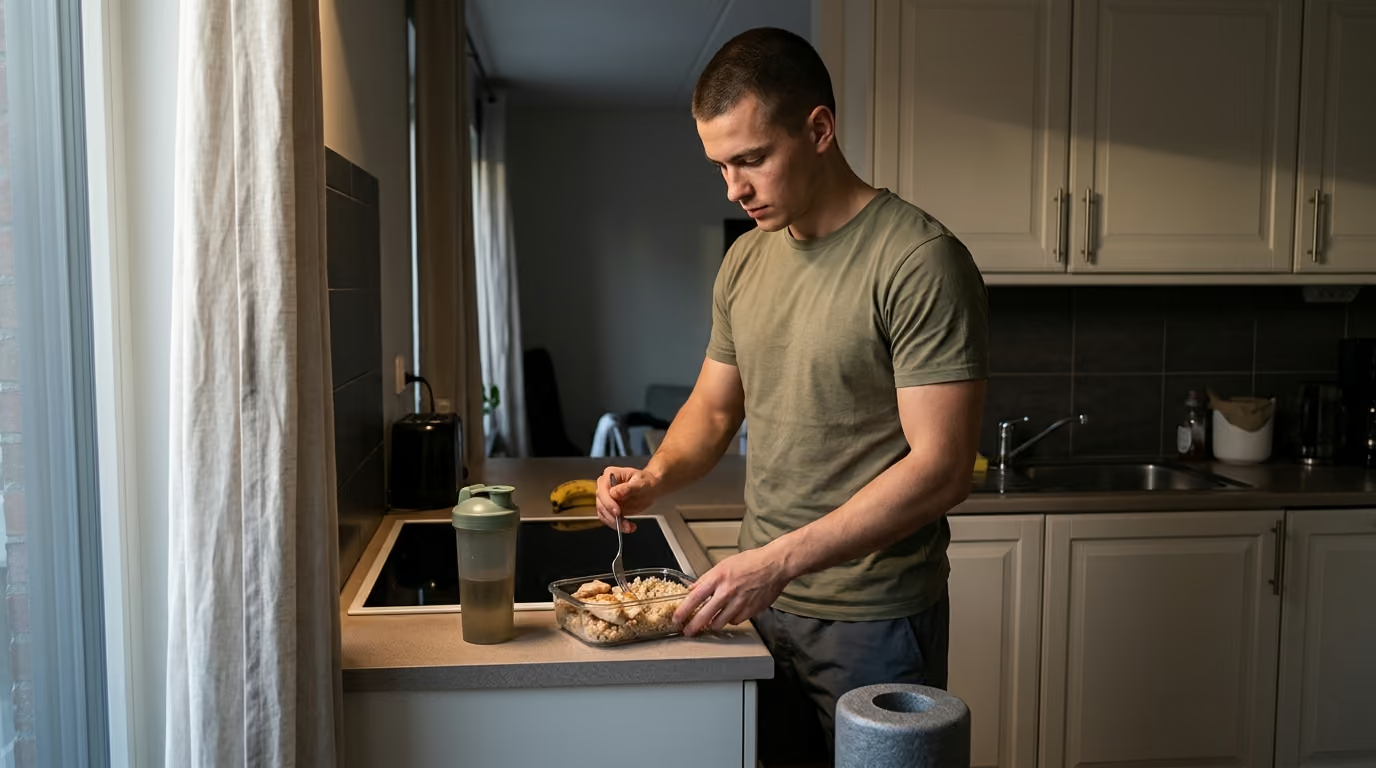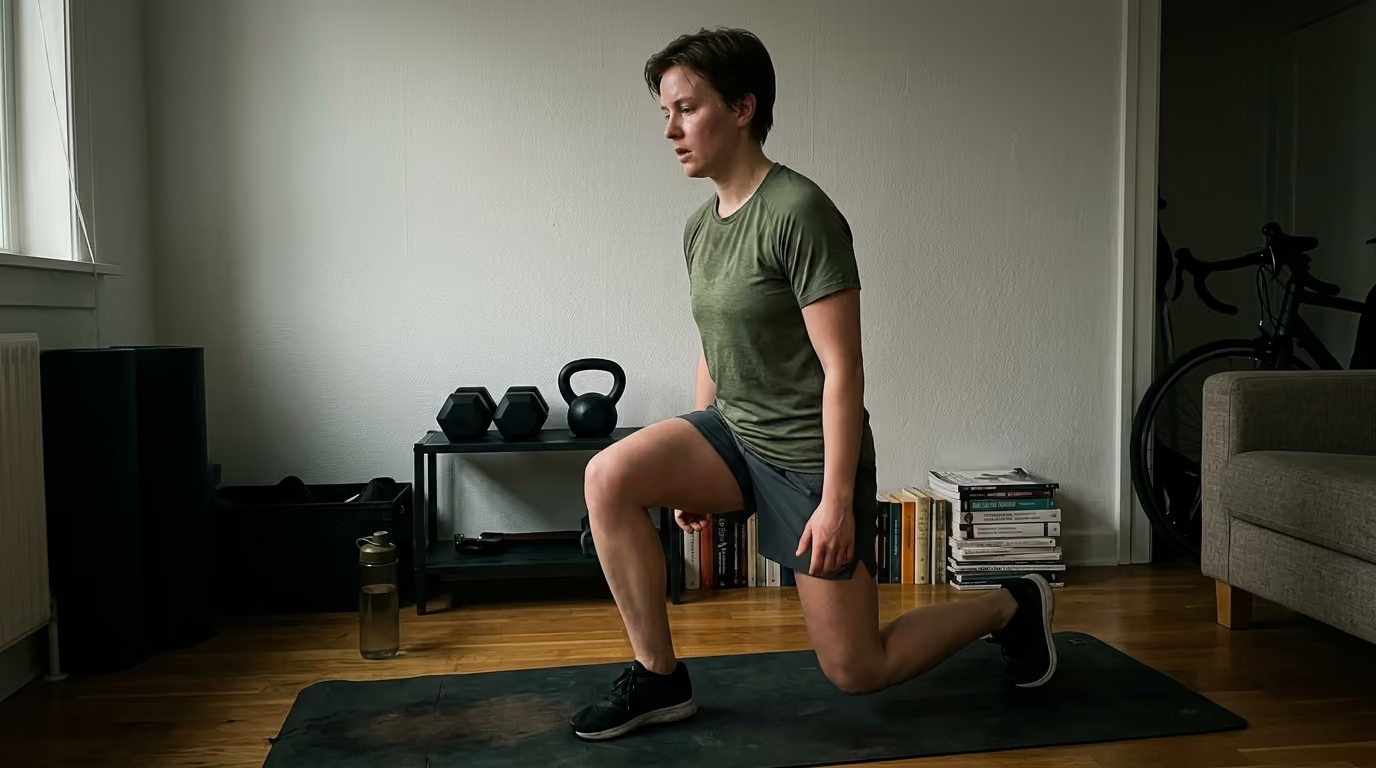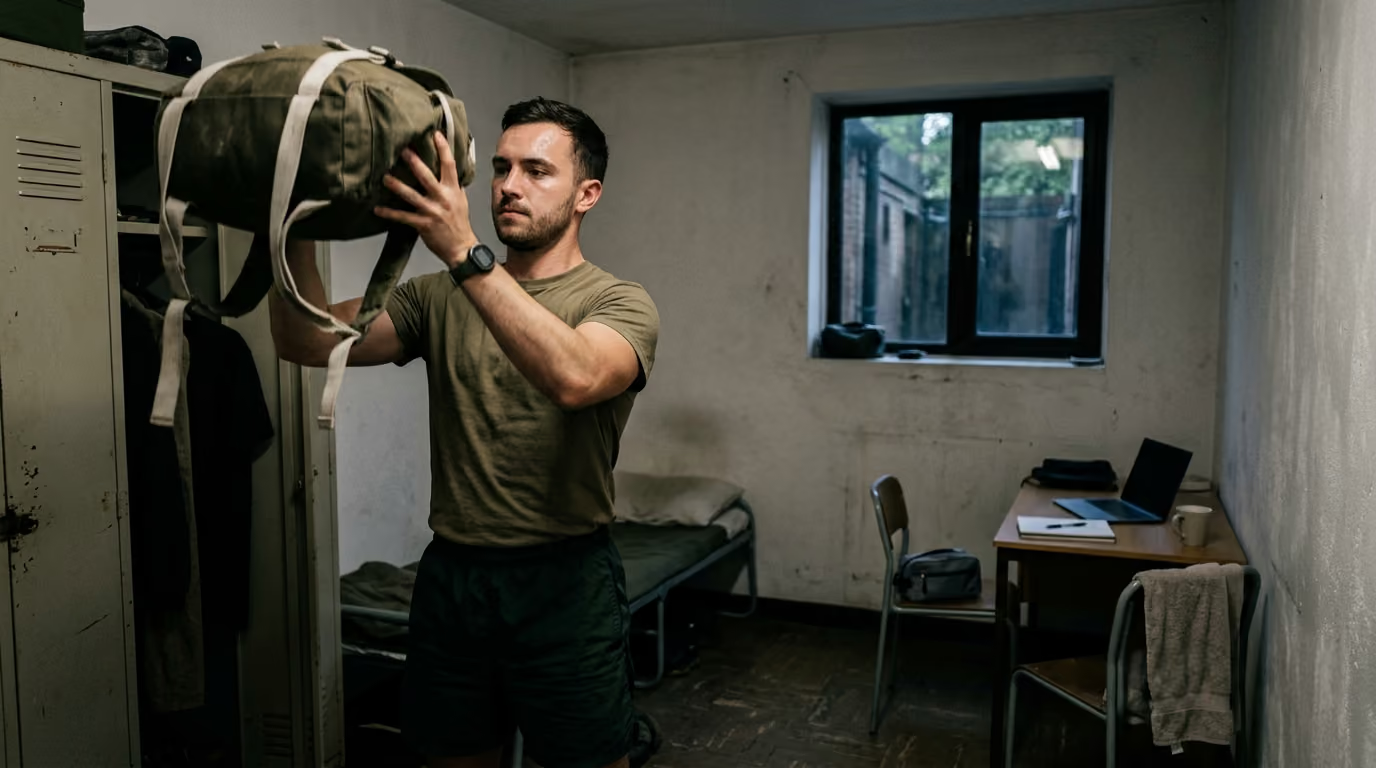

Facing disrupted sleep, delayed flights, and austere operating bases demands flexible training frameworks to maintain functional strength with minimal gear.





You step off a twelve-hour transport flight onto hot tarmac with four hours of fragmented sleep. Your joints feel stiff, your lower back aches from carrying gear, and your schedule for the next week changes by the hour. In these conditions, sticking to a rigid six-day barbell split is impossible. Real progress requires a flexible approach built for fluid environments.
Training during deployment, travel, or remote duty is not about executing an ideal gym routine in imperfect conditions. It is an adaptive system designed to preserve physical performance, protect joint health, and maintain operational capability when time, equipment, and recovery are scarce. When you shift your mindset from rigid compliance to adaptable durability, you can protect your hard-earned physical baseline anywhere in the world.
A durable training plan relies on minimum effective doses, modular exercise substitutions, and readiness-based autoregulation. By prioritizing fundamental movement patterns over specific gym machines, you keep your strength, conditioning, and body composition intact until normal training conditions return.
Most commercial fitness programs assume predictable conditions. They rely on fixed training times, eight hours of quiet sleep, consistent equipment, reliable nutrition, and stable environmental temperatures. When any of those variables collapse, a rigid plan breaks down immediately.
In operational or travel environments, these assumptions disappear. You might face unexpected 24-hour shifts, delayed flights, austere forward operating bases, or extreme heat. Attempting to force a rigid percentage-based strength routine through high cumulative fatigue creates excessive injury risk. It also leads to psychological burnout when missed sessions pile up.
Conventional programming fails to account for total physical workload. Marching with body armor, handling heavy equipment, standing for extended shifts, and walking across uneven terrain all generate systemic fatigue. If you add heavy gym volume on top of heavy occupational labor, your body cannot recover.
Training success should not be measured by perfect calendar completion. It must be measured by maintaining physical capability, movement quality, and readiness for daily tasks. A shortened twenty-minute session that preserves movement patterns without causing joint pain is a success. Recognizing this distinction prevents the cycle of overreaching, injury, and forced layoffs.
To build long-term capability, explore our foundational resources on training and performance designed for operational readiness.
The durability framework replaces rigid schedules with an adaptable system built on anchors and options. Anchors are the non-negotiable foundations that keep your fitness stable. Options provide the practical paths to achieve those foundations based on your daily equipment, time, and fatigue.
Your anchors should include weekly movement patterns, general effort targets, and basic hydration habits. You must target the five fundamental patterns: squatting, hip hinging, pushing, pulling, and loaded carrying. How you train those patterns can vary daily based on what you have available.
When your access to equipment changes, use a simple four-step substitution process:
Understanding your training minimum is essential during disrupted periods. A training minimum is the smallest volume of work required to prevent physical decline. Population health guidelines from organizations like the World Health Organization suggest accumulating 150 to 300 minutes of moderate activity or 75 to 150 minutes of vigorous activity weekly, alongside two days of strength work. While these provide a healthy long-term baseline, your operational minimum during a rough week might simply be two brief full-body sessions and daily movement breaks.
Readiness is a practical operational state rather than a single metric on a wearable device. You can gauge your readiness each morning by evaluating four key markers:
Your sleep was adequate, your energy is normal, and your joints feel comfortable during your warm-up. You can proceed with your planned training volume and moderate-to-high effort.
Your sleep was restricted, work demands were unusually high, or your warm-up feels sluggish. Reduce your total working sets by one-third to one-half, avoid muscular failure, and focus on movement precision.
You experienced severe sleep deprivation, show symptoms of illness, or feel deep physical exhaustion. Skip heavy resistance work entirely and limit activity to light walking, gentle joint mobility, and rest.
Using this readiness model allows you to match your physical stress to your actual recovery capacity. For a deeper look at managing fatigue across a career, review our guide to military health and readiness.
Scientific research provides clear insights into how operational stressors affect human performance. Understanding what is firmly proven versus what remains uncertain helps you make smart training decisions on the road.
Established research shows that sleep loss significantly degrades aerobic capacity, prolonged work capacity, and cognitive vigilance. Meta-analyses examining acute sleep loss demonstrate an average reduction in muscular strength of roughly 2.85 percent. However, the exact impact depends heavily on the timing of sleep loss and the specific tasks tested.
Multi-joint movements and sustained muscular endurance tasks decline faster under sleep restriction than isolated single-joint movements. Researchers also observe that performance decrements are often worse in the late afternoon or evening after extended wakefulness.
Emerging research and observational studies show wider variation when evaluating maximal lower-body strength after one night of poor sleep. Some individuals can maintain brief maximal force output despite feeling tired, while others show notable drops in neuromuscular power. Repeated consecutive nights of partial sleep restriction consistently degrade force generation across all muscle groups.
Circadian disruption from rapid travel across time zones creates measurable physiological strain. Jet lag alters core body temperature rhythms, hormone secretion patterns, and digestive efficiency. Trying to perform maximal conditioning tests during peak circadian fatigue increases perceived exertion and impairs motor control.
To understand how to protect your restorative cycles during irregular schedules, consult our practical library on recovery and sleep.
You do not need a fully equipped gym to maintain strength and muscle tissue. Resistance training principles established by the American College of Sports Medicine show that muscle adaptations occur across various rep ranges when sets are taken close to muscular fatigue. Systematic reviews confirm that strength and hypertrophy can be stimulated through bodyweight, resistance bands, or free weights when progressive overload is applied.
When heavy barbells are unavailable, you must progress exercises through mechanical leverage, range of motion, and tempo. Use a progression ladder to increase difficulty without adding external iron:
Select practical movements across each movement pattern based on your environment:
Safety must always come first when using improvised equipment. Never anchor resistance bands to unstable doors, light fixtures, or sharp metal corners that could shear the rubber.
For structured workout plans tailored to austere environments, explore our resources on strength, fitness, and body composition.
Maintaining conditioning during travel or remote duty does not require hours on a treadmill. Aerobic fitness can be preserved using brief interval sessions, indoor circuits, and high-density work-rest ratios.
If running outdoors is impossible due to security, weather, or terrain, indoor conditioning protocols provide an effective alternative. Use short conditioning intervals that emphasize high cardiac output without creating excessive joint impact.
Set a timer for fifteen minutes. Move through four exercises continuously, maintaining a steady pace where you can breathe through your nose:
Set an interval timer for 10 to 15 rounds of 30 seconds of work followed by 30 seconds of active recovery:
When running causes joint irritation from hard pavement, load a backpack with 15 to 30 pounds. Walk briskly for 20 to 45 minutes on flat terrain or inclines. Rucking builds cardiovascular endurance, strengthens the postural muscles of the upper back, and generates lower joint impact forces than fast running.
Microdosing activity throughout the day is an effective strategy when long training blocks are impossible. Performing five minutes of air squats and push-ups in your room, walking briskly during mid-day breaks, and completing mobility drills before sleep accumulates valuable volume. Light activity breaks also counteract the stiffness caused by long transport flights and sedentary shifts.
Training in hot, humid, or high-altitude environments places unique physiological stress on your cardiovascular system. In hot climates, your body directs substantial blood flow to the skin to dissipate heat, leaving less blood available for working muscles. This raises your heart rate and increases perceived exertion at workloads that would feel easy in cool weather.
Military environmental research from organizations like the U.S. Army Research Institute of Environmental Medicine indicates that heat acclimatization requires eight to twenty-one days of repeated, controlled exposure. You cannot arrive in a desert or jungle environment and immediately match your previous training intensity.
Follow these principles when adapting your workouts to extreme heat:
Learn the warning signs of heat illness. Stop your session immediately if you experience dizziness, mental confusion, sudden chills, nausea, muscle cramping, or poor balance. Heat acclimatization improves your body's cooling efficiency, but it does not make you immune to heat stroke.
When dealing with high operational stress and tough environments, building robust recovery routines is crucial. Explore our dedicated section on sleep, stress, and resilience for evidence-backed strategies.
Maintaining a healthy body composition during travel or deployment requires realistic goals. Attempting an aggressive fat loss diet while dealing with fragmented sleep, heavy gear, and long shifts creates severe systemic fatigue. Under demanding conditions, maintaining your current muscle mass and body weight is usually the smartest priority.
When your dining facility access, field rations, or travel schedules are unpredictable, follow a simple nutritional hierarchy:
Stock your travel kit or quarters with durable, shelf-stable protein sources. Useful options include:
Tracking precise macronutrients is often impossible in the field. Focus instead on hand-sized portion estimates: a palm of protein, a fist of vegetables, a cupped hand of carbohydrates, and a thumb of fats at major meals. This keeps your nutrition structured without requiring a digital food scale.
Avoiding common programming mistakes preserves your readiness and prevents preventable injuries. Many service members and frequent travelers fall into predictable traps when routines are disrupted.
Trying to complete an intense workout after twenty-four hours of wakefulness increases injury risk and provides minimal training benefit. Adjust your volume and intensity based on your actual recovery capacity.
Sweating heavily in a hot environment reflects your body trying to cool itself, not the effectiveness of the workout. Evaluate your sessions by movement quality, force production, and technical precision.
Bodyweight movements can build impressive strength when progressed through leverage, tempo, and range of motion. Single-leg squats and deficit push-ups challenge muscular recruitment as effectively as moderate barbell loads.
Attempting to cram a week of missed sessions into two days creates sudden workload spikes that inflame tendons and overload joints. Simply resume your normal training sequence with the next scheduled session.
Taking sets to absolute muscular failure while fatigued degrades motor control and increases spinal shearing forces. Leave one to three sound repetitions in reserve on all working sets.
Extreme soreness often reflects novel exercises or unaccustomed eccentrics rather than productive growth. Target smooth movement and consistent performance over crippling soreness.
Caffeine increases temporary alertness, but it does not restore neuromuscular coordination or tissue recovery. Use stimulants moderately and avoid high doses late in the day that ruin your sleep.
Carrying loads, climbing vehicle hulls, and standing for long periods all deplete your energy reserves. Account for your occupational labor before deciding how hard to push your workout.
Maintaining your strength, aerobic base, and joint health during a difficult assignment is a major operational win. Maintenance provides the sturdy foundation you need to make rapid gains once your schedule normalizes.
Practical execution requires simple routines that fit common travel and operational constraints. Use these five field templates as plug-and-play frameworks when your schedule gets disrupted.
Do not bind your workouts to fixed days of the week. Use a rolling four-day sequence:
Perform this 25-minute workout three days per week:
Immediately after prolonged wakefulness or a high-stress shift, avoid heavy lifting or high-speed running:
When time is extremely tight, alternate these two quick sessions across the week:
Session 1:
Session 2:
Tracking progress in austere environments should be simple and reliable. Do not overcomplicate your record-keeping with complex metrics that are hard to maintain during a busy assignment.
Record basic variables in a small notebook or notes app:
Evaluate your progress using rolling seven to fourteen-day trends rather than single workouts. If your workout performance drops for three consecutive sessions while your resting fatigue rises, reduce your volume immediately.
When conditions allow you to make progress, change only one variable at a time. Increase your repetitions, add a single set, slow down your eccentric tempo, or increase external resistance. Adding multiple progression demands at the same time makes it impossible to know what caused fatigue or joint discomfort.
This article provides educational fitness information and is not individualized medical or physical therapy advice. Consult a qualified healthcare professional before beginning a rigorous exercise program, particularly if you have underlying cardiovascular conditions, chronic joint pain, or prior operational injuries.
True muscular atrophy and strength loss are minimal over a two-week period if you perform basic bodyweight resistance exercises and consume adequate protein. Most immediate drops in gym performance after field exercises stem from temporary dehydration, muscle glycogen depletion, and systemic fatigue rather than actual loss of muscle contractile tissue.
No. While caffeine masks perceived sleepiness in the brain, it does not restore central nervous system motor control, joint stabilization reflexes, or muscular recovery capacity. High-intensity training while severely sleep-deprived significantly increases the risk of acute musculoskeletal injury and heat illness.
Use unilateral exercises, slower eccentric tempos, longer pause durations, and higher repetition ranges. Performing rear-foot elevated split squats, single-leg Romanian deadlifts, and single-arm overhead presses with 20-pound dumbbells can produce high levels of muscle activation and mechanical tension without requiring heavy weights.
Heat acclimatization adaptations begin to decay within a few days of leaving a hot environment, with notable reductions occurring after one to two weeks without heat exposure. However, re-acclimatization occurs much faster than initial adaptation, usually requiring only a few days of controlled, progressive heat exposure.
Follow BattleVet for practical guidance on military and veteran health, strength, recovery, testosterone, sleep and healthy aging. Stay connected for new articles, research backed insights and clear information to help you stay capable for the years ahead.


Build better habits around strength, recovery, sleep, hormones and healthy aging with practical guidance for active military personnel and veterans.
Explore BattleVet