
Time off does not mean losing all your fitness gains if you apply structured load management to maintain strength and physical performance.





You wake up at 0530 with a swollen knee or an aching shoulder, wondering how much hard-earned progress you will lose this month. The traditional advice to sit on the couch until every trace of discomfort disappears feels counterproductive. You want to protect the damaged tissue without watching your strength, conditioning, and daily routine slip away.
Sustaining your physical capacity during injury recovery requires managing tissue loads through smart exercise substitutions, non-impact conditioning, and unilateral training rather than resorting to complete physical inactivity.
Injury recovery is rarely an all-or-nothing proposition. When an athlete or service member suffers an injury, the primary challenge is identifying the loading tolerance of the damaged tissue. You must separate what the injured site can handle from what the rest of your body can safely perform.
Complete bed rest or total training cessation often leads to rapid physical deconditioning. It reduces muscle protein synthesis, decreases cardiovascular stroke volume, and diminishes neuromuscular coordination. By working closely with a medical professional, you can keep training the systems that remain healthy.
A complete recovery process moves through three clear stages defined in sports medicine literature:
This initial milestone means you can perform modified physical activity or structured rehabilitation exercises. You are actively training, but the volume, intensity, and movement selection remain strictly below your normal baseline.
At this stage, you receive clinical clearance to rejoin your sport or operational unit. However, you may not yet perform at your prior standard of output, speed, or stamina.
This final phase represents the complete restoration of your pre-injury physical capabilities. In many cases, athletes who follow structured rehabilitation achieve higher levels of strength, movement efficiency, and physical resilience than before their injury.
A successful outcome depends on viewing recovery as an ongoing load-management process. The central question during rehabilitation is straightforward: which physical qualities can you train today without exceeding the current biological capacity of the healing tissue?
Understanding how the human body loses fitness helps remove the anxiety surrounding time off. When regular training stops, the body undergoes detraining, which is the partial or complete loss of training-induced adaptations. Fortunately, these losses do not happen overnight.
Research shows that maximal strength is preserved remarkably well during short training interruptions. In trained individuals, strength levels can remain relatively stable for two to four weeks without significant reductions.
Power, which is the ability to generate force quickly, tends to decline faster than maximal strength. Fast-twitch muscle fibers experience reductions in neuromuscular firing rates and recruitment efficiency earlier than slow-twitch fibers. A study on recreationally strength-trained men demonstrated that six weeks of detraining reduced power output more significantly than pure maximal strength.
When detraining extends to 12 weeks, research indicates modest strength and power reductions of approximately 5 to 15 percent. Even after three months away from heavy lifting, some neural adaptations and muscle memory mechanisms persist. Once progressive training resumes, strength returns much faster than the time it originally took to build.
Muscle cross-sectional area declines when mechanical tension is completely removed. In older adults, systematic reviews show that total training cessation decreases muscle size over time, though maintaining even minimal resistance exposure attenuates this loss.
The most dramatic losses occur with complete immobilization, such as wearing a rigid cast or being on strict bed rest. True disuse atrophy involves rapid reductions in muscle protein synthesis and loss of intracellular fluid within the first two weeks. When an athlete continues to train uninjured body parts, systemic circulating factors and general physical activity help preserve total lean mass across the entire body.
Cardiovascular endurance declines slightly faster than skeletal muscle strength. Maximal oxygen consumption can decrease by 4 to 8 percent within the first two weeks of complete inactivity.
This initial drop is primarily driven by a decrease in blood plasma volume. When plasma volume falls, stroke volume decreases, causing the heart to beat faster to maintain cardiac output at submaximal workloads.
Capillary density and mitochondrial enzyme activity also begin to decline after three to four weeks of complete inactivity. However, these aerobic losses are easily mitigated when you maintain non-impact cardiovascular training while your musculoskeletal injury heals.
Navigating rehabilitation requires distinguishing between proven clinical principles and experimental interventions. Not all recovery methods offer the same level of scientific support.
The following concepts are supported by robust clinical trials and systematic reviews:
Other areas show promise in clinical settings but require further research to establish standardized protocols:
When a medical provider restricts a specific joint or limb, you can use specialized training methods to maintain your muscular foundation.
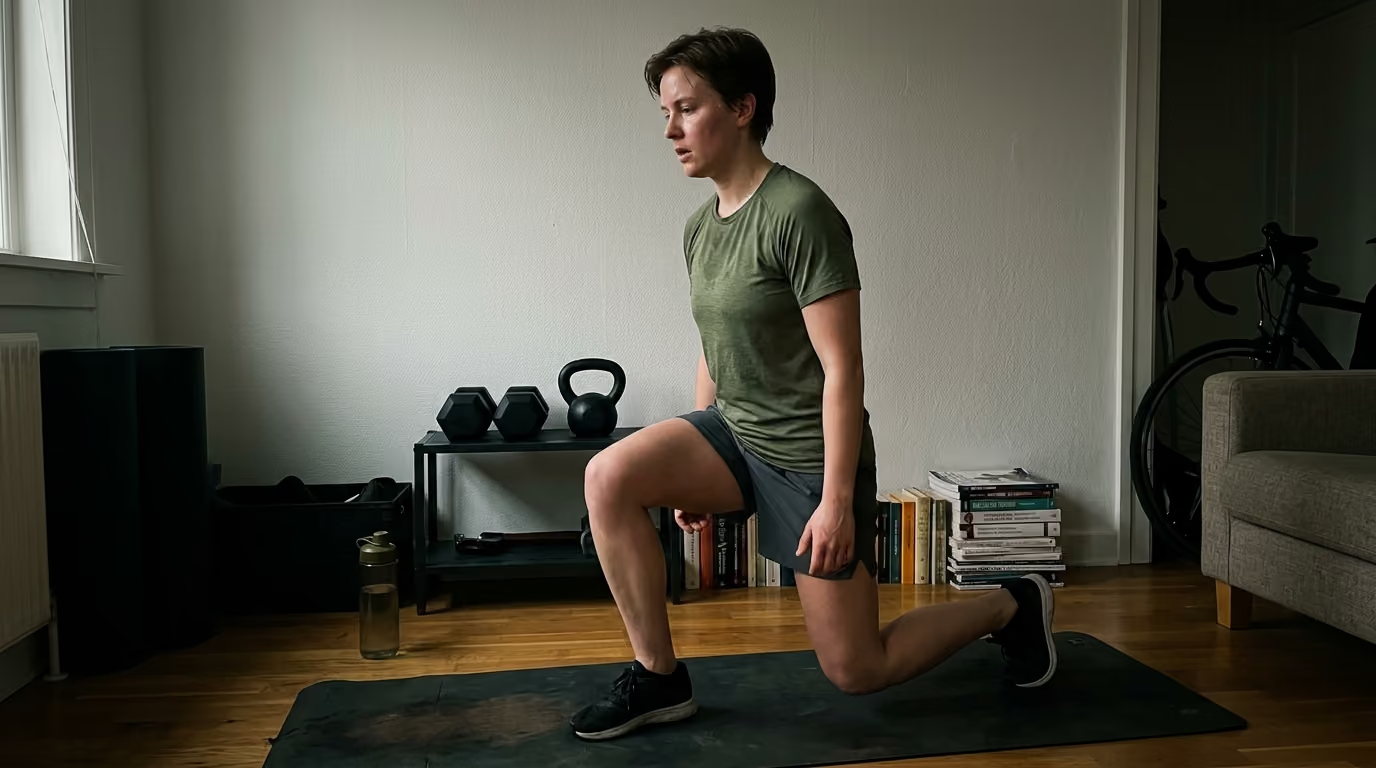
If your left knee is injured, your right leg, trunk, and entire upper body can still train. Working around an injury preserves the habit of consistent physical effort and protects healthy muscle mass.
Unilateral training also produces cross-education. Cross-education describes the neural adaptation where training one limb increases or preserves strength in the untrained, opposite limb. Systematic reviews confirm that high-effort unilateral strength training can induce strength preservation in an immobilized contralateral limb.
To use cross-education effectively:
Blood-flow restriction training uses a specialized pneumatic cuff placed on the proximal end of an arm or leg. The cuff is inflated to a precise pressure that restricts venous outflow while maintaining arterial inflow.
When you perform light exercises at 20 to 30 percent of your one-repetition maximum under restriction, the working muscles quickly experience a hypoxic environment. This low-oxygen state accelerates the recruitment of high-threshold fast-twitch motor units, stimulates muscle protein synthesis, and promotes muscle preservation without requiring heavy mechanical joint loads.
Systematic reviews demonstrate that low-load blood-flow restriction produces muscle hypertrophy and strength adaptations comparable to moderate-load resistance training in post-surgical and rehabilitation settings.
Safety considerations for blood-flow restriction:
Isometric exercises involve generating muscular tension without changing joint angle or muscle length. They offer a practical way to train muscles surrounding an injured joint when moving through a full range of motion causes pain.
Isometrics can be performed at specific, pain-free joint angles cleared by your medical provider. Heavy, sustained isometrics also provide a mild analgesic effect in certain tendon conditions, reducing local pain and allowing better muscle activation during subsequent physical therapy exercises.
If you are looking to build a structured foundation during recovery, you can read our training and performance articles for detailed breakdowns of programming variables.
Cardiovascular conditioning does not require running, jumping, or heavy spinal loading. When impact is restricted, you can switch to non-impact modalities to challenge your heart, lungs, and metabolic pathways.
Select your cross-training method based on the exact mechanical stress you must avoid:
When substituting an aerobic workout, match the energetic goal of your original training session rather than just moving randomly.
For low-intensity base building, perform continuous, steady-state work on your chosen non-impact machine for 30 to 60 minutes. Keep your heart rate in your target aerobic zone where you can speak in short sentences.
For high-intensity intervals, perform repeated work intervals ranging from 30 seconds to two minutes, followed by adequate recovery periods. High-intensity intervals on an upper-body ergometer or stationary bike produce central cardiovascular adaptations without transferring impact to healing bones or tendons.
To learn more about how physical restoration intersects with health, review our recovery and sleep articles.
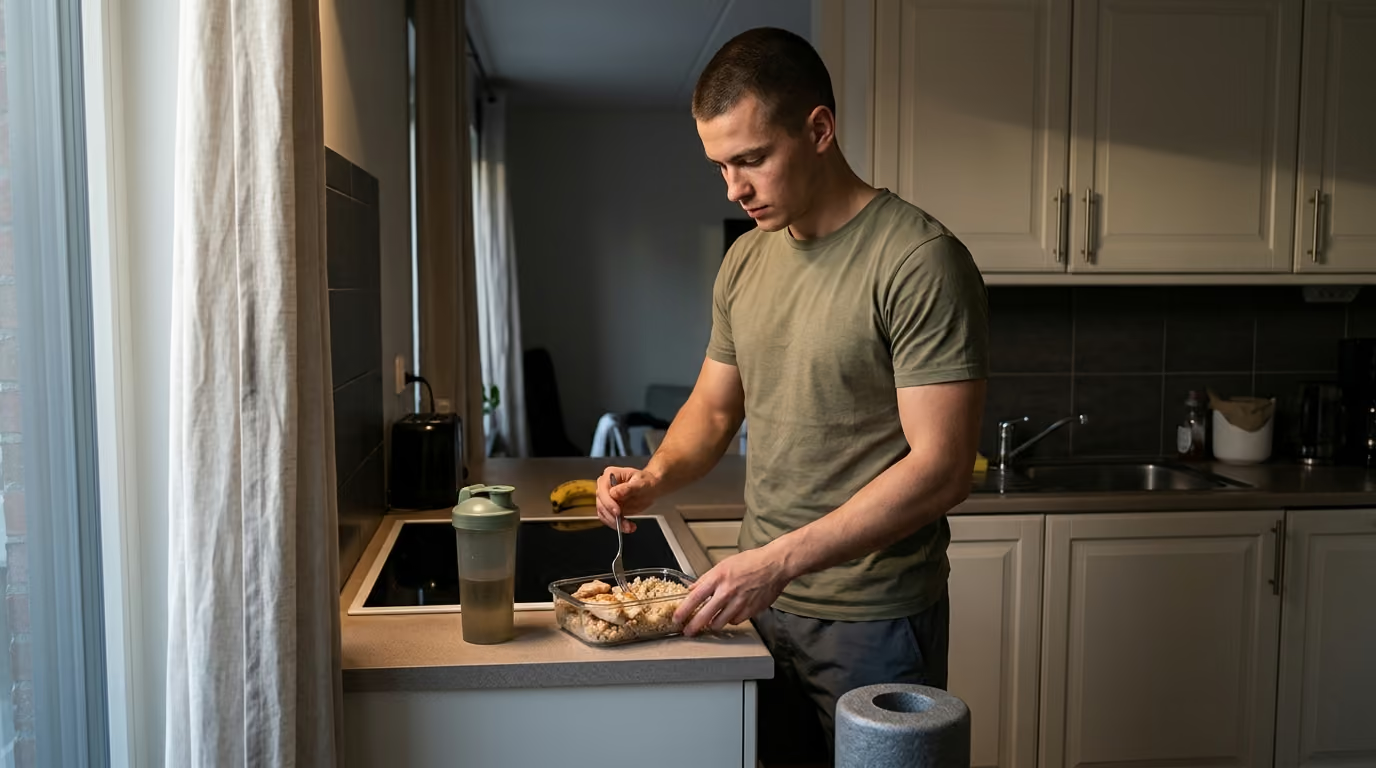
When physical activity drops due to an injury, many athletes instinctively cut their food intake drastically to prevent fat gain. This approach often backfires.
The International Olympic Committee emphasizes that low energy availability impairs bone remodeling, reduces muscle protein synthesis, and delays soft-tissue repair. Healing damaged bone, ligaments, and muscle requires significant energetic resources.
Do not adopt aggressive, crash-diet strategies while recovering from an injury. Maintain adequate caloric intake and prioritize protein consumption of 1.6 to 2.2 grams per kilogram of body weight per day to support tissue repair and prevent unnecessary muscle loss.
When designing a modified training session, you do not need to invent new movements. You can adjust your standard exercises using five practical programming levers.
If a barbell back squat aggravates a hip or knee injury, substitute it with a supported belt squat, a single-leg split squat, or a seated leg press. If a flat barbell bench press causes anterior shoulder discomfort, try a neutral-grip dumbbell press or a seated cable chest press.
Change the implement from a rigid barbell to dumbbells, cables, or machines to allow your joints to travel along their natural paths of comfort.
Tissue irritation often occurs at the extreme ends of joint range of motion. You can continue training a movement pattern by working within a comfortable, pain-free arc.
Use box squats to limit deep knee and hip flexion. Perform floor presses or board presses to restrict excessive shoulder extension. Use block pulls or rack pulls to shorten the distance when deadlifting with lower-back sensitivity.
Reducing external resistance instantly decreases peak joint contact forces, tendon strain, and spinal compression.
To maintain muscular challenge with lighter loads, increase the repetition target, reduce rest periods, or integrate blood-flow restriction methods. Training at 30 percent of your maximum can still recruit high-threshold motor units if the set is taken close to technical fatigue.
Speed multiplies force. Ballistic movements, plyometrics, and fast reversals produce high peak stresses on joints and connective tissues.
Slow down your movement cadence. Use a three-second eccentric (lowering) phase, a two-second pause at the transition point, and a controlled concentric (lifting) phase. Controlled tempos eliminate momentum, enhance muscular tension, and allow you to train hard with lighter weights.
Fatigue degrades movement mechanics. When stabilizing muscles tire out, mechanical stress shifts directly onto passive joint structures, ligaments, and tendons.
Increase your rest intervals between sets from 60 seconds to three minutes. Reduce the total number of working sets per session and distribute your training volume more evenly throughout the week. Stop your sets two to three repetitions shy of muscular failure to maintain crisp technique.
For comprehensive strategies on structuring your weekly strength workouts, consult our strength, fitness, and body composition resources.
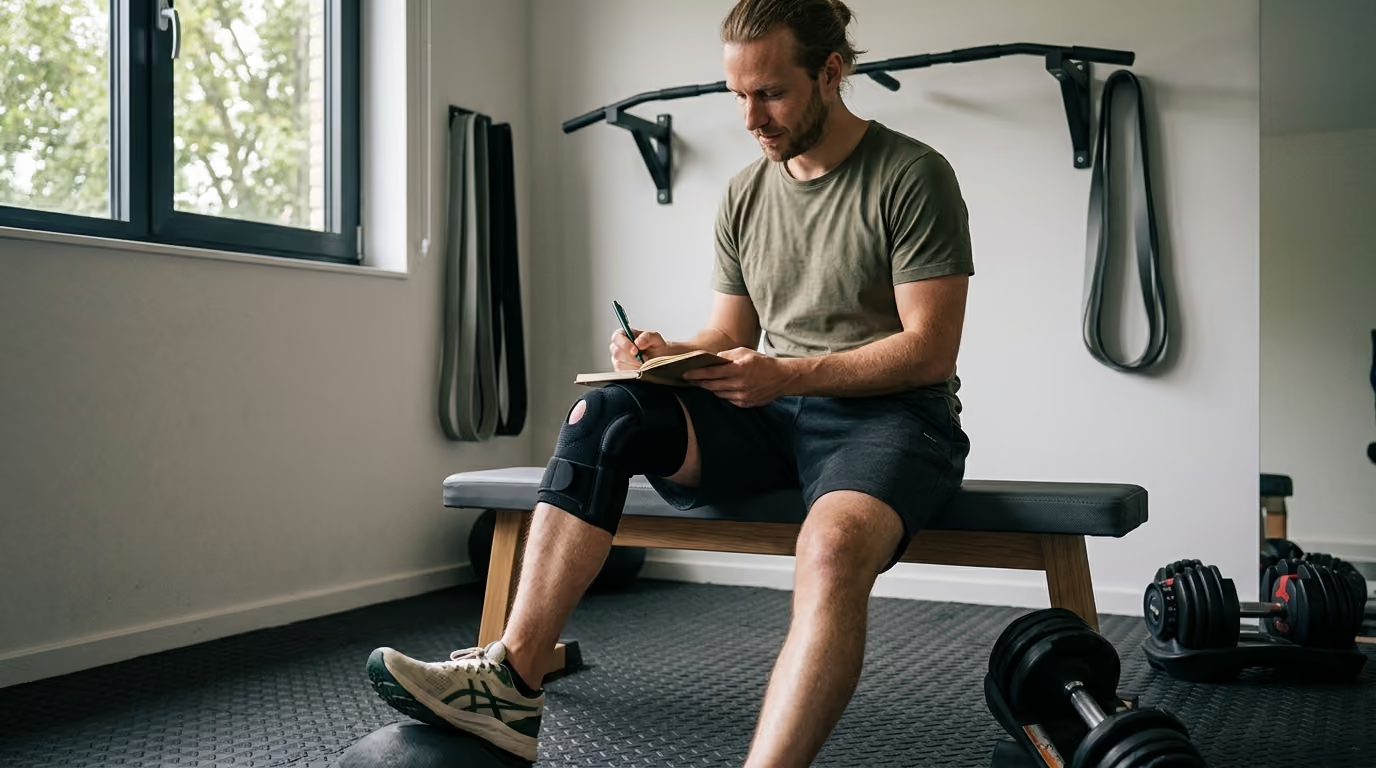
Managing training loads during rehabilitation requires objective monitoring of your symptoms. A traffic-light model offers a structured communication framework for assessing exercise tolerance.
The true test of whether a tissue tolerated a training session occurs 24 hours later. Tendons and articular cartilage often feel fine during warm-up and exercise due to increased blood flow and tissue temperature.
Evaluate how the injured site feels the following morning:
If next-morning symptoms are aggravated, your previous session exceeded current tissue capacity. Adjust your variables downward in the next workout.
When progressing rehabilitation or returning to sport, change only one training variable per week:
Adjusting a single parameter at a time makes it easy to identify what caused any flare-up in symptoms.
Different tissues heal according to distinct biological timelines. Training modifications must match the underlying injury pathology.
Post-surgical protocols take precedence over general training guidelines. Surgeons establish strict restrictions regarding weight-bearing status, brace usage, and allowed joint angles to protect structural repairs, such as sutured labrums, reattached tendons, or reconstructed ligaments.
During the early postoperative phase, focus on maintaining general upper-body conditioning, core stability, and nutrition while completing prescribed physical therapy exercises. Clinician-supervised blood-flow restriction can help attenuate quad and calf atrophy during non-weight-bearing periods.
Bone tissue responds to compressive, tensile, and torsional loads differently than soft tissue. While a mild amount of tendon discomfort is often acceptable in tendinopathy rehabilitation, bone stress injuries require strict offloading.
Never apply a pain-monitoring model to a suspected or diagnosed bone stress injury or fracture. Continued high-impact loading on a stressed metatarsal, tibia, or femoral neck can turn a stress reaction into a full structural fracture. Switch entirely to non-impact cross-training, such as swimming or upper-body ergometry, until diagnostic imaging confirms biological union.
Acute muscle tears in the hamstrings, quadriceps, or calves require an initial period of protection to allow scar tissue formation. High-velocity sprinting, ballistic stretching, and loaded eccentric contractions should be avoided during the early acute phase.
Conditioning can be maintained on a stationary cycle or rowing machine within a comfortable range of motion. As healing progresses, gradually reintroduce eccentric loading, open-chain strengthening, and progressive sprint mechanics to prepare the muscle for high-speed sport demands.
Tendons require mechanical loading to stimulate collagen remodeling and increase tensile strength. Total rest often makes tendinopathy worse by decreasing the tendon's capacity to handle load.
Clinical trials show that continuing sports activity under a structured pain-monitoring framework does not compromise recovery in Achilles and patellar tendinopathies. Focus on heavy, slow resistance training, isometric holds, and gradual re-exposure to energy storage and release activities like jumping and sprinting.
Older lifters and military veterans often manage cumulative joint wear, old surgical repairs, and reduced baseline recovery capacity. Detraining occurs slightly faster in older populations, making regular resistance exercise essential.
Emphasize exercise selections that spare joint surfaces while overloading muscle tissue, such as trap-bar deadlifts, cable rows, and supported leg presses. Prioritize sleep quality, stress management, and daily protein intake to support continuous tissue maintenance.
For additional health and readiness guidance, browse our military health articles.
Examining real-world rehabilitation scenarios illustrates how to apply these loading principles safely.
A service member develops an early-stage tibial bone stress reaction. Running, jumping, and loaded marching are prohibited for six weeks.
A veteran experiences sharp anterior shoulder pain during flat barbell bench presses and overhead military presses.
An athlete undergoes ACL reconstruction using an autologous patellar tendon graft. Weight-bearing and active knee flexion are restricted in the initial weeks.
For more resources on preserving physical capacity across a lifetime, review our sleep, stress, and resilience resources.
Steering clear of standard rehabilitation mistakes ensures your return to full performance remains on schedule.
Many individuals believe that if they cannot perform their exact regular training routine, there is no point in training at all. This mindset leads to weeks of physical inactivity, poor diet, and psychological frustration. Focus on what you can train rather than fixating on what is restricted.
Maintaining exceptional cardiovascular fitness through cycling or swimming can create a false sense of security. You may feel ready to sprint, jump, or play sports because your lungs feel great, but your injured tendon or bone may lack the mechanical tolerance for high impact. Always progress impact volume systematically, regardless of your cardiovascular stamina.
Using non-steroidal anti-inflammatory drugs (NSAIDs) or pain relievers immediately before a workout dulls your body's natural feedback mechanism. Masking pain makes it easy to exceed tissue loading limits and cause further damage. Reserve medication for managing baseline inflammation as prescribed by your physician, not as a tool to train through acute joint pain.
Adding running distance, increasing running speed, and changing running footwear in the same week makes it impossible to identify the cause of a symptom flare-up. Adjust one variable at a time and monitor your 24-hour response before making further changes.
Tissue repair occurs primarily during deep sleep stages when growth hormone release and cellular remodeling peak. Cutting back on sleep or operating under chronic psychological stress impairs musculoskeletal healing. Aim for seven to nine hours of quality sleep nightly throughout your rehabilitation.
This article is provided for educational and informational purposes only and does not constitute medical advice, physical therapy prescription, diagnosis, or personalized treatment planning. Musculoskeletal injuries, post-surgical recovery, fractures, and joint conditions require thorough clinical evaluation. Always consult a qualified physician, physical therapist, or orthopedic specialist before initiating new exercise routines, modifying rehabilitation plans, or using specialized tools such as blood-flow restriction.
If you maintain normal daily activities, adequate protein intake, and continue training uninjured body parts, muscle loss over four weeks is minimal. Most initial reductions in muscle size during the first two weeks reflect the loss of muscle glycogen and intracellular water rather than true structural muscle protein breakdown.
Yes, provided your physician has not placed you on total physical rest. Performing strength training on your uninjured leg stimulates neural pathways that help preserve motor unit recruitment and strength in the resting leg through cross-education. Ensure that your setup keeps the injured limb stable and completely unloaded.
For certain chronic conditions, such as tendinopathies, mild discomfort (rated 0 to 3 out of 10) is often acceptable if movement mechanics remain normal and symptoms return to baseline by the following morning. However, sharp pain, pain that worsens during the session, or any discomfort associated with suspected fractures, acute muscle tears, or post-surgical repairs requires immediate stopping and medical review.
Once cleared by your medical provider, rebuild your training volume and intensity gradually over several weeks. A standard guideline is to resume lifting at roughly 50 to 60 percent of your previous training loads, focusing on movement quality, tempo, and joint comfort. Increase loading by no more than 10 percent per week as long as your 24-hour symptom response remains green.
Review this guide whenever you experience an unexpected injury, undergo surgery, or face a period where normal physical training must be modified.
Maintaining your fitness while protecting a healing joint is an active, calculated process that preserves your physical capability and sets you up for long-term health.
Follow BattleVet for practical guidance on military and veteran health, strength, recovery, testosterone, sleep and healthy aging. Stay connected for new articles, research backed insights and clear information to help you stay capable for the years ahead.


Build better habits around strength, recovery, sleep, hormones and healthy aging with practical guidance for active military personnel and veterans.
Explore BattleVet