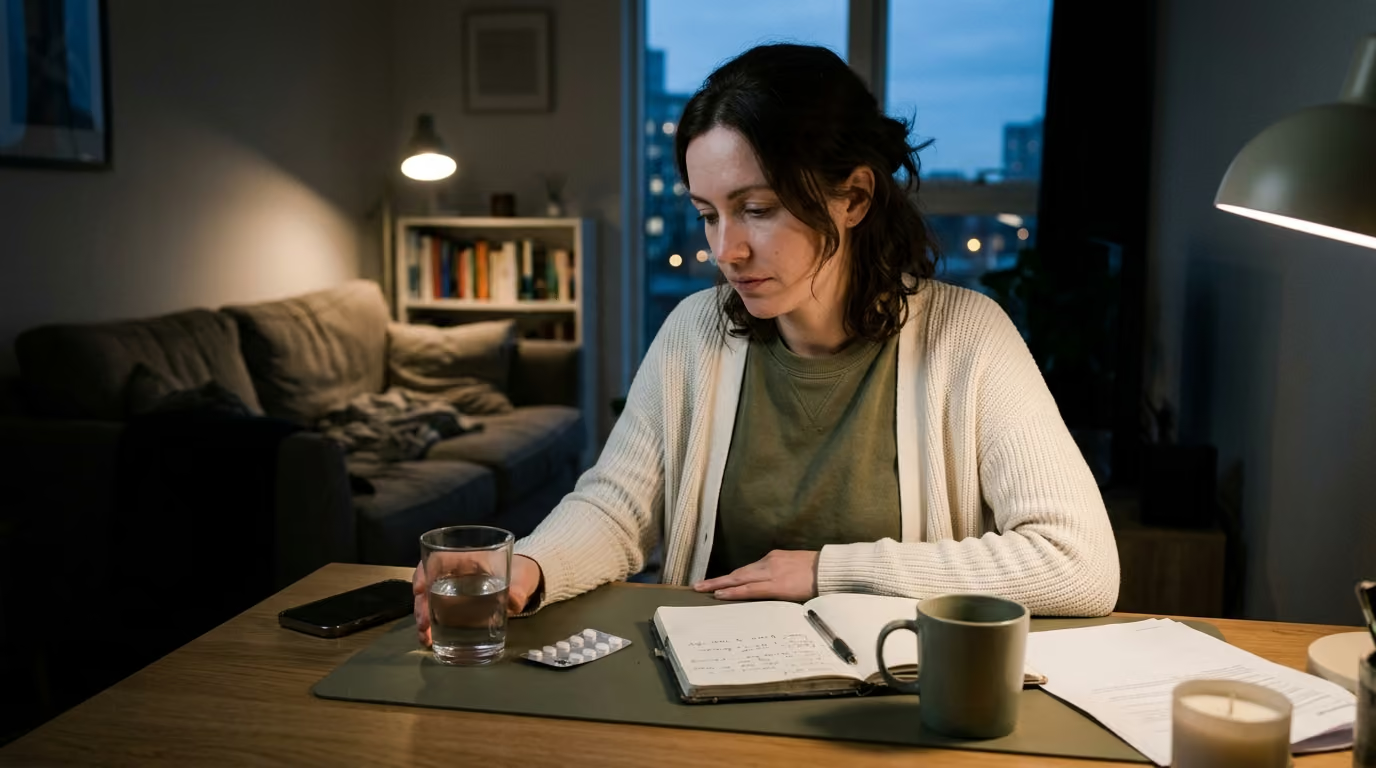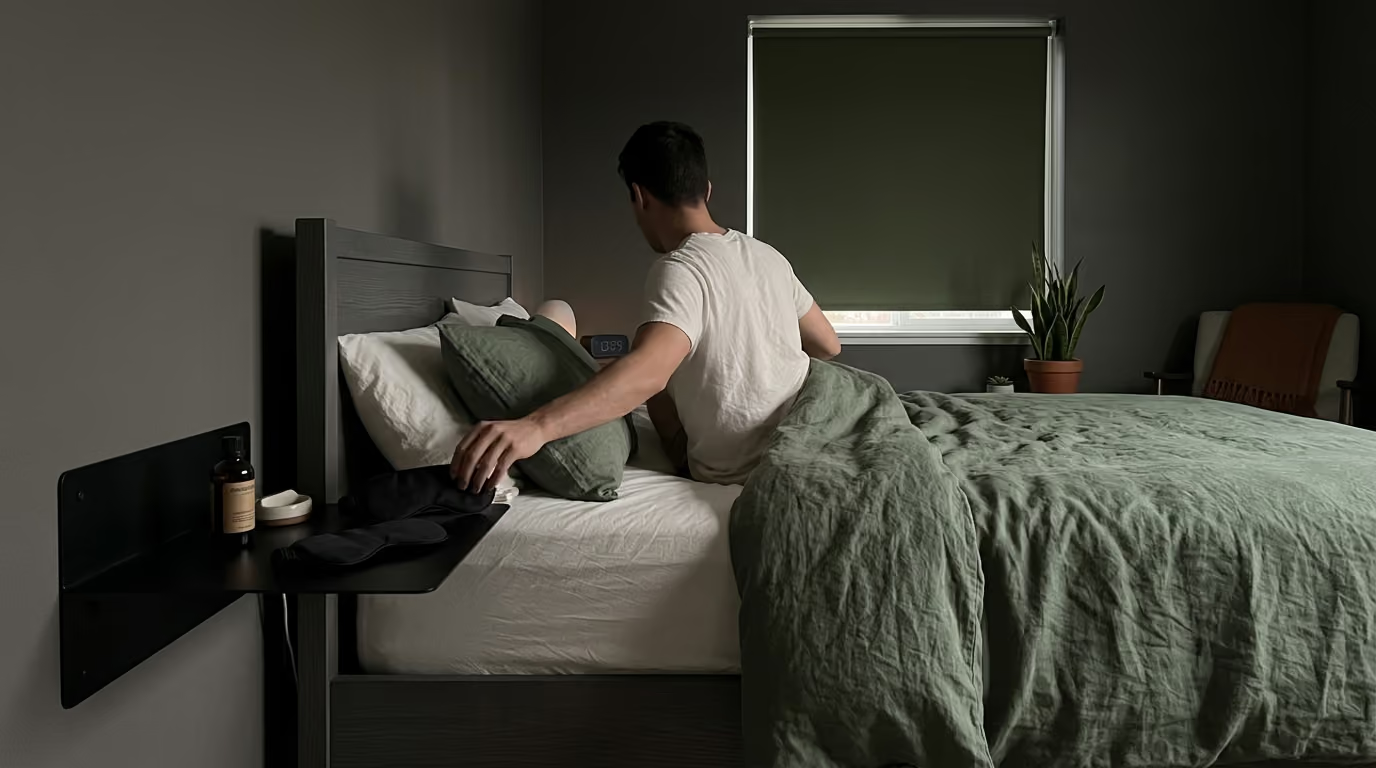

Deeper, uninterrupted sleep becomes achievable anywhere when you apply a practical four-tier framework to master light, sound, and bedroom temperature.





The alarm sounds at 0500, but you have already been awake for two hours. Your shoulders ache from a worn mattress, the hallway light cuts beneath the door frame, and street traffic rumbles outside your window. You drag yourself into the morning feeling unrecovered, knowing your physical output and mental focus will suffer. Restorative rest should not depend on owning a customized house in a silent rural neighborhood.
Creating an effective sleep space requires layered environmental control rather than finding an impossible, perfectly silent sanctuary.
A supportive sleep environment manages sensory input, thermal balance, physical comfort, and perceived safety to allow uninterrupted rest. While ideal conditions feature darkness, quiet, and cool airflow, real life often involves shared walls, shift work, active children, restless pets, and limited control over thermostats. By systematically eliminating what you can, blocking what you cannot eliminate, masking background disturbances, and adapting your personal habits, you can build a reliable sleep space in almost any setting.
Many people confuse the time spent in bed with the restorative value of their rest. Sleep opportunity represents the total window of time you make available for resting. Sleep duration measures the exact amount of time you spend unconscious. If you allocate eight hours of sleep opportunity but environmental friction keeps you awake for ninety minutes, your actual sleep duration drops significantly.
Environmental conditions directly alter the underlying architecture of your sleep. Sleep onset latency is the number of minutes it takes you to transition from full wakefulness to light sleep. Wake after sleep onset measures the cumulative minutes spent awake after first drifting off. When unexpected noises or temperature spikes occur, they cause brief arousals that fracture sleep cycles without fully waking you.
Sleep efficiency is the mathematical proportion of time in bed spent genuinely asleep. High sleep efficiency means you spend most of your resting window in deep, restorative sleep stages. When an environment is unpredictable, sleep fragmentation increases, slow-wave sleep decreases, and rapid eye movement phases are interrupted. Evaluating your surroundings helps convert raw sleep opportunity into actual physiological restoration.
To maintain physical readiness and manage fatigue over years of demanding routines, our team has learned that passive recovery requires deliberate planning. In our experience, readiness is more than pushing through fatigue. I remember waking up after a poor night of sleep and realizing that my training recovery was taking much longer than it used to. It requires a dedicated approach to sleep and hormonal health, which completely shifted how I view long term capability. You can review our comprehensive guides on recovery and sleep strategies to see how physical restoration connects directly with day-to-day resilience.
Designing a functional sleep space when you lack total control requires a systematic hierarchy. Trying to soundproof a rented apartment or forcing a household into complete silence often leads to frustration. Applying a four-tier framework allows you to address environmental disruptors logically.
The first step is removing avoidable sensory disruption at the source. This means silencing nonessential digital notifications, powering down glowing electronics, and keeping work materials out of view. It also involves turning off hallway lights or moving buzzing appliances away from your immediate sleeping zone. Guidance from the National Institute for Occupational Safety and Health emphasizes that removing blue or white light displays and eliminating unnecessary alerts forms the foundation of sleep hygiene.
When a disruptive stimulus cannot be removed at the source, you must prevent it from reaching your sensory organs. Structural barriers include blackout window coverings, door draft stoppers, and moving your bed frame away from shared living room walls. Personal barriers include form-fitting eye masks and high-density foam earplugs. Blocking strategies are essential when living with roommates, family members, or urban noise outside your window.
Unpredictable, sharp sounds cause more sleep awakenings than continuous background volume. Masking introduces a steady, non-threatening audio baseline to smooth out volume spikes from slamming doors, barking dogs, or traffic. Tools include electric fans, air purifiers, and dedicated sound machines producing pink, brown, or white noise. Masking works by raising the background acoustic floor so that sudden noises do not cross the arousal threshold.
Adaptation focuses on the actions, gear adjustments, and routines within your direct control. When a room runs hot and you cannot adjust the main thermostat, you adapt by using breathable layered bedding. If your schedule requires daytime sleeping, you establish strict pre-sleep wind-down routines to signal your nervous system. Adaptation prevents an all-or-nothing mindset, helping you build practical recovery habits regardless of where you rest your head.
Unwanted noise is one of the most widespread obstacles to continuous sleep. Sound waves stimulate the auditory cortex even while you are asleep, activating the sympathetic nervous system. This causes elevated heart rates and cortisol spikes without conscious awareness.
The World Health Organization provides clear community noise targets based on broad population health data. The WHO guidelines recommend maintaining bedroom noise levels below 30 decibels for continuous sound to preserve sleep quality. For external night noise, the organization suggests keeping annual averages below 40 decibels outside bedroom windows. Newer environmental guidelines recommend reducing average night traffic exposure below 45 decibels to lower long-term risks of cardiovascular strain and cognitive fatigue.
These population guidelines serve as benchmarks rather than absolute guarantees. Individual noise tolerance varies based on baseline stress, hearing sensitivity, and the emotional meaning attached to specific sounds. A steady 45-decibel air conditioner may allow deep sleep, while a sudden 35-decibel floorboard creak can trigger immediate alertness.
Continuous noise produces a stable acoustic environment that the brain can habituate to over time. Examples include the steady hum of an HVAC system, distance highway drone, or a tabletop fan. The auditory system processes these steady sound waves without interpreting them as imminent threats.
Intermittent noise presents sudden changes in sound volume and frequency. Examples include car horns, dropped objects, conversational fragments, footsteps, and smartphone alerts. These acoustic spikes demand sensory attention, fracturing your natural progression through sleep stages. Managing sound requires converting irregular acoustic spikes into a steady, predictable background.
Earplugs offer significant sensory dampening, but they require proper hygiene and selection. Foam earplugs should be rolled clean between your fingers, inserted into the ear canal, and allowed to expand fully. Wash reusable silicone models regularly to prevent canal irritation or cerumen impaction. Never use earplugs if you must maintain auditory awareness for medical equipment, young infants, or emergency alerts.
Sound machines should be positioned at a reasonable distance from your bed rather than right beside your ears. Keep the volume at a moderate level that masks ambient fluctuations without causing acoustic fatigue. Masking sound should act as an acoustic buffer rather than a loud wall of noise.
Light is the primary environmental cue regulating human circadian biology. Photoreceptors in the retina detect light wavelengths and signal the suprachiasmatic nucleus in the brain, controlling melatonin secretion and core body temperature. Managing light exposure is essential for maintaining natural hormonal cycles and high training and performance capacity throughout life.
Research summarized by sleep organizations indicates that evening artificial light delays circadian rhythms and increases sleep onset latency. Late-day exposure to light levels as low as 10 lux has been associated with frequent nocturnal awakenings and reduced slow-wave sleep. Even modest illumination passing through closed eyelids can disrupt sleep depth.
While total darkness benefits adult sleep architecture, safety considerations must take priority in specific situations. Older adults and individuals recovering from physical injury require dim pathway lighting to prevent falls during nighttime awakenings.
Infant sleep setups require strict safety standards that differ from adult preferences. The American Academy of Sleep Medicine advises placing infants on their backs on a firm, flat surface with a tightly fitted sheet. Keep loose blankets, pillows, sleep positioners, and heavy dark fabrics out of the crib area. Never enclose an infant sleeping space with makeshift dark coverings that could fall or restrict airflow.
Your body temperature naturally drops by one to two degrees Fahrenheit as you prepare for sleep. This thermoregulatory shift encourages sleep onset and stabilizes deep slow-wave stages. If your sleeping environment traps excess heat, your body struggles to shed core warmth, leading to restlessness and frequent awakenings.
CDC and NIOSH guidelines identify a range of 65 to 68 degrees Fahrenheit (18 to 20 degrees Celsius) as a cool, comfortable baseline for many sleepers. Scientific reviews on environmental parameters note that ambient ranges between 17 and 28 degrees Celsius can support sleep when bedding microclimates are adjusted correctly. A room does not need to feel freezing, but it must allow your body to dissipate metabolic heat.
Relying on a single heavy comforter limits your ability to regulate body temperature across the night. A layered approach allows quick adjustments without fully waking up.
When dealing with hot environments without central air conditioning, close curtains and window shades during daylight hours to block radiant heat. Once the sun goes down and outdoor air cools, open opposing windows to generate a cross-breeze. Place an oscillating fan near your bed to promote evaporative cooling across your skin.
In unheated or cold spaces, block drafts around window frames and door thresholds with rolled towels or insulating foam. Pre-warm your bedding safely using a hot water bottle placed under the covers thirty minutes before bedtime. Ensure your face and airway remain completely unobstructed by heavy blankets to allow normal breathing and ventilation.
A room can be pitch black and silent, but physical discomfort will still undermine your recovery. Your mattress and pillow dictate musculoskeletal alignment, reducing pressure points that would otherwise trigger physical movement and wakefulness. Maintaining joint comfort and physical recovery is essential for healthy aging and longevity across every stage of life.
Expensive sleep gadgets or specialized luxury mattresses are not required for high-quality rest. A supportive, mid-firm mattress paired with a clean pillow that maintains spinal alignment will meet the physiological needs of most adults.
Ventilation plays a direct role in how deeply you rest. Poor airflow allows carbon dioxide, volatile organic compounds, and airborne allergens to accumulate in enclosed bedrooms. Elevated overnight carbon dioxide levels have been shown to degrade subjective sleep quality and reduce next-day cognitive performance.
Keep your sleeping space free from tobacco smoke, cooking odors, and chemical residues. If outdoor air quality is compromised by traffic exhaust or seasonal smoke, keep windows closed and run a portable air purifier fitted with a true HEPA filter. Regularly inspect corners, window sills, and bathroom walls for hidden moisture or mold growth that could inflame your airways.
Servicemembers, students, shift workers, and renters often sleep in spaces where they have little architectural control. Thin walls, shared rooms, noisy hallways, and landlord restrictions can make structural modifications impossible. Under these conditions, you need a portable strategy centered on personal space.
The minimum viable sleep zone concentrates control directly on your body and immediate sleeping surface rather than the wider room. By relying on portable, low-cost equipment, you can preserve sleep quality in barracks, hotel rooms, shared apartments, and temporary living quarters.
When living alongside roommates, partners, or family members with differing schedules, clear coordination prevents unnecessary conflict. Agreeing on predictable household routines reduces unexpected noise during critical sleep windows.
Sharing a bed often introduces competing sensory preferences. One partner may prefer a warm room while the other needs cool air; one may wake early while the other works late.
Using separate sleeping arrangements during demanding training periods, high-stress work cycles, or illness is a practical recovery tool rather than a relationship issue. Protecting uninterrupted sleep maintains physical readiness, mood stability, and daily performance.
Designing an effective sleep environment requires tailoring your approach to specific constraints. Reviewing real-world scenarios illustrates how to combine these strategies in difficult living situations.
A night-shift worker must sleep between 0800 and 1600 while family members are awake, delivery vehicles arrive, and daylight fills the bedroom.
A tenant rents an apartment next to a high-traffic street with frequent sirens, accelerating trucks, and bright streetlights.
Two roommates share a two-bedroom apartment. One works an early morning shift, waking at 0430, while the other works late evenings, returning home after midnight.
Caregivers must share a room or manage nearby sleeping quarters with an infant or toddler who wakes across the night.
A sleeper enjoys having a dog or cat on the bed for comfort, but the animal moves frequently, scratches, or demands early feeding.
Scientific research on pets in the bedroom shows mixed outcomes. Some studies show similar sleep profiles between pet owners and non-pet owners, while others demonstrate that having an animal directly on the mattress reduces sleep efficiency and increases wake after sleep onset. If an animal moves frequently, produces allergens, or fragments your sleep, place a dedicated pet bed on the floor to retain companionship without physical disruption.
Separating proven environmental interventions from popular trends helps you invest your time and energy into strategies that genuinely support recovery.
To understand how daily stress, autonomic recovery, and sleep quality interact over time, read through our detailed breakdown of sleep, stress, and resilience resources.
Use this practical six-step audit to assess and improve your sleep space systematically.
Determine the primary factor breaking your rest. Are you struggling to fall asleep because of evening light, waking up sweating at 0200, or being startled awake by early morning traffic? Focus on the single largest obstacle before changing multiple variables at once.
Keep a straightforward sleep log for seven consecutive days. Note what time you enter bed, estimated sleep onset latency, the number and timing of awakenings, room temperature, and morning energy levels.
If low-cost adjustments leave remaining disruptions, add targeted tools. Invest in a contoured eye mask, soft earplugs, a small fan for masking, or a portable HEPA air filter.
Discuss quiet hours, lighting policies, and door-closing expectations with roommates, partners, and family members. Clear agreements prevent friction and protect sleep windows.
After fourteen days of consistent adjustments, review your sleep log. Look for reductions in sleep onset latency, fewer middle-of-the-night awakenings, and better morning readiness. Retain the changes that work and adjust the ones that do not.
Many people believe that sleep requires complete acoustic silence. In reality, absolute silence can make minor, unpredictable sounds more jarring. A steady, low-level acoustic baseline from a fan or masking unit often provides better protection against sudden volume spikes.
While a 65 to 68-degree Fahrenheit room works well for many individuals, it is not a rigid prescription. Your ideal ambient temperature depends on bedding materials, humidity, clothing, metabolism, and age. The goal is personal thermal comfort without sweating or shivering.
Pitch-black environments support circadian alignment, but safety considerations must come first. Older adults, individuals with mobility issues, and parents responding to infants require low-wattage, warm amber nightlights near the floor to navigate safely.
Earplugs are valuable tools, but they are not appropriate for everyone. Individuals with narrow ear canals, chronic ear infections, or the need to hear emergency or caregiving signals should rely on sound masking and room arrangement instead.
Buying expensive sleep tracking rings, weighted blankets, or high-tech mattresses will not fix poor sleep if your room remains hot, noisy, and flooded with artificial light. Prioritize basic sensory control before spending money on specialized accessories.
Revisit this guide whenever your living conditions, work patterns, or physical recovery demands change. Moving into a new apartment, transitioning to a different work shift, deploying to temporary living quarters, or recovering from a physical injury all require adjusting your sleep space. Reviewing these principles helps you build a functional sleep setup wherever you need to perform.
By approaching your sleep environment as an adjustable system rather than a fixed room, you can protect your sleep opportunity, improve recovery, and maintain long-term capability in any environment.
When you cannot adjust the thermostat, focus on managing your personal bedding microclimate. Use breathable, natural fiber sheets and arrange light blankets in adjustable layers. In hot rooms, place an oscillating fan near your bed to generate airflow, and close window blinds during the day to block radiant heat. In cold rooms, wear warm socks, layer clothing, and use a safe hot water bottle to warm your bedding before sleep.
White noise is safe for most adults when used at moderate volumes. Position the sound machine away from your head rather than directly beside your pillow, and keep the volume at a level that masks background noise without feeling loud. If you experience ear discomfort, ringing, or acoustic fatigue, switch to a lower volume or use a standard electric fan.
A properly fitted eye mask should block light completely around your nose and brow without placing direct pressure on your eyelids. Look for contoured, molded designs that allow your eyes to blink freely beneath the fabric. Ensure the strap fits securely around your head without pulling your hair or digging into your ears.
Shift workers should combine multiple layers of sensory protection. Darken the room with blackout shades and a padded eye mask, run a fan or sound machine to mask household noise, and set phone alerts to an emergency-only bypass setting. Coordinate with household members to establish agreed quiet hours during your core resting window, and keep your bedroom cool to offset daytime heat.
This article is for educational and informational purposes only and does not constitute medical advice, diagnosis, or treatment. Sleep disruptions can be caused by underlying medical conditions, including obstructive sleep apnea, chronic insomnia, and restless legs syndrome. Always consult a qualified healthcare provider regarding persistent sleep issues, chronic fatigue, or before making major changes to your health regimen.
Follow BattleVet for practical guidance on military and veteran health, strength, recovery, testosterone, sleep and healthy aging. Stay connected for new articles, research backed insights and clear information to help you stay capable for the years ahead.


Build better habits around strength, recovery, sleep, hormones and healthy aging with practical guidance for active military personnel and veterans.
Explore BattleVet