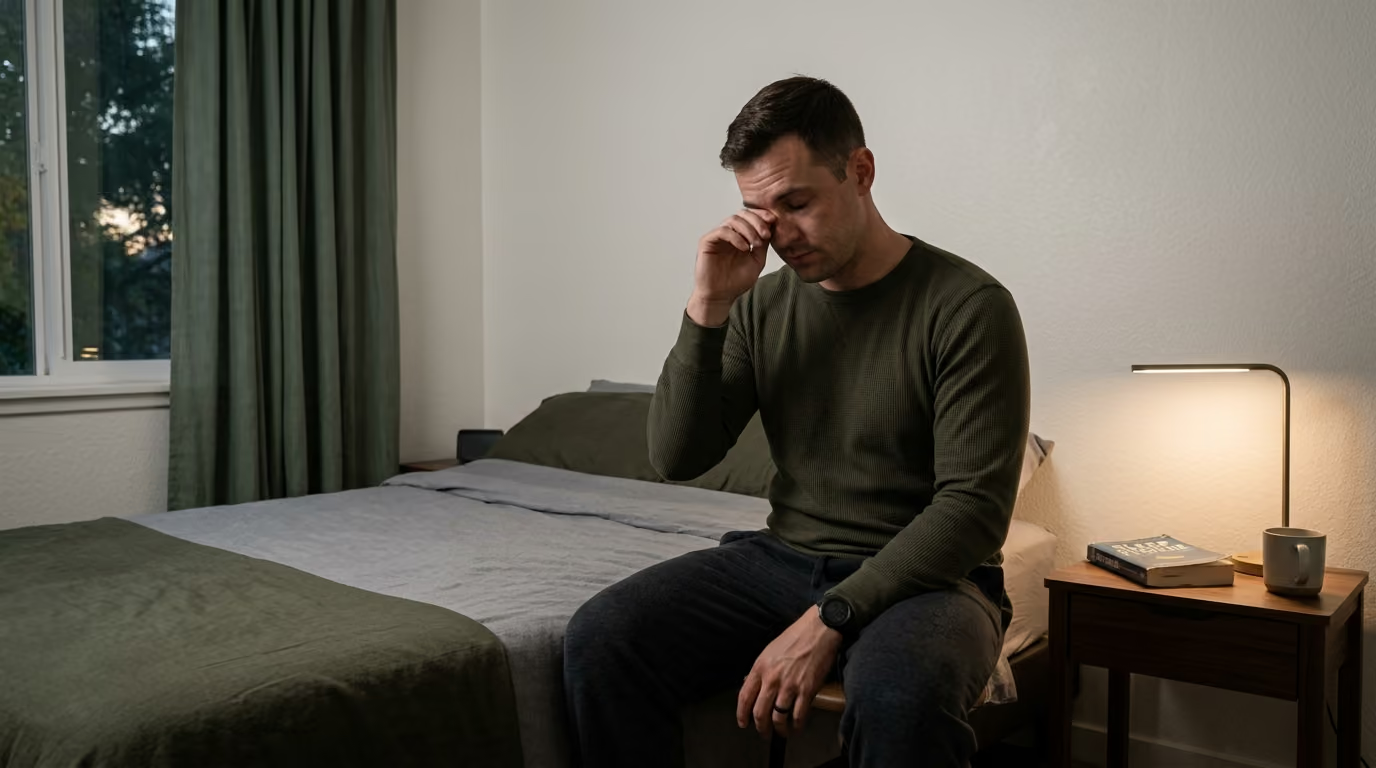

Healthy rest after military life depends on consistent wake times and environmental adjustments that help veterans overcome conditioned insomnia and hyperarousal.





If you are in immediate danger, call 911. For 24/7 support, call or text 988 and press 1 for the Veterans Crisis Line, or text 838255.
A sustainable post-service sleep routine is not an inflexible military schedule enforced by willpower, nor is it a rigid civilian bedtime checklist that falls apart during a crisis. It is a resilient biological system designed to protect rest, absorb real-world schedule disruptions, and restore daily physical capability. Transitioning out of uniform often replaces structured duty days with unpredictable work shifts, family responsibilities, lingering physical pain, and nervous system hyperarousal. Building long-term health requires moving away from the idea of sleep as a test of discipline and instead treating sleep as an adaptable physiological system.
A sustainable sleep routine after military service relies on a consistent wake anchor, an engineered sleep environment, and evidence-based behavioral strategies rather than an unyielding bedtime.
To fix post-service sleep, you must establish an honest sleep opportunity built backward from your daily commitments, align your light and activity cues, and separate primary sleep disorders from conditioned insomnia. Clinical evidence confirms that discipline alone cannot override circadian misalignment, untreated sleep apnea, or conditioned hyperarousal. By understanding your biological sleep drive and applying proven behavioral techniques, you can establish consistent sleep patterns that survive changing civilian demands.
Sleep difficulties are among the most persistent health challenges reported by service members and veterans. During active service, mission demands frequently require prolonged wakefulness, irregular duty hours, overnight watches, and sudden shifts across time zones. Over months or years, these operating conditions condition the brain to treat rest as secondary to immediate operational readiness. When service members leave the military, this learned vigilance does not simply disappear when civilian life begins.
Research shows the scale of this challenge across the military and veteran community. Sleep disturbances affect nearly one-third of personnel deployed in support of contingency operations, and historical estimates indicate that around 600,000 military personnel and veterans experience clinically relevant sleep conditions. In a study examining post-9/11 veterans, 57% met the diagnostic criteria for chronic insomnia disorder. A separate report from that same research program identified insomnia disorder in 57.2% of the sample, with prevalence rates exceeding 93% among veterans diagnosed with post-traumatic stress disorder (PTSD), 78% among those with traumatic brain injury (TBI), and 70% among those managing chronic pain.
In a broader national veteran sample, 37.4% of respondents reported poor sleep quality, 11.4% screened positive for clinical insomnia, and an additional 26% screened positive for subthreshold insomnia. These figures demonstrate that post-service sleep difficulties are widespread biological and behavioral responses to military service rather than personal shortcomings. To address these difficulties, veterans need comprehensive recovery and sleep strategies that account for several overlapping physiological and environmental drivers.
The human circadian system operates on a roughly 24-hour cycle regulated by the central pacemaker in the brain. This system relies on external time cues, known as zeitgebers, to coordinate hormone production, body temperature, digestion, and alertness. Daylight, scheduled physical training, regular meal times, and predictable accountability formations serve as powerful circadian anchors during active duty.
When you transition out of the military, those external anchors often vanish overnight. Civilian employment may introduce rotating shifts, long commutes, irregular telework hours, or unstructured weekends. Without fixed external routines, the internal master clock can drift out of sync with your actual daily obligations. This misalignment makes it difficult to fall asleep at night and leaves you groggy throughout the working day.
Military training and operational environments require sustained environmental awareness. For many service members, nighttime was historically associated with heightened risk, guard duty, incoming communications, or tactical movement. Consequently, the sympathetic nervous system learns to associate darkness and quiet with alertness rather than safety.
When hyperarousal persists into civilian life, lying down in a quiet room can trigger an automatic surge in heart rate, muscle tension, and cognitive scanning. Data from the Millennium Cohort Study published by the VA National Center for PTSD revealed that 92% of active-duty personnel with PTSD experienced clinically significant insomnia, compared to 28% of personnel without PTSD. This state of conditioned alertness prevents the natural drop in core body temperature and brain wave slowing required for deep sleep.
Physical wear and tear from load carriage, airborne operations, vehicle accidents, and repetitive physical strain frequently result in long-term musculoskeletal injuries. Pain delays sleep onset, causes frequent nighttime awakenings, and prevents restorative slow-wave sleep. In a clinical study of veterans with chronic pain, researchers noted significantly elevated Insomnia Severity Index scores and higher daytime sleepiness compared to pain-free peers.
In another study examining veterans with osteoarthritis of the knee or hip, 53% reported symptoms consistent with insomnia, while 66% reported symptoms consistent with obstructive sleep apnea. When pain wakes an individual repeatedly throughout the night, the bed becomes associated with physical discomfort and emotional frustration. This cycle rapidly turns acute physical pain into chronic behavioral insomnia.
Obstructive sleep apnea (OSA) involves repetitive partial or complete collapse of the upper airway during sleep, leading to oxygen desaturations and micro-arousals. Many veterans assume that persistent daytime fatigue, morning headaches, dry mouth, or loud snoring are simply standard byproducts of aging or stress. However, untreated airway collapse places substantial strain on the cardiovascular system and prevents restorative deep sleep.
The Department of Veterans Affairs and Department of Defense (VA/DoD) clinical practice guidelines emphasize that sleep hygiene alone cannot resolve untreated obstructive sleep apnea. An accurate diagnosis requires objective testing through formal in-lab polysomnography or home sleep apnea testing. Attempting to solve airway obstruction with behavioral willpower or relaxation techniques is ineffective and potentially dangerous.
Many transitioning service members rely on substances to manage daytime fatigue and nighttime wakefulness. High-dose caffeine, energy drinks, and over-the-counter pre-workout supplements are frequently consumed late in the afternoon to push through civilian work. Later in the evening, alcohol, cannabis, sedating antihistamines, or prescription muscle relaxers are often used as self-prescribed sleep aids.
While alcohol may shorten the time it takes to fall asleep, it fragments sleep architecture, suppresses critical rapid eye movement (REM) sleep, and worsens upper airway instability. Furthermore, chronic prescription opioid use directly alters central respiratory drive during sleep. VA/DoD guidelines specifically mandate that patients on chronic opioid therapy be thoroughly assessed for sleep-disordered breathing.
A foundational mistake in building a post-service routine is confusing the time spent lying in bed with the time spent asleep. Sleep opportunity refers to the total window of time allocated for rest, spanning from the moment you turn off the lights to the moment you get out of bed. Actual sleep represents the cumulative minutes of verified physiological sleep achieved within that opportunity window.
When an individual spends eight hours in bed but only sleeps for five hours, their sleep efficiency drops to roughly 62%. The remaining three hours are spent tossing, turning, watching the clock, worrying about work, or checking a smartphone. Over time, spending excessive, non-sleeping time in bed trains the brain to associate the mattress with wakefulness, frustration, and physical tension.
To build an effective routine, you must also understand the relationship between sleep timing, sleep continuity, and biological sleep pressure.
Sleep pressure is governed by the homeostatic sleep drive, which tracks the duration of continuous wakefulness. From the moment you wake up, a chemical called adenosine steadily accumulates in the brain. As adenosine concentrations rise throughout the day, your biological drive to sleep intensifies.
When you sleep, the brain clears accumulated adenosine, resetting your sleep drive for the following day. If you take long or poorly timed naps late in the afternoon, you clear away adenosine prematurely. When bedtime arrives, you lack sufficient sleep pressure to fall asleep quickly, even if you feel mentally exhausted.
Sleep pressure works in tandem with the circadian rhythm. While homeostatic sleep pressure builds continuously, the circadian system sends an alerting signal that changes across the 24-hour day. In the early evening, the circadian alerting signal peaks to keep you awake despite high adenosine levels, before dropping sharply at night as melatonin secretion begins.
If your sleep schedule is irregular, your circadian rhythm becomes desynchronized from your sleep opportunity. Going to bed when your circadian clock is actively promoting wakefulness results in prolonged tossing and turning. Conversely, waking up when your circadian clock is promoting sleep creates severe sleep inertia, leaving you feeling mentally foggy and physically slow for hours.
Sleep continuity refers to the stability of your sleep stages throughout the night. A single six-hour block of uninterrupted sleep is generally far more restorative than eight hours of sleep fragmented by hourly awakenings. Frequent micro-arousals disrupt the natural progression through light sleep, slow-wave deep sleep, and REM sleep.
For veterans managing chronic pain, PTSD-related night sweats, or untreated sleep apnea, fragmented sleep prevents the physical tissue repair, immune regulation, and memory consolidation that occur during deep, continuous sleep stages. Improving continuity requires identifying and treating the specific medical, environmental, or psychological triggers causing nighttime arousals.
Sleep stability measures how effectively your sleep routine withstands real-world schedule changes. A rigid plan that demands sleeping precisely from 10:00 p.m. to 6:00 a.m. fails immediately when you face overtime shifts, sick children, travel, or unexpected family demands.
A sustainable routine is built as a flexible system with defined minimum baselines, pre-planned nap protocols, and rapid recovery rules. This structural resilience allows you to absorb inevitable civilian disruptions without completely unraveling your sleep patterns for weeks.
Before attempting to optimize sleep hygiene, create a checklist, or purchase new bedding, you must screen for underlying clinical sleep disorders. Sleep hygiene interventions can optimize a healthy sleep system, but they cannot cure structural airway obstruction, neurological sleep disorders, or severe clinical insomnia.
According to the 2025 VA/DoD Clinical Practice Guideline for the Management of Chronic Insomnia Disorder and Obstructive Sleep Apnea, clinical assessment must precede behavioral self-management. The guideline outlines 29 evidence-based recommendations and three distinct clinical algorithms to ensure accurate diagnosis and appropriate medical care.
Chronic insomnia disorder is clinically defined as persistent difficulty falling asleep, staying asleep, or waking up too early despite adequate opportunity for sleep. To meet diagnostic criteria, these sleep disturbances must occur at least three nights per week for more than three months, and they must cause significant daytime impairment in social, occupational, or physical functioning.
Validated clinical screening tools include the Insomnia Severity Index (ISI) and the Athens Insomnia Scale. These questionnaires quantify the severity of sleep-onset delays, nighttime awakenings, and daytime distress. If you score in the moderate-to-severe range, self-guided habit changes should be paired with formal behavioral medicine support.
Obstructive sleep apnea is characterized by recurrent upper airway collapse leading to hypopneas (partial airway closures) or apneas (complete pauses in breathing). Clinicians diagnose OSA when a patient experiences five or more obstructive events per hour accompanied by symptoms such as snoring, witnessed apneas, or daytime fatigue, or 15 or more events per hour regardless of symptoms.
A standard screening tool used in veteran populations is the STOP questionnaire:
If you screen positive for OSA, the VA/DoD guideline recommends objective confirmation using comprehensive overnight polysomnography or an unattended home sleep apnea test. Treating confirmed OSA with positive airway pressure (PAP) therapy or a customized mandibular advancement device restores oxygen delivery and eliminates sleep-fragmenting micro-arousals.
Certain sleep symptoms demand immediate medical intervention rather than self-guided experimentation. If you operate heavy machinery, drive commercial vehicles, carry firearms, or work in emergency services, severe daytime sleepiness represents an immediate safety hazard to yourself and others.
Red flag symptoms that require rapid clinical evaluation include:
Building a functional, long-term sleep routine requires a structured, step-by-step engineering approach. Rather than overhauling your entire lifestyle at once, implement these twelve evidence-based steps sequentially to create a reliable foundation for recovery and resilience.
Begin by ruling out or treating underlying clinical conditions. Address sleep apnea, severe mood disorders, chronic pain, or restless legs syndrome with your primary care provider or a sleep specialist before making broad lifestyle modifications.
The most critical biological anchor for your circadian rhythm is your daily wake-up time. Waking up at a consistent time every morning sets your central circadian clock, triggers the morning cortisol awakening response, and starts the timer for daily adenosine accumulation.
VA sleep guidance and Centers for Disease Control and Prevention (CDC) clinical guidance recommend getting out of bed at the exact same time every day, including weekends. Even if you had a difficult night of sleep, getting up at your established anchor time preserves your biological sleep drive for the following evening.
Adults aged 18 to 60 require at least seven hours of actual sleep per 24-hour period for optimal metabolic, cognitive, and cardiovascular health. Adults aged 61 to 64 generally need seven to nine hours, while adults aged 65 and older require seven to eight hours.
Work backward from your required morning wake time to determine your lights-out target:
This calculation establishes an honest opportunity window without forcing you to spend excessive, restless hours awake in bed.
The human nervous system cannot shift instantaneously from high-stress work demands into deep physiological sleep. A reliable 20-to-30-minute wind-down sequence signals to the autonomic nervous system that physical demands are over for the day.
If unexpected schedule demands compress your evening, execute a five-minute baseline version rather than abandoning the routine entirely.
Your sleep space must be cool, dark, quiet, and physically comfortable. For veterans who remain sensitive to external sounds, absolute silence can sometimes increase vigilance and sound-scanning. In these cases, consistent, low-frequency sound is far more effective than silence.
Light is the most potent environmental synchronizer for your internal biological clock. Specialized ganglion cells in your eyes detect blue-wavelength light and send signals directly to the suprachiasmatic nucleus to halt melatonin production and promote alertness.
Expose your eyes to direct natural sunlight for 10 to 30 minutes within an hour of waking up. In the evening, dim overhead lights and turn off fluorescent fixtures two hours before bedtime. Minimize exposure to smartphones, computer monitors, and televisions during your wind-down window to allow natural endogenous melatonin synthesis.
Napping is a valuable operational tool when used intentionally, but uncontrolled napping can undermine nighttime sleep quality. Strategic naps should be deployed based on clear physiological principles:
Chemical substances and late meals can directly alter your sleep architecture and autonomic tone.
Physical conditioning supports healthy sleep depth and metabolic function. However, rigorous cardiovascular or heavy resistance training elevates core body temperature and sympathetic nervous system activity for several hours. Complete intense training sessions at least two to three hours before your scheduled wind-down period to ensure your heart rate and core temperature have returned to baseline.
When an individual spends hours awake in bed feeling frustrated, the brain forms a conditioned association between the bed and stress. Cognitive Behavioral Therapy for Insomnia (CBT-I) is the first-line, evidence-based treatment recommended by the VA/DoD clinical guidelines.
The core behavioral component of CBT-I is stimulus control:
Over several weeks, stimulus control breaks the association between the bed and wakeful frustration, re-establishing the bed as a clear physiological trigger for rest.
Veterans dealing with operational trauma or PTSD often experience distressing nightmares and sudden panic awakenings. Approaching these symptoms requires dedicated behavioral protocols:
Managing orthopedic injuries, nerve pain, or spinal trauma requires physical planning rather than simply trying to ignore discomfort:
Do not rely on subjective memory or consumer wearable devices alone to evaluate your sleep progress. Consumer trackers often misinterpret quiet waking rest as sleep and can induce unnecessary anxiety around sleep metrics.
Maintain a simple paper-based or clinical sleep diary for two weeks, such as the open-source tools provided in the VA CBT-i Coach application. Track:
Reviewing objective sleep log data allows you to identify behavioral patterns and calculate your baseline sleep efficiency accurately.
A standard civilian sleep schedule does not fit every veteran's employment reality. Many former service members work in law enforcement, emergency medical services, firefighting, manufacturing, defense contracting, or transportation. These professions demand shift-work flexibility. Rather than abandoning structured sleep habits, use the operational templates below to adapt your routine to your specific work environment.
This template suits veterans working standard daytime hours in business, construction trades, or academic settings.
This template is designed for veterans working fixed overnight shifts in security, industrial plants, or hospital settings.
Rotating rosters represent the most challenging operational environment for circadian biology. When your schedule rotates between days, evenings, and nights, follow a phased transition protocol rather than forcing abrupt overnight adjustments.
Veterans caring for infants, young children, or ill family members cannot always maintain an uninterrupted eight-hour block of sleep. Under these conditions, the objective shifts to protecting a baseline core sleep block.
Veterans managing co-occurring PTSD, chronic pain, and sleep difficulties face unique challenges that standard sleep advice fails to address. When physical discomfort and nervous system hyperarousal interact, standard sleep-hygiene rules can feel frustrating or ineffective. Managing these overlapping challenges requires an integrated, trauma-informed approach.
PTSD significantly alters sleep architecture, leading to increased light stage-1 sleep, reduced slow-wave deep sleep, and highly fragmented REM sleep. During normal REM sleep, the brain processes emotional memories while the body inhibits circulating stress hormones like norepinephrine. In individuals with PTSD, this natural inhibition is impaired.
Elevated nighttime noradrenergic activity triggers intense physiological arousal during REM dreaming, resulting in recurrent nightmares, rapid heart rate, drenching sweats, and sudden awakenings. Understanding that these nightmares stem from a biological excess of stress neurochemistry helps remove self-blame. Veterans should discuss these symptoms with a qualified physician, as evidence-based medications such as prazosin can help normalize nighttime brain chemistry and reduce nightmare frequency.
When you wake up in a state of autonomic panic or disorientation following a nightmare, avoid staying in bed staring into the dark. Follow this five-step physical grounding sequence:
Chronic musculoskeletal pain creates an inflammatory cycle that directly disrupts sleep continuity. When pain wakes you at night, the instinctive reaction is often to tense up, check the clock, and worry about tomorrow's exhaustion. This psychological tension intensifies pain signaling through a process called central sensitization.
To manage pain-related sleep disruption sustainably:
When former service members attempt to address chronic sleep problems, they often apply strategies that seem intuitive but actually worsen insomnia over the long term. Recognizing and correcting these common pitfalls is essential for building a routine that lasts.
The military values grit, mental toughness, and pushing through physical discomfort. However, sleep is a passive biological process that requires physiological surrender rather than active effort.
Attempting to force yourself to fall asleep through sheer willpower activates the sympathetic nervous system, raises core body temperature, and elevates blood pressure. You cannot conquer insomnia by lying rigidly in bed and demanding that your brain shut down. Sustainable sleep requires creating the physiological conditions for rest, stepping back, and letting your biological sleep drive take over naturally.
When individuals experience poor sleep, they often try to compensate by going to bed early, sleeping in late, or spending ten hours lying under the covers. As detailed earlier, spending excessive, wakeful time in bed dramatically lowers sleep efficiency and fragments sleep architecture.
If you only average six hours of sleep per night, lying in bed for nine hours ensures that you will spend three full hours awake, frustrated, and training your brain to associate the mattress with stress. A far more effective approach is sleep compression: narrowing your sleep opportunity window to match your actual sleep duration, consolidating your rest into a solid block, and then expanding that window gradually as your sleep efficiency improves.
Many veterans believe that chronic insomnia, hypervigilance, and trauma nightmares are permanent costs of service that must simply be tolerated. This misconception prevents individuals from seeking specialized medical and behavioral care.
Decades of clinical research by the VA and military health institutions demonstrate that evidence-based treatments produce significant, lasting improvements. Clinical trials show that completing a course of CBT-I or specialized trauma therapies substantially reduces insomnia severity, decreases nightmare frequency, and improves daytime emotional regulation, even in individuals with complex, long-standing PTSD.
Commercial smartwatches, fitness bands, and biometric rings have made sleep tracking accessible to everyone. However, for individuals prone to insomnia, tracking devices often create a secondary condition known as orthosomnia: an unhealthy obsession with achieving flawless sleep metrics.
Consumer wearables cannot directly measure brain waves; they estimate sleep stages using movement sensors and heart-rate variability algorithms. These estimates are often inaccurate, particularly in individuals with fragmented sleep or sleep-disordered breathing. Checking a poor sleep score every morning can induce anxiety and create a self-fulfilling expectation of daytime fatigue. Focus on your subjective physical capability and daytime alertness rather than chasing a perfect score on an app.
Sleep hygiene advice, such as avoiding late caffeine, sleeping in a cool room, and taking warm showers, forms a useful foundation for healthy rest. However, sleep hygiene alone cannot resolve primary medical sleep disorders like chronic insomnia or obstructive sleep apnea.
If you suffer from airway collapse, severe restless legs syndrome, or chronic, conditioned insomnia, adjusting your bedroom temperature or drinking herbal tea will not solve the underlying issue. Do not let basic lifestyle tips delay you from seeking an objective sleep study and evidence-based clinical treatment.
While establishing consistent daily habits and structuring your environment are valuable steps, you should always know when it is time to transition from self-guided management to professional medical care. Recognizing clinical boundaries ensures that serious medical conditions are evaluated and treated before they cause long-term health complications.
The VA healthcare system provides comprehensive clinical resources for sleep disorders, including dedicated sleep medicine clinics, home sleep apnea testing, and specialized behavioral sleep medicine providers. The VA/DoD Clinical Practice Guideline establishes Cognitive Behavioral Therapy for Insomnia (CBT-I) as the primary treatment for chronic insomnia, delivered via individual sessions, group clinics, or structured telehealth platforms.
Veterans can also access evidence-based digital tools developed by VA clinicians, such as the CBT-i Coach mobile application and the VA Sleep Solutions curriculum. If you receive healthcare outside the VA system, seek out board-certified sleep medicine physicians or behavioral sleep psychologists credentialed through the American Academy of Sleep Medicine (AASM) or the Society of Behavioral Sleep Medicine (SBSM).
Veterans seeking medical care for sleep issues are sometimes prescribed off-label sedating medications, such as trazodone, benzodiazepines, or atypical antipsychotics, without a clear long-term management strategy.
The 2025 VA/DoD Clinical Practice Guideline specifically does not suggest several commonly prescribed medications, including trazodone, for the routine management of chronic insomnia disorder. Instead, the guideline emphasizes non-pharmacological behavioral therapies as the foundational standard of care. Medications should only be used under careful physician oversight, particularly when co-occurring conditions like PTSD, pain, or sleep apnea are present.
Restoring your sleep is a fundamental pillar of long-term health, hormone regulation, and physical readiness. Poor sleep accelerates musculoskeletal decline, disrupts glucose metabolism, suppresses endogenous testosterone production, and elevates long-term cardiovascular risks.
Prioritizing your sleep is a vital investment in your future physical strength and capability. For veterans interested in how sleep, physical conditioning, and metabolic health interact over time, our dedicated resources on healthy aging and longevity provide comprehensive, evidence-led guidance for maintaining physical performance across every stage of life.
This article is provided exclusively for educational and informational purposes and does not constitute personalized medical advice, clinical diagnosis, or treatment recommendations. Sleep disruptions, chronic insomnia, and sleep-disordered breathing can be symptoms of complex underlying physical and psychological conditions that require individualized medical evaluation. Always consult with a qualified physician, board-certified sleep specialist, or licensed healthcare professional before making changes to your medications, starting new clinical therapies, or altering your health routines. Never disregard professional medical advice or delay seeking clinical care because of information you have read in this publication.
Rebuilding a dependable sleep routine generally requires three to six weeks of consistent behavioral application. Resetting your central circadian clock and re-establishing homeostatic sleep pressure takes time. Most individuals notice meaningful improvements in sleep efficiency and daytime energy within two to three weeks of locking in a strict wake anchor and applying stimulus control techniques. If chronic insomnia persists beyond six weeks of consistent habit modification, pursue a formal clinical evaluation for underlying sleep disorders.
After a night of fragmented or minimal sleep, do not sleep in late, cancel your daytime physical activity, or consume excessive amounts of caffeine. Wake up and get out of bed at your normal anchor time, get direct sunlight exposure for 15 minutes, hydrate thoroughly, and continue with your scheduled daily tasks. If extreme daytime sleepiness impairs your safety or cognitive function, take a single 15-to-20-minute nap before 1:00 p.m. Maintaining your standard wake anchor ensures that you carry high sleep pressure into the following night, helping you get your sleep schedule back on track quickly.
Weighted blankets provide deep touch pressure stimulation, which can help increase parasympathetic nervous system tone and reduce peripheral nervous system arousal in some individuals. Many veterans find that a weighted blanket (typically 10% to 12% of total body weight) creates a comforting sense of physical security, making it easier to settle into sleep. However, individuals managing severe obstructive sleep apnea, respiratory conditions, or specific orthopedic joint injuries should consult their physician before using heavy weighted blankets, as the added chest and leg pressure can exacerbate breathing difficulties or localized joint discomfort.
Irregular sleep opportunities and chronic circadian misalignment directly suppress endocrine signaling and anabolic hormone production. The vast majority of daily testosterone secretion in men occurs during uninterrupted deep sleep, particularly during slow-wave and early REM stages. Research shows that sustained sleep restriction to five or fewer hours per night can significantly lower daytime testosterone concentrations, accelerate muscle mass loss, impair joint recovery, and increase visceral body fat storage. Shift workers must take extra care to protect their daytime sleep blocks and practice strict sleep timing to preserve their hormonal and physical health over the long term.
Follow BattleVet for practical guidance on military and veteran health, strength, recovery, testosterone, sleep and healthy aging. Stay connected for new articles, research backed insights and clear information to help you stay capable for the years ahead.


Build better habits around strength, recovery, sleep, hormones and healthy aging with practical guidance for active military personnel and veterans.
Explore BattleVet