
Eight to twelve week training blocks help service members and veterans build sustainable strength, protect joint health, and avoid operational fatigue.





Most tactical fitness plans fail because they confuse exhaustion with progress. Grinding yourself down with random daily circuits creates fatigue, but it rarely builds durable capability. A reliable strength program is a structured, repeatable system that accounts for real physical constraints, operational demands, and long-term joint health.
The alarm rings at 0500 after five broken hours of sleep. Your knees ache from yesterday's loaded movement, and your lower back feels compressed from hours in heavy gear or behind a desk. Staring at an aggressive percentage-based barbell sheet that demands a heavy single repetition is a recipe for injury. A practical strength training plan must adapt to physical reality rather than forcing an idealized workout on an exhausted body.
A sustainable strength program balances training stress against recovery capacity, duty schedules, and prior injuries to produce consistent physical capability over years.
To build an effective strength training program, you must identify your primary performance goal, select movements across fundamental human movement patterns, distribute weekly volume across manageable sessions, manage intensity through structured effort scales, and systematically apply progressive overload while adjusting for operational fatigue.
Resistance training is any exercise where muscles work against external or internal resistance. This includes barbells, dumbbells, kettlebells, machines, bands, weighted vests, sandbags, and body weight. Department of Veterans Affairs and military health resources recognize all these modalities as valid strengthening activities. The goal is to apply structured mechanical tension to your muscles and nervous system, prompting positive adaptations that protect joints and improve physical capability.
Understanding the principles of exercise science allows you to build a routine that fits your life. You can explore our strength, fitness and body composition resources for additional programming principles. Whether preparing for a physical assessment, staying capable for field operations, or rebuilding strength after service, the principles in this manual will help you design a sustainable training system.
A program cannot maximize every physical adaptation at the same time. Trying to build maximal strength, gain significant muscle mass, run faster, and improve endurance simultaneously often leads to mediocre results and excessive fatigue. To build an effective program, choose one primary physical adaptation for each eight-to-twelve-week training block.
Maximal strength is the ability of your neuromuscular system to produce force against an external load. Strength is specific to the movement pattern, joint angle, contraction velocity, and contraction type. Gaining strength involves both muscular hypertrophy and neural adaptations, such as improved motor unit recruitment, higher firing rates, and better coordination.
To develop maximal strength, prioritize compound multi-joint movements. ACSM resistance training guidelines recommend loads of approximately 80 percent of your one-repetition maximum (1RM) or higher. Use lower repetition ranges, typically between one and six repetitions per set, with full recovery between sets. Rest periods of three to five minutes allow the nervous system to recover so you can produce high force on every repetition.
Hypertrophy refers to an increase in muscle fiber size. While larger muscles generally have greater force potential, muscle size and maximal strength are not identical. You can gain strength through neural efficiency without gaining large amounts of body weight, and you can build muscle size using moderate loads that do not maximize single-repetition force.
Muscle growth is driven primarily by mechanical tension applied through a sufficient volume of hard work sets. Current exercise science guidelines recommend targeting approximately 10 weekly sets per muscle group. You can achieve muscle growth across a wide repetition range, from five to thirty repetitions, provided sets are taken close to technical failure. Hypertrophy training benefits from varied movement angles and controlled lifting tempos.
Power is the ability to exert force rapidly. It is the product of force and movement velocity. Power is essential for sprinting, jumping, throwing, pushing sleds, breaching obstacles, and rapidly changing direction under load.
ACSM guidelines recommend training power using moderate loads, typically 30 to 70 percent of 1RM, moved with maximum intent. Power exercises should always be performed when you are physically fresh. High fatigue degrades movement velocity and alters movement mechanics, which defeats the purpose of power training. Keep repetitions low, usually two to five per set, and stop sets well before exhaustion.
General readiness combines lower-body strength, upper-body pushing and pulling capacity, trunk stability, loaded carrying ability, and baseline aerobic endurance. This quality is central to operational readiness and long-term vitality.
A general physical readiness program integrates basic strength work with loaded carries and steady-state cardiovascular conditioning. The Department of Veterans Affairs recommends at least 150 minutes of moderate aerobic activity or 75 minutes of vigorous activity weekly, combined with strengthening exercises on two or more days per week. Combining these elements creates a balanced foundation that supports daily tasks and outdoor activities.
Every training program is built on five core variables: volume, intensity, frequency, rest, and effort. Adjusting these dials allows you to manage fatigue, stimulate adaptation, and prevent overtraining. You can read more about balancing physical output and recovery in our military health articles.
Training volume represents the total quantity of work performed. It can be measured in several ways:
Tracking hard sets per muscle group per week is the most practical method for service members and veterans. A 2022 umbrella review of 14 meta-analyses found that volume was the only resistance training variable with a clear dose-response relationship for muscle growth. For most lifters, completing 10 to 20 hard sets per muscle group per week provides a robust stimulus for growth and strength. Beginners can progress on as few as four to six weekly sets per muscle group.
Intensity in exercise science refers to the external load relative to your maximum capability. It is typically expressed as a percentage of your one-repetition maximum (1RM).
A meta-analysis comparing various loading zones found similar muscle growth across light and heavy loads when sets were taken near failure, but heavy loads produced clearly superior gains in maximal 1RM strength.
Frequency is the number of training sessions completed per week, or how often a specific muscle group is trained. VA physical activity guidelines recommend performing resistance training at least two days per week.
A systematic review on training frequency established that while higher frequencies appear to increase strength, this benefit disappears when total weekly volume is matched. Frequency functions primarily as a way to organize and distribute weekly volume. Spreading 12 sets of lower-body work across two weekly sessions of six sets generally produces better movement quality and less fatigue than performing all 12 sets in a single workout.
Load intensity and effort intensity are distinct concepts. Load intensity is the weight on the bar, while effort intensity describes how close a set is taken to muscular failure. A set of 15 repetitions with a light load can demand higher effort than a set of three repetitions with a heavy load stopped well before fatigue.
Repetitions in Reserve (RIR) is a practical tool for managing effort:
RIR is especially valuable for service members and veterans because daily readiness fluctuates with sleep, work stress, and physical fatigue. On days when operational stress is high, an RIR target automatically adjusts the weight downward while keeping the training stimulus appropriate.
Rest intervals between sets dictate your physical recovery and subsequent performance. For heavy strength work using compound lifts, rest three to five minutes between sets. This allows adenosine triphosphate (ATP) and phosphocreatine stores to replenish in the muscle fibers. For hypertrophy and accessory movements, rest periods of 90 to 120 seconds are generally sufficient.
An effective strength program is organized around human movement patterns rather than isolated muscle groups. This ensures balanced joint development, prevents overuse injuries, and improves real-world physical capability.
Knee-dominant movements train the quadriceps, gluteal muscles, and adductors while demanding core stability.
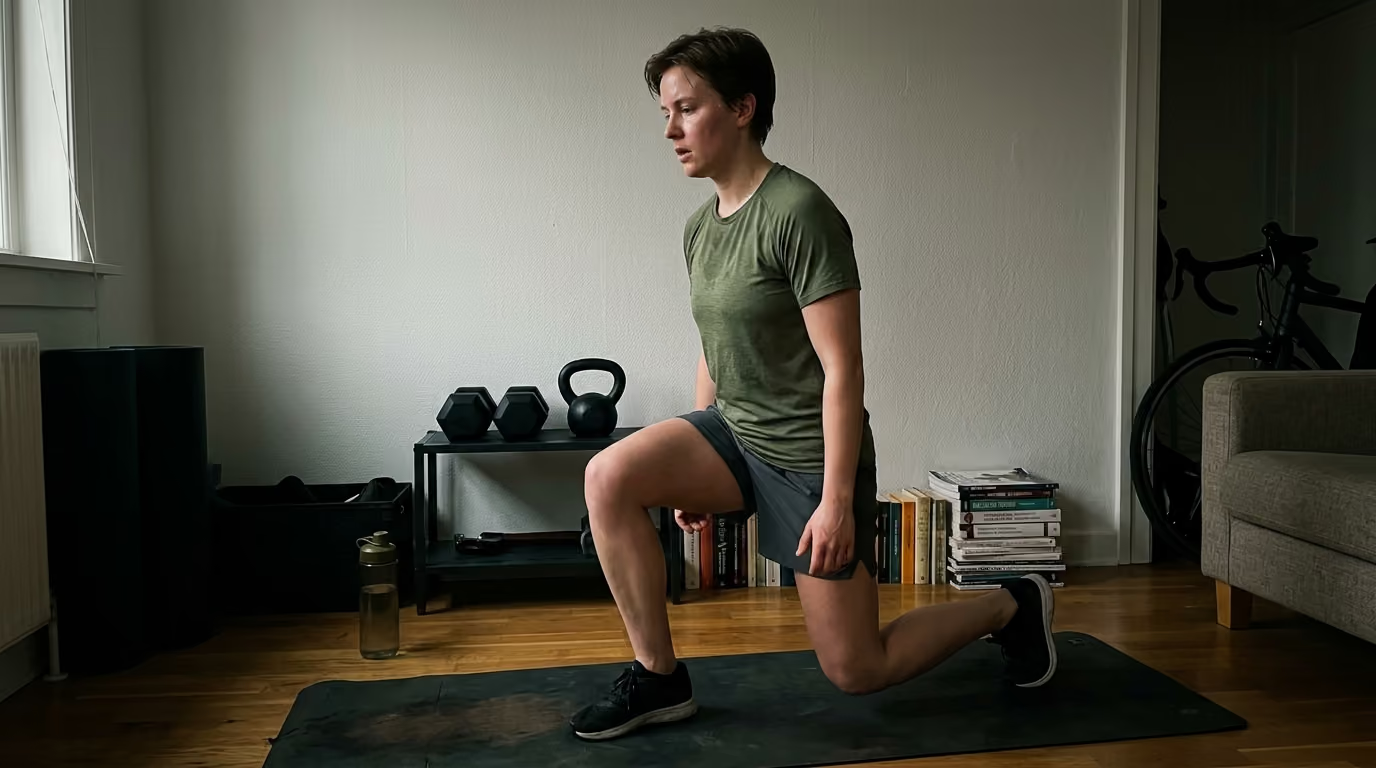
Unilateral squat variations are particularly valuable for tactical athletes. They build single-leg stability, address strength imbalances, and place high mechanical tension on leg musculature with lower spinal compression.
Hinge movements train the hamstrings, gluteus maximus, spinal erectors, and upper back. These structures protect the spine during heavy lifting and load carriage.
The trap-bar deadlift is often the best primary hinge choice for service members. It distributes load evenly across the hips and knees, requires less technical setup than a conventional barbell deadlift, and reduces shear forces on the lumbar spine.
Horizontal pressing trains the pectoralis major, anterior deltoids, and triceps.
Push-ups remain an essential benchmark in military fitness assessments. Transitioning between heavy dumbbell presses and progressive push-up variations builds both maximal pressing power and muscular endurance.
Horizontal pulling strengthens the latissimus dorsi, rhomboids, middle trapezius, and posterior deltoids. These muscles support shoulder health and counter the forward-shoulder posture common from carrying packs or working at computers.
Maintain a one-to-one or two-to-one ratio of pulling volume to pressing volume to keep the shoulder joints healthy.
Vertical pressing targets the deltoid musculature, upper trapezius, triceps, and serratus anterior.
If prior shoulder injuries make vertical pressing uncomfortable, the half-kneeling landmine press provides an effective alternative. The angled pressing path allows upward scapular rotation without impinging the shoulder joint.
Vertical pulling builds the latissimus dorsi, teres major, biceps, and forearm flexors.
Service members frequently need to pull their own body weight over obstacles. If you cannot yet complete multiple strict pull-ups, use lat pulldowns and eccentric-only pull-ups to build the necessary pulling strength.
Carries build grip strength, work capacity, hip stability, and trunk integrity under load.
Loaded carries translate gym strength directly into field capability. Performing suitcase carries forces the contralateral oblique muscles and hip abductors to stabilize the spine against lateral forces.
The trunk transfers force between the lower and upper body. It should be trained for stability across multiple planes:
Progressive overload is the foundation of physical development. It means gradually increasing the demands placed on your neuromuscular system over time. You do not need to add weight to the bar every workout to achieve progressive overload.
Progression can occur through multiple pathways:
The older ACSM progression model recommends a 2 to 10 percent load increase when you can complete one or two repetitions beyond your target range across consecutive workouts.
Double progression is a simple and reliable method for intermediate lifters and accessory movements.
This method works well with dumbbells, bodyweight variations, and cable machines where small weight increments may not be available.
Percentage-based programming assigns training loads based on a tested or estimated 1RM. For example, a program might call for 4 sets of 5 repetitions at 80 percent of 1RM.
While percentage programming provides structure, it fails to account for daily fluctuations in recovery, sleep debt, or operational stress. An 80 percent load feels manageable after eight hours of sleep, but it can turn into a maximal effort after a night in the field.
To fix this, combine percentage targets with an RIR cap. If the program prescribes 80 percent of 1RM, add the rule that every set must finish at RIR 2 or higher. If the assigned weight feels like an RIR 0 effort on a difficult day, reduce the load by 5 to 10 percent. This preserves the intended training stimulus without causing excessive fatigue.
Training stress accumulates over time, leading to systemic fatigue, minor joint irritation, and central nervous system strain. A deload is a planned temporary reduction in training stress that allows tissues to remodel and fatigue to clear.
Schedule a deload every four to eight weeks, or whenever you experience persistent performance drops, joint aching, and disturbed sleep. Learn more about balancing physical strain with rest in our recovery and sleep articles.
During a deload week:
Your training schedule must fit your weekly schedule and recovery capacity. A simple routine performed consistently for years will outperform an elaborate split you abandon after three weeks.
This split is ideal for service members during high-tempo field rotations, veterans with demanding civilian jobs, or individuals prioritizing endurance sports.
Training two days per week fulfills baseline VA strengthening recommendations, touches every major movement pattern, and leaves ample time for recovery or running.
The three-day full-body split is an efficient approach for building strength and muscle mass. It provides 48 to 72 hours of recovery between lifting sessions.
The four-day split works well for intermediate and advanced trainees who have dedicated time for physical training and consistent recovery.
Tactical athletes must balance resistance training with running, marching, and unit physical training. Running and lifting place concurrent demands on the lower body and central nervous system. You can explore training strategies in our training and performance articles.
To balance these demands:
Military injury prevention research highlights excessive cumulative physical training volume and overtraining as leading causes of musculoskeletal issues. Managing total weekly volume across all activities is essential for durability.
Deployments, temporary duty assignments, and austere environments often restrict access to standard gym equipment. You can maintain physical capability by adapting exercise selection to whatever tools are available.
When training with bodyweight alone, manipulate leverage, tempo, and stability to create high mechanical tension:
Resistance bands are lightweight, packable, and provide variable resistance that peaks at full muscle contraction.
Because bands offer minimal resistance at the start of a movement and maximum resistance at lockout, perform repetitions with controlled tempos and hold peak contractions for one to two seconds.
A single pair of dumbbells or kettlebells allows for a complete training stimulus when using offset and unilateral loading:
Unilateral loading challenges trunk stability and core musculature with lighter external weights, sparing spinal compression while training balance and force transfer.
Training with sandbags, water cans, or heavy odd objects builds functional carrying and bracing capacity:
Because odd objects have shifting centers of mass, use conservative loading and maintain a neutral, braced spine during lifts from the floor.
Military service places substantial wear on joints, tendons, and the spine. Managing previous injuries requires selecting movements you can perform comfortably, controlling total volume, and staying active without triggering flare-ups.
A 2026 systematic review and meta-analysis published in the clinical literature concluded that structured, progressive resistance training significantly reduces pain and disability in people with chronic nonspecific low-back pain. Interventions lasting at least 12 weeks showed the most consistent improvements. Another meta-analysis found that both progressive resistance exercise and aerobic training improved back pain, while resistance exercise provided added psychological benefits.
Practical back-friendly programming principles:
Military injury prevention reviews note that resistance exercise and targeted knee-strengthening protocols can reduce anterior knee symptoms.
Practical knee-friendly programming options:
Veterans returning to training after years of inactivity should prioritize joint health and safe movement patterns. You can find more longevity strategies in our healthy aging and longevity resources.
Navigating modern strength training requires distinguishing verified physiological facts from fitness marketing claims.
Here are five practical programs designed around specific operational, physical, and equipment constraints.
Progression model: Use double progression. When you can complete all three sets at the upper repetition limit with clean form, increase the dumbbell weight by five pounds.
Progression model: Apply linear percentage progression on the main lifts (Trap-Bar Deadlift and Bench Press) over six weeks, adding two to three percent load weekly before taking a scheduled deload.
Progression model: Focus on increasing repetitions and movement quality before adding load. Maintain all sets at RIR 2 to 4.
A 2020 systematic review on minimum effective training dose showed that completing a single hard set of 6 to 12 repetitions at 70 to 85 percent 1RM two to three times weekly produces meaningful strength gains in resistance-trained individuals over 8 to 12 weeks.
Progression model: Maintain current working loads. Do not attempt personal records during periods of severe sleep deprivation or high operational stress.
Progression model: Increase repetitions gradually from 8 to 12. Once 12 clean repetitions can be completed across all sets, add light resistance.
To get the most from this program design manual:
This educational resource provides general exercise programming principles for service members and veterans. It is not personal medical advice, clinical physical therapy, or an individualized rehabilitation prescription. Always consult a qualified healthcare professional or physical therapist before starting a new exercise program, particularly if you are managing cardiovascular conditions, severe spinal pathology, or acute joint injuries.
Most service members and veterans achieve their best results training between two and four days per week. Two full-body sessions meet baseline VA health guidelines and maintain strength during high operational stress. Three or four weekly sessions allow for higher volume distribution and better muscle development without causing excessive fatigue that interferes with running or duty tasks.
Yes. Research demonstrates that muscular hypertrophy depends on mechanical tension and total volume, not the specific implement used. You can stimulate muscle growth with bodyweight variations and bands provided you choose challenging movement variations, maintain clean technique, and take sets within two to three repetitions of technical failure.
RPE (Rating of Perceived Exertion) and RIR (Repetitions in Reserve) are complementary scales used to measure effort. RPE rates difficulty on a 1 to 10 scale, where an RPE 8 means you worked at an 8 out of 10 effort. RIR measures the exact number of clean repetitions you could have completed before reaching muscular failure. An RPE 8 corresponds directly to an RIR of 2.
When preparing for a long ruck march or running assessment, reduce your lower-body lifting volume by 30 to 50 percent during the preceding four to seven days. Avoid heavy, high-fatigue squats and deadlifts within 48 to 72 hours of the event. Maintain your upper body and core training as usual, and prioritize sleep, carbohydrate intake, and hydration.
Building lasting strength is a long-term process of consistent, repeatable effort rather than extreme short-term exertion.
Follow BattleVet for practical guidance on military and veteran health, strength, recovery, testosterone, sleep and healthy aging. Stay connected for new articles, research backed insights and clear information to help you stay capable for the years ahead.


Build better habits around strength, recovery, sleep, hormones and healthy aging with practical guidance for active military personnel and veterans.
Explore BattleVet