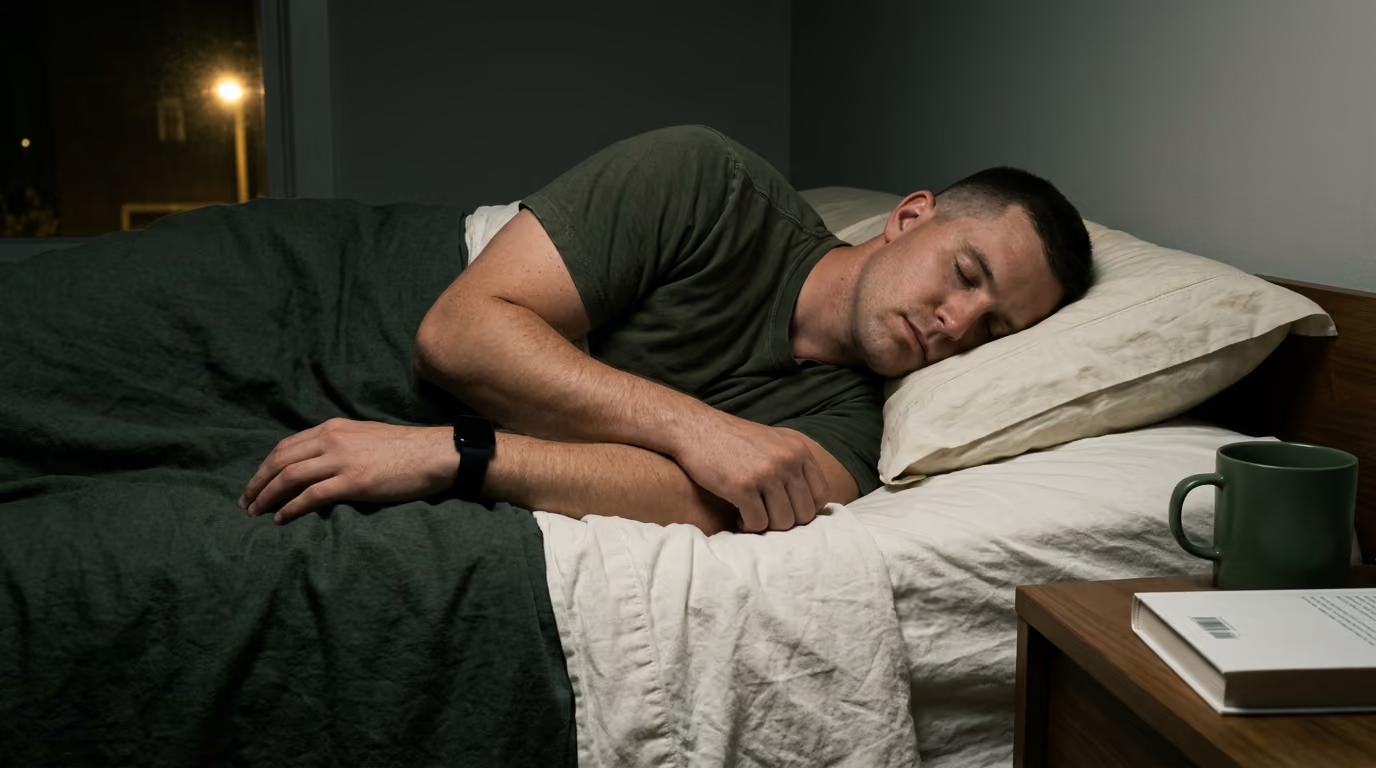

Military service disrupts natural sleep biology by uncoupling the internal circadian clock from homeostatic sleep pressure during demanding operations.





You wake up at 0300 with your heart beating fast, staring at the ceiling of a quiet bedroom. You have been home from service for months, yet your brain tracks every small creak in the hallway. You search online for why you cannot sleep even when you are completely exhausted, looking for clear answers. This field guide breaks down the biological systems that control sleep, explains why military life disrupts them, and provides direct strategies to help restore your rest.
Sleep is governed by the interaction of homeostatic sleep pressure and the internal circadian clock, both of which are easily disrupted by military operations, irregular light exposure, and chronic stress.
Sleep operates through two primary biological engines: the homeostatic drive that accumulates while you are awake, and the circadian timing system that signals alertness based on a roughly 24-hour cycle. When you serve in the military, operational demands force you to work against these systems. Standing night watch, deploying across time zones, sustaining high vigilance, and sleeping in noisy barracks break the coordination between these two mechanisms. The result is not just simple tiredness, but a deep physiological mismatch that impairs recovery, hormonal balance, and long-term health.
Human sleep is controlled by the two-process model of sleep regulation. This model describes two distinct forces that work together to dictate when you feel alert and when you fall asleep. Understanding how these forces interact is the first step toward troubleshooting poor rest.
The first force is Process S, known as homeostatic sleep pressure. Process S acts like an internal hourglass. From the moment you wake up in the morning, a biochemical compound called adenosine accumulates in your brain. As adenosine levels rise, your biological drive to sleep becomes progressively stronger. When you finally sleep, your brain clears this accumulated adenosine, resetting the hourglass for the next day. If you stay awake for 24 or 36 hours during a continuous field exercise, Process S climbs to extreme levels, creating intense physical sleepiness.
The second force is Process C, the circadian process. Process C is an internal 24-hour oscillator controlled by a tiny region in the hypothalamus called the suprachiasmatic nucleus. Unlike Process S, Process C does not care how long you have been awake. Instead, it generates fluctuating waves of alertness and sleepiness based on the time of day, body temperature, and environmental light cues. Process C promotes peak alertness during the biological day and drives sleepiness during the biological night.
Sleep occurs most naturally when both processes align. For optimal rest, homeostatic sleep pressure must be high, and the circadian system must be in its downward, sleep-promoting phase. When both systems point in the same direction, you fall asleep quickly and stay asleep through the night.
In military life, these two systems are constantly thrown out of phase. When you come off a 12-hour night shift at 0700, your homeostatic sleep pressure is exceptionally high. However, as the morning sun hits your eyes, your circadian system initiates its daytime alerting cycle. Process S is demanding sleep, but Process C is driving biological wakefulness. This internal conflict explains why you can feel completely exhausted yet find yourself lying awake in bed at 0900, unable to drift off. You can learn more about managing physical strain in our recovery and sleep articles.
Homeostatic sleep pressure is the physiological debt of wakefulness. The longer you remain awake, the more your nervous system demands restoration. When sleep is cut short night after night, this pressure does not clear completely.
Sleep debt is cumulative. If your body requires eight hours of sleep to fully clear adenosine, but you only obtain five hours during a week of field training, you build three hours of sleep debt each day. By the end of five days, you carry fifteen hours of unrecovered sleep debt. This biological deficit degrades reaction time, impairs working memory, and reduces stress tolerance. Motivation, caffeine, and operational adrenaline can temporarily mask this debt, but they do not eliminate the underlying physiological impairment.
The military environment generates severe sleep pressure through multiple mechanisms:
It is critical to distinguish between sleep opportunity and actual sleep obtained. A flight schedule or watch bill might technically allocate eight hours for rest in the berthing area or tent. However, environmental noise, high ambient temperatures, light leaks, physical pain, and racing thoughts often reduce that window to four or five hours of fragmented sleep.
Recovery from chronic sleep debt is not as simple as sleeping in on a single weekend. While one long night of sleep can reduce acute subjective fatigue, resolving cumulative neurobehavioral deficits requires consecutive nights of adequate, uninterrupted rest. Repeated sleep restriction changes metabolic function, lowers immune defenses, and alters testosterone production. True restoration requires consistent sleep opportunities that allow the brain to complete its standard non-rapid eye movement and rapid eye movement sleep cycles.
The circadian system is the master timing network of the human body. It orchestrates daily fluctuations in core body temperature, cortisol production, blood pressure, and melatonin release. These biological rhythms ensure that physiological processes occur at the right time of day.
The suprachiasmatic nucleus relies on external environmental signals, known as zeitgebers, to stay synchronized with the 24-hour solar day. The most powerful zeitgeber is natural light. When morning sunlight enters the eyes, specialized cells in the retina signal the brain to shut down melatonin production and raise core body temperature. Other secondary timing cues include the timing of your meals, physical exercise, and social interactions. When these cues occur at consistent times, your circadian rhythm remains stable and predictable.
The biological night represents the window when your core body temperature drops to its lowest point and melatonin levels peak. For most humans, this occurs between midnight and dawn. During this window, physical coordination, cognitive processing speed, and vigilance drop to their lowest baseline levels. When military operations require you to perform complex tasks during the biological night, you are fighting your fundamental biology.
Circadian phase describes where your body is within its internal 24-hour cycle. Clock time and circadian phase are not the same thing. Sleeping from 2300 to 0700 occurs during your biological night, supporting deep, restorative slow-wave sleep. Sleeping from 0800 to 1600 occurs during your biological day, when cortisol is rising and core temperature is elevating. Even if both sleep periods last exactly eight hours, daytime sleep is generally lighter, more fragmented, and less physically restorative.
The human body does not automatically adapt to an inverted schedule simply because you force yourself to stay awake. Circadian adaptation requires consistent environmental cues over several days or weeks. When personnel rapidly rotate between day and night duties, the circadian clock becomes desynchronized, leading to chronic gastrointestinal distress, mood instability, and severe daytime fatigue. You can find comprehensive research on these physical challenges in our military and veteran health resources.
Light is the single most powerful tool for manipulating your circadian rhythm. It produces two distinct operational effects on the human body. First, it exerts an immediate alerting effect on the brain by stimulating alertness pathways in the central nervous system. Second, it exerts a phase-shifting effect, moving your internal clock earlier or later depending on when the exposure occurs.
To use light effectively during night shifts or rotating watches, you must manage both the timing and the intensity of your exposure. Bright light exposure during the early and middle portions of a night shift helps maintain alertness and signals the circadian clock to adapt. However, exposure to bright morning light after the shift ends will instantly trigger daytime wakefulness mechanisms, sabotaging your ability to sleep during the day.
A structured light management protocol for night duty involves several practical steps:
The American Academy of Sleep Medicine provides clear guidance on light manipulation for shift work. Research indicates that wearing sunglasses on the commute home preserves daytime sleep by preventing morning sunlight from resetting the circadian pacemaker. Restricting morning light exposure enables the brain to transition into daytime sleep with fewer awakenings, helping night workers secure longer and more stable rest periods.
Light management is equally important for veterans transitioning back to civilian schedules. Looking at bright smartphone screens, computer monitors, or televisions late in the evening delays melatonin release and pushes the circadian phase later. This creates a state of self-inflicted jet lag, making it difficult to fall asleep at a reasonable hour. Dimming household lights two hours before bedtime provides the natural optical signal your brain needs to initiate the sleep process.
Sleep is heavily influenced by conditioned behavioral responses. Over time, your brain forms powerful associations between your sleeping environment and your mental state. If your bedroom is consistently associated with calm, darkness, and recovery, walking into that room triggers an automatic relaxation response.
In military life, the sleep environment is often linked to vigilance, threat monitoring, and unexpected tasking. Service members frequently sleep in uniform, boots on, waiting for an alarm, an incoming transmission, or a sudden change in mission status. When you spend years sleeping with one ear open, your nervous system learns that the bed is a place of active vulnerability. When you leave the military, this conditioned hyperarousal often follows you into civilian life.
Stimulus control is a proven behavioral strategy designed to rebuild a healthy connection between your bed and sleep. The primary rule of stimulus control is simple: the bed is reserved exclusively for sleep and physical intimacy. If you cannot fall asleep within 20 to 30 minutes, you must get out of bed, move to a dimly lit room, and engage in a quiet, non-stimulating activity until you feel genuinely drowsy. Lying awake in bed for hours while tossing, turning, and checking the clock trains your brain to associate the mattress with frustration and vigilance.
Optimizing the physical sleep environment provides the structural foundation for effective stimulus control:
A structured wind-down routine acts as a physiological transition from active vigilance to sleep readiness. Spend 30 to 60 minutes before bed stepping down your nervous system through predictable habits. This can include writing down your task list for the next day to clear mental clutter, taking a warm shower, completing light physical mobility stretches, or reading a physical book under dim light. A reliable routine signals your autonomic nervous system that the surrounding environment is secure and that active threat monitoring is no longer required. For broader health strategies, review our military health articles.
Deployments present an intense combination of biological, psychological, and environmental disruptions that undermine normal sleep architecture. Understanding these factors helps veterans recognize that persistent post-deployment sleep issues are predictable physiological adaptations rather than personal shortcomings.
The deployment environment attacks sleep through several distinct vectors simultaneously. Erratic operational schedules destroy circadian rhythmicity. Crowded tents, loud generators, extreme ambient heat, and constant tactical movement fragment whatever rest is available. Simultaneously, the sympathetic nervous system remains chronically activated to maintain situational awareness. Over months of sustained operations, this elevated baseline of physiological arousal becomes the body's default setting.
The relationship between combat deployment and chronic sleep disorders is thoroughly documented in military surveillance data. Clinical findings highlight the widespread nature of sleep disruption across service populations:
These figures illustrate the deployment sleep paradox. During operational deployments, personnel frequently face a severe lack of sleep opportunity. Over time, the nervous system adapts to this high-threat state by staying alert. When the service member finally returns home to a safe, quiet environment with unlimited sleep opportunity, the brain remains locked in high vigilance. The physical environment is safe, but the internal biological alarm remains active.
Post-deployment sleep disruption is also frequently compounded by physical health conditions. Blast exposures, neck and airway trauma, and changes in body composition significantly elevate the risk for obstructive sleep apnea. Veterans often assume their nighttime awakenings are purely driven by psychological stress or bad dreams, when in reality physical airway collapse is repeatedly choking off oxygen and jolting the brain awake. Comprehensive treatment requires assessing both the psychological hyperarousal and the physical airway mechanics. Explore related wellness topics in our veteran lifestyle and healthcare resources.
Shift work and rotating watch schedules represent some of the most challenging operating environments for the human body. When you work against your natural biological clock, you develop a condition known as shift work disorder, characterized by severe insomnia during sleep periods and dangerous sleepiness during duty hours.
Rapidly rotating schedules are far more damaging than fixed night shifts. On a fixed night schedule, your circadian clock has a theoretical chance to adapt over several weeks if you control light and meal timing carefully. On a rotating schedule, such as alternating between day, evening, and night watches every three to four days, the biological clock is pushed back and forth continuously. The body never receives enough consecutive days on one timeline to establish stable circadian rhythms.
Strategic napping is an essential operational tool for sustaining cognitive function during extended shifts or irregular schedules. Naps should be treated as a targeted countermeasure rather than a casual indulgence. Different nap strategies serve specific operational purposes:
When utilizing maintenance naps, keep the duration around 20 to 30 minutes to prevent drifting into slow-wave deep sleep. Waking up directly from deep sleep causes sleep inertia, a state of profound grogginess, impaired motor control, and mental confusion that can last for 15 to 45 minutes. If you have time for a full sleep cycle, an 80 to 90-minute nap allows you to complete both slow-wave and rapid eye movement sleep, waking up refreshed with minimal sleep inertia.
Caffeine is a powerful adenosine receptor antagonist that temporarily blocks sleep pressure signals in the brain. However, caffeine has an average half-life of five to seven hours, meaning half the drug remains active in your system long after you finish drinking it. To maximize caffeine's benefits during shift work:
Time-zone transitions present a related challenge during rapid deployment or international travel. Flying across multiple time zones creates an immediate conflict between local environmental time and your internal circadian phase. Melatonin can be used as a targeted chronobiotic agent to help shift the circadian clock to the new time zone. Taking a small dose of melatonin in the evening of your new destination advances the circadian phase, while morning exposure to bright sunlight reinforces the new daily schedule. Melatonin must be used with precise timing, as taking it at the wrong biological time will shift your internal clock in the opposite direction.
Evaluating sleep research requires separating well-established clinical consensus from early scientific findings and overhyped lifestyle claims. The military and veteran health landscape is filled with commercial products, supplements, and quick fixes that promise immediate recovery. Relying on verified medical evidence ensures that you invest time and resources into protocols that actually work.
Extensive research across military, veteran, and civilian populations establishes several core facts beyond dispute:
Several areas of sleep science show promise but require further investigation before definitive operational conclusions can be drawn:
The following reference breakdown clarifies the current clinical consensus across common sleep interventions:
When addressing persistent sleep problems, prioritize interventions backed by high-level clinical evidence. Behavioral modifications, environmental control, and formal medical diagnostics form the foundation of sustainable sleep recovery. You can read more about long-term wellness in our veteran life articles.
Restoring your sleep architecture requires a systematic, disciplined approach. Use these practical, hype-free protocols to rebuild your sleep systems whether you are on active duty, working rotating shifts, or managing life as a veteran.
This is a classic sign of conditioned insomnia. Over time, your brain has learned to associate your bed with tossing, turning, vigilance, and frustration. When you sit on the couch, the pressure of vigilance drops because your brain does not view the couch as a performance test for sleep, allowing homeostatic sleep pressure to take over. When you stand up and walk into the bedroom, the physical environment triggers an automatic conditioned arousal response that spikes alertness. Applying strict stimulus control helps break this negative mental loop.
Hyperarousal typically presents as difficulty falling asleep, racing thoughts, waking up with a start at minor sounds, and feeling constantly on edge in bed. Obstructive sleep apnea presents with physical airway symptoms, such as loud chronic snoring, waking up gasping or choking, morning dry mouth, severe morning headaches, and relentless daytime exhaustion despite spending eight hours in bed. Because hyperarousal and sleep apnea frequently coexist in military and veteran populations, any persistent sleep issue accompanied by snoring or breathing pauses warrants a formal clinical sleep study.
Sleeping extra hours on days off provides minor short-term relief for acute exhaustion, but it does not fully correct chronic sleep debt. Furthermore, sleeping in several hours past your normal wake time causes social jet lag, shifting your circadian clock later and making it almost impossible to fall asleep on time Sunday night. A better strategy is to maintain a consistent wake time, go to bed 30 to 60 minutes earlier when fatigued, and utilize a targeted 30-minute afternoon nap to recover without wrecking your circadian rhythm.
No. Melatonin is a circadian phase-shifting signal, not a heavy sedative. Taking large doses between 5 mg and 20 mg floods the brain's receptors, causing morning grogginess, vivid nightmares, and potential disruption of your normal hormone pathways. Clinical trials show that micro-doses ranging from 0.5 mg to 3 mg taken at the correct biological time are far more effective for shifting the circadian clock without causing next-day sluggishness or receptor desensitization.
Apply these five practical steps this week to start stabilizing your sleep architecture:
This field guide is published exclusively for educational and informational purposes and does not constitute individualized medical advice, clinical diagnosis, or treatment. Military personnel and veterans experiencing chronic insomnia, loud snoring, witnessed breathing pauses, severe daytime sleepiness, or persistent trauma-related sleep disturbances should seek evaluation from a qualified healthcare professional or an accredited sleep medicine specialist. Never alter, discontinue, or start prescription medications or clinical therapies without direct supervision from your medical provider.
Follow BattleVet for practical guidance on military and veteran health, strength, recovery, testosterone, sleep and healthy aging. Stay connected for new articles, research backed insights and clear information to help you stay capable for the years ahead.


Build better habits around strength, recovery, sleep, hormones and healthy aging with practical guidance for active military personnel and veterans.
Explore BattleVet